
Knowing about edible mushrooms is useful for every mushroom picker. Edible mushrooms are those that are safe to eat and don't require special preparation. Edible mushrooms are divided into several types, the most well-known of which are tubular, lamellar, and ascomycetes. You can read more about edible mushrooms in this article.
Signs
Edible mushrooms are those that require no special preparation; they can be cooked and eaten immediately. Edible mushrooms do not contain any toxic substances that could harm the body; they are completely safe for humans.
The nutritional value of edible mushrooms is divided into four categories: from high-quality to low-grade mushrooms.
To distinguish edible mushrooms from inedible ones, you need to know some general distinguishing features:
- edible mushrooms do not have a specific pungent smell;
- the color of edible mushrooms is less bright and flashy;
- Edible mushrooms usually do not change color after the cap is cut or broken;
- the flesh may darken during cooking or when broken;
- In edible mushrooms, the gills are attached to the stem more firmly than in inedible ones.
All these signs are conditional and do not provide an exact guarantee that the mushroom is edible.
The video clearly demonstrates how to distinguish edible mushrooms from poisonous ones, using the most common mushrooms as examples. It also explains what to do in case of poisoning:
Conditionally edible
In addition to edible mushrooms, there are also conditionally edible mushrooms. They are classified as a separate category because they secrete a bitter juice or contain poison in very small quantities.
These mushrooms require special treatment before cooking, namely:
- soak (4 to 7 days);
- boil (15-30 minutes);
- scald with boiling water;
- dry;
- salt (50-70 g of salt per 1 liter of water).
Among conditionally edible mushrooms, even with special processing, it is recommended to consume only young specimens, without signs of aging or decay.
Some mushrooms are inedible only when eaten with other foods. For example, dung beetles are incompatible with alcohol.
Types
There are 3 types, which are divided into edible and conditionally edible.
| Name of the mushroom | Type | Collection period | Place of growth | Nutritional value |
|---|---|---|---|---|
| White mushroom | Tubular | June-September | Forests, shade of pines or birches | High |
| Butterlets | Tubular | July-September | Pine forest | High |
| flywheel | Tubular | July-October | Forests, loose soil | Average |
| Aspen mushroom | Tubular | August-September | Mixed forest | High |
| Common birch bolete | Tubular | June-September | Under the birches | High |
| Polish mushroom | Tubular | July-October | Under the pines | High |
| Boletin | Tubular | August-October | Forests | Average |
| Bruise | Tubular | July-September | Deciduous forests | High |
| Fox | Plate-shaped | July-October | Deciduous and coniferous forests | High |
| Ryzhik | Plate-shaped | July-October | Coniferous forests | High |
| Autumn honey fungus | Plate-shaped | September-November | Deciduous forests | High |
| Russula | Plate-shaped | June-November | Mixed forests | Average |
| May mushroom | Plate-shaped | April-June | Meadows and pastures | Average |
| Ringed cap | Plate-shaped | July-October | Under the coniferous trees | Average |
| Felt-leaved woodlouse | Plate-shaped | June-October | Coniferous forests | Average |
Tubular
Tubular mushrooms are distinguished by the structure of their cap, which has a porous, sponge-like structure. The interior is riddled with numerous small, intertwined tubes. Mushrooms of this type are typically found in the shade of trees, where sunlight is scarce and the conditions are damp and cool.
Among tubular mushrooms, both edible and semi-edible varieties are common. Their fruits are very fleshy and have high nutritional value.
Among edible tubular mushrooms, there are many poisonous lookalikes. For example, the harmless porcini mushroom can be confused with the inedible gall mushroom. Before picking, carefully examine the characteristics of edible mushrooms.
The most popular edible
Below are some tubular mushrooms that can be eaten without any precautions:
1White mushroom or boletus
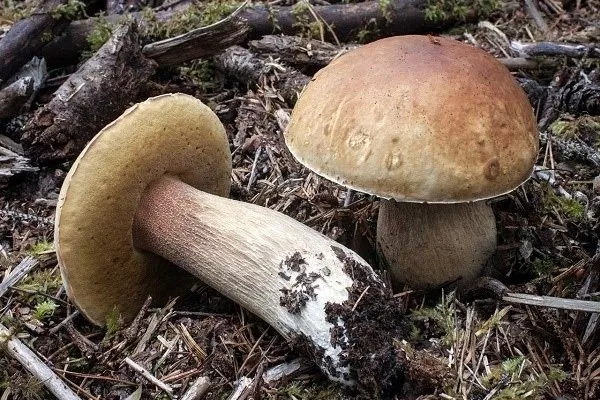
White mushroom The most famous tubular mushroom. If you look closely at the cap, you'll notice it's slightly convex, a soft brown color, with lighter areas. The inside of the cap is riddled with white or yellowish pores, depending on the mushroom's age, with a reticulated structure. The flesh is white, fleshy, juicy, and has a mild flavor. A rich mushroom aroma emerges when cooked and dried. The stem is thick and brown.
Mushroom pickers recommend looking for boletus mushrooms in forests, in the shade of pine or birch trees. The best time to harvest is from June to September.
2Butterlets
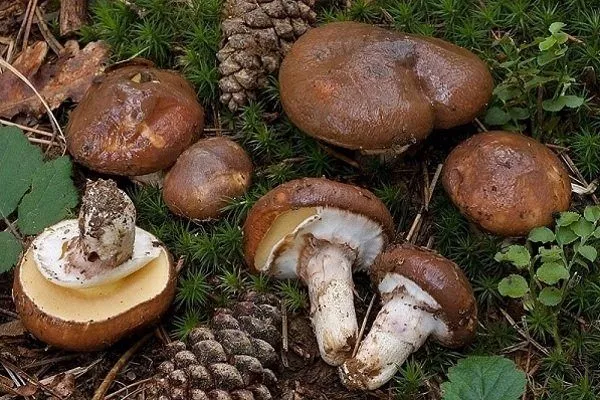
The cap is conical, brown, and oily to the touch due to the mucus covering it. The interior of the cap is yellowish, covered with a light mesh in early mushrooms, which breaks through with time. The flesh is tender and light, becoming brownish near the stem. The stem is thin and light yellow.
Butterlets usually grow in families and can be found in pine forests from July to September.
3flywheel
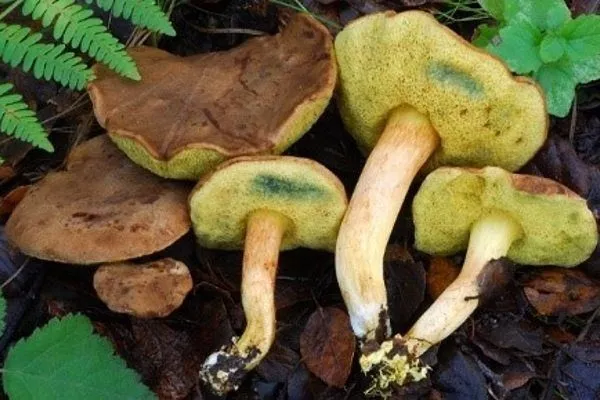
The cap can be light brown or pale green, with a yellow interior. When cutting the fleshflywheel It turns blue, but is not considered poisonous. The stem is thick, from 4 to 8 cm in height.
The mushroom grows in forests, in loose soil, and is sometimes found near swamps. The optimal time for boletus production is considered to be from July to October.
4Aspen mushroom
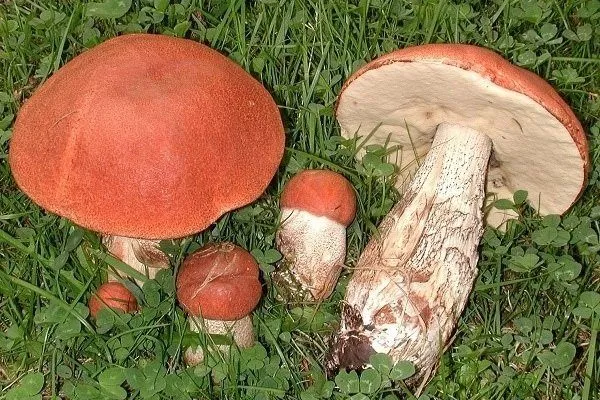
It has a wide, convex cap of orange-red color. The flesh is porous and light, but darkens when broken. The stem is dense, tapering at the top, and covered with dark scales.
The mushroom can be found in mixed forests, under aspen trees, or near pine trees. The best harvest occurs between August and September.
5Common birch bolete
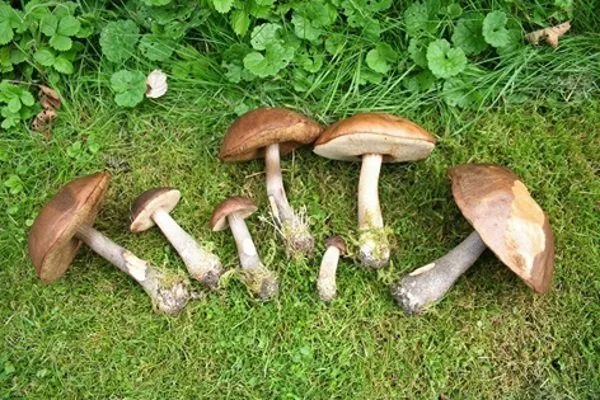
The gray-brown cap is semicircular. The underside is light and soft to the touch. The flesh is white, but darkens during cooking. The stem is long, white, and covered with dark scales.
It's recommended to pick young mushrooms. They should be cooked or dried immediately, as birch boletes spoil quickly.
The mushroom grows in clusters under birch trees. Harvest time: June–September.
6Polish mushroom
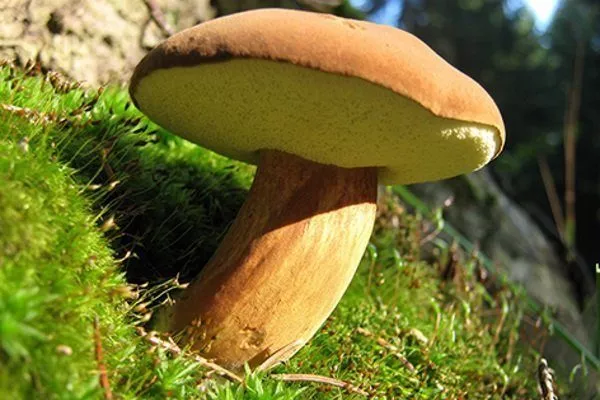
Similar to the boletus, it has a brown cap. The flesh is wide-pored, soft yellow, and darkens when cut. The stem is light brown, with a subtle striped pattern.
When wet, the mushroom skin becomes more difficult to remove.
Often found under pine trees, in loose soil. You can hunt for this Polish mushroom quietly from July through October.
7Boletin
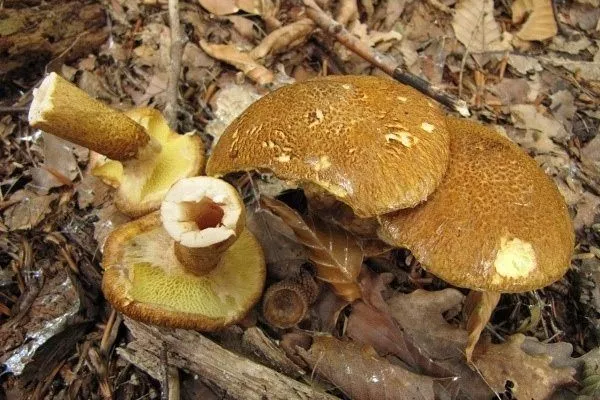
The cap has a matte surface and thin scales. The color can vary from brown to yellowish. The flesh is yellow and has a distinct mushroom aroma. The stem is brown. Early mushrooms may have a yellowish ring on the stem.
It can be found in forests, particularly mixed forests or deciduous forests. It is usually harvested from August to October.
8Bruise
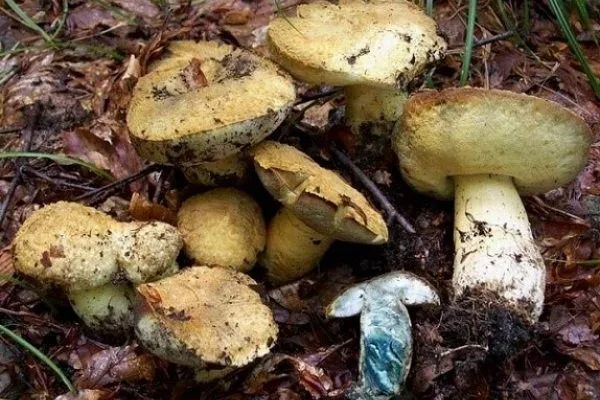
This mushroom is the rarest of those presented. It has a wide, flat cap, slightly concave at the edges. The cap surface is dry and grayish-brown. When pressed, it takes on a blue tint. The flesh is brittle and creamy, but when broken, it turns cornflower blue. It has a delicate flavor and aroma. The stem is long and thick at the base.
Some mushroom pickers mistakenly consider this mushroom poisonous due to its color-changing properties. However, it is not poisonous and is quite pleasant to the taste.
Most often seen in deciduous forests between July and September.
The most popular conditionally edible
Conditionally edible mushrooms deserve special attention. There are quite a few of them among tubular mushrooms. The most common ones are described below.
1Oak tree olive-brown
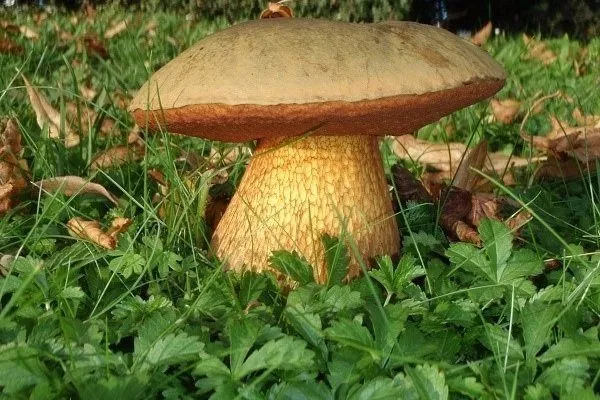
The caps are large and brown. The internal structure is porous, changing color over time from yellowish to dark orange. When broken, the color darkens. The stem is plump, brown, covered with a reddish mesh. It is eaten pickled.
They usually grow near oak forests. Oak mushrooms are harvested from July to September.
2Speckled oakweed
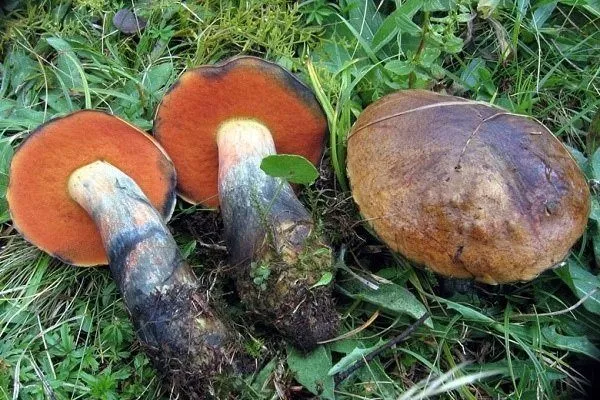
It has a wide cap, shaped like a semicircle. Its color generally ranges from brown to dark brownish-black. The cap's surface is velvety to the touch, darkening when pressed. The flesh is reddish-brown, turning blue when broken. It has no odor. The stem is tall and thick, with thin scales visible on it. The spotted boletus is eaten only after boiling.
It can be found in forests—both coniferous and deciduous. It produces fruit from May to October, with peak fruiting in July.
More details about oak trees are given herehere.
3Chestnut mushroom
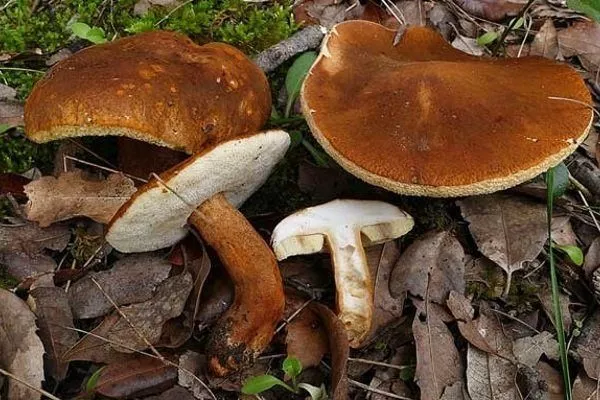
The cap is round and brown. Young mushrooms have a velvety surface, while older ones are smooth. The flesh is typically white and has a faint hazelnut aroma. The stem is similar in color to the cap and is thinner at the top than the bottom. The mushroom should be dried before eating.
Found near deciduous trees from July to September.
4Goat
The cap of this mushroom is usually flattened and reddish-reddish-brown in color. The skin is difficult to separate from the cap. The flesh is firm, elastic, and pale yellow. It turns pink when cut. When cooked, the mushroom takes on a pinkish-purple color. The stem is tall, cylindrical, and usually curved. The stem is similar in color to the cap. This mushroom is most often boiled before eating, salted, or pickled.
Can be found near pine trees. Common from August to September.
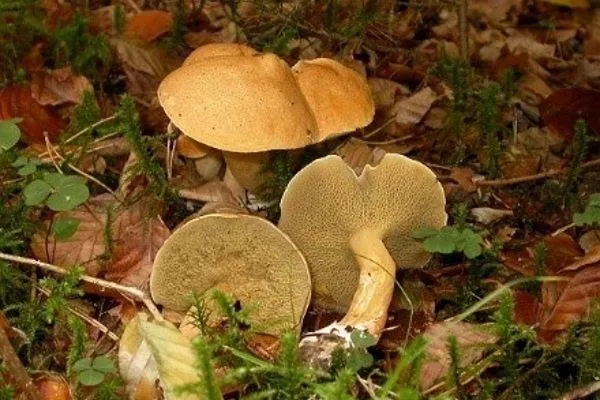
5Pepper mushroom
The cap is round and convex. It flattens over time. It is yellow-brown or red-brown in color. It can become sticky when wet. The flesh is brittle and yellow. It has a distinctly pungent flavor. These mushrooms have a short, moderately thin stem. The stem is almost the same color as the cap, but lighter.
The mushroom is used as a powdered seasoning, as a pepper substitute. It should not be eaten in any other form.
The pepper mushroom can be found in coniferous forests. It is most often collected from July to October.
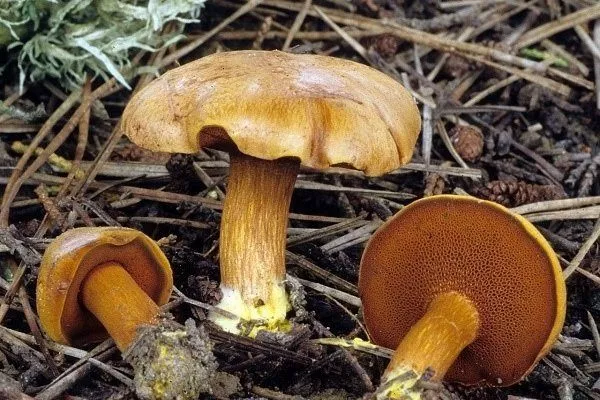
Plate-shaped
Lamellar mushrooms are so named because of their cap, the inside of which is permeated with thin gills containing spores for reproduction. These gills extend from the center to the edges of the cap, covering the entire inner surface of the mushroom.
Lamellar mushrooms are the most common and well-known type of mushroom. The quiet season for mushrooms of this species lasts from midsummer to early winter. They can grow in both deciduous and coniferous forests.
The most popular edible
The most famous edible lamellar mushrooms are listed in this list:
1Fox
It has a concave cap with curved edges, and is yellow-orange in color. The flesh is a delicate yellow, and if you touch it, you'll find that it has a fairly dense texture. chanterelles The stem is identical in color to the cap and continues it.
They are common in deciduous and coniferous forests. They should be collected from July to October.
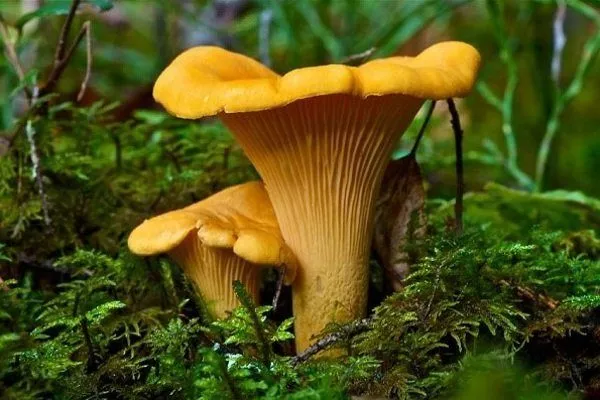
Chanterelles have poisonous lookalikes. Pay attention to the cap color; harmful mushrooms are usually light yellow or pinkish.
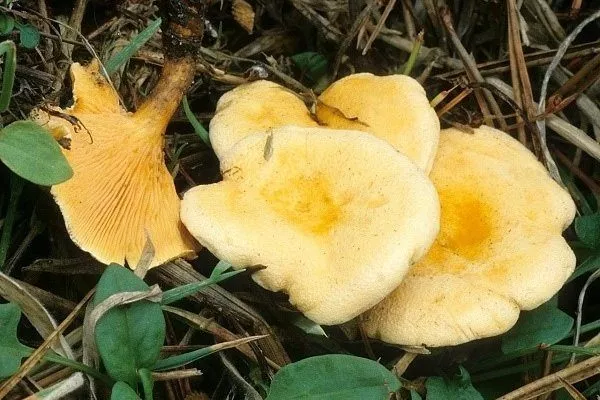
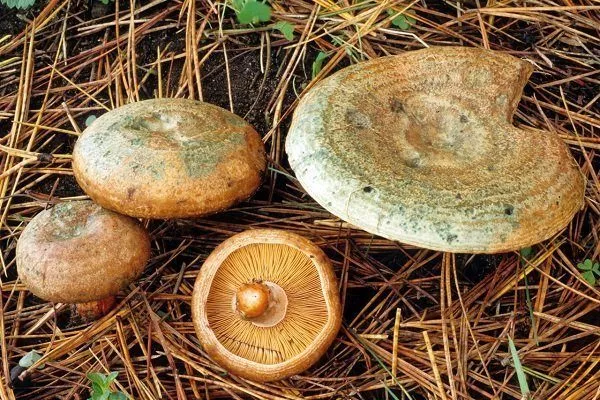
2Ryzhik
The cap is ringed and may be concave toward the center. It is light orange. The flesh is also almost orange and has a dense texture. The stem is small and identical in color to the cap.
It can be found in coniferous forests, under pine trees. It is harvested from July to October.
3Autumn honey fungus
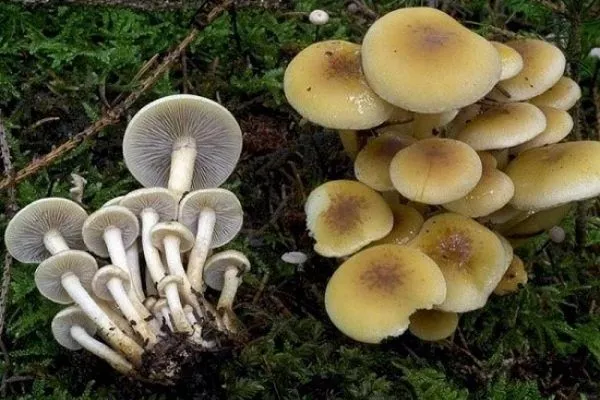
The cap is convex, covered with thin scales. The color ranges from honey to soft green-brown. The flesh is firm and light-colored. It is attractive for its delicate aroma. The stems are narrow, soft yellow, darker towards the bottom, with a small ring under the cap.
They can be found in deciduous forests, on tree surfaces. It's recommended to look for honey mushrooms from September to November.
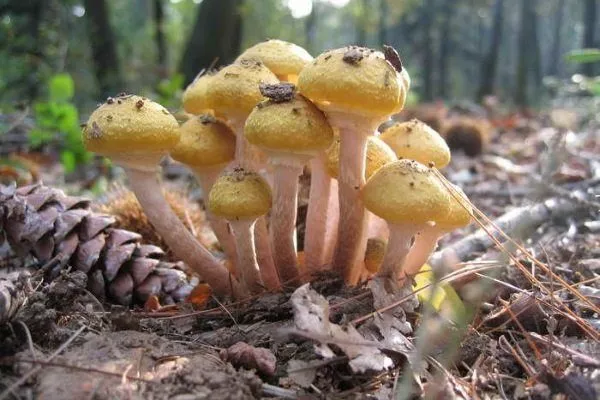
The honey fungus also has a dangerous lookalike—the false honey fungus. It's distinguished by the lack of a ring on the stem and a richer, olive or almost black color.
We recommend reading the article about growing honey mushrooms on your farm – here.
4Russula
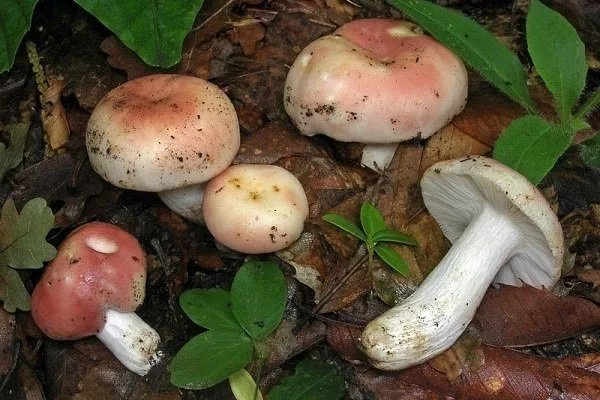
Young mushrooms have caps that resemble hemispheres, but become flatter as they mature. They range in color from light brown to pinkish-brown to pink. The interior is brittle and whitish, becoming darker with age. The stem is cylindrical, either solid or hollow, depending on the variety.
Russula can be seen in mixed forests from June to November.
5May mushroom
The cap is convex and cream-colored. The inside is white and dense. It tastes like flour. The stem is long and white, with a noticeable orange tint at the base.
It grows in meadows and pastures. Fruiting period is from April to June.
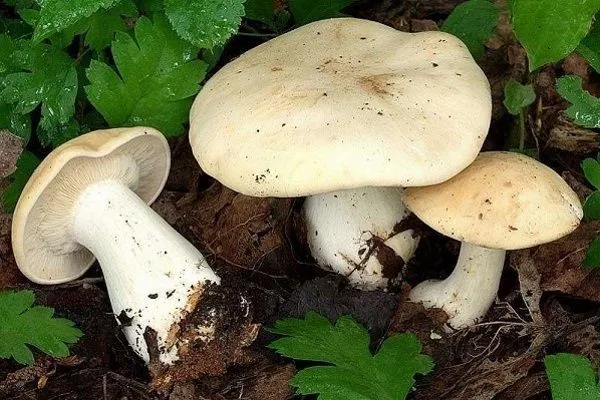
6Ringed cap
The cap of this mushroom is shaped like a cloche, hence its name. It is a warm, soft yellow, sometimes close to ochre, with a striped pattern. The inside is soft, slightly yellowish. The stem is strong and long.
It can be found primarily under coniferous trees, sometimes under birch or oak. It is usually collected between July and October.
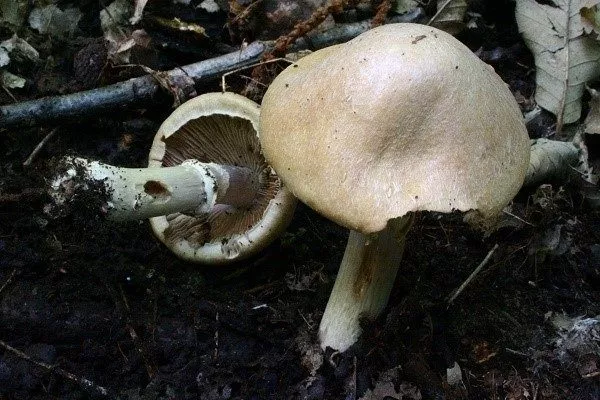
7Felt-leaved woodlouse
The cap is dome-shaped and yellow-brown. The flesh is ochre. The stem is elongated, covered in a white mesh in earlier mushrooms.
Common in coniferous forests. Collected from June to October.
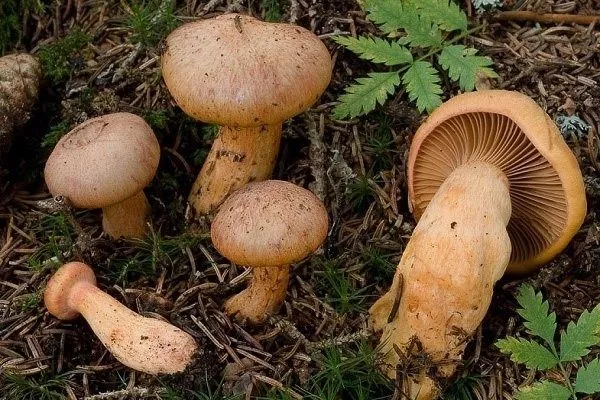
8Honey fungus
The cap is convex in shape. The surface is fibrous, and the color ranges from red to orange-yellow. The flesh is white, densely gilled. The stem is cone-shaped, white, and covered with reddish scales. It is recommended to eat only fresh.
Can be found under pine trees, from March to November.
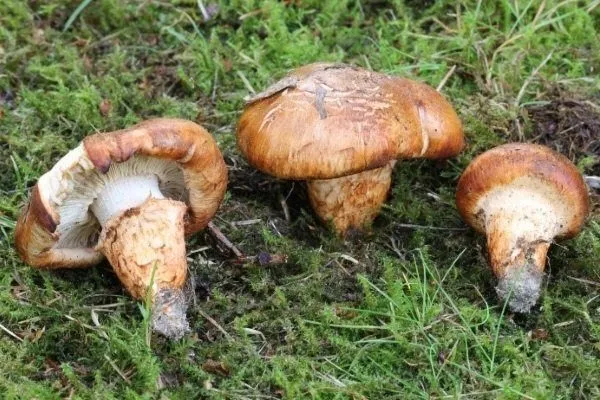
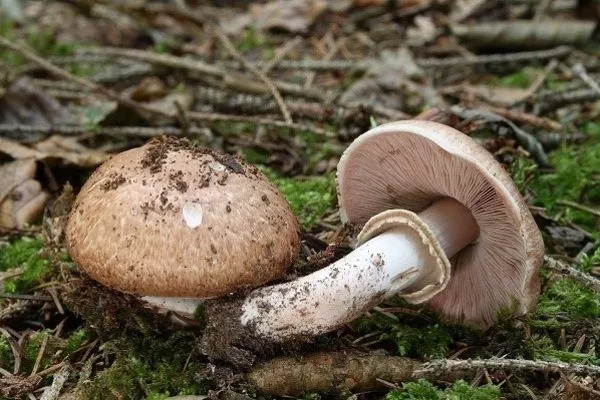
9Champignon
It has a round cap with inward-curving edges, white or brownish in color, which opens as the mushroom ages. The flesh is light-colored, turning gray over time. The stem is low, light-colored, and firm. The mushrooms darken when cooked. They have a distinct mushroom aroma.
They grow in mixed forests or meadows. It is recommended to harvest them from June to September.
10Oyster mushroom
The cap is ear-shaped and has curved edges. It is usually light or soft gray in color and has a smooth surface. The stem is short, thin, and white. The flesh is wide-laminated, white or soft yellow. It has no distinct odor. It is best eaten young, as older mushrooms tend to be tough.
They belong to the oyster mushroom family and typically grow in clusters on trees or rotten stumps. They can usually be harvested during the warmer months of August to September.
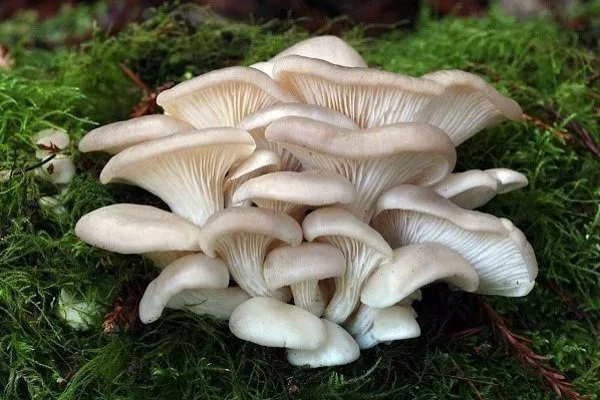
Champignons and oyster mushrooms are cultivated mushrooms. They are grown in artificial conditions for consumption. They are most often found on the shelves of stores and supermarkets. Oyster mushrooms can be freeze.
The most popular conditionally edible
Among the agaric mushrooms, you can also find some that are conditionally edible. You'll read about some of them below:
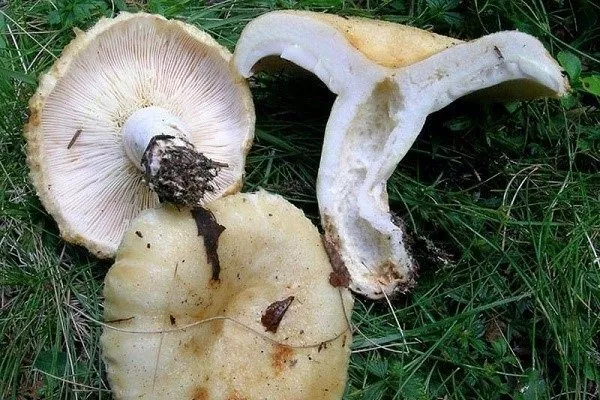
1Real milk mushroom
The cap is white, with faded yellow spots. It is curled downwards. The flesh is dense, light-colored, and has a fruity aroma. The stem is white and cylindrical. When cut, the stem releases a pungent juice. It must be soaked before consumption.
It is collected in birch groves and coniferous forests. The harvest period is from June to October.
2Black milk mushroom
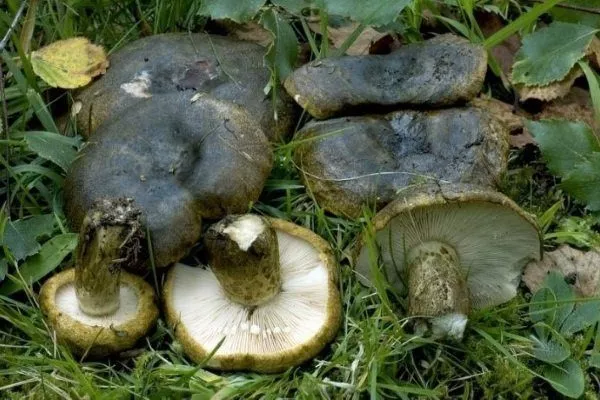
The cap is a swamp-green color. It is semicircular in shape, curled at the edges. The flesh is a delicate yellow. The stem is short, plump, and soft yellow; when broken, a pungent juice oozes out. Can be eaten after pickling.
Distributed in coniferous forests from June to October.
3Pink volnushka
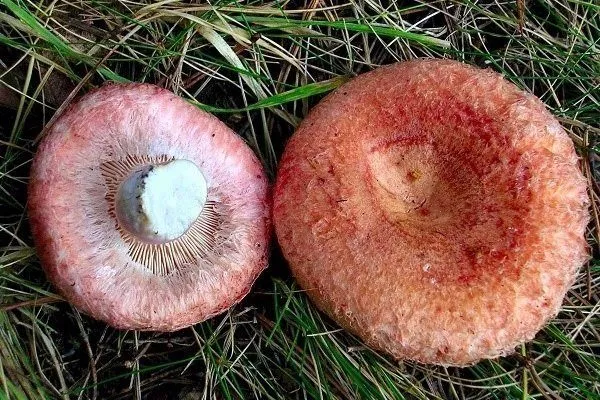
Early mushrooms have a convex cap with underturned edges. Older mushrooms have a flatter cap with smooth edges and a concave center. The skin is covered with fine hairs and is a soft pink or almost whitish color. The flesh is white and dense, exuding a pungent juice when broken. The stem is firm, soft pink, and tapering toward the top. They are eaten pickled.
Volnushka Grows in birch and mixed forests. It should be collected from June to October.
4Talker
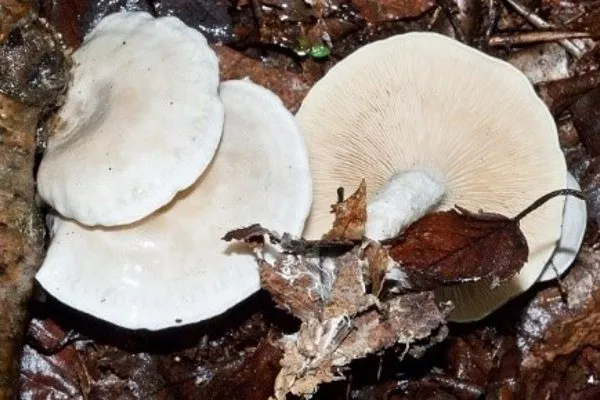
The cap is convex, gray-brown, covered with a whitish bloom. The flesh is pale white and has an earthy aroma. The stem is short and cream-colored. Boil for 25-30 minutes before eating.
It grows in mixed forests and can be harvested from March to April.
5Redhead
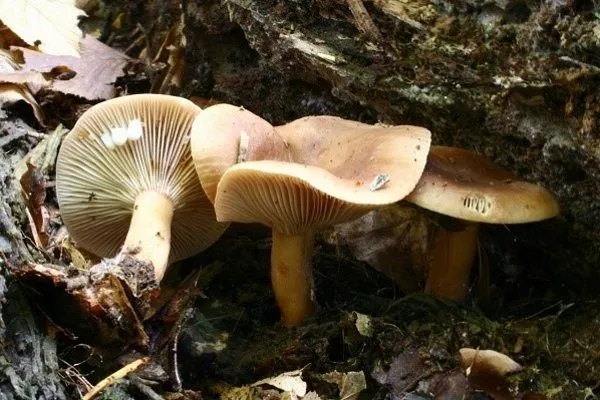
This mushroom has a convex cap with a concave center. Its texture is brittle and fragile. The cap is brown with a glossy surface. The underside is light brown. The flesh is bitter. The stem is medium-length and brownish in color. This mushroom can be eaten after pickling.
Found under beech or oak trees from June to October.
6White dung beetle
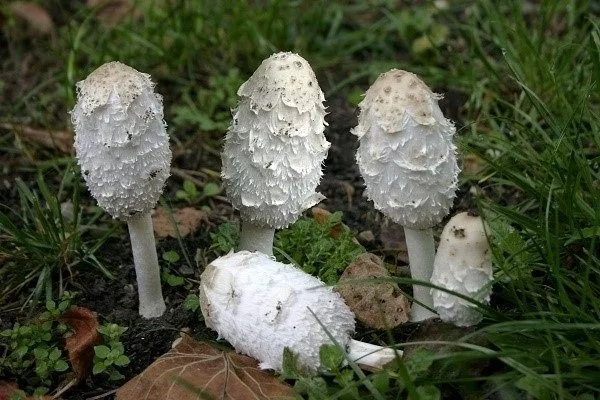
The cap is light-colored and completely covers the stem. There's a brown bump at the tip of the cap. The surface is covered with brownish scales. The flesh is white. The stem is long and white. The inky mushroom should be cooked within the first 2 hours after harvesting, after boiling it first.
It can be found in loose soil in pastures and meadows. It grows from June to October.
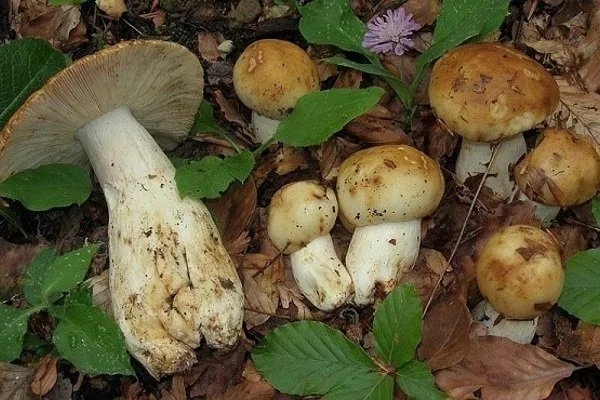
7Valuy
The cap is rounded in young mushrooms, but flattens with age. The color ranges from yellow to brown. The surface of the russula is shiny and slightly slippery to the touch. The flesh is light-colored, quite brittle, and bitter. The stem of the russula is barrel-shaped, light-colored, and covered with brown spots. Before eating, the mushroom should be peeled, soaked in salted water, or boiled for 15-30 minutes. Mushrooms are usually pickled.
It grows in coniferous forests and is found from June to October.
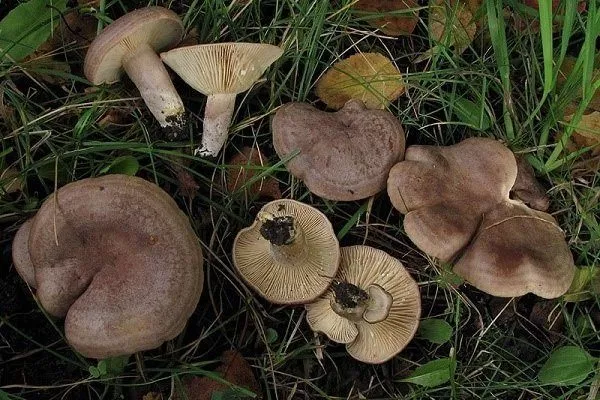
8Serushka
The cap is semicircular, with a tubercle in the center. The mushroom's color ranges from dark gray to brown with a purple tint. The flesh is light in color and has a fruity aroma. The stem is medium-sized, hollow, and the same color as the cap. The mushrooms are soaked and pickled.
It grows in clearings and forest edges and can be found from July to September.
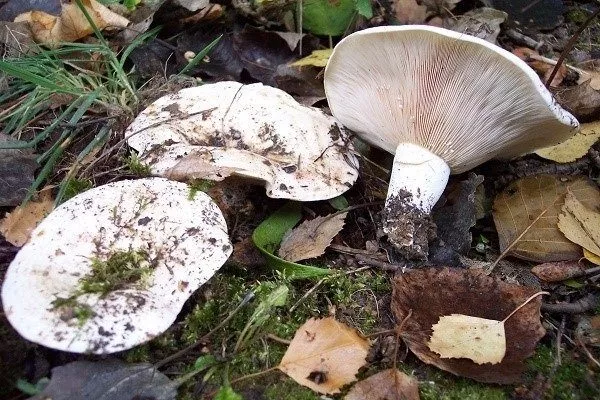
9Violin
These mushrooms have a wide, white cap covered with small hairs. The pulp violins Dense, hard, and releases a pungent juice. The stem is short and hairy. Soaking is recommended before pickling.
They grow in groups, under pine needles or birch trees. They are harvested from July to October.
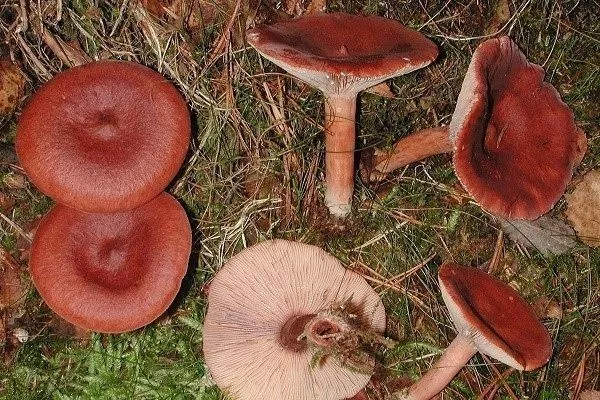
10Bittersweet
The cap is bell-shaped, with upturned edges. It resembles a chanterelle in appearance, but is a distinct brownish-red color. The surface is smooth, covered in small hairs. The flesh is lighter in color than the cap, is brittle, and secretes a pungent juice. The stem is medium-length, reddish in color, and covered in hairs. The mushroom should also be soaked and pickled.
They are collected near coniferous trees and birch groves. They are mainly found from July to October.
Marsupials
This category includes all mushrooms whose spores are contained in a special sac (ascus). Therefore, this type of fungi is also known as ascomycetes. The ascus in these mushrooms can be located either on the surface or inside the fruiting body.
Many mushrooms of this species are conditionally edible. Among the absolutely edible ones, only black truffle.
The fruiting body has an irregular tuberous shape. The surface is jet-black, covered with numerous irregularities. If you press on the mushroom's surface, it changes color to a rusty hue. The flesh is light gray in young mushrooms and dark brown or blackish-purple in older ones. It is streaked with white veins. It has a distinct aroma and a pleasant taste.
The black truffle is considered a delicacy.
It grows in deciduous forests, at a depth of about half a meter. The best time to look for truffles is from November to March.
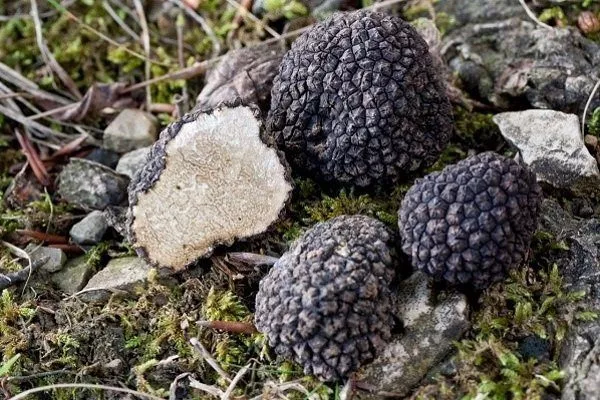
Conditionally edible marsupial mushrooms include:
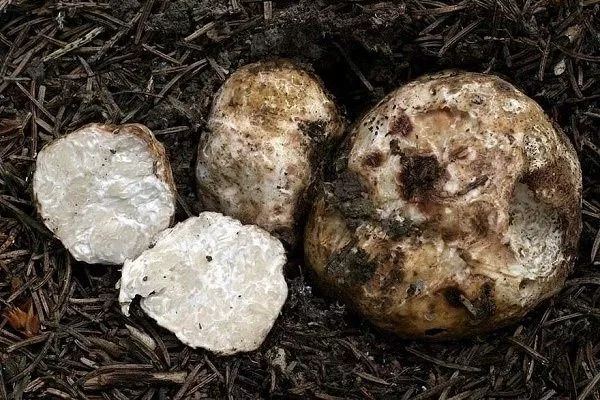
1White truffle
The fruiting bodies are irregularly shaped, with numerous protrusions. The color ranges from light to yellowish. Old mushrooms become covered with reddish spots. The flesh is white, with a distinct aroma and nutty flavor. It requires additional cooking before consumption.
Found among coniferous trees during the cold season.
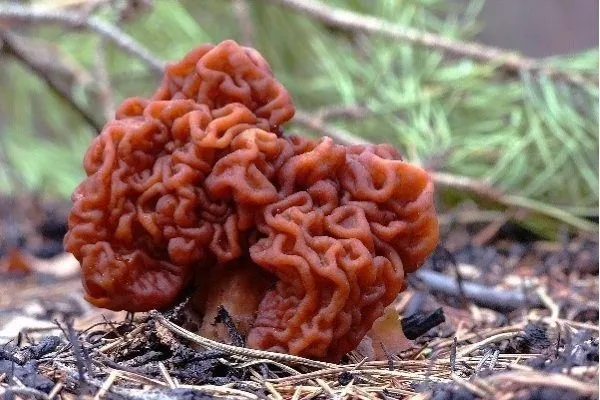
2Common morel
The cap is irregularly shaped, covered with numerous furrows. The color is most often brown, with a dark sheen, but brighter colors are also found. The flesh is quite brittle, has a fruity aroma, and a pleasant taste. The stem is plump and light-colored.
Some authors classify this mushroom as poisonous.
This mushroom should be boiled for 25-30 minutes before eating. More often, morels are dried.
Can be found in coniferous forests and under poplars. Fruiting occurs from April to June.
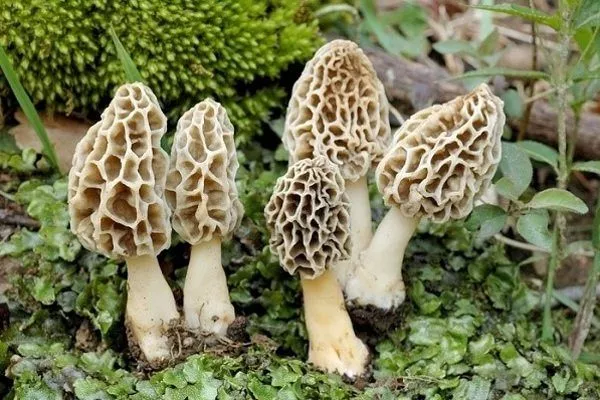
3Edible morel
The cap is rounded, tapering to a point. Its color ranges from yellowish to brown. The surface is uneven, covered with cells of varying shapes and sizes. The flesh is very brittle and delicate, creamy in color, and pleasant to the taste. The stem is conical. Young mushrooms are white, while older ones turn a brownish color. They are ready to eat after boiling or drying.
It grows in well-lit areas, primarily in deciduous forests. It can also be found in parks and apple orchards. It can be harvested from April to October.
What is the difference between a morel and a gyromitra? read here.
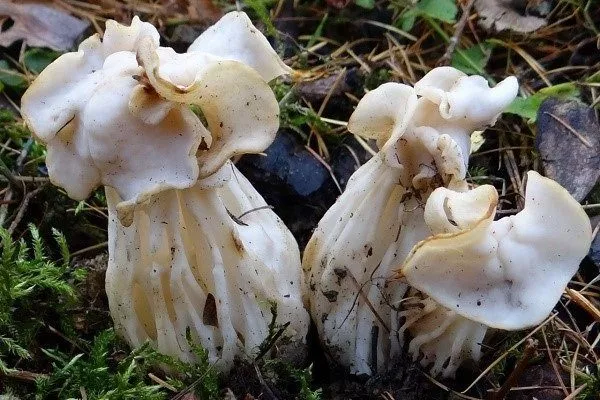
4Curly blade
The lobe-shaped fruits are irregularly shaped, with the stem fused with the cap. The stem is covered with small indentations. The fruits are usually light or cream-colored. They are eaten boiled.
It is recommended to search in coniferous forests from July to October.
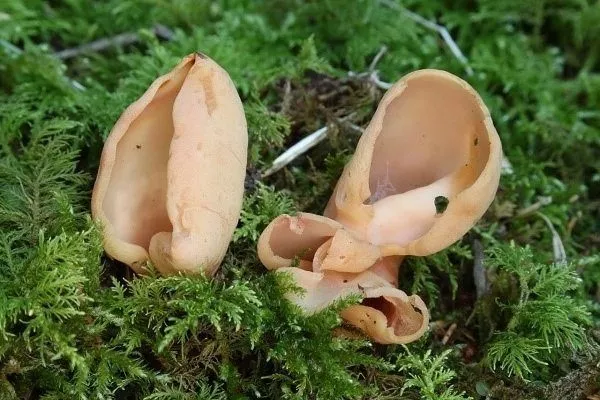
5Otidea (donkey's ear)
The fruiting body is a cup-shaped organ with curved edges. It can be dark orange or ochre-yellow in color. It has a barely noticeable pseudostem. Boil for 20-30 minutes before eating.
It is common in deciduous forests from September to November, primarily growing in moss or on old wood.
Marsupial fungi also include yeast, which is often used in confectionery.
It's important to remember that not all mushrooms are safe—there are many poisonous lookalikes, and without knowing the distinguishing features, it's difficult to avoid mistakes. Therefore, it's best to eat only familiar edible mushrooms, consult experienced mushroom pickers, and if in doubt, avoid picking the mushroom.