
In the Krasnodar region, you can enjoy a wide variety of edible mushrooms, but extreme caution is essential when foraging for them, as you could accidentally encounter a poisonous mushroom, which, if consumed, could cause serious problems. Forewarned is forewarned.

| Name of the mushroom | Cap diameter (cm) | Leg height (cm) | Cap color | Harvest season |
|---|---|---|---|---|
| White mushroom | 7:30 | up to 25 | from light brown to burgundy | June-September |
| Oyster mushrooms | up to 20 | up to 10 | light gray with purple | summer-autumn |
| Grabovik | up to 14 | 5-13 | gray-brown | June-October |
| Oak milk mushroom | about 6 | up to 7 | reddish-orange | July-September |
| Yellow hedgehog mushroom | 3-6 | up to 8 | yellow | August-November |
| Violet lacquer | about 5 | — | violet-lilac | June-November |
| Chanterelles | up to 10 | — | from yellow to orange | spring-autumn |
| Butterlets | up to 15 | — | from yellow to brown | summer-October |
| flywheel | 4-20 | — | from dark yellow to brown | July-November |
| Honey mushrooms | 3-15 | 12-15 | from cream to reddish | May-October |
Edible mushrooms
In the Krasnodar region, there are many types of edible mushrooms, which are described below.
White mushroom
Description. White mushroom The mushroom has a convex cap, ranging in diameter from 7 to 30 cm (sometimes up to 50 cm). Its color ranges from light brown to burgundy. The barrel-shaped, thick stem elongates as it grows, retaining a thick base. The mushroom reaches up to 25 cm in height. Its flesh is predominantly dense, juicy, and fleshy.
Where and when does it grow? They grow in mixed forests, directly on the ground. Mushrooms are collected in summer and fall. The porcini mushroom prefers old forests that are abundantly overgrown with moss and lichen. They grow equally well in sandy, loamy, and sandy loam soils. They grow on all continents except Australia and Antarctica. The season is from June to September. Occasionally, mushroom growth occurs in May and October, but the peak harvest period is considered to be late August.
Varieties. There are several varieties of porcini mushroom:
- Birch porcini mushroom. It is distinguished by a yellow, sometimes almost white, cap, up to 15 cm in diameter, and a pale brown stem. Mushrooms grow in groups or singly along roadsides or at forest edges in cool climates.
- Oak porcini mushroom. A fragrant mushroom that thrives in warmth and deciduous forests. It grows under hornbeams, lindens, oaks, and chestnuts. It has a large cap, which can reach up to 30 cm in diameter.
- Pine white mushroom. It is distinguished by its vibrant color. The cap diameter is 20 cm. When mature, the cap turns dark red. These mushrooms grow not only in well-lit clearings in coniferous forests, but also under the canopy of dense tree crowns.
Doubles. Similar to the poisonous Satan's mushroom and the inedible gall mushroom.
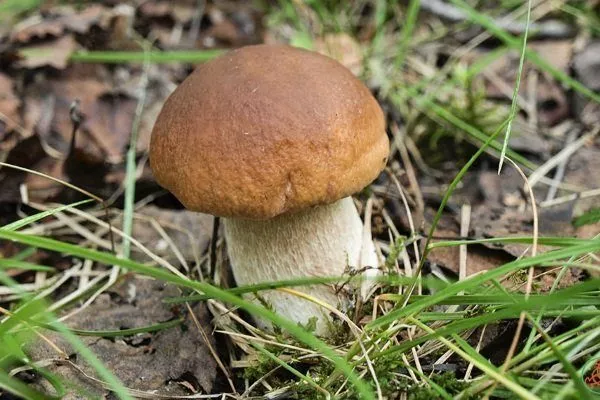
Birch porcini mushroom
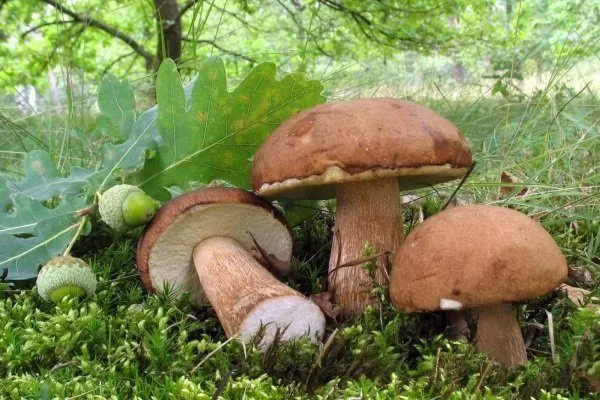
White oak mushroom
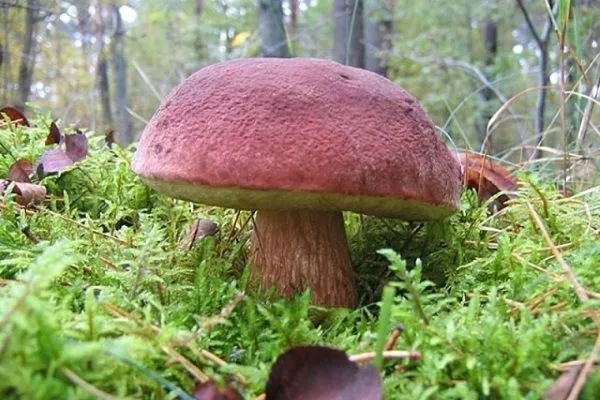
Pine porcini mushroom
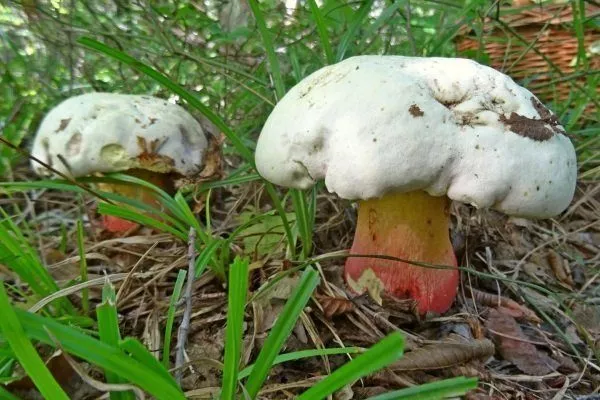
The white mushroom is similar to the poisonous Satanic mushroom.
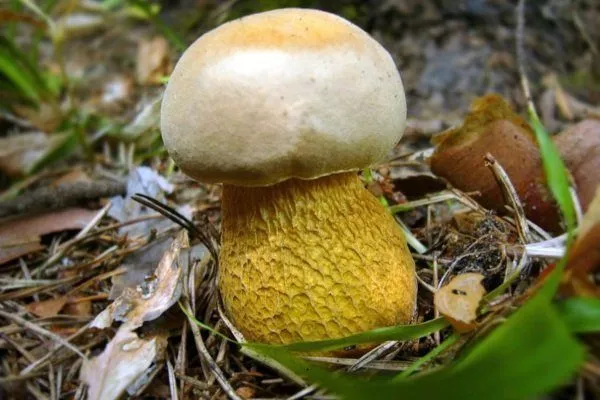
The inedible Gall Mushroom is a counterpart of the White Mushroom.
Oyster mushrooms
Description. Wild oyster mushrooms with a concave, light-gray cap with a purple tint that darkens with age. The cap diameter reaches up to 20 cm. The short stem, up to 10 cm in diameter, is cone-shaped and light in color. The flesh is predominantly white and juicy, becoming firmer with age.
Where and when does it grow? Oyster mushrooms are parasitic fungi that feed on tree sap. Therefore, they are most often found on fallen trunks and old trees that are beginning to rot. They grow on birch, pine, aspen, and sometimes willow.
Varieties. Oyster mushrooms come in several varieties:
- Horn-shaped. Distinguished by its cone-shaped cap, which is where the mushroom gets its name, the oyster mushroom ranges in color from light to dark brown.
- Oak. The cap is flat or convex, and its color ranges from yellowish-gray to gray-brown. The margins are rolled.
- Autumn. The cap is laterally lobed and ear-shaped. Its margins are initially curved, then straight. The color is dark and can vary from gray-brown-olive to brown with a lilac tint or yellow-green spots.
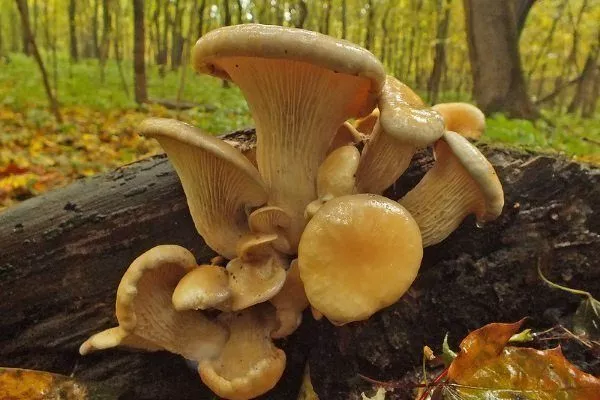
Oyster mushroom
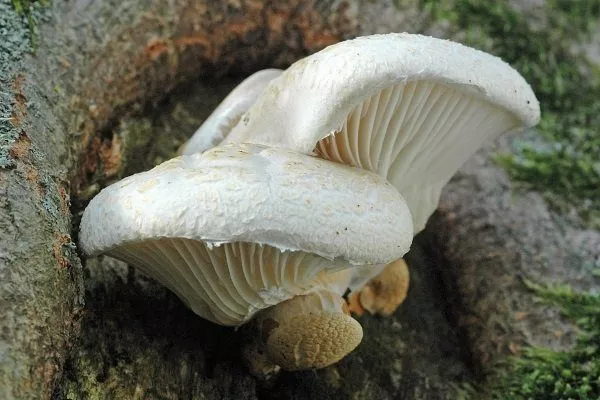
Oak oyster mushroom
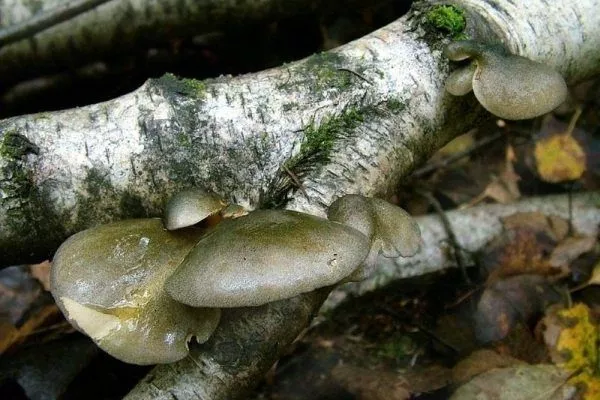
Autumn oyster mushroom
Oyster mushrooms have neither edible nor poisonous analogues.
Grabovik
Description. The long, scaly stem of the mushroom reaches 5 to 13 cm in height and is grayish-brown in color. The cap resembles a pillow with a flat, rounded, and slightly bumpy base. The cap diameter is up to 14 cm and is distinguished by its aromatic, soft flesh.
Where and when does it grow? It grows on the roots of hornbeam, and occasionally poplar, birch, and walnut. It can be found in birch groves, among poplars, and other deciduous trees. Harvesting begins between June and October.
Doubles. Hornbeam is often confused with birch bolete due to their striking similarity.
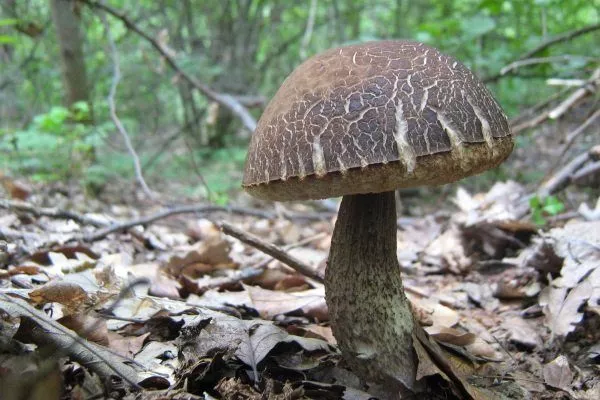
Oak milk mushroom
Description. This edible mushroom requires special preparation before cooking, as it contains bitter juice. It has light-colored flesh with a pleasant aroma. The cap is concave in the center and is a reddish-orange color. The cap diameter reaches approximately 6 cm. The stem, up to 7 cm high, is predominantly light in color.
Where and when does it grow? The mushroom grows in broadleaf forests of the central and southern regions. It prefers clay soil. Fruiting begins from midsummer until the end of September. Forests in the western Kaliningrad region are combed for mushrooms. The most popular destinations are Kumachevo, Kruglovo, and the Baltic Spit. In the southwest, milk mushrooms are found in Ushakovo, Ladushkinsky Forest, and Devil's Bridge.
Varieties. The oak milk mushroom has several varieties in this region:
- Pepper milk mushroom. The cap is predominantly creamy white, occasionally with reddish spots. The center of the cap is slightly velvety. A distinctive feature of the mushroom is its sharp, peppery flavor and aroma, reminiscent of rye bread.
- Aspen milk mushroom. Considered conditionally edible due to its milky sap. It grows in warm temperate zones. It grows in groups and ripens underground.
Doubles. Due to inexperience, the oak milk mushroom can be confused with the large milk mushroom or the pink milk mushroom.
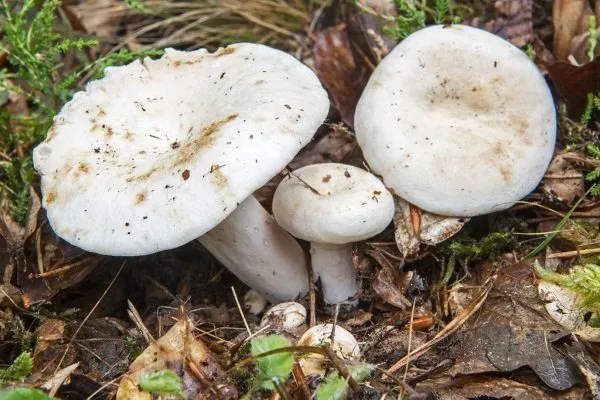
Peppery milk mushroom
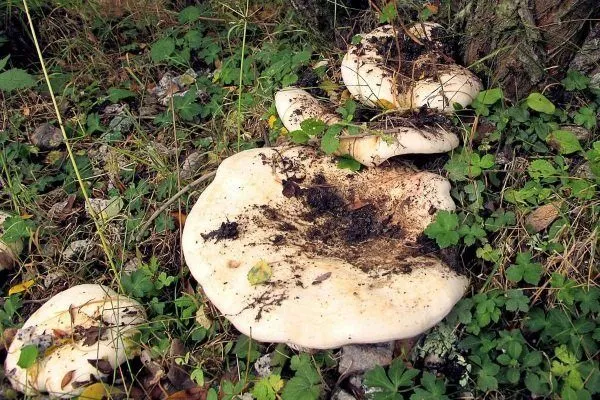
Aspen milk mushroom
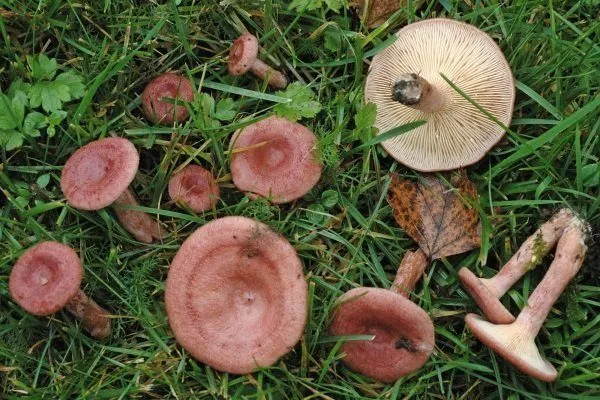
The milk mushroom can be confused with the poisonous spiny milk mushroom.
Yellow hedgehog mushroom
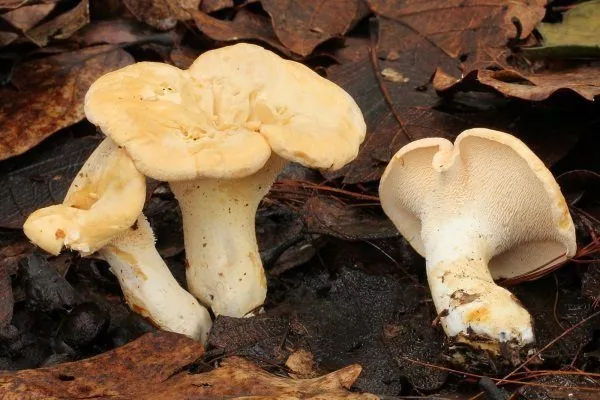
Description. The mushroom is also called Hydnum or Dentium notata. hedgehog mushroom It has a smooth yellow cap, 3-6 cm in diameter. The yellow-white stem, up to 8 cm tall, widens at the bottom. The mushroom's flesh is light, crisp, and fruity in aroma. Old mushrooms have a slightly bitter taste.
Where and when does it grow? The mushroom grows in clusters near tree trunks in mixed forests. The berries are harvested from mid-August to late November.
Violet lacquer
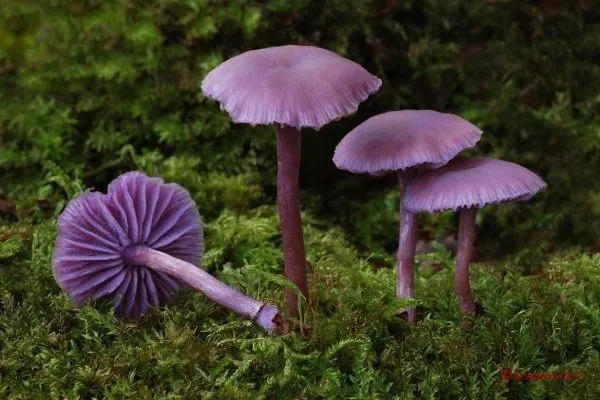
Description. The purple glaze mushroom is a small and beautiful mushroom, sometimes off-putting due to its unusual coloring. Its violet-purple coloring is its distinctive feature. It is dominated by a perfectly round cap, approximately 5 cm in diameter, perched on a tall, thin stalk. It has virtually no odor.
Where and when does it grow? It grows in forests and damp lowlands on mossy substrates. Mushrooms are harvested from early June to late November.
Varieties. A variety of this mushroom, the pink glaze mushroom, has a cap that varies in shape, from convex-depressed in youth to funnel-shaped in old age. The cap diameter is 2-6 cm. It has no distinctive odor or taste.
Doubles. The purple glaze mushroom is similar to the poisonous Mycena pura, which often grows nearby. The main distinguishing feature of Mycena pura is its raisin odor and the presence of white or grayish gills.
Chanterelles
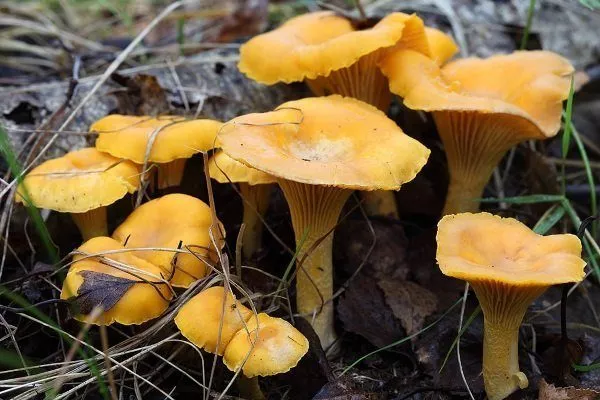
Description. These mushrooms are commonly encountered by mushroom pickers. It's virtually impossible to confuse them with other mushrooms. Chanterelles They have concave caps with wavy edges. The cap diameter is up to 10 cm. The color ranges from yellow to orange. The aroma of the pulp is reminiscent of dried fruit.
Where and when does it grow? They grow in forests, especially coniferous ones. The season begins in spring and ends in late autumn. They are most abundant in July.
Varieties. There are over 60 species of chanterelles, many of which are edible. The following varieties grow in the Krasnodar Krai:
- Ordinary. Shades range from light yellow to orange. It has a predominantly fleshy flesh, yellow edges, and white cut edges. A distinctive characteristic is its slightly tart taste when eaten in dishes.
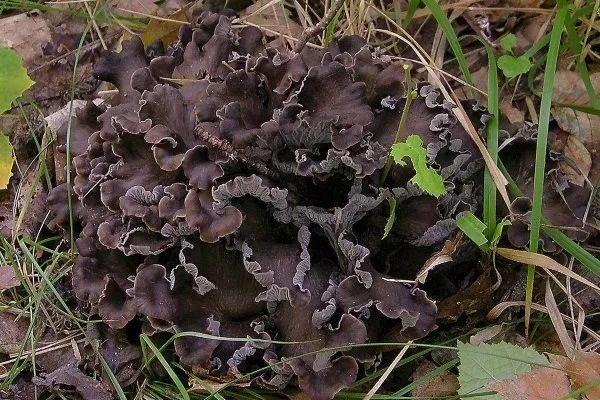
- Gray. An edible mushroom with firm, gray or brownish flesh. The cap has wavy edges and a depression in the center.
Doubles. Chanterelles can be confused with the inedible orange talker mushroom and its poisonous analogue, the olive omphalot.
Common chanterelles
Gray fox
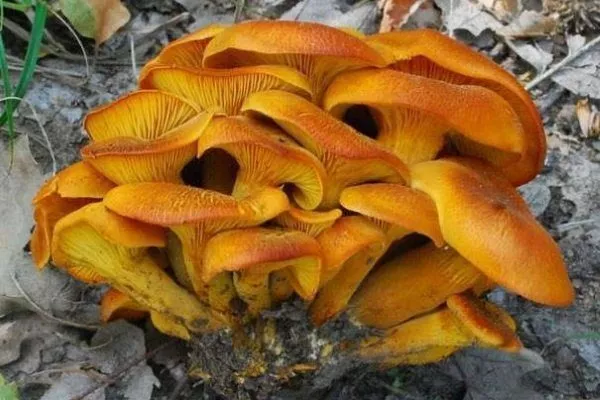
Chanterelles can be confused with Omphalotus oleifera
Butterlets
Description. Small to medium-sized mushrooms, somewhat similar to boletus. Young mushrooms are characterized by a hemispherical, sometimes conical, cap, which straightens with age, resembling a cushion. The cap diameter reaches up to 15 cm. A distinctive feature of this mushroom is the thin, shiny, sticky skin covering the cap. It has soft, yet firm flesh with a whitish or yellowish tint.
Where and when does it grow? The mushrooms grow under coniferous trees, less commonly under oaks and birches. Some boletuses grow near only one tree species, while others grow near various conifers: cedar, spruce, pine, and larch. The harvest period is from early summer to mid-October.
Varieties. Several edible varieties of butter mushrooms are found in the Krasnodar region:
- Granular. When young, the mushroom has a convex cap with a rusty hue; when mature, it takes on a cushion-shaped form and a color approaching yellow-orange. Milky liquid droplets, secreted by spores, are visible at the top of the stem.
- Yellow-brown. When cut, the light yellow flesh of the mushroom turns blue. Young butter mushrooms have a semi-circular cap, 5-14 cm in diameter. With age, the cap takes on a cushion-shaped form.
- Ordinary. A late-ripening mushroom, the distinctive feature of which is a cap of the following shades: yellow-brown, brownish-purple, red-brown, brown-chocolate.
Doubles. Some species of butter mushrooms are confused with the pepper mushroom, which has a convex, smooth, shiny cap.
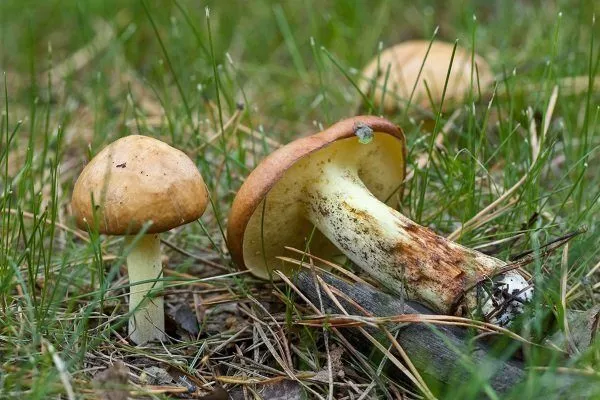
Butter grains
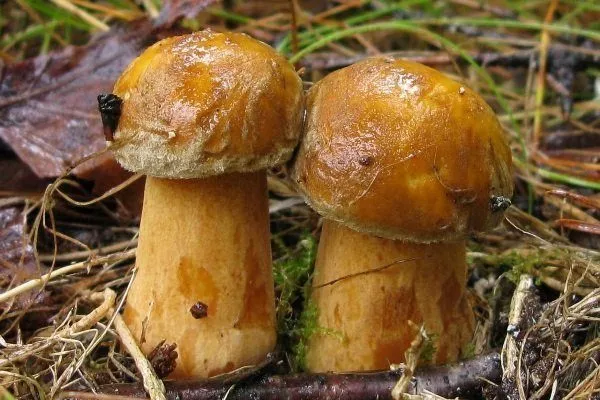
Yellow-brown butter mushrooms
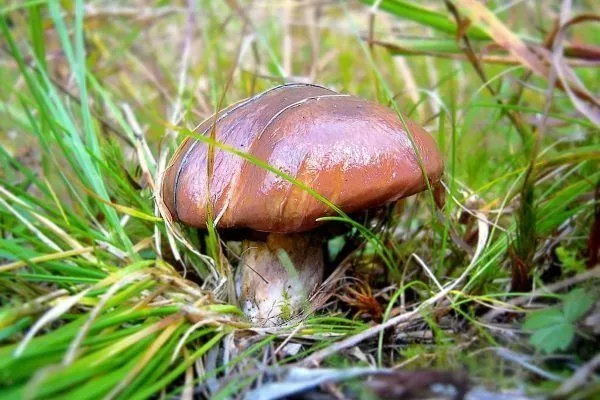
Common butter mushrooms
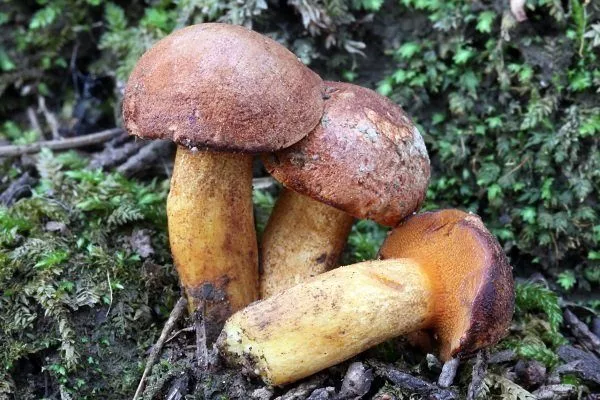
Butter mushrooms are often confused with the inedible Pepper mushroom.
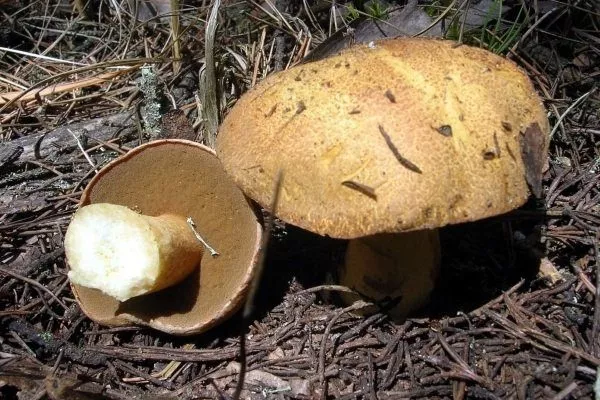
flywheel
Description. flywheel When young, the cap is characterized by a convex or semicircular shape with straight edges. Over time, the cap becomes cushion-shaped. The diameter is 4-20 cm. The surface can be bare, moist, sticky, and velvety, or covered with scales. Colors include dark yellow, chestnut, lemon, olive-yellow, brown, and dark yellow.
Where and when does it grow? Mushrooms grow in coniferous, mixed, and deciduous forests, forming mycorrhiza with spruce, beech, hornbeam, pine, chestnut, alder, and linden. They are most often found in forest clearings and forest edges. They typically grow singly. Harvesting occurs from July to late October-November.
Doubles. There are no poisonous mushrooms among true boletus mushrooms, but they are often confused with inedible or other dangerous mushrooms, such as the gall or pepper mushroom.
Honey mushrooms
Description. A distinctive characteristic is the thin, sometimes excessively long stem, reaching about 12-15 cm in height. Its color varies from light honey to dark brown, depending on the mushroom's age. The cap, lamellar, sometimes rounded at the bottom, covered with small scales, is attractive. The cap's color can be creamy, yellowish, or sometimes reddish.
Where and when does it grow? Honey mushrooms grow not only near trees, but also near certain shrubs, at forest edges, and in meadows. They often grow in clusters on old stumps in wooded areas. Harvesting begins in early May and ends in late October.
How to grow honey mushrooms on your farm – described here.
Varieties. In such areas there are several types of honey mushrooms:
- Summer. The stem is light and smooth at the top, and covered with dark scales at the bottom. Young summer honey mushrooms have a convex cap with smooth, matte skin, a honey-yellow hue. Summer honey mushrooms have tender, moist flesh.
- Autumn. A mushroom that grows in large clusters or singly. Honey fungus has a tall stem—8-10 cm—with a diameter of 1-2 cm. Honey fungus has a cap diameter of 3-15 cm. They are distinguished by their white, dense flesh.
- Winter. A mushroom with a convex cap. The skin is predominantly yellow, brownish, or brownish-orange. The flesh of the winter honey fungus is white or slightly yellowish.
- Meadow. A young mushroom has a convex cap that flattens with age, with jagged edges. It has thin, light-colored flesh with a pleasant flavor.
Doubles. False honey mushrooms are a lookalike of edible mushrooms, with caps colored rusty brown, brick red, or orange. True honey mushrooms have light beige or brownish caps.
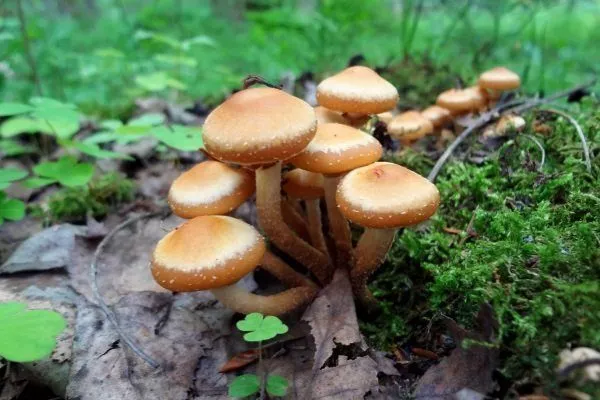
Honey fungus
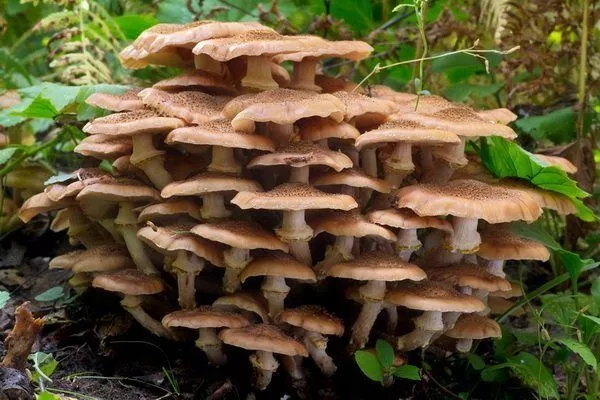
Autumn honey fungus
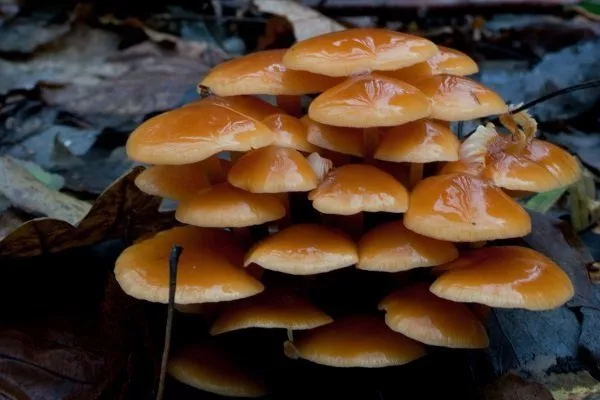
Winter honey fungus
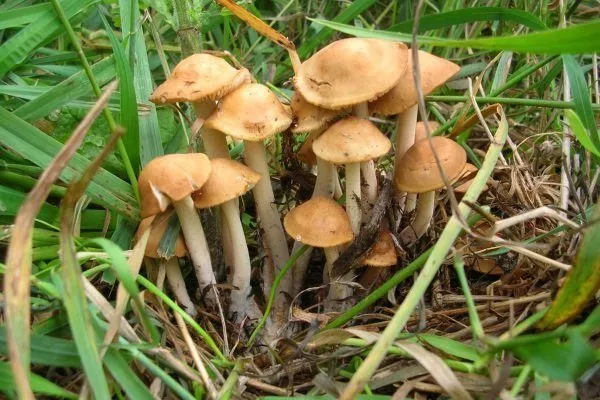
Meadow honey fungus
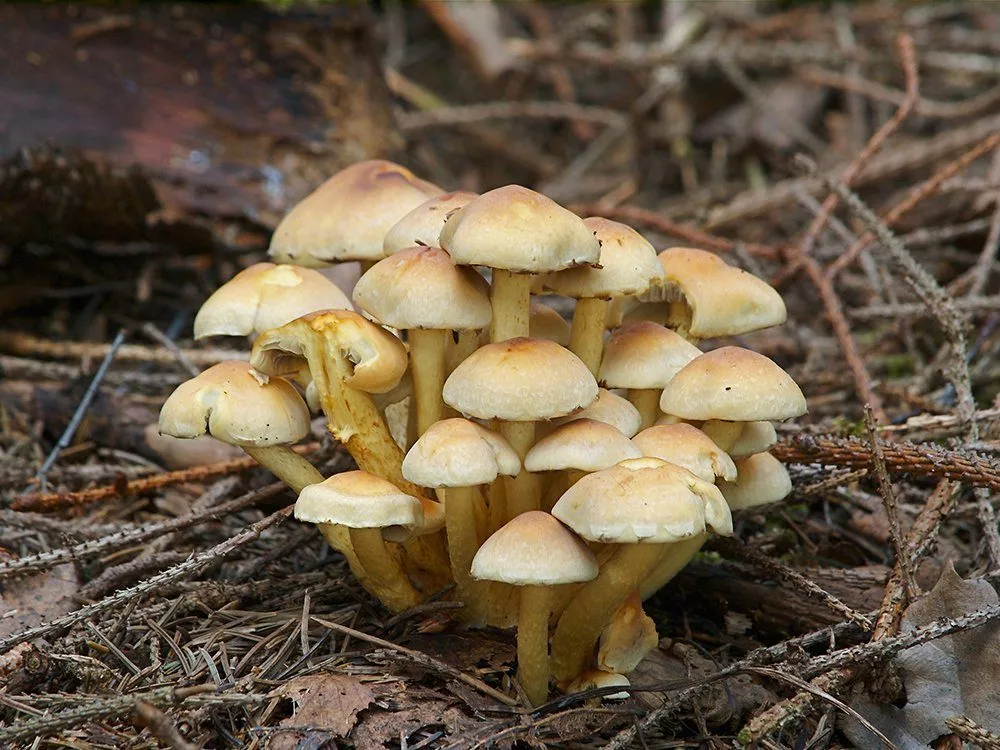
The poisonous false honey mushrooms are a double of the honey mushrooms.
Birch boletus
Description. Young mushrooms have a white cap, which turns dark brown with age. They grow both singly and in small clusters. The cap of the birch bolete is hemispherical, becoming cushion-shaped with age. The flesh is predominantly white, dense, and slightly darkens when cut. The cap diameter is up to 18 cm. The cylindrical gray or white stem is up to 15 cm long. The stem's surface is covered with dark gray scales arranged longitudinally.
Where and when does it grow? Boletus mushrooms grow in any light, deciduous and mixed forests where birch trees are present. Mushroom pickers head into the forest when the bird cherry trees are in bloom. The harvest continues until mid-autumn. The best places to look for the boletus are open clearings and forest edges. Mushroom pickers gather boletus mushrooms in Shipovsky Forest, near Polessk, near the villages of Kosmodemyansky and Bolshoe Selo, and in the Sovetskoye Forestry.
Varieties. There are a huge number of varieties, but the following types of boletus are prevalent in this region:
- Ordinary. The cap is reddish or brown. The stem is dense, massive, and covered with gray scales.
- Swamp. Found in very moist soils. The cap is light gray or light brown. The mushroom has loose flesh.
- A bit harsh. The mushroom cap can be grayish, brownish, or sometimes purple. The cylindrical stem is creamy at the base and white toward the cap.
- Multicolored. The mushroom cap can be orange, pinkish, or light brown. During rainy seasons, the cap becomes slimy. Multicolored boletus mushrooms have white stems, sometimes covered with gray scales.
Doubles. The birch bolete's lookalike is the bitter bolete, a mushroom with a mottled, gray stem and a white-gray cap. The false birch bolete is very bitter.
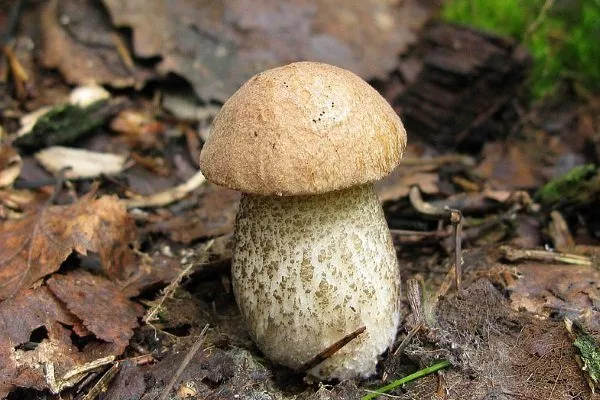
Common birch bolete
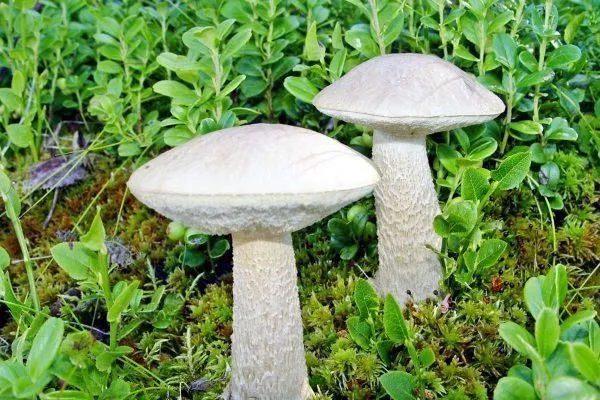
Marsh birch bolete
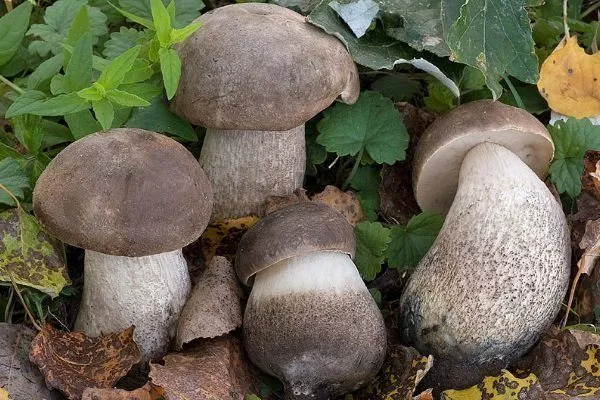
Hardy birch bolete
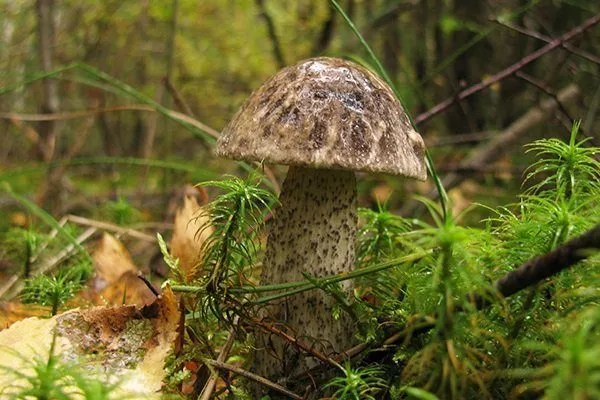
Birch boletus
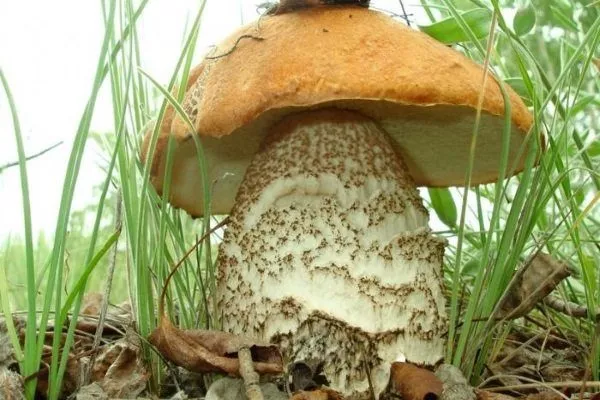
The false birch bolete is an inedible mushroom called the gall mushroom.
Morel
Description. Morels are mushrooms with ovoid-round caps of a yellow-brown color. Morels are distinguished by their honeycomb structure, attached to the stem at the base and hollow inside. The stems are predominantly cylindrical, slightly widened at the base, and range in color from white to light yellow to yellow-brown. These mushrooms have white, crisp flesh, a distinct mushroom aroma, and a pleasant flavor.
Where and when does it grow? Morels can be found in mixed and broadleaf forests, growing at forest edges, clearings, and in mossy ditches. They are also found in parks and gardens. They grow in clusters. Mushroom pickers look for them in areas where forest fires have occurred. They begin to gather mushrooms as early as early March, after the snow melts.
Varieties. There are the following varieties of morels in this area:
- Ordinary. The cap is brown with large cells. Mushrooms are found at forest edges and in grassy meadows. The fruit is harvested as early as May, and the season lasts until mid-June.
- Conical. A distinctive feature of these mushrooms is their bell-shaped, conical cap with shallow wrinkles. They are rarely found near birch, willow, or aspen trees.
Doubles. Edible morels can be confused with false morels, which have a predominantly dark olive cap and an unpleasant smell, attracting insects.
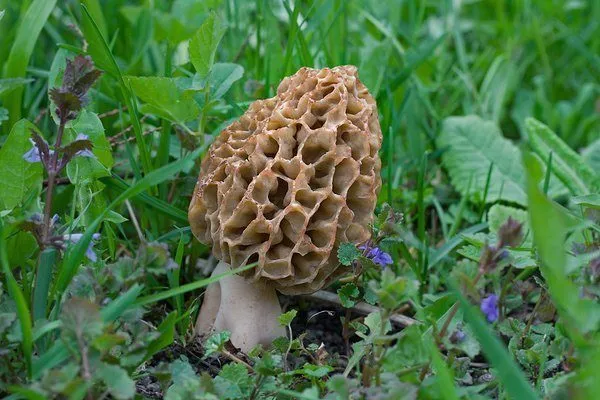
Morels
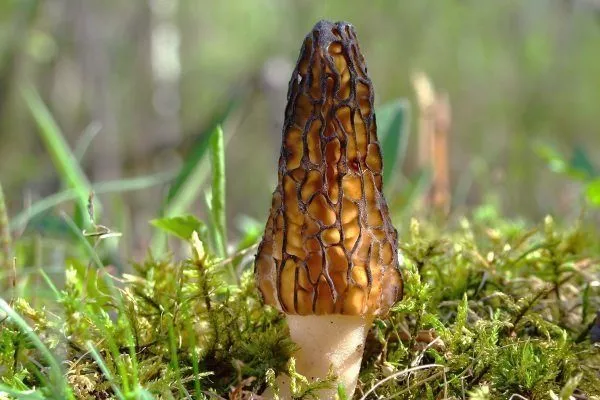
Conical morels
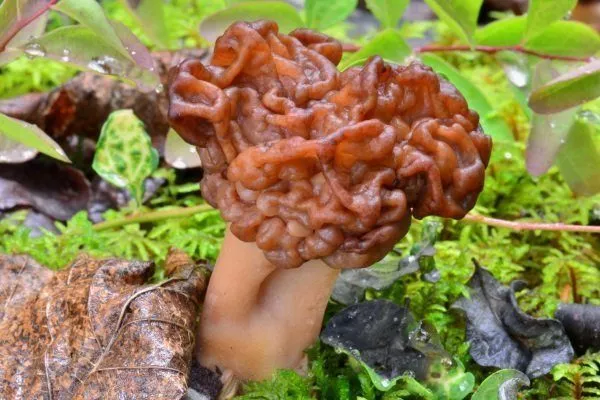
Morels can be confused with the inedible Gyromitra.
Truffle
Description. Truffles resemble potato tubers or cones in appearance. They are slightly larger than nuts, but occasionally grow to over 10 cm. The outer layer covering the mushroom is either smooth or riddled with numerous cracks, and can also be covered with characteristic multifaceted warts. The color of the truffle's flesh varies depending on the variety.
Where and when does it grow? Truffles are found in mixed and deciduous forests. They are best found under the roots of hornbeam, oak, and beech trees. They are extremely rare in coniferous forests, growing from November to February-March.
Varieties. The most famous truffle variety in the Krasnodar Krai is the Black Summer Truffle. It reaches 10 cm in diameter and weighs 400 g. With age, the white flesh of the truffle turns yellow-brown or gray-brown. Its consistency also changes: young mushrooms are firm, while older ones become loose. The mushroom is characterized by a sweet, nutty flavor and a slight seaweed aroma.
Doubles. The truffle has inedible lookalikes that are dangerous to consume. These include the false truffle and the deer truffle.
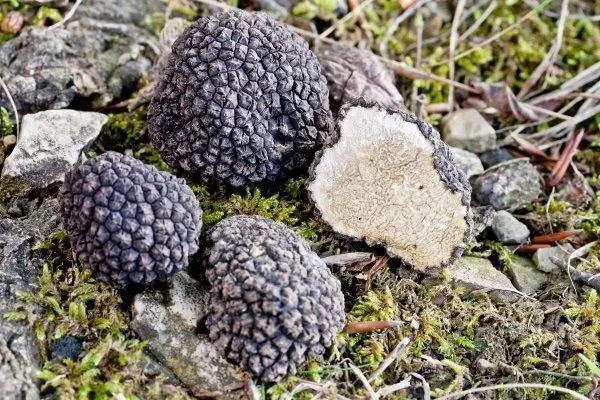
Black summer truffle
Garlic
Description. The distinctive feature of the garlic mushroom is its small cap, 2-3 cm in diameter. Young mushrooms have a convex hemispherical shape, while older mushrooms are spread out or slightly depressed, sometimes with a tubercle on top. The edges are wavy and irregular. The cap is usually completely smooth. The color is brown, cream, or ochre-red. The garlic mushroom has a distinct garlic aroma and white, thin flesh. The cap sits on a thin stalk, 2-3 mm thick and 3-5 cm long.
Where and when does it grow? The garlic mushroom is considered an all-season mushroom, harvested from May to early October. It grows in colonies in deciduous, coniferous, and mixed forests at the edges and open clearings. Mushroom pickers rely on the mushrooms' scent, which is especially noticeable after rain.
Varieties. There are common, oak and large garlic mushrooms.
Doubles. Garlic mushrooms are similar to the following mushrooms:
- Oak garlic. A rare species growing on fallen oak leaves.
- Large garlic plant. A large mushroom. The cap diameter reaches 5 cm. This species inhabits fallen branches and beech leaves.
- Meadow honey fungus. A brownish mushroom, similar in shape and color to the garlic mushroom, but odorless.
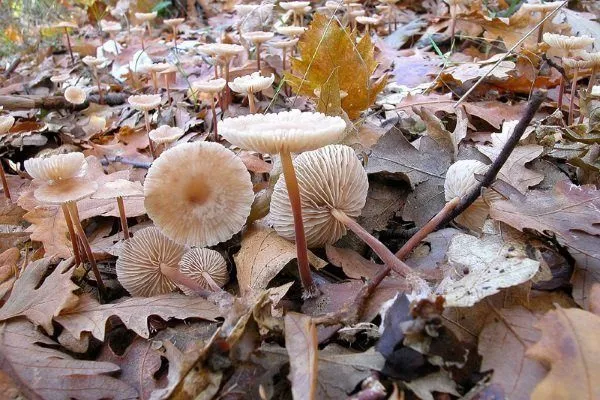
Oak garlic
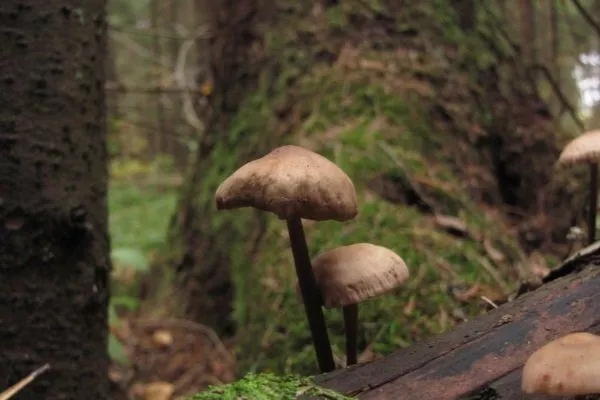
Large garlic
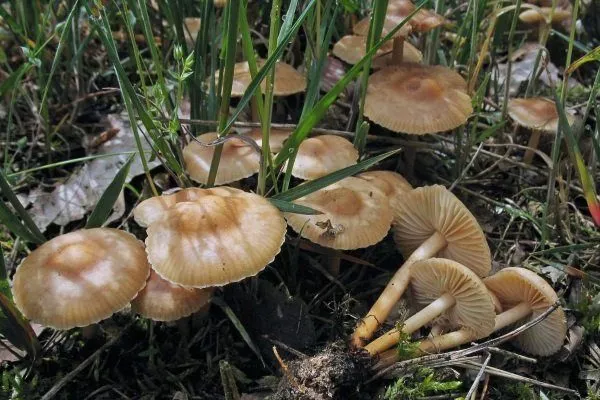
The edible meadow honey fungus is similar to the garlic mushroom.
Champignon
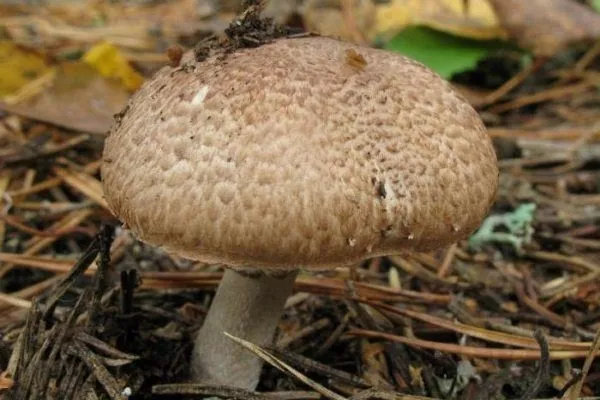
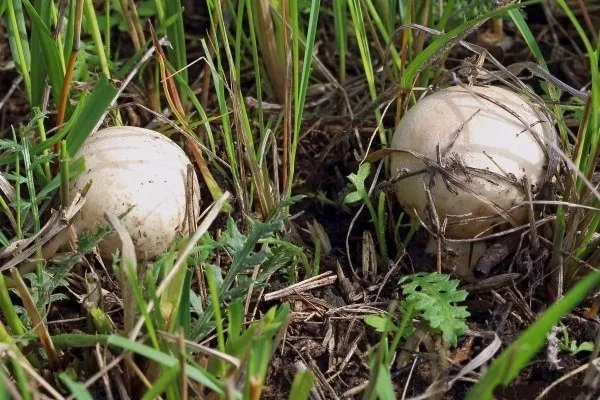
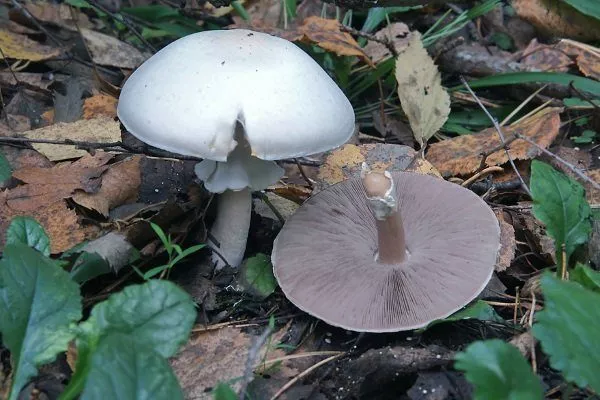
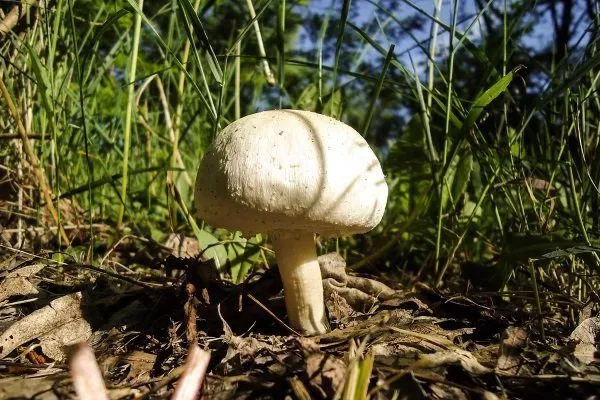
Description. Mushrooms have massive caps. When young, they are more rounded, but as they mature, they straighten and become flatter, reaching 10 cm in diameter. The cap can be white, fulvous, or sometimes brown. Its surface is smooth, but also has hard scales. Mushroom flesh is white with a yellow or red tint. The stem is smooth and firm.
Where and when does it grow? Mushrooms grow in forests on the bark of rotting trees, in fields and meadows, and near human habitation. Here, they form large, ring-shaped colonies. Depending on the variety, champignons can be harvested from April-May until October.
Varieties. There are about two hundred varieties of edible, inedible, and even poisonous champignons:
- Ordinary. An edible mushroom that grows in parks, gardens and vegetable patches.
- Forest. The champignon grows in mixed and coniferous forests.
- Field. The mushroom can be found in forest clearings, clearings, and park areas. It rarely grows near deciduous trees.
- Pereleskovy (thin). An edible mushroom that grows in deciduous and coniferous forests. It often forms mycorrhizae with beech and spruce. It grows in both small and numerous groups.
Doubles. The false champignon is a lookalike mushroom. This poisonous mushroom has a brown spot in the center of its cap. When pressed, light yellow spots appear.
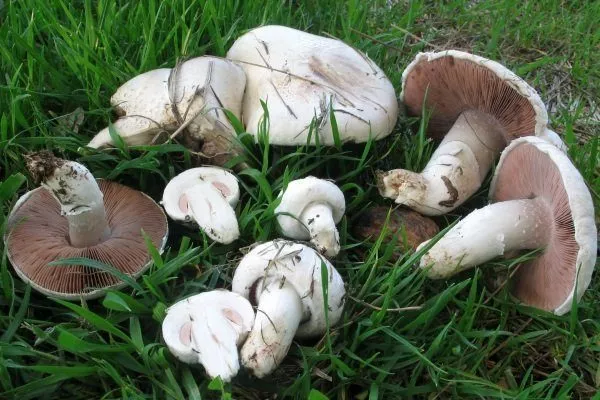
Common champignon
Forest champignon
Field champignon
Champignon coppice
The false champignon is poisonous.
Volnushki
Description. The cap of a young mushroom is convex, but with age it becomes hollow with a deep depression in the center. The cap diameter is 4-12 cm. The cap sits on a hard, sturdy stem, 3 to 6 cm tall. Volnushka There are several varieties, which is why the color of the mushrooms varies.
Where and when does it grow? The mushroom grows near birch trees. It can also be found in mixed forests, most often under old trees. The white milk cap grows from August to September. The pink milk cap is collected from late June to October.
Varieties. Volnushka has several subspecies:
- pink (Volzhanka);
- white (white butterfly);
- marsh (milky milkweed);
Doubles. Milk caps are considered to be look-alikes of the volnushki mushrooms, which are similar in appearance: a pinkish cap, the presence of reddish rings, but the absence of fluff along the edges.
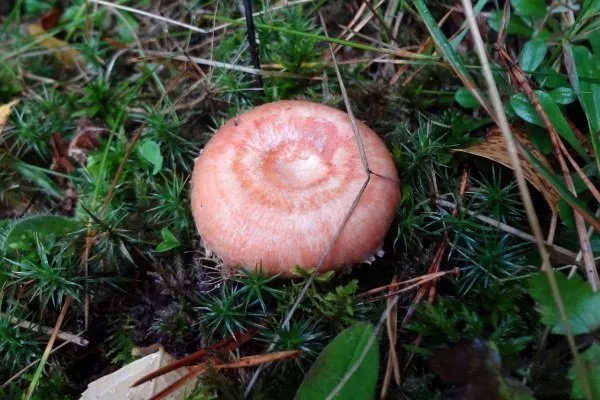
Pink volnushka
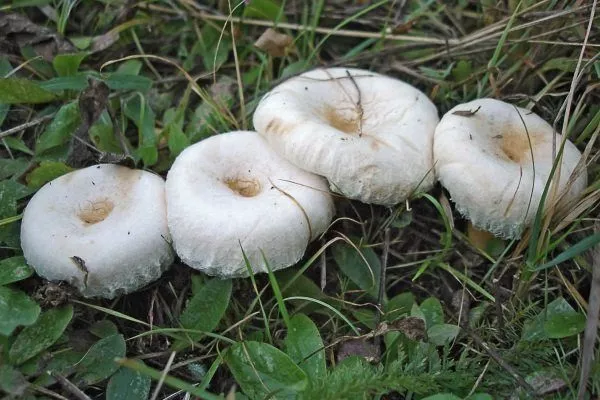
White volnushka
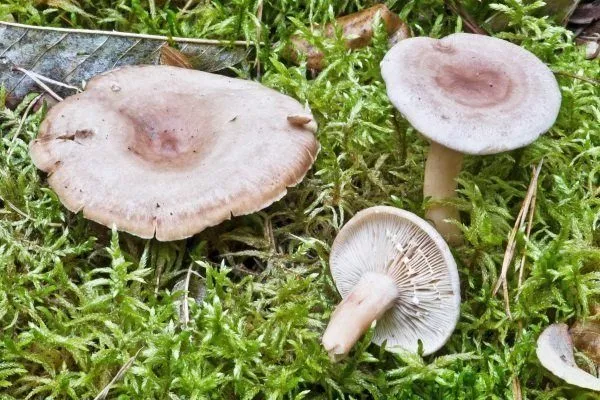
Marsh volnushka
Aspen mushroom
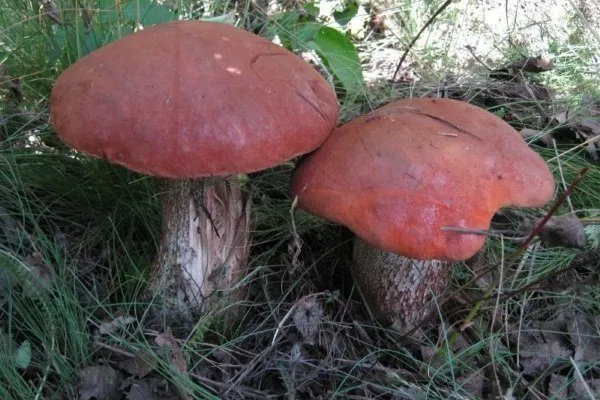
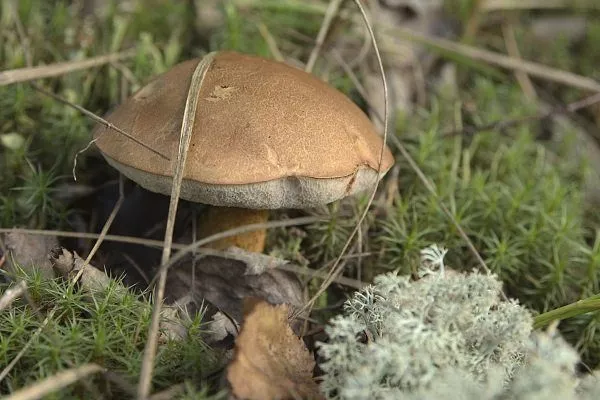
Description. The cap of a young mushroom is hemispherical, becoming cushion-shaped with age. The cap diameter can range from 5 to 30 cm. The skin can be dry, felty, or velvety. The stem is tall—up to 22 cm—and club-shaped, with small brown or black scales on the surface.
Where and when does it grow? Each mushroom species has one or more mycorrhizal partners—trees of a specific species. Mushrooms grow not only under aspen trees, but also under willows, spruces, poplars, birches, beeches, and oaks. Depending on the species, the harvest lasts from late June to October. Mushrooms are collected in the forests near the village of Shepetovka, as well as near the picturesque Vishtynetskoye Lake.
Varieties. There are several varieties of the aspen mushroom, which differ mainly in the shade of the cap:
- red;
- reddish-brown;
- white.
There are oak, painted-legged, pine and black-scaled aspen mushrooms.
Doubles. The mushroom has poisonous counterparts, so to speak, false aspen mushrooms.
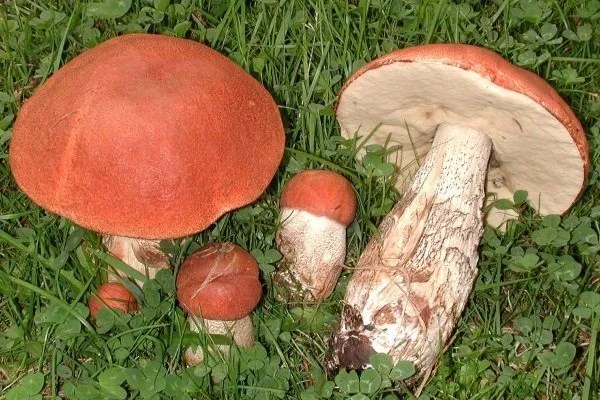
Red aspen mushroom
Red-brown aspen mushroom
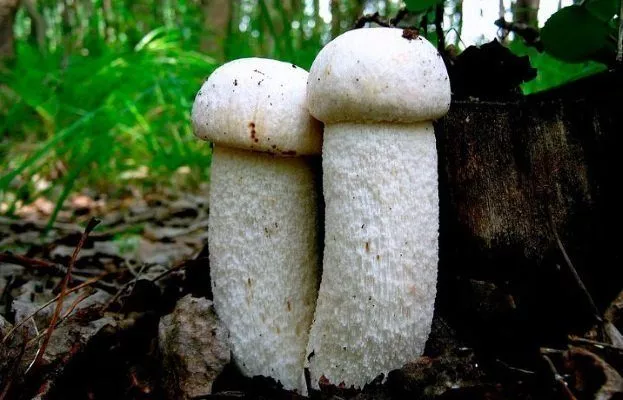
White aspen mushroom
The aspen mushroom is confused with the inedible mushroom Bitterling
Russula
Description. Russula mushrooms differ only in their caps. Otherwise, they are similar: the cap diameter reaches up to 10 cm, the cap is straightened, and the edges are slightly curved downward.
Where and when does it grow? Russula mushrooms can be found anywhere, including deciduous or coniferous forests, young birch undergrowth, city parks, and even on swampy riverbanks. The mushrooms begin to emerge from the ground in late spring, but begin to grow en masse in late August or early September.
Varieties. There are a huge number of varieties of russula:
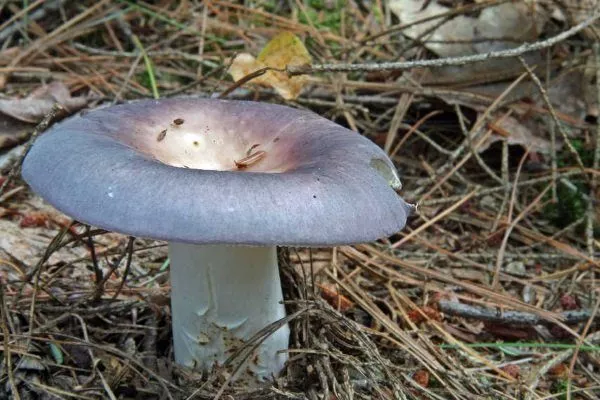
- Light yellow russula. It grows in damp birch and birch-pine forests from July to October. The hemispherical yellow cap eventually becomes flat and funnel-shaped. The cap diameter is 5-10 cm.
- Blue russula. The mushroom is found in coniferous forests. Its diameter is 3-10 cm. It grows on a white stalk, 3-5 cm high.
- Green russula. It inhabits coniferous and deciduous forests. It is recognizable by its yellowish-green, flat-convex cap, up to 10 cm in diameter.
Doubles. There are no poisonous lookalikes among russula mushrooms, but they can be confused with the death cap. Therefore, avoid handling mushrooms with a greenish cap.
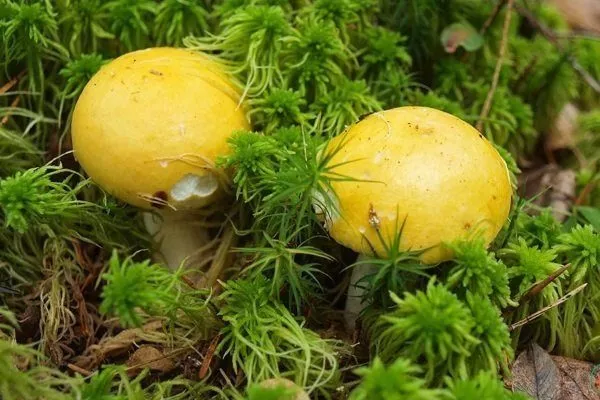
Light yellow russula
Blue russula
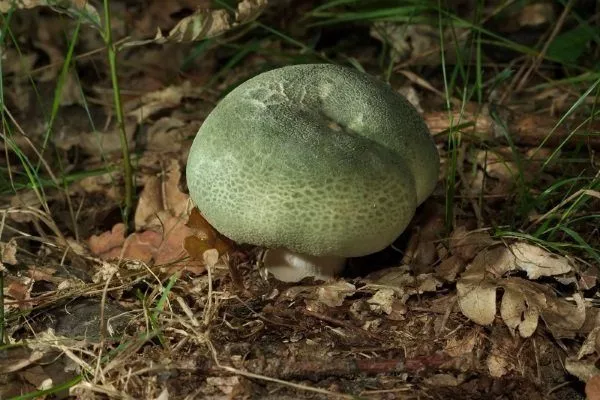
Green russula
Rows
Description. Mushrooms with a cap-stem structure. Young Tricholoma mushrooms have caps that are spherical, bell-shaped, or conical, with a diameter of 3-20 cm. With age, the cap straightens and becomes flattened and spreading, with a distinct tubercle in the center. Color varies depending on the variety: white, green, red, yellow, or brown. The stipe is 3-10 cm tall.
Where and when does it grow? Tricholomae are ground mushrooms. Many varieties are micro-formers that prefer coniferous trees as mycorrhizal partners. They often grow near pine trees, less commonly under larch, fir, and spruce. Rare species form symbiotic relationships with beech, oak, and birch. They grow singly, in small groups, or in large clusters. They are considered autumn mushrooms, found from late August to late October.
Varieties. There are about 100 species of rowan mushrooms, but in the Krasnodar region the most common are:
- Gray. It has a gray cap, initially rounded, then becoming flat and uneven. The stem is white with a gray-yellow tint.
- Purple-footed. The cap's surface is smooth, yellowish-beige with a purple tint. Its distinctive features include a sweetish taste and fruity aroma.
Doubles. A lookalike of this mushroom is the poisonous Trichomycetes, which grows in deciduous and coniferous forests. The Trichomycetes cap has extended edges, convex in the center and flattened toward the edges. The cap diameter is up to 12 cm. The mushroom has whitish flesh and a floury smell and taste.
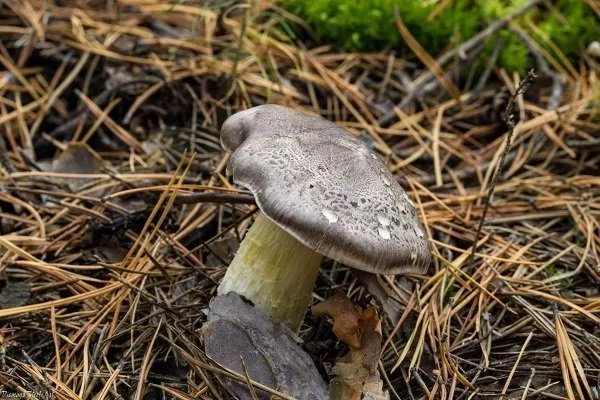
Gray rowan
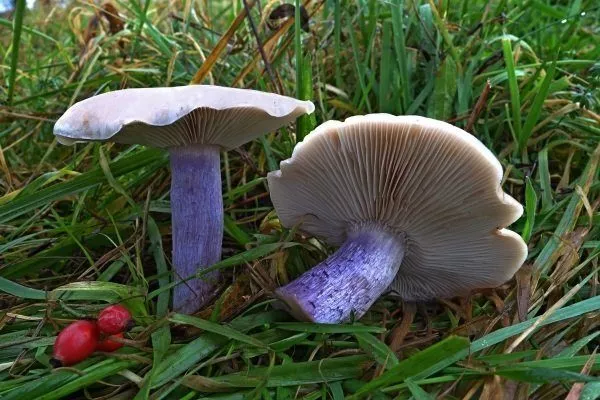
Purple-legged rowan
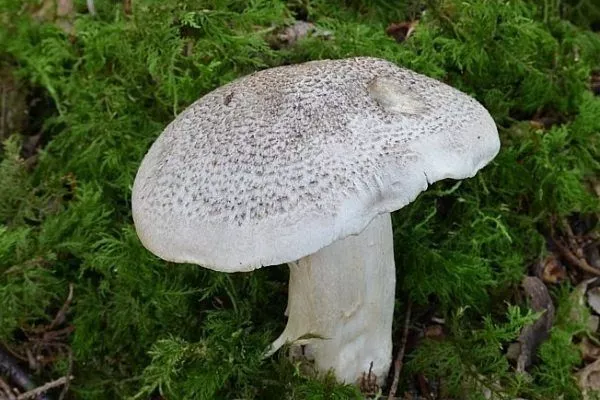
The edible rowan can be confused with the poisonous rowan
Poisonous mushrooms
When picking mushrooms, it's crucial to choose edible mushrooms, as there are a huge number of poisonous specimens that can cause serious poisoning or, worse, death.
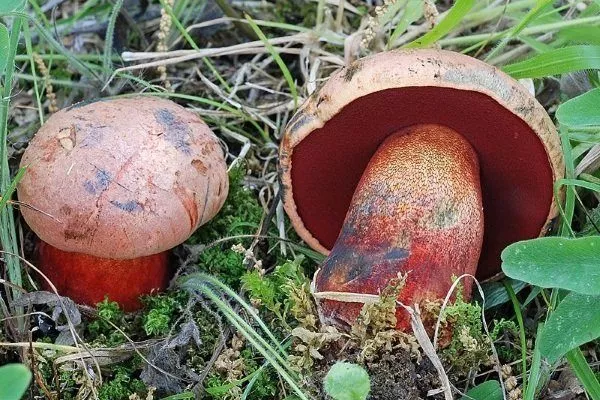
Purple boletus
Description. The boletus is a massive mushroom consisting of a cap and a thick stem. The cap is spherical and convex. The surface is velvety or smooth to the touch. The flesh is lemon-colored, turning blue when pressed or cut.
- Call an ambulance immediately.
- Rinse the stomach with plenty of water.
- Take activated charcoal or another sorbent.
- Provide peace and warmth.
- Save the remaining mushrooms for analysis.
Where does it grow and when? Mushrooms grow both singly and in groups. They are found in coniferous and deciduous forests under spruce, oak, pine, hornbeam, and beech trees. The season begins in early June and ends in mid-September.
Who can be confused with? The boletus is similar in appearance to the oak boletus. Therefore, care should be taken when picking mushrooms to avoid accidentally adding a poisonous one to your basket.
Entoloma
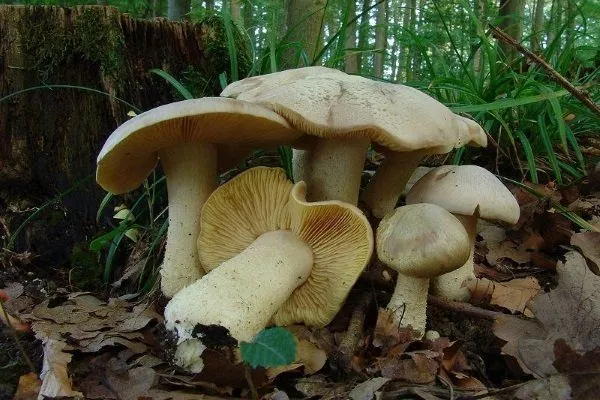
Description. The Entoloma venomosa is a toxic mushroom with a round, sometimes conical cap, 5-17 cm in diameter, dirty pink with a grayish tint. Occasionally, folds can be seen in the center of the cap. The mushroom has white flesh that does not change color when broken. The stem is 4-14 cm tall and cylindrical, slightly curved. It has a distinctive smell reminiscent of freshly ground flour.
Where does it grow and when? The mushroom grows in deciduous or mixed forests. It is primarily found under willow, oak, hornbeam, beech, and birch trees. Large clusters are extremely rare; it usually grows singly. The growing season is early May to mid-October.
Who can be confused with? The poisonous entoloma can be confused with the garden entoloma, the May row, the common champignon, the saffron celandine, the pigeon row, and the smoky talker.
False honey fungus
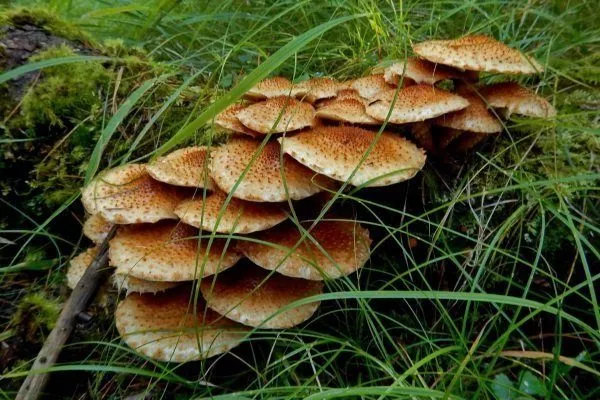
Description. False honey mushrooms grow in clusters. There are several species, but they are all similar in appearance, and many are poisonous. They contain a milky sap that can cause severe gastrointestinal problems. False honey mushrooms typically have elongated stems that are hollow inside. They have smooth, often brightly colored caps.
Where does it grow and when? They grow in deciduous forests. False honey fungi inhabit not only rotting stumps but also living trees, including those that are diseased and have damaged wood, such as linden and birch. They grow from early May to late October.
Who can be confused with? The false honey fungus can be confused with the oak honey fungus, autumn honey fungus, summer honey fungus or meadow honey fungus.
Liner
Description. A mushroom whose cap resembles the convolutions of a brain. It initially grows chestnut-brown, then turns dark brown. The cap diameter varies from 2 to 13 cm and has an irregularly rounded shape. The morel has a hollow, dry cylindrical stem, which can be white, yellowish, reddish, or gray.
Where and when does it grow? The common morel grows in coniferous forests, on loam and sandstone. Mushrooms are often collected in clearings, burnt areas, and under poplar or birch trees. The giant morel is collected in mixed and deciduous forests, under birch trees, or near old stumps. The autumn morel can be found in coniferous and mixed forests.
Varieties. There are several types of lines:
- Giant. It has a folded, wavy cap, which has no distinct shape and is fused to the stem. A young mushroom has a chocolate-colored cap, while an older one has an ochre-colored cap. The diameter is 7-12 cm, rarely reaching 30 cm. It sits on a short stem.
- Autumn. The folded cap is up to 10 cm in diameter, brown, then black. The surface is velvety. The shape is saddle-horn. Inside, the hollow stem, white-gray or gray-brown in color, reaches up to 10 cm in height.
Doubles. The autumn morel (or horned morel) is a poisonous variety, making it dangerous to eat. However, some mushroom growers consider it edible after repeated processing.
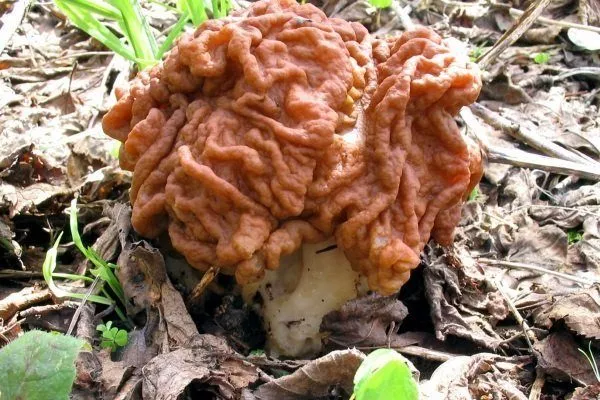
Giant morel
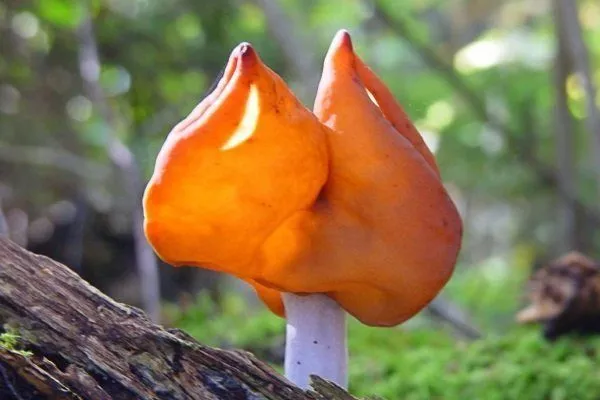
Autumn morel
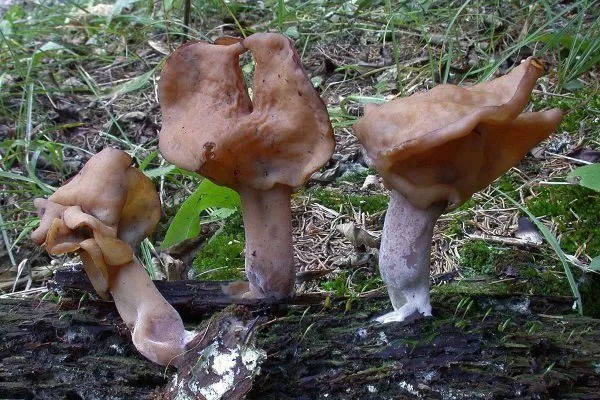
Horned morel
Yellow champignon
Description. The yellow button mushroom has a spherical cap, 5-15 cm in diameter, with inward-curving edges. It has a whitish or light gray surface, sometimes with grayish-brown spots, and is dry and smooth. It grows on a cylindrical stem, slightly thickened at the base, reaching a height of 6-10 cm. It has a distinctive smell reminiscent of ink or carbolic acid.
Where does it grow and when? The yellow champignon is found from July to early October in abundance after rains, not only in mixed forests, but also in parks, gardens, and grassy areas.
Who can be confused with? This “fake” mushroom is often confused with the wild champignon.
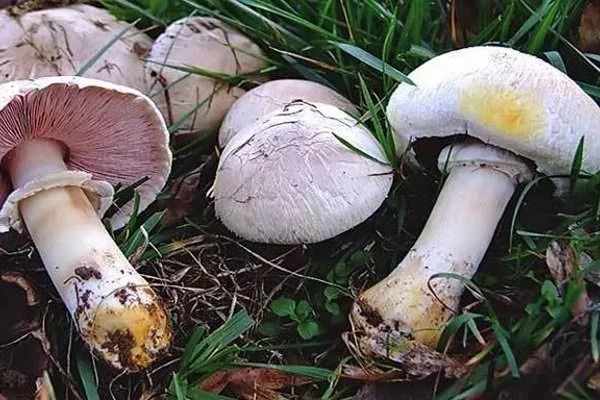
Death cap
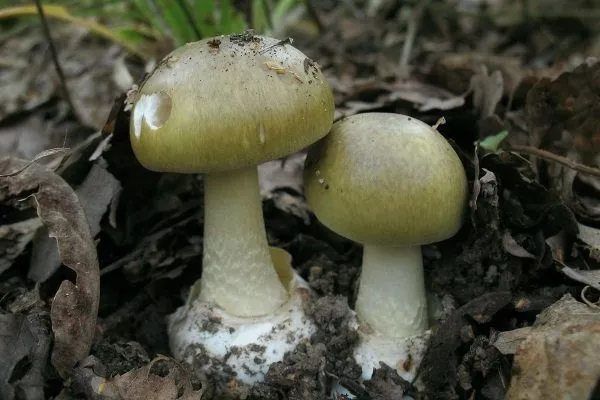
Description. A deadly mushroom with a grayish or greenish, olive-green cap, 5-14 cm in diameter. It is flat or hemispherical in shape, with smooth edges. A distinctive feature is the membranous ring on the top of the stem.
When and where does it grow? It grows both singly and in groups. It can be found in any forest. It develops at the beginning of summer.
Who can be confused with? The death cap is similar in appearance to champignons and green russula.
Fly agaric
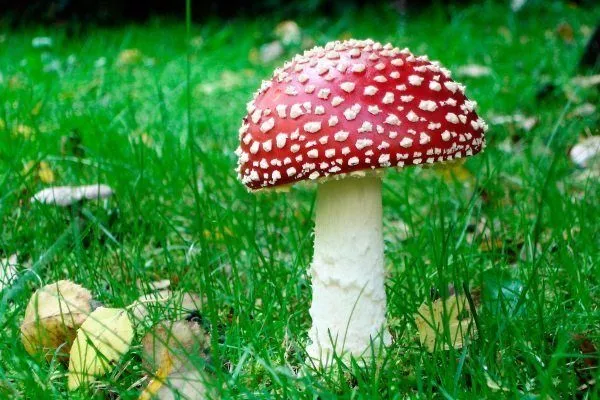
Description. Meet fly agaric, a mushroom with a red cap and white specks on the surface, can be found quite often.
Where does it grow and when? Fly agarics grow in any forests, starting in July.
Who can be confused with? The fly agaric has virtually no analogues, but it is often confused with the Caesar mushroom, which is found only in the Caucasus.
Satanic mushroom
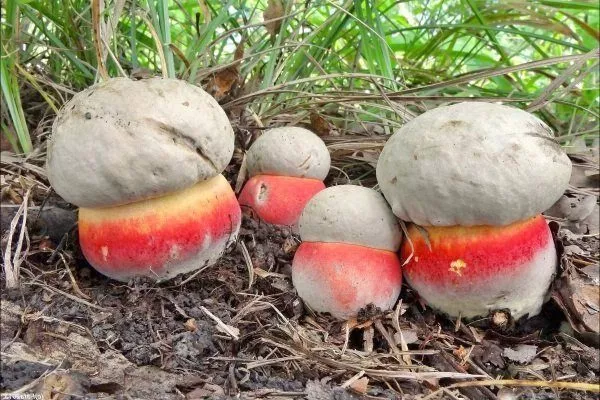
Description. Satanic mushroom, with a grayish cap when young and greenish when mature, reaching 10-25 cm in diameter. It is distinguished by a massive, reddish-brown stem and bluish flesh when broken.
Where does it grow and when? It grows in mixed forests, most often under hazel, chestnut, and linden trees. The harvest season begins in mid-June and lasts until the end of September.
Who can be confused with? This specimen is often confused with the porcini mushroom, but the satanic mushroom has a reddish stem, so you can avoid becoming a victim of poisoning by taking a closer look.
Pigs
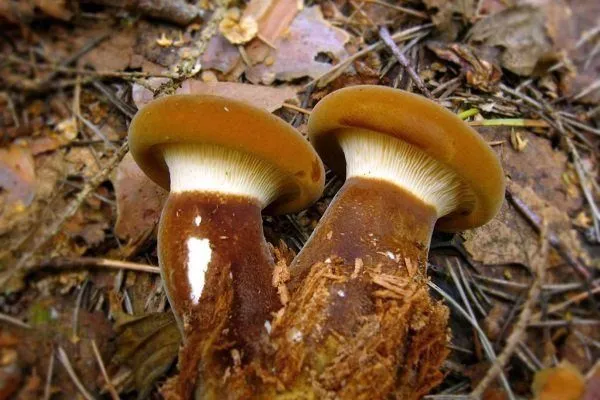
Description. The pig mushroom is a poisonous mushroom that accumulates muscarine, a toxin that is not destroyed by heat. This small mushroom resembles a milk mushroom in appearance. Its round or elongated-round cap is 12-15 cm in diameter.
Where does it grow and when? It grows in groups, or less commonly, singly. It is found in forests on upturned tree roots from July to October.
Who can be confused with? Russula and milk mushrooms have an external resemblance to pig mushrooms.
Mushroom-picking spots in the Krasnodar region
Many mushroom pickers are concerned about the question of "Where and when to pick edible mushrooms?" These delicacies can be found throughout the Krasnodar Krai region in pine, oak, hornbeam-oak, fir-beech, and birch forests. Mushrooms are often found in shrubs and clearings where clay or sandy soil predominates.
The Tuapse and Apsheron regions are considered the most productive. The following mushrooms are common here:
- chanterelles;
- russula;
- oyster mushrooms.
Mushroom pickers head to the villages of Kaluzhskaya, Saratovskaya, and Smolenskaya for porcini mushrooms. Honey mushrooms are best sought in Goryachy Klyuch, in the Arkhyz region between Lake Kardyvach and Krasnaya Polyana. Milk mushrooms are common in the forests near the villages of Kaluzhskaya, Dakhovskaya, and Smolenskaya. Aspen and birch boletes are collected in the foothill forests and along the coast.
When does the season start?
Mushroom fruiting in the Krasnodar Krai begins in mid-June and continues until October. Under favorable weather conditions, mushrooms begin to grow as early as May, making them easy to harvest earlier than usual.
Mushrooms are harvested in the Krasnodar Krai during a period when the air temperature is stable and constant. Consistent warmth and light, gentle rains, resulting in average humidity of 50%, are ideal conditions for mushroom growth.
The Krasnodar region is rich in various types of mushrooms. These mushrooms are especially popular for consumption, as they can be used in salads, soups, and main courses. Mushroom pickers tirelessly venture into the forests in search of edible mushrooms to sell or preserve.