
Since ancient times, people have bred honeybees to produce healthy and natural products. Later, people realized that bees pollinate plants better and faster. To feed their entire colony, these workers work all day, eventually dying in flight. A large amount of honey can be harvested from these bees.
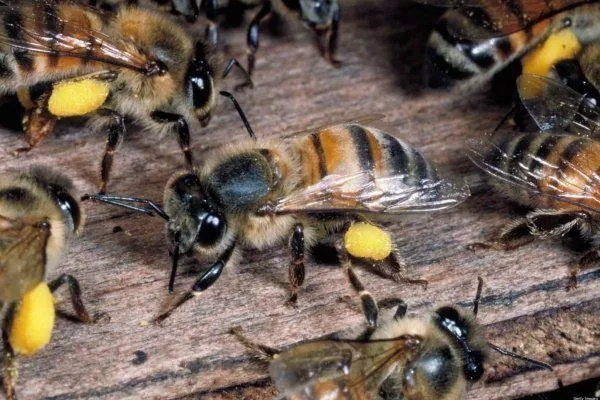
Description and structure of honey bees
The body of a honey bee has three parts:
- head;
- breast;
- abdomen.
A bee has two compound eyes and three simple eyes. The former are located on the sides of the head, while the latter are on the crown. The head contains a tentorium (an internal skeleton), to which are attached the muscles responsible for turning the head, proboscis, and jaw. Each antenna has a segment and a single flagellum, consisting of 12 small segments in drones and 11 in females. The abdomen of a female bee is divided into six segments, while that of a male bee is divided into seven.
The exoskeleton, called the cuticle, serves as support. On the inner surface of the insect are hairs that serve as protection from contamination and also perform tactile functions. All three parts of the body are connected by elastic membranes.
The functioning of the body and individual organs
Bees, like other insects, animals, and humans, have sensory organs and other organs. But in insects, they function completely differently.
Digestive system
There are three sections of the bee's digestive system. The first section is called foregutIt includes the mouthparts, pharynx, esophagus, honey stomach, and muscular gizzard. The digestive tract begins at the bee's mouth. The mouth then connects to the pharynx, which continues into a narrow esophagus. The pharynx contains specialized muscles that contract, pushing food into the esophagus. The esophagus, in turn, also has muscles that similarly push the ingested food further into the honey stomach. The honey stomach is a sac-like structure that serves as a storage area for nectar. The honey stomach can expand as it fills with food.
The honey stomach of the queen and drone is underdeveloped, since they do not need to participate in honey collection and bring nectar to the hive.
Behind the honey crop is the muscular stomach (also known as the midgut). This organ acts as a valve for the honey crop. It is funnel-shaped, with the wide end entering the honey crop and the narrow end entering the midgut. Thus, food moves forward only when the honey crop is full.
The second section of the bee's digestive system is called midgutThis is the main section of the bee's intestine, where food is digested and assimilated. Water, carbon dioxide, uric acid, and urates are also produced here. The first two elements are eliminated from the body through the respiratory system, while the last two enter the hindgut and are excreted in the feces.
The third section is called hindgutIt consists of the small intestine and the rectum, which ends at the anus. The small intestine also contains muscles that move food particles into the rectum. In the rectum, feces are finally formed and eliminated.
During wintering, excrement accumulates in the rectum, causing the bee's abdomen to expand. Bees defecate only during the spring honey flow.
Respiratory system
The bee's respiratory system consists of numerous tracheae that run along the entire body. The bee has specialized openings called spiracles, three pairs of which are located on the thorax and seven pairs on the abdomen. Air initially enters the respiratory chamber through the spiracle, which is covered with hairs to trap small dust particles. The air then enters the air sacs. It then passes through smaller tracheae to the bee's various organs.
Bees can hold their breath for long periods of time when exposed to toxic air.
Movement organs
The organs of locomotion include the legs and wings. Honeybees have three pairs of legs. They are used not only for locomotion but also for maintaining balance while walking, as well as for collecting nectar and cleaning the antennae.
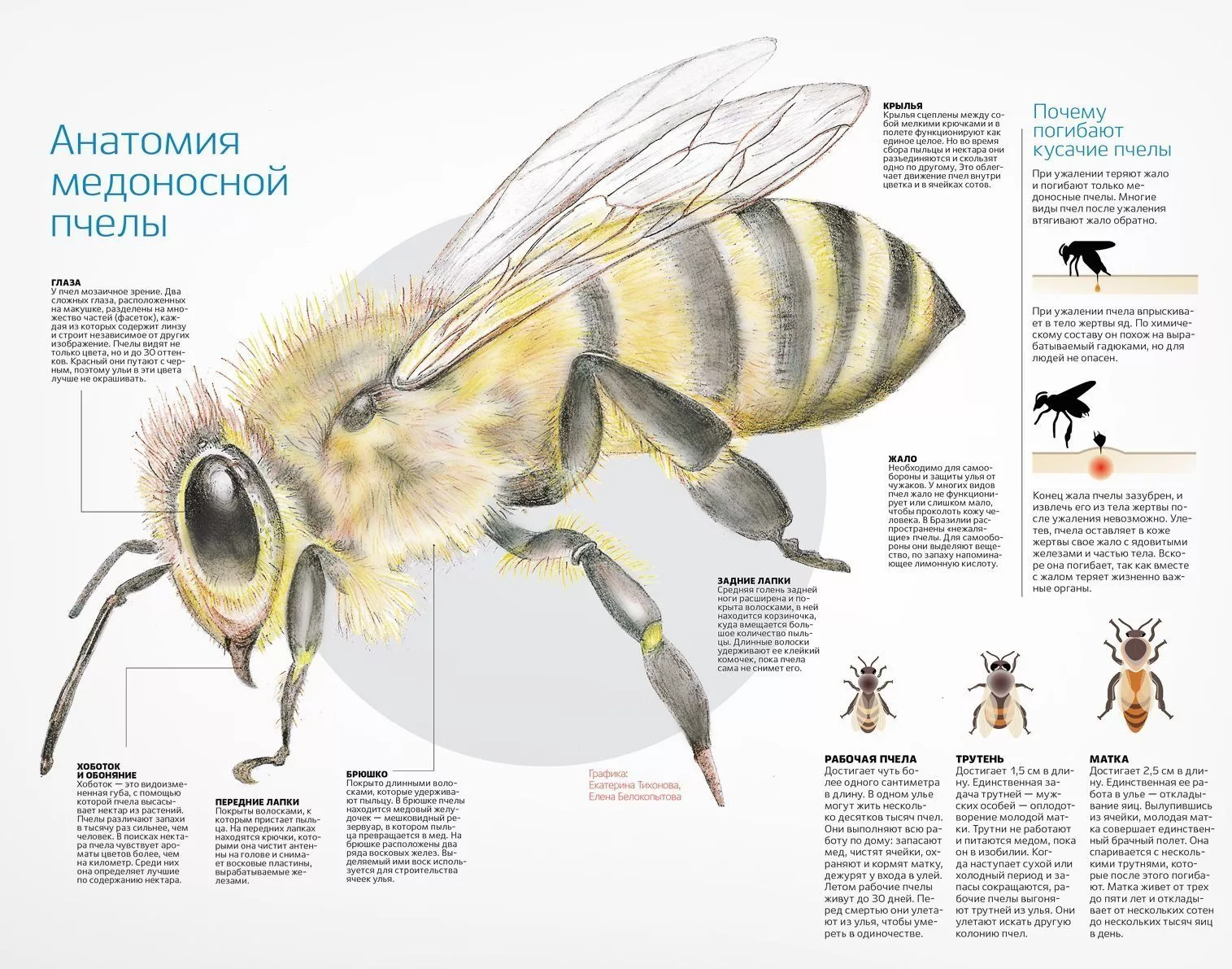
Bees can walk on both smooth and rough surfaces thanks to the structure of their legs. Their legs have claws that provide a firm grip on rough surfaces, and between the claws is a pad that acts as a suction cup, helping the bee maintain a firm grip on slippery, smooth surfaces.
As for the wings, their rudiments form while still in the pupa. Wings are fully developed only in adults. The wings have veins, which act as a kind of framework for the wing and help overcome air resistance during flight. The indirect muscles, located in the bee's sternum, play a key role in flight. They are what propel the wings.
Sense organs
Honeybees have well-developed senses. Thanks to them, the insect is able to survive and adapt to its environment.
Vision
Large compound eyes have many small ocelli:
-
- the uterus has from 3000 to 4000 of them;
- a worker bee has from 4000 to 5000;
- the drone has from 8,000 to 10,000.
With three simple, small eyes, insects can see the direction of the sun when it's completely invisible. Bees can see yellow, blue, and ultrasonic rays, but they can't see red at all.
Sense of smell
The antennae contain olfactory organs. The hairs that cover the bee's body play a key role in its sense of touch. This sense allows bees to navigate the nest at night. Drones have seven times more pores than worker bees.
Taste
The taste qualities lie in the honey proboscis, in the throat, on the antennae and on the paws.
Hearing
The hearing organs are located on organs that are located in some parts of the body, as well as on the legs.
The antennae also contain organs that sense moisture, cold, and, conversely, heat. These organs are capable of monitoring the nest's climate and carbon dioxide levels.
Poison glands
The venom glands are located on the abdomen, consisting of two glands: a venom reservoir and a 2 mm stinger. The stinger is barbed, causing the stinger to become lodged in the skin when it stings, which is what causes the bee's death when the stinger is lost.
The venom tastes bitter and sour, and is colorless. When exposed to air, it hardens into a crystalline mass. It easily withstands freezing and heating up to 115 degrees Celsius. A bee sting can release approximately 0.5 mg of venom, and the lethal dose for humans is 2 grams, or about 700 stings.
Life cycle of bees
Bee colony consists of three titles:
- Drones.
- Worker bees.
- Uterus.
Their life cycles are completely different; the lifespan of a bee depends on its caste. For example, a queen bee can live for 7 years, a worker bee for 8 weeks, and drones die at a maximum of five weeks.
A new colony is founded by the queen in May-June. First, the males are expelled, and cells are laid for the birth of the new queen. As soon as she emerges, about half the worker bees, along with their queen, fly away from the hive. They initially wait on a branch until the queen finds a new home.
The young queen flies out with her drones, mates with them, and returns to the nest to lay eggs. The bees in the new nest build honeycombs, where they collect nectar and pollen for storage and to feed the next generation.
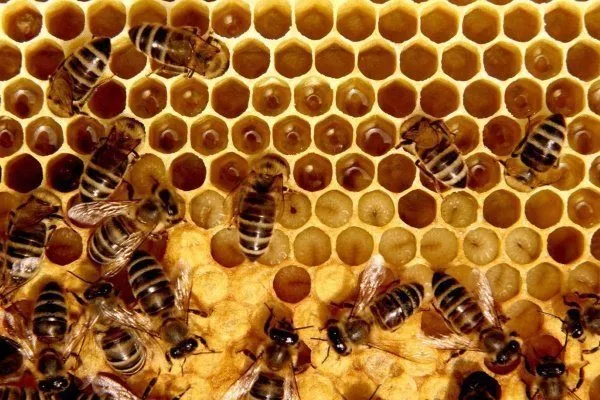
In July, bees prepare honey for the winter, and with the onset of cold weather, they seal up the cracks, and in winter they sit together on the honeycombs and feed on the prepared food.
In the hive, bees communicate with each other through movement. Specifically, if one bee finds plants rich in nectar and pollen, it returns to its nest, circling the combs and wagging its abdomen. This way, it tells the others where to fly. It also conveys the scent of the flower from which it recently collected nectar.
Uterus
When winter ends, the queen lays eggs, and the larvae hatch after three weeks. Worker bees feed them for about a week, then the larvae are sealed in a cell with wax, where they develop into a pupa, and then into an adult.
After 12 days, the imago emerges, an insect that differs from the adult bee in its soft body covering. It feeds the brood, cleans the hive, and performs other household chores.
The queen's role is to replenish the hives with brood, expanding the colony. She can only leave the hive during swarming.
Worker bees
An elite colony contains approximately 70,000 worker bees in the summer and about 20,000 in the winter. They all descend from a single queen. The bees clean their colony of debris and feed the brood and drones.
From the 16th to the 20th day of life, some bees convert nectar into honey. After 20 days from hatching, the bee begins to fly around, memorizing its hive, increasing the distance each time.
Drones
Male bees lack a stinger and are larger in size. Their sole function is to fertilize the queen. Interestingly, once a male has fertilized the queen, he immediately collapses and dies. Therefore, their life cycles differ. Many drones hatch from the brood, many more than necessary, so the bees simply expel the excess and weak ones. Read more about drones. Here.
Hive bees
Hive bees are young individuals that work only inside their home, their duties include:
- Feeding the larvae.
- Construction of new cells.
- Maintaining optimal temperature.
- Cleaning and ventilation of the nest.
- Receiving nectar from summer bees and processing it into honey.
- Insulation of walls with propolis.
Then they transform from hive bees into summer bees.
Summer bees
Summer bees have a short lifespan, about eight weeks. For the first ten days, they are unable to feed themselves and feed only on pollen. However, once they mature and become nurses, their foraging glands are well developed. Summer bees fly out into the field on the fifteenth day of their life, and some even earlier. In addition to nectar and pollen, they also collect honeydew from plants.
Nest
A honey-producing colony consists of 10,000-50,000 bees, sometimes increasing to 100,000 worker bees thanks to the queen. Worker bees build nests in their hives, without which they would not survive. Nests are where pollen, nectar, and honey are stored, where brood grows, and so on.
The center of the nest (occupied by the brood) always maintains an optimal temperature, which is necessary for the proper development of the eggs. The stronger the bee colony, and the larger the nest it occupies, the greater the temperature difference between the edges and the center.
The nest is surrounded by honeycombs made of wax, secreted by the bees' wax glands and hardening over time into plates. Bees spend their entire lives between these plates (honeycombs). A healthy colony's nest is clean, dry, and pleasantly scented.
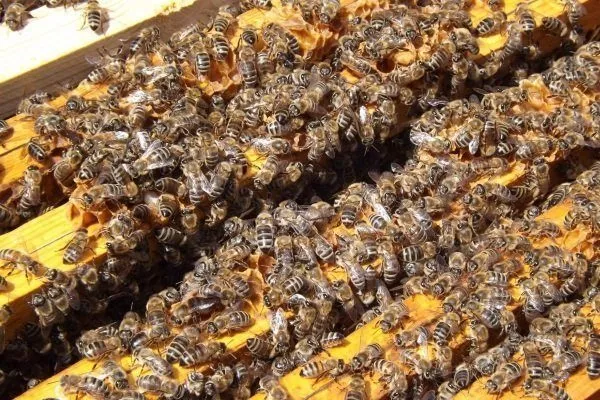
The honeycomb has 3 compartments in the form of cells for different processes:
- Bee hives, which are used to breed worker bees. Bee bread and honey are also stored there.
- Drone cells are where drones grow, and honey is also stored there.
- Queen cells are temporary, constructed by worker bees to produce a queen. Once the process is complete, the bees chew them off.
Swarming
Bee colonies swarm around April or May, when the weather warms up. This allows them to reproduce naturally. Colonies in small enclosures swarm much more frequently than those in larger, more spacious ones. While the brood is growing well and the worker bees are busy feeding the larvae, swarming does not occur. Swarming occurs when a large number of bees has accumulated.
If the insects' bodies have enough nutrients and their physiology does not change, swarming will not occur.
Some methods to prevent swarming:
- moving insects to a cool place where they will expend a lot of energy;
- to load the bees with brood feeding;
- pour in a large amount of sugar syrup for processing;
- transfer the bees to intensive summer work.
By taking certain measures, swarming can be delayed or prevented altogether. Excess nutrients in the body are also harmful; swarming is inevitable.
As soon as the bees seal the first queen cells, some of the bees fly out of the hive containing the old queen. If the weather is bad, this may be delayed for several days. Long before this, the worker bees fly out in search of a new home, searching for boxes and lightweight logs that beekeepers specifically hang for the departing flock.
After swarming, bees work much harder than normal colonies. This is because the swarm consists primarily of young bees, who either did nothing in the old nest or simply helped feed the larvae. The young bees begin to work hard at building combs, collecting honey, feeding the larvae, and preserving the honey.
Common breeds
There are a large number of honeybees, and they can be distinguished by their appearance, color, and other characteristics. A description of the most popular bees can be found in the table:
| Types of honey bees | Description |
| European dark | The most common honey bee. These insects have a short proboscis, and their body is dark. The bee itself is large. The honey is light-colored. They are somewhat aggressive and irritable. Among their advantages are good productivity and resistance to diseases and weather conditions. A colony of these bees can produce 30 kg of honey per season. |
| Ukrainian steppe | It is small, yellow, and non-aggressive. Its advantages include resistance to disease and overwintering. A colony of this variety can produce 40 kg of honey per season, more than other varieties. |
| Caucasian | They are almost the same size as the Ukrainian bee, but their coloring is yellow with a gray tint. Because the bees have a long proboscis, they can extract nectar even from deep flowers. They work in all weather conditions, are non-aggressive, and are not prone to disease. A colony produces 40 kg of honey per season. |
| Italian | Native to the Apennines, these bees have a long proboscis, a yellow abdomen, and clearly visible rings around their bodies. They are meticulous in their cleanliness, eliminating harmful insects that approach the hive. They clean their hives thoroughly and frequently, which positively impacts their productivity. They are disease-resistant, but their productivity is lower than that of other honey bees. |
| Carpathian | The body is gray and non-aggressive. Advantages include swarming, disease and cold resistance, and high productivity of 40 kg. |
Maintenance and care
Caring for honeybees is hard and demanding work. It requires extensive knowledge and constant expansion to properly manage and feed the bees. Beekeeping is a labor-intensive process, as hive maintenance alone requires at least eight hours a week in the spring and summer. Experienced beekeepers accomplish the task much more quickly.
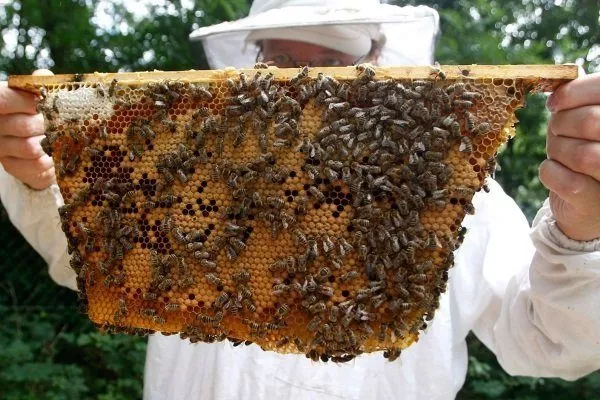
You don't need to buy a lot of bees at once, just 6 families are enough, and then you can expand.
Terrain
Choosing a location for hives should be done carefully; it should be as close as possible to the bee colony's natural habitat. It's recommended to locate the apiary near high-rise buildings or a spacious ravine, but it's important to consider the wind direction and ensure it doesn't disturb the bees or blow too strongly into their hives. It's also important to have as many honey-producing plants as possible within a 2-kilometer radius of the apiary.
- ✓ The presence of natural or artificial barriers to protect from the wind.
- ✓ Availability of water within a radius of no more than 500 meters from the apiary.
- ✓ Diversity of honey plants within a radius of 2 km.
Hives should be spaced appropriately, with approximately 4 meters between hives and 6 meters between rows. If space does not allow for this type of placement, closer spacing is acceptable. In a confined area, beekeeping in hives requires 15 colonies in an area of 3 by 5 meters.
Arrangement of the house
Beekeepers know the importance of high-quality hives—they protect bees from inclement weather and allow for proper organization of the hive's activities.
Modern hives can be purchased at a specialty store. They can be narrow-wide or tall-narrow, with square or rectangular frames inside. These frames will house the brood and store honey. These colonies can be designed for a single bee colony or for several.
The structure can be vertical or horizontal. The former is a multi-tiered design, with each tier containing 10 to 14 frames. The horizontal design, however, can be expanded to any size by adding additional enclosures.
Springtime care
Spring is the most challenging time for a beekeeper, as they must create all the conditions necessary for life and development during the spring and summer after hibernation. The first step is to increase the swarm's size and strengthen it.
Immediately after winter, carefully inspect the hive; it should be dry, clean, and warm. Also, pay attention to the honey supply—this is essential for the colony's survival. A colony requires 8-10 kg of honey and 2 frames of bee bread.
In addition to food, bees must have constant access to water, which they use to make larval food. Without water, the bees will seek out puddles and may die in flight. To ensure good egg production and high brood survival, the queen needs to lay new combs with the onset of spring. After all, bees will only be able to make their own combs a month after the onset of warm weather.
Basic principles of apiary care in spring:
- reduction of weak bees in early spring;
- insulation of strong individuals remaining in the hive;
- providing insects with food and constantly adding food to feed the brood;
- breeding new queens.
In the summer
When the bees are ready to swarm, the summer period of care begins, requiring the beekeeper's increased attention. It's important to understand that no more than one swarm can be removed from a hive. The first swarm emerges only in favorable weather conditions. The swarm circles the swarm's location, the beekeeper waits for them to land, and then performs a series of manipulations:
- the beekeeper must take a ladle and carefully catch the bees, releasing them to swarm;
- If bees don't want to fly to swarming, they are scared with smoke;
- The full container is left in a dark room for an hour until they calm down. If this does not happen, this means that there are two queens or none at all.
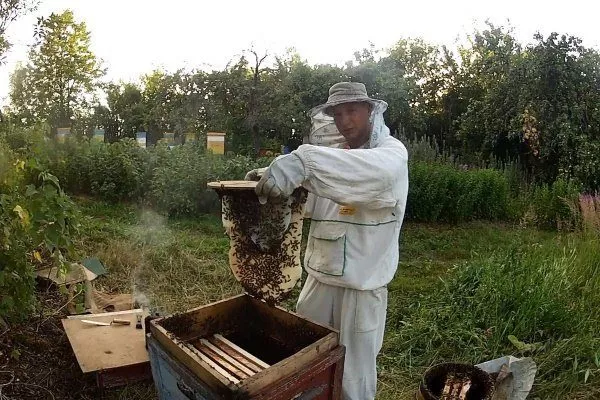
From June to August, the main nectar flow occurs, during which bees collect nectar and pollen within a useful radius. During this period, it's best to restrict bees from building comb by filling empty spaces with wax foundation. This will allow the insects to focus entirely on collecting supplies.
In August, check the bees' readiness for winter, paying particular attention to the central part of the nest. If there is honey there, cut it off, and seal the opening with spare honeycomb. If there are any cracks, seal them with clay.
In the autumn time
In the fall, preparations for wintering begin, including checking the nests' honey reserves and testing the honey's quality. To test the honey's quality, a small sample is taken and mixed 1:1 with water. If clumps of flakes appear after dissolving, this indicates honeydew. These clumps must be removed from the hive and replaced with high-quality frames. To ensure the colony survives the winter, supplemental feeding in the form of sugar syrup is necessary.
In the fall, the old queens are replaced by young ones, but it's important to decide whether to keep the brood or not. In some regions with sharp temperature fluctuations, weak individuals may not survive. After all these procedures have been completed, preparation for winter begins in three stages:
- From all the frames, only 2 with brood and honey are selected and they are moved closer to the partition.
- The colonies with spare queens are moved there.
- It is necessary to control the situation until all the frames are covered from all sides.
In winter
Bees overwinter in special wintering houses, and their productivity and viability in the following season depend on how well they survive the winter. Therefore, it is important to create all the conditions for a successful wintering.
Humidity in the room should be 80%; if this level rises, consider ventilation. It also shouldn't drop too low, as the insects will die of thirst. You can increase humidity by hanging wet towels around the wintering area.
The same applies to the room temperature: it should be between 0 and 4 degrees Celsius. If the temperature drops, the room should be insulated, but if it rises, ventilation should be installed.
In addition, you should ensure that there is no bright light or loud noise, as this may cause the bees to fly out, which is highly undesirable.
Reproduction
The queen mates with the drone while in mid-air, fertilizing the eggs. The drones are then immediately removed from the hive and die. Every 30 days, the queen lays about 1,500 eggs. Some queens live up to six years, at which point they can lay up to three million eggs in their lifetime.
Benefits of honey bees
Bees are extremely beneficial and diverse. They produce healthy and nutritious honey, as well as wax, which is used for various purposes. Bee venom is also used to treat certain illnesses. Bees pollinate many plants, which has a positive effect on them.
Bees are the most beneficial insects on the planet for humans, as all bee products are natural antibiotics. Unlike medications that kill human microflora, bee products inhibit the proliferation of pathogenic microorganisms.
While the bee is alive, it brings the following useful substances:
- I;
- milk;
- honey;
- wax;
- bee bread;
- propolis.
Even from the body of a dead bee, healing tinctures are made.
Honey
Honey is used to treat gastrointestinal disorders, infectious diseases, and colds. Daily consumption of honey also helps combat alcohol addiction, making it impossible to find alcoholic beekeepers.

Wax
This product is highly valuable and used in industrial applications. Numerous creams and pharmaceuticals are created using beeswax. Chewing beeswax is recommended to prevent colds.
Milk
A unique product containing many microelements. A worker bee lives up to 30 days, while a queen bee can live up to 6 years, laying numerous eggs. She feeds exclusively on royal jelly. It is also used to treat many illnesses, even severe ones. Read on to learn how to obtain royal jelly. Here.
Propolis
Propolis is used to make tinctures and is taken in its pure form. It is used to treat burns, frostbite, tuberculosis, and abscesses. Read more about the medicinal properties of propolis. here.
Over the past hundred years, about half of bee species have become extinct. If this continues, all bees will die out. Because of this, flowers will no longer be pollinated, and plant life will gradually begin to die out. Humans could eventually disappear as a species, as they will lack food and oxygen (which plants produce).
Honey herbs for bees
Bees can't collect nectar and pollen from all plants, but below is a list of where bees collect them from:
| Type of grass | Name of the herb |
| Grain and feed | sweet clover buckwheat clover serradella sainfoin |
| Medicinal | hyssop sage coriander mint thyme mother liquor oregano lavender angelica |
| Oilseeds | sunflower tobacco kenaf chicory rape mustard |
More information about honey plants is available here here.
Diseases and prevention
Bees are classified as suffering from infectious and non-infectious diseases. Bees can contract infectious diseases through contact with other sick bees. The most common include:
- acarapitosis;
- meleosis;
- nosematosis.
The bee's body may contain parasites that bring other diseases, for example varroatosisSome infectious diseases can kill an entire swarm, so the beekeeper must closely monitor their health.
Non-communicable diseases can develop due to improper bee feeding. Proper nutrition is crucial for honeybees, as bees receiving all the necessary vitamins, microelements, and other nutrients ensure high productivity.
Non-infectious diseases also include those that occur during embryo development. These can be caused by a cold or the presence of parasites; such larvae will hatch underdeveloped or the eggs will dry out.
In the video, a beekeeper explains preventative measures to keep bees healthy, and also discusses the diseases these insects can contract:
The difference between honey bees and wild bees
In nature, there are both domesticated and wild honeybees, each with distinct characteristics and appearance. Wild bees are more industrious and more resilient to temperature fluctuations, but they are also overly aggressive. The quality of the honey they produce also differs from that of domesticated bees; it is better and more nutritious, as it matures fully in the nest. The number of wild bees is declining year after year, as anthropogenic factors are affecting them, leading to their death.
Domestic bees live in a hive, which is constructed with human assistance in the form of a hollow tree. After the swarm migrates to another nest, everyone is actively engaged in building wax combs, thus conserving wax. Some cells contain honey, while others contain pollen and larvae.
Honey bees clean their hives themselves from dust and harmful insects and use their wings to maintain the required room temperature.
Honeybees are extremely beneficial insects on our planet. Without them, humanity simply wouldn't survive. Thanks to bees, flowers grow, people obtain healing honey, and many illnesses are treated. Before you start keeping honeybees, you should thoroughly research them to ensure you don't encounter any problems when caring for them.