
Acarapisosis of bees is a parasitic disease caused by the mite Acarapis woodii. Acarapisosis requires treatment, as it leads to the death of large numbers of bees. To prevent the disease from progressing, preventative measures should be taken.
General characteristics of the disease
Acarapisosis in bees is a common disease caused by microscopic mites that live in the bees' trachea. The parasites initially penetrate the bee's body, crawling along hairs and then, upon contact with other beehive inhabitants, migrating to them. The female mite, having penetrated the trachea, attaches to it and lays eggs, which subsequently develop into larvae.
These parasites are unable to survive outside the bee's body. They do not infect humans or animals. The mite survives on the hive walls and in honeycombs for no more than five days. Acarapis woodii can survive for up to six days in a dead bee. If a suitable host does not appear, it dies and no longer poses a threat to insects.
Individuals under 4 days old are most susceptible to the disease. Older insects have physiological characteristics that prevent tick penetration.
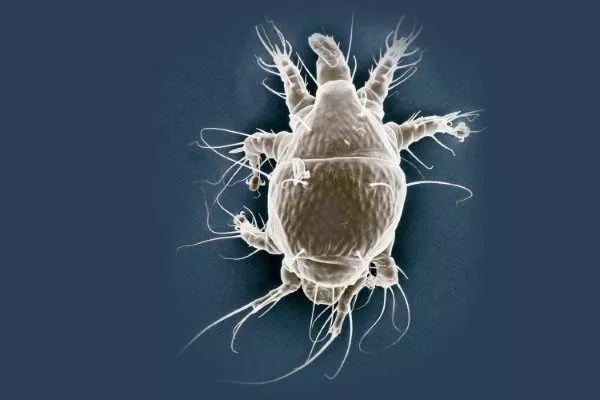
Both larvae and adult parasites, having penetrated the trachea, secure their nutrition. To do this, they pierce the tracheal wall to gain access to the hemolymph.
If the infestation reaches a significant scale, the tracheal lumen gradually becomes filled with mites, larvae, and their waste products. This prevents the honey bees from breathing properly and leads to death.
A single bee can be infested with up to 150 mites of the Acarapis woodii species. The disease is highly contagious. Cases of acarapisosis are most often recorded in the fall and spring, periods when the number of young increases.
Infection occurs through contact between healthy bees and infected ones. Acarapisosis is also spread through wandering bees, introduced queens, and drones.
During wintering, when bees huddle close together, mite infestation increases. During this period, fertilized females leave the tracheal area and migrate to the wing joint. The mites move here to feed on the soft chitin at the base of the wings. This also negatively impacts the health of the bees—their wings become damaged and misaligned. This defect leads to the death of honey bees in the spring.
This bee disease is most widespread in areas with a humid climate.
Causes of the disease
By penetrating the body of insects, the tick causes the following pathological changes:
- metabolic disorder in the body;
- wing deformation;
- disruption of the structure of the muscles, as well as the cells of the outer covering of the bees' bodies.
The disease develops due to the following reasons:
- Acquiring new bees. This is the most common factor that predisposes to the development of acarapisosis in hives. Insects should only be purchased from reputable apiaries. Insects must be veterinarily inspected.
- Merging weak colonies with strong ones to strengthen the former is especially dangerous if the queen bee shows signs of infestation.
- The presence of robber bees and swarming insects near hives. They can carry mites and, through close contact, infect the insects.
Infestation within the hive is also possible if corpses remain there. The pest continues to live in the body for another week and is capable of infecting healthy insects during this period.
Acarapidosis affects both ordinary worker bees and drones and the queen. While insects with strong immunity resist the disease, the presence of unfavorable factors (cool springs, damp weather, long winters, poor honey flow) increases the risk of disease spread.
Symptoms of acarapisosis
The disease can develop over several years if the beekeeper doesn't closely monitor the health of the bees and doesn't properly treat the hives. Clinical manifestations are only observed when acarapisosis affects approximately 50% of the insects.
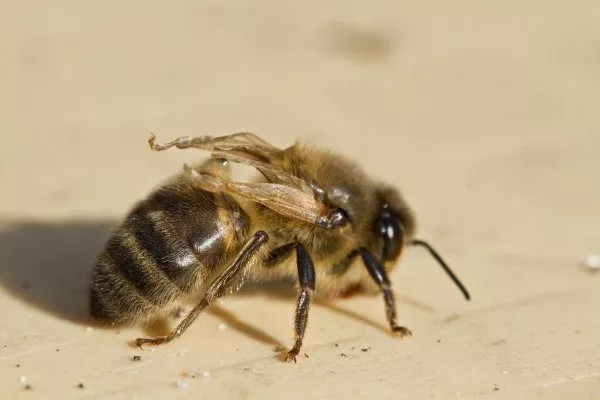
Acarapidosis of bees is expressed by the following characteristic symptoms:
- increase in the size of the abdomen;
- incorrect positioning of the wings: externally it looks as if they are turned in different directions;
- anxiety and unreasonable restlessness of insects;
- liquid excrement of insects on the walls of hives;
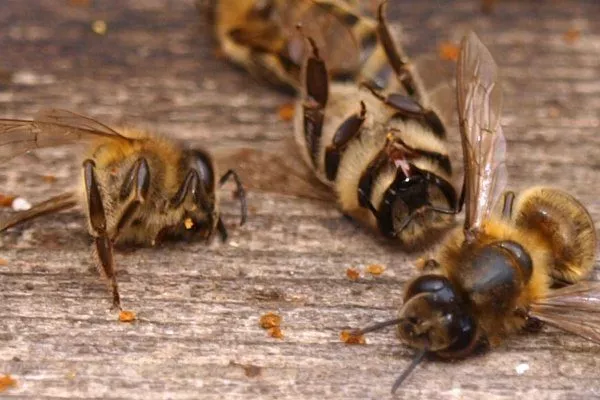
- increase in the volume of dead bodies at the bottom of the hives;
- bees crawl around the hive, jumping up and down, unable to fly; often the floor of the hives and the space around them are filled with crawling insects.
The symptoms of acarapisosis are not unique, making diagnosis of this parasitic infestation challenging. The presence of the disease can only be determined through laboratory testing.
Acarapisosis in bees is a chronic disease. It can develop in a latent form, typically lasting 2-3 years from the time of infection. Acarapisosis manifests itself in its overt form 4-5 years after the mite infests the apiary.
Clinical symptoms as the pathology develops are:
- the appearance of yellow spots on the walls of the trachea - this occurs within 3-6 days from the moment of infection;
- the formation of black spots on the trachea, which also becomes fragile - observed on the 14-23 day;
- the presence of larvae, eggs and mature ticks in the lumen of the trachea;
- blackening of the trachea – from 27 to 30 days.
If a beekeeper suspects acarapisosis among his bees, he should immediately contact the appropriate veterinary authority for diagnostic measures and determination of a course of treatment.
Diagnostics
To diagnose acarapisosis in bees, several bees must be brought to the laboratory for examination. The veterinarian examines the trachea of the affected bee through a magnifying glass.
The apiary owner needs to collect diagnostic material. One sample should be taken from each bee colony. Each colony should contain 30-50 individuals.
Only those insects that died the day before or are still alive are suitable for research.
The material is placed in matchboxes or paper bags and sent to the laboratory. Plastic bags are not used, as they allow the bees to decompose.
Based on the results obtained, a course of treatment is determined. If a diagnosis is confirmed, a quarantine is declared within a five-kilometer radius of the apiary.
Treatment Features
If acarapisosis is detected in an apiary, treatment measures must be extended to all colonies. This applies not only to infected colonies but also to those that are healthy but have been quarantined. All hives must be treated with special agents, and the queens must be replaced.
Treatment for this parasitic infestation can be carried out using the following methods:
- Treating hives with medicinal products, or fumigation. This should be done at a temperature of 16 degrees Celsius or higher. Before treatment, close all cracks in the hive. Widen the space between frames. Plates or strips containing medicinal substances are ignited, releasing acrid smoke that kills mites. Fumigation products such as Polisan, Akarasan, BEF, and Bipin are used. Sachets or strips containing the active substance are ignited and left to smolder. They are then placed in the hives.
- Using smoldering tablets. The tablets work similarly to the strips. Tedion is used to fumigate hives. One tablet is lit. It should smolder. While smoldering, it is inserted through the bottom entrance, moving along the bottom toward the back wall. This procedure should be repeated 10 times every other day for a month.
- Using plates impregnated with special chemicals (such as Apifit). These products are glued to the inside of the hive walls. This procedure is repeated twice a year.
- Using special supplemental feeds with added medications. For example, supplements containing Apimax and sugar syrup are used to treat acarapisosis. The supplemental feed is placed in plastic bags or feeders.
- Using fir oil. Dip a gauze pad in the solution and place it over the frames. Cover the hive with plastic wrap first. Repeat the procedure three times over five days. Purchase only natural products. This product not only effectively combats acarapisosis but also boosts the immunity of honey plants, promotes brood production, and has a powerful antiseptic effect.
- Using menthol. It is recommended to take a bag of crystalline menthol (total quantity – 50 g) and place it at the bottom of the hive for several weeks.
- You can also make smoldering strips yourself. To do this, take blotting paper, soak it in a 15% potassium nitrate solution, and let it dry. Then soak the paper strip in ether sulfonate and let it dry again. Cut the prepared sheets into strips 2 cm wide and 10 cm long. One strip is enough for one family consisting of 10 lanes. Light the strips at one end, extinguish the flame, and hang them smoldering between frames using wire. Place a sheet of canvas on top of the frames and close the entrances for approximately 25 minutes. Eight treatments should be carried out at weekly intervals.
- ✓ Effective against the Acarapis woodii tick
- ✓ Safety for bees and humans
- ✓ Easy to use
Smoke treatment should not be used during honey harvesting, as there is a risk of chemicals leaching into the finished bee product. When using any type of medication against acarapisosis, personal protective equipment must be worn.
All infected hives after detection of acarapisosis must be isolated for the period of anti-mite treatment.
The last resort is to remove weakened, infected colonies from the apiary and destroy them by fumigation with sulfur dioxide. This will help stop the spread of the disease.
Destroyed bees must be burned.
Quarantine is lifted once the disease has been completely eradicated. A full course of treatment takes 1.5–2 months.
Preventive measures
To prevent the development of acarapisosis in hives, the following measures must be taken:
- Place hives in areas exposed to the sun: high humidity levels increase the risk of disease development several times over, since in these conditions insects tend to stick closer to each other;
- annually examine bee colonies after wintering, observe their behavior;
- After the bees have wintered, you should carefully examine the condition of the frames and the hive as a whole, and also examine the composition of the dead bees to detect parasites or ensure their absence;
- in infected hives it is necessary to replace queens;
- stop cases of bee theft to prevent the risk of spreading infection;
- stimulate the first flight of bees after wintering;
- provide food reserves for honey plants for the autumn period;
- to carry out activities to strengthen healthy families and create favorable conditions for their full development;
- do not purchase bees from dubious apiaries;
- Buy bee species that are most resistant to mites for breeding: for example, representatives of the Italian breed are more resistant.
This video explains how to recognize and treat Acarapis woodii mite infestations on bees:
Acarapisosis of bees is a disease caused by a mite that penetrates the trachea and continues its development and reproduction there. The disease is dangerous due to its latent, chronic course and difficulty in diagnosis. Control of the pest can be achieved using specialized products, such as glow strips and tablets, as well as feeding solutions.