
Varroa is a disease of honeybees, widespread worldwide. It causes significant losses to beekeeping. The disease can be identified by specific symptoms and is quite severe. Treatment requires a comprehensive approach.
General characteristics of the disease
Varroatosis is a dangerous disease. It affects all bees, both adults and larvae. The danger of the disease lies in the fact that it is rarely detected in its early stages due to the lack of obvious clinical signs.
Varroatosis is a quarantine disease, since its degree of contagiousness is very high.
Insects infected with varroa do not form a cluster in the fall. They tolerate the winter poorly. They may awaken as early as the first half of winter. Individuals often become restless and may attack food. Overeating causes diarrhea in the spring.
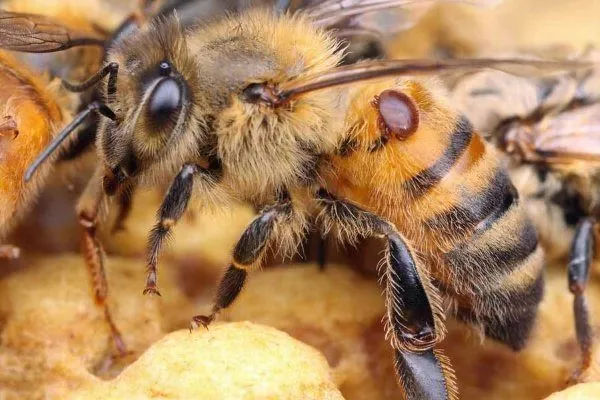
Pathogens, routes of infection
Varroatosis is caused by the mite Varroa destructor. It was described over a century ago, but at that time, it was associated with the Indian honeybee Apis cerana indica. In the 1960s, this parasitic pathogen began affecting honeybees.
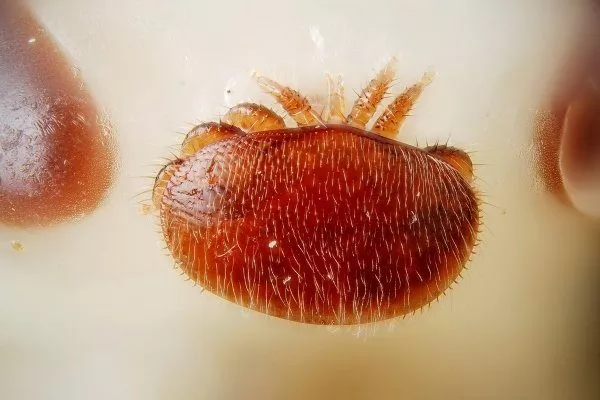
The parasite can be seen without a microscope, although it is just over a millimeter long and approximately 1.5 mm wide. A distinctive feature of the parasite is the presence of four pairs of limbs equipped with suckers. These are necessary for the ticks to attach to the host's body. The parasites prefer the area between the abdomen and thorax or the lateral surface between body segments.
Varroa mites feed on insect blood. Adult parasites attach themselves to bees and, by feeding on their blood, survive the winter.
As a result, the bees become restless, weaken, and may die. If a single insect is infested with several mites, its death is inevitable.
The parasites reproduce inside the sealed cells of the honeycomb. The mite development cycle usually coincides with the brood emergence period, as they select drone or worker bee pupae for reproduction. The development cycle lasts on average 8 days if the temperature remains at 35 degrees Celsius.
Female parasites lay five eggs each. For this, they use six-day-old bee larvae before sealing them with wax.
During brood formation in early spring, the carriers of parasites are mainly worker bees, and in the summer period – drones.
Since varroatosis is rarely detected at the initial stage, standard work is carried out in the apiary, which contributes to the spread of the disease.
The source of infection in a colony can be a bee that flies in to steal. Other possible routes of infection include swarming, wandering, and acquiring infected individuals from other apiaries.
Mite larvae can enter a healthy bee colony if a frame containing infected brood is introduced. Cut drone brood can also be a source of infection.
Symptoms of Varroa Mites in a Beehive
The main symptom of this disease is bees and drones with developmental defects. These may manifest themselves as:
- absence of wings;
- rudimentary, curved wings;
- absence of paws.
To detect the disease, it's sometimes enough to examine the lateral abdomen and cephalothorax near the wing attachment. Oval plaques of light or dark brown color may be visible in these areas. They are approximately 1.5 by 2 mm in size. These plaques are adult female mites.
When varroatosis reaches its advanced stages, its hallmark is variegation of the brood. Large numbers of dead bees, larvae, pupae, and drones are found around the hive. These are discarded by living bees during cleaning. If you examine the larvae, the disease can be identified by their yellow color and rotting.
To confirm varroa, place several live bees in a transparent plastic box, ensuring they fit in a single layer. This allows for a targeted inspection.
Mites can be found not only on the bees but also in the hive. To do this, inspect the removable trays, or more precisely, the hive debris within them. This debris may contain female mites, both mobile and immobile.
You can open the honeycomb cells where the brood is sealed. If the colony is infected with varroatosis, the female mites will be on their pupae—the characteristic plaques are easily visible on their white bodies.
The parasite infects all brood, but drones are more susceptible than worker bees. This allows for diagnosis, monitoring of mite numbers, and the rate of growth of the colony's infestation.
To assess the mite infestation, collect several dozen live insects from the center of the nest, steep them in boiling water, and add a spoonful of baking soda (you can substitute laundry detergent). After this, separate the dead parasites from the insects. By counting both, you can estimate the infestation as a percentage.
To determine the severity of mite infestation, 100 bees and 100 brood cells are sampled. These cells should be taken from the center of the nest. If fewer than two parasites are found, the infestation is light; 2-4 mites indicate a moderate infestation; and more than four indicate a severe infestation.
If the degree of damage is mild or moderate, the apiary is considered conditionally healthy.
Treatment of varroatosis in bees
Currently, all apiaries in Eurasia are considered a priori infected with varroatosis. Annual treatment and preventative measures are required.
There are no biological methods for controlling varroa mites. The varroa mite has no diseases or natural enemies—at least none have been identified so far. The only way to control the parasite's population is by removing the infected drone brood.
Varroatosis can be combated using chemical, physical, zootechnical and folk methods.
No treatment method can completely eliminate varroatosis from an apiary, but it can reduce the level of mite infestation in certain colonies to achieve a relatively safe level.
| Method | Efficiency | Side effects | Period of application |
|---|---|---|---|
| Chemicals | High | Impact on the reproductive system of queens | Any, except during the honey flow period |
| Physical | Average | Risk of bee death | Spring, autumn |
| Zootechnical | High | Labor intensity | Summer |
| Folk | Low-medium | Temperature dependence | Spring, summer, autumn |
Chemical methods
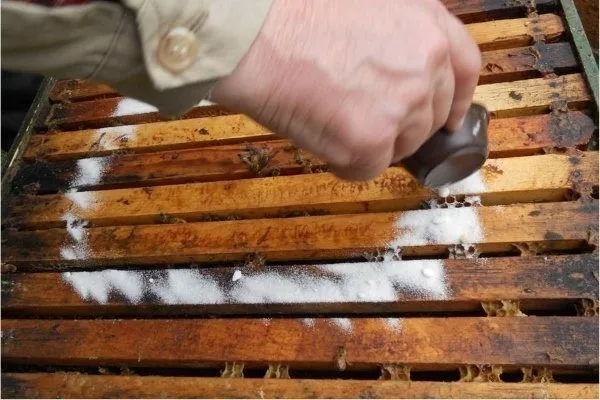
Chemical treatment of varroatosis in bees involves the use of various chemicals to treat bee colonies. These substances either kill the parasites or cause them to fall off.
The main drawback of chemical treatments for varroatosis is that they are ineffective against parasites that have entered sealed brood. Another drawback is the effect of chemicals on the queen's reproductive system. This damage gradually makes it impossible for her to lay fertilized eggs, which are the source of worker bees and a new queen.
Most of these products are based on amitraz and fluvalinate, which are systemic acaricides.
Amitraz is a source of amitraz, including Bipin, Varroades, Varropol, and Tactica. Fluvalinate-based medications include Apistan, Apifin, Varrotom, and Fumisan. Flumethrin-based Bayvarol or Varostop, acrinatrine-based Gabon RA-92, and coumaphos-based Apiprotect or Pericin are also used.
Of the listed medications, Bipin or Tactic are the most effective. They are used for late autumn treatments. The advantage of these medications is that they are non-addictive.
Veterinary medications for varroa are available in various forms. These include a self-emulsifying aqueous solution or a wood or polymer strip with an appropriate impregnation.
When using aqueous solutions over the course of 24 hours, the concentration of the drug decreases and falls below the effectiveness threshold. Treatment with such solutions is performed in 2-3 doses, with an interval of 3-4 days between treatments.
When using acaricide-impregnated strips, ticks begin to fall off within a few days. The advantage of these products is that they can be left in the family's home throughout the winter. The disadvantage is that prolonged exposure to a product at a concentration lower than the effective level can lead to the development of resistance to the product.
An experienced beekeeper provides an overview of the most popular bee mite treatments in this video:
Physical methods
There are some physical methods that can be used to control mites, but they are ineffective against parasites that have entered sealed brood. In other cases, the following methods can be used:
- ThermalThis treatment is short-term and involves exposure to temperatures between 43-46 degrees Celsius. A mesh cassette is used, into which the bees are forced from the frames. The high temperature kills the mites and they fall off. This method has a significant drawback: it can kill the queen and worker bees, sometimes completely. Due to its labor-intensive and unsafe nature, it is rarely used.
- MagneticThis method requires paired, strong magnets. They should be installed in the bees' movement zone, including the entrance, landing board, and underframe space. When the bees enter the magnet's range, mites fall off due to disorientation. To prevent the parasites from returning to the hive, mechanical traps are used—mesh trays over the trays, lined with paper coated with Vaseline or oil.
Zootechnical methods
A popular method for eliminating varroa mites is to remove drone brood. During the summer, drone cells can harbor approximately 85% of mites. Place a frame with a small strip of foundation near the young brood. The bees will fill it with drone cells, which the queen will then seed.
After sealing the cells, remove the frame and place it in hot water for three hours. The temperature should be 55 degrees Celsius (131 degrees Fahrenheit). These conditions are necessary to kill the parasites. After this procedure, unseal the caps and return the frame to the hive. The dead larvae serve as a protein supplement.
There's no need to return the frame. In this case, its contents should be shaken out and destroyed. If the frame is needed, it should be treated with acetic acid (prepare a 2% solution).
Another zootechnical method for treating varroatosis involves creating colonies. This approach helps limit the mite's development.
Under natural conditions, a brood-free period must be created. Nuclei are placed on a barren queen or queen cell. At the end of this period, all mites will emerge from the cells and reside on adult bees. This allows for the entire parasite population to be treated. This should be carried out after the start of the larval stage.
Another option is to create brood-free colonies. To do this, select a hive and place two combs filled with honey and bee bread, and one filled with dried bees. All bees in the infected colony, except the queen, should be shaken off onto the ramp, and a frame of exposed brood should be placed in the hive. A fertile queen should be introduced into the brood-free colony, and the colonies should be removed from the apiary. The bees should be treated with appropriate preparations.
Folk remedies
To get rid of varroatosis, you can resort to various folk remedies. The following options are effective:
- Lactic acidYou need to make a 10% solution and spray it on the frames containing the bees. This can be done in the spring, when the temperature has risen above 14 degrees Celsius. On average, 10 ml of the solution is required per frame.
- Hot pepperIt needs to be added to top dressingTo do this, crush the product, pour a liter of boiling water over it, and let it sit for 24 hours. Filter the resulting mixture and add it to 50% sugar syrup. 0.12 liters of pepper tincture is sufficient for one liter of syrup. For increased effectiveness, you can also add 20 ml of propolis tincture (10%). This healing syrup should be administered to bee colonies three times, with a weekly interval. 0.25-0.3 liters of the mixture is sufficient for one treatment.
- ThymeFresh raw materials must be used. They must be ground, placed in cheesecloth, and placed on frames, covered with plastic. Replace the dried mass with fresh raw materials every three days. This method can be used throughout the season. If the temperature is above 27 degrees Celsius, this method is ineffective.
- Lavender essential oil and alcohol (96%)Fill the vaporizer with alcohol and add a few drops of lavender oil. Place the vaporizer on the frames, but leave it for no more than 21 days. Add more lavender oil periodically. This method requires the use of rubbing alcohol; technical grade alcohol is not suitable for this purpose.
- Oxalic acidIt can be used in any season except winter, but be careful not to let it come into contact with honey. The optimal temperature for this product is 14-25 degrees Celsius. Prepare a 2% acid solution, heat it, and spray it onto the frames. 10 ml of the product is sufficient for each frame. Up to six such treatments can be performed per season.
- Formic acidThis treatment can be carried out in the spring after the flight or in the fall after the honey has been extracted. The optimal temperature for treatment is 10-25 degrees Celsius. You can purchase a special product called "Muravinka"; one package is enough for a colony with up to 12 sirens. Two treatments are required, with seven days between each.

Read more in the article: How and with what to treat beehives against mites.
Consequences
The danger of varroatosis is that it can affect absolutely all bees. The disease is fatal, so without timely intervention, it can cause serious damage to an apiary. If the mite infestation is severe, the bees simply die.
Prevention
Due to the widespread prevalence of varroatosis, preventative measures are essential. Prevention should begin as early as the planning stage of an apiary. The risk of mite infestation can be reduced by placing the apiary in an area where certain plants grow. These include:
- wild rosemary;
- marigold;
- hawthorn;
- elderberry;
- walnut;
- oregano;
- angelica;
- coriander;
- nettle;
- lavender;
- juniper;
- mint;
- tansy;
- sagebrush;
- thyme;
- celandine.
In addition to placing apiaries in areas with appropriate vegetation, hives should be properly arranged. They must meet the following requirements:
- The place where the hives are installed should be well lit by the sun.
- The height to the ground should be 0.25 m.
- The hive itself should be provided with a varroa-resistant floor lined with a special mesh. All debris will fall onto this mesh. The mesh should be cleaned periodically.
To prevent varroa, weak bee colonies should be merged. Bees should be periodically given the task of building honeycomb. To do this, frames with wax foundation are placed in the hive.
To prevent a sudden increase in parasite numbers during the nectar flow, drone brood is periodically partially removed. This removal should be done only on the brood frames, which are initially empty or shortened.
At different stages of their biological development, bee colonies need to be strengthened to increase their resistance to parasites. For this purpose, the insects are given supplemental feeds containing preventative agents. These include cobalt salts, acaricides, and dietary supplements.
Special strips impregnated with acaricides are also used for prevention. These can be left in the household over the winter to prevent a spring outbreak of mites.
Varroatosis is an extremely unpleasant and dangerous condition. It's impossible to completely eliminate it. Treatment involves a variety of methods, but it's best to use them in combination. Preventive measures are essential to reduce the risk of spreading the disease.