
Nosema is an infectious disease that can affect any bees and dronesIf 10% of bees are affected by the disease, it can lead to a loss of 40% of the colony's total honey production. The infection spreads quickly. Every beekeeper needs to know what this disease is, how to identify it, and how to treat it.
General characteristics of the disease
The disease is caused by the bacterium Nosema apis, which lives in the intestinal lining of bees. It reproduces, producing spores that destroy the bee's intestines.
Worker bees suffer damage to the glands that process sugars, while queens' ovaries are damaged, causing the death of up to 20% of larvae. Drones can also be affected—they become incapable of fertilization and die.
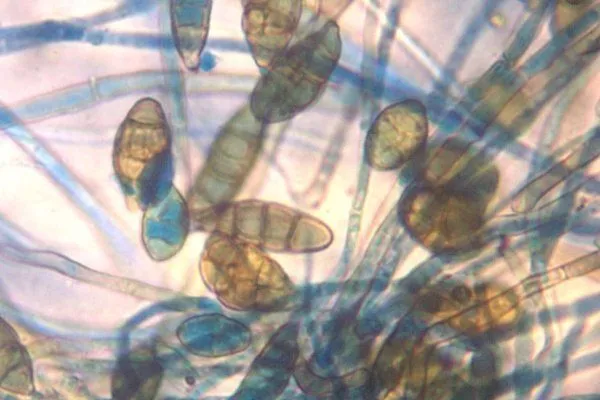
After the larvae reproduce inside the bee, they are released into the environment along with the bee's feces. Other bees consume the spores along with honey or while cleaning the honeycomb. The spores enter the intestines, where the parasite embryos hatch. Nosema apis develops inside the bee for three days.
The disease spreads most rapidly in warm temperatures—20-30 degrees Celsius. At higher or lower temperatures, the parasite reproduces less effectively, but remains very resilient thanks to its hard chitinous shell. The parasite's spores remain viable for one to five years, depending on location—they survive longest in the bodies of dead bees.
Reasons
Infection is possible when parasite spores are transferred from a diseased apiary. This could be from inadequately treated equipment, honey, or other bee products from the affected area. Within an apiary, the disease can be spread by moving frames from one colony to another or by robber bees.
Favorable conditions for the development of the disease are:
- poor feeding of bees;
- high temperature and humidity in the hive;
- dirt in houses and on frames;
- poor wintering conditions.
The disease can be aggravated by combining infected and healthy families.
Symptoms of nosematosis in bees
The main symptom of the disease is fecal stains on the hive walls and frames. There are no specific signs of nosematosis; diarrhea can accompany toxicosis, high humidity, or fungal infection in the hive.
The disease progresses particularly in late winter and early spring. During winter, bees in an affected colony become restless, and some insects emerge prematurely and die. Sick bees are very lethargic, their abdomens are enlarged, and they have difficulty holding onto frames, often falling.
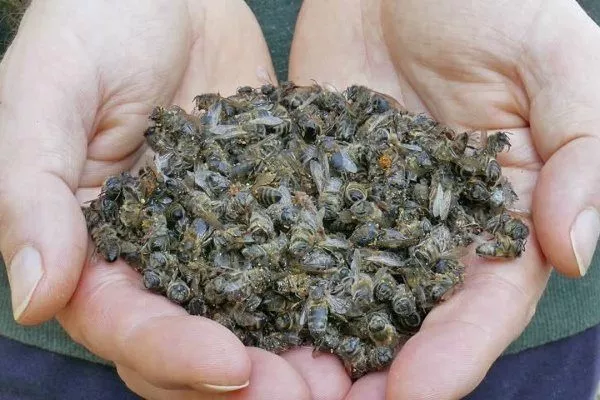
The first spring inspection reveals heavily soiled hives and a large amount of dead bees on the bottom. During their first flights, the colony moves very slowly and reluctantly, and many insects die: they take off with great difficulty and immediately fall. The remaining bees' wings can be seen trembling after landing. Sick bees defecate not in flight, but while sitting on branches or frames.
In strong colonies, nosematosis may be latent, affecting only a small number of individuals and not spreading as quickly. After the first few flights, you may notice a decrease in insect numbers and some individuals with swollen abdomens. If treatment and preventative measures are not taken, the disease will quickly progress to an overt form.
Diagnostics
If signs of illness are noticed, select several live individuals from the family and examine their intestines. There are three options for doing this:
- Carefully tear off the sting - parts of the intestine will be removed along with it.
- First, cut off the insect's head, then remove the intestines along with the stinger, holding it by the abdomen. This method allows for a complete examination of the intestines.
- Make an incision on the bee's abdomen. If affected by nosema, the middle part will be white-gray, enlarged, and without folds.
However, independent testing is not enough. Therefore, if infection is suspected, about fifty individuals should be collected from each hive, along with a small amount of honey. It is crucial to number the hives and samples for analysis to avoid confusing sick bees with healthy ones.
Samples are sent to a veterinary clinic, where they are examined under a microscope to detect Nosema spores. If the diagnosis is confirmed, the homes containing the infected colonies should be immediately removed and appropriate treatment measures taken.
The longer the time from the start of treatment to the first spring flight of a sick family, the greater the likelihood of saving it.
Treatment of nosematosis in bees
Once the diagnosis has been confirmed, a cleansing flight should be performed on the affected colonies as soon as possible. The insects are then transferred to clean, insulated hives. Honeydew is replaced with a higher-quality product. Hives containing affected colonies are separated from other hives.
Disinfection
Disinfection of dirty hives and equipment that sick bees have come into contact with plays an important role in treatment. Debris and dead bees from the hive are burned—they cannot be used to make tinctures or for any other purpose.
Honey from bees infected with nosema should not be fed to other bees. Heavily contaminated frames are melted down for wax. If there are only a few traces of diarrhea on a frame, or if there are only a few frames in the apiary, they are disinfected with vinegar and reused. Infected queens must be replaced.
Infested hives also need to be cleaned. There are several ways to do this.
| Method | Efficiency | Processing time | Necessary materials |
|---|---|---|---|
| Hot lye | High | Depends on the volume | Lye, water |
| Mole solution 0.5% | High | Depends on the volume | "Mole", water |
| Bleach solution | High | Depends on the volume | Whiteness, water |
| 4% formalin solution | Very high | Depends on the volume | Formaldehyde, water |
| Blowtorch annealing | High | Fast | Blowtorch |
| Vinegar vapors | Average | 3-7 days | Vinegar, rags/cotton wool |
Clean the wooden surfaces with a chisel. Then thoroughly wash the hives using any of the following solutions:
- hot lye;
- a solution of water and 0.5% "Mole" pipe cleaner;
- a solution of water and bleach: a glass of cleaning agent per bucket of water;
- 4% formalin solution.
After treatment, the hives must be washed with water and dried.
Alternatively, you can burn the hives with a blowtorch. Then clean them with a chisel and wash them with soapy water.
Another disinfection method is vinegar vapor. About 200 ml is needed for each hive. Cleaning is done as follows: the hive bodies are filled with honeycomb, and rags or cotton wool soaked in vinegar are placed in the spaces between the bodies. All cracks are carefully sealed with clay, and the holes are sealed with tape. The hives are stacked on top of each other.
If the air temperature is 15-20 degrees Celsius, disinfection with vinegar vapor lasts for 3 days. If the temperature is lower, it's best to leave the hives with vinegar for a week. Then open them and ventilate them thoroughly.
The inventory must be boiled for at least ten minutes.
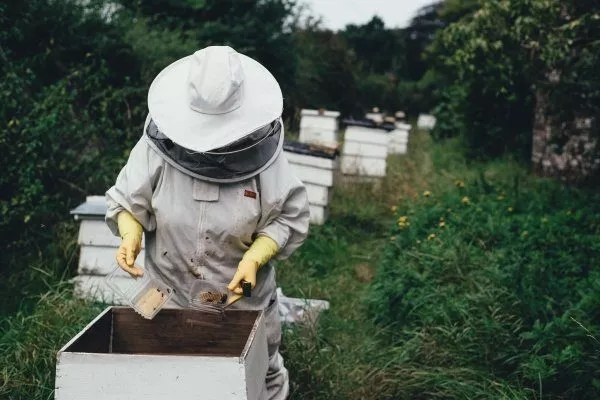
Cleaning procedures must be carried out throughout the entire apiary, even if the majority of families remain healthy.
Drug therapy
In addition to disinfection, antibiotic treatment is necessary.
- ✓ Effective against Nosema apis
- ✓ Easy to use
- ✓ Accessibility
- ✓ Cost
One effective remedy is fumagillin syrup. One ampoule should be dissolved in 50 ml of water and mixed with 25 liters of syrup. The course lasts up to two weeks. Each family should consume approximately 250 ml of the solution dissolved in the syrup daily. Don't prepare the entire 25 liters at once, as this may render the remedy ineffective. It's best to divide the entire amount into three portions.
The drug is effective only if less than half of the family is affected.
Another remedy is Enterosepol, which comes in 0.25g tablets. Four tablets, ground into powder, are needed per liter of water. The medication is added to syrup and used for four days. A five-day break between doses is recommended.
Another remedy for nosematosis is Nosemacid. It is a powder packaged in 5g packages. 2.5g should be mixed with 30ml of water and then added to 10 liters of syrup. Each frame requires 100ml. Treatment is carried out twice, with a 5-day interval between doses.
Wormwood is a herbal remedy for treating parasites. It is considered to be as effective as pharmaceutical medications. It is used in the form of a decoction and tincture in alcohol. To prepare the tincture, you will need 0.5 liters of vodka and 75 grams of dried herb. Infuse in a dark place for a week, then strain. Add half a teaspoon per liter. top dressing.
To prepare the decoction, you need 100 grams of wormwood and 1.5 buckets of water. The decoction is boiled for half an hour and then steeped for 12 hours. It is usually used for prevention rather than treatment.
Prevention
To prevent the development of nosematosis, preventive measures must be taken.
First of all, quarantine must be maintained between apiaries containing sick and healthy insects. It's best not to take anything from an infected apiary. All equipment must be disinfected before use.
Honey for wintering should be flower honey, of good quality, with a honeydew content of less than 5%.
During the wintering period, you need to provide more sugar so the bees can store more food. It's important to always have protein-rich food available. You can make syrup from a wormwood decoction.
It is better to leave only strong and healthy families for the winter; weak and small families should be united.
In early spring, the number of young individuals should be increased. This can be achieved by providing the female with sufficient carbohydrates.
Every spring, be sure to disinfect the hives, avoiding drying and feeding together. Each hive must have good ventilation. The temperature in the wintering area should not exceed 10 degrees Celsius.
If there were signs of illness in a family, queens should not be bred in it; the sick ones must be replaced as quickly as possible.
If there is a risk of infection, fumagol or metronidazole are administered as a preventative measure. A mixture is prepared at a rate of 1 g of the drug per 5 liters of syrup. Each frame will require 50 ml of the solution.
It is better to carry out prevention in the fall.
A beekeeper explains how to treat nosematosis in this video:
Nosema disease in bees is caused by parasites that infect the insects' intestines. The disease is dangerous because it can spread rapidly throughout the apiary. Treatment and prevention include disinfection and antibiotics.
Hello!
Thank you very much for the article. As a blogger, I included a link to it in my article "Preparing the Apiary for Winter | Stage 2: Feeding Bee Colonies /29/."
If you want to read, you can type it into the search bar or find me in Vladimir Yengovatov's online diary.