
If you've decided to breed chickens for large egg production, you should choose egg-laying breeds. This article examines the best egg-laying chicken breeds, their egg production figures, and compares breeds by productivity.
Comparative table of egg production of all breeds described in this article:
| Name | Egg production (pieces/year) | Egg weight (g) | Shell color |
|---|---|---|---|
| Leghorn | 370 | 62 | white, brown |
| Loman Brown | 320 | 63 | brown |
| Dominant | 320 | 65 | brown, white |
| White Russian | 230-240 | 55-56 | white |
| Tetra | 300 | 65 | brown |
| Minorca | 200 | 75-80 | white |
| Hamburg | 380-400 | 50 | white |
| Pushkin striped-motley | 220-290 | 60 | white, slightly yellowish |
| Kuchinskaya Jubilee | 300 | 60 | cream |
| Hisex White | 280 | 63 | white, brown |
| High Line | 240-340 | 60-65 | snow-white |
| Shaver | 250 | 52-60 | white, brown |
| Rhode Island | 200 | 58-60 | brown |
| Sussex | 170 | 58 | yellowish-brown |
| Adler silver | 180-250 | 60 | light brown |
| Orlovskaya | 135-155 | 60 | beige |
| Rhodonite | 300 | 60 | dark brown |
| Isa Brown | 320-340 | 63 | brown |
| Russian Crested | 180-200 | 56-60 | cream |
Leghorn
Leghorn chickens Leghorns were developed in the 19th century. They are still considered among the best. Almost all modern egg-laying breeds were developed by crossing Leghorns with other chicken varieties. Leghorn hens set egg production records. Over the course of a year, they lay approximately 370 eggs weighing 60-62 g. The largest egg produced by this breed was 454 g, containing nine yolks.
Leghorns begin laying eggs as early as 17-20 weeks of age, and lay eggs year-round in comfortable conditions. White hens lay white eggs, while spotted hens lay brown ones. The average weight of a hen is 1.5-1.7 kg, and a rooster's weight is up to 2.5 kg. Chick survival rates are up to 92%.
Leghorn Features:
- They cannot be kept outside of factories—the birds cannot tolerate outside noise and are prone to noise hysteria. When exposed to noise, the animals may start banging against the coop wall, throwing themselves at the fence, injuring themselves, and causing harm to neighbors.
- Leghorns have a weakened immune system and are susceptible to many diseases.
- The birds have a proud posture. They are small but tall. Their bodies are triangular, with a bright red comb and wattles. In hens, the comb hangs to the side, while in roosters, it protrudes. When young, the wattles and comb are light pink. The back is slightly concave in the middle, and the chest is puffed out.
- Birds are very agile and active. They are called "lightweight" because they rarely sit still.
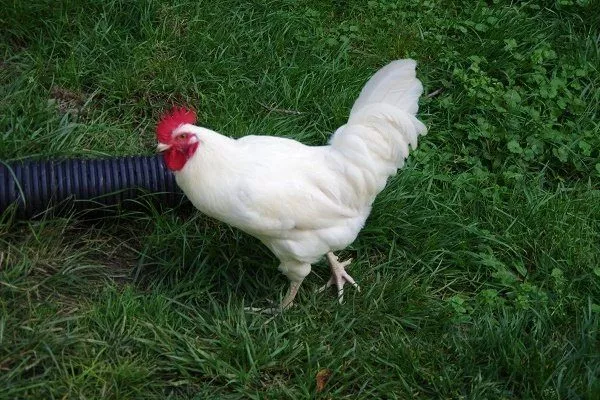
White Leghorns are considered more common, as they acclimate quickly. Less common are mottled layers, which are slower to adapt to new conditions but produce brown eggs, making them more popular with consumers. More than 40 color variations have been recorded for this breed.
Loman Brown
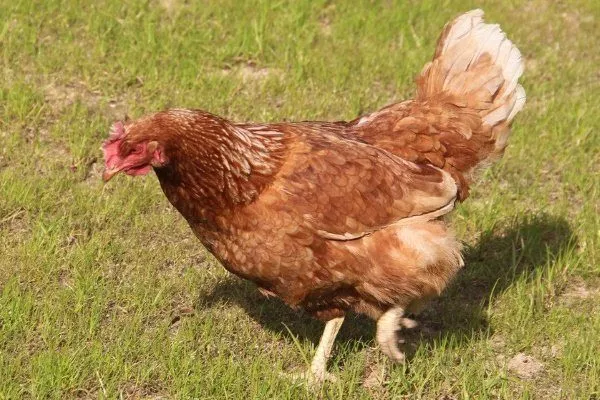
If a breeder can't decide which chicken breed to bring into their homestead, the Lohmann Brown is the perfect choice. This chicken can quickly adapt to a new climate and withstand freezing temperatures without issue. Even the bird's featherless earlobes, comb, and legs are immune to frostbite.
Egg-laying begins as early as 25-27 weeks. A single hen lays up to 320 brown eggs per year, weighing up to 63 g. Their shells are strong. Loman Browns are strong and resilient birds, making them profitable to breed.
The Loman Brown is considered a calm and balanced bird, and it doesn't make much noise. However, the bird is quite large—it's not a purebred, but a mixed breed capable of providing its owner with not only eggs but also meat.
The bird has a powerful, rounded chest and a slightly arched back. It has a large, prominent tail. It has a strong, massive beak. Its feathers are white or brown. A chicken can weigh up to 2 kg.
Dominant
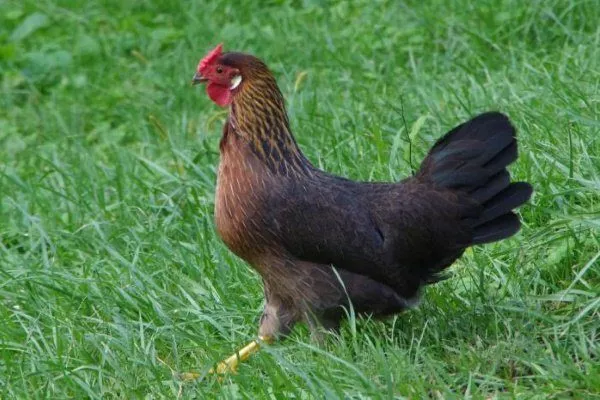
These are crosses developed by Czech breeders. They are popular among inexperienced breeders. These birds are considered not only good layers, producing large eggs, but also animals with a high survival rate in adverse conditions. The dominant's distinctive features include an attractive appearance, high egg production, low maintenance, and increased disease resistance.
The Black Dominant lays the largest eggs, and they have an excellent brooding instinct. Dominant Sussex hens lay up to 320 eggs per year, growing and gaining weight quickly. Males of these hens can weigh up to 3.2 kg. Dominants They produce eggs with brown shells, sometimes white. Each egg weighs up to 65 g.
Thanks to their thick plumage, dominants are able to tolerate cold well. They are kept in a variety of conditions, but prefer free-range grazing. Some European countries raise birds in organic poultry farming. Dominants are not picky about food and can forage for themselves when free-range.
Dominants are not a single cross between different breeds. They are distinguished by plumage color, beak, comb shape, and other, usually external, characteristics. Birds with blue feathers are even common. Sexual maturity occurs at 5 months.
High productivity of hens is maintained for up to three years, after which egg production decreases.
White Russian
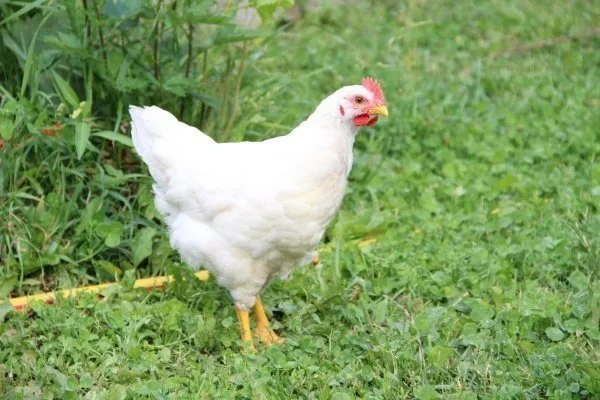
Russian White chickens were created by crossing Leghorns with local Russian mongrel birds. Work to improve Leghorns and develop the Russian breed lasted 24 years, ending in 1953. Since then, the Russian White has been rightfully considered one of the best egg-laying breeds.
Specifications:
- Lays up to 230-240 (sometimes up to 300) eggs per year.
- The weight of one egg is 55-56 g. The shell is white.
- The weight of a hen is 1.6-1.7 kg, a rooster – 2-2.6 kg.
A distinctive feature of these birds is the large, leaf-shaped, bright red comb with five teeth in adults. White Russian chickens are known for their resistance to stress, cold, and most chicken diseases. They are not aggressive toward other birds, are well-balanced, and develop quickly.
Breeding efforts have yielded excellent results—a subspecies called "Russian Snow White" has been developed. Some of its chicks are covered with white, rather than yellow, down at one day of age. Furthermore, this subspecies tolerates cold very well.
Tetra
Tetra is universal meat and egg breedDeveloped by a Hungarian company, these chickens are virtually indistinguishable from similar breeds. Their bodies are well-developed and rectangular, their heads are small, and their beaks are firm and light yellow. They are distinguished by a long neck, a medium-sized tail, and short, white-yellow legs.
A distinctive feature is the silky plumage of red or brown in hens and white in roosters. The birds' wings are medium-sized and lie close to the body.
Hens begin laying eggs at 16-20 weeks. They produce up to 300 brown eggs per year, weighing up to 65 g. The breed's highest productivity is observed in the first year of life, but declines thereafter. A hen's weight at 4.5 months reaches 1.6 kg.
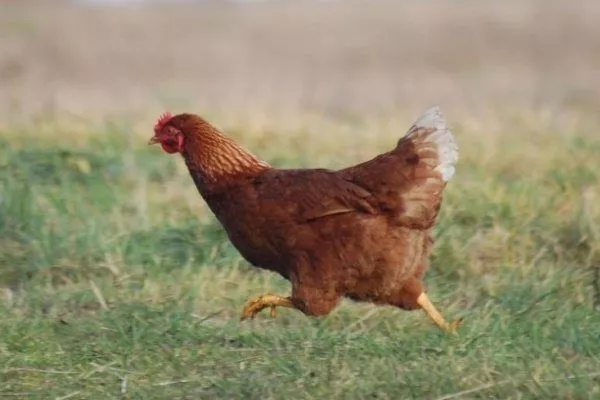
Like all general-purpose breeds, Tetra is renowned for its lean, tasty meat. It quickly reaches marketable weight—in just 4-5 months.
Minorcas
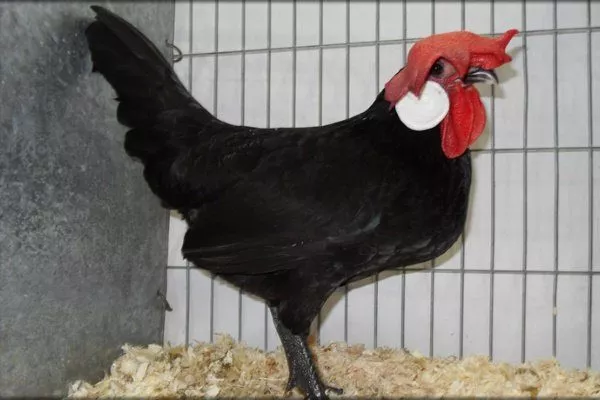
Minorcas are birds with a distinctive appearance. The hens have large white wattles. They come in several colors. The Black Spanish variety has black plumage with a green tint, but the earlobes remain the same color. The White Minorca was developed in Britain and is easily recognized by its red eyes, pinkish claws, and tarsi. A bright red comb completes the look. The bird is quite aesthetically pleasing, despite being a single color. The breed appeared in Russia in the late 19th century. However, these layers are not very popular in the country today, and large farms keep a few birds solely to maintain the gene pool.
What is of interest to scientists is the fact that the breed is purebred and no foreign lines have been mixed into it.
Hens are known for their early maturity, producing up to 200 large eggs with white, smooth shells per year. The eggs are large, weighing 75-80 g. Hens weigh 2.8-3.5 kg, and roosters 3.4-4 kg.
Hamburg
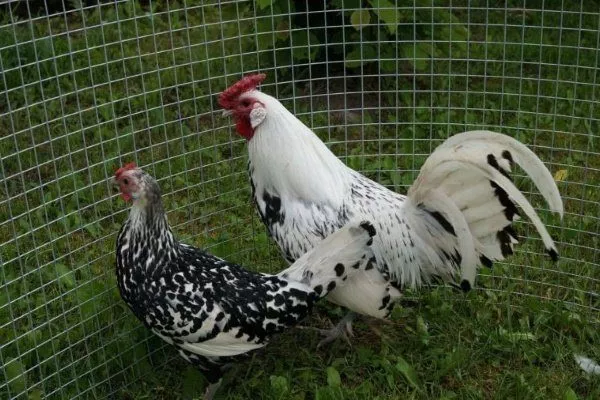
The bird was developed in Germany by crossing hens imported from other countries with local varieties. The Hamburg chicken has a slender, elongated body of medium size, a long neck, and a high chest, giving it a proud appearance. The Hamburg chicken has a pink comb and white earlobes.
Because several chicken breeds were used in selective breeding, the birds come in a variety of colors. They can be black, fawn, silver-striped, partridge, blue, golden-striped, or spotted.
Hens weigh 1.5-2 kg, roosters 2-2.5 kg. A single hen produces up to 380-400 white eggs weighing up to 50 g per year.
Pushkin striped-motley
The Pushkin chicken is a relatively new breed, developed by Russian breeders in 2007. White Leghorn males were crossed with black-and-white Australorps.
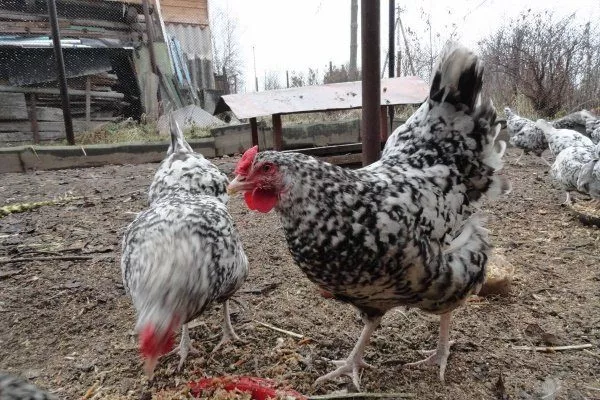
These birds have a trapezoidal, wide body. They have a long, vertical neck, topped by a small head and a prominent, bright red comb. The comb has a spike that begins at the nape of the neck and ends at the forehead. Pushkin chickens have a straight back, an elongated head, and an ivory-colored beak. Their eyes are orange. Their limbs are gray. Their plumage is striped and mottled.
Broilers of this breed are much larger than other egg-laying birds. An adult female weighs up to 2 kilograms, while a male weighs up to 3 kilograms. They begin laying eggs at 5-6 months. A hen can produce 220-290 eggs per year, weighing up to 60 grams. The eggs range in color from white to slightly yellowish, slightly creamy.
Pushkin chickens are known for their calm nature and undemanding living conditions. When threatened, the birds don't flee, but instead crouch, trying to stay as low as possible to the ground. This makes them very easy to catch for slaughter.
Kuchinskaya Jubilee
Kuchin Jubilee Breed The breed was developed by Russian scientists back in the Soviet era. At that time, the best birds were used for crossbreeding, such as Leghorns, Plymouth Rocks, Orlovskayas, New Hampshires, and Australorps. The Kuchinskys turned out to be robust and highly adaptable to a variety of conditions. The survival rate of the young is up to 95%.
Kuchinsky Yubileinaya chickens grow quickly, reaching sexual maturity at 5 months. Adult roosters weigh about 4 kg, and hens up to 3 kg. A single hen lays up to 300 cream-colored eggs weighing up to 60 g per year.
Although the breed was developed through repeated crossbreeding, it does not degenerate. On the contrary, what distinguishes Kuchin hens from other layers is their excellent maternal instincts and they sit on the nests independently. A single female can hatch up to 30 chicks. Kuchin roosters are typically red with greenish-black tails. The hens are distinguished by their variegated colors.
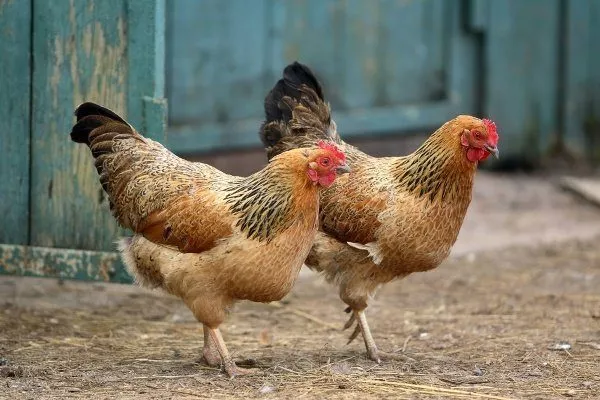
Even if the temperature in the coop remains above zero during the winter, Kuchinsky hens continue to lay eggs. Their productivity does not decline for up to three years.
Hisex White
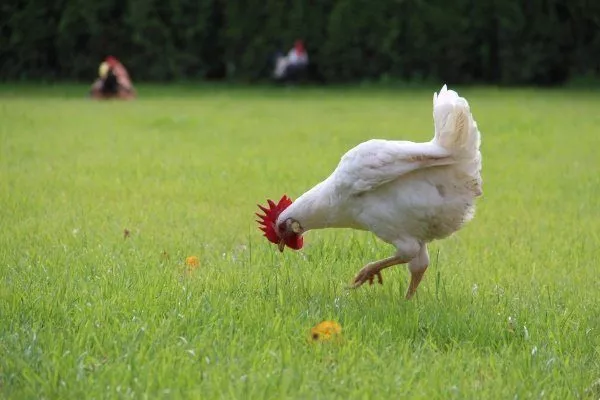
The Hisex White is a white bird weighing up to 1.8 kilograms. It is an active and agile animal. This variety Hysex breed The chicken has a slightly elongated body shape and snow-white plumage, occasionally with small brown speckles at the tips. The chickens have a wide comb that slopes slightly to one side.
Birds reach sexual maturity at 5 months. A single hen produces up to 280 brown or white eggs weighing 63 g per year. A distinctive feature of these eggs is their minimal cholesterol content. Hens often lay eggs with two yolks.
Birds are demanding animals: they require minerals in their feed. Furthermore, they must receive conditions and food that are close to their preferred ones. Productivity is particularly dependent on this.
High Line
High Line is a relatively new cross that has quickly gained popularity worldwide. This chicken is sought after not only by large factory farm owners but also by ordinary farmers. Today, it receives only positive reviews.
This is an egg-laying chicken breed with no significant flaws or special concerns. It has a calm disposition and requires little care. The hens are characterized by increased disease resistance and a high hatchability rate of approximately 96%. All this indicates excellent profitability in poultry farming.
Egg production characteristics:
- Laying hens produce 240-340 eggs per year.
- The color of the shell is snow-white.
- Egg weight: 60-65 g.
Typically, at the beginning of laying, the eggs are small, but after a few months, the hens produce large eggs suitable for incubation.
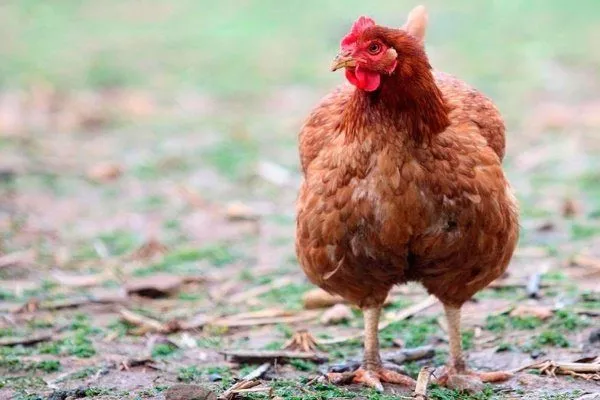
High Line chickens are small, reaching 1.3-1.5 kilograms by four months of age. Adults weigh approximately 2.3 kilograms at eighteen months of age. These hens are very attractive, slender, and sport a large, bright comb on their heads. Brown or white hens are also found. They have a small head, a strong, yellowish beak, a thick, medium-length neck, an elongated body, and a broad back. Their wings are well developed and held tightly to their bodies.
Shaver
Shavers are a breed of chicken originating in Holland, developed by specialists at Hendrix Genetics Company. The breed is a hybrid, comprising three varieties with identical production characteristics. However, the distinguishing feature is the feather color. Shavers come in white, black, and red.
Another common feature of this breed is that all individuals have white down, regardless of feather color. The Shaver is a small bird with a gently curved back and a short tail. The wings and feathers are held tightly to the body. The head has wattles and a short comb. The skin of the feet is initially bright yellow, but over time it acquires a bluish-gray color.
An adult hen weighs no more than 2 kilograms. Sexual maturity occurs at 4 months. A hen produces up to 250 eggs per year, weighing between 52 and 60 grams. White and black Shavers lay white eggs, while red Shavers lay brown-shelled eggs.
Rhode Island
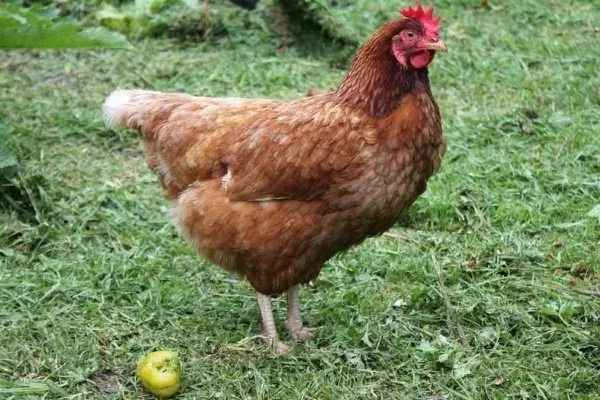
Rhode Island Chickens Developed through successful selective breeding experiments, the breed is considered truly magnificent and original. The birds have a long, strong body, a sloping chest, and a small head. Their plumage is dark with a shimmering green hue. The bird's broad back indicates the breed's egg production. The bird is active and agile, standing firmly on powerful yellow legs.
A distinctive feature of this breed is its unusual coloration: the feather shaft is bright red, while the feathers themselves are brown. Each feather is edged with a darker color.
Breed productivity:
- An adult Rhode Island hen can weigh up to 2.5 kg.
- In the first year of life, the bird produces about 200 eggs.
- Egg weight is 58-60 g, shell color is brown.
The breed's advantage is the gender-specific golden gene. This trait allows for the production of so-called autosexed chicks. At one day of age, farmers can distinguish the sex of the chicks. The hen typically has a spot on the nape, and her down is brown, sometimes with small light flecks. The young cockerels have white wings.
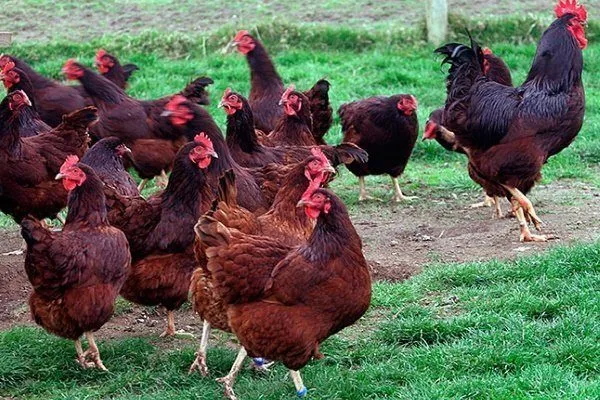
Laying hens have a strong brooding instinct. Generally, the birds are unpretentious, enjoying long periods of freedom in search of food.
Sussex
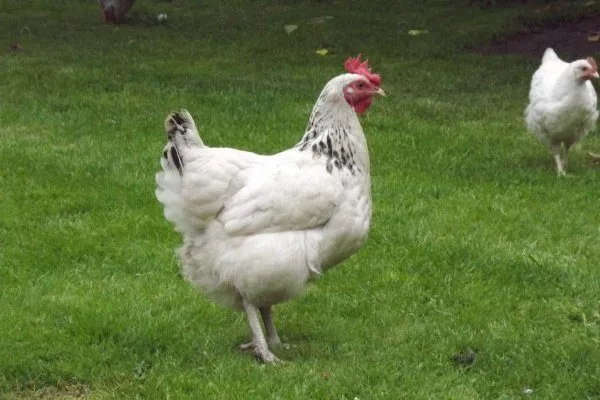
Sussex is not only an egg-layer, but also meat breed, originally from England. It was bred by crossing Dock Creek, Orpington, and other chicken varieties. The bird has a small, round head, topped by a medium-sized, red, leaf-shaped comb. The eyes and earlobes are the same shade as the comb. The bill is light, with a slightly darker base. The bird itself has a slightly awkward appearance. It has a square body, a thick, short neck, and a massive chest. Its wings and tail are small. Its legs are short and thick, and white.
The average weight of a Sussex chicken is up to 2.7 kg. Their egg production is moderate – a hen produces up to 170 yellowish-brown shelled eggs per year. Eggs weigh up to 58 g. Sussex chickens are easy-to-care-for birds, naturally robust, and require no special care.
The Sussex has a distinctive, distinctive coloration: its plumage is completely snow-white, with a black band around the neck and black edges at the tips of the feathers. The breed's distinguishing feature is the sex-linked silver gene. By crossing Sussex hens with those carrying the gold gene, such as Rhode Island hens, it's possible to distinguish day-old chicks by sex.
Adler silver
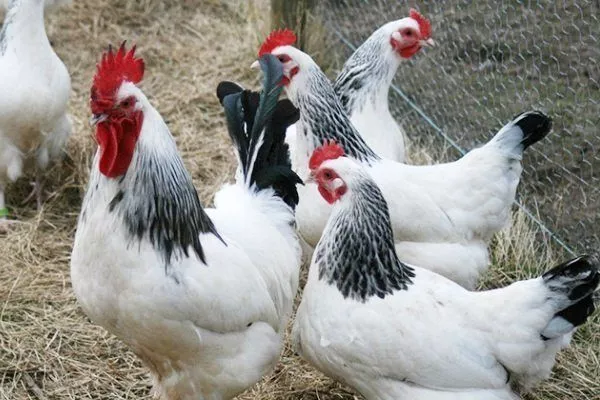
The Adler Silver chicken breed is named after the city where it was developed. The bird's uniqueness lies in its excellent acclimatization to a variety of weather conditions. It has a beautiful silvery coat and dark wing edging. The chickens have a neat appearance, low necks, copper-toned eyes, bright yellow legs, and a well-proportioned body.
Sexual maturity occurs at 5 months, sometimes earlier. At one year of age, a hen already weighs up to 2.5 kg. The Adler Silver hen produces 180 to 250 eggs per year. The eggshell color is light brown, and it weighs up to 60 g.
The head has red earlobes and a yellow beak. The birds have a small, rounded tail. The bird's advantage is its calm and friendly nature. Most farmers speak highly of the birds, noting their docile nature.
Orlovskaya
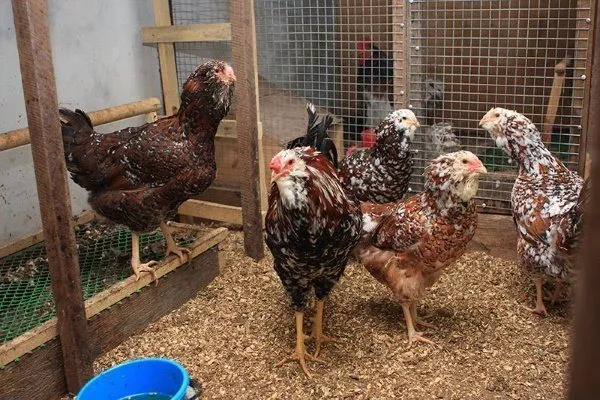
The Orlov chicken was developed 200 years ago and has since become very popular in Russia. There is no precise data on the breed's origins, but it is believed that the hens and roosters of the Iranian breed are its ancestors.
Orlov chickens have a strong, well-developed body structure. They are easy-to-care-for and adapt well to any climate. They lay 135-155 beige-shelled eggs per year, weighing up to 60 g. Live weight is up to 2 kg.
Orlov chickens are unique domestic birds with distinctive plumage. They have a small head, a small curved beak, and a wide nape. Hens reach a minimum height of 60 centimeters. They have well-developed muscles and skeletons. Their long necks are covered with lush plumage. A distinctive feature is their amber or orange-red eyes. Their comb is crimson.
Rhodonite
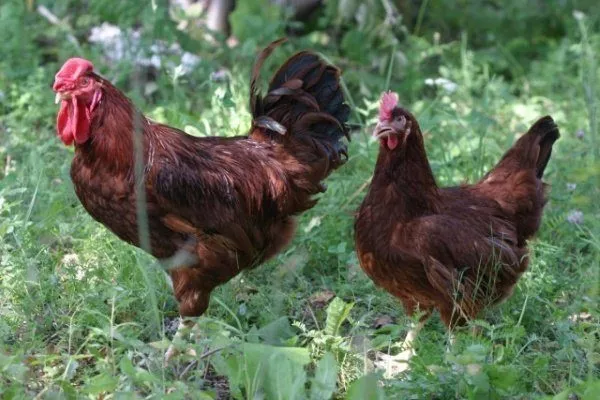
Rhodonite is an egg-laying breed. However, many farmers also raise the birds for meat. Rhodonite hens reach sexual maturity at four months. They lay approximately 300 dark-brown eggs per year, weighing approximately 60 grams. High egg production is observed during the first 1.5 to 2 years. The breed is characterized by its light weight, with hens reaching 2 to 3 kilograms (4.5 to 6.7 pounds) as adults.
For withdrawal chicken Rhodonite Rhode Island roosters and Lohman Browns were used. This resulted in a variety with characteristics inherited from both varieties.
Rhodonites have a small head, a yellow beak with a central stripe, large bright red wattles, and a leaf-shaped crest. Light brown feathers lie close to the body. These birds are very agile, active, non-aggressive, and adapt well to various weather conditions.
These birds are used not only for domestic but also for commercial breeding. They are unpretentious and adapt easily to any conditions, allowing them to be kept in a standard poultry house without perimeter insulation. The breed tolerates temperature fluctuations well, but to maximize egg production, the house should not be kept colder than 2 degrees Celsius in winter.
Isa Brown
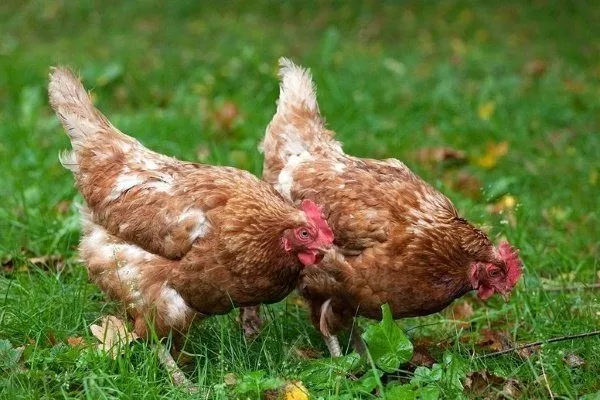
This is a young industrial egg-laying cross. The birds were bred in France. In appearance, the bird is a typical layer. It is a miniature animal with a light bone structure and brown plumage. It has a small head and comb. The key is beige-pink, and the legs are yellow.
Future layers are distinguished by darker, brown plumage. This is a highly productive cross. They begin laying eggs as early as four months. Isa Brown hens are considered record-breakers in their field. They lay approximately 320-340 eggs per year. Their shells are brown. Each egg weighs up to 63 g. The average weight of a hen is up to 1.9 kg.
Crossbreeds have an unusually calm and docile nature. They don't get into fights or conflicts. They are active and require a comfortable area to roam. Read more about this breed of chicken. Here.
Russian Crested
The breed emerged in the late 19th century and was developed without the assistance of professional breeders. The primary contribution to the breed's development was made by ordinary farmers. The initial impetus for developing the Russian Crested was the desire to create a hardy breed with high reproductive rates and high egg production.
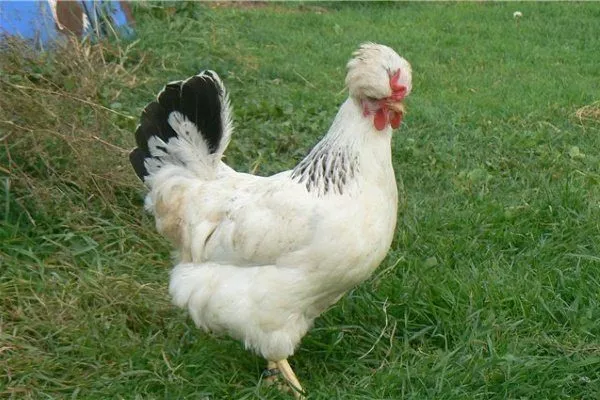
The Crested is a versatile breed that excels as a layer. Its attractive appearance attracts many farmers, as in addition to its high production figures, it also boasts a unique appearance. Its name derives from its lush crest. These hens have a large body with prominent muscles. The back is broad and raised, and the chest is rounded. The head is small. The beak is gray-yellow, elongated, and has a rounded tip.
A distinctive feature is their light brown or orange eyes. Some have a reddish tint. These chickens come in a wide variety of colors, including black, silver, fawn, white, blue, brown, and even multicolored individuals.
Breed characteristics:
- At maturity, the bird's weight reaches about 2.5 kg.
- They are known for their neatness. They enjoy an active lifestyle and a spacious outdoor area.
- Some individuals are capable of flying as high as one and a half meters. This should be taken into account when setting up the poultry house.
- They can become very attached to people and readily run out to meet their owner when they see him.
Sexual maturity occurs at 5-6 months. Sometimes egg-laying begins earlier or later than this. A hen lays approximately 180-200 eggs per year, weighing approximately 56-60 g. The eggshells are cream-colored.
There are a huge number of varieties of egg-laying chickens. Many farmers study their productivity before breeding and raising animals, as this determines their future profitability and return on investment. Among the many breeds, it's always possible to select a bird with only positive traits.