
Leghorn chickens are an easy-to-care-for breed that has gained popularity among many breeders. This breed is praised for its many advantages and attractive appearance. This article describes the characteristics, raising, and care of these birds. The breed's varieties and their productivity are discussed.
History of the breed
Leghorns were developed in Italy towards the beginning of the 19th century. However, even then, they couldn't boast high productivity, so they were considered famous only in the Tuscany region.
The breed had average precocity and egg production, and was exported first to England and then to the United States. American breeders, who were actively developing new, high-yielding breeds at the time, used Italian chickens in their experiments. And for good reason, as the birds possessed great potential.
The Leghorn was developed by crossing Spanish breeds, Japanese ornamental chickens, and the White Minorca. In the 1860s, the Italian birds were dubbed "Leghorns" in the United States. They only arrived in Russia in the second half of the 1920s.
Description
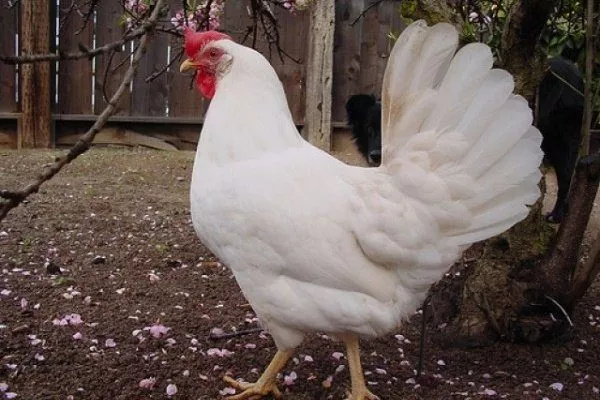
Leghorns are an old breed with a small frame, which is more appropriate for egg-laying breeds. They have a wedge-shaped body with a rounded, slightly protruding chest. The back is broad and elongated, with a concave center. The head is small, topped by a large, bright red comb. Roosters have an upright comb, while hens have a slightly drooping comb. They are characterized by a long neck and straight, yet slender legs.
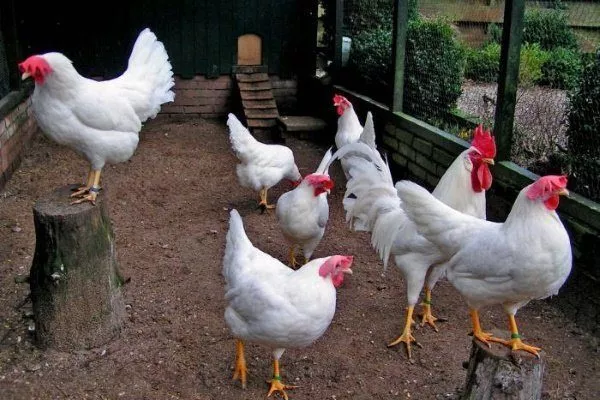
Both hens and roosters of this breed have fairly heavy tail feathers. Males and females can sometimes be distinguished by their combs. Many believe Leghorns are white, but in fact, there are several shades of plumage. White Leghorns were previously the dominant breed in commercial poultry farming, but as consumer demand for brown-shelled eggs grew, breeders began to focus more on breeding birds with colored plumage.
The birds have a calm disposition. The breed is adapted for industrial farming, so they lack maternal instinct.
Features and performance
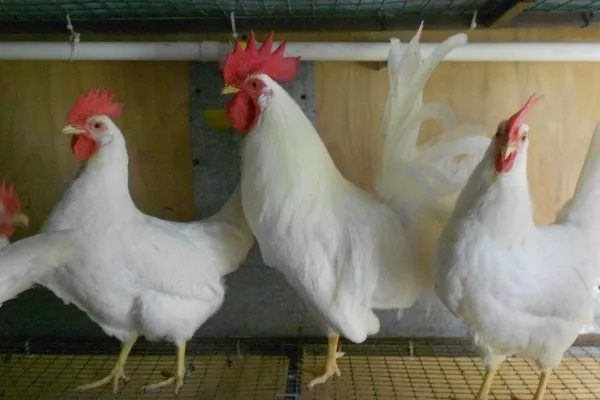
White Leghorns are considered one of the best breeds for egg production. A single hen lays approximately 300 eggs per year, significantly more than other breeds. This trait is prized by farmers breeding these birds for large egg production.
Almost 95% of eggs are fertilized, as Leghorn roosters are very active. If a farmer wants to raise their own chicks, they'll need to use an incubator. Despite the lack of a brooding instinct, hatchability is high.
Unlike white Leghorns, dwarf hens produce slightly fewer eggs per year—260, weighing between 57 and 65 grams. Hens begin laying eggs as early as four months. During the first two months, they may produce small eggs, but their size increases significantly afterward.
Varieties of the breed
The Leghorn is a remarkable breed of bird, distinguished not only by its coloring but also by its appearance. Today, several varieties of this breed are recognized:
| Variety | Egg production (pieces/year) | Egg weight (g) | Weight of an adult chicken (kg) | Rooster weight (kg) | Shell color |
|---|---|---|---|---|---|
| Striped and variegated | 220 | — | 2.1 | 2.5 | White/cream |
| Mini Leghorns | 260 | 60 | 1.3 | 1.5 | White |
| Spotted | — | — | — | — | — |
| Legbar | 270 | 60-70 | 2.5-2.8 | 3-3.5 | Blue/olive |
| Golden | 260 | 60-61 | 1.9 | 2.2 | White |
Striped and variegated
The breed was developed in the 1980s at the Institute of Farm Animal Breeding and Genetics in the Soviet Union. During the selection process, scientists focused on increased egg production, early sexual maturity, increased egg weight, and improved appearance. Striped Leghorns were developed by crossing black-and-white Australorps.
- ✓ Egg production level
- ✓ Egg weight
- ✓ Disease resistance
- ✓ Feeding requirements
- ✓ Adaptation to climate conditions
As a result, it was possible to obtain birds that have the following characteristics:
- Disease resistance. The birds have good health and high immunity.
- Egg orientation. Over the course of a year, hens produce 220 white or cream-colored eggs. The shells are hard.
- Rapid weight gain. By 5 months of age, hens weigh around 1.7 kilograms. By the time they reach 1 year of age, hens reach 2.1 kilograms, and roosters 2.5 kilograms.
- Marketable appearance. The laying hen attracts attention with her external appearance, which is very important for colored animals.
- Early sexual maturity. Hens begin laying eggs at 5.5 months of age. Fertility rates are up to 95%, hatchability is 80%, and chick survival is 95%.
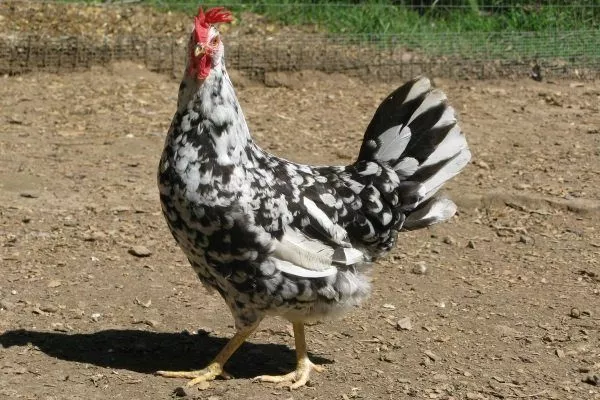
Breeding work to improve and consolidate the highly productive qualities of striped-and-motley Leghorns continues to this day.
Mini Leghorns
This is a miniature version of the Leghorn, developed by Russian breeders. Today, it is in demand worldwide. Despite its diminutive size, hens weigh an average of 1.3 kg, and roosters 1.5 kg.
Mini Leghorns are renowned for their high egg production. This egg-laying breed is popular because they lay up to 260 white eggs per year, weighing approximately 60 grams. They begin laying early, at 4-4.5 months. The breed's main advantage is its high chick survival rate—95%.
Breeders value this breed for its profitability. These hens are easy-to-eat and eat 35% less than larger birds. However, to ensure proper egg production, they require a diet rich in calcium and protein.
Although the egg fertility rate is 98%, the dwarf breed is completely devoid of maternal instinct. These animals are characterized by a calm disposition, lack of aggression toward their owners, and the ability to adapt to Russia's climate.
Spotted
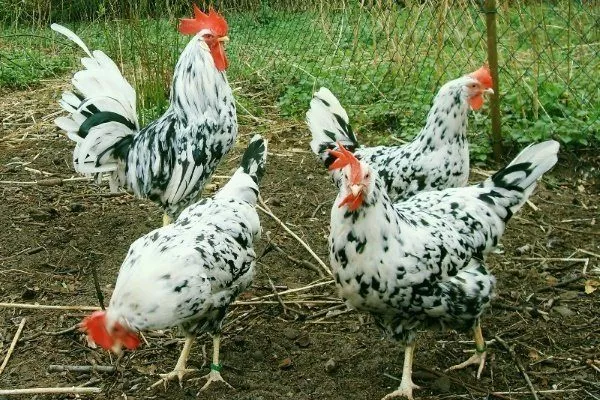
A breed with a black and white coat. The first chickens of this color were bred in 1904. They were considered defective, but eventually became the ancestors of the spotted Leghorns, which were never crossed with any other breeds. Perhaps the genes of the Black Minorca, which was used to develop the Leghorn breed, played a role. A distinctive feature of this variety is that spotted Leghorns are considered good layers.
Legbar
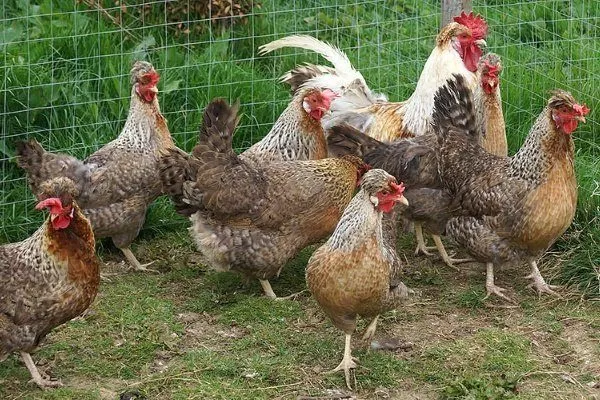
Cuckoo-Partridge Leghorns are often used for breeding. Their advantages include a high survival rate and low feeding requirements. Hens have gray, silver-toned, and golden-cream plumage. Roosters have more distinct stripes than hens. They have a distinctive crest and a bright comb with white wattles.
They are known for their calm nature, robust health, and high egg production—laying up to 270 eggs per year, each weighing 60-70 grams. Their shells are blue or olive. Roosters weigh 3-3.5 kg, and hens 2.5-2.8 kg. Fertility is 90%.
Golden
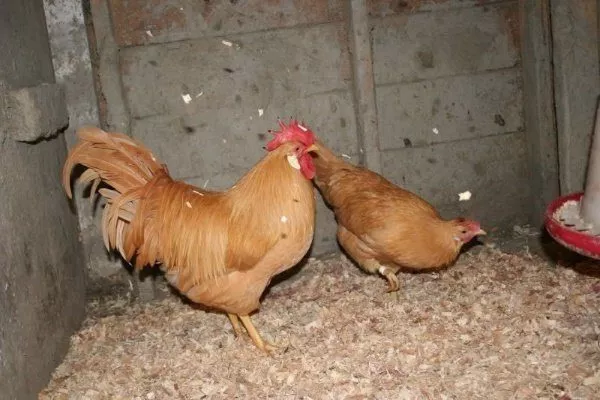
Golden Leghorns are characterized by their small body size, beautiful appearance, and high productivity. They are considered an ornamental subspecies. Their golden plumage lends them a certain mystique. Hens lay up to 260 white eggs per year, weighing 60-61 grams. An adult hen averages 1.9 kg, and a rooster, 2.2 kg.
Maintenance and care of Leghorn chickens
Leghorn chickens are easy-to-care-for animals, but they do require proper care, as their productivity depends on it. This includes adhering to sanitary standards, feeding the birds appropriately, and maintaining proper housekeeping.
Premises
The poultry houses are equipped with perches, nest boxes, waterers, and feeders. For perches, it is recommended to use rounded perches with a diameter of 4 cm, making it easier for the hens to grasp them with their feet. There should be enough space for all the birds, as they spend most of their time perched. The structure should be sturdy, should not sag, and should be able to support several birds.
To make nests, use any container that can accommodate birds. The bottom is lined with hay.
Experienced breeders recommend providing a private aviary for their birds. To do this, fence off an area near the coop and stretch a meter-and-a-half-high net to prevent the birds from escaping. Otherwise, the animals could cause damage to the farm, such as digging up garden beds, pecking at vegetables, and so on. A aviary allows the birds to forage for food.
In winter, containers with ash are placed in the poultry house where the birds can bathe, which provides reliable protection against body parasites.
Feeding
Leghorn chickens' diets are similar to those of all other chicken breeds. The key is to feed them fresh feed, maintain a consistent feeding schedule, and create a balanced diet that includes minerals and vitamins.
Particular attention is paid to feeding the chicks:
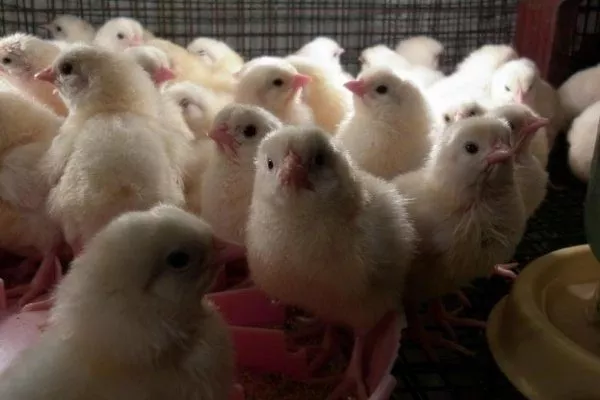
- From day 1 to day 3 They are fed with boiled grated eggs, cottage cheese or starter feed for laying hens.
- On the 4th day add greens: dandelion leaves, onion feathers, nettles.
- On the 5th day feed chalk is introduced.
The young are fed at least 6 times a day.
Starting from the third week, you can transition the chicks to an adult diet. Mature hens won't need to be fed as frequently; three meals a day will suffice. However, it's a good idea to acclimate the chicks to the new regimen by gradually reducing the number of feedings as they reach six months of age.
Adult birds are fed the following products:
- bone meal;
- grain feed;
- root vegetables, vegetables;
- green mass;
- mineral and vitamin supplements;
- herbal flour;
- feed chalk.
The birds are fed grain in the morning and evening. For lunch, it is recommended to feed the animals a mash with vegetables and chopped grass. Chickens readily eat any root vegetables. When preparing a diet for young birds, include foods high in protein. Adult birds require adequate vitamins and calcium. In the summer, they replenish their reserves with green fodder, and in the winter, they are fed boiled vegetables and grass meal.
Birds get calcium from crushed shells. It's best to place containers of this product in the coop. In addition to food, they are given clean water, which is changed regularly. In winter, the birds are given warm liquid to drink.
Diseases and prevention
On commercial farms, birds are often exposed to elevated noise levels, which can lead to the development of a condition common in Leghorn chickens called noise hysteria. Laying hens are particularly susceptible to this condition. The condition manifests itself as hens behaving aggressively toward each other, screaming, flapping their wings, and banging themselves against the walls. This leads to severe injuries and bruises, as well as feather loss. decrease in egg production.
Noise hysteria attacks can occur several times a day. In such cases, it is necessary to immediately reduce the noise level and create favorable conditions for egg production.
Breeding and incubation
Leghorn hens lay particularly well in their first year. After that, productivity gradually declines. There's no point in keeping them for more than two years. Therefore, eggs are collected from yearling hens and they are put into incubationOnly even eggs that are free of dirt, growths, or damage are selected.
White Leghorns lay eggs with almost transparent shells—this allows the breeder to detect spoilage using an ovoscope. Candling is necessary so the breeder can examine the yolk and air cell.
- The yolk should be whole and move slightly to the side when turned over, then immediately return to its place.
- The air cell should be located at the blunt end. If the cell is significantly displaced, such eggs should not be set.
Incubation is carried out in the usual manner: the temperature regime and required humidity are maintained.
Industrial and home breeding
Leghorn chickens are particularly popular for commercial breeding in various countries. More than 20 breeding farms across Russia are developing and developing new varieties of this breed.
Experiments in improving the breeding process have resulted in hens laying eggs for over 250 days a year. Breeding Leghorns requires little space or feed, making large-scale breeding very profitable today.
On commercial farms, Leghorns are raised in cages arranged in rows in a barn. Hormones and antibiotics help prevent diseases that develop due to cramped conditions and dirt. However, this leads to emaciation, which leads to culling. In industrial settings, hens are raised for only a year, then slaughtered due to declining egg production.
Home breeding is profitable and cost-effective. White Leghorns are popular commercially, while backyard farmers prefer birds of various colors. These are typically brown hens that lay large eggs. Poultry farmers are attracted to the appearance of these birds, although their productivity is lower than that of white Leghorns.
Brown-colored hens require special attention. They need to be fed not only well, but also on a consistent schedule. Otherwise, egg production will suffer, and it will take a long time to recover. These hens are more susceptible to infectious diseases than their white counterparts.
About the correct feeding of laying hens – read here.
Advantages and disadvantages of the breed
Leghorn is a popular and sought-after breed of egg-laying chicken. These birds are considered the best layers. This isn't the only advantage these birds have. However, they also have several disadvantages.
The table below lists the pros and cons of the breed.
| Pros | Cons |
|
|
Comparative characteristics of productivity with other breeds
Below is a table that allows you to compare Leghorn chickens with other egg-laying breeds:
| Breed | Weight of laying hens | Number of eggs per year | Egg weight | Shell color |
| Loman Brown | 1.6-2 kg | 280-320 pcs. | more than 60 g | brown |
| Rhode Island | 2.5-2.9 kg | up to 170 pcs. | 58-63 g | brown |
| Black Minorca | 2.3-2.5 kg | 170-200 pcs. | up to 60 g | white |
| Sussexes | 2.4-2.7 kg | 170-190 pcs. | 56-58 g | from light beige to yellow-brown |
| New Hampshire | 2.5-2.8 kg | 190-200 pcs. | 58-59 g | light brown |
| Russian white | 2-2.5 kg | 300 pcs. | up to 56 g | white |
| Belarus 9-U | 2-2.1 kg | 250-260 pcs. | 59-60 g | white |
Farmers' opinion
The Leghorn breed is the subject of only positive reviews online. It's virtually impossible to find a breed that surpasses the Leghorn in egg production.
Leghorn chickens are popular birds, renowned worldwide. They are easy to care for and feed, but require proper care. Only with good feeding, regular cleaning of the coop, and replacement of drinking water will these birds delight their breeders with abundant eggs.