
There are many varieties of meat chickens available for breeding, each with its own unique characteristics. For example, breeders who prefer meat-oriented chickens prefer fast-growing, heavy-set chickens that are easy to care for.
Characteristics of meat breeds
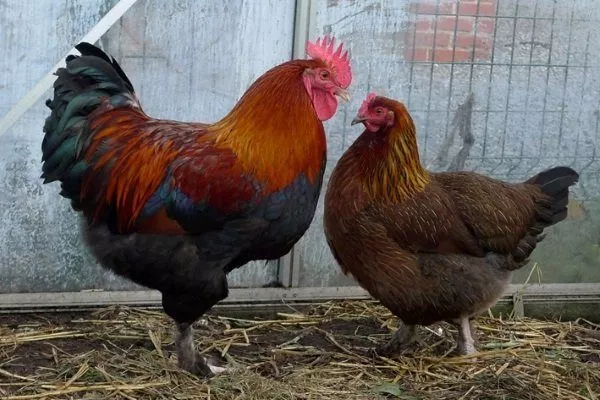
Meat chicken breeds differ significantly from their egg-laying counterparts. They are larger, have a heavier frame, a strong constitution, and looser plumage than laying hens. They are distinctive not only in their appearance but also in their temperament. Meat chickens are less aggressive, less skittish, and adapt better to changes in their environment.
What features can be obtained from the development of meat chickens:
- Meat breeds are characterized by low egg production;
- At the age of 2 months, the young gain weight up to 1.5 kg, an adult at 5-6 months can weigh up to 4.5 kg.
- They develop and gain weight most intensively in the first two months of life;
- Meat breeds are not prone to low temperatures, but chicks need a stable temperature of 19-25 degrees for normal development.
Meat chickens require less light than laying hens. A stable temperature in the house and proper nutrition, especially during the first two months of life, can help ensure rapid growth. Otherwise, caring for meat chickens is virtually the same as caring for laying hens.
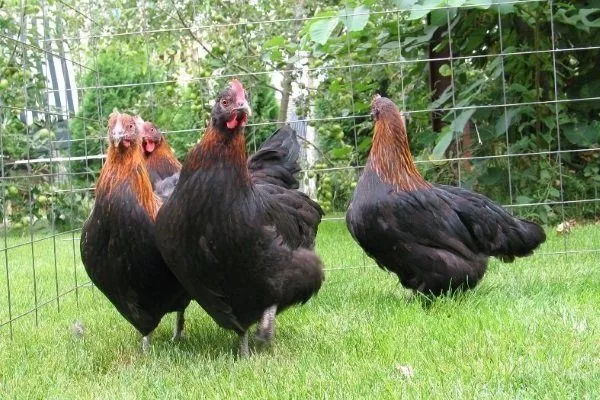
The coop should be equipped with perches and nests, food and water supplies, and bedding made of straw and sawdust. No more than 10-15 one-month-old chicks should be housed per square meter. Adults require ample space.
- Ensure a stable temperature in the poultry house.
- Prepare a high protein diet.
- Organize a free space for walking.
- Conduct regular veterinary examinations.
- Provide sufficient light.
List of the best breeds
In just one season, large, fast-growing chickens can generate profits for breeders by selling healthy, juicy meat. Besides providing meat, chickens are also valuable as egg producers. These birds have a robust structure. They mature early, are quite hardy, and easily adapt to life in summer coops.
The characteristic traits of poultry raised for meat include large size and strong bones. To improve productivity, most poultry farmers use crossbreeds—hybrids of well-known breeds that incorporate only the best traits from both parents. For example, many broiler crossbreeds were developed using representatives of well-known Russian breeds—White Plymouth Rock and Cornish meat chickens.
| Breed | Rooster weight, kg | Chicken weight, kg | Egg production, pcs/year | Disease resistance | Temperature requirements, °C |
|---|---|---|---|---|---|
| Maran | 4 | 3 | 150 | High | 19-25 |
| Broilers | 3 | 2.5 | 120 | Average | 20-25 |
| Gate | 5 | 4.5 | 120 | High | 15-25 |
| Cochins | 6 | 4 | 120 | High | 18-25 |
| Kuchinskaya Anniversary | 4 | 3 | 240 | High | 16-25 |
| Faverolles | 4 | 3 | 180 | Average | 15-25 |
| Pushkin chickens | 3 | 2 | 220 | High | 17-25 |
| Adler | 4 | 2.8 | 180 | High | 18-25 |
| Cornish | 4.5 | 3.5 | 130 | Average | 19-25 |
| Amrox | 4.5 | 3.5 | 220 | High | 18-25 |
| Plymouth Rock | 4.5 | 3.5 | 170 | High | 19-25 |
Maran
These are French meat-egg chickens well-known to poultry farmers. They have become popular in Europe due to their early maturity, beautiful plumage coloring, bright, almost chocolate-colored eggs, and excellent meat quality.
The Marans breed is renowned for its exceptionally beautiful birds, boasting a variety of attractive colors. Birds come in white, silver, and black with copper markings. Hens have black feathers with a gold collar around their necks. Roosters are distinguished by golden spots on their chests and reddish feathers on their backs. These birds are distinguished by their black tails with a blue sheen.
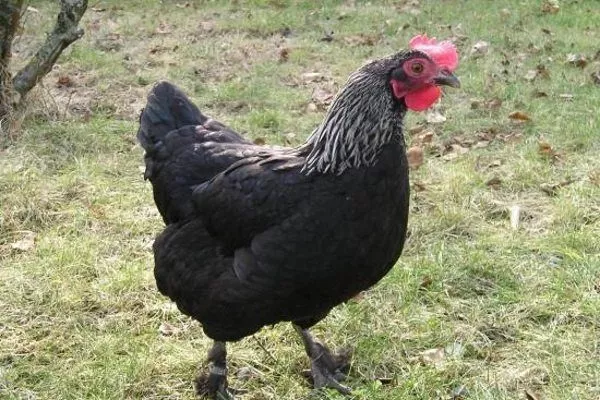
There are Marans with a silvery-cuckoo coloring. Less commonly, birds with a golden-cuckoo coloring are bred, highly prized by breeders due to the alternating black and golden feathers—these birds command high prices. Wheat-colored birds are equally popular. Roosters with this coloring have bright golden feathers on their chest and neck. Hens tend to have yellow, golden-red, and sometimes brownish hues.
Adult birds are quite large. Roosters can reach up to 4 kg, and hens up to 3 kg live weight. Hens produce up to 150 large eggs weighing up to 80 g. The breed is unique in its coloring. These birds can have golden cuckoo, wheat, black, cuckoo, white, or variegated plumage.
Broilers
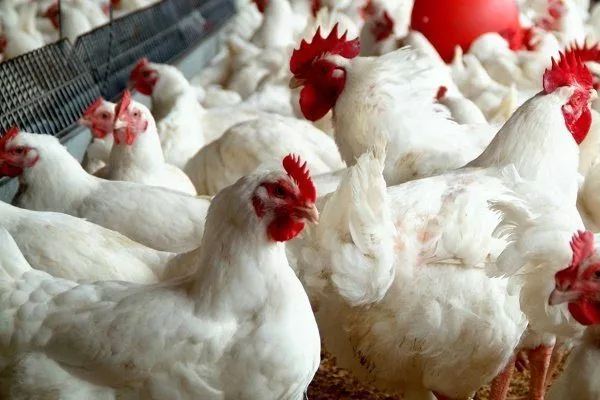
The familiar broiler chickens are not a meat breed, as many beginning poultry farmers believe. They are crossbreeds—the offspring of interbreeding pairs of Cornish and Plymouth Rock birds. Occasionally, other meat breeds are also used in broiler production programs, such as the Yubileynye Kuchinsky, Brahma, or Cochin. These chickens are renowned for their good meat production, but they are unable to pass on these traits to their offspring, so they are kept until they reach market weight and then sent to slaughter.
At one month, chicks weigh about 1.5 kg. This is the age at which they are most often slaughtered. If you can wait a little, it's best to take your time, as after a month, the live weight of the bird will be around 3 kg. Growing broilers longer than this doesn't make sense—their weight won't increase, but their appetite will. This is why broilers rarely live longer than three months.
Gate
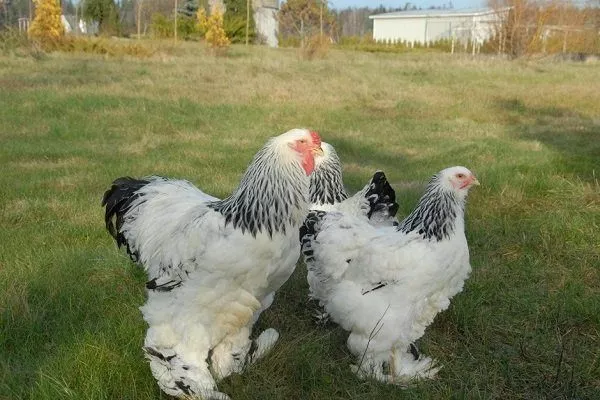
This variety was developed through crossbreeding with Asian fighting chickens, Chichinchins, and other varieties. This bird is renowned for its large size. Several varieties of Brahma chickens are raised worldwide, differing in coloration and the unusual traits inherent to this breed, defining it as a decorative and meat breed.
Roosters of this breed can gain up to 5 kg of live weight, and hens around 4.5 kg. Hens are excellent brood hens, producing approximately 120 brown eggs per year, each weighing 60 g.
Brahma chickens They are able to quickly adapt to any living conditions, are also undemanding and can withstand winters well. They don't require large areas for running, are flightless, and coexist well with other chicken breeds.
Cochins
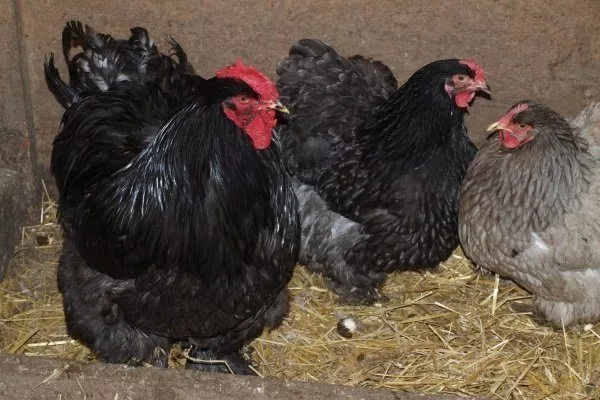
This is a Chinese chicken breed that has recently become popular in Russia. These birds are renowned for their lush plumage and exceptionally large size. This meat-producing breed gains weight quickly and aggressively. Roosters can reach up to 6 kg, and hens around 4 kg. They are capable of laying approximately 120 brown eggs with bright yolks per year.
While blue or black chickens were once the dominant color of this variety, today white and beautiful fawn birds are also found. These meat or egg-laying chickens are easygoing, calm, and get along well with other birds. However, poultry farmers should be careful not to overeat Cochins, as this can lead to obesity.
Kuchinskaya Anniversary
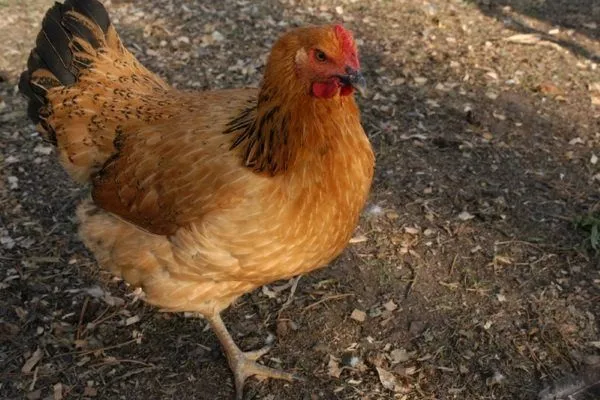
To develop this breed, breeders used the best egg-laying and meat-producing breeds. The result is a bird distinguished by its excellent egg production and meat yield. These versatile hens have truly become a boon for owners of small private farms and backyards. Hens can lay up to 240 eggs per year, and adult hens can reach 3-4 kg of live weight.
The meat quality of the Kuchin Jubilee chicken is significantly better than that of commercially bred broilers. The bird is not fussy, tolerates both cold and heat, is undemanding in its diet, and matures early. A distinctive feature of this breed is the distinct coloring of males and females, allowing for easy separation of the flock even at 24 hours of age.
Faverolles
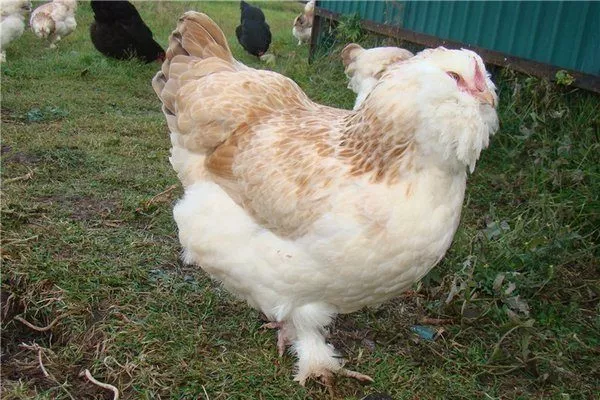
This variety has been common in France since the early 20th century. It is renowned for its distinctive appearance and exceptional meat quality. Its excellent consumer qualities are still valued today. These meat-and-egg hens grow quickly, reaching 3-4 kg live weight. Hens lay up to 180 eggs, each weighing 60 g. The eggshells are brown.
Despite their excellent meat production, Faverolles chickens, unlike other meat-egg breeds, are distinguished by their fine bones. They are able to quickly adapt to seasonal temperature fluctuations and have a calm disposition, but are prone to obesity.
Pushkin chickens
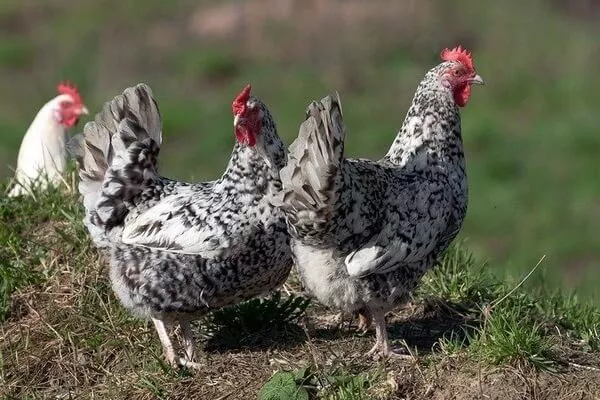
Pushkin chickens are distinguished by their black and white markings. Some poultry farmers consider this meat-egg breed one of the best for small private farms. These chickens are hardy and quickly adapt to any conditions, even the harshest. They are unpretentious, able to find their own food in the open air, mature early, and lay a good number of eggs.
A rooster can weigh up to 3 kg, and a hen up to 2 kg. A hen can lay about 220 white eggs per year. The beauty of this breed is that, despite their modest weight, they can develop a plump, attractive body.
Adler
These are beautiful meat-egg birds with an attractive silvery color. This breed was developed in southern Russia. Adler hens begin laying eggs at six months of age. Birds raised for meat production are, of course, inferior to the traditional meat breeds, but they are still quite heavy. A rooster can weigh up to 4 kg, and a hen up to 2.8 kg.
The Adler breed of chicken is popular for its excellent egg production, as they can lay eggs for 3-4 years, eliminating the need to replace the flock every year while still collecting a significant number of eggs.
Cornish
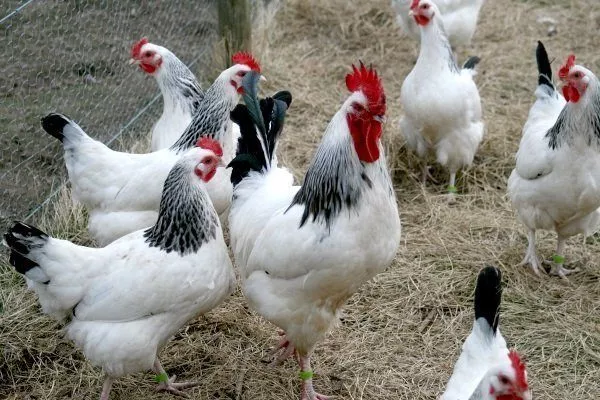
The Cornish or Cornish meat breed is an ancient chicken variety, developed in the first half of the 19th century. This bird is capable of producing excellent meat crosses. Today, white Cornish chickens are bred for high-quality meat on an industrial scale. When used for private farms, they mature fairly early, but, like all meat breeds, they produce few eggs.
An adult female weighs up to 3.5 kg. An adult rooster weighs up to 4.5 kg. There are dwarf varieties of the Cornish breed. A hen weighs 0.85-1.3 kg, and a rooster weighs 1-1.6 kg.
A single white female lays approximately 100-130 large brown eggs per year. A colored bird lays eggs with predominantly brown or speckled shells.
Amrox
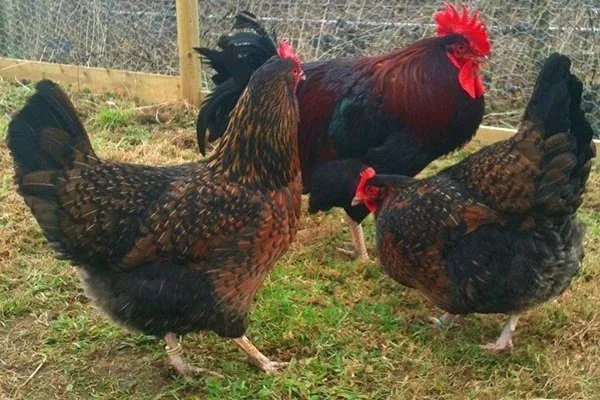
The Amrox chicken variety has a cuckoo-like coloring, with each feather ending in a dark stripe. Roosters of this breed are powerful, tall, and massive. They are quite large, with a large head proportionate to their body. The birds have a short, strong, slightly curved, yellow beak. Besides their coloring, this breed's distinctive features include large, expressive, reddish-brown eyes. They have a full, red face, oval, elongated wattles, and earlobes.
These meat and egg hens are excellent layers, producing up to 220 eggs per year. This breed is also known for its good weight. Roosters grow up to 4.5 kg, hens up to 3.5 kg. Amrox chickens have a calm disposition, quickly adapt to new living conditions, and grow quickly.
Plymouth Rock
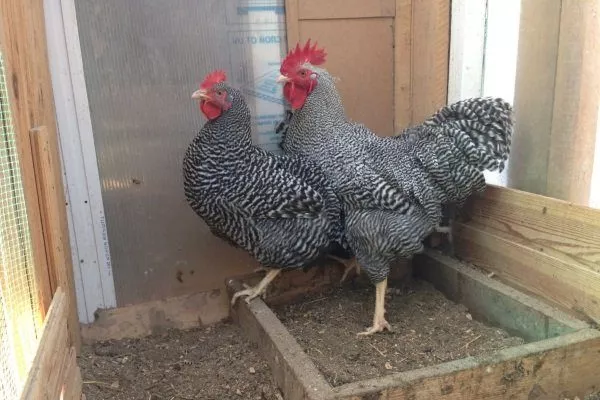
The ancestors of modern meat-producing chickens are the Langash, Brahma, Cochin, and other less popular varieties. These chickens can come in one of eight colors. Commercially bred white chickens are often chosen, while private breeders also favor colorful specimens of this meat-producing breed. The Plymouth Rock is a chicken variety renowned for its ease of care, rapid growth, and tasty, nutritious meat. After just two months, this breed can gain up to 1.8 kg in weight.
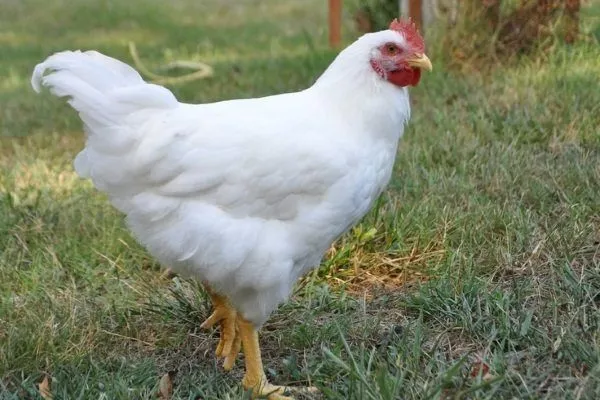
Adult roosters can weigh up to 4.5 kg, and hens around 3.5 kg. Hens lay over 170 large, light-brown eggs per year.
Mini-chickens
This chicken breed has several advantages that distinguish it significantly from other poultry. These include:
- versatility of breeding;
- rapid growth;
- tasty and tender meat;
- absence of the habit of tearing up the ground, which is important when walking;
- unpretentiousness in food;
- obtaining large eggs;
- Possibility of keeping in cages and enclosures.
But at the same time, birds have some disadvantages:
- the need to keep chickens of different colors separately, since crossbreeding is unacceptable;
- it is impossible to walk the bird in rainy weather, since its legs are short, which is why dirt accumulates on its belly, which can lead to various diseases;
- If you feed your chickens unbalanced feed, it can cause them to develop leg problems, which is dangerous for the chickens.
These chickens grow well, but they require warmth. The air temperature should be at least 35 degrees Celsius. This ensures the survival of almost all the chicks. With each subsequent week, the temperature should be lowered by a few degrees.
The average weight of roosters is 3 kg, and hens 2.7 kg. Miniature chickens are distinguished by their delicious meat, which is also juicy because the fat is distributed among the muscles. These hens produce up to 180 eggs per year, each weighing 60 g.
Roy Island and Leghorn miniature meat chickens are often raised. These hens lay eggs well regardless of the time of year.
Due to their compact size, the flock doesn't require much space. A dozen hens can fit in one square meter. The roosters are calm and non-aggressive. They grow quite quickly and begin laying eggs as early as 5-6 months.
There are many varieties of meat-producing chickens. With so many varieties, it's easy to choose breeds that grow quickly, gain weight, and produce eggs. This makes it easy to raise these animals for yourself or to sell their carcasses and eggs.