
Rhodonite is one of the best egg-laying poultry breeds. These hens lay eggs even in the most adverse climate conditions. This is the most sought-after cross among poultry farmers. These red-brown layers have won the hearts of even the most discerning farmers; they are uniquely suited to the Russian climate, as they were developed by Russian breeders.
A little about the origin of the cross
Two highly productive breeds—Lohmann Brown and Rhode Island—were used as the basis. This explains why newcomers to poultry farming often confuse the "parents" with this cross-hybrid, bred by crossing a rooster of one breed (in this case, the American Rhode Island) with hens of another highly productive breed (the German Lohmann Brown).
Comparison of parent breeds and hybrid in the table below:
| Rhodonites | Loman Brown | Rhode Island | |
| Direction | egg | egg | meat and egg |
| Weight of male, kg | 3.5 | 3 | 4 |
| Weight of female, kg | 2.5 | 2.2 | 3.5 |
| Egg weight, g | 60 | 64 | 58 |
| Egg production, pcs./kg | 350 | 320 | 200 |
| The first egg | at 4 months | at 5.5 months | at 6 months |
| Cellular content | No | Yes | No |
Spreading
Red chickens have adapted well to Russian climate conditions. The latest Rodonit-3 line was developed by breeders in Yekaterinburg, who aimed to create a breed that would lay eggs well in low (subzero) temperatures.
Initially, the cross was intended for industrial production, but it soon gained popularity among private farmers and poultry breeders. Therefore, this cross can be found on many farms in various regions of Russia, especially those with cold and prolonged winters.
Rhodonite standard
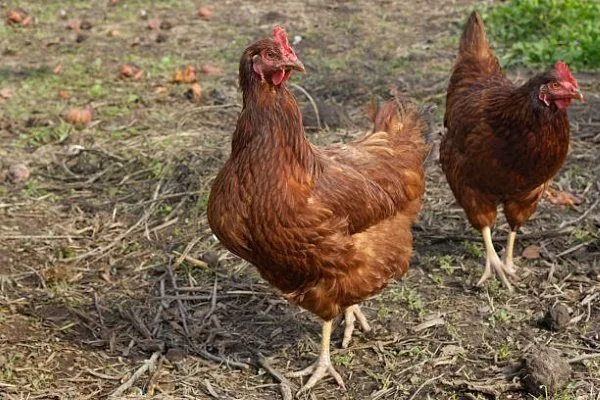
These chickens have light brown or fawn plumage with creamy speckles. The feathers lie close to the body. The speckles are located at the tips of the wing and tail feathers. Rhodonites have a small body, with a noticeably convex chest. Their small heads have medium-sized wattles and a leaf-shaped, flat, bright red comb that should not fall to one side. The beak is yellow with a distinctive brown stripe down the middle. The legs are light yellow and bare.
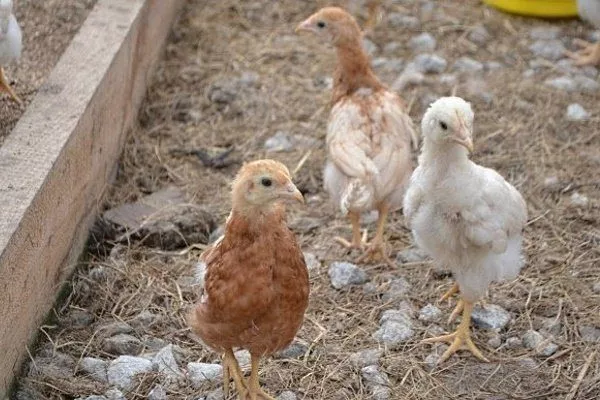
Another advantage is that males and females can be distinguished within a day of hatching. A newborn cockerel is easily recognized by its light yellow down and noticeable dark spots on its head. Its eyes are surrounded by a yellow rim. Hens have a darker coloring, and a light stripe can be seen on their backs. Their eyes are surrounded by a dark brown rim.
If we talk about older individuals, the rooster weighs more than the laying hen - 3.5 and 2.5 kg, respectively.
Character
These birds have a balanced, calm, and easygoing nature. They prefer an active lifestyle and are very active. "Movement is life" is their motto. They need constant exercise, so a larger run is provided to allow them this opportunity.
They are friendly with other birds and their own kind, and are not aggressive. They quickly adapt to new environments and are not anxious or stressed when moving, so they begin laying eggs as soon as they settle into their permanent home. They quickly become accustomed to their owner, are not afraid of her, and do not scatter when she appears.
Productivity of rhodonites
This cross is known for its high egg production. Hens can lay up to 350 eggs per year, with an average of 280 to 350. They begin laying early, with the first eggs being collected from hens as young as four months old.
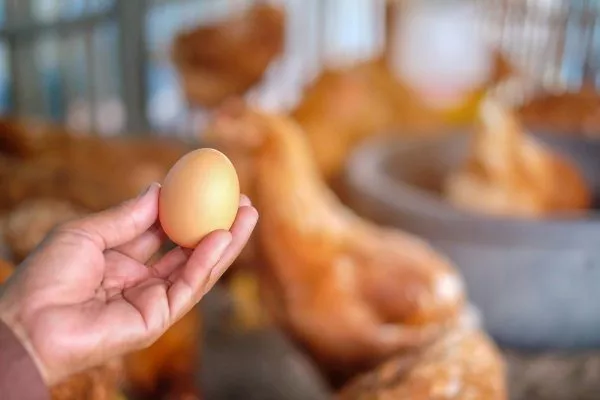
The eggshell is brown, with light or dark shades. Some poultry farmers describe the shell color as brown with a burgundy tint. They are small in size, with an average egg weighing 60 g.
Peak productivity is observed during the first year and a half. Two-year-old hens' egg production begins to decline rapidly, so poultry farms typically replace their flocks after 1.5-2 years; private farms and backyards keep them for up to 3-4 years. However, laying hens are given a so-called "rejuvenation" vaccine, which restores their productivity for another 80 weeks.
Raising cockerels for meat is impractical, as their taste leaves much to be desired. Males reach a maximum weight of only 3.5 kg. The meat is tough and suitable only for broths, soups, and industrial processing.
Pros and cons of rhodonite
Rhodonites have a number of advantages:
- Early and high egg production.
- Frost resistance: layers can withstand temperatures down to -20°C and continue laying eggs at sub-zero temperatures. To maintain good productivity in winter, the temperature in the coop should be kept above -2°C. At temperatures above 28°C, egg production also decreases.
- High viability. Chick hatchability is 87%, survival rate for chicks up to 17 weeks is 99%, and survival rate for females aged 17-80 weeks is 97%.
- Quick adaptation to new conditions.
- The birds are unpretentious in care.
Maintenance and care
The unpretentious rhodonites require only one thing: a draft-free environment. However, if more eggs are desired, favorable conditions are created to meet their few needs.
Chicken coop or barn
A barn or chicken coop is suitable for raising and keeping rhodonites, but in any case, there must be a yard for walking; keeping them in a cage is unacceptable for this active bird.
These birds require ample space, so when purchasing a flock, calculate the size of the room as follows: every 20 birds require 10 square meters of space, with wall heights ranging from 170 cm to 190 cm.
The floor of the chicken coop is sprinkled with sand, wood chips, sawdust or peat.
Ventilation should be provided to prevent stagnant air in the shed. This can be achieved by installing a window or opening in the shed, covered with a thick mesh screen to keep rodents out (a south-facing window is ideal), but there should be no drafts. The chickens should also be provided with easy access to the outside.
Perches are installed in the barn, positioned 1 meter above the floor and opposite the exit. Perches are not placed near windows, as they can cause the chickens to catch a cold. Feeders (separate for dry and wet food) and waterers are securely fastened to the walls to prevent the birds from tipping them over. Waterers are positioned at a low height from the floor to prevent debris from getting into them.
Nests are prepared—they should be the same size as the hen; one nesting site is sufficient for 2-3 hens. They are filled 1/3 full with hay and placed 80 cm above the floor.
To help chickens get rid of parasites, bathing trays are placed on the floor and filled with ash or sand.
Although chickens can withstand winter temperatures down to -20°C, this doesn't mean the coop shouldn't be heated. In winter, the indoor temperature shouldn't drop below 0°C. In summer, temperatures shouldn't rise above 28°C. To cool the air, some coop owners use wet sheets hung on the walls of the coop. Rhodonites don't tolerate heat or cold well; they quickly lose weight and stop laying.
- Insulating the chicken coop a month before the onset of cold weather.
- Organization of additional lighting to maintain egg production.
- Correction of diet by increasing the energy value of feed.
Caring for them is easy and doesn't require any special skills. To reduce the risk of disease, the room is well ventilated and a "spring cleaning" is performed three times a year, which includes treating the barn. Once a year, the walls of the room are whitewashed with lime to prevent parasites. In the summer, while the hens are out running, the empty coop is treated with special antiseptic cleaners.
How to make a chicken coop with your own hands is described in this article.
Yard for walking
The yard for walking is surrounded by a high fence—a mesh fence—since chickens can easily reach a height of one and a half meters and fly over it. To thrive, they need social interaction not only with their own kind and birds of other breeds, but also daily walks in the fresh air.
When properly cared for, hens lay eggs regularly and thrive. However, if their productivity declines or they become ill, their care and maintenance practices should be reviewed.
What to feed?
Since Rhodonite is an egg-laying breed, the hens require a balanced diet. Only with proper nutrition will they lay well and produce nutrient-rich eggs.
Calcium-rich foods are essential to ensure strong shells—such as chalk, crushed shells and shells, and limestone. Fresh greens and grass are provided daily, along with dried nettles and vegetables in winter. The diet is based on grains—wheat, oats, and corn. Fish or meat broth is added to the mash to replenish the rhodonites' protein levels.
They also purchase ready-made compound feeds, which already have a balanced composition of minerals and nutrients.
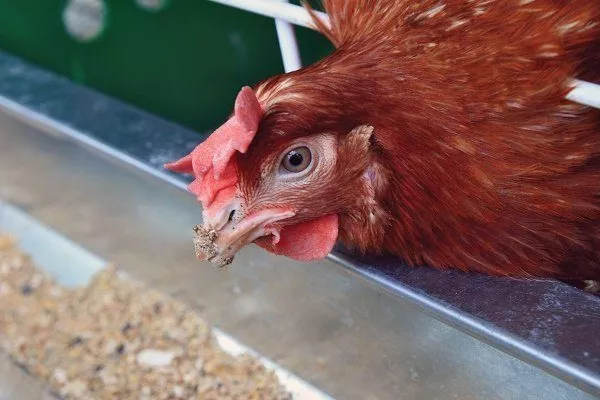
The hens are fed twice a day. The portion sizes should be large enough for them to finish everything within half an hour. If there is still feed left in the feeders after this time, reduce the portion sizes, as overfeeding is detrimental to the hens' health and egg production. If the hens finish everything within 30 minutes, there isn't enough feed for everyone and they need to be replenished.
Clean drinking water is essential; it should always be available in the water bowls. Change it daily, and more frequently if it's hot.
Experienced poultry farmers recommend giving rhodonites a decoction of medicinal plants once a week - chamomile, calendula, or a light pink solution of potassium permanganate.
To ensure proper stomach and intestinal function, birds are given small stones or gravel. More information on proper feeding for laying hens can be found here.here.
Breeding
As mentioned above, laying hens have no brooding instinct whatsoever. They are bred using incubation or by placing eggs under other hens.
- ✓ The optimal egg weight for incubation is 58-62 g.
- ✓ The shape of the egg must be correct, without deformations.
- ✓ The shell must be clean, without cracks or damage.
The egg fertility rate is 97%, so there's no reason to complain about the cockerels. To obtain high-quality eggs for incubation, there should be one rooster for every four hens. If there aren't enough roosters, to increase the fertility rate, separate a "family" of one rooster and four hens. Over the course of a week, collect their eggs, which are then used for breeding.
But when breeding, remember that this is a cross, meaning its eggs won't produce high-quality chicks with the same characteristics as their parents. When hatched, the resulting chicks will be weaker and significantly less productive.
More information about incubating chicken eggs at home is available here. here.
Diseases and preventive measures
Rhodonites are hardy chickens with good immunity to various diseases. If properly cared for and maintained, they rarely get sick.
To prevent parasitic infestations such as ticks and other insects, inspect all livestock weekly. If parasites are detected, treat the affected areas with special insecticides. As a preventative measure, be sure to provide ash containers.
Timely whitewashing of walls and wooden components in the room and weekly cleaning will also help prevent the development of infections.
Young birds are at a higher risk of illness, although even adults' immune systems can fail. Sick birds should be isolated immediately, and the cause of their illness should be determined.
The most common diseases of this cross include:
- Gastroenteritis is an intestinal disorder with associated symptoms. Its development is triggered by birds consuming poor-quality or stale feed.
- If your bird is lethargic, walks with its wings drooping, its eyes closed, refuses to eat, and breathes rapidly, it may have pullorum disease, which is often fatal. This disease most often affects chicks under two weeks old.
- Swelling under the eyes and strange sounds and cries in birds may indicate the development of mycoplasmosis. The disease negatively impacts egg production in hens.
- Loose stools, vomiting, exhaustion, and fatigue can be symptoms of infection with parasites, both internal (helminths) and external (ticks, bedbugs, and fleas).
- Yellow feces and nasal foam with mucus indicate pasteurellosis. This condition most often affects young animals under three months of age. Treatment involves antibiotics prescribed by a veterinarian.
- Salmonellosis is characterized by nasal discharge, muscle weakness, and lethargy. Birds may have difficulty breathing. It is one of the most common diseases transmitted from poultry to humans through eggs and meat.
- Sudden weight loss, a pale comb, and wrinkled wattles indicate tuberculosis. Once diagnosed, the bird is slaughtered and disposed of.
- Birds with frequent diarrhea containing mucus and blood may have coccidiosis. Without proper treatment, young birds die within 3-5 days of infection.
- Chickens can also suffer from bronchitis. They stop laying eggs, cough, wheeze, and breathe heavily, causing them to constantly open their beaks. They become apathetic and appear lethargic. Bronchitis often leads to rhinitis and conjunctivitis.
Raising chickens
When it comes to raising chickens, everything is simple; you only need to follow the basic rules:
- The vitality of newly hatched chicks is high, so the entire brood almost always survives to adulthood. A newly hatched chick is immediately transferred from the incubator to a heated box or brooder. An infrared lamp is best for heating, but if the brood is small, a blue lamp is suitable.
- The bottom of the brooder is covered with sawdust, and the bottom of the box is covered with white cotton cloth.
- The dried-out "newborn" chicks are first given a finely chopped hard-boiled egg. Once all the chicks have eaten, the remaining egg is immediately removed to prevent the feed from spoiling.
Next, introduce wheat groats. The container can be left in the room with the chicks and topped up as needed. After 24 hours, add variety to the menu: cottage cheese mixed with fresh nettles (finely chopped) or garden greens, such as green onions. Ten-day-old chicks are fed a protein-rich diet of fish and meat. - In the first days of life, chicks are given a very weak solution of potassium permanganate to drink, which is changed several times a day.
- Puppies can be taken outside for walks starting at two weeks of age, provided the weather is warm and dry. Initially, walks should last no more than two hours. They can be left outside for the entire day starting at one month of age, provided the weather is good.
Where to buy and what are the prices?
Some private sellers sell Rhodonites based on photos. It's best to avoid such purchases, as these birds are similar in appearance to many egg-laying crosses, but their egg production is significantly inferior. Red hens of other breeds or yearling Loman Brown hens are often passed off as these birds. Therefore, experts recommend purchasing from large farms that specialize in this cross. Young birds are preferred.
The price per individual varies from 350-450 rubles, with day-old chickens being cheaper - 30 rubles per head.
Reviews
Farmers have received only positive reviews about the Rhodonite cross, but there are also some dissatisfied farmers. Here are a few:
The Rhodonite cross is an easy-to-care-for chicken, distinguished by high egg production and resistance to climatic conditions. However, the meat quality of this cross doesn't garner rave reviews, but then again, it's an egg-laying breed. Rhodonites are ideal for those directly involved in industrial egg production, but they have also proven themselves in private settings.