
Most farmers breed chickens to maximize profits from their sales. The most profitable investment is buying chicks, which produce not only large, meaty birds but also a decent number of eggs. Meat-and-egg breeds of chicken are considered among the most sought-after today.
What makes chickens special?
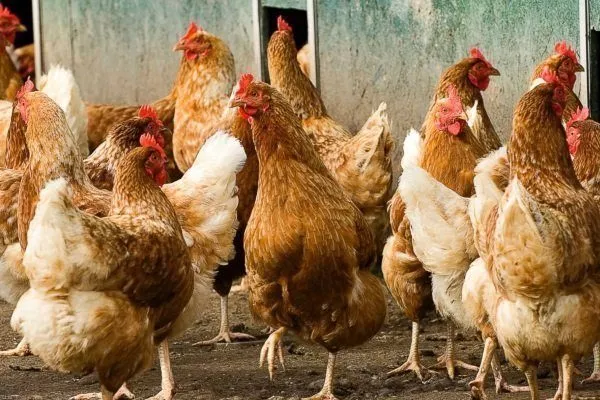
Meat-and-egg chickens are a versatile breed, falling somewhere between these two promising breeds in terms of meat and egg production. A unique feature of these chickens is that they require virtually no special care or maintenance requirements. However, they do require sufficient light and heat, so the coop should be well-lit and equipped with heaters.
Through selective breeding, chickens have partially lost their maternal instinct, so they are not good brood hens. These individuals were developed through practical genetic experiments crossing meat and egg-laying hens. However, there are some varieties in the world that naturally possess these qualities.
Types of meat and egg chickens
There are a huge variety of meat and egg-laying chickens, but not all of them are productive enough to make raising them profitable. When choosing a chicken, carefully consider not only the breed but also the annual egg production, the time of sexual maturity, and the maximum weight.
| Breed | Rooster weight (kg) | Chicken weight (kg) | Egg production (pieces/year) | Egg weight (g) | Puberty (months) | Disease resistance | Temperature requirements |
|---|---|---|---|---|---|---|---|
| Poltava | 3.5 | 3.0 | 190 | 60 | 5 | High | Moderate |
| Ukrainian earflaps | 3.5 | 2.3 | 180 | 58 | 6 | Average | Moderate |
| Yerevan | 4.5 | 2.5 | 220 | 58 | 6 | High | Heat-loving |
| Mini | 3.0 | 2.5-2.7 | 190 | 57 | 6 | Low | Heat-loving |
| Naked necks | 3.5 | 2.5 | 180 | 55-58 | 6 | High | Cold-resistant |
| Californian | 3.5 | 2.5 | 240 | 58 | 6 | Average | Moderate |
| Rhode Island | 3.9 | 2.9 | 220 | 58 | 7 | High | Cold-resistant |
| Adler silver | 4.0 | 3.0 | 180 | 58 | 6 | High | Moderate |
| New Hampshire | 3.3 | 2.6 | 190 | 58 | 6 | High | Cold-resistant |
| Anniversary Kuchinskaya | 3.5-4.0 | 2.5-3.0 | 220 | 58 | 6 | High | Cold-resistant |
| Orpington | 3.5 | 2.6 | 190 | 58 | 6 | Average | Heat-loving |
| Moscow | 3.9 | 2.8 | 250 | 63 | 6 | High | Cold-resistant |
| Sussex | 3.1 | 2.6 | 180 | 65 | 6 | High | Moderate |
| Plymouth Rock | 6.0 | 3.6 | 180 | 58 | 6 | High | Cold-resistant |
| Salmon Zagorsk | 3.6 | 2.8 | 250 | 65 | 6 | High | Cold-resistant |
| Faverolles | 3.9 | 2.9 | 190 | 65 | 6 | Average | Cold-resistant |
Poltava
This breed of chicken is distinguished by its excellent appearance: it has "clayey" plumage, meaning its plumage has a mottled light brown hue. They can lay approximately 190 eggs per year, each weighing 60 grams. A rooster can weigh up to 3.5 kg, while a hen weighs half a kilogram less.
Poltava hens rarely hatch eggs, but when they do, they are excellent brood hens. They are excellent caregivers, reliably protecting their young from external factors. They reach sexual maturity at five months. For an enterprising farmer, this breed is one of the best options for breeding and profiting from meat and eggs.
Ukrainian earflaps
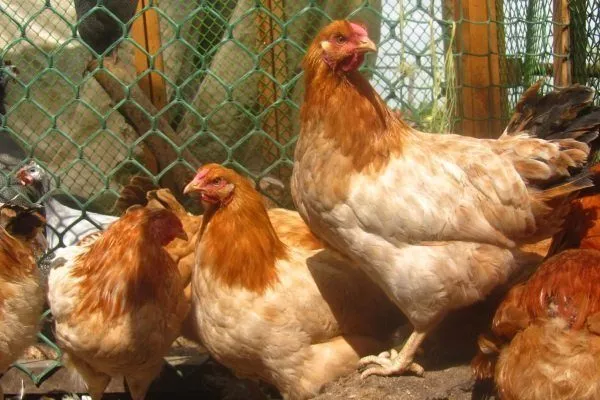
This variety is raised on specialized farms in Ukraine. It is medium-sized, with a rooster weighing up to 3.5 kg and a hen up to 2.3 kg. The Ushanka carefully raises its young, protecting them from all environmental factors.
Hens reach sexual maturity at six months. It's difficult to call this variety an egg-laying breed, as they produce up to 180 eggs per year, each weighing 58 g.
Yerevan
The name itself makes it clear that this breed was developed by Yerevan specialists through a long process of selective breeding. This breed is one of the best egg-laying varieties. Yerevan chickens are prized in Asia. However, in Russia, few people know about them.
The advantage of this breed is its red plumage, which lies close to the body. These chickens are bred in Armenia and Azerbaijan. The main drawback is their excessive timidity. The rooster reaches a weight of 4.5 kg, and the hen up to 2.5 kg. They reach sexual maturity at six months. As mentioned earlier, these chickens are good egg producers, producing up to 220 eggs per year.
Mini
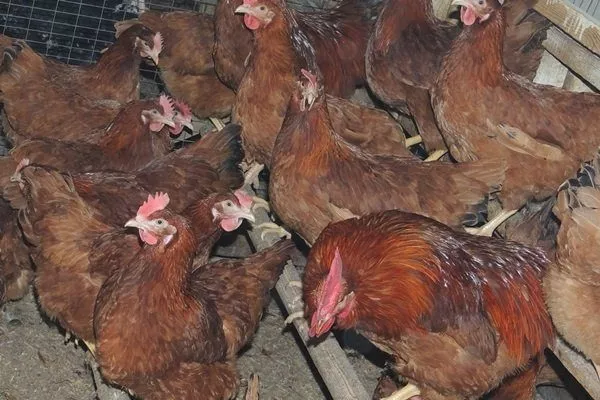
This is a variety of chicken commonly found in European countries (England, France), and somewhat less frequently in Russia. This breed is distinguished by its white and red plumage. These animals are characterized by a compact build, short legs, and light weight. They have a leaf-shaped comb, and their plumage is stiff and fine.
Chickens have a calm disposition but are highly sensitive to temperature fluctuations. An adult rooster, ready for slaughter, weighs up to 3 kg. An adult hen weighs 2.5-2.7 kg.
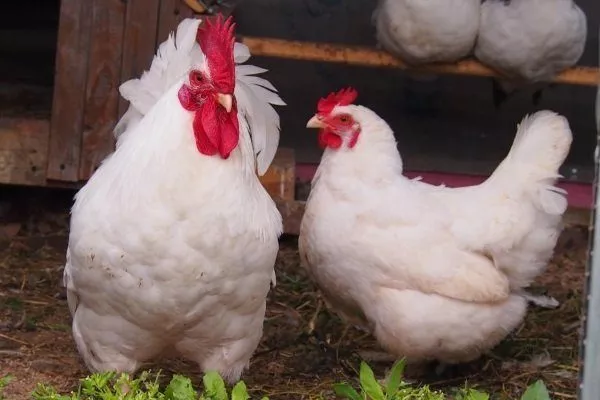
They are famous for their high egg production, as they can lay up to 190 eggs per year, each weighing 57 g.
Naked necks
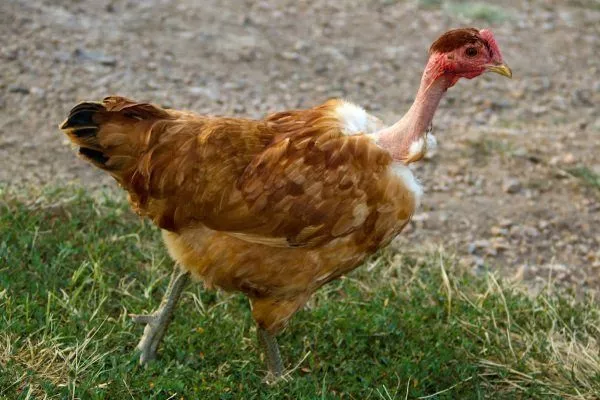
This is a sought-after meat and egg breed of chicken, known for its excellent stamina. This breed is found in Russia and European countries. It is a versatile chicken. A rooster weighs 3.5 kg, and a hen 2.5 kg. They lay up to 180 eggs per year, each weighing 55-58 g. These are the best representatives of this chicken breed.
Californian
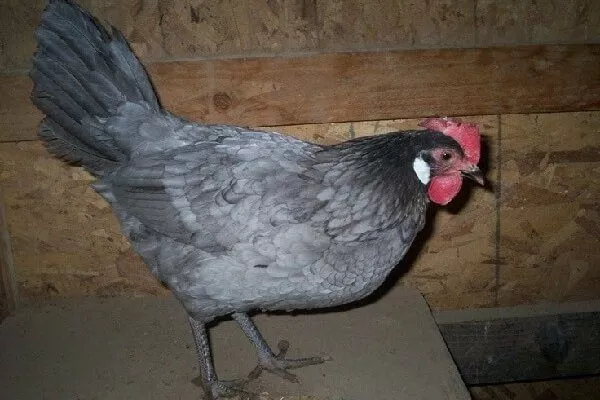
As for the best meat and egg breed, Californian chickens are considered the most popular in terms of egg production, laying up to 240 eggs per year. In terms of body weight, they are slightly inferior to Yerevan chickens. This variety is virtually uncommon today, but Californian chickens can be found on various farms in Russia.
Hens weigh 2.5 kg, roosters 3.5 kg. These are laying breeds of chickens, producing eggs weighing 58 g each. The eggshells are creamy.
Rhode Island
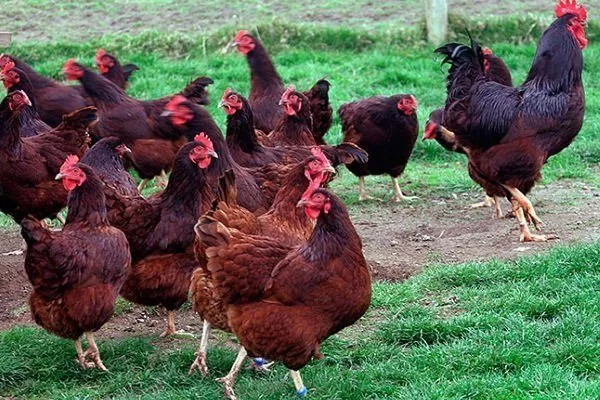
This breed takes its name from the state where these birds originated. They are reddish-brown in color and have greenish plumage. They have a leaf-shaped red comb, a yellow beak, and strong legs. Hens reach sexual maturity at seven months, when they begin actively laying eggs—up to 220 brown eggs per year. An adult rooster weighs up to 3.9 kg, and a hen up to 2.9 kg.
If a chicken has an elongated neck and head, is overweight, has light eyes, a triangular body shape, or dull plumage, these are considered deviations from the breed.
These hens are known for their low feeding requirements, readily consuming feed from their feet. They lay eggs year-round. Hens that are good egg producers are retained for breeding. To maintain productivity during the winter, the optimal temperature in the coop is maintained at 10 degrees Celsius.
Adler silver
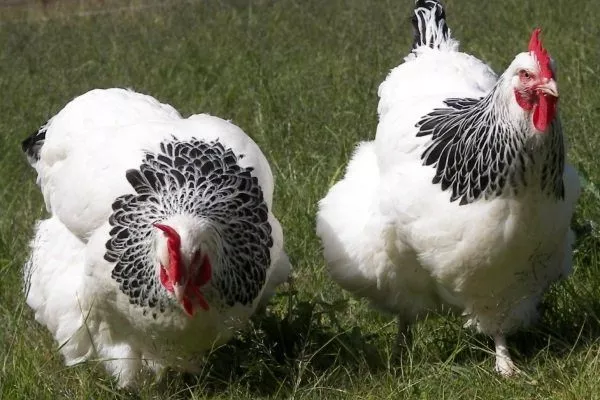
These are meat and egg-producing chicken breeds with a presentable appearance. Their plumage has a yellowish tint, and their comb is leaf-shaped and slightly slanted. They have a strong, compact body, with a broad chest and back.
These hens are also particularly attractive due to their yellow legs and beak. Adler hens can weigh up to 3 kg, and roosters, 4 kg. They lay eggs year-round, up to 180 over 12 months. They reach sexual maturity within six months of hatching.
The main drawback of this breed is that they are poor brood hens. Adler Silver hens have a calm, non-aggressive nature. They were used in selective breeding to produce a superior variety. As a result, many crosses based on this variety have emerged.
New Hampshire
This breed is a variety of the Roy Island. The advantage of these meat-and-egg hens is that they quickly reach their maximum weight and are also good egg producers. New Hampshires have excellent flock survival rates. Sexual maturity begins at six months.
The hens have a light, brownish-red plumage. A mature rooster weighs up to 3.3 kg, while a hen weighs 2.6 kg. A hen can lay up to 190 large eggs annually. The only drawback of this breed is that the hens are not good brooders.
Anniversary Kuchinskaya
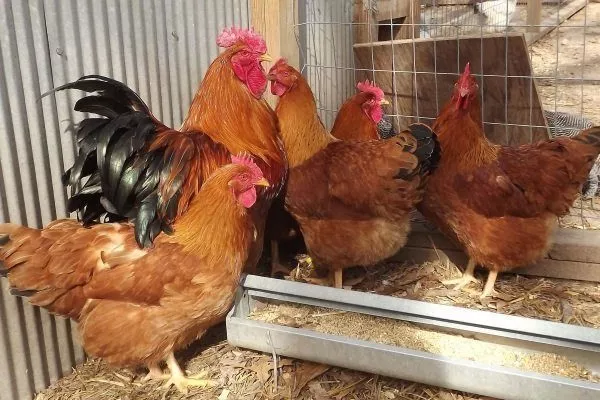
A breed that will delight farmers not only with its large size but also with good egg production. They have a brown color scheme with a golden shimmer. They also guarantee high survival rates and productivity.
An adult rooster weighs 3.5-4 kg. A hen ready for slaughter weighs 2.5-3 kg. These birds are relatively low-maintenance and easy-care, valued for their calm and friendly nature. They easily tolerate a variety of weather conditions. They grow quickly. They can lay up to 220 large, brownish-pink eggs. Their meat is juicy and tasty.
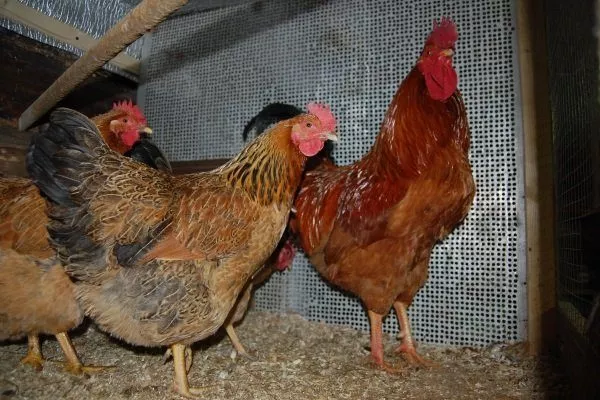
The breed's distinctive features include the hen's brown plumage and the rooster's red plumage with gold and black flecks. This breed also has a long beak, a leaf-shaped comb, and massive, featherless feet.
Orpington
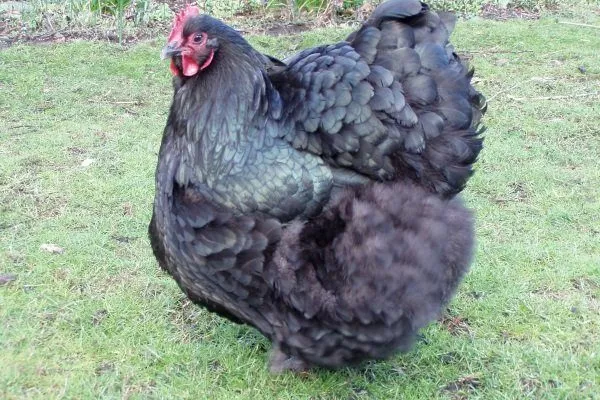
This breed originates from England and is prohibitively expensive. It has short feathers and a wide range of colors. Orpingtons can be found in black, red, fawn, and partridge varieties. A mature rooster weighs 3.5 kg, while a hen weighs 2.6 kg. A hen can lay up to 190 large eggs per year.
Moscow
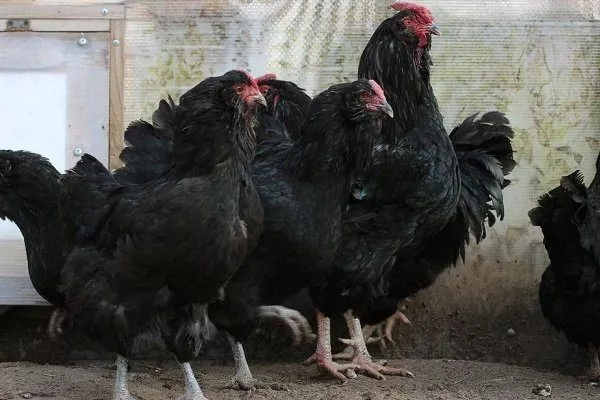
This breed is considered the most successful, based on the crossbreeding process. Moscow chickens are hardy, productive, and have a high survival rate. Their primary color is black, with yellow feathers on their necks. Hens weigh up to 2.8 kg, and roosters 3.9 kg.
A hen can lay up to 250 eggs annually, each weighing 63 grams. With proper care and good feed, she can lay up to 300 eggs. The advantage of this breed is that these birds are cage-friendly, disease-resistant, active and cheerful, easy to feed, and adaptable to a variety of living conditions. Sexual maturity begins at 6 months.
The Moscow chicken's drawback is that it lacks a developed brooding instinct and is a poor broody hen. These hens thrive in warm conditions. If you want them to continue laying eggs during the winter, it's important to insulate the coop.
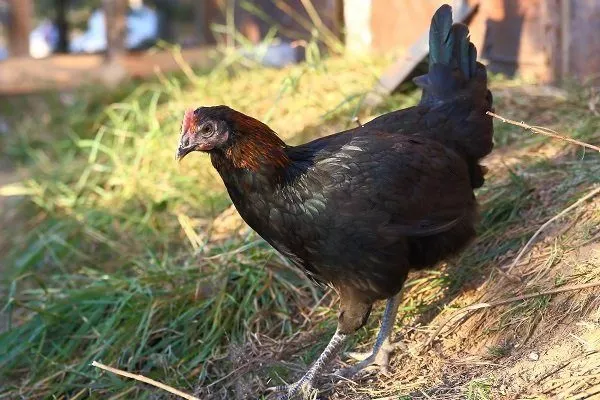
Sussex
These chickens get their name from the famous county. They are distinguished by their large, massive back. They come in white and black. Their necks are always spotted. They are noted for their rapid weight gain and their predominantly leaf-shaped comb.
These chickens have a small, broad head. They have a strong, slightly curved beak, dark at the base and lighter toward the tip. Their eyes are often red or orange. Their bodies are rectangular, with a wide back that tapers slightly toward the tail. A strong, broad chest and a large belly make this breed attractive. These birds have a short tail and short tarsi.
A rooster can weigh up to 3.1 kg, while a hen can weigh up to 2.6 kg. Each year, a hen lays up to 180 eggs, each weighing 65 g.
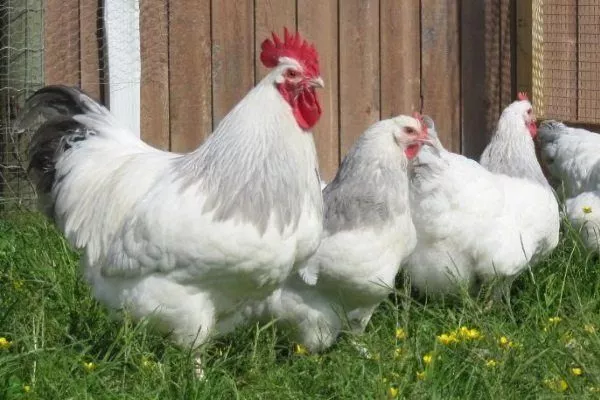
Plymouth Rock
This variety will appeal most to breeders who value the bird's appearance, tasty, healthy meat, and abundant eggs. The Plymouth Rock is particularly attractive, making it a great addition to any backyard. Furthermore, this breed is distinguished by its large size. Roosters can reach 6 kg (13 lbs), and hens, up to 3.6 kg (8.8 lbs). They boast tasty, tender meat and high egg production.
Distinguishing features include large eyes, a wide, bushy tail, and a small yellow beak. Plymouth Rocks are known for their calm disposition. A hen can lay up to 180 brown eggs annually. Sexual maturity occurs at six months.
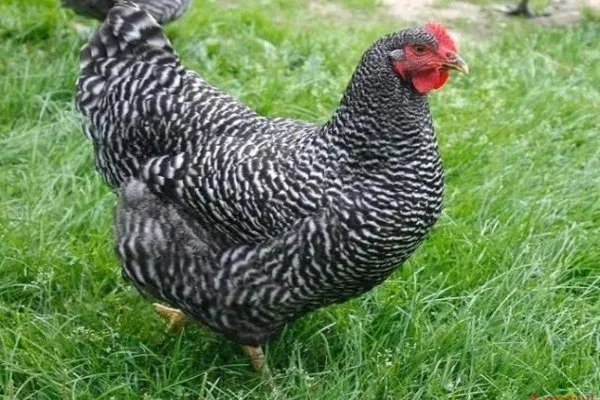
Salmon Zagorsk
This meat-and-egg breed is one of those that attracts attention solely for the appearance of its meat: it has a salmon-like hue. This animal is characterized by its small size and black or red coloring.
What are the advantages and disadvantages of birds:
- they have a highly developed maternal instinct;
- the animals are unpretentious in maintenance and very hardy;
- calm and good-natured character allows keeping birds with other breeds;
- birds are not picky about food;
- Salmon from Zagorsk have a strong immune system, so the livestock rarely gets sick.
One drawback is that this breed's birds can fly high, reaching heights of up to 2 meters. Breeders will need to build a high enclosure or fence it with mesh. This will prevent the chickens from escaping and will also prevent them from causing damage to the farm, as they love to sneak into garden beds and damage them.
An adult rooster weighs up to 3.6 kg, while a female weighs 2.8 kg. A hen can lay approximately 250 eggs per year, each weighing 65 g.
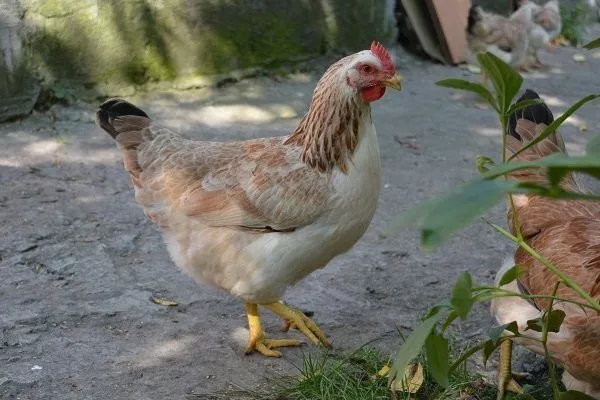
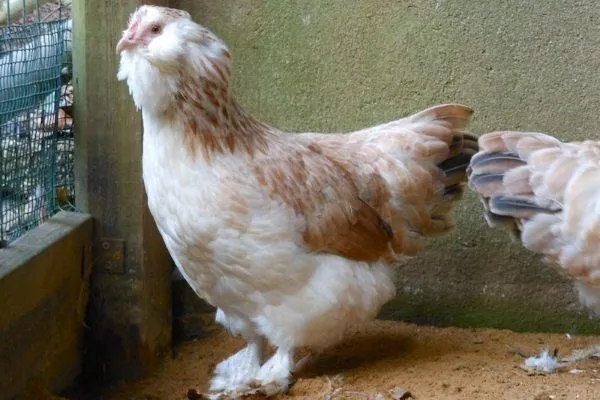
Faverolles
Beautiful chickens with sideburns and feathered legs. This breed will make a wonderful addition to any backyard. These chickens are sedentary, unconcerned with other birds, and have a calm disposition. Due to their sedentary nature, this breed can quickly accumulate fat, gaining weight. They tolerate low temperatures quite well.
An adult rooster weighs up to 3.9 kg, while a hen weighs 2.9 kg. Each hen lays up to 190 eggs annually, each weighing 65 g.
Feeding meat and egg-laying chickens
Regarding feeding, these hens have a slow metabolism, which slows egg production. They lead a sedentary lifestyle and are prone to overeating, which leads to the accumulation of subcutaneous fat, which is deposited in their liver. This leads to suppressed hormonal regulation of egg production, increased feed costs, and a decrease in the biological quality of the eggs.
To avoid this, a balanced diet is created, that is, nutrition should be aimed at stimulating the growth of live weight and the formation of eggs.
All breeds of this type consume significantly more feed than regular chickens. Therefore, a feeding schedule is maintained, distributing three types of feed at six-hour intervals:
- grain mixtures of oatmeal, corn and millet;
- wet mash with meat and bone meal or fish meal, milk or cottage cheese;
- cereals (a different type every day).
To increase egg fertility, roosters are fed 50 g of sprouted grain at a rate of 20 mg per kg of feed. Meat and egg-producing hens are the best category for economical feeding while achieving excellent results, aimed at profitability.
Thus, you can earn a good income by raising meat-and-egg chickens. They have a calm disposition, are easy to care for, and are attractive in appearance. Moreover, they provide their owners not only with juicy and healthy meat but also with large eggs, which they can keep for themselves or sell.