
The primary goal of breeders is to improve productivity, ease of maintenance, and ease of care. In recent decades, they have achieved significant advances in poultry farming. Highsex chickens have become one of the most successful breeds, popular both on poultry farms and in private homes.
History of appearance
Highsex chickens were developed by the Dutch in 1970 by crossing White Leghorns and New Hampshires. The breeders' goal was to develop a high-producing breed for poultry farms.
Additionally, they succeeded in reducing the breed's weight and, consequently, feed consumption, achieving rapid growth, large eggs, and a long period of high productivity. The breeders achieved all their goals. As a result, the breed, introduced to the USSR in 1974, was widely distributed on poultry farms, first in Crimea, later in the Tyumen region, and then spread throughout the country.
Hisex is not a true breed of chicken, but a crossbreed. Being a hybrid, it's difficult to breed at home.
Description of Highsex chickens
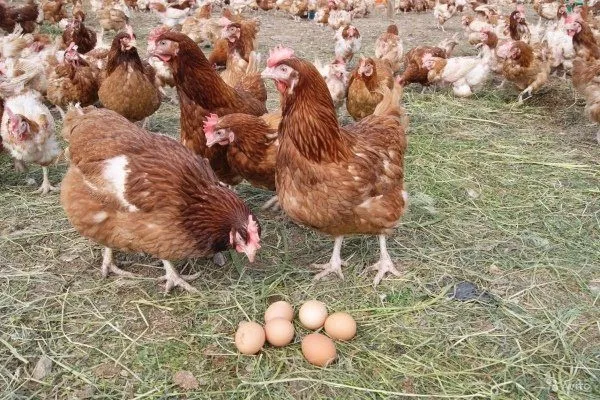
Hisex are a highly productive egg-laying breed. They lay eggs almost daily and maintain peak productivity for two to three years. The birds themselves are quite small, weighing no more than 2 kg. Despite their light weight, they lay enormous eggs—some weighing up to 90 grams.
A distinctive feature of the breed is its large, red comb, which hangs down to the side. When purchasing an adult bird, pay attention to its legs—the yellow color turns gray with age.
A pleasant feature of the breed is its chicks. Even day-old Highsex hens can be distinguished from roosters. The plumage of both hens and roosters is brown with reddish and beige hues.
Purpose and performance characteristics
Highsex chickens are egg-laying chickens, while the brown subspecies, due to their greater weight and shorter period of peak productivity, are classified as egg-and-meat chickens.
The characteristics of the breed are as follows:
- chicken weight 1.5-2 kg;
- the weight of the cockerel is 2-2.5 kg;
- productivity – 260-300 eggs per year;
- egg weight (on average) 65-75 g;
- reaching sexual maturity – 4-4.5 months;
- The duration of maximum effectiveness is 2-3 years.
Poultry breeders note that the meat of a 3-year-old chicken is significantly tougher than that of a 2-year-old hen. Therefore, when raising poultry for meat and eggs, it is recommended to completely replace the flock every 2 years, rather than waiting until the end of the bird's effective egg-laying period.
Varieties
The breed is divided into two subspecies, differing in plumage color and some features:
- hisex brown;
- Highsex White.
| Characteristic | Hisex Brown | Hisex White |
|---|---|---|
| Weight of an adult chicken | up to 2 kg | 1.6-1.7 kg |
| Egg production per year | up to 300 eggs | 260-280 eggs |
| Egg weight | 60-70 g | 65-75 g |
| Survival rate of young animals | 95% | 90-95% |
| Disease resistance | High | High |
| Response to climate change | Less sensitive | More sensitive |
Hisex Brown
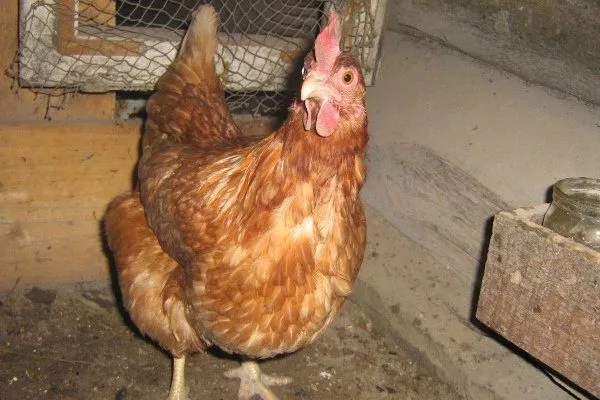
They got their name from their brown plumage, which reminds many backyard chicken breeders of the well-known Rhodonites. They are small in size, but slightly larger than their white counterparts (chickens weigh up to 2 kg).
A distinctive feature of the breed is the high resilience of its young. About 95% of chicks survive to sexual maturity. The birds themselves are quite calm and, unlike the white breed, are less sensitive to climate change.
Brown chickens are known for their higher egg production. Although their eggs are slightly smaller (60-70 grams), they can lay up to 300 eggs per year. Their productivity is on average 20 eggs higher than that of white chickens. This has made this subspecies the most popular on poultry farms throughout Russia.
Hisex White
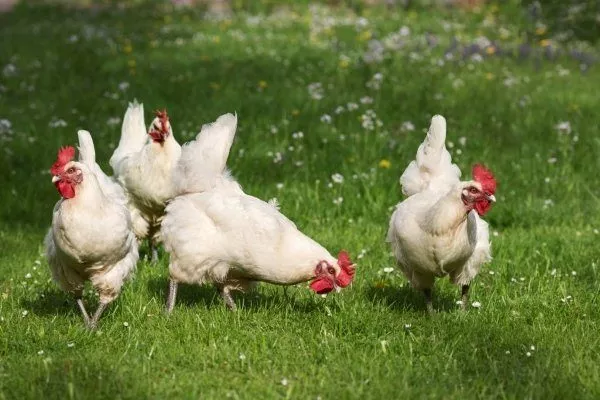
Chickens of the White subspecies are smaller than their Brown counterparts, typically reaching a mature weight of 1.6-1.7 kg. The birds' plumage is white. The breed is characterized by a red comb.
They are as calm and phlegmatic as their brown counterparts, but due to their smaller size, they are more sensitive to adverse weather conditions. The advantage of their lighter weight is that they consume less feed. Farmers also report a higher survival rate of young animals—90-95%.
The breed's egg production is slightly lower than that of Browns (260-280 eggs per year), but the eggs weigh slightly more. This can cause oviduct problems in some birds. A benefit in this case is the lower cholesterol content. Farmers also note that the White breed maintains high egg production and lays actively for longer than Brown Highsex.
Advantages and disadvantages
Highsex chickens have gained great popularity among farmers due to several characteristics:
- early ripening;
- high egg production;
- large eggs;
- low feed consumption;
- disease resistance;
- calm character.
Among the disadvantages are noted:
- It is essential to maintain optimal temperature and lighting, as well as some other characteristics characteristic of hybrid breeds.
- Highsex chickens cannot be bred at home, they do not hatch eggs at all. egg incubation or when they are introduced into other breeds, degeneration is observed - the offspring does not have the characteristics of the parents.
- Birds lack a self-preservation instinct, which is why it's recommended to keep them away from larger animals. Some birds are prone to feather plucking and pecking, and we'll discuss ways to combat this below.
How to choose the right one?
Home breeders and farmers buy both day-old chicks and young birds. Purchasing day-old chicks is fairly straightforward, especially since hens at this age already have distinctive plumage compared to cockerels. These chicks can be purchased at poultry farms or specialty stores. Pay attention not only to the color of the plumage but also to the shape of the beak. A curved beak, like a parrot's, indicates illness; these chicks usually don't survive to adulthood.
- ✓ Plumage color matches the breed
- ✓ Legs are yellow in young individuals
- ✓ The beak is straight, without bends
- ✓ Active behavior
Young hens can also be purchased at the market. Poultry farms also sometimes hold shows where you can buy chicks. Pay attention not only to the individual's weight and plumage, but also to the color of their legs: young hens have yellow legs.
Content
Despite the generally low-maintenance nature of the Highsex breed, they require good conditions to maximize productivity. Birds can be kept in a coop, aviaries, or cellsHowever, it's important to provide the birds with sufficient space. It's important to ensure a comfortable temperature so they don't freeze or overheat.
Experts recommend keeping birds in a backyard, in a farm building with sufficient space. This way, the birds will be able to find some greens and other organic food on their own, which has a positive effect on egg quality. On poultry farms, hens are kept in cages without access to free range, so in addition to a standard balanced feed, they are fed a large amount of active supplements.
As a result, maximum production efficiency is achieved, and the hen lays a large number of eggs, but their quality suffers. To produce tasty and healthy eggs, it is necessary to create comfortable conditions for the hens.
Setting up a chicken coop
To ensure a comfortable temperature in the poultry house, it is necessary to install underfloor heating. Straw or sawdust is typically used for this, laid in a layer of at least 15 cm.
Poultry require a lot of light, so the coop should be built with windows and equipped with several lamps. Adult birds have about 17 hours of daylight per day, while chicks need 22 hours. Poultry are very sensitive to cold, so consider insulating the coop and installing heaters.
To prevent feather pecking, farmers use red lamps. They also use containers filled with sand or ash to clean feathers.
The chicken coop should provide sufficient space, at least 1 square meter per 4 hens. Perches and nest boxes should be positioned approximately 60 cm above the floor to allow the hens to easily jump into them.
Nests should be located in cozy, dark places. To encourage hens to find nesting sites, experienced breeders place a tennis ball in the nest. Additionally, to increase egg production, avoid using bright colors in the coop.
It has been noted that the laying instinct in Highsex hens is dulled, so some birds need to be accustomed to the nesting box. This requires observing hens that are reluctant to lay in the nest box, and as soon as the hen settles on the floor to lay eggs, move her to the nest box.
To preserve the eggs, it's important to take measures to control large pests. Control methods for mice and rats range from mousetraps and cat hair traps to carbide and electronic rodent repellents.
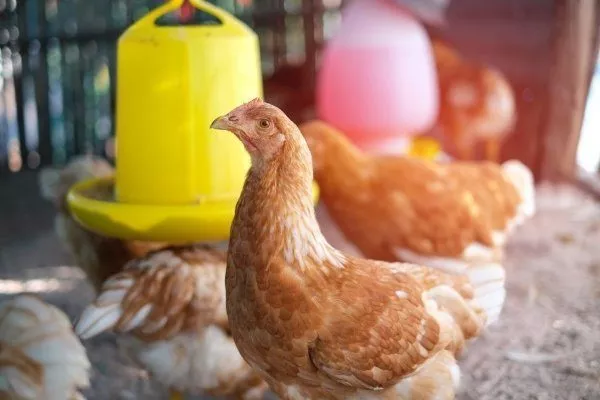
Every chicken coop should have a feeder and a drinker that is large enough and comfortable for the birds.
Read more, How to build a chicken coop yourself.
Cleaning
Highsex chickens are fairly disease-resistant, but don't rely on this alone. To prevent disease, the coop must be well-ventilated. Stale air promotes the growth of bacteria and viruses.
Feeders and waterers with leftover grain can also be breeding grounds for infection. Therefore, when cleaning, remove any leftover food and change the water.
Mechanical cleaning of the poultry house is performed on average once every two weeks (or once a month if the birds are kept outdoors). In addition to changing the water and cleaning the feeders, this includes removing accumulated droppings and feathers from the floor and other visible surfaces, replacing the top layer of litter, and cleaning the nests.
In addition to mechanical cleaning, it's essential to regularly disinfect the chicken coop. This is typically done 2-3 times a year using specialized products. Never clean the coop with household cleaners or chlorine, as these compounds are harmful to the chickens' health, and the odor is simply intimidating.
It's recommended to purchase specialized products, or if these aren't available, thoroughly rinse the coop with water and baking soda. In extreme cases, apple cider vinegar or lime can be used.
How and what to feed?
On poultry farms, Highsex chickens are fed exclusively with compound feed at a rate of 105-110 grams per day. This feed is rich in micronutrients and ensures maximum egg production, but is quite expensive.
Therefore, at home, you can choose a different, less expensive diet. Adult chickens are fed three times a day, and their diet differs slightly from that of other breeds. It is based on:
- wheat, oats or barley;
- corn;
- legumes.
The feed is poured in such quantity that the chickens eat it all within 30 minutes.
Avoid overfeeding your bird, as this can lead to large eggs and problems with the oviduct, which is typical for the breed.
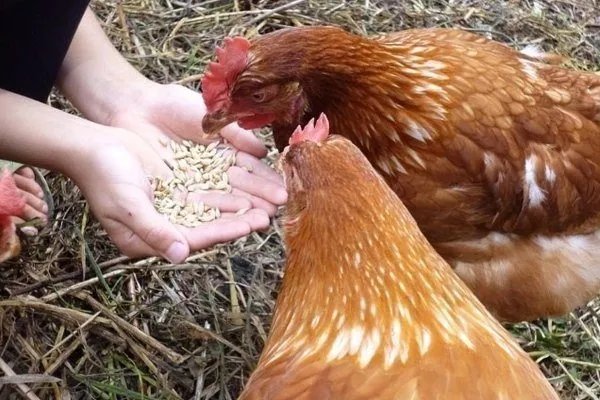
Leftover grain should not be allowed to ferment, as this can become a breeding ground for infection. To enhance the effectiveness of the diet, fish, greens, various oilcakes, or vegetables are added. Micronutrients should also be considered.
When pecking occurs, add a small amount of sulfur to the birds' diet. Calcium has a particularly significant impact on egg quality. Deficiencies in this nutrient cause hens to become lethargic and their eggs to become very fragile. Breeders recommend feeding eggshells to the birds and, if a weak egg is detected, using calcium as a dietary supplement.
When purchasing chickens from a poultry farm, the bird's diet should be changed gradually, starting with industrial compound feed and gradually moving to mash.
Breeding
To maintain efficiency, the chicken flock is replaced every 2-3 years. Experienced farmers often slaughter their hens annually to obtain tasty young meat. The meat of birds over 2 years old becomes tough and rubbery.
Breeding a hybrid at home is impossible, so chicks are purchased from poultry farms. Large breeders sometimes purchase eggs and raise them in incubators. Highsex birds themselves never hatch eggs due to a loss of maternal instinct.
Raising chickens
The optimal time to buy chicks is late spring or early summer. This period is characterized by long daylight hours and warm temperatures. This makes raising the young birds easier and allows for savings on feed.
Necessary conditions
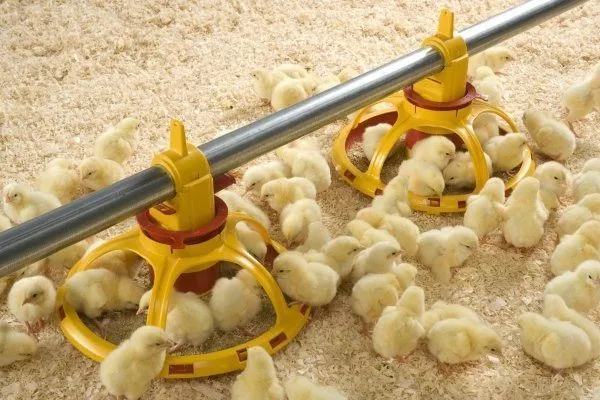
Initially, the chicks should be kept under 24-hour light; after a few days, the daylight hours can be reduced by an hour. Temperature must be closely monitored—chicks do not tolerate cold or overheating, so the temperature should not fall below 22 degrees Celsius or rise above 28 degrees Celsius.
During their growth, cockerels are typically kept separate from the hens. Hens require more micronutrients, while cockerels can be fed a simpler diet. On average, around 3-4 months, cockerels are gradually introduced to the hens. It's important to take time, as introducing a cockerel abruptly can stress Highsex hens, temporarily reducing egg production.
Cockerels are replaced by younger ones every 16-18 months, on average there is 1 rooster for every 8-10 hens.
As with adult birds, when raising young birds, it is necessary to ensure good ventilation and cleanliness in the chicken coop.
How to feed correctly?
It's best to feed chicks commercially prepared feed, especially during the growth period. Young chicks can also be fed a grain mixture. This ensures stable growth and high survival rates. When feeding grain, micronutrients are generously supplemented with fermented milk products, fish, greens, and hard-boiled eggs.
Young birds are fed more frequently than adult birds. Up to 2 weeks old, chicks are fed 6 times a day; up to 2 months old, 4 times a day.
To prevent diseases, the poultry house is also disinfected, and potassium permanganate is sometimes added to the water.
Diseases of Highsex chickens and their prevention (vaccination)
Highsex chickens have good natural immunity and are resistant to disease. However, as with any poultry, careful monitoring is required: lethargic or aggressive birds are most often sick and should be isolated from the rest of the flock. Furthermore, the main symptoms of chicken disease include:
- excessive or insufficient water consumption;
- sore throat;
- lack of appetite;
- exhaustion.
To prevent the spread of infection, it's necessary to immediately isolate sick chickens from asymptomatic chickens. Afterward, switch them to a fortified diet and add antibiotics to their feed or waterers.
In addition, the feed and the poultry house itself should be thoroughly inspected to determine what could have caused the infection. Rodents or other pests are often the source of infection. If traces of rodents are found, measures should be taken to prevent them from entering the poultry house and feeding troughs.
Due to their innate immunity, most vaccinations are not administered to these birds.
For large herds, vaccination against Gumboro disease (20-25 days), Newcastle disease (5 weeks) and paralysis (when symptoms appear) is mandatory.
Chicken vaccinations can be performed either by a veterinarian or independently. Preventative measures depend on the type of vaccine and the desired effect, using:
- vaccinations;
- additives injection into drinking water;
- instillation into the eye (intraoculation);
- Dipping the beak into a liquid (instillation). A particularly popular method for grafting young chicks (up to 7 days old).
However, the main measures for disease prevention are good conditions for keeping birds: comfortable temperature, sufficient lighting and space in the poultry house, good ventilation, proper nutrition, and timely cleaning and disinfection.
Reviews
Highsex chickens are a high-quality egg-laying hybrid. When properly managed, these birds are highly productive. The minor challenges associated with their heat-loving nature and special diet are more than offset by their high survival rate and immunity.