
Dominant chickens are well known among farmers and rural residents. These poultry are characterized by high disease resistance and undemanding living conditions. They are attractive not only for their appearance but also for their high productivity. They are bred for meat and eggs.
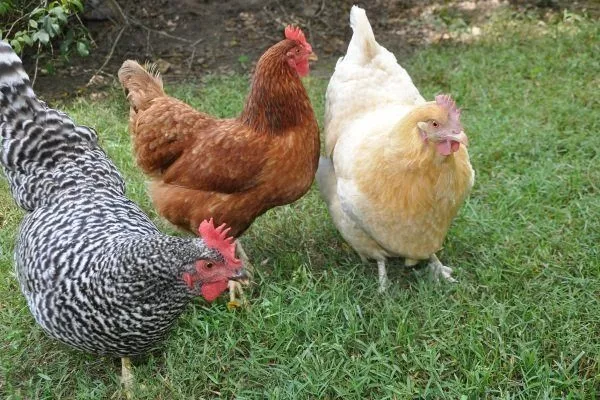
Dominant chickens are a hybrid of several breeds (called a "cross"), developed by Czech breeders. The offspring of these hens will never have the same excellent characteristics as their parents. These crosses are not intended for further breeding, as Dominant chicks will have virtually the same characteristics as regular domestic chickens.
Description of the cross
Chickens are distinguished by their massive bodies and short legs. Their heads are small and graceful, with a vibrant comb and scarlet wattles. These birds are often bred not only for their production but also for their beauty.
These hens are known for their high egg production, making Dominant hens considered true record-breakers. This provides breeders with a considerable profit, as the birds are easy to feed and can feed themselves when free-ranging.
The advantage of crossbreeding is that even at a young age, males and females are easy to distinguish. Hens have darker plumage, while roosters have lighter plumage.
Another advantage of Dominants is their calm nature. They are hardly aggressive, which is a boon for farmers. They thrive both indoors and outdoors. However, keeping them in confined living spaces is undesirable, as they need access to exercise. If a designated area for exercise is not available, they can be housed in low-rise enclosures.
Since sunlight promotes the synthesis of vitamin D, it is preferable for the bird to have free access to the outdoors – this allows it to improve its health.
The table shows the main performance indicators of Dominant chickens:
| Indicator | Characteristic |
| Productivity type | crossbreeds, broilers, egg |
| Weight of the male | average weight 2.1-3.5 kg |
| Weight of the female | average weight 2.1-3.5 kg |
| Egg production | high - more than 250 eggs per year |
| Size and weight of eggs | large, weighing more than 60 g |
| Beginning of oviposition | fast – 4-5 months |
| Availability | average |
| Peculiarities | unpretentiousness to conditions, resistance to diseases, adaptation to any climate |
Origin
The Dominant chicken was developed thanks to the selective breeding work of Czech specialists. They decided to develop a hybrid that, while producing high yields, would be highly resistant to a variety of diseases and adapt well to various environmental conditions.
The following chicken breeds were used as the starting point for the breeding process: Plymouth Rock, Sussex, Rhode Island, Leghorn, and Cornish. The resulting Dominant crosses, in addition to the above-mentioned characteristics, were noted for their high egg production, excellent taste, and the nutritional value of the resulting meat.
Purpose of the cross
Breeders select Dominant chickens in part because they are not only highly productive but also have strong immunity and are easy to care for. Furthermore, layers and roosters of this variety provide farmers with an excellent supply of meat, with a delicate flavor and pleasant aroma.
Chicken lovers can use Dominants for meat. This is especially true when the chickens egg production has decreasedBut, despite the fact that the birds are distinguished by their impressive body mass, they are largely raised exclusively for egg production.
These hens are high egg producers. At one year of age, they produce up to 300 eggs per year. However, achieving these levels requires a balanced diet and proper care. They lay well until they are 3-4 years old, after which their egg production significantly decreases.
Advantages and disadvantages of cross-country skiing
Dominant chickens have their pros and cons. Before breeding this bird, it's crucial to first familiarize yourself with its positive and negative aspects so you know what to expect in the future.
Benefits of poultry:
- Early maturity. Hens begin laying eggs early, and their large eggs have excellent taste, making them particularly attractive to buyers. Dominant hens lay eggs almost every day, provided they are properly fed and kept in favorable conditions.
- Rapid growth. At 3.5-4 months of age, the birds are ready for slaughter. Their meat is tasty, tender, and nutritious.
- High egg fertility rate. Hatchability is close to 90%.
- Calm temperament. These birds are calm, balanced, and non-aggressive. They are not prone to panic attacks, adapt easily, and quickly become attached to their owners.
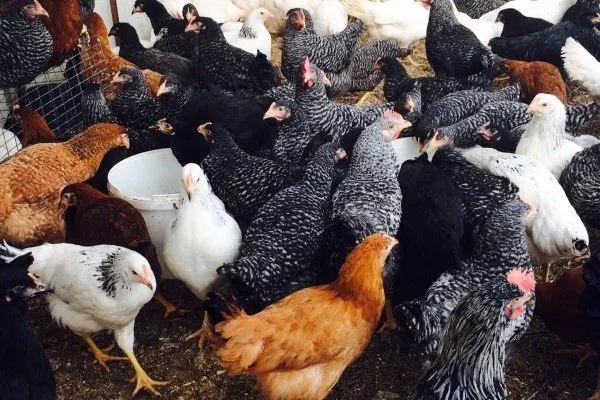
But the cross also has quite a few disadvantages:
- Feeding requirements. Without adequate feed containing protein and calcium supplements, hens' egg production drops sharply. This also impacts the onset of egg production.
- Overcrowding in the coop. If birds are kept in a cramped space, they may start pecking. Generally, if chickens are allowed to roam freely, they don't have problems with cannibalism.
- Secretiveness. Farmers often can't tell whether hens are laying eggs because they can hide their eggs in secluded places. This behavior indicates that the hens are running out of space to lay eggs. Clucking is a sign that the hen is preparing to go into brooding.
Productivity
Dominant hens are quite large. Hens can weigh up to 1.8-2.3 kg, while roosters can weigh up to 3 kg. Hens begin laying eggs at 4-5 months, and their very first egg is an impressive 65-75 g. They often lay eggs weighing up to 118 g, but they often have two yolks, making them unsuitable for incubation.
Roosters gain weight faster. There's one rooster per ten hens in a private backyard. Birds are culled for meat after being culled based on appearance: disproportionately developed bodies (sunken chests, sagging backs). A decrease in egg production often occurs due to several molts in layers throughout the year. Such hybrids are best slaughtered.
Dominant Productivity Depending on Age
| Age group | Productivity |
| 4-5 months | 85-90% |
| 2-3 years | 99-100% |
| 4-5 years | 80-85% |
| over 5 years old | 65-70% |
Types of chickens
The most well-known Dominant chicken varieties today are the following, each with its own characteristics and differences from one another. Before breeding, it's important to know each bird's unique characteristics:
| Object | Male weight (kg) | Female weight (kg) | Egg production (eggs/year) | Egg size and weight (g) |
|---|---|---|---|---|
| Brown (D102) | 2.1-3.5 | 2.1-3.5 | 250 | 60 |
| Sussex (D104) | 1.8 | 1.8 | 250 | 60 |
| Partridge (D959) | 2.1-3.5 | 2.1-3.5 | 250 | 60 |
| Red (D853) | 2.1-3.5 | 2.1-3.5 | 250 | 60 |
| Red striped (D159) | 2.1-3.5 | 2.1-3.5 | 250 | 60 |
| Blue (D107) | 2.1-3.5 | 2.1-3.5 | 250 | 60 |
| Black (D109) | 2.1-3.5 | 2.1-3.5 | 250 | 60 |
| Speckled (D959) | 2.1-3.5 | 2.1-3.5 | 250 | 60 |
| Leghorn (D229) | 2.0 | 2.0 | 310 | 62 |
| Painted D723 | 2.1-3.5 | 2.1-3.5 | 315 | 62 |
Brown (D102)
The distinctive characteristic of laying hens is their brown coat with white flecks. Roosters are white with yellow or brown hues.
Sussex (D104)
These birds have a snow-white body. Black feathers with a speckled pattern are visible on the tail and collar. A benefit of breeding this cross is the good survival rate of chicks during the first few months. Adults weigh up to 1.8 kg. The most productive age is considered to be up to 1.5 years.
Partridge (D959)
These birds are also known as speckled Dominants. They are characterized by golden-brown feathers and a coloration similar to that of the Leghorn variety. Partridge hens adapt well to Russian winters. Their eggs weigh up to 60 grams and are white or cream in color.
Red (D853)
These birds have a vibrant, rich coloration, which they achieved by crossing with the Rhode Island breed. Hens begin laying eggs at five months of age, typically laying eggs every two days. They are moderately productive and require little care.
Red striped (D159)
The paternal line is descended from egg-laying crosses, predominantly striped. The maternal line is descended from white Rhode Island chickens. The advantage of this cross is its high immunity and excellent productivity. They have red plumage with black edging, creating a striking striped pattern.
Blue (D107)
The Blue Dominant's distinctive feature is its bluish plumage. Hens have a black neck, while roosters have a black and white stripe on their neck, back, and tail. Blue Dominants are considered ornamental birds, suitable for both small and large farms. This makes them highly prized.
Black (D109)
Hens have a high desire to incubate eggs. They lay small eggs, but in good numbers. They are distinguished by a uniform coloration throughout their bodies, with feathers with a blue tint. Roosters sometimes have patches of contrasting colors.
Speckled (D959)
The Speckled Dominant has gray-white or golden-brown feathers. The bird is very attractive in appearance. The hens lay white or light brown eggs. Breeders value these chickens for their adaptability to any climate, both cold and hot. Even in very cold winters, the birds' egg production does not decrease. Their striped pattern gives them a resemblance to the famous, fairytale-like Ryaba hen.
Leghorn (D229)
These hens are completely white. Adult roosters are distinguished from hens by a darker, more powerful comb. This Dominanta variety is most popular in Poland, is actively sold in Belarus, and has recently appeared in Russia. Leghorn This hen is considered a record-breaker for egg production, producing up to 310 eggs per year. By the time she reaches three years of age, her minimum weight reaches 2 kg.
Painted D723
A remarkable Dominanta variety, distinguished by high egg production: a hen lays up to 315 cream-colored eggs per year, with an average weight of 62 g. Each bird requires 115 g of feed per day. These are small birds, and their sexes are distinguished by the length of their wing feathers, with roosters having longer ones.
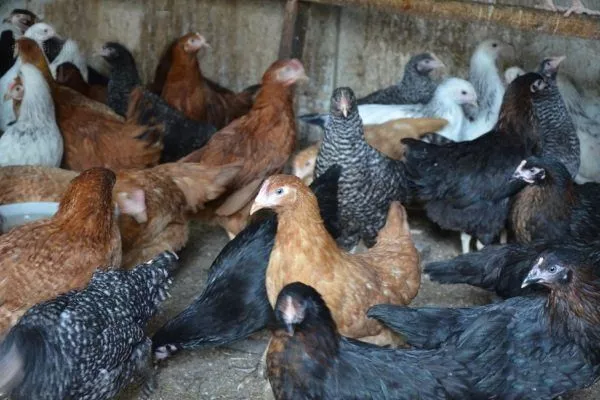
Dominant chickens of various colors
Each subspecies has distinct appearance characteristics. The birds have a squat body, characterized by a broad chest and short legs. Roosters have larger wattles than hens.
Conditions of detention
The conditions created in the poultry house affect the quality of meat and egg production of hens. Therefore, experienced breeders recommend providing the proper conditions when keeping Dominant birds.
Room and temperature
Although birds can adapt to even slightly below-zero temperatures, to ensure high egg production, it is best to insulate the poultry house and maintain a temperature of at least -5 degrees Celsius.
- Insulation of walls and ceilings to maintain temperatures no lower than -5°C.
- Organizing additional lighting to compensate for short daylight hours.
There should be no more than 4-5 laying hens per square meter. Peat or straw, pre-mixed with a layer of lime, is best for bedding—this prevents the emergence and proliferation of pathogenic microflora.
A distinctive characteristic of birds is that hens do not always stop laying eggs during the shedding period, which results in a decline in clutch quality. Therefore, given the high level of exhaustion experienced by laying hens, farmers can facilitate eggshell formation during this period by introducing mineral supplements into their diet.
The coop should be set up so that the birds have access to the outdoors. It's essential to ensure there are no drafts, and water bowls should be regularly stocked with water. The coop should be cleaned regularly to prevent bird diseases.
For overnight stays, the birds require a coop with comfortable bedding for complete comfort. Dry sawdust, hay, leaves, and other materials are used as bedding. Dominant chickens can be raised in private farms or commercially.
Feeding
Feeding is an important aspect of raising Dominant birds. The daily grain requirement for one individual is approximately 150 g. This amount decreases during the summer, as the birds forage for their own food while out foraging. Each hen consumes approximately one bag of feed per year.
- ✓ Protein content of at least 16% to maintain egg production.
- ✓ Mandatory presence of calcium supplements to form a strong shell.
Young birds should also receive their share of compound feed, but only during the period of intensive growth. Afterwards, it can be replaced with mash and grain. The chickens' diet can also include premixes, cooked vegetables (potatoes, fresh herbs, carrots, pumpkin), crushed eggshells, meat and bone meal, and chalk.
You can read about the specifics of feeding laying hens here.
Breeding
Dominant hens have a high survival rate and rarely encounter any infections. However, disease prevention should be started from an early age. Most of the eggs laid by hens are fertile, provided there are enough roosters.
Chicks are hatched using incubation or natural hatching. However, it is generally accepted that chicks hatched by laying hens are more viable and less susceptible to various pathologies, including congenital ones.
Bird nests must be kept clean, and the bedding must be changed every two days. Three to four hens share one nest. It's crucial that each nest be kept in a warm but accessible area. While incubating eggs, hens need to be provided with peace and quiet. They should have a place inaccessible to other birds.
Care and maintenance of young and adult birds
Proper care and maintenance are essential for the survival and continued development of birds. Caring for chicks and adult birds differs significantly. A breeder must know what vitamins to give the birds, what to do to ensure their comfort, and how to protect them from disease.
How to care for chicks?
When purchasing young birds from a reliable, proven supplier, there are no problems, as the birds have already received the necessary vaccinations. This ensures that the animals thrive, grow, and rarely get sick. However, buying chicks at the market or hatching them from purchased eggs can present some challenges for the farmer.
At the very beginning, experienced specialists recommend giving the chickens one of the following medications for three days:
- Levomycetin – 1 tablet per 1 liter of water.
- ASD-2 – 1 ml per 3 liters of water.
- Startonic or Chiktonic - follow the instructions.
This will help boost their immunity and prevent gastrointestinal infections. Over time, it's advisable to add ascorbic acid and vitamin D to their drinking water. Trivit can be used.
As the chicks grow older, they are given Farmazin or Trisulfon as a preventative measure. Before placing the birds in the coop, the room is disinfected and the floor is treated with quicklime.
For bedding, use chopped straw or finely shredded wood shavings and sawdust mixed with peat (this removes excess moisture and prevents the growth of pathogens). Be sure to change the bedding whenever it becomes soiled.
When the chicks are two weeks old, the breeder should reduce daylight hours to eight hours to prevent feather pecking. During this period, the birds' food should contain sufficient calcium and vitamins. The optimal solution is to add nettles, resin, fish oil, and feather ash to the feed to provide essential vitamins and microelements.
Care of adults
To speed up the development of Dominant hens, from 16 to 24 weeks, increase their daylight hours from 8 to 16 hours. Maintain this amount of light, as hens react quickly to changes. Keep the birds as usual: in aviaries, cages, or free-range. Proper feeding is essential. If commercial feed is not available, make a mash of chopped grass, grains, vegetables, and potatoes. Barley or corn should be added.
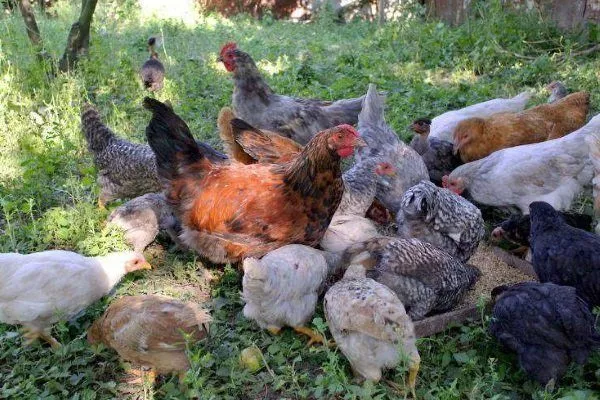
What recommendations should be followed:
- Chickens need sufficient calcium to ensure strong eggshells. To achieve this, add chalk, crushed shells, and bone meal to their diet. Sand or gravel in the feeder will ensure better digestibility.
- It's advisable to stock up on stinging nettles for the winter, as they're considered the best way to boost egg production. Breeders should strive to maintain consistency in diet and living conditions. If these deteriorate, egg production declines, and recovery will take a long time.
- The chicken coop must be kept dry. Excessive humidity can cause birds to become ill. It's important to stock up on peat or straw for bedding in advance.
- There should only be one rooster in a flock of laying hens. If males compete, they may attack the same hen. This can lead to them pecking her to death.
With proper care and maintenance, laying hens will produce large eggs with excellent taste.
Diseases and prevention
Although these chickens have enhanced immunity to various diseases, they are still susceptible to certain infectious and invasive diseases. Some of these diseases have treatments and preventative measures that can help prevent serious health problems.
The most common chicken diseases are:
- Pullorosis. Birds become immobile, lethargic, and refuse to eat. Their breathing becomes rapid and they become completely exhausted. To prevent this, the flock is inspected daily. Proper conditions must be maintained in the house. Ventilate the house regularly.
- Pasteurellosis. When birds are ill, their body temperature may rise, and their limb joints may swell or become deformed. They may refuse to eat, and mucus may be released from their nasal passages. Prevention involves removing rodents that may be able to access the feed. Disinfect the eggs before placing them in the incubator.
- Salmonellosis. An infectious disease that causes birds to suffer from foamy diarrhea, inflammation of the organs near the vent, and difficulty breathing. To maintain health, an immune serum is used for vaccination. After treatment, disinfect the poultry house and equipment.
- Coccidiosis. Coccidia enter the body, causing illness. Symptoms are similar to an intestinal infection. Chickens may have greenish feces, sometimes with bloody clots. The birds refuse to eat, and diarrhea may occur. They experience rapid weight loss, and egg production declines.
Antimicrobial medications are used for treatment. The most popular drugs are nitrofurans or sulfonamides.
Breeders are convinced that if minimal hygiene is observed and young animals are vaccinated on time, there will be no problems with maintaining Dominant livestock.
Farmers' opinions on the cross