
Most poultry farmers know that Rhode Island chickens are profitable breeders, but they are not able to survive in extreme conditions. Keeping them requires providing all the necessary conditions to ensure a high chick survival rate. This article discusses the birds' appearance and diet.
History of the breed
Rhode Island chickens are a type of chicken bred in the United States. Farmers worked on the breeding process in the mid-20th century. Chicken breeding was first practiced in the state of Rhode Island, which is where the birds got their name.
Today, almost all farmers in this area raise poultry. Chickens have become one of the state's symbols. The first poultry show took place in 1880, indicating the breed's age. However, it still shows no signs of degeneration. Farmers meticulously maintained the purity of the line.
The breed was initially developed by crossing the birds with fawn fighting roosters. The new breed was then further improved by crossing it with speckled ones. Leghorns, characterized by increased egg production. In Russia, breeding Rhode Island hens became popular in the 1920s.
External and quality characteristics
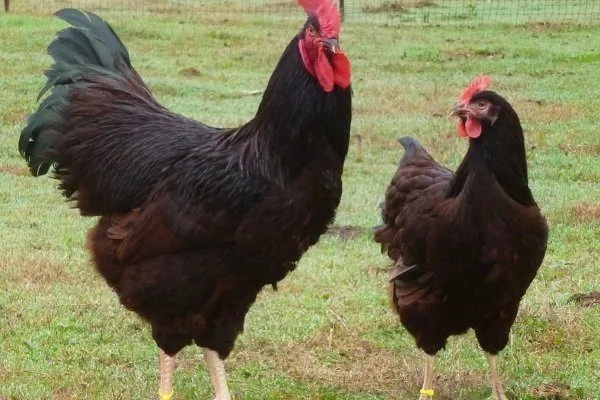
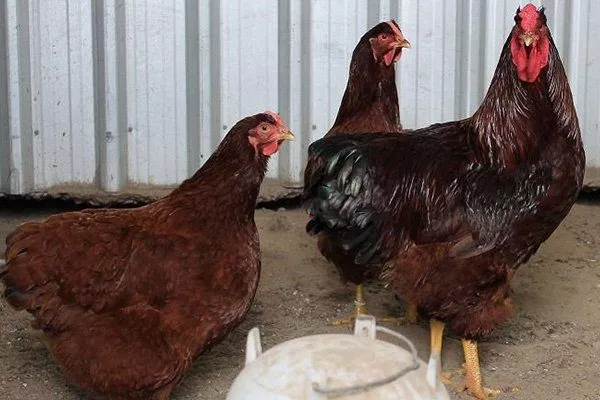
The Rhode Island hen is dark brown with a bright reddish shaft running the entire length of the feather. The underparts are light brown. The tail feathers are black with a greenish tint. The head is small, with a leaf-shaped, red comb, usually with five regular teeth. The earlobes are bright red. It has a curved bill, yellowish in color, but with a brown spot. Its powerful build is the result of crossbreeding with fighting birds.
These birds are characterized by a long, deep, and rectangular body. They have a strong chest and a long, broad back. The neck is short and covered with a fluffy mane. The small wings have wide feathers. The legs are short, bare, and strong, with yellow metatarsus and toes. Sometimes a red stripe appears on the sides of the metatarsus. Rhode Island geese are agile and thrive in free-ranging conditions. They are undemanding in terms of diet and living conditions.
Representatives of this breed have a balanced, non-aggressive nature, but rarely fight with each other. They don't cause fuss in the coop, and conflict is unheard of. They tend to quickly bond with their owner and may allow their eggs to be accessed. This behavioral trait is characteristic not only of layers but also of roosters, which are known for their aggressive nature in other breeds. Rhode Island hens tolerate changes in feed and temperature well, do not lose weight, and are consistently productive.
| Object | Weight of an adult (kg) | Egg production (pieces/year) | Eggshell color |
|---|---|---|---|
| Whites | 3.1-3.9 | 160-170 | Light brown |
| Dwarf | up to 1.2 | up to 40 | Brown |
Whites
The Rhode Island White was developed in 1888. White and red individuals of this breed are sometimes crossed to produce highly productive hybrids. Their distinctive feature is their plumage color. This is a meat-egg variety with similar weight and productivity. The Rhode Island White has a larger comb, and its color is a rich red.
The white bird was bred by crossing white Leghorns, Conchinchins, and white Wyandottes. The American Poultry Association first registered the Rhode Island White in 1922. For 40 years, the bird was relatively popular, then began to disappear. In 2003, only 3,000 individuals of this population were registered.
Dwarf
The Rhode Island Dwarf was developed by German breeders. The bird weighs no more than 1.2 kilograms, and its eggs weigh no more than 40 grams. Representatives of the dwarf variety have the same proportions and species standards as the larger birds.
The only difference is in egg production and quality. The Rhode Island Dwarf is significantly lower in production. For these reasons, these birds are bred primarily by collectors.
Performance
The birds have a fairly robust body structure, which contributes to the production of large quantities of juicy, tender meat. The average weight of males at one and a half years is 3.1-3.9 kilograms. At the same age, hens weigh between 2.5 and 2.9 kilograms. They are significantly smaller in size.
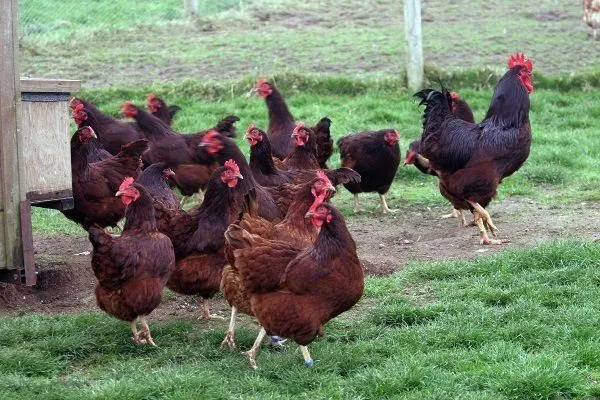
Sexual maturity occurs at 7 months. They lay eggs regularly. The Rhode Island breed is an excellent choice when large quantities are required. Experts note good egg production in these birds—a hen lays approximately 160-170 eggs per year. However, some individuals boast record-breaking egg production—up to 215 eggs per year. The average egg weight is 58 to 63 grams. These hens produce eggs with light brown, sometimes brown, shells.
Contents and diet
The Rhode Island hawk is a foraging bird. If free-ranging is restricted, vegetation will quickly become depleted. In this case, it's essential to provide the bird with a balanced diet. Depending on the bird's age, its living conditions and diet vary significantly.
Chickens
Rhode Island chickens are born strong and resilient. This is due to the genetics of previous generations of fighters previously used in the breeding process.
A characteristic trait of this species is its rapid growth rate. However, feathering is not as rapid—in the young, this process is protracted.
There are no secrets when it comes to raising young birds. Farmers adhere to certain rules when caring for chicks, applicable to all varieties. Below are recommendations for raising, feeding, and boosting the chicks' immunity:
- Maintaining an optimal air temperature will ensure comfortable conditions for the chicks. Initially, the chicks are kept warm at 28-32 degrees Celsius, then gradually decrease the temperature by 2 degrees every 7 days. This helps the chicks adapt more quickly and adapt to the normal climate.
- Young chicks are fed millet with mashed boiled eggs and finely chopped greens. This feed is suitable for young birds aged 10 days and older. Over time, the diet should be expanded, introducing new foods. Typically, the birds are fed wet and dry mash, vegetables, and grains.
- Don't forget about drinking water, filling special drinking bowls to prevent the birds from tipping them over. This must be monitored closely, as damp bedding can lead to hypothermia and illness. Chicks are given warm water, no warmer than 38-40 degrees Celsius.
- The breeder will have to care for the health of the young birds from the first days of their life. Regular cleaning of the poultry house, disinfection of waterers and feeders, and the introduction of vitamin supplements into their diet are essential. Chicks are regularly vaccinated against dangerous infectious diseases. Vaccination is not a guarantee that the birds will not become ill, but it significantly reduces the risk of infection.
- At six weeks, the active chicks are moved to live with their adult relatives. Here, they feed from the same feeder. They will eat whatever is given to them, as both young and mature chicks especially need protein.
Adult birds
When selecting feed and formulating a diet, it's important to consider the basic needs and characteristics of Rhode Island hens. While this breed is considered a low-maintenance breed, that doesn't mean they should be fed just any diet. A lack of nutrients can lead to decreased productivity.
- ✓ The ratio of proteins, fats and carbohydrates in the diet should be 20:5:75.
- ✓ Vitamin supplements are essential, especially in winter.
It's best to feed laying hens whole and crushed grain. Whole grain is poured into feeders as a separate meal, while crushed grain is added to porridge and mash. Grains are essential in the diet: birds are fed barley, wheat, rye, corn, and oats. Experienced farmers recommend adding meal and cake. Specialty stores sell ready-made mixed feeds containing all the necessary components in the required proportions. You can read more about feeding laying hens. here.
During the summer, green fodder can make up half of the daily diet. In winter, Rhode Island crabs are fed dry grass. During the active laying season, increasing the amount of chalk and shells is recommended to help replenish their mineral needs.
Breeding
Rhode Island hens are considered among the best breeds of poultry for combined production, and are considered one of the best for home breeding. Although they are not brooding, 50% of individuals exhibit this instinct. To increase the brood size of these hens, incubators or other brood hens are used.
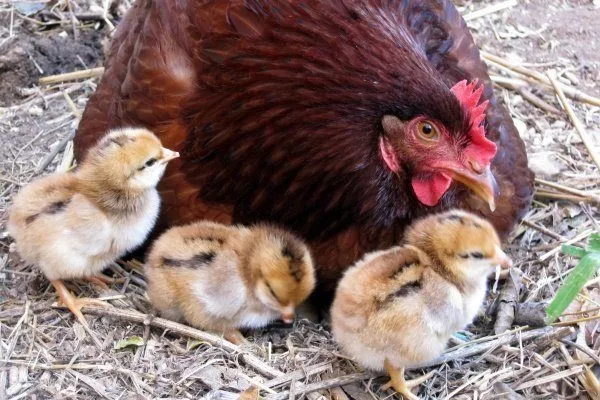
Hatchability and fertility are up to 75%. Chicks have excellent survival rates, with a 95% survival rate. Even at day old, chicks exhibit sexual dimorphism, thanks to the golden color gene. They have a distinctive spot on their crown, allowing farmers to select a flock of potential layers. Roosters do not have this marking; they are separated from their male counterparts. This allows the brood to be fattened specifically for meat production in a short period of time.
Commercial breeding of this breed is impractical, making purebred specimens extremely rare. However, Rhode Island roosters are used for broiler production. They significantly improve the meat quality of, for example, the Kuchinsky Yubileiny.
Age of slaughter
This breed's egg production peaks at eighteen months, after which it begins to gradually decline. After two years of age, the hens are usually slaughtered and replaced with younger hens.
Diseases and prevention methods
Rhode Island fowl become ill due to improper care or poor, unbalanced nutrition. Farmers should pay attention to the birds' appearance: if they appear disheveled, indifferent to food, sleep standing up, away from others, have a dull gaze, and have dirty plumage, these are signs of illness. They should be isolated immediately to prevent infection of other birds.
The most common chicken diseases:
- lice;
- atony;
- pliers;
- cannibalism;
- lice eaters;
- inflammation of the cloaca;
- smallpox;
- bowel disease (diarrhea);
- paralysis;
- coccidiosis;
- cholera;
- pullorosis-typhus.
The main prevention of diseases in Rhode Island chickens is a proper, varied diet with high-quality feed, adequate space in the poultry house, regular cleaning of the cages, disinfection of the premises, and maintaining the correct temperature and humidity conditions.
Advantages and disadvantages
Reviews
There are many positive reviews of the Rhode Island breed online. Here are a few:
It was very important to me that the birds weren't aggressive, as we have five small children in our family. The seller assured me that the animals were very calm, and this turned out to be absolutely true. Even the roosters don't show aggression, so you can safely go out into the yard without fear of these birds. We are pleased not only that the birds lay eggs, but also that their meat is tender and juicy.
But a friend explained that this breed is actually often used in breeding meat and egg crosses, meaning it's quite possible to produce purebred chicks from Rhode Island hens. I believed her, and oh, how wonderful. The birds are good egg layers, and the chicks hatch well. They're versatile hens, and they can be kept in cages. Everything suits me.
Rhode Island chickens are easy-to-care-for birds with many positive characteristics. With proper care, regular housekeeping, and preventative measures, they will remain healthy, gain weight quickly, and delight their owners with juicy meat and medium-sized eggs.