
The "Slavyanka" variety is considered one of the best in the crop. It's easy to grow and requires minimal care. The root vegetable boasts excellent marketability and flavor. This article covers growing and care aspects, including soil and seed preparation, and planting.
History, description, characteristics
"Slavyanka" was developed in Ukraine by breeders from the Kirovograd Institute of the Ukrainian Academy of Agricultural Sciences using virus-free seed material. The variety was registered in the State Register of the Russian Federation in 2009. Since then, Slavyanka has spread widely across Russia, winning the hearts of local gardeners and vegetable growers.
The variety is recommended for planting in the Central Black Earth Region, but it is grown in virtually all regions of the country. In the country where it was developed, Slavyanka is considered one of the best.
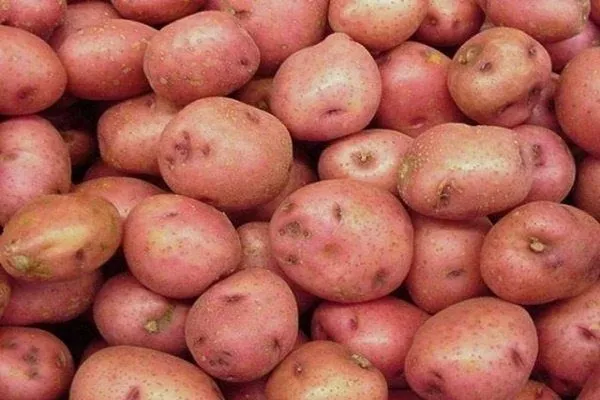
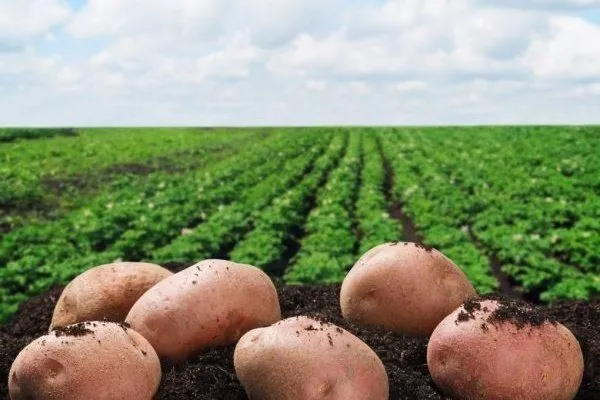
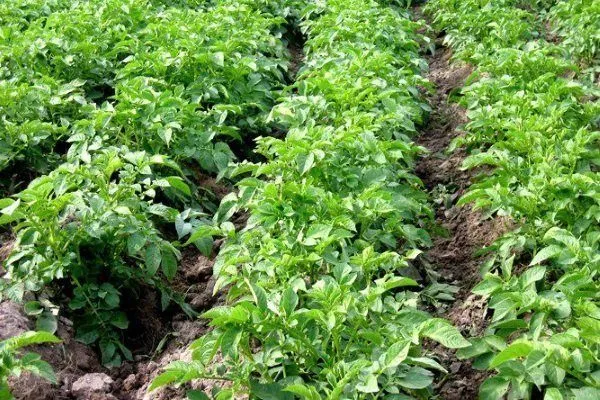
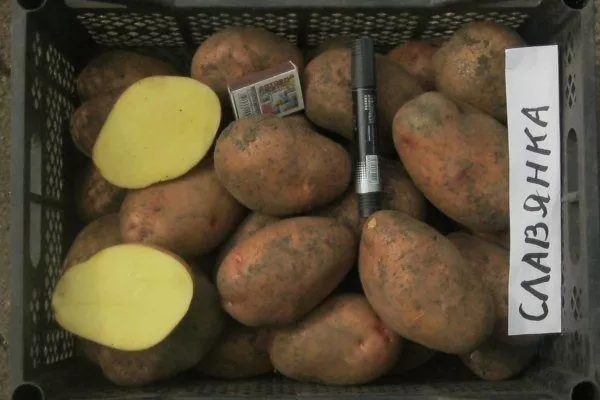
The bushes are small and compact, reaching up to 50 centimeters in height. The stems are spreading, the green mass is lush, the leaves themselves are wavy and small. The tubers are oval-elongated, with smooth, thin skin of a pinkish-purple hue. Small, shallow eyes are present on the surface. A single tuber weighs 100-250 grams. Larger specimens are occasionally found.
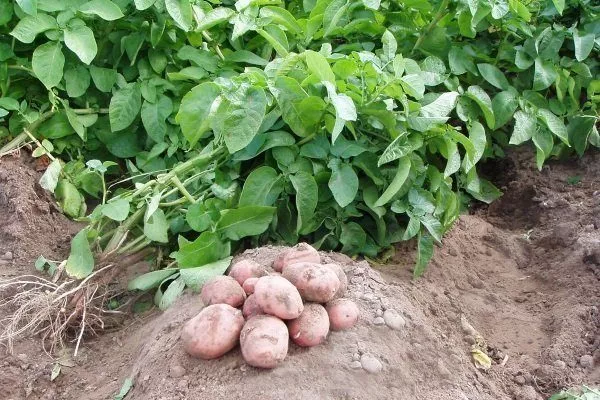
From the first shoots, it takes 100-120 days for the potato to reach full maturity. Potatoes guarantee a high yield. Up to 300 kg of potatoes can be harvested from one hundred square meters of land. With proper agricultural practices, this figure increases to 400 kg. A single plant produces approximately 13 large tubers and a minimum of small potatoes.
| Full characteristics of the variety | |
| Name | Slav |
| Ripening period | 100-120 days |
| General characteristics | a mid-season table variety with excellent appearance and taste |
| Productivity | up to 400 c/ha |
| Number of tubers in a bush | 13-15 |
| Weight of commercial tubers | 100-250 g |
| Starch content | 11-13% |
| Shelf life | 95% |
| Pulp color | cream |
| Peel color | pinkish-purple |
| Disease resistance | The variety is resistant to golden potato nematode, the causative agent of potato cancer, wrinkled and striped mosaic, and leaf curl virus. |
What are the advantages and disadvantages of Slavyanka?
The Slavyanka potato variety has many positive qualities and few negatives. However, before planting, it's important to carefully familiarize yourself with both aspects to avoid any difficulties or uninformed guesses.
Advantages of potatoes:
- resistance to major diseases;
- high taste qualities of tubers;
- unpretentiousness to climatic and weather conditions;
- high yield;
- versatility of potato use;
- friendly ripening of root crops;
- attractive presentation;
- good keeping quality.
Landing features
Before planting potatoes, prepare the soil and planting material. Following these recommendations will ensure a high yield.
Preparing soil and seed material
Planting in flat, well-lit areas is preferred, as moisture can linger, as this can cause plant rot. The soil should be prepared first, and humus should be added. When digging, it's important to add nitrogen, phosphorus, and potassium fertilizers—these help the seeds germinate faster and the tubers develop.
- ✓ Soil pH should be between 5.0-6.0 for optimal potato growth.
- ✓ The soil should be well drained to avoid water stagnation.
3-4 weeks before planting, potatoes are laid out in 1-2 layers and taken into a warm room where warm rays penetrate - the tubers turn green and sprout, which ensures better germination of the root crop.
Small tubers are left from the most beautiful bushes. It is recommended to use potatoes the size of a chicken egg for planting. Potatoes are planted after they turn green and sprout.
Planting potatoes
Potatoes are planted when the soil temperature is between 7 and 10 degrees Celsius. This allows the potatoes to take advantage of the moisture accumulated during the winter from melting snow.
In the spring, dig up the area and loosen the soil. The distance between bushes should be 30 cm, and between rows, at least 70 cm. Compost is added to the dug holes. The seed is placed at a depth of 8-10 cm, covered with soil, and leveled with a rake.
Care Features
Caring for potatoes is easy if you follow basic recommendations that will help you get a good harvest in the future:
- Water the plants. Regular watering is recommended. However, Slavyanka doesn't like overwatering, as this can lead to the development of fungal diseases. It's best to install a drip irrigation system.
- Weed the bushes. This procedure is carried out a few weeks after planting, when the first shoots appear. Weeding is then carried out as needed.
- Hilling potatoes. Plants are hilled twice: when the bushes reach 15-20 cm and before flowering. This procedure is combined with loosening and weeding.
- Apply fertilizer. Potatoes require intensive fertilizing. Before the first hilling, add 300 g of compost and 10 g of ammonium nitrate per plant. Fertilizing with cow manure and wood ash is also beneficial. After flowering, it is recommended to water with a solution of 30 g of superphosphate diluted in 10 liters of water.
- Mulch the beds. Sawdust or hay is used for mulching between rows and potato beds. Mulch is spread in a 5-10 cm layer – this promotes excellent moisture and heat retention and prevents weed growth.
Pest and disease control
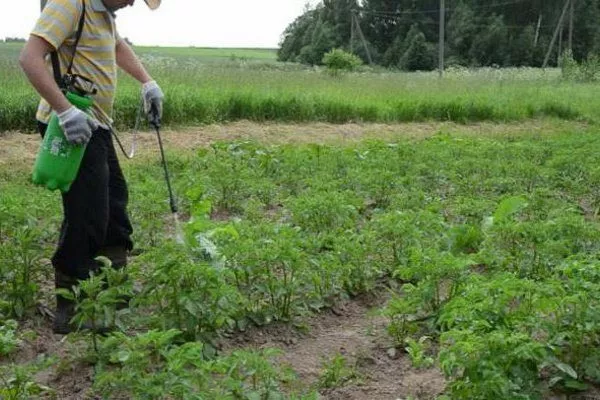
There is average resistance to late blight, which is why it is recommended to treat the plant with copper-containing preparations. Late blight The disease manifests itself as dark spots on the leaves, leading to their rapid rotting. Gradually, the disease spreads to the tubers and stems. If left untreated, it will destroy the entire crop.
To avoid this problem, gardeners follow these recommendations:
- observe crop rotation;
- When storing potatoes, they are first inspected for the presence of infected tubers;
- Do not spray potatoes in the evening, as drops on green mass can trigger the development of the disease;
- harvest on time;
- dry the harvested potatoes in the fresh air;
- Don't forget to hill up the bushes.
Insecticides are used to control pests such as the Colorado potato beetle, mole cricket, aphids, and wireworms. Read more about pest control. hereOnly all these actions will help grow healthy potatoes.
Harvesting and storage
When the bushes begin to droop and wither, it is recommended to dig up one bush: if the potato skin has become strong, it is permissible to begin mass harvesting.
After harvesting, the tubers are left in the sun for several hours to dry. They are then sorted to remove any rot and separated into planting and feed grades. The potatoes are then stored.
Potatoes are stored in basements, cellars, and basements. The storage location doesn't matter, but it must be clean, ventilated, and disinfected, with a humidity level of 80-95% and a temperature of 1-3 degrees Celsius.
Potatoes are stored in bags, nets, wooden boxes, or compartments. They can also be scattered on the floor, after making a depression and filling it with straw to a depth of 10 cm.
Comparison with other varieties
To compare the Slavyanka potato with other mid-season varieties, a table is provided where you can learn about the advantages and disadvantages of a similar crop:
| Variety | Ripening time | Productivity | Advantages | Flaws |
| Slav | 100-120 days | up to 400 c/ha |
| Low resistance to mechanical damage. |
| Tuleyevsky | 80-110 days | 180-500 c/ha |
| Susceptibility to golden cyst nematode. |
| Rocco | 100-150 | 350-400 c/ha |
| It does not store well in cellars where there are no proper conditions. |
| Aurora | 60-80 days | 215-400 c/ha |
| Requires a high level of agricultural technology. |
| Rosara | 65-70 days | 415 c/ha |
| Suffers from late blight of tops. |
Reviews from gardeners and vegetable growers
The Slavyanka potato is popular among gardeners, farmers, and agriculturists. This is confirmed by the numerous positive reviews you can find online.
The Slavyanka variety has gained popularity among many gardeners who have been growing the crop for many years. Slavyanka is a variety that guarantees high yields and increased disease resistance. The key is to follow the planting, growing, and care recommendations.