
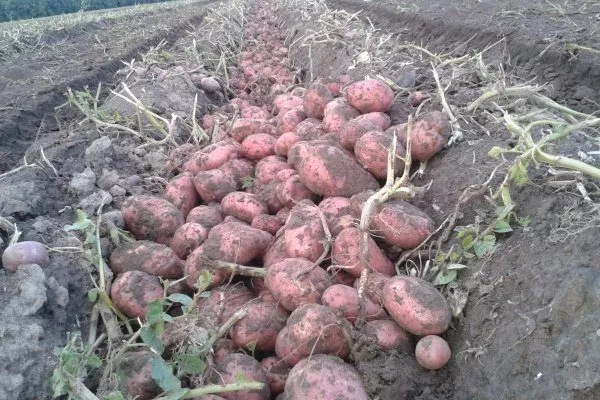
Many gardeners today grow potatoes, for whom it's a profitable business or a way to feed their families. The Rosara potato is considered one of the best varieties, as it boasts high yields, excellent taste, and attractive appearance. However, proper care of the root vegetables is essential to ensure a good harvest.
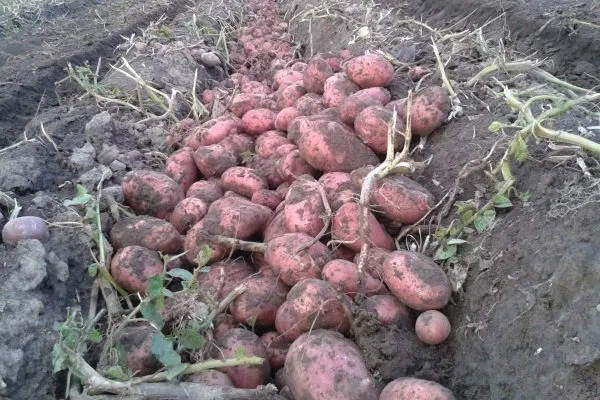
Description of the Rosara variety
The main advantage of potatoes is their quick ripening and high yield. Plants develop most rapidly in the early stages of vegetation, with root crops appearing as early as 45-50 days after the first shoots emerge. The tubers reach full technical maturity in 65-70 days. The bushes reach a medium height (50-55 cm), are semi-spreading, with green foliage and small clusters of red-violet flowers.
The flower sprout is characterized by an ovoid shape with a slightly pubescent base. The marketable weight of the tubers ranges from 80 to 115 g. They come in medium and large sizes, with an oblong-oval or elongated, teardrop-shaped form. The tubers are distinguished by smooth, red skin with small, bright red eyes.
The potato has light yellow flesh that tends to darken when cut and peeled, and darkens slightly when boiled. Rosara potatoes are good for boiling, but their flavor is significantly reduced when fried or baked. They are best used in salads, entrees, and side dishes.
Characteristic features
The Rosara potato is an early variety that has gained popularity among many gardeners due to its excellent characteristics. A more detailed description is provided in the table:
| Indicator | Description |
| General characteristics | ultra-early table variety (suitable for commercial production, packaging, washing, and mechanical harvesting) |
| Ripening period | 65-70 days |
| Productivity | 415 c/ha |
| Marketability | 91-99% of the total yield |
| Shelf life | 95% |
| Weight of commercial tubers | 80-115 g |
| Number of tubers in a bush | 15-18 pieces |
| Pulp color | light yellow |
| Peel color | red (from pink to dark crimson) |
| Starch content | about 13% |
| Color of corollas | red-violet |
| Disease resistance | increased (the plant is highly resistant to common scab, potato cancer, leaf curl virus, iron spot, black leg, rhizoctonia, late blight of tubers and tops, and golden nematode) |
| Consumer qualities | excellent taste, universal culinary purpose |
| Features of cultivation | flexible, produces a good harvest in almost any soil, climate and weather conditions |
Productivity
If all agricultural practices are followed, a gardener can harvest up to 500 kg of high-quality, large, and attractive fruit per 100 square meters. Importantly, the yield will be maintained for five years, without changing the seed. Weather conditions do not affect the harvest.
The Rosara variety produces the highest yields in temperate latitudes. Farmers growing in northern latitudes note that even with minor temperature fluctuations, quality indicators do not decline, and yields remain high.
Features of cultivation
In just a few months, you'll get a high-yielding and delicious potato variety. It's best to start the first planting from seed, which will make it easier to evaluate its qualities. However, planting from potatoes will also yield good results. Planting begins in May for harvesting in August.
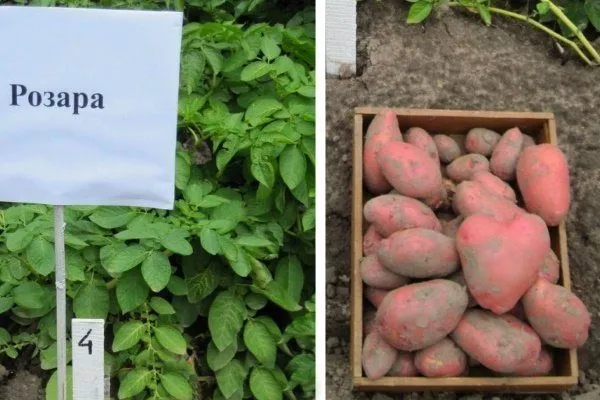
It is essential to prepare the soil and seed material, after which gardeners begin planting potatoes.
Soil preparation
The correct soil for planting potatoes is sandy or loamy soil, prepared in advance in the fall. Remove weeds and loosen the soil. In the spring, add a small amount of humus and 20 grams of ash to each hole.
It is best to grow this variety on land where the following crops were previously grown:
- cabbage;
- flax;
- cucumbers;
- winter crops;
- lupine;
- annual and perennial herbs;
- grain legumes.
This is necessary to prevent the spread of diseases through the soil, to which the root crop is susceptible. A sun-drenched area is preferable.
Preparation of seed material
Sprouting tubers is a procedure that shortens the already short growing season of the variety by another 7-12 days. After the growth buds have emerged, the tubers are covered with a 3-4 cm layer of damp sawdust. As they dry, they are sprayed with a solution of any biostimulant. Recommended products include Heteroauxin, Epin, and Mikon.
12-15 days before planting, the tubers are exposed to sunlight to develop a greenish tint on their skin. This increases their resistance to pests. This treatment significantly increases yield.
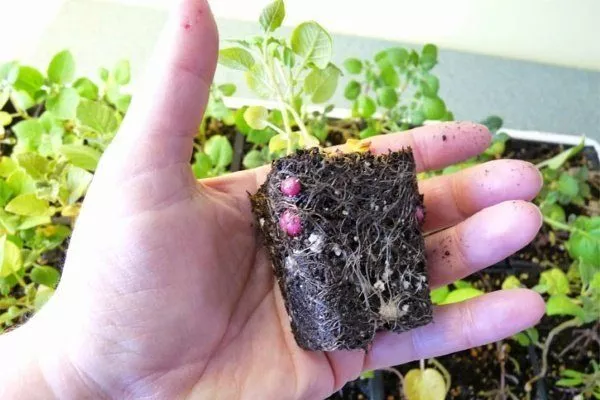
Growing tubers from seeds
Growing potatoes from seed is a great opportunity to cultivate a unique variety. The tubers a gardener obtains in the first year will vary greatly in color, size, and shape. The gardener's primary goal is to select the best ones.
Growing potatoes from seeds in open ground is only possible in regions with a warm subtropical climate.
How is the procedure performed:
- The potatoes, which resemble small green tomatoes, are harvested. They are hung in a cheesecloth bag in a sunny room to ripen. Once they have shriveled and softened, the seeds are separated from the pulp and left to dry. After this, they are soaked in a potassium permanganate solution for half an hour, dried, and stored indoors in airtight glass containers until spring.
- A week before planting, the seeds are treated. They are stored in the refrigerator at night and in a warm place during the day, such as on a radiator or a sunny windowsill.
- Wrap potato seeds in wet gauze to encourage sprouting.
- Prepare a light and nutritious soil. Use a ready-made store-bought seedling substrate with the addition of nitrophoska (2-3 g/l) or a mixture of ordinary garden soil, peat chips, and coarse river sand.
- Half an hour before planting, the seeds are soaked in a solution of any biostimulant.
- Fill small flat containers with sterilized soil, level them, and moisten them moderately.
- Plant several seeds at a time, spaced 4-7 cm apart. Leave at least 8-10 cm between rows. Cover the seeds with a thin layer of fine sand and compact gently. Cover the containers with glass or plastic wrap.
- The containers should be exposed to direct sunlight and the temperature should be at least 25 degrees Celsius. Ideally, the containers should be heated from below. The greenhouse should be ventilated daily by opening it for 5-7 minutes.
- The first shoots will appear in just 7-10 days. Once two leaves have emerged, carefully transplant the seedlings into pots filled with peat.
- Once the plants have established themselves and new leaves begin to form, the seedlings are fed by spraying them with nitrogen fertilizer. One and a half to two weeks before transplanting into the garden bed, the plants begin to harden off by placing them outside in the garden or on the veranda during the day. Gradually extend the period of outdoor exposure.
| Stage | Deadlines | Temperature | Quality criteria |
|---|---|---|---|
| Germination of seeds | 7-10 days | 25-27°C | The appearance of white roots |
| Growing seedlings | 35-40 days | 18-22°C | 4-5 true leaves |
| Hardening | 10-14 days | 14-16°C during the day | Stem thickening |
| Planting in the ground | — | Soil +10°C | Height 12-15 cm |
Step-by-step planting guide
Potatoes are planted according to a specific pattern. There's nothing complicated about this process. The main thing is to do everything correctly, so the potatoes will take root and produce a good harvest. Here's what to do:
- Before planting, plow the soil to a depth of at least 30 cm.
- Add fertilizer containing phosphorus and potassium to the holes.
- The holes should be 6 cm deep for loamy soil, 10 cm for sandy loam soil.
- The distance between holes is 40 cm.
- After applying fertilizer, place the potatoes in the holes with the sprouts facing up.
Crushed eggshells with wood ash and onion peels are used as fertilizer.
How to care?
It is possible to get a rich and timely harvest only if you provide the plants with good care, do not forget about watering, weeding, hilling and application of fertilizers.
| Watering | Weeding | Loosening | Hilling |
| If the summer is hot and dry, be sure to water your potatoes. Be careful not to overwater, as waterlogging can kill the plants. Rosara has dense, well-developed foliage, so in dry weather it requires regular artificial watering. Each plant requires 5 liters of water. | If the first shoots don't emerge, loosen the soil twice to remove weeds. Harrowing should also be done during this period. The first harrowing should be done one week after planting, and the second one seven days later. | The procedure is carried out when the plants reach 10 cm in height. This is done between rows using a hoe or a flat-top cultivator. Loosening the soil to a depth of 10 cm eliminates weeds and improves oxygenation. If the soil is moist, loosening is carried out to a greater depth. Over a period of 1-1.5 months, the soil is loosened three times, at intervals of 10-15 days. | Bushes should be treated at least twice during the growing season. Perform the procedure after watering or rain. During the first hilling, cover each bush with 12 cm of soil around it; during the second, cover it with 20 cm of soil. |
Pest control
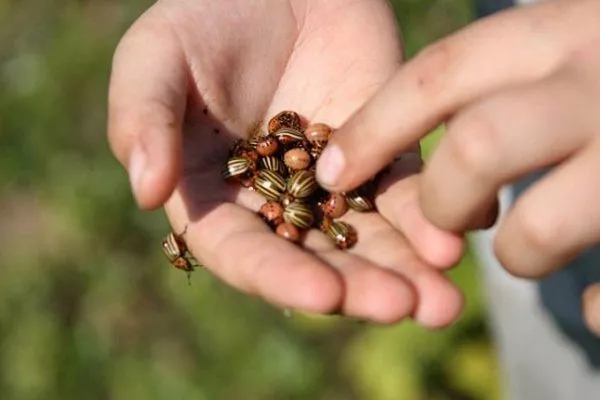
Rosara is most susceptible to attacks by the Colorado potato beetle, but is considered one of the most delicious varieties.
WITH pests Control is essential, otherwise the yield will be significantly reduced or there will be no fruit at all. Chemical, traditional, biological, and mechanical methods are used to control beetles.
- Biological method. Biological pest control is preferable, as it is harmless to all living creatures and is intended solely for pest control. After using these products, Colorado potato beetles retreat. Recommended products include Fitoverm, Bitoxibacillin, Colorado, Agravertin, and Bicol.
- Use of chemicals. When using toxic chemicals, it's important to follow safety precautions. Always read the instructions carefully before using. Always wear protective clothing when working with chemicals. Use no more than 1 liter of diluted solution per 10 square meters.
- Mechanical methodThis involves collecting the pests by hand. Adults and larvae should be collected in a container, after which the beetles are destroyed, usually by pouring boiling water over them. This method requires careful inspection of the plants. Most often, the insects hide their egg clutches under leaves.
- Folk remedies. The advantage of these methods is their harmlessness to humans and the environment. The following methods are popular:
- Grind 100 g of birch charcoal and mix with 10 liters of water. Spray the potato tops with the solution.
- Boil the ash for 15 minutes and let it steep for 48 hours. Then strain, dilute 50 g of the infusion in 10 liters of water, adding 2.5 tablespoons of laundry soap. Spray the potato tops.
- Plant calendula between the rows and scatter onion peels. Their scent repels pests.
- Pour 40 g of Karbofas into 500 ml of water and soak potato peels in the solution. Place them in tin cans and bury them around the perimeter of the field. This should be done before the first shoots appear. After they emerge, hungry insects will pounce on the poisonous "dessert."
Preparation Consumption rate Number of treatments Waiting period Fitoverm 2 ml/1 l of water 2-3 2 days Bitoxybacillin 40-50 g/10 l 3-4 5 days Colorado 1.5 ml/10 l 2 20 days Agravertin 5 ml/1 l 2 3 days
How to harvest and store potatoes?
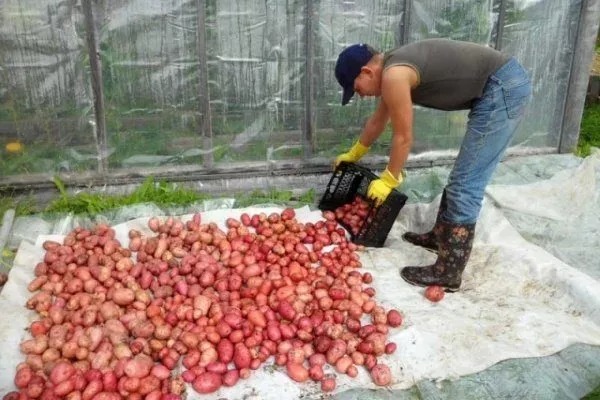
The harvest can only be preserved effectively if the potatoes are well-ripened. After the tops die back, the tubers accumulate all the necessary nutrients, including starch. These nutrients contribute to the variety's characteristic flavor and aroma. Ripe potatoes are characterized by the formation of a rough skin with dry eyes.
Before storing the harvest, the fruit is first air-dried. Protecting the tubers from sunlight will help prevent them from turning green. Next, sort the potatoes and remove any defective ones.
Only tubers without mechanical damage are used for storage. Tubers with obvious signs of disease are destroyed immediately.
Before storing, air-dry the harvest. The optimal storage temperature is 2-4°C (37-42°F) to ensure the best preservation of the potatoes. Humidity should not exceed 70-85%. Sand, crushed stone, or pebbles should be placed on the bottom of the storage area to help absorb moisture and prevent the development of fungal diseases. The storage area should not be exposed to direct sunlight.
Storage Preparation Schedule
- For 1 month: whitewashing the walls with lime (2 kg/10 l of water)
- For 3 weeks: treatment with sulfur checker (60 g/m³)
- 2 weeks before: airing and drying
- 1 week in advance: ventilation check
Pre-laying out rat poison will help prevent rodents from entering the premises.
Mesh bags or wooden crates are ideal for storage. When harvesting Rosara potatoes, the yield is minimal. This allows for long-distance transportation without worrying about their marketable appearance or flavor preserving until spring.
Comparison of Rosara with other varieties
The Rosara potato is considered one of the best early-ripening varieties, requiring little care. Even with minimal care, gardeners reap an excellent harvest. The table below lists some varieties that can be compared to Rosara:
| Variety | Ripening period | Productivity | Peel/flesh color | Advantages |
| Rosara | 65-70 days | 350-500 kg/1 are | Red skin, yellow flesh | Marketable appearance. Long shelf life. Disease resistance. |
| Alena | 50-60 days | 300 kg/1 are | The skin is red, the flesh is cream-colored | The first tubers appear in just 45 days. This variety is suitable for growing in the West Siberian regions. The potato is disease-resistant. |
| Ariel | 50-70 days | 150-450 kg/1 are | Light yellow skin, cream-colored flesh | Two harvests are collected per year. |
| Timo | 70 days | 240 kg/1 are | Light skin, creamy flesh | The variety is suitable for growing in a variety of soil types. The first root crops appear in 45-50 days. |
| Karatop | 50-65 days | 350-500 kg/1 are | Light skin, yellow flesh | The variety is characterized by high yield and increased resistance to diseases. |
| Bellarosa | 50-60 days | 320 kg/1 are | Light pink rough skin, yellow flesh | Increased disease resistance. Easy to care for. |
| Lark | 40-55 days | 250-280 kg/1 are | Bright yellow skin, delicate lemon flesh | Resistance to late blight of tops, golden nematode |
| Impala | 65-75 days | 370-600 kg/1 are | The skin and flesh are light yellow | Uniform fruits, identical to each other. High yield. Disease resistance. |
| Romano | 80 days | 500-600 kg/1 are | Pink rind, creamy lemon flesh | Excellent taste. Marketable appearance. Good yield. |
| Lily | 50-60 days | 600-680 kg/1 are | Lemon peel, light yellow flesh | High yield. Good taste. Resistant to long-distance transport. |
| Luck | 65 days | 420 kg/1 are | Yellow skin and flesh | Increased resistance to diseases. |
| Bullfinch | 45-55 days | 400-450 kg/1 are | Pink skin, creamy flesh | Good yield. Easy to care for. |
| Charoite | 80-90 days | 320 kg/1 are | Yellow skin and flesh | High yield. Marketable appearance. Harvest shelf life. Even fruits. |
| Veneta | 50-55 days | 235-240 kg/1 are | Dark brown or yellow skin, light brown flesh | Marketable appearance. Undemanding to soil composition. Excellent taste. |
Technology for increasing crop yields
Gardeners and farmers actively grow the Rosara potato because it's easy to cultivate and requires little care. Experienced growers have long since learned how to increase yields through the development of several technologies. They do this in the following way:
- Grow potatoes on straw, using the ridge method with rotted sawdust and straw. Significant yield increases and improved root crop quality are observed with these methods.
- Planting potatoes on raised beds effectively increases tuber production when planted early. This helps the plant efficiently utilize the soil's moisture reserves during the winter and spring.
To guarantee a high yield, it's important to properly create a bedding layer using rotted sawdust, ash, and dry chopped grass. Rotted straw is also used. Organic bedding allows the soil to warm up quickly, and as it decomposes, it provides additional nutrition to the plants.
Advantages and disadvantages of potatoes
The Rosara potato, like many other varieties, has its advantages and disadvantages. Before growing this variety, gardeners should familiarize themselves with its potential pros and cons:
| Advantages | Flaws |
|
|
Reviews from gardeners
Gardeners generally have positive reviews for the Rosara potato variety. Many grow this variety annually, noting its high yield even with minimal time investment.
The Rosara potato has received numerous positive reviews, as many gardeners continue to grow this variety after growing it, appreciating its low maintenance and resistance to diseases and pests. With proper planting, seed preparation, and minimal care, you can reap a bountiful harvest.