
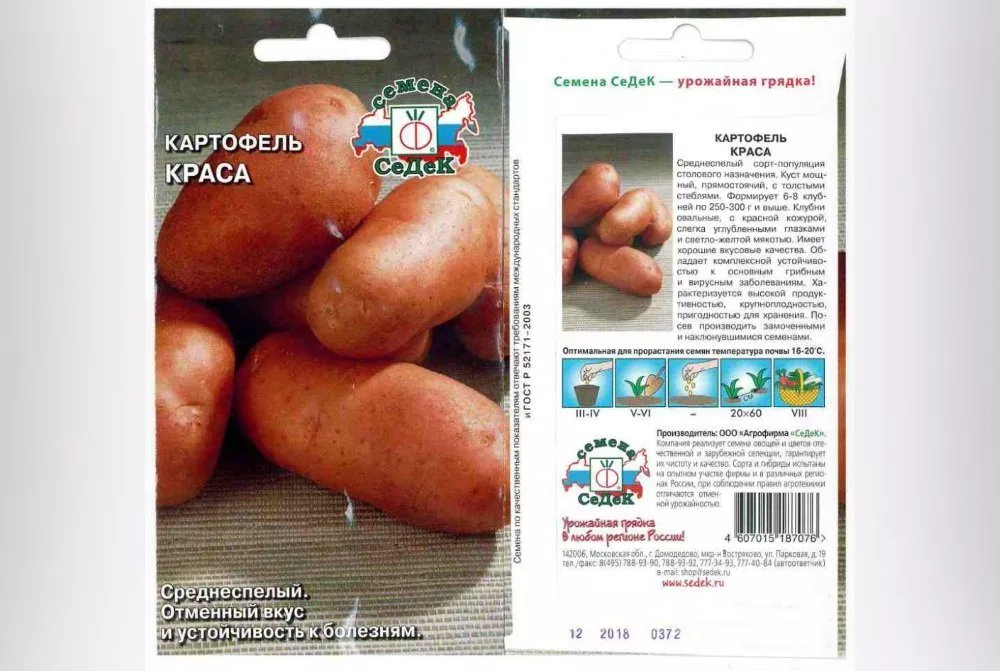
The "Krasa" potato is a mid-late variety renowned for its remarkable flavor. A distinctive feature of this potato is that it cooks quickly, yet retains its nutritional value when used in soups. To plant this variety in your garden, you need to know the rules that will ensure a high-quality harvest and a large quantity of beautiful fruit.
Characteristics of the variety
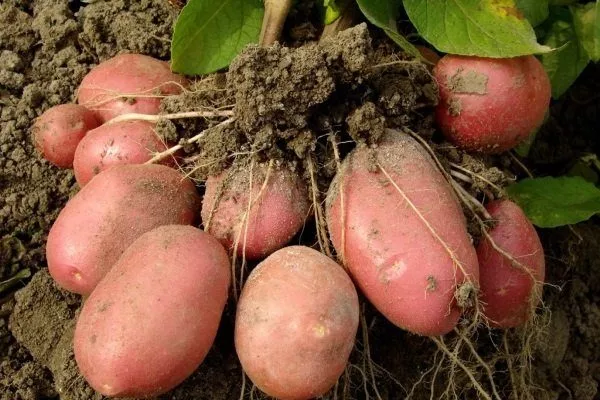
The "Krasa" potato ripens in 80 to 100 days, making it considered a mid-late variety. It is grown in all regions of Russia. The Ilyinsky variety boasts excellent taste and a good marketable appearance. It is a table potato that produces a high yield. It easily tolerates drought and various mechanical damage, and exhibits increased resistance to various diseases and pests.
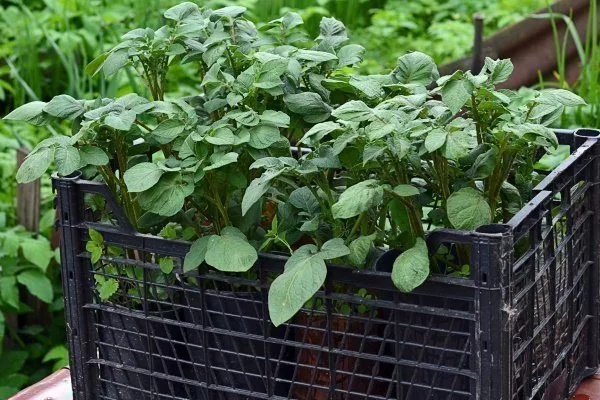
Potatoes are best planted in light, well-drained soil. This variety grows into strong, upright bushes with sturdy, massive stems. The bushes have green leaves and medium-sized flower heads. Each cluster produces 6-8 tubers.
Detailed specifications are given in the table below:
| Criterion | Characteristic |
| Adaptation | adapts well to soil and climate, bears fruit consistently |
| Ripening period | 80-100 days |
| Starch content | 15-19% |
| Weight of commercial tubers | 250-300 g |
| Number of tubers in a bush | 6-8 |
| Productivity | 400-450 c/ha |
| Shelf life | 95% |
| Consumer qualities | good taste, great for baking and frying |
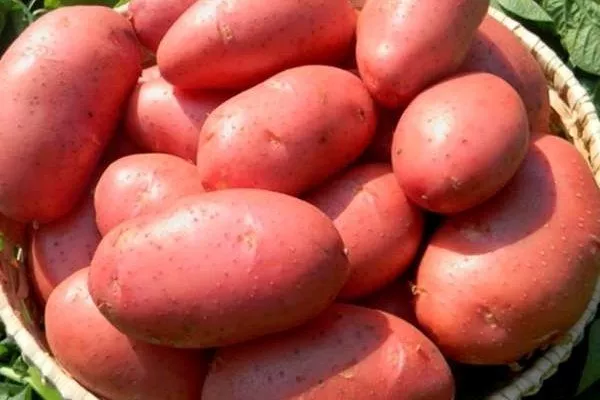
| Peel | dense, red |
| Pulp | light yellow |
| Resistance to pests and diseases | the variety is dominated by increased resistance to diseases and pests |
| Features of cultivation | standard agricultural technology |
| Where is it preferable to plant? | in any region of Russia |
How to plant with seeds?
Potato seeds should be sown for seedlings no earlier than 80 days before planting outdoors. Seedlings can be planted in May. The seeds must be treated to ensure good seedlings, which can be planted outdoors to produce new potatoes in the fall.
Before growing potatoes from seed, the soil and planting material are prepared. The soil can be prepared using equal parts soil, lowland peat, or sand. A special universal seedling soil can also be purchased. The prepared substrate is steamed in a water bath for 30-40 minutes, after which it is treated with Extrasol or other biological preparations with fungicidal properties.
Preparing potato seeds for planting involves soaking them in boiled, cool water for 1.5 days, followed by treatment with any growth preparation. After treatment, the seeds are rinsed in cool water and then sown.
Planting of seeds should be carried out in a seedling box in furrows to a depth of 1-1.5 cm.
The top layer is covered with river sand, previously cleaned of impurities and calcined over a fire. The seedling trays are covered with plastic film or glass. The cover is removed periodically for ventilation. The optimal temperature for growing seedlings from seeds is 18-20 degrees Celsius during the day and 13-15 degrees Celsius at night.
Caring for potatoes after planting seeds is no different from caring for tubers. Gardeners should be especially vigilant during budding and immediately after flowering. During this period, potatoes especially need ample watering, supplemented with the microbiological preparation Extrasol.
Landing features
| Soil type | Optimal preparation | pH | Drainage |
|---|---|---|---|
| Loam | Adding sand (5 kg/m²) + compost (3 kg/m²) | 5.5-6.5 | Good |
| Peat bog | Dolomite flour (500 g/m²) + phosphorus fertilizers | 5.0-5.5 | Ridging required |
| Black soil | Loosening to a depth of 25 cm without turning the soil over | 6.0-7.0 | Great |
| Floodplain soil | Application of ash (1 l/m²) + potassium fertilizers | 6.5-7.5 | Moderate |
Before planting potatoes, you need to prepare the soil and planting material. It's important to follow all the necessary instructions to ensure a good, abundant harvest in the future.
Some gardeners plant potatoes and prepare seeds for planting using their own technology, as they have many years of experience and the necessary knowledge.
Choosing a location
Krasa is best planted in aerated soils with excellent oxygen permeability. Loamy and sandy loam soils, peat bogs, black soils, and floodplain soils are preferred. Growing potatoes in pits, ditches, and other depressions is not recommended, as moisture stagnates in such areas, especially in the spring. Excess moisture can cause the tubers to rot.
It's recommended to monitor the groundwater level. Ideally, the groundwater level should be no closer than 100 cm from the soil surface. Otherwise, you'll need to plant potatoes in raised beds at a height of 15-20 cm.
Potato plants require well-lit areas but protected from gusty winds, especially from the north. Plant the "Krasa" potato variety on south- or south-east-facing slopes, with tall shrubs growing on the north and northwest sides to provide protection from the wind.
It's best to plant potatoes in soil previously occupied by onions, lettuce, radishes, legumes, cucumbers, and pumpkins. It's not recommended to plant potatoes in the same spot for more than five years in a row. The soil harbors various microorganisms that damage the root crop, damaging 30-70% of the harvest.
Planting time and yield
Potatoes are planted in open ground as seedlings or tubers. Seeds for seedlings are sown in late March or early April. Seedlings should be stored in a warm room, under optimal care. The highest yield will be achieved if potatoes are planted in soils rich in potassium and nitrogen.
Krasa can be planted outdoors in late April or early to mid-May. By the time of planting, there should be no more night frosts, and the average daily temperature should not be below 7°C (45°F). Soil warming conditions are also taken into account. Experts recommend planting potatoes when the soil layers have warmed to at least half a meter deep.
Harvest times directly depend on growing conditions, climate, and proper root crop care. The average yield per hectare is approximately 400-450 centners.
Rules
The "Krasa" potato is a high-yielding, mid-season variety with some unique planting requirements. To harvest large quantities of potatoes, follow these guidelines:
- the soil for planting is prepared in the fall, dug up to the depth of a spade and complex fertilizers are added;
- rows are located at a distance of 60-70 cm;
- This variety of potato is planted at the end of the first to the beginning of the second ten days of May;
- potato tubers are taken out of the basement or cellar approximately 7-14 days before planting and transferred to a warmer room;
- Potatoes are planted using seeds or year-old tubers, which are sprouted and treated against diseases before growing.
Most gardeners recommend adding nitrophoska when planting potato tubers.
Planting methods
Potato planting depends on weather conditions. Planting can only be done after checking the soil temperature. If the temperature at a depth of 10 cm is +8°C, planting can begin. It's best to plant potatoes using a raised bed, which significantly improves oxygen penetration throughout the entire planting area.
If you're growing seedlings, sow them in February or early March, already soaked. To create favorable conditions for seed growth, fertilize the soil with a mixture of 1 part soil to 4 parts peat, and add a complete fertilizer.
The seeds are scattered in the soil and lightly covered with sand. When growing the variety from seed in the first year, don't expect a high yield. However, if you continue to use these seeds for planting, the harvest will increase each year.
Care
The tops of the "Krasa" potato are quite sensitive to cold and frost, and are sensitive to soil moisture and weeds. To ensure a high-quality and abundant harvest, the following growing conditions are met:
- When planting potatoes in the ground as seedlings, shoots, seeds, or small tubers, no hilling is required. Such vegetable plantings are carefully protected from winds and severe cold using special films. In other cases hilling potatoes necessary.
- For the first few weeks after planting, avoid watering the tubers, as this is when the potato's root system develops. Once the roots have established themselves, water the plants as needed. If the water level is low, the stolons may begin to die, but if the water level is high, the potato will simply rot.
- When the first stems appear, apply the first fertilizer using potassium and water-soluble fertilizers. A second fertilizer is applied a month later, but only if needed. If the stems are strong and growing well, a second fertilizer is not necessary.
Hilling schedule
- The first is when the height of the tops is 15-18 cm (complete covering of the lower part of the stems)
- The second – 14 days after the first (formation of ridges 20 cm high)
- Third (if necessary) – before the tops close between the rows
Preventive measures
- ✓ Treatment of tubers before planting: “Prestige” (30 ml/1 l of water)
- ✓ Spraying against the Colorado potato beetle: "Aktara" (1.4 g/10 l) in the budding phase
- ✓ Prevention of late blight: 1% Bordeaux mixture at a top height of 25 cm
- ✓ Wireworm control: application of Bazudin (15 g/10 m²) during planting
- ✓ Disinfection of the storage facility: whitewashing with lime + fumigation with a sulfur candle
The "Krasa" potato is highly resistant to many pests and diseases, so preventative measures are carried out very rarely and at the discretion of the vegetable grower if he or she has any concerns.
Insecticides and functional preparations are used for this purpose. You can protect the plant from aphids with a mild solution of potassium permanganate or a garlic solution by crushing 500 g of garlic in 1 liter of water.
Harvesting and storage
Gardeners begin harvesting the tubers 85-100 days after planting, in early to mid-August. After harvesting, the tubers are sorted: some are left for planting, rotten and spoiled ones are discarded, and the rest are stored.
To ensure long-term storage of potatoes, experts recommend treating them with a weak solution of copper sulfate. The tubers must be stored in a cool, moderately humid, and preferably dry place. It's best if root vegetables are stored They will be stored in wooden boxes in a cellar where the temperature fluctuates between 2 and 4 degrees Celsius. If the temperature is higher, the tubers will sprout and eventually spoil.
Comparison with other varieties
The Krasa potato is compared with other popular varieties, paying attention to its characteristics, yield, and disease resistance.
| Variety | Purpose | Productivity | Tuber weight | Maturation | Pulp color | Peculiarities |
| Beauty | Making mashed potatoes. Frying. | 400-450 kg per 1 ha. | 250-300 g | 80-100 days | Light yellow | A mid-late variety that typically requires no pest or disease treatment, as it is resistant to them. It has an attractive appearance and excellent flavor. |
| Adretta | Making mashed potatoes. Baking. | 200-450 kg per 1 ha | 100-150 g | 60-80 days | Dark yellow | An early variety with increased resistance to disease and adverse weather conditions. Frost-tolerant. |
| Gala | Making mashed potatoes. Baking. | 340-550 kg per 1 ha | 100-110 g | 60-80 days | Yellow | A German variety with low starch and high carotene content, making the potato ideal for dietary nutrition. |
| Zhukovsky early | Making mashed potatoes. Baking. | 200-450 kg per 1 ha | 100-170 g | 55-60 days | White | An ultra-early variety. The tubers are resistant to mechanical damage and store well. These potatoes have increased resistance to late blight, scab, and other diseases. |
| Red Scarlett | Baking. Boiling. Frying. Making mashed potatoes. | 450-600 kg per 1 ha | 60-120 g | 70-90 days | Soft yellow | A Dutch table variety with predominantly red skin. It has a pleasant flavor and retains its yellow flesh even after frying. It has increased disease resistance. |
| Rosara | Frying. Baking. | 300-500 kg per 1 ha | 85-150 g | 65-70 days | Yellow | Delicious potatoes of uniform size and a neat oval shape. |
| Temp | Baking. Boiling. Frying. Making mashed potatoes. | 350-550 kg per 1 ha | 100-150 g | 120-140 days | Cream | A late-ripening variety with high resistance to late blight and scab. Tempa tubers store well. |
The Krasa potato variety is one of the best varieties, preferred by both experienced and novice gardeners.
Advantages and disadvantages
The advantages of this variety include the fact that the potato can easily withstand drought and minor mechanical damage.
Krasa also has other advantages:
- good shelf life;
- comparatively large weight of tubers when ripe;
- high and stable yield;
- high taste qualities;
- increased resistance to major varietal diseases;
- excellent presentation.
As gardeners and agronomists note, the Krasa potato there are no disadvantages. 99% of gardeners are satisfied with the harvest, provided that basic care rules are followed.
Gardeners love the "Krasa" potato variety, as it's one of the few varieties grown from seed. This potato is ideal for growing in the short, cool summers of the Siberian region.
The "Krasa" potato can be planted from seeds and seedlings. Because it's easy to care for and doesn't require constant preventative measures, this variety is a favorite among gardeners looking to enjoy new potatoes at the end of summer. Thanks to its high yield, Krasa can be sold for a good profit.