
The Zhukovsky potato variety is easy to care for; growing it is effortless and a joy. With the right approach and regular maintenance, the variety's yield increases significantly. Gardeners are already enjoying delicious new potatoes in the first months of summer. This article provides recommendations for growing and caring for this crop.
History of selection and distribution
In the late 20th century, by crossing two varieties, breeders succeeded in developing a disease- and drought-resistant variety—Zhukovsky Ranny. It was intended for cultivation in temperate regions, but it has demonstrated excellent results in all climates.
The variety is adapted to various soil types. It is recommended for cultivation in the Far East, Northwest, West Siberian, Central, Ural, Volga-Vyatka, Lower Volga, Central Black Earth, Middle Volga, and North Caucasus regions. The variety was added to the State Register of the Russian Federation in 1993.
Description and characteristics
The Zhukovsky potato is considered one of the most popular varieties among vegetable growers. It has average yields, but is preferred due to its many advantages.
The variety is characterized by the following criteria:
- Bush. A semi-spreading shrub with numerous, highly branched shoots. Large, dark green foliage with ribbed veins. Blooms evenly and profusely, but for a short time. The inflorescences are small and do not produce fruit. The flowers are pinkish-purple with a white tint at the petal tips.
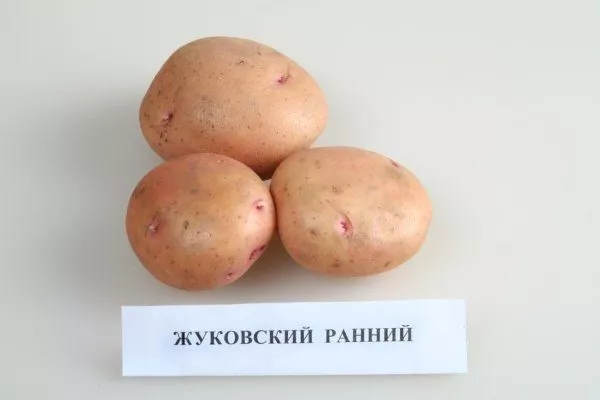
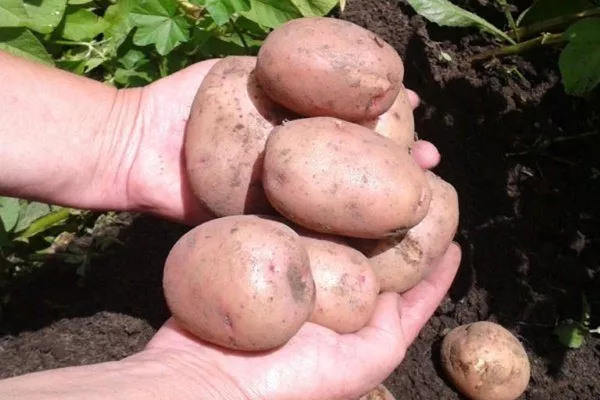
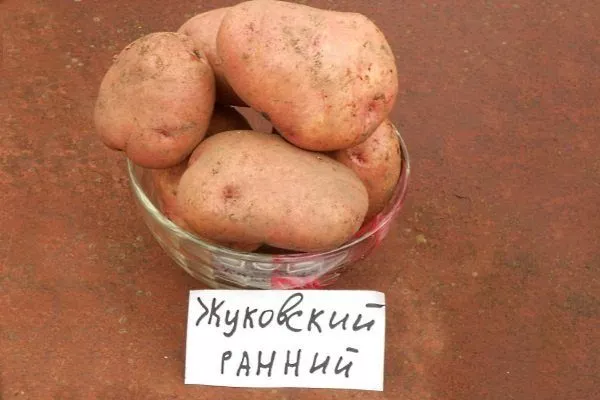
- Tubers. The root vegetables are characterized by a neat, rounded shape and are medium to small in size. The skin is thin, pinkish, and smooth. Eyes are few in number. Up to 12 potatoes are harvested from a single plant. The flesh is firm, white, and watery. Tuber weight varies from 100 to 120 grams. The shelf life is 90-92%. The root vegetables retain their attractiveness during long-distance transport.
- Nutritional value. This variety is distinguished by its content of numerous vitamins, organic acids, protein, and bioflavonoids. It is also rich in minerals: phosphorus, sodium, potassium, calcium, and magnesium. It has a low starch content—up to 12%. It is a low-calorie variety.
- High resistance to diseases. The Zhukovsky potato is virtually immune to potato diseases. It is robust and resistant to common scab, golden nematode, and potato cancer. It has moderate resistance to late blight.
- Taste qualities. It's used for boiling, frying, cooking in its skin, and deep-frying. It retains its shape during cooking. The root vegetables are tasty and slightly sweet.
| Characteristics of potatoes | |
| Name of the variety | early Zhukovsky |
| General characteristics | a table variety that guarantees excellent taste, preservation of its marketable appearance during transportation, and unpretentiousness |
| Ripening period | 60-70 days |
| Weight of commercial tubers | 100-120 g |
| Starch content | 10-12% |
| Peel color | pink |
| Pulp color | white |
| Number of tubers in a bush | 10-12 |
| Productivity | 400-450 c/ha |
| Shelf life | 90-92% |
| Disease resistance | resistant to all diseases |
| Consumer qualities | More often, new potatoes are boiled, baked, or made into chips. |
| Features of cultivation | It does not require special care, germinates even in poorly warmed soil, and does not form berries. |
The value and disadvantages of Zhukovsky potatoes
Gardeners appreciate this variety for its many positive aspects. It does have some drawbacks, but they're relatively minor, but it's important to be aware of them before planting:
| Pros | Cons |
| A disadvantage of the Zhukovsky variety is that the taste deteriorates if the harvest is not timely, and frequent rains can also cause the potato to become infected with late blight. |
Preparing for landing
Growing Zhukovsky potatoes is no different from growing other early varieties, but there are some points to consider. The following points are important.
Soil preparation
Although this variety is undemanding of soil, to achieve high yields, it is not recommended to grow it in damp clay soils or in areas with depleted or acidic soils. In dense, organic-poor soil, the tubers will grow small and tasteless. Furthermore, they will be susceptible to disease. Sandy soils and light loams, fertilized with organic matter, are preferred.
- ✓ Make sure the soil is well-drained and rich in organic matter.
- ✓ Maintain soil temperature at +5-6 degrees during planting.
The soil for potatoes is prepared in advance in the fall. Dig the soil to a depth of 25 cm, adding ash and rotted compost (35-40 buckets per 100 square meters). In the spring, additional nitrogen fertilizer is required. Then, loosen and level the soil. It is advisable to plant "Zhukovsky" potatoes in soil previously occupied by cucumbers, cabbage, legumes, and green manure.
Sprouting tubers
Potatoes are removed from storage for germination 15-20 days before planting. Early varieties are planted around the third ten days of April, and germination begins in late March.
Germination procedure:
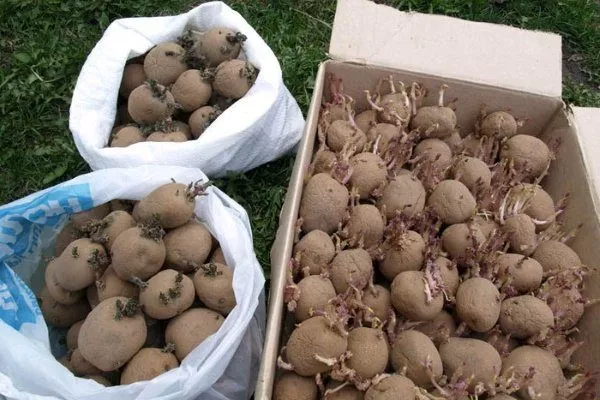
- Carefully inspect the tubers for planting, discarding any with damaged skin, wet or dry rot, or abnormal shape. If the potatoes in the basement have already sprouted and their sprouts are longer than 5 cm, remove them.
- To minimize space requirements for sprouting potatoes, experienced gardeners recommend using shallow, 10-cm-deep boxes filled with planting material and stacked one on top of the other. If there's ample room, the tubers can be spread out on the floor in a single layer.
- The room should be bright, and the air temperature should not exceed 5-10 degrees Celsius. This temperature is sufficient for Zhukovsky potatoes. The room should be periodically ventilated and the air humidified. If the sprouts are strong and have grown to 1 cm, and the skin has turned green, the tubers are ready for planting. Potatoes with thin sprouts are not suitable for planting.
You can shorten the germination time by sprinkling the potatoes in boxes with damp sawdust or compost, occasionally sprinkling them with warm water. Keep the potatoes in light, but not in direct sunlight. This method allows you to get strong sprouts with roots in as little as 15 days. Planting them by hand prevents damage to the roots.
Landing
Before planting, the tubers are treated with wood ash at a rate of 400 g per 50 kg of potatoes. The use of special preparations such as Bordeaux mixture, Maxim, and Prestige is permitted. This procedure promotes accelerated root development and protects the potatoes from pests and diseases during the formation period.
The "Zhukovsky" potato variety is planted in rows, leaving 25-30 cm between tubers and 60-70 cm between rows. This planting pattern easily accommodates 5-6 plants. The potato planting depth should be no more than 6 cm. It is best to plant when the soil has warmed to 5-6 degrees Celsius.
Growing methods
Depending on soil type and natural conditions, the optimal method for growing potatoes is selected. The most common methods for planting "Zhukovsky" potatoes are:
| Flat landing | Ridge planting | Trench planting |
| The tubers are placed in the holes, covered with soil, and leveled with a rake. The potatoes are planted 8 cm deep. | This method is suitable for regions of Siberia where cold snaps and flooding occur.
The tubers are placed into the soil at a depth of 5 cm after germination hilling upTo ensure the sprout is completely covered with soil, earth up the seedling again. When the sprout emerges above ground, earth up the seedling again. This process is repeated until the sprout reaches 15 cm in height. | This growing method is designed for arid regions. A trench is dug 10 cm deep and fertilized. The tubers are placed sprout-side up and covered with soil. The soil surface mulch – this helps retain moisture in the soil. |
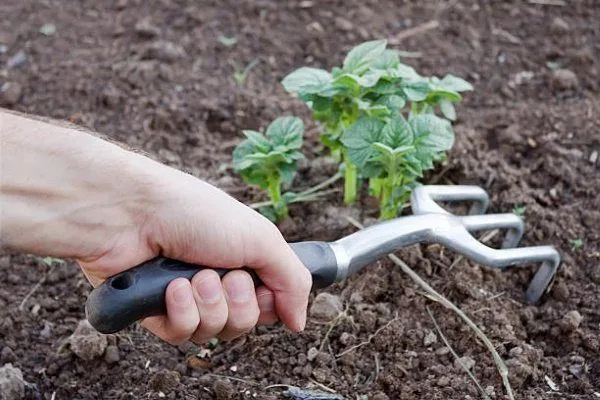
- Carry out the first loosening of the soil 5-7 days after planting.
- Inspect plants regularly for pests and signs of disease.
- Harvest 60 days after planting, being careful not to damage the tubers.
Care Features
For Zhukovsky potatoes, the key is timely planting and harvesting of tubers. Five to seven days after planting, the soil is loosened to remove weeds and provide oxygen. Loosening is done to prevent pest attacks, such as mole crickets and Colorado potato beetles.
Early varieties are drought-resistant and thrive on the moisture in the spring soil. Additional watering is not necessary except in exceptional cases, such as during prolonged periods of intense heat. This should be done early in the morning.
Potato plants don't require additional feeding. When preparing the plot, add organic fertilizer, such as manure.
How to fight pests and diseases?
The Zhukovsky variety is valuable for its increased resistance to diseases such as potato cancer, rhizoctonia, early blight, and golden nematode. However, potatoes are especially susceptible to late blight. Despite its strong immunity, gardeners should be aware that if the plant does become infected, it may exhibit telltale symptoms. Colorado potato beetles can also attack potatoes.
The table shows the symptoms and methods of pest and disease control.
| Disease/pest | Symptoms | Methods of struggle |
| Potato crayfish | It is accompanied by the formation of dark growths that look like cauliflower. | Removing affected bushes and cultivating the soil will help prevent the disease from spreading to other plants.
For preventive purposes, the drug "Benomyl" is used. |
| Golden nematode | A parasitic worm that reproduces on the roots of a plant and, as a result of its life activity, forms bald spots on it. | Control is achieved through the use of chemicals. The most popular chemical is "Bazudun."
For prevention: before planting, potatoes are treated with a solution of potassium permanganate, observing crop rotation. |
| Alternaria | Brown and dark brown spots appear on the leaves, which subsequently cause them to dry out and fall off. | The disease is incurable, but preventative measures are available. Cultivate the soil before planting, following crop rotation. A solution of potassium permanganate or copper-containing preparations can help. |
| Late blight | Separate healthy root crops from infected potatoes immediately before planting. This will significantly reduce the risk of late blight. This problem can also be solved by removing the tops of the potatoes 7-10 days before harvesting, allowing the crop to ripen early. | |
| Colorado beetle | Destroys plant leaves. A very voracious pest. It is highly resistant to various conditions and quickly adapts to toxic chemicals. | It's difficult to get rid of due to its high fertility. Avoiding this addiction is recommended by using various active ingredients.
Beetle control begins in early spring and ends in late fall. Control methods:
|
Harvesting and storage
The Zhukovsky potato ripens in just 60 days after planting. This variety is highly resistant to mechanical damage, making it suitable for automated harvesting.
Potatoes should be stored in a dark place at a temperature of 2-5 degrees Celsius. If the temperature rises, the potatoes will sprout; if the temperature drops, they will freeze, spoil, and their flavor will deteriorate. It's best to store the potatoes in wooden boxes or bags. Learn more about proper potato storage – read here.
Reviews from gardeners and farmers
It's impossible to hear anything bad about the Zhukovsky potato. Gardeners and farmers speak highly of the variety.
Even though the potatoes are early, they store well. They've been stored in our cellar at 4°C all winter. I haven't encountered any difficulties with planting or care. We water the plants as often as we can, and hill and weed when possible. Colorado potato beetles are a bit of a problem, but they're quite manageable. We get a consistent harvest, harvesting 8-10 tubers per plant.
The Zhukovsky potato is an early variety that can be harvested as early as late June, ready to be enjoyed with young tubers. Many gardeners prefer this variety because it's easy to care for, requires little time, and is resistant to many diseases.