
The Adretta potato variety is very popular among farmers. It's easy to plant, hill, fertilize, and store. It's resistant to various diseases. The only thing it doesn't tolerate is severe drought.
General characteristics of the variety
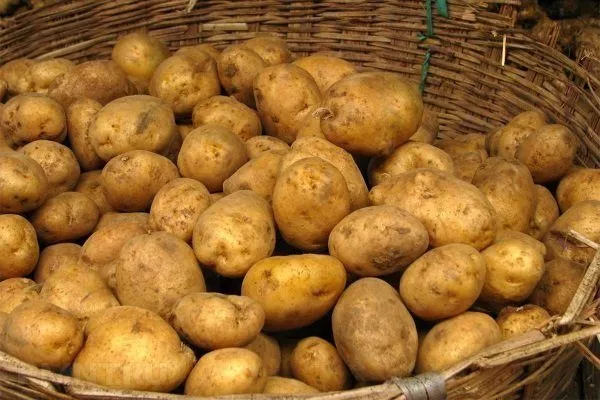
Adretta was developed about twenty years ago and is considered a table potato variety. It is very popular due to its excellent flavor, which is widely used in a variety of dishes. Adretta has a crisp texture after boiling due to its 16% starch content.
The bush itself is an upright plant with rich green leaves. The flowers have white corollas. The tuber is oval, the flesh is yellow, and the skin is the same color with a few small sprouts. On average, a potato of this variety weighs about 130 grams.
Adretta produces a high yield (40-45 tons per hectare). A single bush can produce approximately 25 tubers. Their maturation period lasts from 70 to 105 days, depending on care and weather conditions.
The popularity among gardening enthusiasts also lies in the ease of care for the above-mentioned variety, as it is resistant to most viruses and pests and tolerates various weather conditions well.
| Parameter | Characteristic |
|---|---|
| Ripening period | 70-105 days (mid-early) |
| Tuber shape | Oval, aligned |
| Peel/flesh color | Yellow/yellow |
| Average tuber weight | 120-150 g |
| Starch content | 15-17% |
| Productivity | 40-45 t/ha |
| Shelf life | 94-96% |
Features of planting, growing and care
To obtain a good harvest, you should pay attention to some features in growing the Adretta variety.
Landing
Experts recommend purchasing potatoes for planting in specialized stores to be completely sure of their quality.
Before planting, soak the potatoes in plain water for 48 hours. Gardeners recommend hardening them off for 10 days. To do this, place the soaked potatoes in the refrigerator overnight, and maintain the water temperature between 22 and 24 degrees Celsius (72 to 75 degrees Fahrenheit) during the day.
Additionally, the potatoes are placed in boxes. These should be filled with soil and peat in a 1:4 ratio and fertilized. The best time for this is the first week of April.
After the first sprouts appear, the tubers are stacked in rows with a distance of about 10 cm between each row and at least 5 cm between the potatoes themselves. Sprinkle with a thin layer of sand. Cover each box with plastic wrap and place in a warm place.
The first shoots can often be seen within 7-14 days. After the first 2-3 leaves appear, transplant the plants into small plastic containers.
Before planting, you can treat the tubers with wood ash. This will increase the yield and starch content of the potatoes.
To disinfect the planting material, the tubers are also placed in a special solution. This solution is prepared using boric acid (10 g), copper sulfate (6 g), and potassium permanganate (1 g). All ingredients are dissolved in 5 liters of water.
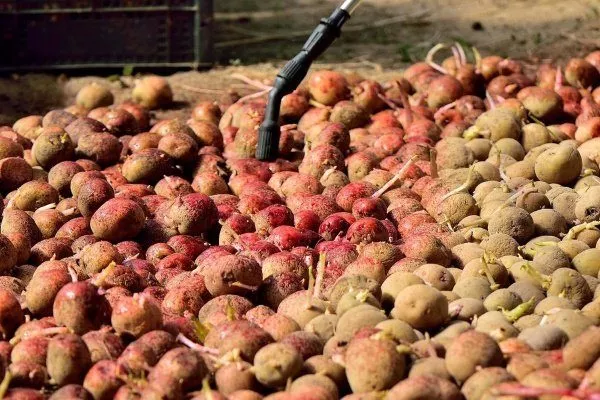
Pre-treatment of tubers before planting reduces the risk of various diseases developing during plant growth, and also helps increase yield and improve the taste of the Adretta potato variety.
In early May, you can begin planting Adretta in the ground. This variety is undemanding regarding soil composition, but it's best to choose a location with good moisture supply to the roots. Potato growing areas should receive ample sunlight.
The holes should be dug about 10 cm deep, with a distance of up to 40 cm between each hole and 50 cm between rows. A small amount of cow manure and urea should be placed in each hole beforehand.
To prevent rapid evaporation of moisture after planting, the soil should be leveled with a rake.
Hilling
The Adretta variety requires hilling twice per season. This not only helps prevent moisture loss but also promotes the formation of new roots and tubers and oxygenates the soil.
The first time, hilling is done when the first stems reach a height of about 10 cm. The procedure is repeated when the bush reaches a height of at least 20 cm.
They are conducting hilling On moist soil, apply early in the day or in the evening. Exposure to daylight can kill the plant, so it's highly undesirable to perform this procedure during the day.
If planting was done in a dry or hot climate and regular watering is not possible, you should avoid hilling and simply regularly loosen the soil and remove weeds.
Hilling schedule
- The first is when the tops are 10-12 cm high
- The second one is 14-18 days after the first one.
- Third (if necessary) - before the tops close
Loosening the soil
This procedure will aerate the soil and is best done after watering.
When loosening the soil of the Adretta variety, it is important to pay special attention to the fact that the roots of this plant are not very deep, so you need to loosen them carefully so as not to damage them.
It is advisable to carry out loosening in conjunction with weeding, which, in turn, will significantly facilitate the removal of weeds.
Additionally after weeding mulch the soilThis will help prevent the soil from drying out and control weed growth.
Watering
| Growth phase | Watering rate | Frequency |
|---|---|---|
| Shoots | 2-3 l/bush | Once every 7-10 days |
| Budding | 4-5 l/bush | Once every 5-7 days |
| Bloom | 5-6 l/bush | Once every 4-5 days |
| After flowering | 3-4 l/bush | Once every 10 days |
Adretta does not tolerate both drought and excessive soil moisture. Therefore, it is necessary to monitor the soil moisture level and water this variety only when the soil becomes dry.
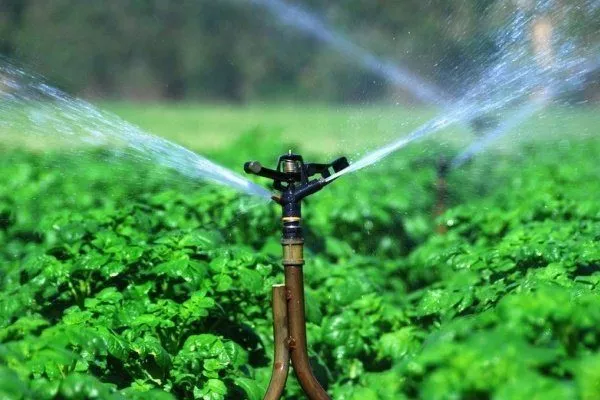
On average, about 4 liters of water is allocated per plant. It is advisable to water using a sprinkler, as this method will moisten not only the soil but also the air around the potatoes.
24 hours after watering, the soil is loosened manually.
Fertilizer
Experts recommend fertilizing the Adretta variety in the morning or evening, preferably on a sunny, windless day. Gardeners offer several tips for fertilizing this potato variety:
- If shoots are weak and thin, and the leaves appear unhealthy, begin the first plant feeding. To do this, take 1 tablespoon of equal parts urea and ammonium nitrate and dilute in 10 liters of water.
Instead of the above fertilizers, fresh cow and bird manure can also be used at a ratio of 500 ml per 10 liters of clean water. Approximately 0.5 kg of the above fertilizers are added per bush. - During the budding period, the following fertilizer should be applied to accelerate flowering. Dissolve 3 tablespoons of ash and 1 tablespoon of potassium sulfate in 10 liters of water. Typically, no more than 0.5 liters of this fertilizer is applied per plant.
- The Adretta variety should be fed a third time during flowering to accelerate and enhance potato growth. To create a fertilizer mixture, dilute 250 ml of cow or poultry manure in 10 liters of water and add 2 tablespoons of phosphorus fertilizer. Apply 500 ml of this mixture under each potato plant.
Pest and disease control
Adretta is a variety that is resistant to pests and diseases. However, to prevent crop losses, preventative measures should be taken to protect the potato.
Below are the types of diseases and pests, as well as methods of control and prevention:
Late blight
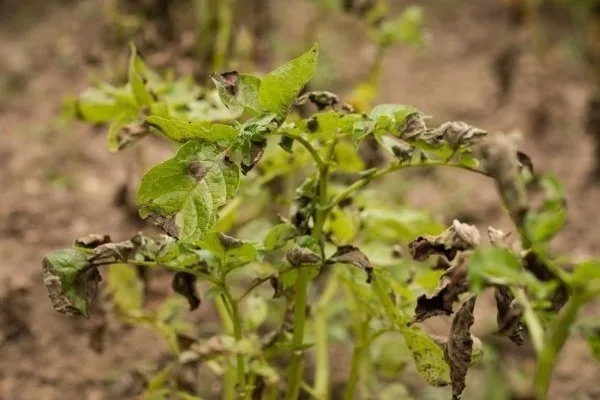
This disease is characterized by the appearance of dark brown spots on the leaves and stems of the plant, which causes the potatoes to rot and dry out.
A gray rot develops on the tubers. If this disease appears, treat all affected plants with a copper oxychloride solution (40 g per 10 liters of water) or Cuproxate (no more than 3 liters per hectare).
The treatment is carried out 3 times with a 10-day break. To prevent the occurrence late blight For the Adretta variety, it is advisable to plant this potato separately from other nightshades or increase the dose of potassium sulfate when fertilizing plants.
Macrosporiosis
Affects the entire plant. Its characteristic signs are dry, brown spots and superficial ulcers.
To eliminate the problem, treat the plants with Cuproxat (no more than 3 l per 1 ha), copper oxychloride (40 g per 10 l of water) or Abiga-Peak (50 g of the preparation per 10 l of water) 3 times with a 10-day break.
This disease often affects tomatoes, so experts recommend planting potatoes separately from them. Deep soil cultivation in the fall can also be used as a preventative measure.
Common scab
This disease is characterized by the appearance of rot on the tubers due to high soil moisture.
To combat this disease, it is recommended to use potassium magnesium sulfate with superphosphate (30 g per 1 sq. m) before planting potatoes. This solution will help maintain acidity in the soil. As a preventative measure, you can treat the seeds with a formalin solution (500 ml per 100 liters of water) for 3 minutes.
Aphid
These pests often attack young plants, causing them to rot and dry out. The following potato sprays can be used to control them:
- Forbecid solution (5 ml diluted in 5 l of water);
- a decoction of wormwood and tansy in a 1:1 ratio;
- soap solution (35 g of soap per 10 l of water).
To prevent aphids, it's important to fertilize the plants regularly. You can also plant dill or parsley around the Adretta variety.
Colorado beetle
The danger of such pests is that the insects eat the plant's leaves and buds, which often leads to the death of the entire bush.
If beetles are detected, treat them with Bitoxibacillin (100 ml of the product per 10 liters of water) 3 times every week.
To prevent the appearance of this insect, you should periodically inspect the plant, collect the larvae and destroy them in a strong saline solution.
Greenhouse whitefly
These pests attack potato leaves, which can lead to the death of the plant. To control them, spray with Fosbecid (40 ml diluted in 10 liters of water). To prevent these pests, it's also advisable to plant potatoes separately from tomatoes.
For more information on pests and how to control them, lookhere.
Storage conditions for Adretta potatoes
The harvest can be done in late July or early August. Before shipping potatoes for storage Carefully inspect all potatoes for damage and remove any spoiled ones. To extend their shelf life, it's also advisable to air-dry them for several hours.
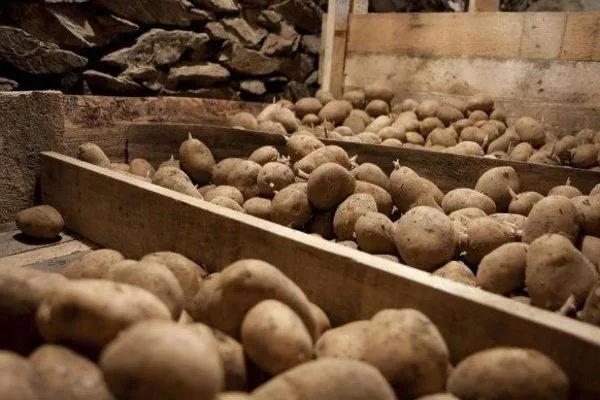
This variety is kept in a basement at a temperature no higher than 30 degrees Celsius and humidity around 85%. The harvest is stored in wooden boxes, which should be placed on slightly elevated surfaces to allow excess moisture to evaporate. To prevent sprouting, place a few apples between the potatoes.
- ✓ Temperature: +2…+4°C
- ✓ Humidity: 85-90%
- ✓ Ventilation: mandatory
- ✓ Lighting: none
- ✓ Packaging: wooden boxes
- ✓ Preparation: sorting and drying
If you follow all the above recommendations, the Adretta variety will retain all its properties for a long time and will not become sweet when the temperature drops significantly.
Pros and cons of potatoes
TO merits Adretty should be attributed to:
- good harvest;
- relatively fast ripening;
- large tubers;
- long shelf life;
- good adaptability to soil composition and weather conditions;
- The variety is resistant to various diseases.
Reviews
The Adretta potato has remained popular for many years, despite the large number of different varieties available. Below are reviews from people who grow this potato:
Adretta is a popular potato variety among both professional and novice gardeners because it has excellent flavor, ripens quickly, is easy to care for, is resistant to disease, and produces a fairly bountiful harvest.