
The Russian Black Bearded, Capercaillie, and Barsky Bird are all names for a single breed known as the Galan. This ancient breed emerged in the 19th century in Russia. It was most common in the Oryol, Kursk, Rostov, and neighboring provinces. However, today its numbers are very small, and it is primarily bred by breeders of ornamental birds.
History of origin
The origin and origin of this fascinating breed is unknown. Several hypotheses exist regarding its origin. Some poultry breeders believe that the bearded specimens descended from Wyandottes and Crevecoeurs, while others maintain that the Galan was created by crossing Wyandottes and black Orlov chickens. It first attracted attention at poultry shows in the late 19th century and found a following among wealthy farmers.
Due to the jet-black color of its feathers, breeders named it "Galan," which translates into Russian as "Dutch soot." However, many poultry breeders disagree. Some agree that "galan" is a distorted version of the word "gallant." The bird is indeed slender and stately. In America, where it was introduced to New Orleans in 1850 and then spread to the northern United States, it is known as the "Russian Stately."
It was also often called a "lord's bird." In villages, it was customary to give newlyweds a pair of birds—a black hen and cockerel—as a wedding gift. Since the "bearded ones" were the same color, they were ideal for a wedding gift. However, only the wealthy kept them, meaning they were considered a gift from a "lord's heart."
Appearance
These chickens are hard to confuse with any other breed. They have enough distinctive features to easily distinguish them from the vast array of chicken breeds:
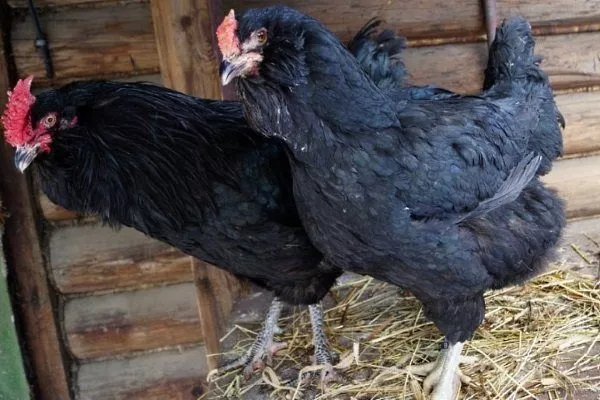
- A distinctive feature is the beard on the neck, which is present in both sexes. Unlike hens, males boast a more luxuriant mane, beard, and sideburns. In appearance, these hens resemble wood grouse, but are smaller. Their aristocratic movements and gait resemble those of peacocks; they can be described as "strutting like peahens."
- Galan chickens have a large, broad head, topped with a bright red, flattened comb resembling a rose. The small wattles are almost completely covered by a wattle. The beak is strong and dark, slightly arched, with a yellow spot at the tip. The eyes are dark orange.
- The neck is short and has a thick mane, which is so lush it completely covers the shoulders. The body is massive and large. The back is straight, tapering toward the tail, but this is almost unnoticeable due to the lush plumage on the lower back, and the chest is raised.
- The tail is short, with short tufts, but fluffy. The wings are small and held close to the body. Due to their small size, these hens cannot fly. Roosters have a low but quite resonant voice. It's hard not to hear such a vocal bird early in the morning.
- The legs are long and featherless, with powerful black claws. The soles of the paws are light-colored.
- The plumage is black with a green tint; any other color cast is considered a defect. The coloring of hens and roosters is the same. The hen differs from the rooster in having a smaller comb, shorter wattles, and a wider back. The hen's tail does not have a green tint.
This bird belongs to meat and egg breed, but more often it is grown as an ornamental plant and is used in various exhibitions.
There are a number of exterior defects that will disqualify individuals from participating in these events:
- underdeveloped beard and sideburns;
- The comb is not rose-shaped or has a thorn. A rose-shaped comb with a thorn is a sign of light breeds;
- hunched back;
- limbs covered with feathers;
- the coloring includes white, there may be a light ring of feathers on the neck, or a purple tint, but if a two-year-old male develops red plumage around the neck, this is considered only a defect;
- the body size does not correspond to the breed standard - it is small, short, the figure is either high or low, the belly is underdeveloped;
- long or curled tail;
- dark soles of the paws;
- Non-glossy plumage can also be a reason for an individual to be removed from the competition.
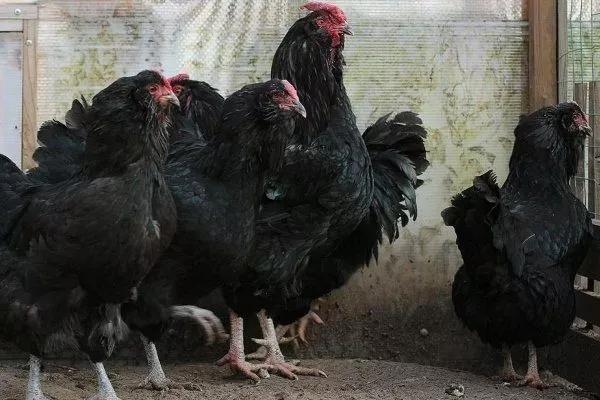
Breeders should be aware that even a purebred pair that meets standards may produce chicks with certain defects, as genes from other varieties often manifest in the offspring. Such chicks are necessarily culled and kept separate from the Galan flock.
Temperament
These hens are sedate and very slow. They won't run wildly around the yard, expending excess energy or bullying their fellow hens. On the contrary, the roosters, like true gentlemen, invite the hens to the feeders and, like gentlemen, let them go first.
They don't like conflict or arguments, preferring to be friends and get along well with other breeds. However, in such close quarters, the breed's purity will be forgotten. While some individuals are aggressive and quarrelsome, most bearded chickens have a calm and phlegmatic disposition.
The instinct of incubation
Females are not without a well-developed maternal instinct. However, one in five hens is a poor broody hen. Therefore, careful consideration should be given to their selection. The most caring "mothers" are selected for this purpose. To ensure high fertility, there should be one rooster for every four hens.
Breed productivity
As mentioned above, this is a breed primarily for eggs and meat. Therefore, don't expect them to be high egg producers or gain significant weight. All versatile hens typically fall in the middle of these categories.
Hens lay 150-160 eggs per year, a number that increases with a good, balanced feed supply. Each egg weighs 60-65 g, has a strong shell, and is light brown or cream-colored. Sexual maturity occurs at 4-5 months. Productivity remains consistent for four years.
In terms of weight, roosters weigh up to 4 kg, while hens are slightly smaller, weighing no more than 3.5 kg. Their carcasses are clean and meaty, making them suitable for dietary feeding due to their low fat content. The skin is yellow. The meat has excellent taste and high nutritional value.
Until they reach sexual maturity, the birds rapidly gain weight until they are five months old. After that, their weight remains stable, fluctuating only slightly due to seasonal changes, such as molting, or dietary changes. Roosters are slaughtered in their second year, and hens are replaced in their fourth year.
Maintenance and care
Domestic wood grouse are easy to care for, and thanks to their mane and wattle, they're frost-resistant. This makes life easier for poultry farmers, as they don't need to heat the coop, which is a significant expense; insulating it is sufficient. The birds suffer more from heat and drought in the summer.
- ✓ The temperature in the chicken coop should not fall below +14°C in winter, despite the frost resistance of the breed.
- ✓ Humidity in the room should be maintained at 65-70% to prevent diseases.
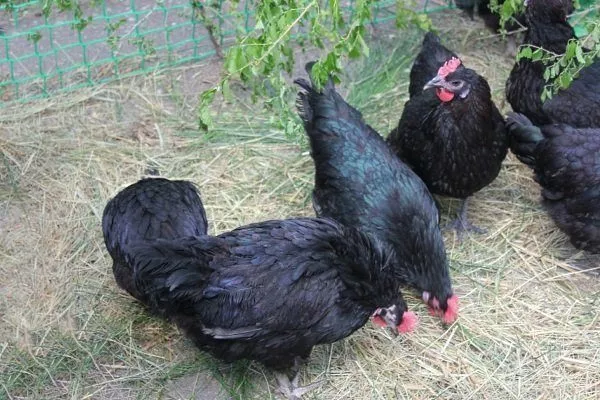
For their comfortable living, they need a clean, dry, draft-free room. They don't need a high fence or a covered run, as chickens not only don't fly, but they're also not overly active. The floor is covered with hay and straw, which are changed regularly.
Low perches are provided in the barn, and they must be paired with a ladder so the hens can easily climb onto them. Nests are also installed, and feeders are constructed. make drinking bowlsSeveral ash baths are installed for bathing to prevent parasites from infesting their plumage.
Basic requirements for a chicken coop
The chicken coop must meet certain requirements:
- Lighting. Chickens lay eggs only in daylight, so if you want to produce eggs in winter, be sure to provide artificial lighting. The optimal daylight duration is at least 12-14 hours.
- Temperature. A comfortable indoor temperature for bearded representatives is at least +14°C in winter.
- Humidity. The optimal value would be 65-70%; this figure can be reduced using a ventilation system, which is provided for in advance during the construction of the poultry house.
Can birds be raised in cages? Bearded vultures have decorative characteristics, so keeping them in cramped quarters negatively impacts their appearance. Furthermore, when free-range, they supplement their diet with micronutrients by eating worms, insects, grass, and small stones. Cage-based housing increases the nutritional and care requirements.
How to build a chicken coop with your own hands so that it meets all the above requirements is written here.
Nutrition
Chickens are fed three times a day—morning, afternoon, and evening. They are given grain in the morning and evening meals, and mash and fresh herbs or vegetables in the afternoon. Portion per laying hen The daily requirement is 130 g, and 300 ml of clean water. If the chickens are free-ranging, the number of meals is reduced to one or two, as they thrive on foraging while outside.
Preferred grains include wheat, millet, barley, and corn. During the warmer months, fresh herbs and seasonal fruits, vegetables, and root vegetables—apples, pumpkins, squash, watermelons, carrots, potatoes, and beets—are added to the diet. In colder weather, they are fed sprouted grain.
The diet must include chalk, shells, small stones, salt, yeast, oil cake, bran, bone or fish meal, and mash prepared with whey or yogurt.
Keeping chickens
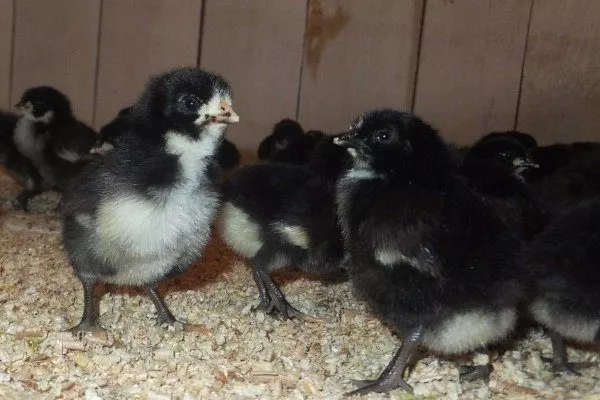
The only drawback of bearded chickens is their long feathering period. Therefore, poultry farmers will have to work hard with the young generation and breed them only in the spring, so they have time to develop warm feathers by winter. It's also preferable to hatch them with a broody hen rather than an incubator. The mother hen won't abandon her half-naked chicks, and they will always have access to warmth under her wing. The chicks are born dark-colored, with only their bellies and necks being light yellow.
During the first 10 days, they require a special microclimate. The temperature in the nesting area is maintained at +30°C, then gradually reduced by 2 degrees every week.
It's important to ensure the litter remains dry at all times, changing it daily. Regularly wash and disinfect the chicks' eating and drinking utensils.
Until two months of age, their bodies are quite vulnerable, with a 91% survival rate for young birds. Therefore, it's essential to add mineral and vitamin supplements to their food and water to help strengthen their immune system and speed up the feathering process.
After hatching, chicks are fed for the first time 8-10 hours later, and then every 2 hours during the first few days. Experts recommend purchasing starter feeds for meat breeds, which contain all the necessary nutrients in optimal ratios. They can also be fed a mash made with sour milk, cottage cheese, boiled chopped egg, fish oil, and boiled vegetables.
Nettle is the most beneficial herb. It is first scalded with boiling water and finely chopped. The feed is sprinkled with chalk, ground to a powder. When feeding wet feed, remove any leftovers immediately after the chickens have finished eating, as they spoil quickly and become a breeding ground for various pathogens.
In the place where the chickens are kept, there should be free access to drinking bowls with clean water.
Many poultry farmers still prefer to use an incubator when raising chickens. Read more about this.here.
Molting
Like all chickens, Galan molts every year in the fall, when daylight hours become significantly shorter. During this period, egg production declines, and some hens stop laying eggs entirely, as a protective response to feather loss. However, once the feathers are restored, egg production increases and health improves.
To help the bird go through this natural process more quickly and easily, the proportion of protein products in its diet is increased.
Diseases
Nature has endowed these chickens with robust health. They are not predisposed to any diseases, including genetic ones. With proper care, timely vaccinations, and preventative measures, chicken health poses no concern to poultry farmers.
Advantages and disadvantages of the breed
Breeders of this breed highlight the following advantages:
- unpretentiousness in care and maintenance;
- frost resistance;
- friendly character;
- beautiful appearance;
- The shell is strong, and chickens do not have the habit of pecking the eggs.
Significant disadvantages include:
- long plumage of young animals;
- high cost.
Where and at what price do they buy Galanov?
The last drawback is that the breed is very rare. It is difficult to find any specimens or eggs for sale. bookmarks in the incubator It still takes some effort. The cost of one hatching egg ranges from 180 to 220 rubles, a week-old chick can cost up to 410 rubles, and an adult hen can cost up to 1,520 rubles.
They are purchased from specialized nurseries. For example, at the Kurkurovo farm in the Lukhovitsky District and the Genofond farm in Sergiev Posad, or at the Bird Village farm in the Yaroslavl Region, located in an ecologically clean area.
Even a novice farmer can raise these chickens, but it's best to purchase young birds aged 2-2.5 months. Saving money and buying younger chicks can leave you with nothing, as they are still weak and have a high mortality rate.
Breed analogues
| Name | Rooster weight (kg) | Chicken weight (kg) | Egg production (pieces/year) | Plumage color |
|---|---|---|---|---|
| Galan | 4 | 3.5 | 160 | Black with a green tint |
| Yurlovskaya's loud voice | 5 | 4.5 | 160 | Various |
| Pavlovskaya | 2.5 | 2 | 150 | Golden, silver |
The versatile Yurlovskaya gossipy breed, which also appeared in Russia in the 19th century, is often considered a similar breed. The average rooster weighs 5 kg, while the average hen weighs 4.5 kg.
In terms of egg production, they are comparable to Galans; on average, a hen lays up to 160 eggs, but each weighs 70 grams. Yurlovsky hens are also resistant to frost, as they are well protected by thick down. However, their temperament is strikingly different from that of the "bearded" hens, especially the roosters. They are feisty and aggressive, thanks to the genes derived from the use of local hens and fighting cockerels in the breeding process.
Fans of ornamental breeds should consider the native Russian Pavlovsk chicken. This bird has a very unusual golden and silver coloration, and its head is crowned with a helmet-like crest. Despite its decorative nature, these hens are quite productive layers, laying up to 150 eggs per year.
Reviews from poultry farmers
The population of "domestic wood grouse" is so small that raising them for slaughter is simply sacrilegious. More suitable meat-producing birds exist, producing more meat. They are often bred as ornamental birds, and as a bonus, they also produce eggs. Even a novice poultry farmer can raise these birds. They will undoubtedly be a beautiful addition to any poultry yard.