
Laying hens, when fed a balanced diet, are able to consistently produce highly nutritious eggs. Proper nutrition can make chicken farming a stable source of income and a profitable business. Let's learn how much feed to feed hens to ensure high egg production.
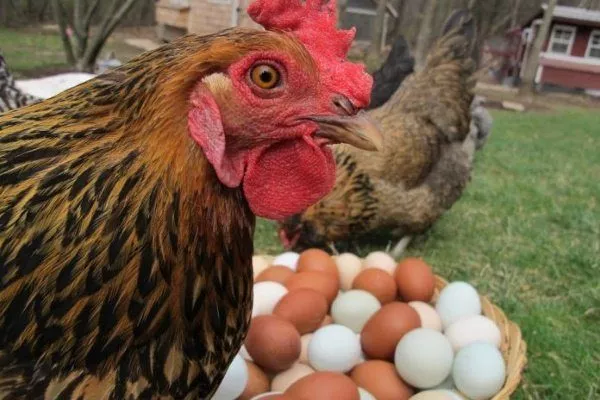
Daily feed intake standards
Raising egg-laying chickens will be successful if you follow two important rules:
- Overfeeding birds is prohibited.Many new poultry farmers think that the more a hen eats, the more eggs she will lay. This is a misconception. If a hen overeats, obesity occurs, which leads to decrease in egg productionEgg production also decreases if the bird receives feed that is unbalanced in fats, proteins and carbohydrates.
- Underfeeding birds is prohibited.Malnutrition immediately affects egg quality. Underfed hens lay small eggs with thin shells, or even no shells at all. Malnutrition affects productivity, and subsequently, the well-being and health of the birds.
Feeding standards for an adult chicken
Laying hens raised on backyard farms receive a diet significantly different from that of large poultry farms. Chickens raised on backyard farms have access to natural foods, so their eggs are more nutritious and healthy.
Every year a laying hen consumes:
- compound feed – approximately 40 kg;
- greens – 15 kg.
The annual consumption rate is calculated based on the daily requirement. An adult laying hen should receive the following daily amounts:
- feed – 120-160 g;
- including greens – 40-50 g.
Daily caloric intake of an adult chicken:
- free-range – 300-320 kcal;
- when kept in a cage – 260-280 kcal.
Food should have the following balance:
- protein – 15-20%;
- fats – 3-5%;
- carbohydrates – 70-75%;
- fiber – 5-6%.
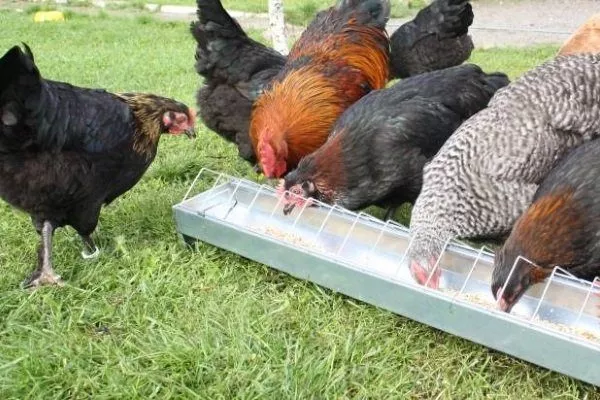
In winter, feeding rates are increased by 15-20%, as it is necessary to replenish the energy that the bird spends on maintaining heat.
Why does chicken need so many carbohydrates? It needs energy for:
- egg formation;
- movements – chickens are active and move a lot around the yard and the chicken coop.
Some breeds tolerate frosts well without sacrificing egg production, but they require more feed. Others prefer warmth and stay indoors, so feeding rations are reduced.
Egg formation occurs at night, so in the evening the hens need to be fed more heavily, especially during the winter season.
The chicken should be given water to drink – about 300 ml of water per day.
How do feeding standards depend on the age of the chicken?
We've already covered feeding chicks during their first months of life. Their diet will change as they mature:
- The period from the 2nd to the 4th month of life. During these months, bones are rapidly forming, weight is increasing, and future productive qualities are being laid. Caloric intake is reduced to 260 kcal per 100 g of feed. Protein is given at 15%, and fiber intake increases to 5%, where it remains for the rest of the hen's life. The bird should also receive adequate micronutrients in its feed; the dosage remains the same throughout its life.
- The period from the 4th to 5th month of life. The egg-laying stage is completed. The laying hen is fed a feed with a calorific value of 270 kcal/100 g and protein content of 16%. At this stage, it is especially important to provide the hen with calcium—2-2.2%. Phosphorus and sodium—0.7% and 0.2%.
- From the sixth to the eleventh month, the body's development is complete. The bird continues to receive the same feed as before, but the protein content increases to 17%.
- From 12 months, calorie intake is reduced to 260 kcal/100 g. Protein intake is 16%. Calcium and phosphorus levels are increased. It is important to prevent overfeeding, which can cause digestive problems, obesity, and decreased egg production.
How to feed laying hens?
If a farmer plans to raise hens for egg production, proper nutrition should be considered as early as the chicks' maturation stage (i.e., future layers). Feed dosage and composition are determined based on the breed of bird. The diet is tailored to each individual hen. Feeding is carried out in accordance with the standards outlined above. Compound feeds typically include corn, oats, soy, wheat, sunflower meal, bone or meat meal, and other additives and components.
Chicken diet
The first feeding of chicks should occur within the first 8-16 hours of life.
The productivity of chicks that receive feed in the first hours of life will be 30-35% higher in the future.
Laying hens should be fed every 2-2.5 hours, including at night. It's also important to ensure a 24-hour water supply in special drinking bowls. If the chicks get wet, they can become ill. Feeding guidelines for chicks:
- Whole grains are not allowed until one month of age.. The grains are first ground and steamed.
- The best food is a mixture of barley and corn grits with the addition of cottage cheese and yolk.
- Already in the first days of life, chickens should be given grass - alfalfa, nettles.
- From the 5th-6th day of life, vegetables and mineral supplements are introduced into the menu - shells, chalk, eggshells.
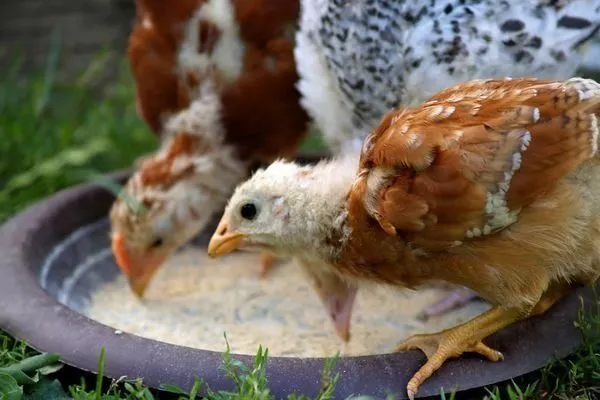
Until the fifth day, the diet of laying hens is unremarkable—the same as for any other chicken. However, starting on the fifth day, you can begin introducing solid foods. Dry feed is given—oatmeal or barley flour. Before feeding, remove the grain membranes, as they are difficult to digest in chicken stomachs. The diet must include:
- green;
- carrot;
- yeast;
- fermented milk products;
- herbal and coniferous flour.
Caged chickens should be given fish oil starting on day 5, at a dose of 0.1-0.2 g. It's best mixed with crushed grain. The chicken diet is listed in Table 1.
Table 1
| Feed | Age of chicks, days | ||||||
| 1-5 | 6-10 | 11-20 | 9:30 PM | 30-41 | 41-50 | 51-60 | |
| ground and crushed grain | 4 | 7 | 11 | 18 | 28 | 38 | 45 |
| cake | — | 0.2 | 0.5 | 0.6 | 1.2 | 1.5 | 2 |
| boiled potatoes | — | — | 4 | 10 | 14 | 18 | 20 |
| cottage cheese | 1 | 1.5 | 2 | 3 | 4 | 4 | 4 |
| hard-boiled eggs | 2 | — | — | — | — | — | — |
| fermented milk products | 5 | 10 | 15 | 20 | 25 | 30 | 30 |
| boiled carrots and fresh herbs | 1 | 3 | 7 | 10 | 15 | 17 | 20 |
| chalk and shell | — | 0.2 | 0.4 | 0.5 | 0.8 | 0.9 | 0.9 |
| crushed shells | — | 0.2 | 0.4 | 0.5 | 0.8 | 0.9 | 0.9 |
| ground salt | — | — | 0.05 | 0.05 | 0.08 | 0.1 | 0.1 |
Weight standards for hens/roosters:
- age 1 month – 220-270/290 g;
- three months – 970-1000/1150 g;
- 5 months – 1600-1700/1900
By monitoring weight, the largest individuals are selected.
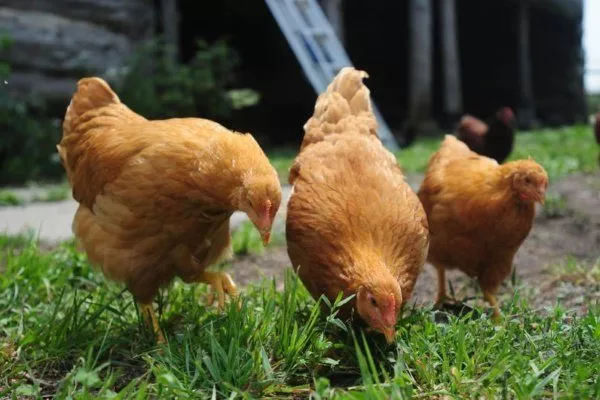
Chicken diet
By the end of the 45th week, the bird's body is fully formed. It requires high-quality, balanced nutrition. A sample chicken diet is shown in Table 2.
Table 2
| Feed | Age of chicken, weeks | |
| 22-47 | over 47 | |
| corn | 40 | — |
| wheat | 20 | 40 |
| barley | — | 30 |
| boiled potatoes | 50 | 50 |
| sunflower meal | 11 | 14 |
| baker's yeast | 1 | 14 |
| fish meal | 4 | — |
| fish/meat waste | 5 | 10 |
| carrot | 10 | — |
| pumpkin | — | 20 |
| green | 30 | 30 |
| bone meal | 1 | 1 |
| chalk | 3 | 3 |
| shell | 5 | 5 |
An experienced poultry farmer explains how to prepare nutritious and economical feed for laying hens. You'll see how to make a grain mixture from seven ingredients:
Types of food
A poultry farmer's job is to properly manage the feeding of laying hens. Their diet is based on a mixture containing all the nutrients they need. Commercially prepared feed or a mash—a "meal"—can be used.
| Type of feed | Advantages | Flaws |
|---|---|---|
| Dry compound feed | Balanced, easy to use | High cost |
| Wet food (mash) | Possibility of changing the composition, reducing the cost of feeding | It spoils quickly |
| Cereal crops | A source of carbohydrates, vitamins, and fiber | May lead to obesity |
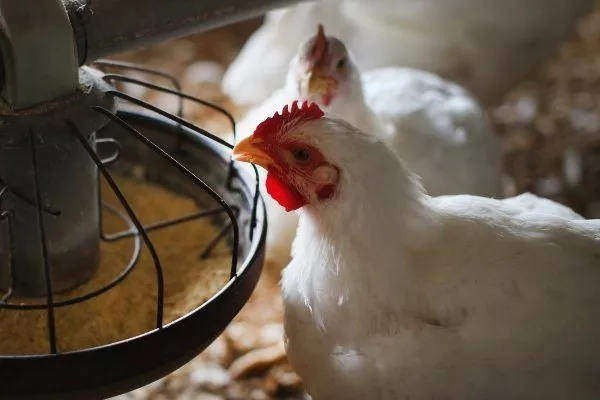
Dry compound feed
This is a finely ground feed that prevents overeating. A laying hen consumes no more than 130 g of feed per day. The prepared diet typically includes:
- crushed grains;
- legumes;
- soybeans;
- sunflower cake;
- vegetable fats;
- calcium carbonate;
- salt;
- vitamin complex.
The advantage of prepared feeds is their balanced nutrition. Poultry farmers can purchase feeds tailored to specific age groups. Manufacturers also offer compound feed options:
- fortified;
- with increased protein content.
Combined feed should be purchased from specialized stores, not from markets. It's important to examine the feed's ingredients. There are several options that have proven themselves excellent for feeding layers. For example, PK-1 is a balanced feed suitable for all types of birds. It contains ingredients that increase egg production in layers:
- sunflower meal;
- yeast;
- meat and bone meal and limestone;
- vitamin and mineral complexes;
- soda, salt, chalk, sunflower oil.
Wet food
Wet food is a homemade mash. It contains:
- cake;
- boiled potatoes;
- vegetables;
- meal;
- bran;
- herbal flour;
- cake;
- cereal.
The mash is prepared by hand. The mixture is steamed and stirred. The vitamins and premixes added to it are evenly distributed. The advantages of the mash:
- possibility of changing the composition;
- reducing the cost of feeding;
- variety of diet.
Chickens are omnivores, so you can add anything to their mash. Wet food is ideal for feeding young birds, as their bodies are not yet able to digest coarse feed.
Mashed food shouldn't sit in the feeder for long—it should be eaten within 3-4 hours of preparation. This is especially important in the summer, as mashed food spoils quickly in the heat. Stale food can lead to illness and poisoning.
The mash can be made with meat or fish broth. It's essential to add greens—in summer, and sprouted grains in winter. The mixture should be of a certain consistency. Feed that's too liquid can clog the chickens' nasal passages. The desired consistency is one part liquid to three parts dry feed.
Cereal crops
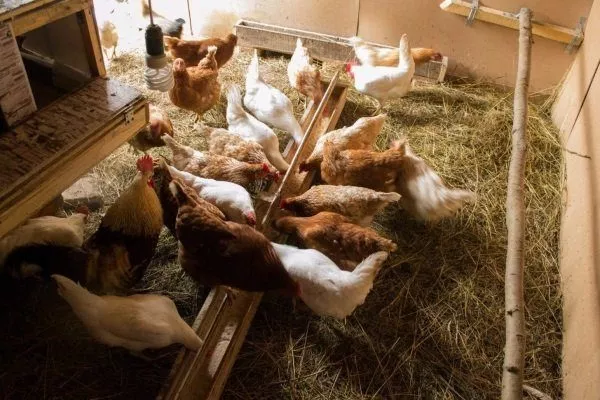
Grain is a source of carbohydrates, vitamins, and fiber. Feeding only compound feed is unprofitable and impractical. At home, chickens are often fed a mixture of grains consisting of:
- Oats. A source of protein that is easily digestible by poultry. No more than 10% oats are added to the mixture, as they are high in fiber, which requires a lot of energy for the chicken to digest.
- Wheat. It makes up 70% of the mixture. In winter, 30% of it can be replaced with corn.
- Barley. An ideal grain for feeding chickens. It is not given in its pure form due to its sharp edges.
- CornA valuable source of carbohydrates. It's given in ground form. Avoid overindulging in corn, as it can lead to obesity.
- Rye. It's rich in protein and vitamins. It's rarely included in formula due to its high cost.
Experienced poultry farmers recommend feeding hens only crushed grain—it's easier to digest this way. Whole grain can be fed to hens at night—this way, the birds won't go hungry until the morning.
Laying hens are fed 100 grams of grain mixture per day. Exceeding this amount will lead to obesity and a drop in egg production.
Top dressing
No matter how balanced the feed your hens receive, supplements are essential. These are especially important:
- in spring – when daylight hours increase and egg production increases;
- in autumn – when weather conditions worsen.
Premixes—supplements that provide the bird with the necessary nutrients—should be added to the feed daily. These supplements contain amino acids and microelements.
- ✓ Calcium (shell rock, chalk, eggshell)
- ✓ Premixes (amino acids and microelements)
- ✓ Fish oil (especially in winter)
Twice a year, laying hens need to be given a vitamin complex – it is diluted in water.
The primary nutrient a laying hen needs is calcium. Without it, a strong eggshell cannot form. This element is present in compound feed, but it may not be sufficient to meet the hens' needs. Sources of calcium:
- shell rock;
- ground bones;
- crushed chalk;
- eggshell.
Calcium supplements can be given separately or as part of the feed. The hen will determine the amount of calcium she needs; simply add the supplement to a separate feeder.
The premixes contain calcium, sodium, phosphorus, and amino acids not synthesized by chickens: cystine, lysine, and methionine. The premixes also contain valine, arginine, histidine, threonine, tryptophan, leucine, isoleucine, and phenylalanine—substances that increase egg production and promote bird health. Dosage: Follow the manufacturer's instructions.
Feeding chickens at different times of the year
The laying hens' diet is adjusted depending on the season. By adjusting seasonal feeding, poultry farmers achieve increased productivity. Depending on the season, poultry farmers adjust feeding rates. A sample diet and feeding rates are provided in Table 3.
Table 3
| Feed, g | Winter | Spring | Summer | Autumn |
| Green | 0 | 20 | 30 | 20 |
| Herbal flour | 5 | 3 | 0 | 3 |
| Gravel | 1 | 1 | 1 | 1 |
| Yeast | 3 | 4 | 3 | 3 |
| Oilcake/meal | 12 | 13 | 12 | 12 |
| Crushed grain | 50 | 55 | 60 | 55 |
| Whole grains | 50 | 45 | 40 | 45 |
| Bone meal | 1 | 1.5 | 1.5 | 1 |
| Carrot | 40 | 20 | 0 | 20 |
| Meat and bone meal | 5 | 7 | 5 | 5 |
| Back | 20 | 30 | 30 | 20 |
| Salt | 0.7 | 0.7 | 0.7 | 0.5 |
| Wheat bran | 10 | 1 | 10 | 10 |
| Shell, chalk | 4 | 5 | 4 | 4 |
Winter
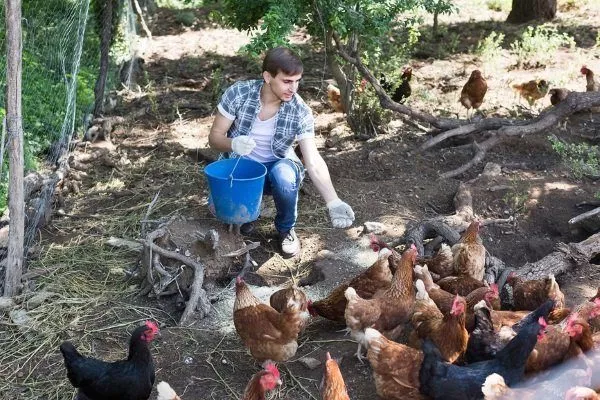
In winter, chickens are fed 3-4 times a day. Combined feed is preferred. Cooked vegetables and oilcake are always included in the diet. The mash is served warm, to keep it warm. Fish oil is added. Dried greens are given for storage in the summer. Hay is hung at a height of 30 cm.
In the morning and evening feeding is carried out with the light on.
In winter, feed is given 15-20% more than usual - 160-180 g. Approximate "winter" menu:
- for breakfast – soaked compound feed with greens;
- for lunch - wet mash;
- for dinner – whole dry grain with the addition of a premix.
Maintain the following ratio:
- carbohydrates – 50%;
- plant foods – 20%;
- proteins – 30%.
You can increase the amount of boiled potatoes, offer yogurt and cottage cheese more often, and replace the water in the porridge with fish broth. In winter, sprouted grain, gravel, and wood ash are also recommended. Keep the water bowls filled with clean, warm water.
Summer
In summer, laying hens are fed less generously than in winter. The number of feedings is three. The composition and standards of the diet vary. The diet should include:
- protein – 50%;
- carbohydrates – 30%;
- other feeds – 20%.
The bird feeds on fresh grass, gaining vitamins. It also gets protein from bugs and worms. Feeding: 120-150 g:
- morning - wet mash;
- during the day – dry food or feeding outside;
- Dinner – grain mix.
Spring
Spring feeding is similar to summer feeding. Egg production peaks in the spring and summer. Spring is when productivity begins to increase, so it's important to vary the diet as much as possible. Three feedings are recommended. One meal can replace a walk outside, where the birds will find grass, beetles, worms, and midges. The recommended feeding amount is 120-150 g.
Autumn
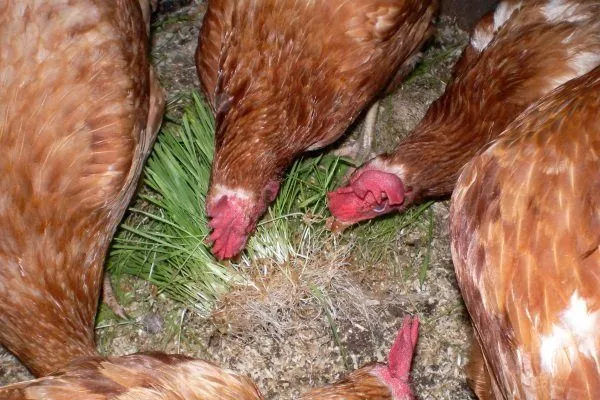
In the fall, chickens molt—they change their plumage. Their bodies become weaker, and their metabolism slows. During this period, chickens are fed 3-4 times a day. The molt period lasts about two months. It's important to provide the birds with adequate nutrition. The recommended daily feeding amount is 130-150 g:
- increase the protein content of feed;
- give more animal feed - meat scraps and earthworms;
- add vitamins to the feed mixture;
- Give more succulent food - grass, vegetables, tops, root vegetables.
The autumn diet should include:
- skim milk and cottage cheese;
- eggshells;
- shell rock and chalk;
- beet tops;
- green legumes;
- carrots, boiled potatoes.
The bird is fed:
- morning – a third of the daily grain intake;
- lunch – wet mash with vitamins and minerals;
- dinner - grain.
Nutrition-Related Causes of Low Productivity
Egg production may decrease due to the following reasons:
- overeating;
- unbalanced feeding;
- lack of water or stagnation of water in drinking bowls;
Helpful Tips
Experienced poultry farmers advise on how to increase the productivity of laying hens:
- Give partially sprouted grainThis is especially necessary during the winter season, when chickens lack grass. Sprout approximately 1/3 of the grain in their diet.
- Give your chickens only tasty food. Birds don't like food with a specific taste or smell. If you feed them tasteless food, they'll simply refuse to eat.
- Increase the caloric content of the diet for pulletsDuring puberty, a hen's body experiences stress. Increased feeding rates will help her start out with high egg production.
- Give the bird clean waterThirst negatively impacts chicken productivity. Water is first boiled and then cooled. Raw water contains bacteria.
To get lots of large, tasty eggs from your hens, you need to learn the proper feeding and care practices. By paying close attention to your hens and adjusting their diet according to their age and the time of year, you can maintain high egg production year-round.