
Properly keeping cows on your own farm will bring great benefits, as you'll always have fresh milk and meat on hand. However, it's important to understand that these animals require proper care, feeding, and proper housing. This is especially true for newborn calves and pregnant cows.
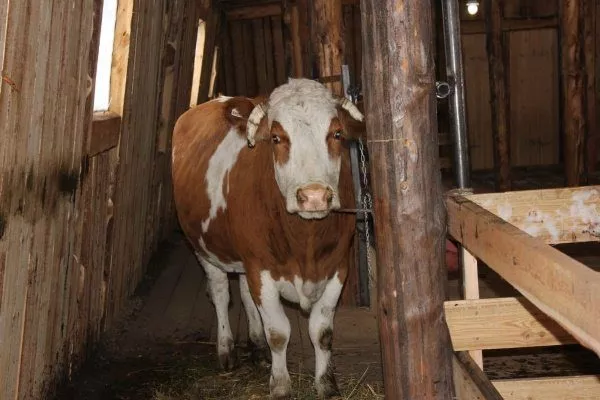
The best breeds for personal use
| Breed | Milk yield per year (l) | Milk fat content (%) |
|---|---|---|
| Holstein | 7000-9000 | 3.7 |
| Jersey | 5000-6000 | 5-6 |
| Simmental | 4000-5000 | 4 |
| Yaroslavskaya | 3000-4000 | 4.5 |
There are two types of cows: dairy and beef. Let's take a look the best cow breeds for breeding in private households.
Dairy cows:
- Holstein;
- Jersey;
- Simmental;
- Yaroslavl.
Beef breeds of cows:
- Hereford;
- Belgian Blue;
- Kianskaya;
- Auliekolskaya.
| Breed | Weight of an adult (kg) | Slaughter yield (%) |
|---|---|---|
| Hereford | 800-1000 | 60-65 |
| Belgian Blue | 1100-1300 | 70-75 |
| Kianskaya | 1000-1200 | 65-70 |
| Auliekolskaya | 900-1100 | 60-65 |
Depending on what the owner needs to get more: milk or meat, he is faced with the choice of purchasing a cow suitable for him.
Types of keeping cows on a private farm
There are several types of housing suitable for keeping cows personally.
Pasture
This type of management is only suitable for animals sent for fattening and raising young. The same applies to large farms. In this case, cows spend the entire grazing period in pastures in special camps. Milking takes place in special milking parlors right next to the pasture. This is profitable for private cattle raising.
Stall
In this case, the animals are not allowed to roam freely; they live in stalls. This type of housing is used extremely rarely and only when there is no land available for pasture. The cows consume prepared feed delivered directly to the stall and are allowed to roam in designated areas for about three hours a day. This method is not suitable for private farms, as feeding imported feed year-round is expensive. It is used only in winter, when grazing is not possible.
Tethered
This method is used in large farms, but there are some positive aspects of tethered housing in a household:
- If several animals are housed in a single barn, it may be necessary to tie each cow to a tether. This is necessary to prevent injury to the weaker animals.
- Cleaning up the processed waste is simplified since it only needs to be removed from the back, not the entire stall.
- A tether is used for treatment or artificial insemination.
- It is easier to monitor the animal's condition and the amount of food consumed; thanks to this method, it is possible to identify any illnesses at the early stages, if any.
- Light care of the cow, namely udder treatment, hoof cleaning, milking and other procedures.
- An individual approach is provided to each animal: feeding, supplementary feeding.
- The animal quickly gets used to its owner, since it is in close contact with him.
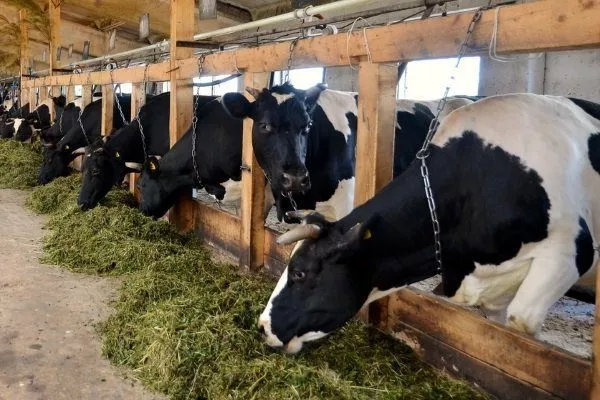
In addition to the positive aspects, there are also negative ones:
- Sitting on a leash for long periods of time can lead to musculoskeletal problems.
- Feeding and watering animals is somewhat difficult.
- Keeping a cow tethered for long periods can lead to retained placenta. In other words, after the calf is born, the placenta becomes attached to the uterine wall and can only be removed surgically.
- Before giving birth, you should not keep the cow on a leash, as this may result in injury to the baby.
Loose
Loose housing is also used in both large and small farms. This type of housing is popular due to its convenience and affordability. The bedding is changed twice a year, and straw or sawdust is added as the top layer becomes wet.
Thus, the lower layers of litter are deprived of oxygen and exposed to biochemical attack. As a result, intense heat is released from beneath the lower layer, which serves as a warming agent, especially in winter.
The feed is poured into a large common trough, making the process easier with machinery. Whole bales of hay are often laid out in the yard for the animals to feed from. The downside is that the amount of feed increases. The advantage is that several animals can be housed in a given area at once.
In the boxes
Cows are kept in special cubicles. The animals remain in the cubicle at all times, only occasionally moving to the opposite side for feeding. The cubicle's equipment allows for milking, grooming, and rest. Each cubicle houses approximately 40 cows, separated by age.
This type of housing saves space and simplifies the entire animal care process, as everything is done mechanized. This has a positive effect on milk production.
Arrangement of a cowshed
If you've decided to keep a cow, you'll need a barn where the animal will spend the nights and, in winter, the days. Building a barn yourself is fairly easy, and any material will do:
- tree;
- brick;
- plate.
However, the climate in which the animals will live must be taken into account; for example, in northern latitudes, the barn will need additional insulation. The temperature in the barn should not fall below 10 degrees Celsius to ensure the cows feel comfortable. The floor should be wooden, with a slope from the waterer to the manure pit to allow excess liquid to drain.
The space per cow should be 5-6 square meters, and if the cow is with a calf, the space should be increased to 10 square meters. The space should be well-lit and have ventilation. The calf's crate should be spacious, bright, warm, and clean.
For added comfort, the floor is covered with bedding, which is changed daily. Feeders and waterers should be positioned at muzzle level to ensure constant access. If cows of different ages are housed in the same room, a fence should be installed between them to prevent injury.
There should be only one door to the barn to prevent drafts. The entire barn, including water bowls and feeders, must be cleaned and washed daily to prevent the animals from contracting helminths and other diseases. The barn should be disinfected every three months to prevent various diseases.
The video features a cow owner explaining how to best set up a barn, how much milk cows produce on a private farm, and when and how they graze:
Inventory
Once the barn is complete, it's time to look into the feed storage. It's not recommended to store feed in the barn itself, as it will become saturated with manure and quickly spoil.
In addition, you should take care of the necessary equipment that the owner will work with:
- scales;
- buckets;
- shovel (scraper and scoop);
- pitchfork;
- rake;
- feeders;
- drinking bowls;
- food storage container;
- cow cleaning brushes;
- clothing and footwear specifically designated for the barn.
Conditions of detention
The most important conditions for keeping livestock are clean, warm, and dry conditions in their barns. Barns must be cleaned and bedding replaced daily. Feeders and waterers must also be cleaned daily.
The temperature in the stall in winter should not be less than 10 degrees, and for calves not less than 15 degrees.
Care and hygiene
Proper cattle care directly impacts their productivity. A cow weighs up to 500 kg, but they are herd animals, so it's advisable to have several cows on a farm. If this isn't possible, grazing them with other animals is recommended to ensure proper development of the young.
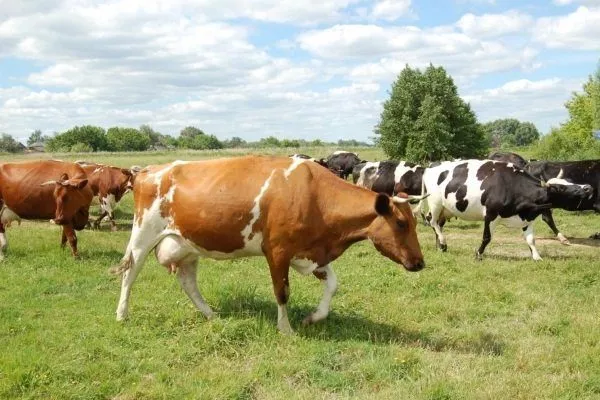
In summer, animals should not be kept indoors; they should be allowed to roam freely. A shelter should be installed in the paddock area to provide shelter from the sun and rain. A packet of salt and a water trough with clean water should also be placed there.
Milking is one of the most important processes on a private farm. It should be done three times a day by hand. Before milking, carefully inspect the milking area and udder for damage, after which it should be massaged. Milking must be completed until the udder is empty and soft to the very last drop.
Summer care
To achieve high productivity, it's essential to maintain regular breaks between feeding, milking, and even cleaning. Feeding and cleaning in the barn are scheduled in the morning from 5:00 AM to 6:00 AM, and the same procedures are performed at 1:00 PM and between 8:00 PM and 9:00 PM. Feeding and taking the animals out for exercise should also be scheduled regularly.
In the summer, cows' milk is of the highest quality, as the grass they graze on pastures is very nutritious. This also saves a significant amount on animal feed.
Winter care
Caring for an animal in winter includes preparing the premises and equipment.
- If there are any cracks, they must be sealed, and the windows, floor and ceiling must be insulated.
- The equipment is disinfected and checked for damage.
- Windows should be easy to open for ventilation and should be located behind the animal, on the side, or above its head.
It's important to change the bedding regularly. It can be made of straw, which requires 2.5 kg per head. Peat, which has hygroscopic properties, or spruce branches or sawdust, which also absorb moisture, can also be used.
Walking
If cows are kept in free-stall housing, they should be turned out daily. By free-roaming in the pasture, cows feed naturally, consuming nutritious, succulent feed. Fresh grass is rich in vitamins and other nutrients essential for proper growth.
Loose-leash housing is carried out in late fall and early spring. If grazing occurs on artificial pastures, they should be tethered 5 meters from a stake, which should be moved periodically.
Pregnancy and calving of a cow
A cow's gestation period, like that of humans, lasts nine months. Two months before the expected due date, the cow should stop milking. This is done to ensure the calf is born healthy and strong. Additionally, succulent feed is removed from the pregnant cow's diet six weeks before the due date, and the amount of concentrated feed is reduced.
Hay and special vitamin supplements should be included in the pregnant cow's diet; they will benefit both the calf and its mother. A couple of weeks before calving, the cow's behavior will change. She will distance herself from other animals, lag behind them in the paddock, and begin to build a nest, dragging bedding into the nest. This doesn't mean the cow should be kept in a barn; grazing is still necessary.
Just before labor, the cow is moved to a separate room. The cow's abdomen drops and the udder swells, indicating labor. She should be disinfected, covered with hay, and covered with burlap. An easy calving takes no more than 30 minutes. Immediately after birth, the calf should be dried with a clean cloth, its nose, ears, and eyes should be cleared of mucus, and the umbilical cord should be cut with sterile scissors.
How are calves kept?
The first few days after birth are crucial, as the calf is exposed to adverse environmental influences. The calf's room should be warm and draft-free. Two hours after birth, the calf should drink a portion of colostrum, which is essential for proper development and growth. On the second day, it can be fed its mother's milk. More information on feeding calves from birth can be found here. Here.
During the first month, the calf will drink milk and receive additional succulent concentrated feed. Then, over the next month, the amount of milk is reduced, while the amount of solid food is increased.
Calves are kept separately from their mothers in a special paddock where hay, succulent feed, and water are always readily available. If there are multiple calves, they are separated by sex at eight months of age. A heifer is ready to conceive at eighteen months of age, but only when she reaches 70% of her adult weight.
Diet
The most convenient way to feed animals is from a feeding table. A trough is placed in front of the stall, or simply a space is fenced off with boards, and the feed is poured between them. This option is ideal for tethered housing.
You can put any food in these feeders:
- haylage;
- mash;
- hay;
- roughage;
- roots;
- vegetables;
- concentrated feed.
It is written about what the diet of dairy cows should be here.
When housing cattle loose, it's best to hang hay troughs in the barn. These are pyramid-shaped, truncated at the bottom, making it easy to pour fine feed. Concentrated feed can also be poured into these troughs. Juicy ingredients, as well as root vegetables, are given from a bucket during milking.
Roughage should be the basis of the diet, which helps maintain the cow profitably and ensures proper nutrition. Cows have a digestive tract that can digest a large amount of hay, grass, and straw. If the animals don't get enough concentrates, they develop digestive problems and milk yield decreases.
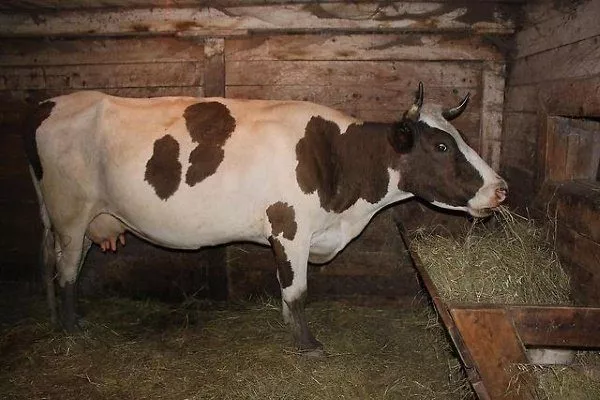
On large rural farms, the mainstay of the diet is silage, hay, and haylage. However, for private breeders, systematically producing silage feed is difficult.
Summer
In summer, animals can graze in the pasture all day, which makes feeding much easier. Vegetables, root vegetables, and concentrated feed can be offered as supplementary food. Clean, fresh water should always be readily available.
Winter
In winter, animals should be fed pre-prepared hay and silage. A single head of cattle can consume 15 to 20 kg of roughage per day. For variety, animals can be offered chopped root vegetables, vegetables, and mixed feed. They can also be treated to porridge made from steamed oilcake.
Clean water should be readily available in drinking bowls 24/7. Salt can be added to the food and should be kept within easy reach of the animal.
The feeding ration for cows in different seasons is presented in the table below:
| Indicators | Phases of the lactation period | Dry period and calving | |||||
| Calving and milking | Stabilization | Attenuation | |||||
| Time of year | from February to May | from June to August | from September to October | from December to February | |||
| Daily milk yield for the period in liters | 18-20 | 16-18 | 10-12 | - | |||
| Beets and carrots, kg/day. | 4-6 | - | - | - | |||
| Sunflower cake, kg/day. | 2 | 1 | 0.5 | 0.5 | |||
| Cereal concentrates, kg/day. | 1 | 1 | 0.5 | 0.5 | |||
| Feed phosphates, kg/day. | 0.04 | 0.02 | 0.03 | - | |||
| Salt, kg/day. | 0.1 | 0.09 | 0.06 | 0.4 | |||
| Additional feed for the entire period in kg | |||||||
| Roots | 350 | - | - | - | |||
| Sunflower cake | 200 | 100 | 50 | 30 | |||
| Cereal concentrates | 100 | 100 | 50 | 30 | |||
| Feed phosphates | 4 | 2 | 3 | - | |||
| Salt | 10 | 9 | 6 | 3 | |||
The grazing period for animals may vary in lower and upper limits depending on the climate.
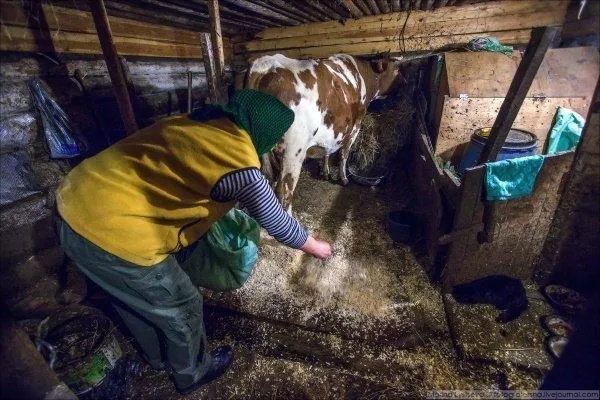
Health and prevention
The owner should always monitor the pet's health, food intake, and general behavior. As a preventative measure, veterinarians recommend the following:
- Providing complete nutrition with essential vitamins and minerals. Recommended after each feeding. milk a cow.
- Keep the livestock clean and in a dry, ventilated area.
- At any time of the year, cows must have constant access to clean water.
- It is necessary to monitor the cleanliness of the animal - the cleaner the cow, the healthier she is and the better the quality of her milk.
- Carrying out all vaccinations and passing the necessary veterinary examinations.
The barn should be treated with slaked lime or caustic soda every 7 days. Wild animals and rodents should be kept away from the animals.
As for vaccinations, it is important to do them according to age to prevent disease.
| Age | Vaccination |
| 10 days | Paratyphoid, which is additionally carried out after 10 days. |
| 1 month | Combovac is a combination treatment for infectious diseases. Repeat after 15 days. |
| 1.5 months | Pasteurellosis, repeated after 20 days. |
| 77 days | Lichen, repeat after 13 days. |
| 100 days | Anthrax. |
| 110 days | Leptospirosis, repeat after 15 days. |
| 135 days | Emphysematous carbuncle. |
| 100 days before birth | Colibacillosis. |
| 3 months before giving birth | Paratyphoid, revaccination after 10 days. |
| 50 days before giving birth | Combovac, repeat in a month. |
Advantages and disadvantages
Raising and keeping cows on a private farm is a profitable but labor-intensive endeavor. Cows require daily cleaning, feed and water changes, and early morning wake-ups to milk and feed them and take them out to pasture. If the animals are kept loose on a private farm, this hassle is reduced. However, if they are kept on pasture, they must be walked with them to ensure they don't wander too far.
Advantages:
- In order to have several cows you won’t need a lot of money;
- there is no need to hire workers or purchase special expensive equipment;
- the ability to find a place to walk, since there are not many livestock;
- the opportunity to find a good place to sell products;
- Home-produced milk and meat are valued much higher than those from large farms.
Flaws:
- the need to get up at dawn and carry out a number of manipulations;
- When grazing, cows should be grazed and left to sit until the grazing period is over, as the animals can wander far;
- If a decision is made to have more than 15 heads, then it is necessary to hire special workers.
Keeping cows on a private farm is profitable, but also challenging. After all, the animals require constant care, timely feeding, milking, cleaning, and grazing. But the investment pays off quickly, as home-grown meat and milk are more valuable than store-bought. If properly cared for and fed, the animals are sure to delight their owners with their productivity.
Thank you so much for the comprehensive information. We were new to cows, so we didn't really know anything about it. You've covered everything we needed—care, calving, pregnancy, and even breed descriptions.