
Dairy cows require adequate, balanced nutrition. If animals are not properly fed, their productivity will decrease, milk fat content will be significantly lower, and its taste will deteriorate. Dairy cows must be fed properly after calving to ensure sufficient milk production for their calves. This article discusses aspects of proper feeding. dairy cows.
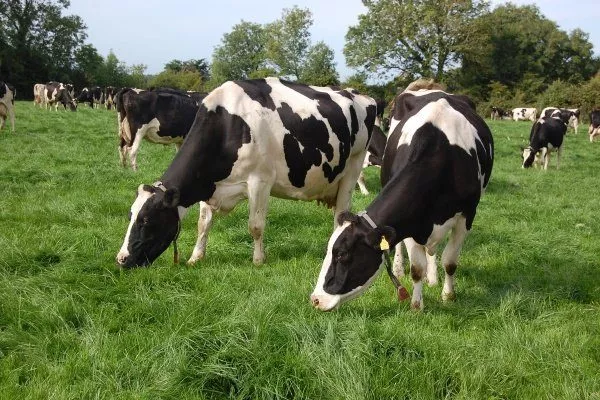
Basics of the diet and its indicators
A deficiency of nutrients, minerals, and vitamins significantly reduces the productivity of dairy cows. Continued underfeeding can lead to vitamin deficiency, brittle bones and hooves, exhaustion, and even death.
Furthermore, poor feeding of cattle reduces their immunity and resistance to infectious diseases. To ensure their animals remain healthy and healthy, farmers must monitor their diet, provide a balanced diet, and include minerals, proteins, fats, vitamins, and carbohydrates.
Diet planning is an important moment during which we take into account weight, the cow's age, its housing conditions, and weather conditions. One feed unit per 100 kg of body weight.
| Type of feed | Percentage of total diet |
|---|---|
| Roughage | 50% |
| Balancing feeds | 25% |
| Productive compound feed | 25% |
Nutrition for dairy cows:
| Feed | Daily intake | Dry matter | Feed units | Digestible protein | Calcium | Phosphorus | Carotene |
| Meadow hay | 12 kg | 9.6 kg | 5.5 kg | 588 g | 84 g | 24 g | 180 mg |
| Turnip | 15 kg | 1.2 kg | 1.3 kg | 105 g | 5 g | 5 g | — |
| Potato | 5 kg | 1 kg | 1.5 kg | 60 g | 1 g | 3.5 g | — |
| Compound feed | 4.5 kg | 4 kg | 4.5 kg | 495 g | 4.5 g | 13.5 g | — |
| Carrot | 6 kg | 0.8 kg | 0.8 kg | 48 g | — | — | 360 mg |
| Table salt | 0.07 kg | ||||||
| Total in the diet | 42.57 kg | 16.6 kg | 13.6 kg | 1296 | 94.5 g | 46 g | 540 mg |
Feed amounts are also increased during the milking period to improve milk production and prolong lactation. However, overfeeding is undesirable, as constant overload of the stomach and intestines can lead to the development of diseases.
Diet system and composition
The diet of a dairy cow consists of three components: basic feed, balancing feed and productive compound feed.
Staple food
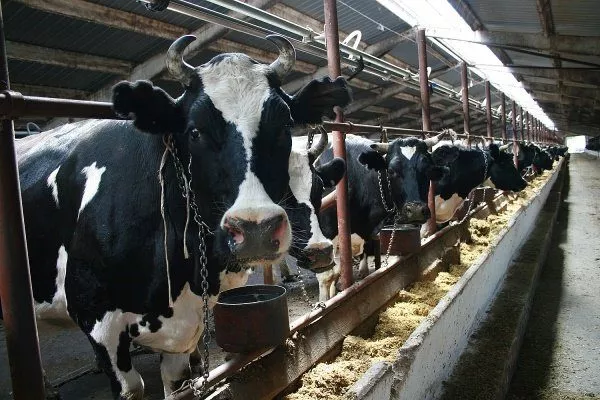
The main diet is a roughage feed given to animals twice a day, with uneaten food removed periodically. This type of food includes the following:
- hay;
- husk;
- straw;
- chaff;
- husk.
These foods contain a high amount of fiber, which promotes increased salivation and reduces stomach acidity. The main feed is fed before the concentrated feed. However, experts recommend regularly adding the main feed to the cow's feeder. The main feed should make up at least 50% of the total daily ration.
Balancing
A ration is necessary to compensate for a deficiency or excess of protein in the roughage ration. A balancing ration is required to replenish nutrient deficiencies. Compound feeds that help maintain protein balance are considered feeds. If there is an excess of protein, cows should receive oats, triticale, and barley.
If there is a lack of protein, animals are fed:
- soybean meal;
- rapeseed cake;
- silaged spent grain.
It is precisely the balancing feed that an animal requires to synthesize the maximum amount of milk.
Productive compound feed
When cows are fed a well-balanced diet, they produce an average of 10-15 liters of milk. High-performance feed ensures the remaining milk supply and overall high productivity. Each cow should receive a specific amount of this feed, based on the animal's weight, milk yield, and other factors.
High-yielding feed consists of concentrates. On average, a cow can receive 3-4 kilograms per meal. However, if the balanced feed contains a high starch content, the high-yielding feed should not exceed 2 kilograms. High-yielding cows are fed small amounts of concentrates every 4 hours.
Calculation of dietary norms
Feed volume is determined solely by dry matter content. For example, on average, a cow requires 2-3 kilograms of dry matter per 100 kilograms of body weight. If there is a shortage of succulent feed, this figure can increase to 4-4.5 kilograms.
A dairy cow's daily ration should consist of 50% roughage, with the remainder split between balancing and productive feed. A cow weighing approximately 500 kilograms and producing 16.5 liters of milk should receive approximately the following products in the given quantities:
- silage – 30 kg;
- sugar beet – 5 kg;
- hay – 6 kg;
- sunflower cake – 1.5 kg;
- wheat bran – 700 g;
- barley flour – 1 kg.
Watering is a must in the daily ration. All high-yielding cows drink more water than average- or low-yielding cows. For every 3 liters of milk, 1 liter of water is used. In winter, cows drink about 35-40 liters, and in summer, up to 50-60 liters. Water is given three times a day.
Diet of cows depending on the period
For cows of all breeds and ages (except newborn calves), the diet consists primarily of hay and greens. Other feedstuffs are considered supplementary feed.
Feeding in winter
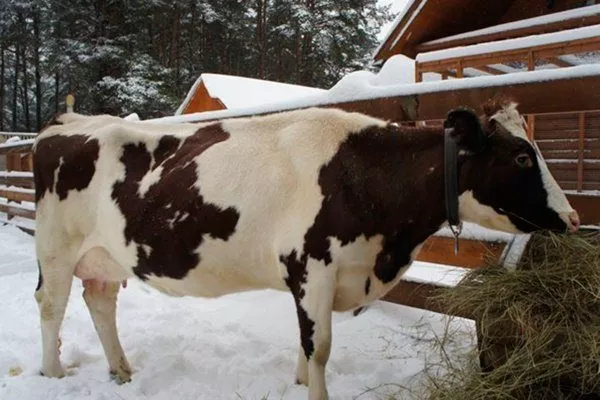
In winter, the main diet is dry feed—straw and hay. This is supplemented with root vegetables, compound feed, and silage. Hay can be harvested or purchased pre-made. Each cow receives approximately 15-20 kilograms of hay per day. When purchasing hay, it's important to carefully monitor the quality of the product: take a sample from under the top layers of the bale or stack.
What foods and how much should you give to a cow in winter:
| Stern | Daily intake | Feed units | Digestible protein |
| Table salt | 700 g | ||
| Legume-cereal grass | 15 kg | 3.3 kg | 360 g |
| Meat and bone meal | 100 g | 100 g | 15 g |
| Meadow hay | 15-20 kg | 2.5 kg | 288 g |
| Meat meal | 500 g | 400 g | 257 g |
| Oatmeal | 2 kg | 2 kg | 144 g |
| Sunflower meal | 500 g | 600 g | 181 g |
| Wheat bran | 500 g | 400 g | 65 g |
| Barley mash | 1.1 kg | 1.1 kg | 94 g |
Summer diet
In summer, cows are fed differently than in winter. The primary feed for cows is fresh, lush grass, which contains all the necessary nutrients and substances for optimal performance. However, for high-yielding cows, 300 grams of concentrates are added to the diet per liter of milk. Summer feeding of cows is based on the type of housing:
- stall – cows eat all the food in the stalls, including freshly mown grass;
- pasture – cows do not receive supplementary feed in stalls or the total amount of supplementary feed does not exceed 25% of the nutritional value of the daily ration;
- stall-pasture – the main feed, about 50-75%, animals receive in stalls, the rest – in the pasture;
- pasture-stall – about 50-70% of daily feed consumption is green grass from the pasture.
For dairy cows, pasture management is only effective when the animals have access to ample lush grass—approximately 0.5 hectares per cow. Otherwise, cows require supplemental feeding with silage and concentrates.
The table below shows what and in what quantities to feed a dairy cow in the summer:
| Stern | Daily intake | Feed units | Digestible protein |
| Table salt | 700 g | ||
| Meadow hay | 6 kg | 3.6 kg | 330 g |
| Blood meal | 300 g | 200 g | 227 g |
| Alfalfa hay | 2 kg | 1 kg | 206 g |
| Sunflower cake | 600 g | 700 g | 238 g |
| Corn silage | 5 kg | 1 kg | 90 g |
| Corn flour | 500 g | 600 g | 36 g |
| Red carrots | 4 kg | 500 g | 36 g |
| Wheat bran | 1 kg | 800 g | 130 g |
| Oatmeal | 2 kg | 2 kg | 154 g |
Transitional stage
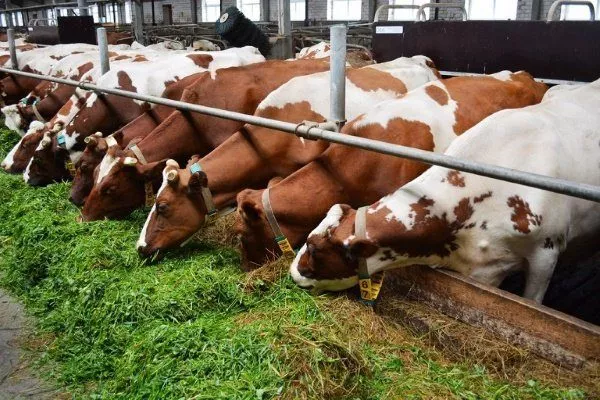
A specific aspect of feeding dairy cows during the stall-feeding period is the transition period. To prevent digestive system problems, cows are carefully transitioned to a high-fiber, roughage diet. It's also especially important for cows to consume minerals, including magnesium.
The feeding ration for cows after the end of the meadow time is compiled approximately according to the following calculations:
- roughage – 38%;
- juicy food – 34%;
- concentrates – 28%;
- dry matter – 5 kilograms per 100 kilograms of weight.
Dairy cows with an average weight of 500 kg should receive 5 kg of haylage and hay, 2 kg of straw, about 9 kg of corn silage, 7 kg of beets, 2.4 kg of concentrate and 9 kg of feed units per day.
What do you feed cows that have just calved?
Cows that have just calved consume more food, and their diet must be nutritious. For these cows, the amount of concentrated feed is increased to 45% of the total daily ration. Root vegetables are essential.
Particular attention is paid to the mineral composition of the feed for these cows. Magnesium, phosphorus, and calcium levels are increased. To achieve this, special mineral mixtures, wheat bran, flaxseed meal, dry yeast, and other supplements are added to the main feed. Silage and acidic feeds, if present in large quantities, have a particularly negative impact on the productivity of fresh dairy cows. Experienced farmers recommend feeding chalk or baking soda to the animals.
A cow that has calved continues to develop, on average, until her third calving. These cows are fed a diet that provides sufficient nutrients for milk production and growth:
| Type of feed | Amount of feed for milk yield, kg/day. | |||
| 8 l/day. | 12 l/day. | 16 l/day. | 20 l/day. | |
| Medium meadow hay | 8 | 8 | 10 | 12 |
| Spring straw | 4 | 4 | 2 | — |
| Cereal and mixed grass silage | 5 | 5 | 7 | 10 |
| Potato | 2 | 4 | 6 | 8 |
| Fodder beet | 3 | 4 | 6 | |
| Fodder carrot | 2 | 2 | 4 | 5 |
| Food waste | 6 | 8 | 10 | 10 |
| Leftover bread | 0.5 | 1 | 2 | |
| Wheat bran | 1 | 1 | 1 | — |
| Meal, cake, flour of legumes | — | — | — | 1 |
| Table salt | 0.055 | 0.07 | 0.09 | 0.105 |
Newly calved cows require sufficient amounts of structural fiber and high energy content, and their diet includes special preparations for prevention. ketosis.
What do high-yielding dairy cows eat?
Feeding is based on the fact that these animals have a significantly higher metabolism than conventional breeds. To maintain this metabolic rate, the diet of high-yielding dairy cows should consist of:
- 25% of minerals and vitamins;
- 25% easily digestible protein;
- 50% fat, carbohydrates and other nutrients.
- ✓ Provide high protein and energy content in the feed.
- ✓ Maintain a strict feeding regimen of 3-4 times a day.
- ✓ Use high-quality feed: hay, silage, fresh grass.
Any deviation from the feeding schedule can lead to a decrease in cow productivity. The diet of high-yielding cows should be based on hay, silage, and fresh grass. It is advisable to supplement this diet with a certain amount of potatoes and beets. Concentrated feed is an excellent source of energy, but it should make up no more than 25% of the total diet. The animal is fed 3-4 times a day according to a strict schedule.
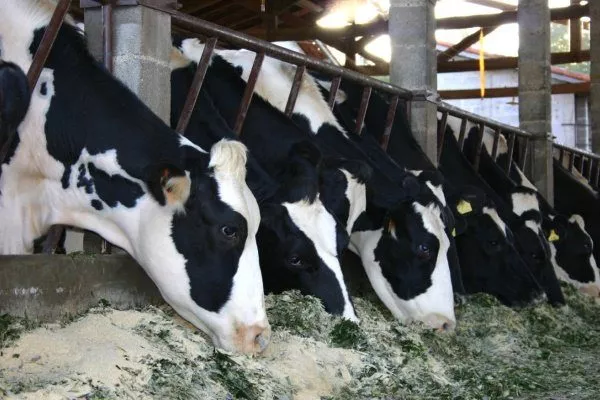
A daily ration for high productivity includes the following parameters. To achieve this, the farm develops a pre-planned schedule for rationing according to the corresponding lactation phase:
| A product that is fed to a cow | Milking | Mid-lactation | End of lactation |
| Hay | 10% | 14% | 15% |
| Haylage | 14% | 22% | 26% |
| Silage | 19% | 24% | 27% |
| Roots | 12% | 10% | 8% |
| Concentrates | 45% | 30% | 24% |
One gram of dry matter contains 17% protein during milking, then the figure drops by 2%. For high-yielding cows, a concentrate-based feeding program is partially suitable. This is achieved by increasing the metabolizable energy per kilogram of dry matter.
New feeds for lactating cows
Pelleting natural feed is trendy these days, as it helps boost cow productivity. For many farms, purchasing a pellet mill is now a no-brainer, with the advantage of saving money on feed preparation and procurement if used efficiently and with maximum precision.
This type of diet also has its drawbacks. Feeding dairy cows exclusively pellets, even when combined with roughage, can deteriorate their health. The animals may experience decreased milk production and fat content, and their rumen may malfunction.
It is more effective to formulate a diet based on 50% granulated supplements with silage and other bulk feeds.
Sprouting natural foods is equally popular. This new approach is considered superior to dried varieties. There are several reasons for this:
- The food is organic and extremely affordable. The cost of this food is several times lower than purchasing dry food.
- Feeding sprouted cereal grains provides fiber needs with a small amount of acids.
- This type of nutrition guarantees increased milk yield and improved quality of dairy products.
- For the farmer, this type of feeding will be much more convenient.
Sprouted legume seeds are the most sought-after. They are rich in fat and have a beneficial effect on the lifespan of cattle.
Equally popular is feeding cows extruded feed, which is produced by processing grain. The feed is prepared by briefly changing pressure and temperature. Feeding this feed increases milk yield by 20-40%.
Extruded feed is quickly and thoroughly digested by the animal's body. It can be easily stored for several months. Feeding cows during the winter is especially easy, as it can be stored loose in dry areas.
Uniform feeding of cows
A uniform feeding system for dairy cows has recently become increasingly popular among farmers. This involves rational use of the food supply, and the diet remains identical throughout the year. However, even this type of feeding has certain rules that are important to follow:
- It is necessary to sow clover, corn and other crops on large areas.
- In summer, let the cow out to pasture only until lunchtime.
- Creating stable conditions and not changing the cow's diet ensures increased milk yield.
Feeding cows uniformly has its drawbacks: it's very difficult to achieve record-breaking increases in productivity. However, it eliminates abrupt transitions from one diet to another, which can be stressful for the animal. Productivity remains consistent throughout the year.
Dairy cows' diets must be balanced, nutritious, and nutritious, as this is what determines their productivity. Dairy cows require a diet rich in vitamins and micronutrients.