
In this article, we've compiled 15 of the best cow breeds that are profitable to raise for your own use and for sale, ensuring a good profit. This list is based on statistical data from a survey of farmers' preferences.
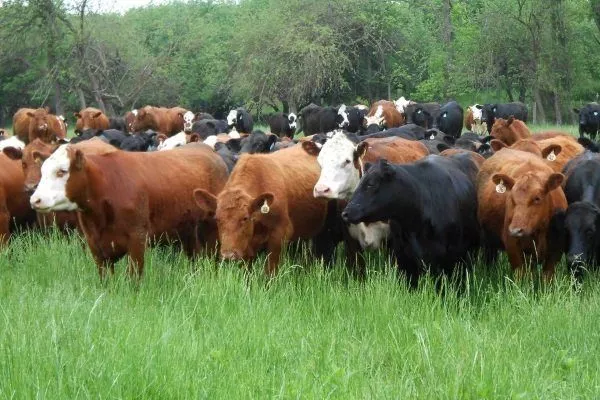
- ✓ The fat content of milk must be at least 4% for the production of cheese and butter.
- ✓ The breed must have high resistance to mastitis and other udder diseases.
Dutch
Thanks to excellent heredity, Dutch cows maintain high milk production qualities for many years.
Dutch cows They are predominantly black and white in colour, with a proportional body, low, strong limbs and a wide chest.
Breed productivity:
| Breed data | Indicators |
| Average weight of cows | 500-600 kg |
| Average weight of bulls | up to 1000 kg |
| Amount of milk during the lactation period | 4400-5000 l |
| Fat content of milk | more than 4% |
| Killer exit | 60% |
Dutch cows are demanding in terms of housing conditions and nutrition. They will produce large quantities of milk only if all nutritional recommendations are followed.
Dutch Terriers can be kept in any climate and are adaptable to a variety of temperatures.
The advantage of this breed is their precocity—the cows grow quickly. Sexual maturity occurs at 12 months, allowing them to produce milk as early as possible. Disadvantages include being overly clean, requiring regular bedding changes and house cleaning. Cows are susceptible to stress and have a weak immune system.
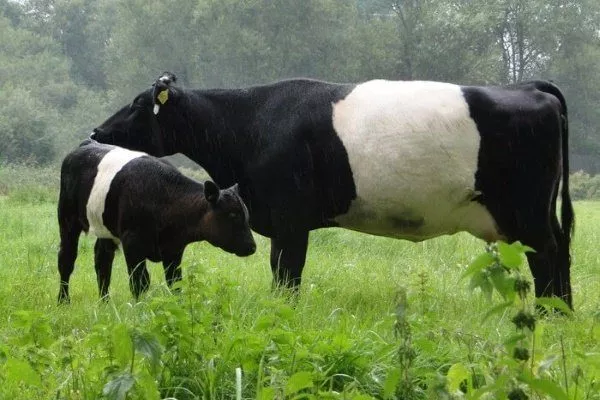
Angler breed
Cattle have established themselves as producers of large quantities of milk and meat.
The cow produces up to 12,000 liters of fatty milk per year, so it can rightfully be called one of the best among its “dairy” brothers.
Cows are predominantly red or cherry red in color. They are lighter in color than bulls. They have black hair around the nasal area and udder. They are characterized by a broad chest, a long, massive body, and a small head.
Breed productivity:
| Breed data | Indicators |
| Average weight of cows | 550 kg |
| Average weight of bulls | up to 1000 kg |
| Amount of milk during the lactation period | up to 12,000 l |
| Fat content of milk | 4.49% |
| Killer exit | 60% |
The milk is rich in protein, calcium, magnesium, and vitamin E. Farmers note that Angler cows are hardy animals that are easy to feed and require little special care.
Cows easily withstand extreme heat, frost and humidity, and easily adapt to any climatic conditions.
Advantages of anglers:
- sexual maturity is reached at 1.5 years;
- unpretentiousness in diet;
- high quality dairy products;
- juicy meat with excellent taste.
The disadvantages of anglers include the individual characteristics of some animals. Over time, people become accustomed to the cows' disposition.
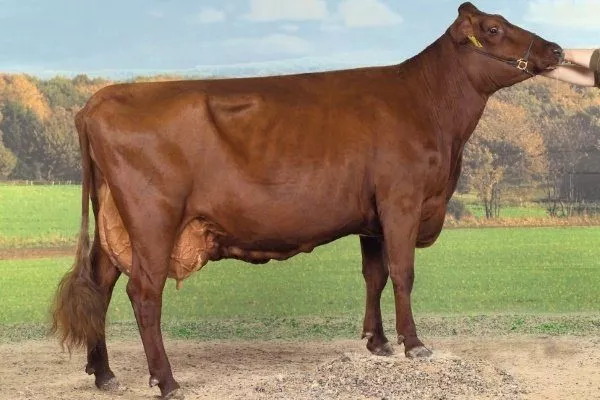
Montbéliarde breed
The Montbéliarde breed of cows is considered the best not only because it produces a large amount of tasty lean meat, but also fatty milk in huge quantities.
The breed is distinguished by the white coloring of the lower body and limbs. The upper body is a bright crimson. A large cow with a strong skeleton, a long body, and a large head. Scarlet spots may be present around the eyeballs and on the cheeks. The breed has a voluminous back and a horizontal udder base.
Breed productivity:
| Breed data | Indicators |
| Average weight of cows | 600-820 kg |
| Average weight of bulls | up to 1000-1200 kg |
| Amount of milk during the lactation period | 8500 l |
| Fat content of milk | more than 4% |
| Killer exit | 52-58% |
Lactation can last 305 days during one calendar year.
Animals of this breed are easy to feed and care for. They adapt quickly to changing weather conditions and tolerate extreme heat well. Among the breed's advantages are high productivity and low fat content in milk. The quality of meat and milk is high. They are easy to care for and feed.
Disadvantages of the breed:
- low yield of meat products;
- the need for high-quality feed;
- low resistance to infectious diseases.
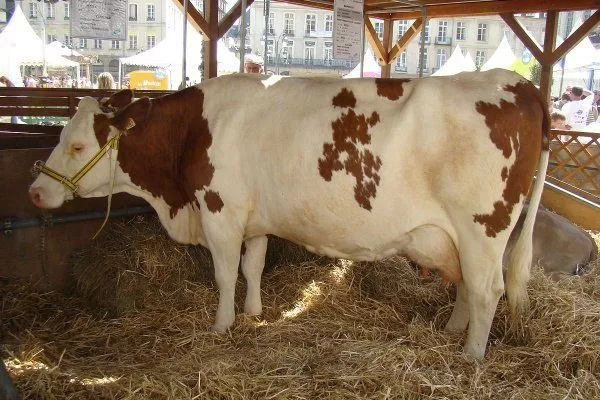
Black and white
A relatively young dairy breed, prized for its abundant, rich milk and the potential for delicious meat.
Cattle of this breed are characterized by an elongated frame, a powerful, and proportionate body. The animals have a small, elongated head, a broad chest, a straight back, and strong limbs.
Breed productivity:
| Breed data | Indicators |
| Average weight of cows | up to 650 kg |
| Average weight of bulls | up to 1000 kg |
| Amount of milk during the lactation period | 5400-8000 l |
| Fat content of milk | 3.5-4.1% |
| Killer exit | 60% |
The animal requires sufficiently spacious housing. Cows should be regularly brushed with special brushes, and their udders should be washed after each milking. They tolerate heat and cold well and tolerate long walks from one pasture to another.
Advantages of the breed:
- high quality products;
- increased resistance to diseases;
- medium early maturity;
- quick adaptation to different climates.
The disadvantages of the breed are low fat content, low milk yield, and insufficient massiveness and size of the cattle.
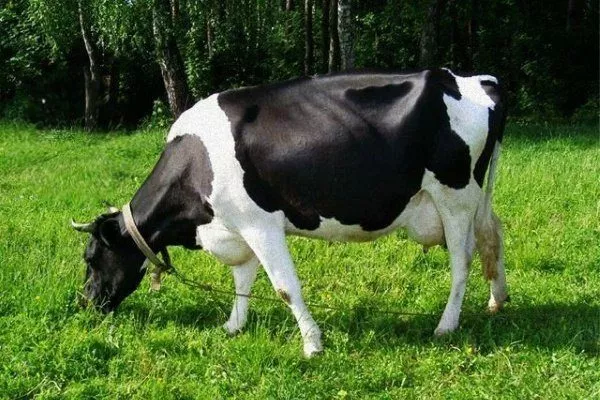
Holstein
The Holstein breed of cattle is the result of extensive selective breeding. It is renowned not only for its high milk yields but also for the massive carcasses of its bulls and cows.
The distinctive features of the breed are a massive body with moderately developed muscles, long limbs with strong joints, a deep and wide chest, and a narrow neck.
Breed productivity:
| Breed data | Indicators |
| Average weight of cows | 700 kg |
| Average weight of bulls | 900-1200 kg |
| Amount of milk during the lactation period | 7500-10000 l |
| Fat content of milk | 3.1-3.8% |
| Killer exit | 50-55% |
Holsteins are quite sensitive to housing conditions. They require a spacious, clean, dry, and warm barn free of drafts. A strong point of the breed is their rapid growth. They reach sexual maturity by the age of one year, significantly shortening their non-productive period.
Advantages of the breed:
- increased cleanliness;
- susceptibility to infectious diseases;
- the need for large quantities of high-quality feed;
- low stress resistance.
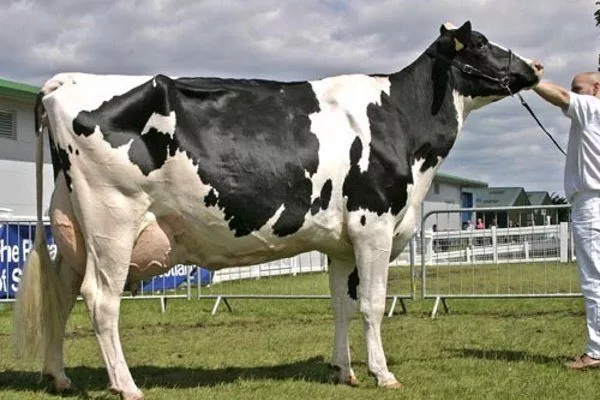
Brown Latvian
The breed was developed by crossing Latvian cows with Danish Red bulls. It is characterized by a compact build.
Distinguishing characteristics include a compact build, fine bone structure, and a broad chest. They have a small, elongated head and a full chest. Their red coat comes in several shades.
Breed productivity:
| Breed data | Indicators |
| Average weight of cows | 500-600 kg |
| Average weight of bulls | up to 1000 kg |
| Amount of milk during the lactation period | 4100 l |
| Fat content of milk | 4.1% |
| Killer exit | 50% |
The brown cow is a picky eater. In summer, its productivity increases in lush meadows. A shelter is essential for the animal to shelter from the rain. Cows do not tolerate heat well and lose their appetite.
Animals adapt well to natural and climatic conditions.
The disadvantages are the relatively small weight, low productivity, and fastidiousness in feeding.
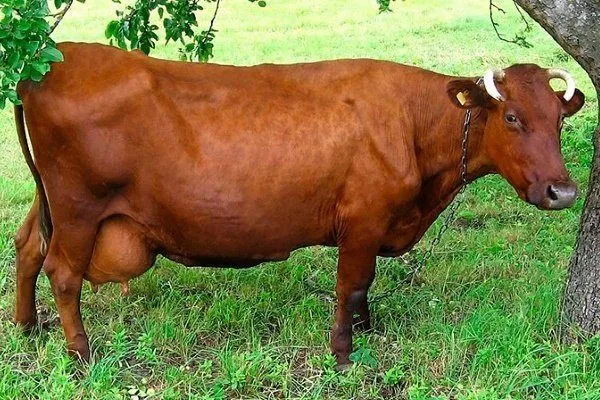
Kostroma
A beef breed of cow, considered one of the best for meat production, the Kostroma cow is characterized by high milk yields.
The breed's distinctive characteristics include a broad, straight back and a wide, deep chest. Color ranges from gray, brown, and dark brown. Cows are typically a solid color with a yellow stripe down the spine.
Breed productivity:
| Breed data | Indicators |
| Average weight of cows | 700-800 kg |
| Average weight of bulls | 1000-1200 kg |
| Amount of milk during the lactation period | 4000-8000 l |
| Fat content of milk | 3.9% |
| Killer exit | 58-60% |
Kostroma cows are not particularly demanding in terms of nutrition or care. In the summer, they are turned out onto pastures with lush grass. Steppe pastures with low, semi-dry grasses are not suitable for these animals.
Cows can easily withstand temperature fluctuations and various climatic conditions.
Meat production – young animals grow quickly. Low maintenance – cows don't require special conditions. Low production costs – animals don't need expensive feed.
Disadvantages include low milk yield, heat intolerance, and decreased productivity in large herds.
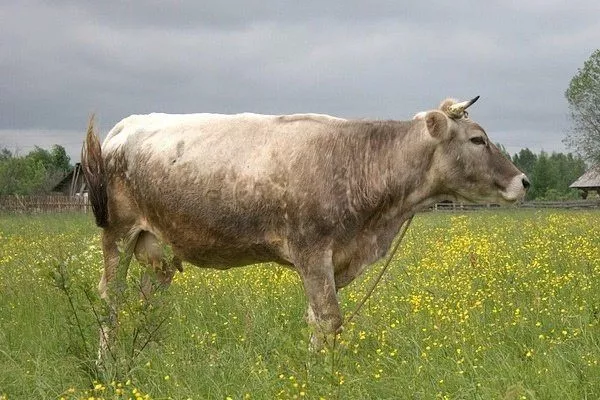
Yaroslavskaya
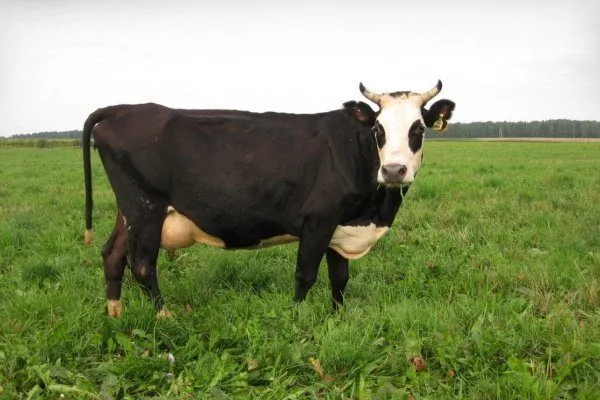
The Yaroslavl breed of cattle is popular among farmers due to its high yields of meat and dairy products. Today, it is successfully bred in the Tver, Vologda, and Ivanovo regions.
The breed's distinctive features are typically black, sometimes black and red-and-white. It is characterized by short, slender limbs, a narrow head, a powerful build, and well-developed muscles.
Breed productivity:
| Breed data | Indicators |
| Average weight of cows | 500 kg |
| Average weight of bulls | 800-1200 kg |
| Amount of milk during the lactation period | 3000-6000 l |
| Fat content of milk | 4-4.5% |
| Killer exit | 58% |
| Breed | Resistance to mastitis | Resistance to leukemia |
|---|---|---|
| Holstein | Low | Average |
| Yaroslavskaya | High | High |
This breed of cows is raised using the same technology as any other dairy breed. They are resistant to leukemia. There are virtually no complications with the animals. The cows adapt to any climate.
The Yaroslavl breed's advantages include its ability to withstand adverse environmental factors. These cows don't require much feed, are undemanding in terms of housing and nutrition, and have a strong immune system. A disadvantage is their disproportionately wide hindquarters.
Bestuzhevskaya
The value of the Bestuzhevskaya cow is its good slaughter weight, reaching up to 1,200 kg for bulls. The cows are easy to care for, undemanding in terms of pasture, and have a strong immune system.
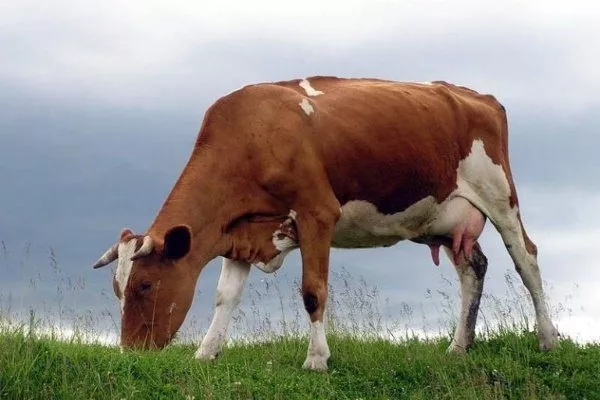
Bestuzhev cows are characterized by a reddish color, ranging from light to dark red. Occasionally, animals with white spots are seen. They have a straight back, a strong chest, and a small head.
Breed productivity:
| Breed data | Indicators |
| Average weight of cows | up to 800 kg |
| Average weight of bulls | up to 1200 kg |
| Amount of milk during the lactation period | 4300 l |
| Fat content of milk | 3.5-4% |
| Killer exit | 58-60% |
Despite their undemanding housing conditions, cows require certain criteria, particularly barn cleanliness. Cows are adaptable to any climate.
The breed's advantages include robust health, increased disease resistance, undemanding diet, and tolerance to both cold and extreme heat. Disadvantages include a wide grip behind the shoulder blades and sabre-like hindquarters.
Yakut
The Yakut cow is among the top 15 best breeds due to its high milk yield. The main difference between the Yakut cow and European cows is its increased cold tolerance.
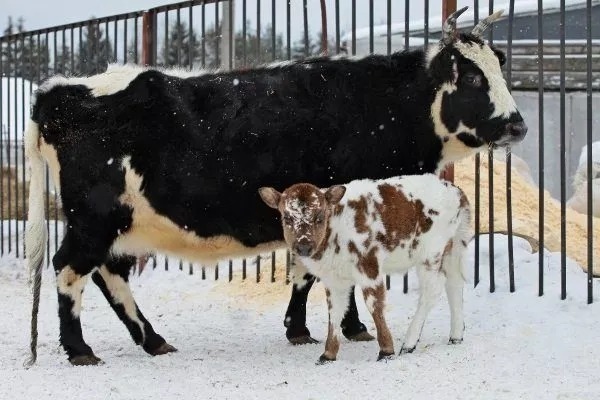
These animals are distinguished by a powerful neck and large head on a dense, massive body. They are distinguished by a slight hump. The hindquarters are slightly sagging. The short, strong legs are positioned correctly.
Breed productivity:
| Breed data | Indicators |
| Average weight of cows | 300 kg |
| Average weight of bulls | 400-500 kg |
| Amount of milk during the lactation period | 5400-7200 l |
| Fat content of milk | 6% |
| Killer exit | 60% |
The Yakut cow is considered the most prepared for severe frosts. Temperatures as low as -40°C (-104°F) are unaffected. It thrives in any climate.
Advantages of the breed:
- calm disposition;
- good health;
- disease resistance;
- ease of care.
Farmers note the difficulty of milking compact animals. Cows have short teats, which are difficult for milking machines to grasp.
Hereford
Breeding Hereford breed They are engaged in this due to the fact that it shows excellent meat indicators – it reaches from 700 to 1500 kg.
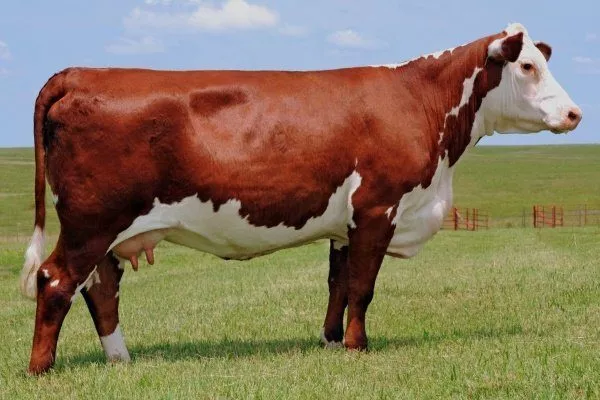
Cows are characterized by a stocky build, well-developed muscle mass, and heavy weight. They are short, with short, strong limbs. They have a wide, barrel-shaped body. Their fur is long and curly. Their main distinguishing feature is their white horns with dark tips, pointing sideways, forward, or downward.
Breed productivity:
| Breed data | Indicators |
| Average weight of cows | 800 kg |
| Average weight of bulls | 700-1500 kg |
| Amount of milk during the lactation period | 1000-1200 l |
| Fat content of milk | 4% |
| Killer exit | 60-70% |
Cows require spacious barns with central feeders. Although they are well adapted to cold weather, the animals must be protected from humidity and drafts. The breed acclimates to any conditions.
Advantages:
- high survival rate of calves;
- early maturity;
- unpretentiousness in nutrition;
- disease resistance;
- endurance;
- delicious marbled meat.
Flaws:
- consumption of food in large quantities;
- intolerance to moisture and drafts;
- high maintenance requirements;
- low milk productivity.
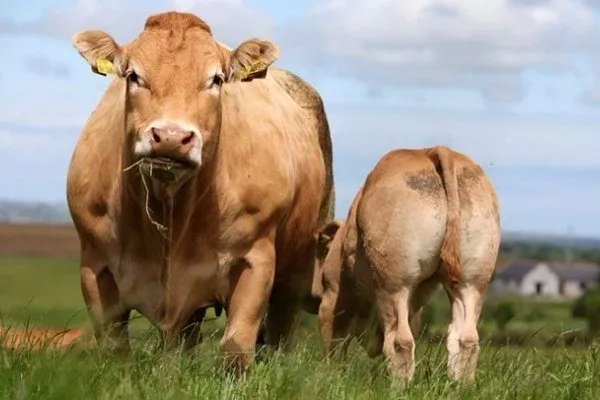
Limousin breed
Limousin cows have become popular among farmers due to their meat productivity and high meat quality.
The animals are massive and well-proportioned. Their fur is red, sometimes with light spots on the insides of their limbs, tail, and belly. Their chests are broad, their backs straight, and their heads small.
Breed productivity:
| Breed data | Indicators |
| Average weight of cows | 700 kg |
| Average weight of bulls | up to 1100 kg |
| Amount of milk during the lactation period | up to 1800 l |
| Fat content of milk | up to 5% |
| Killer exit | 60-65% |
Keeping cows is relatively easy when provided with suitable conditions. They are undemanding in terms of housing and feeding. Due to the climate of Limousin, where the animals were raised, they are well adapted to colder regions and can graze even on mountain meadows with sparse vegetation.
Advantages of the breed:
- high yield of meat from live weight;
- good survival rate;
- early maturity;
- rapid acclimatization;
- high fertility;
- good health.
The main disadvantage is the manifestation of aggression after calving.
Yorkshire
This breed is popular today due to its high milk production rates and excellent milk taste.
The cows are characterized by their red coat. Calves are born dark brown, cherry-colored. They have a compact, muscular build, a straight back, and a massive, short neck.
| Breed data | Indicators |
| Average weight of cows | 500-520 kg |
| Average weight of bulls | up to 800 kg |
| Amount of milk during the lactation period | 5000 l |
| Fat content of milk | 4.4% |
| Killer exit | 50% |
Yorkshire terriers are unfussy eaters, eating not only grass but also bark, leaves, and tree branches. There's no need to insulate barns, as the animals tolerate low temperatures well and are able to adapt to any geographical and climatic conditions, qualities that demonstrate their high adaptability.
The advantages of the breed are early maturity, the ability to quickly gain weight, economy and high immunity.
Farmers consider cows' timidity and some aggressiveness to be a drawback. However, not all cows exhibit such traits.
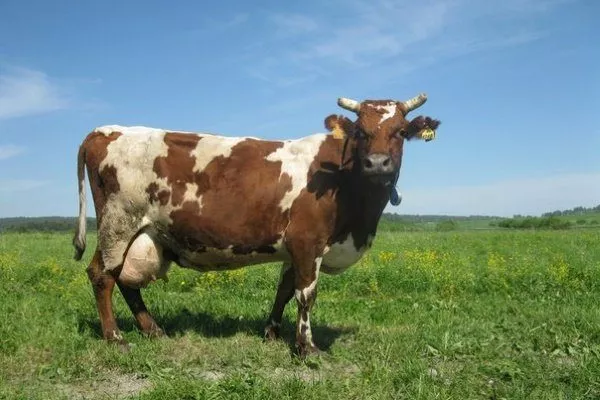
Ayrshire
The Ayrshire cow is one of the leading dairy breeds. Ayrshire cows are a favorite among farmers due to their low maintenance.
The cow is small in size, characterized by a proportional build, a short body, and a straight, broad back. The animal has fine bones and flexible joints. The chest and dewlap are narrow. The legs are straight and short.
Breed productivity:
| Breed data | Indicators |
| Average weight of cows | 450-480 kg |
| Average weight of bulls | 700-800 kg |
| Amount of milk during the lactation period | 7000 l |
| Fat content of milk | 2.3-4.2% |
| Killer exit | more than 50% |
The animal doesn't require any special care. Cows can quickly adapt to a variety of housing systems.
The advantages of this breed are its easy adaptation to any climate, undemanding maintenance and care, excellent immunity, activity, and adaptability to long-distance travel.
The negative aspects include the animals' intolerance to extreme heat and their difficult temperament. The most active cows tend to be aggressive and skittish.
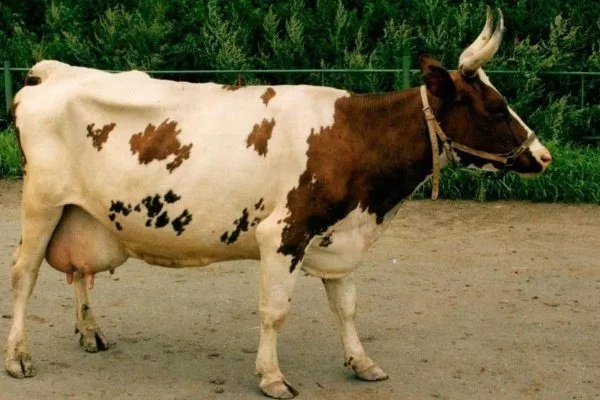
Tagil
Local varieties of this cattle were considered ordinary, with low milk production. However, through crossbreeding, they became prized for their high milk yields—up to 5,000 liters of milk per cow per year. However, the breed is more renowned for its meat production.
Cows come in a variety of colors. Commonly kept cows include white, spotted, black, red, red- and black-and-white, piebald, brown, and gray. They all share a strong frame, a long, slender neck, and a powerful body.
Breed productivity:
| Breed data | Indicators |
| Average weight of cows | 450-590 kg |
| Average weight of bulls | 890-1240 kg |
| Amount of milk during the lactation period | 4000-4600 l |
| Fat content of milk | 4.1% |
| Killer exit | 49-52% |
The breed is easy to feed and maintain. In summer, keeping the animals becomes significantly more economical. The cows tolerate climate change well.
Advantages of the breed:
- low cost of the animal;
- high milking speed;
- calm disposition;
- excellent sense of smell;
- no need for careful care of animals.
Cons:
- freshly milked milk has a slight grassy taste;
- low protein content in milk;
- low fat;
- visually crooked legs.
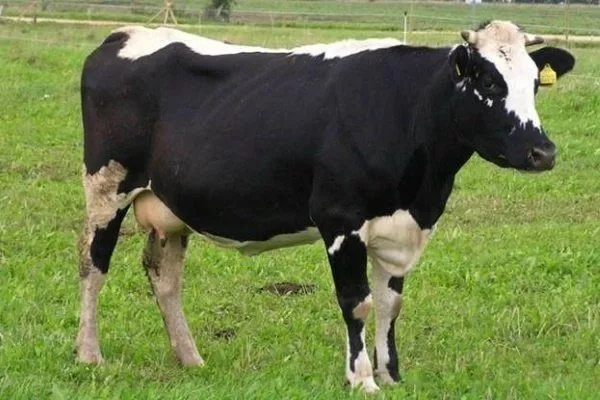
Comparison and statistics
For a more visual representation of the indicators of all the best breeds, their comparative characteristics are presented below.
Comparison of the main breed criteria:
| Breed | Weight of an adult cow, kg | Milk yield per year, l | Milk fat content, % | Protein content in milk, % | Disease resistance and feed tolerance, in points |
| Dutch | 600 | 4400 | 4 | 3.6 | 3 |
| Anglerskaya | 550 | 12000 | 4.49 | 3.6-3.8 | 4.5 |
| Montbéliarde | 820 | 8500 | 4 | 3.27 | 4.3 |
| Black and white | 650 | 5400-8000 | 3.9-4.1 | 3.2 | 4.5 |
| Holstein | 700 | 7500-10000 | 3.1-3.9 | 3.4 | 4 |
| Brown Latvian | 500 | 4100 | 4.1 | 3.4 | 4-4.5 |
| Kostroma | 700 | 4000-8000 | 3.9 | 3.36 | 5 |
| Yaroslavskaya | 500 | 3000-6000 | 4-4.5 | 3.7 | 4.5 |
| Bestuzhevskaya | 800 | 4300 | 3.8-4 | 3.2 | 5 |
| Yakut | 300 | 5400-7200 | 6 | 4.2 | 4.5 |
| Hereford | 700 | 1200 | 4 | 3.6 | 5 |
| Limousine | 350 | 1800 | 5 | 3.5 | 4.7 |
| Yorkshire | 520 | 5000 | 4.4 | 3.7 | 4.4 |
| Ayrshire | 480 | 7000 | 2.3-4.2 | 3.4-3.5 | 5 |
| Tagil | 450 | 4000-4600 | 4.1 | 3.6 | 1 |
| Kholmogorskaya | 600 | 6500 | 4 | 3 | 4.3 |
| Jersey | 400 | 6500 | 5.85 | 4.02 | 4 |
| Norman | 370 | 7500 | 4.2 | 3.45 | 3.5 |
| Simmental | 630 | 5500 | 3.9 | 3.5 | 5 |
| Red Steppe | 550 | 4500 | 3.9 | 3.5 | 4.5 |
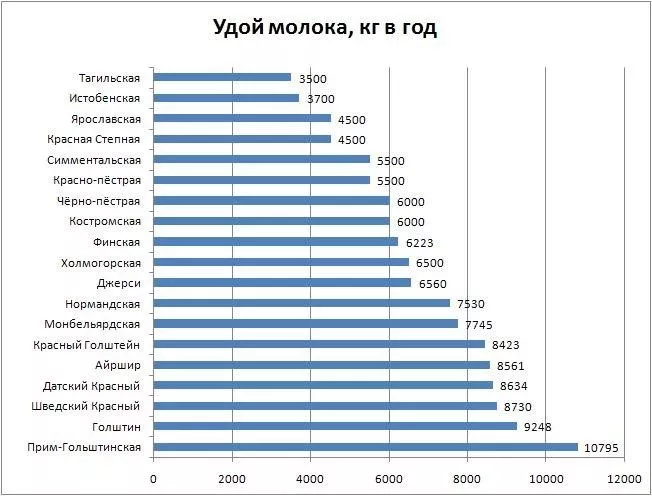
Characteristics of cows compared to the amount of milk produced per year:
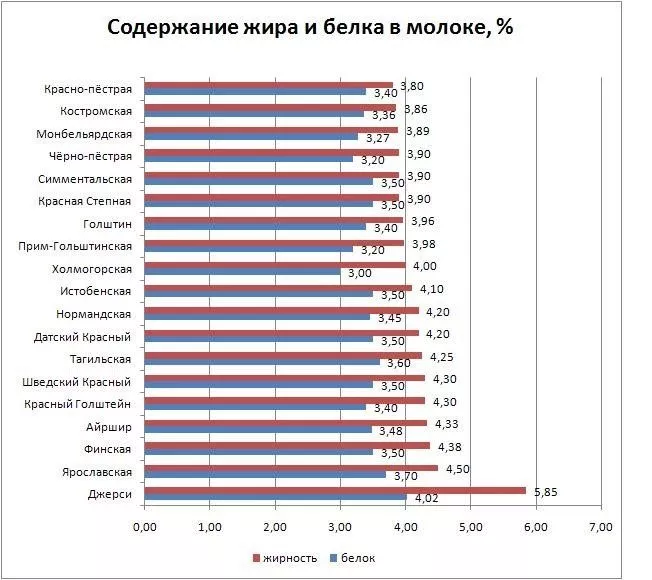
Fat and protein content of milk in percentage:
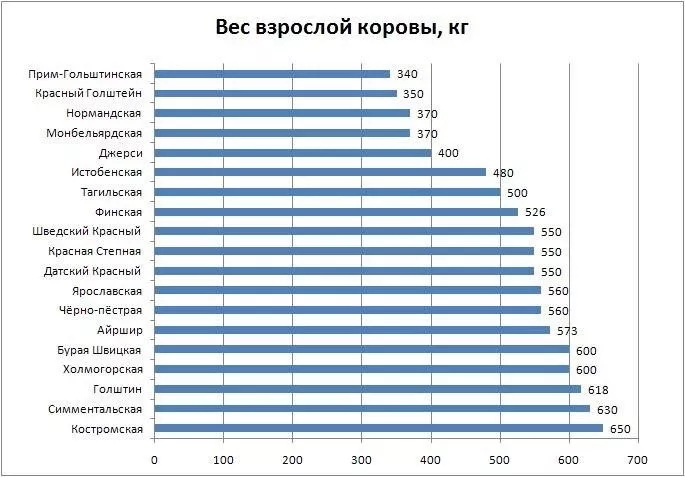
Weight of an adult cow in kilograms:
Based on all this data, we can draw the following conclusions:
- The Tagil cow produces the least milk among other breeds.
- The Kostroma breed of cows is the leader in weight category.
- The Jersey breed has the fattiest milk.
- The Prim-Holstein cow holds the record for the highest milk yield.
To choose the ideal cow breed, it's important to determine its intended purpose (milk, meat, or a combination), the climate conditions the animal will be kept in, and the maximum expenses to be invested in herd development. Only by considering these factors can you maximize your cattle's productivity and minimize your efforts.
With industrial fattening, the weight of standard dairy and beef cattle should reach 550-600 kg within 1.5 years, while beef cattle should reach 800-850 kg. The meat is lean, not fatty. The profitability of feed components at market prices is +25-40%, meaning no farmland is required. The minimum herd size should be 3,000 head. Individual farmers can team up and create a collective farm, and then fattening can begin. Sheep and goats can also be fattened. Keeping ruminants in stalls will prevent the spread of desertification. Manure is processed into mineral fertilizer, which is better for plants than manure. And if you recycle MSW in an environmentally safe way, you'll get electricity, heat and cold in the right place, year-round greenhouse farming for mushrooms and tomatoes, a canning plant, mineral fertilizer, and so on. So, even without subsidies, agriculture can be much more profitable than oil trading (in truth, not in Russia, unfortunately)! The invention of fattening technology was developed and tested in industrial conditions almost 30 years ago.