
The Lorkh potato has gained popularity among many gardeners, who grow the fruit not only for personal consumption but also for sale. Its high yield, attractive appearance, and easy transportation are important qualities for business. Many kilograms of potatoes can be harvested from a single hectare, resulting in significant profits from sales.
Characteristics of the variety
Lorkh potato plants grow quite tall, reaching almost 80 cm in height. They have extensive branching. They are characterized by light green, slightly dissected, medium-sized leaves. There are quite a few of them. The corolla is medium in size, with a predominantly light red-purple hue. After flowering, berries are rarely produced.
Potato characteristics:
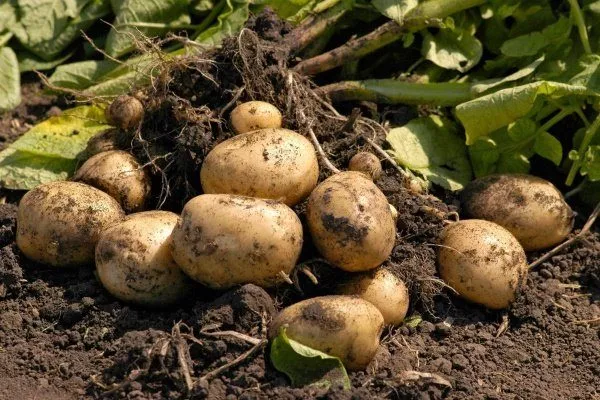
- The round-oval tubers are covered with a light beige skin. Each potato weighs on average 90-120 g.
- The mid-late variety has a smooth skin structure, but there is slight peeling near the top of the tuber.
- A few eyes that are evenly distributed over the entire surface of the potato.
- The root vegetable has white flesh that does not darken during peeling or cooking. The flesh is soft and slightly watery. It retains its shape.
- Contains a small amount of starch – 15-20%.
- Excellent taste qualities are noted.
Potatoes have the advantage of being highly resistant to bacterial diseases, but they regularly suffer from late blight of leaves and tubers. Gardeners prefer this variety for its versatility—it's used not only for cooking but also for making starch.
Advantages and disadvantages
The Lorkh potato variety has many advantages. Its pros and cons include the following:
| Advantages | Flaws |
|
|
Landing features
Today, several methods are used to grow potatoes. But planting them in beds is considered the most common and effective. Gardeners claim this method yields the largest yields and often produces positive results. Crucially, it doesn't require a lot of time or effort to cultivate the potato beds.
A distinctive feature of the Lorkh variety is its increased resistance to any short-term climate changes, making it suitable for cultivation even in northern regions. Its undemanding nature regarding soil composition is another advantage.
How to choose a location and prepare the soil?
It's best to avoid planting potatoes in soils containing clay and sand, as these components are not known for their fertility. Clay soils are dense and tend to retain moisture and water, which increases the risk of the tubers becoming deformed and small.
- ✓ The area should be well lit, without shading, to prevent excessive growth of the above-ground part to the detriment of the tubers.
- ✓ The soil should be light, permeable, and free of clay and sand to avoid deformation of the tubers.
It's preferable to choose sunny, level areas where groundwater won't stagnate. If bushes are grown in a shaded area, the above-ground portion will grow more, while the underground portion will suffer.
What rules to follow:
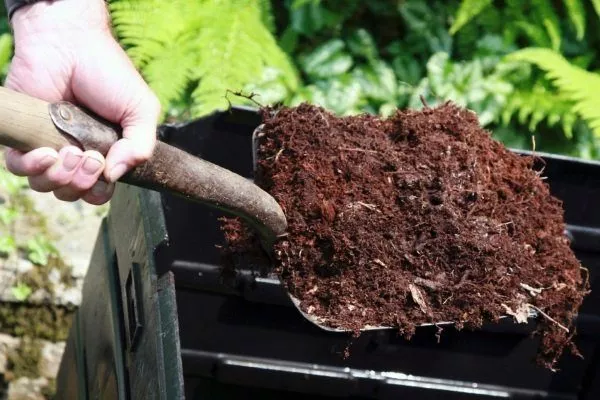
- Prepare the soil in advance by clearing and fertilizing it. Add fresh organic and mineral fertilizers. When digging, remember to add nitrogen fertilizers to promote good seed germination and tuber formation. If you fertilize the soil in the spring, reduce the amount of additional fertilizer during the summer.
- Gardeners should remember crop rotation. Following it will help them overcome many problems: avoid disease, tuber degeneration, and pest infestations. After harvesting, avoid planting potatoes in the same spot for three years.
- The soil should be well-drained, as well-drained soil will ensure rapid and healthy growth. This also impacts the taste of the fruit.
Crop rotation
To ensure high yields and prevent unwanted diseases, gardeners need to select the right precursor plants. The following are considered the best crops for subsequent potato cultivation:
- legumes;
- cabbage;
- pumpkin;
- roots;
- cucumbers.
Lands where members of the nightshade family, primarily tomatoes, as well as sorghum and sunflowers, are grown accumulate pathogens and pests that are particularly dangerous for this variety.
Experts recommend sowing oats a year before planting potatoes. Oats have disinfectant properties and can inhibit the growth of fungal pathogens that can cause vegetable diseases.
You will find more information about crop rotation here.
Preparation of seed material
The quality of planting material directly impacts the yield: its quantity and appearance. Careful seed selection is essential, choosing only healthy, strong tubers weighing at least 80 g. Sprouted potatoes are best for planting, as they sprout quickly. Using cut parts of large potatoes is not recommended, as this can reduce yield.
- ✓ Tubers should be free from signs of disease, with strong sprouts 1-2 cm long.
- ✓ The weight of the seed tuber should be at least 80 g to ensure sufficient nutrition for the sprouts.
Rules for sprouting potatoes:
- Remove the seeds from the basement a month before planting, clean them of soil and spread them in a thin layer on the floor or decking.
- Ventilate the room where the potatoes are stored well. The temperature should be no lower than 12-14 degrees Celsius.
- Periodically spray the tubers with water to create a greenhouse effect.
- The first sprouts should appear within a week. They should be at least 1-2 cm tall before planting.
- Before planting in the ground, soak the tubers in a solution of potassium permanganate for disinfection.
Helpful tips:
- To plant green tubers for seeds. This will require sufficient sunlight—lay the seeds out for 2-3 weeks to ensure good light and warmth. The accumulated solanine helps protect against fungal and bacterial infections.
- Do not exceed the optimum temperature. When storing tubers, the temperature should not exceed 4 degrees Celsius. Otherwise, the tubers will begin to sprout.
- Wake up the eyes. This method is suitable if you don't have time to sprout the tubers. Dip the tubers in a potassium permanganate solution, then place the seeds in a plastic bag and heat at 30 degrees Celsius.
Planting methods
By sprouting seeds before planting, you can harvest a couple of weeks earlier, and the quality of the seedlings themselves will be significantly better. Germination usually begins a month before planting.
There are several methods for planting Lorkh potatoes in the ground:
- Hole method. This is considered the most common method. Dig holes with a shovel, spaced up to 40 cm apart. This is necessary because this variety grows tall and spreading bushes. This way, they won't interfere with each other. The holes should be about 10 cm deep and 70 cm apart. Place the seeds in the holes, sprout-side up, and then cover with soil.
For best yields, it's recommended to mix the soil with a small amount of compost or manure. Avoid placing such fertilizers at the bottom of the hole, as direct contact with them can damage the seedlings. - Trench method. This method is worth using if the garden soil is very dry. Trenches are dug in the fall and then filled with straw—it helps retain moisture and subsequently acts as an additional fertilizer. The trench depth is about 30 cm, with a layer of straw about 15 cm thick. When planting, place the seeds in the trench, keeping a distance of about 30 cm. Cover with soil.
- Comb method. This method is used for soils with high moisture content. Using specialized equipment, such as a walk-behind tractor, create high ridges about 20 cm thick. Dig holes in these ridges and plant the seeds in them. Fertilize the soil using the same method as with the hole-drilling method.
Potatoes of the "Lorkh" variety must be planted within a specific timeframe. Planting is typically done in late April or early May. The soil must be well-warmed. If it's cold, the plant will take a long time to emerge, which will delay flowering. The optimal temperature for planting potatoes is considered to be +8°C (46°F).
Planting potatoes according to Mittlider
Growing potatoes using the Mittlider method is very popular and productive if you follow the rules. Planting potatoes this way will yield a bountiful harvest, high-quality tubers, and excellent fruit. It involves vertical growth, low but focused watering, and highly nutritious fertilizers. Growing boxes are required. The substrate used for filling the beds is a mixture of 1/3 sand and 2/3 sawdust.
The advantage of this method is its applicability to any surface. Planting potatoes using the Mittlider method is simple. It's useful at any time of year and in any climate, and doesn't take up much space. It can be used in greenhouses, and it's easy to care for and harvest.
The main requirement is to maintain close spacing between crops, allowing for more plants to be planted in a smaller area. Vertical cultivation minimizes light exposure.
What is the method:
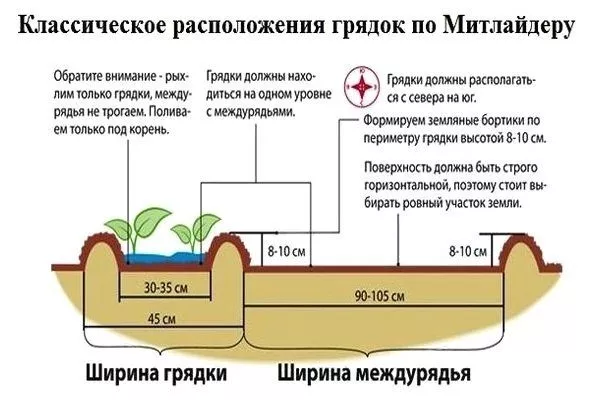
- According to Mittlider, the standard length of a garden bed should be 9 m. The distance between rows should be 105-150 cm. Making rows shorter than the recommended distance is not recommended, as this will result in plants shading each other and leaving them with little room to grow.
- Leave a sanitary zone 1 m wide along the perimeter of the fence.
- Place two rows of potatoes on the prepared bed so that the distance between them is at least 30 cm, as is the distance between the bushes in the row.
- Use a marker to mark the holes in a checkerboard pattern next to the edges of the bed. The depth of the bed should be 10 cm.
- Before planting, treat sprouted tubers with insecticidal or fungicidal preparations.
- Place the tubers into the holes with the sprouts facing up, then level the bed with a rake.
Care Features
To obtain a good harvest and large, high-quality fruits, watering the plants, loosening and mulching, hilling, fertilizing and feeding are essential.
Watering
A disadvantage of this variety is its intolerance to drought. Lorkh potatoes require constant moisture, so water the plants frequently and thoroughly. If nutrition and moisture are insufficient during the active fruit set period, the tubers will overgrow.
Watering is especially important in southern regions, where droughts are common. During hot weather, watering should be done at least 3-4 times a week. An average of 4 liters of water per day is considered ideal for each bush. Best results can be achieved with an automatic irrigation system.
Plants especially need water during the initial germination period, when buds are forming, flowering begins, and tubers are growing. It's best to water potatoes early in the morning or evening, as the heat during midday can cause water to evaporate quickly.
Loosening and mulching
Loosening and mulching maintain the soil's water balance. Loosening promotes soil drainage, ensuring moisture reaches its intended destination. This also helps eliminate young weeds and improve soil quality by stimulating root growth.
Mulching This is necessary for long-term soil moisture retention, preventing too much strong sunlight from reaching the stem's point of emergence. Sawdust or dry grass are used as mulch.
Hilling
Hilling This is necessary to ensure that the potato roots are saturated with oxygen. It stimulates the active growth of lateral shoots, or stolons, which later form the root crops. High hilling is not suitable for the Lorkh variety; too much soil can overheat the roots. Hilling should be done 2-3 times throughout the season, combining it with watering and fertilizing.
Fertilizer and feeding
Previously, potatoes were typically fertilized with humus, manure, and ash. This method is still used today, but it is recommended to also add mineral fertilizers to the organic matter.
Basic fertilizers are applied three times:
- When sowing. Place ash and humus or bone meal and nitrophoska into the hole along with the planting material.
- In 10-12 days. Use chicken manure diluted with water.
- During flowering. Apply root feeding using potassium sulfate and water.
When selecting fertilizers, consider the balance of vitamins and microelements. Too much nitrogen will lead to fattened foliage and slow tuber growth. A lack of potassium and phosphorus will result in unattractive fruit.
Diseases and pests: control and prevention
Lorkh has a high resistance to various diseases and pests. However, sometimes plants can become sick or even die if prompt intervention is not taken.
The most common diseases of the variety:
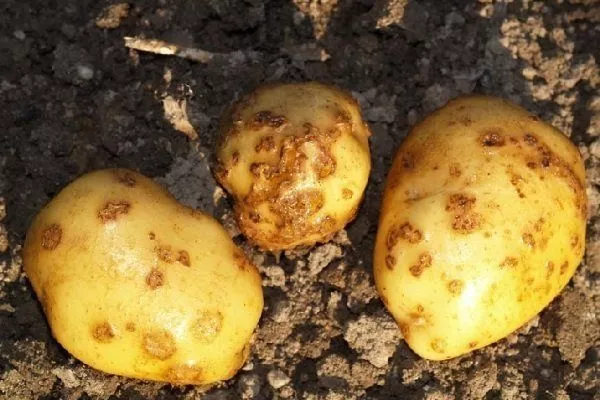
- Common scab. This disease causes small, dark bumps to appear on the tubers. The potatoes become rough to the touch and mottled in appearance. The potato's flavor is also significantly impaired. Yields are significantly reduced.
There is no cure for the disease. However, preventative measures can be taken by cultivating the soil before planting, maintaining crop rotation, and using potassium permanganate solutions or copper-containing preparations. Regular watering is also important. - Potato cancer. This disease causes the development of uneven growths, which are then followed by rotting. The tuber becomes soggy and disintegrates. To prevent the disease from spreading to other plants, remove the affected plants and cultivate the soil. Benomyl is used as a preventative measure. Experienced gardeners recommend not planting potatoes in the same area for 2-3 years after potato cancer.
Potato cancer
Potatoes can also be attacked by such things pests:
- Mole cricket. A pest that damages not only the roots and tubers but also the above-ground portions of the plant. The insect chews through the leaves and stems, causing the plant to quickly die.
You can protect yourself from the pest using Grizzly, Medvetoks, and Grom products – sprinkle the granules into the holes for planting potatoes beforehand.
- Wireworm. The pest burrows into the tubers and roots underground, leading to plant death and rapid spoilage of the potato.
You can get rid of the pest using pesticides such as Dokhlos, Grom, and Aktara. It's also recommended to add a little ash or superphosphate soaked in acetone to the potato seedlings when planting. For prevention, regularly remove weeds and plant fragrant herbs near the potatoes—wireworms don't tolerate them.
Harvesting and storing potatoes
The Lorkh potato harvest occurs in late August or early September, depending on when the potatoes were planted, the weather conditions, and how well the gardener cared for the plants. Ripening can be determined by the yellowing and drying of the tops, the easy separation of the tubers from the stolons, and the formation of a thick skin on the root.
Approximately 10 days before digging, mow down the tops, leaving 10-centimeter-thick stems above the ground. Harvest in dry weather. It's best to dig from the row spacing, using a pitchfork. Leave the dug potatoes in the air for a few hours to allow the roots to dry. Then, clean the tubers, discard any diseased or damaged ones, and place them in boxes and bags.
Potatoes of this variety are distinguished by their long shelf life. Storing tubers Under the right conditions, the fruit will maintain its marketable appearance for a long time. It's important to maintain a room temperature of no more than 2-4°C, and humidity no more than 85%. Adequate ventilation is also essential. During storage, the fruit should be periodically sorted to remove any rotten tubers.
Reviews of the variety
You can find countless positive reviews of the Lorkh variety online. Many gardeners note its versatility, high yield, and low maintenance requirements.
The Lorkh potato is considered one of the most popular varieties today. It's popular for its high yield, excellent appearance, and excellent taste. However, the yield and appearance of the fruit largely depend on proper care. The key is to follow the rules for planting, growing, and caring for the plant.