
The Maran chicken breed is particularly popular among poultry farmers due to its unique egg production and excellent meat flavor. This article discusses the bird's appearance, varieties, breeding, and maintenance.
How did the breed come about?
The Marans breed was developed by French breeders in 1895. However, the animals' unique qualities were only appreciated 29 years later. In 1914, the breeders decided to present their new breed at the La Rochelle exhibition. Since then, the birds have become popular worldwide.
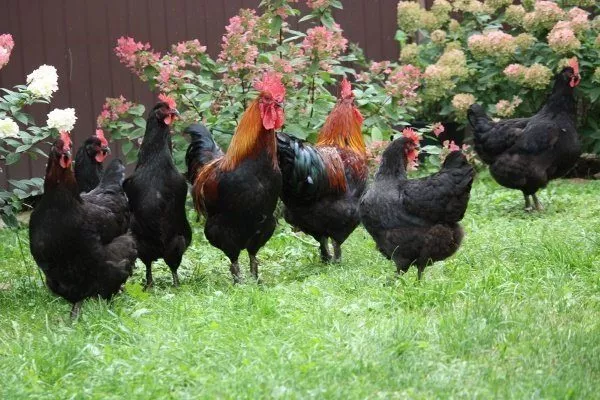
Many poultry farmers still prefer this breed. The bird was developed in the city of Marans, located in western France. This contributed to the animals' excellent adaptability to adverse weather conditions.
Description of the Marans
Marans are a very attractive bird. Their plumage remains vibrant throughout the year. These powerfully built birds don't appear heavy or clumsy; instead, they have a noble and majestic appearance.
The body size is medium, the build is good, and the plumage is dense. These birds have a long body and broad, high shoulders. Their strong, long necks are covered with numerous long feathers, forming a distinctive ruff. A strong chest, a well-developed abdomen, and wings held tightly to the body indicate a strong bird. The legs are short and white or slightly pinkish. However, birds with dark plumage may have gray or dark gray legs.
Morans have a small, slightly elongated head. They have a medium-sized, pointed crest. Their wattles and earlobes are red. Their distinguishing features are their orange-red eyes and strong, curved yellow beak.
The birds are active and lively, yet calm and non-aggressive. This is convenient for poultry farmers breeding several breeds at once.
Features of the bird
Marans chickens have many unique characteristics. Here are a few:
- Birds lay eggs with thick, strong shells—they act as a barrier that prevents harmful microorganisms from penetrating. However, this characteristic also comes with a significant drawback, as it's very difficult for chicks to break through this barrier when hatching.
- If you cross a male Maran with chickens of other breeds, the hens will produce the same “chocolate” eggs.
- The animals have beautiful and bright plumage, its color does not change throughout the year, remaining as bright as at birth.
- The darker the Maran eggs, the higher the quality of the product. Because of this, poultry farmers strive to provide the birds with good conditions to produce dark eggs.
What is the productivity of the breed?
Mature laying hens weigh up to 2.5-3.3 kg, and roosters weigh around 4 kg. The meat is highly palatable and can be used to make soups and various main courses. The carcasses are also attractive, with white and yellow skin.
Marans are rarely used for meat, despite being a versatile breed. They are primarily kept for egg production.
Hens reach sexual maturity at six months or slightly earlier. Their first eggs are not as intensely dark, and their weight typically does not exceed 60 grams, but this improves over time. A hen can produce 130 to 250 eggs per year, weighing approximately 85 grams. Sometimes the number of eggs increases, depending on the type of feed and living conditions. One-year-old hens lay richly colored eggs.
Varieties of the breed
Marans come in cuckoo, black, white, wheaten, Columbian, silver-black, and other colors. Dwarf subspecies also exist. All varieties differ in color. The different varieties of Marans are discussed below.
| Object | Weight of an adult (kg) | Egg production (pieces/year) | Plumage color |
|---|---|---|---|
| Wheat | 3.0 | 200 | Golden |
| Cuckoo | 3.2 | 180 | Motley |
| Copper-black | 3.5 | 190 | Reddish with a golden tint |
| Black-tailed | 3.3 | 170 | Red body, black tail |
| Colombian | 3.1 | 160 | White with a black mane |
| Lavender | 3.4 | 175 | Lavender |
| Black | 3.6 | 185 | Jet black |
| White | 3.0 | 165 | Snow-white |
| Blue copper | 3.2 | 195 | Silver-copper |
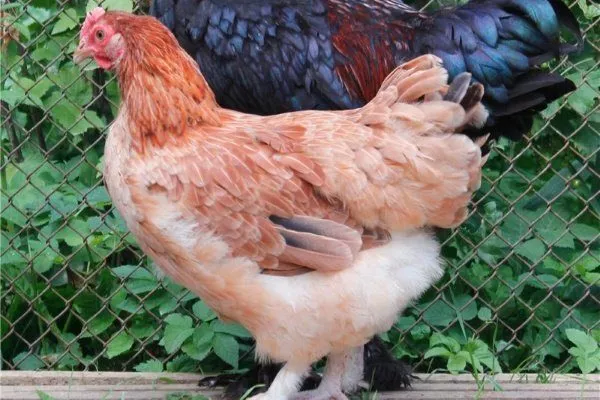
Wheat
The birds have a uniform golden coloration. Males of this variety are much more colorful, with a wheat-colored neck, black chest, and red tail feathers.
Cuckoo
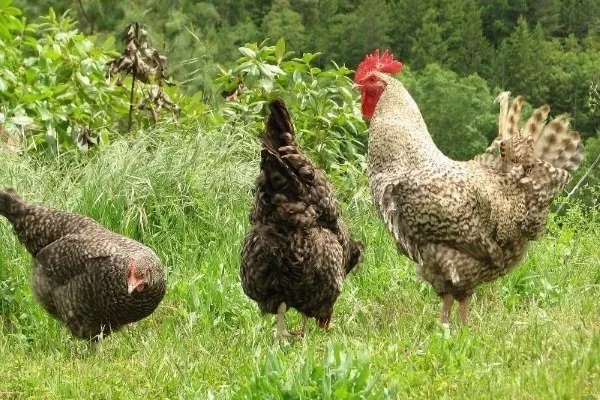
According to the French standard, cuckoo-colored males are lighter than hens. The birds have uniformly mottled plumage throughout their bodies and a slightly reddish tint. British standards specify that the rooster's neck and upper chest are lighter than the rest of the body. Because of this, black chicks may be produced in the offspring of cuckoo-colored Marans. When a silver-cuckoo rooster is mated with a black hen, the offspring will be dark-colored males and silver-cuckoo hens.
Copper-black
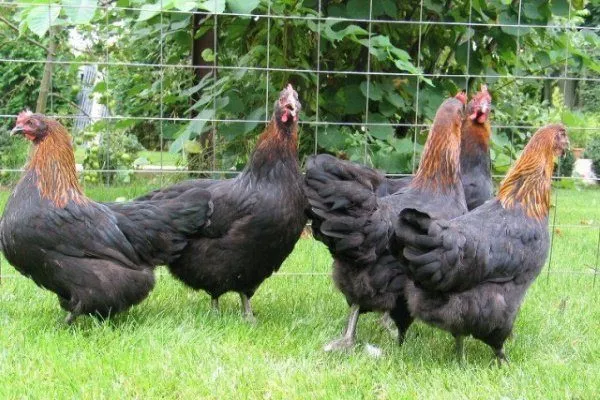
Almost the entire body of these birds is reddish with a golden sheen. These birds have a black tail with small spots.
Black-tailed
The birds have a red body and a black tail. Males have emerald-colored plumes, while females have brown feathers.
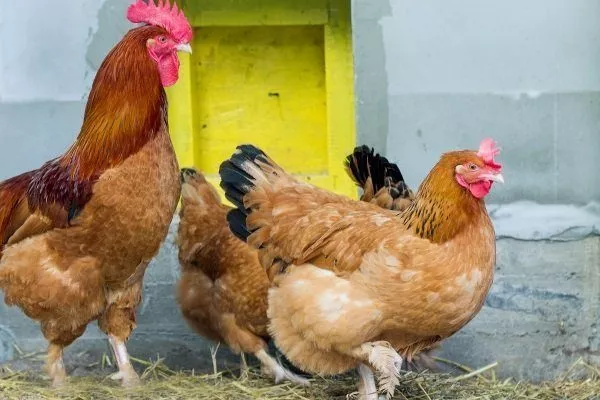
Colombian
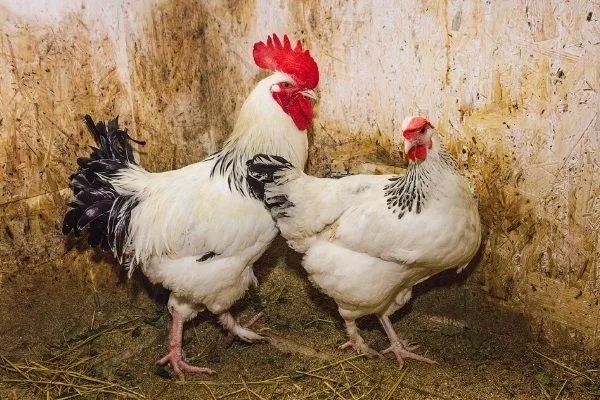
Colombian birds are distinguished by their pure white body and snow-white down. A black mane of feathers edged in white adorns the neck. The flight feathers are white on the upper side and black on the underside. When the bird folds its wings, the black tint is invisible. The tarsi are pinkish-white.
Lavender
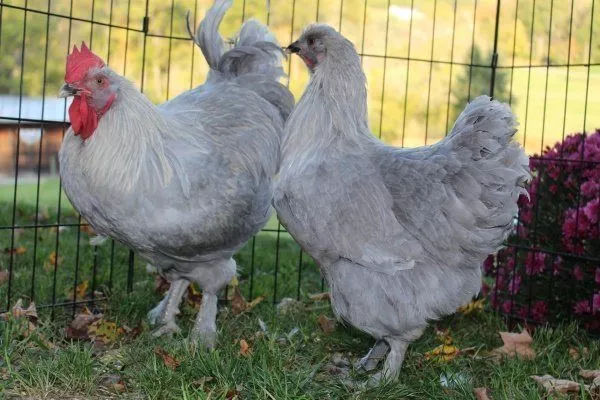
Lavender comes in several variations, as it's based on red and black pigments. Lavender chickens can have either black or red feathers.
Black
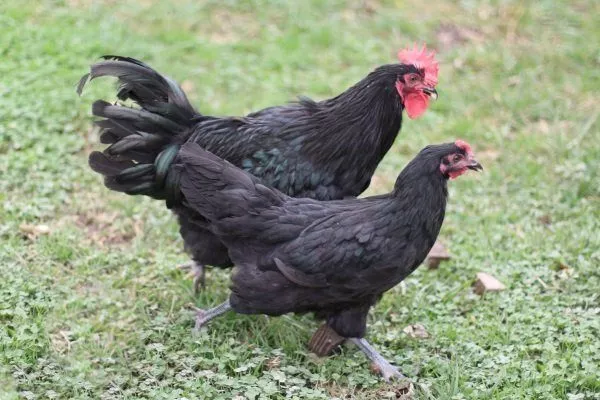
Their entire body, including the tail feathers, is jet black. Occasionally, individuals with patches of feathers of a different color are found—those are defective birds.
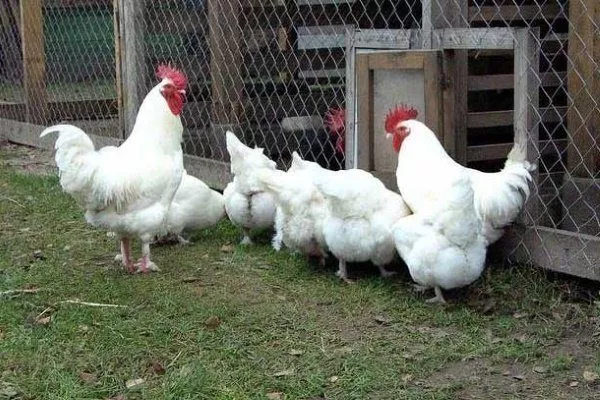
White
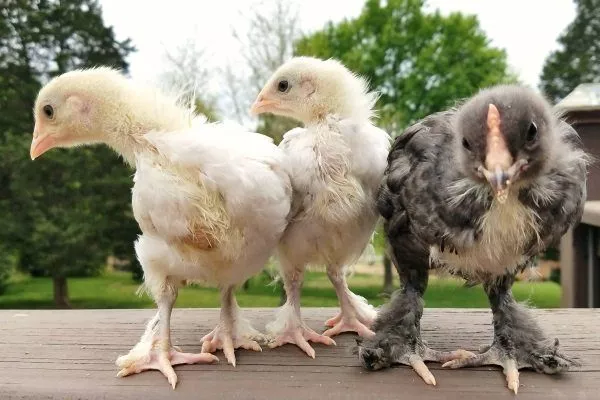
White Marans are predominantly snow-white in plumage. Roosters sometimes have yellow highlights on their mane, tail, and rump feathers. White Marans have pink tarsi. If a chick has gray or gray-blue rose plumage, it is a lavender specimen that has not yet faded.
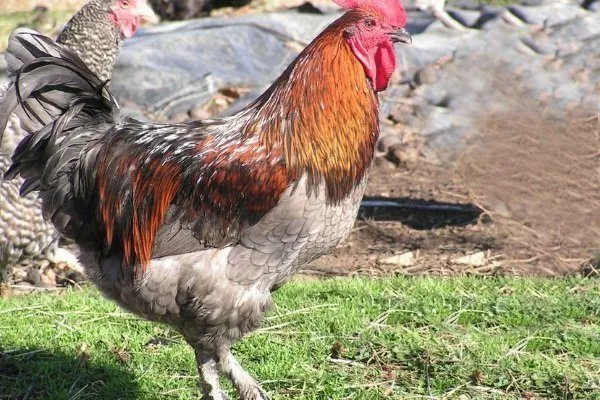
Blue copper
The coloring is very similar in appearance to the copper-black birds, but in this case, the feathers of the birds are silvery-copper in color.
More about eggs
Farmers value the Maran breed for its brownish-red egg color. The richer the color, the higher the quality of the eggs. Specific criteria exist for this type of egg, with a minimum acceptable score of 4-5 points. However, for hatching eggs, the score must be at least 7 points. The best representatives of the breed boast a shell color of 9 points. These eggs have a shell that is almost charcoal-colored.
Some farms claim that feeding carrots, beets, and onion peel broth will result in dark eggs, but this is a misconception. However, crossing a male Maran with hens of a different breed will produce dark eggs.
The eggs' distinctive color is due to the passage of the egg through the oviduct during laying. If you scratch the outer layer of the egg's protective shell, it will take on a lighter hue. The additional color serves as a protective layer for the egg itself.
But the main characteristics of Maranov egg products are their excellent taste and durable shell, which allows for the eggs to be transported and stored with minimal risk.
Content Features
Before purchasing birds, a farmer must be aware of the living conditions the animals prefer:
- Marans require a dry, warm, and draft-free coop. It shouldn't be dark; the birds require at least 11 hours of light.
- The temperature in the barn, even in winter, should not fall below 15 degrees Celsius. Sawdust bedding is essential.
- Birds don't tolerate humidity, so the coop needs to be ventilated more frequently. If ventilation isn't sufficient, installing a heater in the coop can help alleviate the problem and prevent health problems.
- There is no need to enclose the walking area with a high fence, since the birds cannot fly due to their significant body mass.
- Provide a spacious walking area. If animals don't have the opportunity to lead an active lifestyle, they may become obese, which is dangerous not only for productivity but also for the birds themselves.
- Farmers install special containers filled with sand and ash in the range—dry baths help protect the birds from parasites, which can lead to exhaustion and reduced productivity. Sometimes parasites can cause feather loss. With proper care, chickens won't suffer from this.
- Half of the enclosure should be covered with a roof so that in case of bad weather the chickens can hide from the rain or snow – this will protect them from colds.
- Although these birds were bred for cool climates, it's important to pay attention to their winter care. During this time, daylight hours should be up to 14 hours long, and artificial lighting can help. Experienced poultry farmers recommend using a timer relay, which automatically turns the room's lights on and off.
- Avoid allowing the temperature to drop below 10 degrees Celsius in winter, otherwise egg-laying will cease. Optimal temperatures can be achieved by using additional heaters and warm straw bedding on the floor, which should be changed twice a month.
Feeding
The Marans' diet is based on the same feeding principles as other chicken breeds. To ensure good weight gain and consistent egg production, the flock is provided with a balanced diet.
Laying hens are harmed by underfeeding and overfeeding. Improper feeding can lead to decrease in egg productionThe farmer must take the menu planning for young and adult animals seriously.
What to give to young animals?
Chickens need to be fed properly – proper development and growth depend on this, and therefore a specific schedule must be followed:
- From the 1st to the 3rd day, feed the babies boiled eggs and cottage cheese every 2 hours.
- From the 3rd to the 6th day, corn grits and crushed millet grains are added to the cottage cheese and eggs.
- From days 6 to 9, crushed eggshells and shell rock are added to the birds' food. The chicks are fed up to 6 times a day.
- From the 10th day, the chicks are fed 4 times a day.
- From the 14th day, it is recommended to feed the chicks with plant-based foods.
Once a week, chicks should be given a weak solution of potassium permanganate to drink – to prevent gastrointestinal diseases.
The chicks require strict living conditions. From birth until the seventh day of life, they are kept in brooders where the temperature is at least 30 degrees Celsius. After a week, the chicks are allowed out for a couple of hours, weather permitting.
From the second week of life, the chicks are left with the adults, but are placed in a warm place at night. Once the birds reach one month of age, they are considered adults and can be kept in a communal coop.
Nutrition of adult birds
One chicken receives up to 75 grams of compound feed per day if the main diet consists solely of this food. However, it's highly undesirable to dispense the entire amount at once, to prevent the birds from eating it all and then going hungry. Feeding is divided into several meals. Greens and vegetables are also essential.
During the warmer months, grass, chopped vegetables, and cabbage heads are essential. Layers require supplemental feeding. The birds are fed several times a day. The intensity of the yolk color in the eggs directly depends on the amount of green matter consumed by the hens.
Read more about proper feeding of laying hens Here.
- ✓ The ratio of carbohydrates to protein in the diet should be 70% to 30% to maintain health and productivity.
- ✓ Mandatory presence of calcium supplements for the formation of strong eggshells.
Chicken feed is either purchased ready-made or prepared at home. The latter option allows farmers to save significantly on poultry feed.
The dry mix should contain the following products:
- table salt – 0.3%;
- fodder yeast – 5%;
- grass, fish and bone meal – 5%;
- sunflower meal – 7%;
- feed chalk, shell rock, limestone – 7%;
- barley grains – 7%;
- pea grains – 8%;
- wheat grains – 12%;
- corn grains – 45%.
To improve feed digestibility in poultry houses, it is recommended to equip containers with shell rock, gravel or quartz sand.
A domestic chicken's diet consists of 70% carbohydrates, with the remaining 30% being protein. Young laying hens should be fed more nutritious feeds once they begin laying eggs. Commercially prepared feeds already contain all the necessary supplements. Special supplements are provided as an additional source of calcium to help develop strong eggshells. They are fed the following products:
- crushed eggshells;
- feed chalk;
- bone meal;
- shell.
This supplement can be provided in a separate container or added to the food. However, it's best to provide supplementary food separately, allowing the birds to decide for themselves when and how much to enjoy.
Breeding
For bookmarks in the incubator Choose large eggs weighing at least 65 grams. The darkest ones are chosen to preserve genetic traits. It's also crucial that the parents meet breed standards for appearance.
The only problem farmers face is the thick and durable shells of the eggs. If the chicks are weak, they have a very difficult time breaking through the shell or rupturing the membranes inside the shell. Failure to help the chicks escape in time can lead to their death.
To prevent death from oxygen deprivation under thick shells, farmers can ensure good ventilation during the second half of incubation—days 10-11. To prevent the embryo from sticking to the shell membrane, eggs should be turned more frequently. Spraying with water can help maintain humidity during the final period of incubation. During the final days, humidity should not fall below 75%.
To prevent embryo overheating and defects in chicks (such as crooked toes), lowering the temperature by 0.2 degrees per day, starting on day 16, will help. By the time of hatching, the incubator temperature should be 36.8-36.9 degrees.
Once the chicks begin to peck, care must be taken to ensure that the pecked area does not rest against the floor or any other surface. Some farmers assist the chicks by breaking the shells in a circle around the pecked area. If incubation procedures are followed, Maran chicks hatch uniformly—21 days after being laid.
You can read more about incubating chicken eggs here. here.
Diseases and prevention
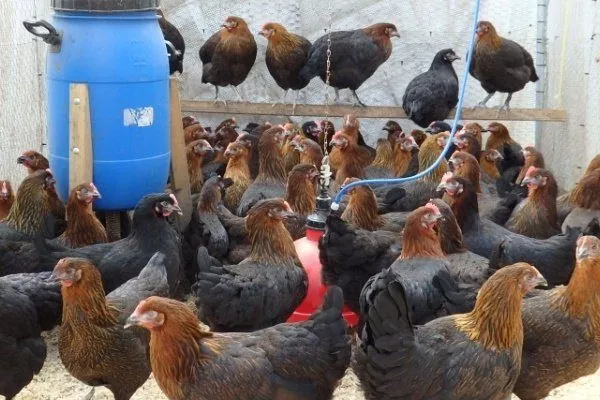
Chicken diseases can be prevented by maintaining a clean coop and proper feeding. It's equally important to vaccinate young birds on time. The table describes the most common chicken diseases and their treatment options:
| Disease | Symptoms | Methods of control |
| Bird flu | An infectious disease. Birds experience loss of coordination and a fever. They may also exhibit constant head rotation and ruffled feathers. Mucus may be secreted from the beak of sick birds. | Isolate the infected bird or slaughter it before the infection spreads to other birds. |
| Dropsy of the abdominal cavity | An infected bird suffers from an enlarged and tense abdomen. The animal feels weak and lethargic. Its gait is tense. | The condition is treated by draining water from the abdominal cavity. Diuretic herbs such as bearberry and horsetail are also added to the drink. |
| Knemidokoptoz (growths on the paws) | A disease that causes scales and bumps to appear on the feet of chickens. This is caused by the burrowing of the scabies mite under the skin. | The most effective drug for solving the problem is considered to be averictin or non-verticin ointment. |
| Ascariasis | Birds become infected with helminths. | It's advisable to treat the disease with medications such as Hygromycin or Piperazine. If worms are discovered in the chicken coop, it's necessary to immediately sanitize all surfaces with boiling water. |
Read more about chicken diseases, their causes, treatment, and prevention. here.
Advantages and disadvantages of the breed
In comparison, Maran has many more advantages:
- Chicken meat and eggs have a delicious taste;
- a thick and durable shell reliably protects against the penetration of parasites;
- the breed is adapted to breeding in any conditions;
- eggs and bird carcasses delight farmers with their large sizes;
- chickens have increased resistance to various diseases;
- Egg products are predominantly a rich brown color, which is why eggs are called “chocolate”.
In addition to these advantages, many poultry farmers note the activity and mobility of chickens, which has a beneficial effect on the fetus.
Profitability of breeding
Marans are a meat-and-egg breed. However, most farmers argue that breeding birds solely for meat production is completely pointless. As for egg production, dark-colored eggs are incredibly popular, especially for their large size.
The eggs of females have a unique taste, and their strong shells ensure safe transportation over long distances, which cannot be said about the product obtained from chickens of other breeds.
Breeding will only be profitable if the goal of the business is to sell unusual dark eggs to gourmets and interested buyers. However, it's important to identify potential buyers (hobbyists or restaurateurs) in advance.
Where to buy and at what price?
Farmers often turn to trusted suppliers for hatching eggs. Today, many poultry farms offer high-quality Maran eggs, as well as chicks and adults of this breed.
Approximate cost:
- hatching eggs – about 300-350 rubles per piece;
- seven-day-old chickens – from 400 to 470 rubles;
- two-week-old chicks – from 480 to 500 rubles;
- six-month-old individuals – from 5,500 to 6,000 rubles.
Farmers can learn more about poultry farm products by visiting their websites, reviewing their offerings and price lists. The websites provide detailed information and descriptions of the breeds offered by the farms. Online orders are also available.
Reviews of Marans chickens
Reviews of Maran chickens are mostly positive, as many have experienced that these hens produce large, high-quality eggs and that their meat has a unique taste.
Under proper conditions, birds gain good weight by 4.5 months. At 5 months, hens begin laying eggs. I have four varieties of birds on my farm. I prefer the copper-black Maran.
Marans chickens are very popular and in demand today. They are prized for their rapid weight gain and large chocolate eggs. Their produce has excellent flavor. Breeding difficulties are rare, and proper housing conditions help maintain population growth while increasing business profits.
Thanks for the article; it was interesting to learn how many different color variations Marans come in. I have black-copper Marans; I got them this year and they're about to start laying. I knew there was a wheaten Maran, but I didn't expect there were so many other colors. I wonder what color eggs other Marans produce. As far as I know, black-copper Marans have very dark eggs, wheaten Marans are a couple of shades lighter, but what about the others? So far, I like my birds; they're calm, and the rooster is turning from a teenager into the king of the yard, growing new feathers—he looks very smart and vibrant!