
Poultry breeders often encounter chickens falling ill for no apparent reason. But illnesses don't arise without reason, and often manifest themselves simply due to improper care, unbalanced nutrition, and other factors. To prevent suffering, it's important to know in advance what diseases your birds are susceptible to.
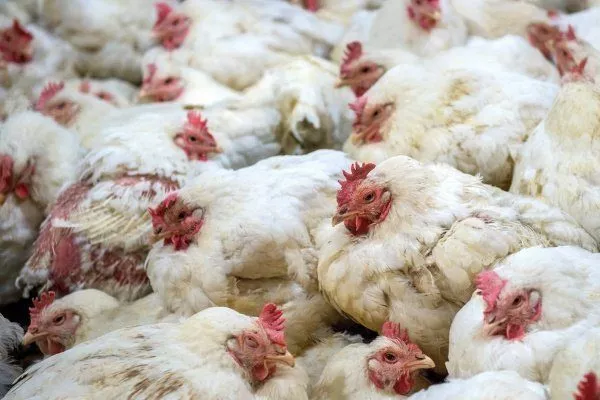
The condition of chickens during illness, the main signs
Almost all infectious chicken diseases caused by bacteria or protozoa are treated with one method: slaughter. Only salmonellosis is treatable. However, there are a large number of diseases that affect birds. The main signs of a chicken with any disease are a drooping head, a hunched back, drooping wings, and a desire to move as far away from other chickens as possible. A chicken's physical condition is determined by the color of its comb:
- With a blue tint. The chicken senses its impending death. In this case, the chicken needs help before it dies.
- Light pink. Indicates circulatory problems and serious illness of the animal.
- Red. Indicates normal blood circulation in the bird.
Checklist: Emergency Measures When Changing the Comb
- ✓ Blue tint: immediate isolation and veterinary examination
- ✓ Pale pink: checking body temperature (normal 40.5-42.5°C)
- ✓ Bright red: food and water monitoring for 3 days
- ✓ Purple spots: urgent analysis for pasteurellosis
- ✓ Whitish coating: examination for fungal infections
In many cases, sick chickens can be used for human consumption, but many poultry farmers prefer to feed the birds to dogs.
There are some infectious diseases of chickens that are dangerous to humans:
- salmonellosis;
- tuberculosis;
- listeriosis;
- pasteurellosis;
- leptospirosis.
If leptospirosis occurs, the chicken should be separated from the main flock and treated with furazlidone (added to water) and streptomycin (mixed with feed) for 20 days.
Bacterial diseases: symptoms
Breeding birds requires knowledge of infectious diseases and their symptoms. This will allow you to quickly resolve the problem without harming other animals or yourself.
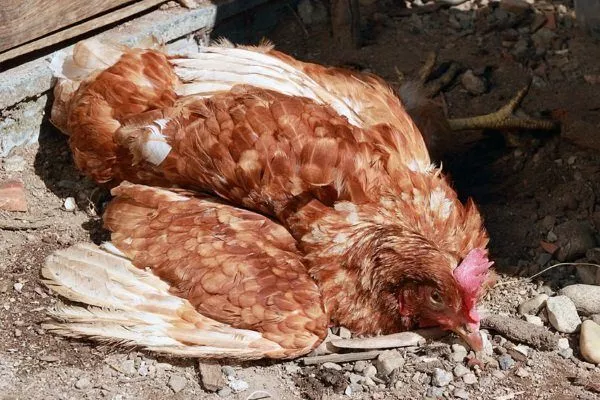
Common bacterial diseases:
- Listeriosis. The disease is caused by a gram-positive, motile rod-shaped microorganism. It often manifests as reddened eyes (conjunctivitis). During the disease, chickens also experience convulsions, culminating in limb paresis, paralysis, and death. A diagnosis can only be made in a laboratory.
- Tuberculosis. Chickens most often suffer from chronic tuberculosis, when the symptoms are subtle. A farmer may notice that the hen has become emaciated and lethargic, and the hens suffer from decreased egg production. This disease can also cause diarrhea and yellowing of the mucous membranes. Very rarely, the disease is accompanied by lameness and swelling on the soles of the feet.
- Salmonellosis. A disease characterized by copious, foamy, runny droppings, apathy, thirst, and loss of appetite. Chickens also develop swelling in their joints. Chickens are most susceptible to the disease. They are infected by other chickens or by consuming food (bone meal, for example) containing salmonella. Adult chickens typically develop a mild form of the disease, as they are carriers of the infection.
- Pasteurellosis. The disease has five distinct forms, each with a different set of symptoms. The hyperacute form is characterized by a normal appearance but sudden death of the bird.
An acute stage of the disease is indicated by a blue comb and wattles. Chickens become aggressive, their pectoral muscles atrophy, and foam comes out of their beaks. The disease is often accompanied by intense thirst.
The acute form of the disease results in the death of the bird within a few days. Subacute and chronic forms exhibit similar symptoms: chickens are emaciated, lethargic, and develop inflamed wattles with abscesses. In the subacute form, chickens die within 5-7 days. The chronic form of the disease manifests itself with rhinitis, conjunctivitis and nasal discharge, and inflammation of the intermaxillary space. - Leptospirosis. The disease causes liver damage, which manifests as yellowing of the skin and mucous membranes. Weak intestinal function, fever, and decreased egg production are also observed.
If any disease appears, do not try to treat the chicken; it is easier to slaughter it to protect it from serious consequences.
Danger to chickens and safety for humans
There are infectious diseases that are not harmful to humans. We'll look at them below.
Egg Drop Syndrome-76
SSS-76 is a viral disease. It affects the reproductive organs of laying hens. The disease not only reduces egg production but also alters the shape and quality of the eggs, causing soft or missing shells.
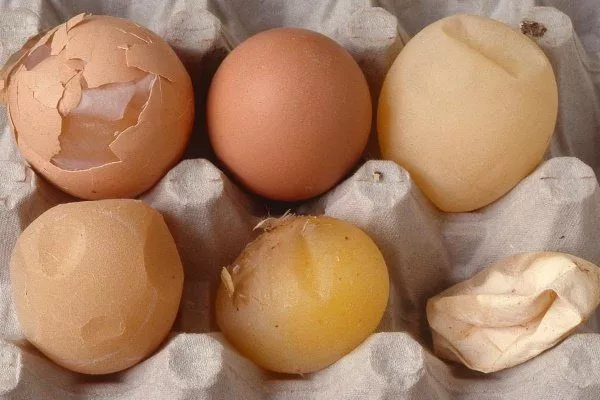
| Parameter | Norm | At SSY-76 |
|---|---|---|
| Egg shape | Oval | Pear-shaped/spherical |
| Shell | 0.33-0.35 mm | 0.1-0.15 mm or absent |
| Egg production | 85-90% | Reduction up to 50-60% |
| Protein | Dense | Watery |
| Yolk | Bright yellow | Pale, displaced |
At risk are hens aged 25-35 weeks, especially those laying brown eggs and breeding hens.
The disease has no characteristic symptoms. Some poultry farmers report ruffled feathers, prostration, and diarrhea in hens. In the later stages of the disease, the comb and wattles may turn blue, but this does not affect all birds. Within 20 days, hens lay deformed eggs, with a 30% reduction in egg production. Keeping hens in cages can restore productivity. There is no treatment. For prevention, laying hens are vaccinated at 5 months of age.
Eimeriosis (coccidiosis)
It is a parasitic infection caused by protozoa. Small birds, no older than 2-8 weeks, are most susceptible. Therefore, it is not surprising when two-month-old chicks begin to die. The incubation period lasts 3-5 days.
Birds experience an acute course of the disease, characterized by thirst, depression, and a sharp loss of appetite, with a refusal to eat. Chicks often huddle together in an attempt to stay warm, with their wings drooping and feathers ruffled. Death occurs within 2-4 days of clinical signs.
At the first signs of the disease, the entire flock is treated with coccidiostatics, which are divided into two groups: those that prevent the development of immunity to eimeriosis and those that allow the development of immunity. The disease is often transmitted through water and feed contaminated with oocytes. To prevent infection, follow veterinary and hygienic rules for keeping chickens. Avoid allowing bird droppings to contaminate water or feed. Animals should be kept in cages that are easily disinfected.
Outbreak Treatment Plan
- Day 1-3: Amprolium 0.024% in feed
- Day 4-7: Salinomycin 60 g/t feed
- Day 8: Disinfection with 3% hot sodium hydroxide solution
- Day 9-14: Vitamin supplements (A+D3+E)
- Day 15: Livestock Inspection
Newcastle disease
The virus is quite stable in the external environment and can also penetrate chicken eggs in utero and survive within the egg during the incubation period. Therefore, sick chicks may be born.
The disease has three distinct progressions, including typical and atypical forms. In the acute stage, the entire chicken coop is affected within a few days. The virus affects the birds' nervous systems, causing difficulty breathing, severe excitability, and limb paralysis. This leads to neck stiffness and impaired coordination.
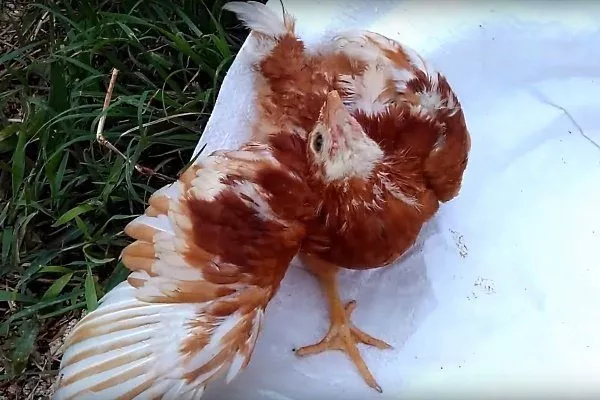
Nervous signs of Newcastle disease
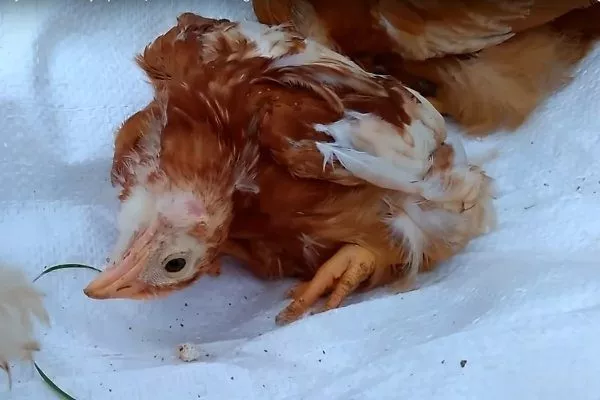
With Newcastle disease, the bird's neck becomes bent and coordination is impaired.
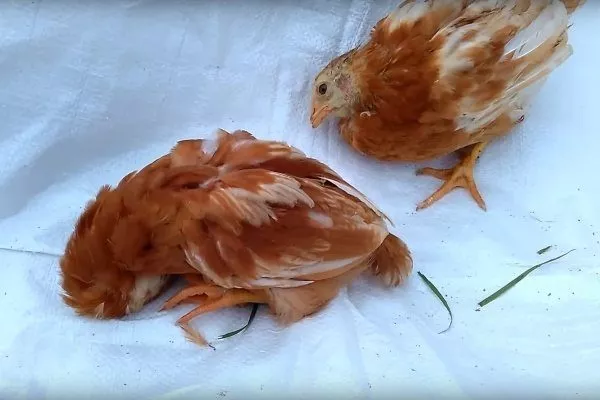
Semi-paralysis of the neck, wings, and legs is observed.
In the typical acute form of the disease, chickens often suffer from diarrhea or die from suffocation. The atypical form of the disease often manifests without characteristic clinical signs, primarily affecting young chickens. The primary preventative measure is adherence to sanitary standards.
Leukemia
A disease caused by oncoviruses that often affects hens over 16 weeks of age. Symptoms include decreased egg production, exhaustion, comb anemia, and diarrhea. Tumors can develop, often in the chest cavity, in the skin, and under the skin.
The disease is incurable. Suspected chickens are isolated or slaughtered. For preventative measures, it is recommended to source young chickens and hatching eggs from farms free of leukemia.
Marek's disease
The disease is known as neuritis, infectious neurogranulomatosis, or avian paralysis. It is caused by a form of herpes. The virus is stable in the environment but is extremely sensitive to common disinfectants: chlorine, phenol, formaldehyde, alkalis, and lysol. The incubation period can last up to five months.
In the acute form of the disease, chickens become emaciated and lethargic, and their egg production decreases. Birds suffer from abnormal postures of the body, head, and limbs. Death occurs in 46% of cases.
In the classic form of the disease, birds experience damage to the nervous system, including paralysis, lameness, and paresis. The eyes become gray, and the pupils take on a pear-shaped or star-shaped appearance. There is no treatment for the disease.
The primary preventative measure is vaccinating chicken flocks with live vaccines. The vaccine used consists of strains of the virus responsible for this disease and strains of the turkey herpes virus. Also, as a preventative measure, eggs are imported during the incubation period only from farms with positive recommendations. Strict hygiene requirements in poultry houses are essential.
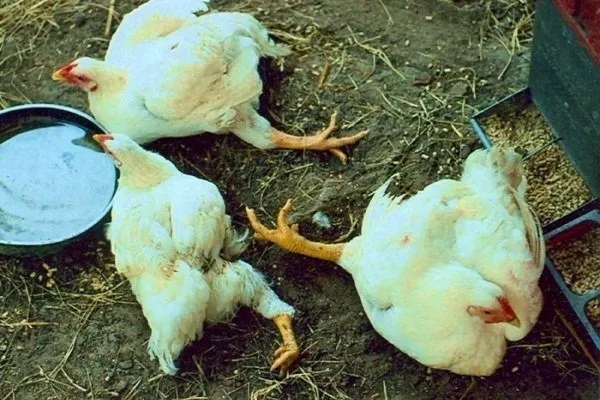
Paralysis of the legs in Marek's disease
Invasive diseases
Invasive diseases are caused by parasites. They thrive in conditions where many chickens are kept in a small area. Invasive diseases include the following:
- Knemidocotosis (scabies mite). It often infests chickens under the scales of their feet, causing swelling. It also frequently appears in feather follicles, causing the chicken to become aggressive, scratching itself and plucking its feathers. Acaricides can help control the parasite.
- Feather eater. When a bird is sick, it develops intense itching on its body, so it tries to get rid of it by plucking its feathers. If a chicken is pecking itself, it's worth checking for a feather mite infestation. This large insect can be seen with the naked eye and sometimes even felt moving on your hand. As with any skin parasite, this pest can be eliminated with any pet products designed for fleas and ticks.
- Helminthiasis. A disease caused by worms in birds. It can be treated with anthelmintic medications. For prevention, deworming is performed every four months.
| Preparation | Dosage | Against what parasites? |
|---|---|---|
| Ivermectin | 0.2 mg/kg | Knemidocoptes, pereaters |
| Piperazine | 0.5 g/kg | Ascaris, Heterakis |
| Flubendazole | 30 mg/kg | Capillaries, syngamuses |
| Albendazole | 10 mg/kg | Cestodes, trematodes |
| Phenothiazine | 1 g/kg | Heterakiasis |
In addition to the diseases listed above, there are many others. One common fact stands out: treatments for infectious diseases have not been developed. Furthermore, most diseases exhibit similar symptoms, making it difficult for the average farmer to diagnose them without laboratory testing.
Bird flu: is it dangerous for humans?!
Avian influenza is a viral disease. There's no point in treating the birds; the disease becomes an epizootic, which can only be stopped by culling. There are several stages of the disease, varying in severity:
- In severe cases of the disease, the chicken's body temperature rises to 44 degrees Celsius (113 degrees Fahrenheit), dropping to 30 degrees Celsius (86 degrees Fahrenheit) before death. Nasal discharge appears, and the mucous membranes become swollen. The comb and wattles also turn blue. The chickens become inactive and quickly fall into a coma. They die within 1-3 days of the onset of clinical signs.
- The moderate severity of the disease lasts for a week. Chickens become weak and depressed, their breathing becomes shallow. Mucus-laced discharge flows from the beak and nose. The birds suffer from diarrhea, which has a characteristic yellow-green tint.
- Mild and moderate cases of the disease kill up to 20% of birds. To prevent the disease, chickens are vaccinated and premises housing sick animals are quarantined.
Checklist: Actions in case of suspicion
- ✓ Isolate suspicious birds immediately
- ✓ Notify the veterinary service within 2 hours
- ✓ Stop the removal of products and inventory
- ✓ Disinfect with a 5% chloramine solution
- ✓ Dispose of corpses by burning
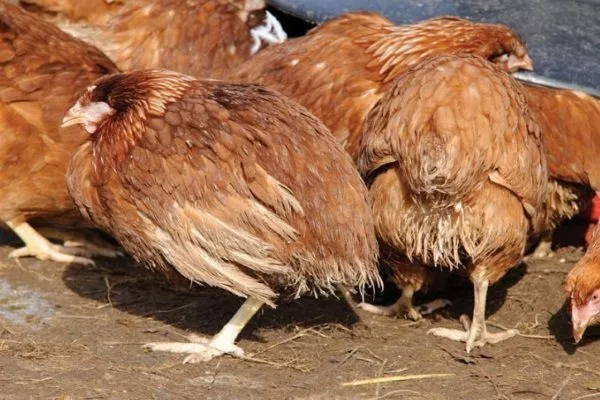
A sick chicken stays aloof and looks depressed and weak.
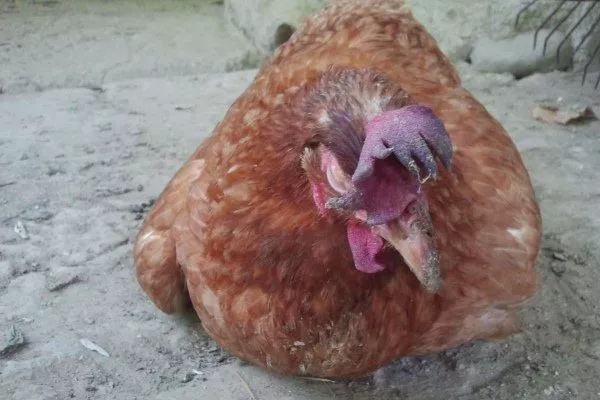
Bluish discoloration of the comb and earrings is often observed.
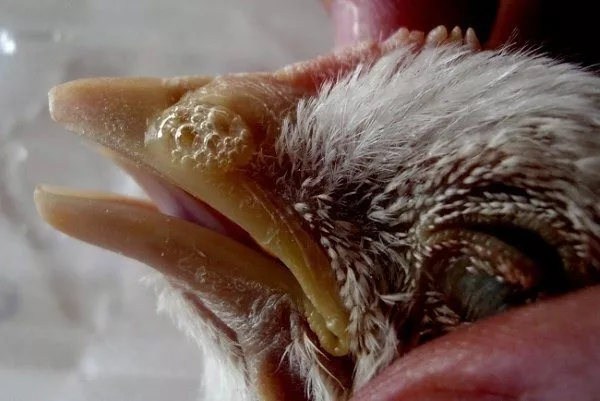
As a rule, there is mucous discharge from the nose and mouth.
Only bird flu with an antigen formula is dangerous to humansH5N1, which has adapted to humans. Without testing, it's impossible to determine the exact strain of the virus in sick chickens. Therefore, in the event of a mass death of poultry, experts recommend culling all chickens and quarantining them to prevent infection of other poultry. Poultry housing conditions should also be reviewed, as poor farm management is the primary cause of the outbreak and spread of influenza.
Winter diseases: what diseases do chickens get?
In winter, the large number of birds in a small coop can cause illness. A lack of micronutrients and vitamins can also lead to bird diseases.
During the winter, birds are most susceptible to eimeriosis, a disease caused by large numbers of hens crowded into a small space. When a farmer notices a decrease in egg production, it's most likely due to shorter daylight hours during the winter. pecking eggsWhen birds sometimes rip out feathers and peck the body down to the flesh, this is stress or a lack of microelements.
In times of stress caused by a lack of space, the birds are given free exercise in an aviary, being brought into the coop only at night. The rest of the time, the chickens should be free-roaming, allowing them to choose whether to enter or exit the coop.
When hens begin pecking at their bodies and eating eggs, chalk and sulfur are added to their daily diet. Once a hen has developed a taste for eggs, it's unlikely she'll stop. If adding chalk and sulfur doesn't improve the situation, the bird is slaughtered.
As a preventative measure, it is recommended to walk the chickens more often and feed them a balanced diet.
What infections can broilers suffer from?
Infectious diseases in broiler chickens are most often caused by improper temperature conditions and poor nutrition. Enteritis can also cause infectious diseases. Broilers can be affected by the following infectious diseases:
- cuticulitis;
- dyspepsia;
- gastritis.
| Parameter | Norm | Critical value |
|---|---|---|
| Temperature | 32-35°C (chickens) | Below 28°C or above 38°C |
| Humidity | 60-70% | 85% or <50% |
| Draft | 0.1 m/s | >0.3 m/s |
| Density | 18-20 heads/m² | >25 heads/m² |
| CO₂ | 0.2% | >0.5% |
Diseases often arise from an unbalanced diet or feeding birds low-quality feed. A simple solution to these problems is to switch your birds to high-quality commercial feed. This will prevent contamination of homemade feed with pathogens.
Birds can develop bronchopneumonia, which occurs when chicks become chilled and a secondary infection enters the respiratory tract. Antibiotics can help combat this problem. If the bird is simply cold but has not yet become infected with pathogens, you can simply move it to a warmer location.
What are the signs of hypothermia?
- trembling throughout the body;
- foamy discharge from the eyes;
- discharge from the nasal openings of the beak.
A simple cold will clear up within a few days; the sick bird should be moved to a room with a temperature of around 40 degrees Celsius. If the chicks are cold and trying to get closer to each other, the room temperature should be increased.
When overheated, birds try to get as far away from the heat as possible; they become inactive and lie with their beaks on the floor. In this case, the temperature is reduced.
Chickens often become ill due to their owners' failure to observe sanitary standards and neglect optimal temperature conditions. Before starting a chicken farm, you should first learn about the diseases you might encounter in this type of business.
To prevent respiratory diseases in my chickens, I periodically smoke them with a Tambey smoke bomb containing fir oil. As a result, all my chickens are healthy and lay an excellent number of eggs.
Yuri, could you tell me where is the best place to buy this saber?
[REMOVED BY SITE ADMINISTRATION. ADVERTISEMENT]