
Kuban Red—that's what farmers call a chicken breed developed by Russian breeders. The official breed name assigned to the layers is "UK Kuban-7." The breed is adapted to local conditions and is marketed as an egg-laying breed.
History of appearance
The Kuban Red was developed in the Krasnodar region in 1995 at the Labinsky breeding farm. The breeders' goal was to create a breed with high egg production. They crossed two chicken breeds—Rhode Island and Leghorn. Essentially, the "Kuban-7" chicken farm is more of a cross (hybrid) than a full-fledged breed. Breeding efforts to improve the hybrid's characteristics are ongoing.
Breeders were tasked with increasing the breed's egg production. When selecting birds for breeding, the developers focused on the following breeding traits:
- dense shell;
- beautiful shell color;
- high commercial quality of eggs;
- large yolk;
- nutritional value of eggs;
- high quality protein;
- high quality meat and marketable appearance of carcasses;
- stress resistance.
As a result, they managed to produce birds with unprecedentedly high profitability.
Description of the breed
Although the Kuban Red is considered an egg breed, it produces high-quality meat and is attractive in appearance. For many chicken owners, the appearance of the chicken is a significant factor when choosing a breed.
A distinctive feature of UK Kuban-7 chickens is their high egg production, which continues even when cold weather sets in. This is important for breeders who don't have heated coops.
The Kuban Red is a very young breed, but it has already become popular. The reasons for its popularity are obvious:
- high egg production;
- minimal feed costs.
Thanks to the combination of the above factors, Kubanka is very profitable for creating a chicken business.
Other distinctive features of "UK Kuban-7":
- Within a month after hatching, males and females can be distinguished from each other.
- To ensure that most of the eggs are fertilized, it is enough to have one rooster for every ten hens.
- To ensure that the egg production of Kuban hens does not decline, they are not bred for laying eggs; the care of their offspring is entrusted to hens of less productive breeds.
- Vigorous, non-confrontational, and moderately curious, these birds are calm and phlegmatic. They easily change habitats, moving from the coop to the outdoors and vice versa.
Exterior
The Kuban Red chicken is no different from other egg-laying breeds. Appearance characteristics are listed in Table 1.
Table 1
| External feature/characteristic | Description |
| Body | compact, without excess weight |
| Neck | short, set high |
| Head | small |
| Breast | wide, with developed muscles, smoothly transitioning to the belly |
| Crest | bright red in color, leaf-shaped, earrings and earlobes are red |
| Paws | powerful and short |
| Wings | tight-fitting to the body |
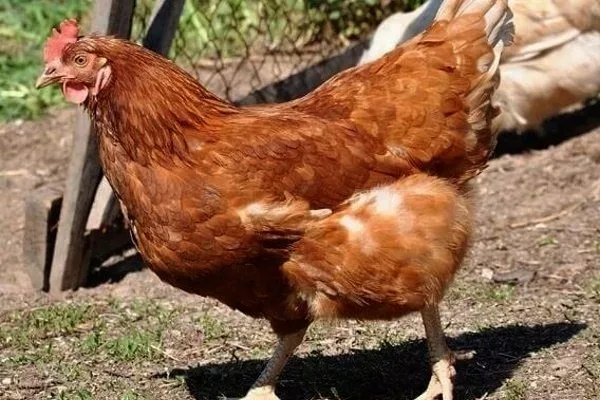
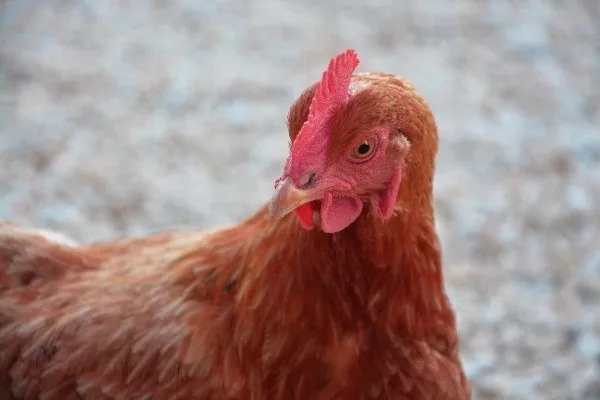
| Plumage | reddish-brown in color (sometimes black and white feathers are found in the plumage), the ends of the tail and wings have a grayish tint |
| Weight | chicken – 2 kg, roosters – 3 kg |
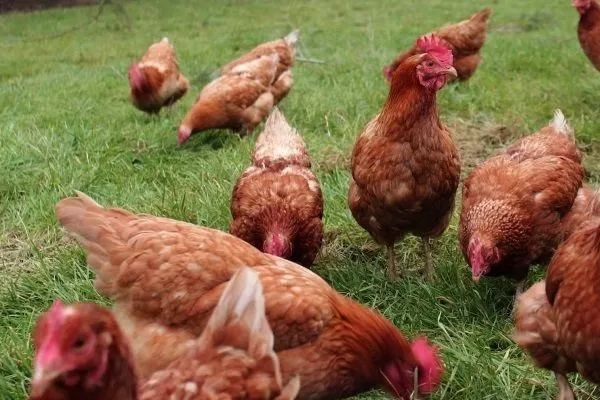
The chicken is a small bird. Among its fiery red plumage are gray speckles on the tail and wings. The leader of the flock is also not particularly large. And in appearance, it is not particularly different from the hens. Perhaps a bit larger and more masculine in appearance. The rooster differs from the hen in its more powerful legs, broad chest, and long comb.
Productivity
Kuban Red hens are bred for their eggs. Therefore, their primary productivity characteristic is their egg production. This breed is considered precocious – they can lay eggs as early as four months after birth. Meat breeds don't acquire this ability until six or even eight months of age.
Eggs
A single hen can produce up to 340 eggs per year. However, such productivity is only achieved with high-quality care. With average care, egg production drops to 250 eggs per year.
| Indicator | Kuban Red | Loman Brown | Hisex Brown |
|---|---|---|---|
| Egg production (pieces/year) | 250-340 | 300-320 | 280-320 |
| Egg weight (g) | 55-60 | 60-65 | 63-70 |
| Age of onset of laying | 4 months | 4.5 months | 4 months |
| Peak productivity | 10-11 months | 8-9 months | 7-8 months |
| Period of high productivity | 1.5-2 years | 2-2.5 years | 2-3 years |
To achieve maximum profitability, laying hens must be provided with a properly formulated diet and good living conditions. Each egg weighs 55-60 g.
Meat
The meat of this cross is dietary. It is tender, juicy, and not at all fatty. Females weigh 2 kg, males 3 kg. The meat yield at slaughter is 55-60%. A single hen can yield a carcass weighing 1-1.5 kg.
Puberty and motherhood
The Kuban Red hens are distinguished by their exceptionally early maturity. They are already capable of reproduction—laying eggs—at four months, which is exactly what breeders require. The eggshells only acquire the necessary qualities two weeks after the start of laying. The shell color is golden or light brown. The farmer's job is to support the young hen in her egg-laying career by replenishing her calcium.
If you don't give your hen calcium supplements in time, she'll peck at the eggs she lays. This behavior can become a habit over time.
Eggs reach their maximum size when the hen is six months old.
Females have a well-developed maternal instinct and are good egg-laying brooders. The key is to provide them with everything they need during incubation. If desired, the eggs can be placed with hens of other breeds to avoid distracting productive hens from laying eggs.
To breed a crossbreed without having to deal with chicks, you need to take 4-month-old birds.
Content Features
The Kuban Red breed has a fairly strong immune system, provided the birds are kept in good conditions and receive adequate nutrition.
Care
Like any breed bred for cages, UK Kuban-7 dislikes dampness above all else. The birds require the following conditions:
- The chicken coop must be dry.
- The room must have forced ventilation. As a last resort, open a window to regularly ventilate the coop.
- There should be no drafts in the room where the chickens are kept.
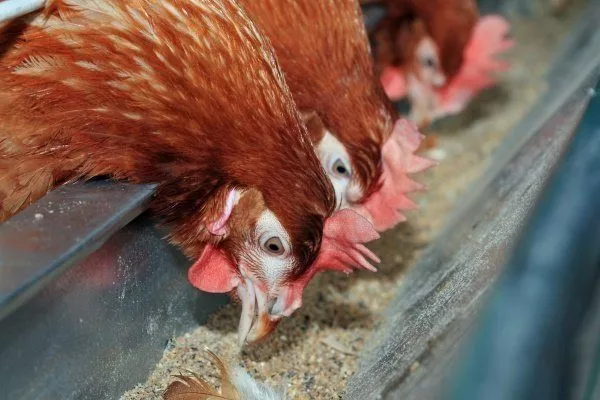
- The room must be kept clean. To achieve this, waterers and feeders are placed above the floor to prevent the birds from contaminating the litter with water and food. The height should be such that each bird can easily eat and drink, but cannot climb into the trays with their feet.
- Egg-laying nests are provided—wooden boxes placed on the floor and lined with straw, which is changed regularly to keep the eggs clean. Nests can also be placed on walls, 80 cm above the floor, or on stands equipped with ladders to make them easy for the hen to climb.
- To prevent a decrease in egg production during the cold season, laying hens are given an extended daylight period of up to 12 hours using artificial lighting.
- The temperature in the room where the hens are kept should not drop below -2°C. This breed is heat-loving, and in cold weather, the birds can freeze their combs. Furthermore, in need of energy—to stay warm—the hens begin to consume feed more intensively. To maintain egg production, the temperature in the coop should not drop below +10°C.
- The breed doesn't like heat. If the temperature rises above 27°C, the birds refuse to eat, and the eggs have poorly-shelled eggs—too thin. Sometimes, during the hot season, hens lay eggs without shells at all.
- The optimal temperature range is 17 to 19°C. Such conditions can only be achieved for laying hens in specialized poultry farms equipped with climate control systems.
- The chicken coop should be completely cleaned twice a year. The walls are painted with whitewash. The frequency of painting depends on the flock size. If the flock has fewer than 100 birds, paint it once a year; if there are more than 100 birds, paint it four times a year.
- If the coop is unheated, lay thick bedding on the floor—straw or sawdust. The bedding should be at least 20 cm thick.
If you don’t have a place for breeding birds on your farm, then we recommend reading the article about How to build a chicken coop yourself.
Feeding
The UK Kuban-7 cross is productive when fed the right diet. Grains should make up 50% of the chicken's diet. The breed requires protein, so its diet includes feeds containing both plant and animal proteins.
The bird is fed:
- peas;
- soy;
- alfalfa;
- cottage cheese;
- whey;
- meat and bone meal;
- meat broth.
To ensure that chickens receive the required amount of calcium, they are fed chalk, crushed eggshells, and shells.
Birds can be fed finely chopped fish - they eat it willingly, but it should be taken into account that their meat will have a specific smell.
In the spring, the feed is enriched with vitamin and mineral premixes. In the summer, fresh grass and garden greens are introduced into the chickens' diet. Hay is prepared for the winter – clover and alfalfa. The hay should have leaves. In dry hay, chickens will only peck at dried leaves and petals. Hard straw is unsuitable – there's nothing for the chickens to eat in it. Once the birds have pecked at all the tasty things – leaves and flower petals – the hay can be used for bedding.
The birds are fed wet mash prepared with cottage cheese, whey, or broth. This feed is given little by little to prevent it from stagnating in the feeders. In hot weather, such mash will quickly turn sour, and chickens eating stale feed will develop digestive problems. The mash should not sit in the feeder for more than half an hour.
Laying hens need to be fed twice a day. Grain is supplemented with:
- legumes;
- compound feed;
- bran;
- vegetables;
- grass.
Water bowls should always be filled with water—change it once a day in winter and twice a day in summer. It's recommended to add nettle infusion to the water in winter to replenish the bird's vitamins.
An approximate daily ration for laying hens (per head) is shown in Table 2.
Table 2
| Feed | Daily requirement, g | |
| summer | winter | |
| Cereals (grains) | 45 | 55 |
| Grains and legumes | 5 | 5 |
| Flour feeds | 20 | 20 |
| Oilcake, meal, yeast | 7 | 6 |
| Animal feed | 5 | 5 |
| Greens, root vegetables, tubers | 55 | 20 |
| Hay, coniferous, and herbal flour | — | 5 |
Laying hens must be fed grain—oats, wheat, corn, and barley. Feed the grains one at a time, not all at once.
Benefits of grains for chickens:
- Wheat – rich in vitamins A and E. It is a source of protein and can make up 60% of the total feed weight.
- Barley – improves the quality characteristics of meat.
- Oats – a source of fiber.
- Corn – needed to increase egg production.
During warmer months, when grass feed is available, chickens' diets should consist of about 40% grass. This is both beneficial for farmers and beneficial for the chickens. Chickens can also be given additional supplements in the summer:
- nettle;
- zucchini;
- pumpkin;
- cucumbers;
- beet tops, radish tops, etc.
You might also be interested to know, How to make a DIY herb chopperto save time on preparing feed for chickens in the summer.
Breeding
Kuban Red hens are bred at a ratio of 1 rooster per 10 hens. Hens are rarely used for incubation. Firstly, it's more profitable to lay eggs under hens of other, less productive breeds. Secondly, Kuban Red hens are supposedly good brood hens, but not as good as their parent breeds.
The best breeding methods:
- entrust the eggs to hens of other breeds;
- put the eggs in the incubator.
All the intricacies of incubating chicken eggs at home are describedhere.
The chicks are golden when they hatch. They only turn reddish after molting. Ninety-five percent of hatchlings survive.
How to increase egg production?
Peak laying productivity in hens occurs at 10-11 months. In home-raised hens, this age usually falls in the fall and winter. During cold weather, the birds require extra care—warmth, light, and adequate feeding.
To increase egg production of laying hens, it is recommended:
- Increase daylight hours, including artificial lighting. The optimal daylight duration is 15 hours.
- Maintain the temperature in the chicken coop at 16-23°C. Any deviation in either direction immediately reduces egg production by 10%.
- Feed your birds premixes and concentrated feeds. Chickens become satiated quickly and feel fuller for much longer than when fed regular feed. The vitamins and minerals contained in special feeds strengthen their immune system and replenish any missing nutrients.
- Create comfortable nests.
- Ensure the coop is quiet. There should be no loud noises or stress.
Only 20% of egg production is determined by the breed of chicken. 80% is due to the farmer, who feeds and manages the birds properly. The productivity of Kuban Red hens can reach 90% or more.
Care and maintenance in winter
During the winter period, the diet of laying hens is adjusted:
- The number of feedings increases from two to three times per day. Mashed and succulent feed is given in the morning and at lunch, and dry food is given in the evening. Roughage takes longer to digest, providing the bird with energy until morning.
- Green fodder prepared in summer is introduced into the diet - hay, dried nettles, branches of coniferous trees.
- Grain porridge, mash, vegetables, and melons are introduced into the diet.
- Supplement the diet with sprouted oats, seeds and sunflower cake.
- They are fed fish meal and bone meal. Fish oil is added to the roughage.
- The introduction of cottage cheese, whey, and skim milk into the diet has a positive effect on egg production.
- They give calcium by placing a container with sand, pebbles, and shells in the chicken coop.
It's important to remember that overfeeding negatively impacts egg production. In winter, overfed hens gain weight and, losing energy, lay fewer eggs.
Features of keeping chickens in winter:
- One bird receives 150 g of feed. If the feeders are empty by the next feeding, the norms are correct.
- First feeding – 6-8 am. Lunch – 1 pm. Dinner – 5-6 pm.
- ✓ Maintain humidity in the chicken coop at 60-70%
- ✓ Provide a bedding layer of at least 20 cm
- ✓ Control the temperature at +12…+16°C
- ✓ Organize a walk at temperatures above -10°C
- ✓ Add fish oil to the feed (0.5 g per head/day)
- ✓ Use sprouted grains (5-7% of the diet)
- In the morning they give mash, before nightfall - grain of cereal crops.
- You can feed your chickens table scraps. However, feeding them baked goods, black bread, or meat is prohibited. Potatoes should only be boiled.
A warm chicken coop is set up for winter. The birds can be kept in a special coop or a polycarbonate greenhouse. Here's how to prepare a place for chickens in a greenhouse:
- remove all debris and excess soil from the premises;
- eliminate the presence of drafts;
- organize ventilation in the room;
- install lighting;
- sprinkle the floor with straw bedding.
Raising chickens
When hatched, chicks can't peck properly yet. Their stomach sacs contain a small amount of nutrients that help them survive for a few hours. Once the chicks are dry, they should be immediately offered food—a complete, proven, high-quality, and nutritious diet.
The chickens' living area must be kept clean. It is recommended to use feeders that the chickens cannot reach with their feet. Any uneaten food must be carefully removed before introducing fresh feed.
The chicks' well-being is closely monitored. Weak or "sad" chicks are removed from the flock and raised separately. Those that refuse to eat are force-fed by inserting softened food into their beaks. The food can be administered with a pipette or a needle-less syringe. The chicks' diet depends on their age.
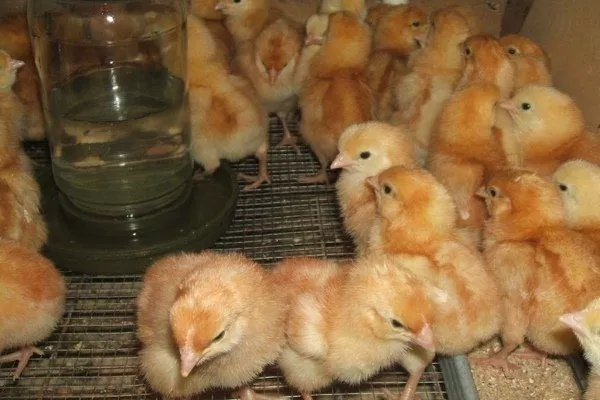
Step-by-step diet for egg-laying chickens:
- Newborns. Fine corn grits are suitable for feeding. Hard-boiled eggs are not recommended now, as veterinarians say they can be hard on chickens' stomachs.
- Daily allowance. The following foods can be introduced into the diet:
- barley, corn and wheat groats;
- semolina;
- millet;
- ground oatmeal.
Day-old chicks are fed at two-hour intervals. Don't mix grains; it's best to feed them separately.
Fresh water should always be available in the waterers. It should be replaced regularly, as chickens like to dip their feet into the water. If they develop diarrhea, replace the water with a weak solution of potassium permanganate.
- 1-3 days: 8-10 times a day (every 2 hours)
- 4-10 days: 6-7 times a day
- 11-30 days: 4-5 times a day
- 31-60 days: 3-4 times a day
- Older than 2 months: 2-3 times a day
- Up to one week. Grain alone is not enough for the chicks' full development. It is recommended to gradually introduce cottage cheese, a source of calcium and nitrogen, into their diet. Initially, it is added to their regular food, and if there is no digestive upset, it is given plain. From three days on, kefir, yogurt, whey, and fresh herbs can be introduced:
- nettle;
- clover;
- dandelion;
- plantain.
The leaves are given in a slightly dried form, pre-cut into small pieces. On the fifth day, green onions can be introduced to prevent infections. Grated vegetables such as beets, pumpkin, and carrots are also gradually introduced. At this age, vitamin supplements with yeast are given.
It is strictly forbidden to give milk to chickens - it causes diarrhea and feather sticking.
- More than a week. The diet is mixed—cereals, greens, fermented milk products, and vitamin and mineral supplements. As the chicks mature, feeding frequency is reduced to 4-5 times per day. After feeding fermented milk products, dishes are thoroughly washed, scalding them with boiling water.
- Month. Month-old chicks should be allowed to roam freely—they can already forage for food on their own. Coarsely ground grain is gradually introduced into their diet. Feed them a wet mash with bone meal and food scraps. After another two weeks, whole grain can be introduced. Avoid crushed shells—it's quite possible that they'll eat the eggs. It's better to feed them ground shells.
- After three months. You can give industrial compound feed.
Chicken feeding schedule
Why do chickens lose feathers?
Chickens can lose feathers for various reasons:
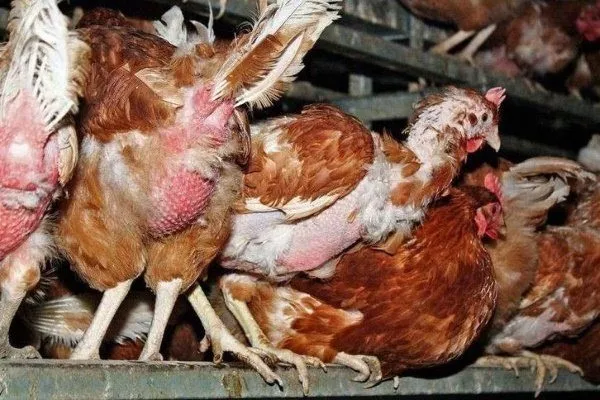
- Molting. This is a seasonal phenomenon. Chickens lose their feathers in a specific order. First, the feathers on the neck fall out, then the back, then the belly and wings. Young chickens molt in the spring, while adult chickens do so in the fall. The molt lasts 1-2 months.
- Rooster aggression. When a rooster fertilizes a hen, he clings to her back and sides with his claws. If the 10:1 ratio (one rooster for every 10 hens) isn't met, problems can arise. If there aren't enough roosters, the chances of fertilizing eggs decrease. Conversely, if there aren't enough hens, the rooster overworks—stomping on each hen several times a day, causing the hens to lose feathers.
- Stress. Changing coops can cause stress. The move can cause chickens to refuse food, move less, and even lose feathers. Adaptation usually takes two weeks.
- Diseases. Feather loss can be caused by vitamin deficiency, which occurs due to poor nutrition. A lack of vitamins is why hens stop laying eggs and become unsightly, losing not only their feathers but also their down.
- Parasites. Birds can lose their hair due to parasites such as fleas and ticks. To combat these parasites, special medications or ash are used.
What diseases do chickens get?
Although Kuban chickens have excellent immunity, they are still not immune to disease. Most illnesses are associated with parasites that infest the chickens, so it's important to create all the necessary conditions to prevent their occurrence. Symptoms that indicate the presence of disease should alert breeders:
- the bird is lethargic;
- no interest in food;
- does not move, sits with his eyes closed;
- loss of plumage – the first symptom of the presence of skin parasites.
These signs are enough to make you suspect something is wrong and take a closer look at your bird. You may notice the following symptoms:
- foam in the beak;
- there is mucus in the nose;
- diarrhea;
- unkempt, disheveled appearance;
- severe loss of plumage.
What diseases can Kuban Red chickens suffer from?
- Infectious. These are the most dangerous diseases that rarely result in recovery. Among these dangerous diseases are, for example:
- Pasteurellosis. There is a high temperature, foam is coming from the beak and nose, breathing is hoarse, the comb is blue, and there are blood clots in the droppings.
- Chicken pox. The head and other parts of the bird's body become covered in red spots. These become rougher and turn yellowish-brown. The hen becomes aggressive, refuses to eat, and may lose her sight.
- Parasitic. Birds can have mites, bedbugs, fleas, helminths, and other parasites. Symptoms of parasites include loss of appetite, weight loss, feather loss, and down loss. A rapid decrease in activity and loose, yellow stools indicate the presence of worms. Parasite prevention involves installing baths filled with sand and ash. Parasites are dangerous not only to chickens but also to humans.
- Non-infectious. These are the most common diseases. They are caused by poor nutrition, non-compliance with housing rules and conditions, and irregular feeding schedules. Non-communicable diseases include:
- apteriosis and hepatosis - due to irregular feeding;
- pneumonia and conjunctivitis - due to hypothermia;
- poisoning - consumption of bad food.
Prevention
To ensure healthy laying and disease-free egg production, hens need preventative vaccinations in addition to proper housing and feeding. Young birds can be vaccinated against the following diseases:
- infectious bronchitis;
- salmonella;
- bursitis;
- mycoplasmosis and others.
The schedule of preventive vaccinations is in Table 3.
Table 3
| Age for vaccination | Disease |
| Hatching day | Marek's disease |
| The second day of life | salmonella |
| 6-7th day | coccidiosis |
| End of the third week | infectious bursitis |
Maintaining cleanliness is also a preventative measure. The chicken coop should be thoroughly cleaned. This is especially important during the winter, when the birds are indoors 24/7. Regularly clean feeders and waterers, replace the straw on the floor, and keep the perches clean.
Advantages and disadvantages of the breed
Kuban Red chickens are a real find for beginning farmers. Despite their light weight and low feed intake, they lay eggs tirelessly.
Advantages of the breed:
- They are easy to care for and maintain – suitable for beginning farmers.
- High egg production – one individual can lay up to 340 eggs per year.
- Calm temperament. Not only hens, but roosters too, are phlegmatic.
- Good adaptation. Chickens typically get used to a new location in about a month, but Kuban Red hens adapt twice as quickly.
- They are undemanding in their diet and can eat any food. No pre-processing is required.
- The hens and roosters get along well with each other - without any conflicts.
- Early maturity – birds reach sexual maturity at 4 months.
- You can distinguish roosters from hens already at the age of 1 month.
- The chickens gain weight quickly and have a high survival rate (up to 95%).
The breed is practically perfect—its advantages can only be lost if feeding and housing are not properly managed. Once owners acquire Kuban Red chickens, they never give them up—their advantages over competing breeds are so obvious.
Disadvantages of Kuban Red layers:
- Temperature requirements. Temperatures outside the favorable range immediately affect the hens' egg production.
- Egg production decreases with age.
- A relatively short period of maximum productivity.
Reviews of the breed
The Red Kuban breed is an excellent choice for both home and commercial farming. Characterized by high egg production, these hens are inexpensive—a young female can be purchased for as little as 500-550 rubles.