
Alopecia is the complete or partial loss of feathers in chickens. Farmers encounter this avian disease quite frequently. There are many causes, and failure to respond appropriately and promptly can lead to serious complications.
Causes of alopecia
The causes of alopecia in chickens are numerous. The condition can arise due to:
- Improper nutrition. Birds often begin to lose feathers due to an unbalanced or improper diet. A deficiency of vitamin A and B vitamins, as well as various micro- and macronutrients (sulfur, calcium, iodine, manganese, and phosphorus), can negatively impact plumage. Furthermore, chickens may experience feather loss if they consume cow thyroid for a long period of time.
- Lack of food. A proper and balanced daily diet doesn't guarantee that a chicken's feathers are safe. Feeding may simply be insufficient. This is especially true during periods of natural feather shedding: feathers fall off, and the chicken doesn't have enough nutrients to support new growth, leading to an imbalance and vitamin deficiency. As a result, the bird becomes completely featherless.
- Poor conditions of detention. Unsanitary conditions in a poultry house will not make any chicken healthy. Inappropriate humidity and temperature conditions, as well as insufficient artificial lighting and sunlight, have a detrimental effect on the birds' overall well-being, and especially on their plumage.
- Lack of walking. For many chicken breeds, ranges play an important role. Not only does it provide an opportunity to forage for food and replenish essential nutrients and vitamins, but it also provides a source of vitamin D, which is essential for these birds to maintain healthy feathers.
- Parasites and diseases. A common cause of hair loss in these birds is feather-feeding parasites. Lice, mites, feather eaters, and fleas can all cause alopecia in chickens. Feather damage by larger pests, such as rats and mice, is also possible.
- Breed. Alopecia most often affects meat and meat-egg breeds of chickens, but this disease can occur in both laying hens and decorative breeds.
- ✓ Make sure the supplement contains vitamin A and B vitamins, as well as trace elements: sulfur, calcium, iodine, manganese and phosphorus.
- ✓ Check the expiration date of the supplement and its storage conditions.
It's important to remember that chickens can lose feathers not only as a result of negative factors. These birds are characterized by molting—a natural process of feather renewal. There are several types of this phenomenon:
- Juvenile molt – the very first. It is associated with changes in the bird's physiological state during its intensive growth and development. The primary feather is replaced by the secondary (so-called definitive) feather. As a rule, the juvenile molt occurs when the chick is about one and a half months old.
In any case, if a bird is rapidly losing feathers and new ones aren't growing, it's worth consulting a veterinarian. It can be extremely difficult for novice farmers to distinguish between molting and alopecia.
- Seasonal change of feathers. This is the body's response to changes in environmental conditions. Periodic molting in good-quality chickens typically occurs in the fall and can last up to two months, during which time the hens rapidly lose their feathers.
Symptoms
This condition can be detected with due attention and vigilance. Alopecia is characterized by a specific pattern of feather loss and other symptoms:
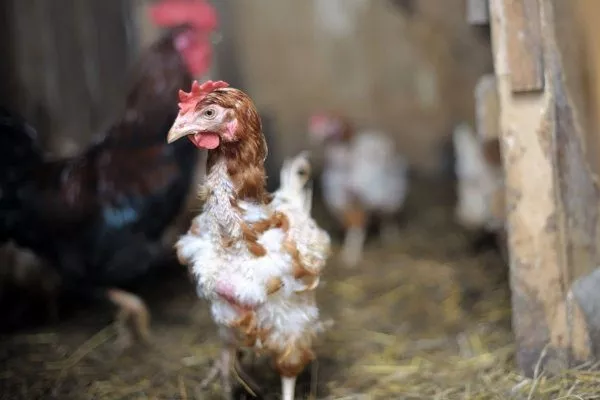
- The first thing that happens is that the feathers disappear from the chicken's back and neck.
- Next, the tail, belly, and chest become bald. The process can continue until the bird is left virtually or completely hairless.
- Along with the loss of feathers or immediately after, down also falls out.
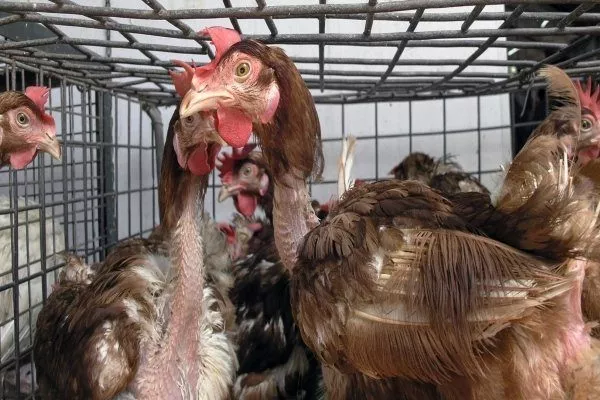
- In areas without feathers, skin inflammation and bruising may be found.
- The remaining feathers often lose their natural color and become inelastic.
What's the danger? Possible complications and consequences
It's not so much the danger of alopecia itself as the consequences it can lead to without timely and proper treatment. Complications of this condition include:
- Decrease in egg production. Initially, hens with alopecia begin laying eggs less frequently, and eventually stop laying eggs altogether. Such a hen is then suitable only for slaughter.
- Deterioration in egg quality. Chickens with this disease suffer not only from poor egg production but also from poor egg quality. Eggs become small, contain fewer nutrients, and raising chicks from them poses significant challenges for farmers.
- Poor weight gain. Even with proper and balanced nutrition, bald chickens gain weight extremely slowly, which entails additional costs, since a healthy chicken requires significantly less feed to gain weight.
- Cannibalism. Cannibalism is not uncommon in a flock of chickens with alopecia. Birds peck each other until they bleed, creating additional conditions conducive to infection by various pests.
- Susceptibility to diseases. Chickens with this disease have a significantly increased risk of contracting various infections.
- Financial losses. Loss of feathers can lead to a loss of attractiveness in birds. A sickly-looking chicken is unlikely to be purchased, which can lead to lost profits.
Diagnosis and treatment
There are several ways to confirm a diagnosis of alopecia. The first, most reliable, is to consult a veterinarian, who will be able to diagnose the condition and prescribe appropriate treatment for the bird. The second, for experienced poultry farmers, is to thoroughly examine the chicken and monitor for hair loss and other associated symptoms.
Traditional methods
Folk remedies are most often used to treat alopecia in chickens. Two methods are the most effective and time-tested:
- Recycling of fallen feathers. After grinding them into flour, the owner of sick birds needs to add the resulting mixture to the chicken feed: a free supplement rich in cysteine can lead to the active growth of new feathers and down.
- Use of horns and hooves. Ground beef provides birds with a high concentration of nutrients—vitamins, macro- and microelements. This method also helps eliminate sulfur deficiency, which negatively impacts plumage.
You can also replenish sulfur deficiency in chickens with feed sulfur—a yellow powder. The required amount of powder is added to the chickens' feed. Recommended dosages are usually specified in the instructions.
Folk remedies can help correct dietary deficiencies in poultry. However, if this isn't the cause of alopecia, these methods will only promote new feather growth, while the underlying cause will still need to be addressed.
Improving conditions of detention
If chickens are kept in poor conditions, they need to be improved to treat the birds. To do this, take the following steps:
- A lack of vitamin D, which birds get from sun exposure, is a common cause of feather loss. This is especially true for those who keep chickens in cages. If it's not possible to provide the birds with access to fresh air for at least an hour and a half a day, the coop should be equipped with ultraviolet lamps, which can compensate to some extent for the lack of sunlight.
- Cleanliness and hygiene in the chicken coop are the key to beautiful feathers. Therefore, regular cleaning and disinfection are essential to remove dirt and harmful ammonia fumes caused by decomposing chicken excrement. Disinfection is essential not only for surfaces but also for all equipment in the coop, from perches to waterers.
- Ventilation installation also plays a significant role in poultry housing. It ensures a regular supply of fresh air and removes unpleasant odors from the coop.
Read more, How to build a chicken coop yourself.
- Check and insulate the walls and roof of the chicken coop.
- Provide supplemental lighting to compensate for short daylight hours.
- Increase the amount of feed, taking into account the increased energy expenditure of birds during the cold season.
Artificial molting
One treatment for alopecia is forced shedding. To do this, follow these steps:
- Deprive the chickens of food, water, and light for three days, or otherwise influence their bodies. At the end of this period, the birds will begin to lose their feathers, becoming virtually bald.
- Feed them grain for a week: 20 grams on the first day, increasing to 110–120 grams on the seventh. Grain should then be replaced with a complete feed.
- Daylight hours should be gradually increased to 12-14 hours.
- On the tenth day, the birds should be transferred to a diet with a high energy content, amino acids and other nutrients that accelerate the formation and growth of new plumage to replace the lost one.
- At the end of the artificial molting procedure, the birds should be transferred back to standard compound feed.
Getting rid of parasites
Chickens are quite often susceptible to parasitic infestations. Mites are most active at night, so it's important to check your birds for bloodsuckers at that time.
Mites, feather eaters, and lice eaters produce a cotton-like substance during their life cycle—this is their primary habitat and breeding ground. If such a mass is discovered during an inspection of the animal, it should be destroyed immediately. Parasites that eat down and feathers in chickens should be looked for at the base of the feathers.
Any parasite leaves excrement on the skin of birds - it can be seen by parting the feathers enough.
Special baths can help get rid of any parasites. Fill a large container with ash or sand. This will help the chickens clean their feathers and thus naturally remove the parasites.
Mice and rats are also common pests of chickens' feathers. Parasites in the coop should be poisoned (or mousetraps installed). A concrete floor and sealed cracks will reliably protect the birds from further rodent infestations.
| Method | Efficiency | Time of action |
|---|---|---|
| Ash baths | High | Long-term |
| Chemicals | Very high | Short |
Modern treatment
In some cases, adjusting the diet and improving living conditions aren't enough to restore healthy feathers to the birds. In these situations, specialized medications can help:
- Gamavit. A product that modifies immunity in chickens weakened by diseases and parasites.
- Chiktonik. A complex multivitamin preparation that helps compensate for microelement deficiencies in the chicken's body.
- Desi spray. A spray that helps eliminate skin lesions that form where feathers and down are lost. It also has antibiotic and wound-healing properties.
Specialized feed mixtures are also considered medicinal. They are designed to restore lost feathers. The most well-known preparation is Operin.
Diet
Experience shows that the most common cause of alopecia is poor nutrition. Chickens, like humans, require a proper diet rich in various beneficial minerals and vitamins.
However, alopecia can occur not only from low-quality feed but also when chickens don't eat enough, so poultry farmers must ensure their birds are never hungry. Calculating the required daily feed amount for a flock can be done empirically.
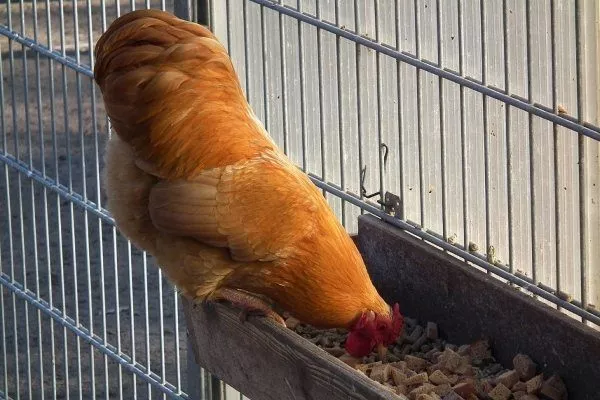
The following tips will help you improve your poultry's diet:
- Add essential vitamin and mineral supplements directly to the feed. These supplements contain all the essential nutrients chickens need. These supplements can be purchased at any veterinary pharmacy, pet store, or specialized online retailer. Mineral supplements such as "Ryabushka," "Capital Prok," and "Solnyshko" are popular among farmers.
- Each portion of chicken feed should contain sulfur or Glauber's salt. The ratio is as follows: 3 milligrams of sulfur or 1 milligram of salt per chicken.
- Folk remedies such as feather or horn and hoof flour are not only effective in combating existing alopecia but also serve as a beneficial dietary supplement.
- Greens are also an important part of the chickens' daily diet, and for the birds' health, they need to be provided in fairly large quantities. During the summer, the chickens can forage for them themselves while free-range, and in the winter, pre-prepared grass meal can be a helpful aid.
- From time to time, it would not hurt to feed the chickens with manganese sulfate and potassium iodide at the rate of up to 8 milligrams of manganese and up to 4 milligrams of potassium per chicken.
- If alopecia progresses rapidly and the hen loses more and more feathers each day, vitamin B should be urgently added to the diet. This supplement will not only promote feather restoration but also improve amino acid metabolism.
- The diet of chickens with alopecia should contain fairly high doses of calcium, which is essential both for the formation of new feathers to replace lost ones and for the overall health of the birds. Chalk contains a large amount of this nutrient, but special calcium-rich medications are available from veterinarians.
- Every other day, chickens should be given a weak solution of potassium permanganate (iodine will also work): this will help normalize the level of microelements in the birds' bodies.
- In general, when planning your pet's daily menu, it's best to focus as much on protein as possible and as little on fat as possible. This nutritional distribution will help broilers and layers recover even more quickly, fully restoring their feathers in the shortest possible time.
Preventive measures
If the chickens have good plumage (this is especially true for ornamental breeds), and the owner wants to keep it that way, it is necessary to follow a number of simple rules:
- Do not feed beef thyroid gland to chickens. Violating this rule will almost always result in bald birds.
- During shedding, pets should be given food with a high content of organic sulfur: cabbage leaves, legumes, blood and bone meal.
- Feed must be available in sufficient quantity to keep the chickens well-fed. It must also be rich in essential vitamins and minerals.
- Frequent cleaning and disinfection of the chicken coop will prevent feather and health problems in birds.
- A preventative measure can be to equip the poultry house with an ash container to protect against parasites. It is strongly recommended to lightly oil the birds' feathers, especially their bases, with vegetable oil.
- A concrete floor and sealed cracks will reliably protect birds from rodent infestations.
- Owners are always required to follow basic recommendations for proper care and maintenance. To prevent vitamin D deficiency, it's recommended to allow birds to be exposed to fresh air and sunlight for 6-8 hours during the day.
Alopecia can affect any breed of chicken, and even the most experienced poultry farmer is susceptible. However, this condition is much easier to prevent than to treat. Therefore, it's best to treat your birds with the utmost care and attention before they begin to lose their feathers.