
Today, pig farming is considered one of the most popular and valuable branches of animal husbandry. Thanks to the work of breeders, there are approximately 100 pig breeds worldwide, divided into three main types based on productivity:
- sebaceous;
- meat (bacon);
- meat and fat.
Further in the article we will describe the most popular pig breeds today.
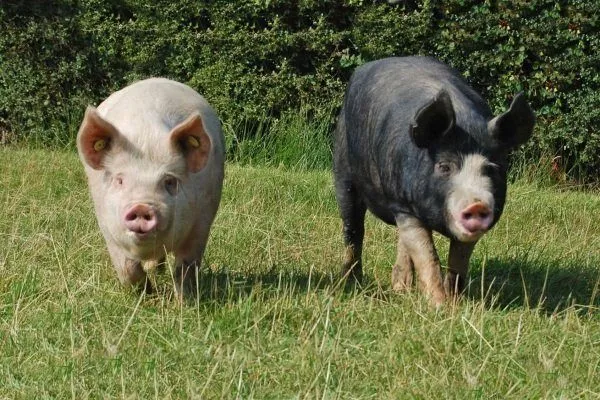
- ✓ Consider the climatic conditions of your region when choosing a breed.
- ✓ Pay attention to the feeding and maintenance requirements of the chosen breed.
- ✓ Consider the purpose of breeding: meat, lard or a combination of both.
Meat breeds
Bacon- or meat-producing pigs are bred for meat production. These animals are distinguished by their productivity and fattening qualities. They have a low fat content, and the live weight of the meat is high. Productivity is average. One individual can produce up to 80% meat and 20 to 32% fat.
Representatives have distinctive external features:
- elongated body;
- deep sternum;
- the width of the chest is insignificant in comparison with the length of the body;
- massive hams;
- The front part of the body is noticeably smaller than the back.
| Name | Weight of an adult boar (kg) | Weight of an adult female (kg) | Number of piglets per farrowing | Average daily weight gain (g) |
|---|---|---|---|---|
| Urzhumskaya | 315-350 | 250 | 11-13 | 720 |
| Landrace | 300 | 210-250 | 10 | 700 |
| Duroc | 300-360 | 250-300 | 9-11 | 750 |
| Pietrain | 270 | 150-200 | 8 | 600 |
| Donskaya | 300-320 | 200-230 | 10-11 | 700 |
| Estonian bacon | 300 | 200 | 12 | 700 |
| Lacombe | 220-280 | 200-250 | 10-11 | 680 |
| Hampshire | 300-320 | 230-250 | 6-11 | 650 |
| Tamworth | 300 | 250 | 6-10 | 600 |
| Vietnamese Pot-bellied | 140-150 | 120-140 | 10-15 | 500 |
| Early maturing meat | 300-320 | 240 | 10-11 | 800 |
Urzhum breed
A pig breed developed in the 20th century in Russia, in the town of Urzhum in the Kirov region. It was officially approved in 1957. It was developed through extensive crossbreeding of local long-eared pigs and Large White boars. Developed for the central regions, the Urzhum pig thrives throughout the European part of the country. The breed's characteristics include a strong constitution, high productivity, and resilience.
Appearance. White coat with massive, coarse bone structure. Animals have a narrow, long body, slightly elongated in the middle and elongated in the front. Males reach 180 cm in length, while females reach 170 cm. The head is medium-sized, with large, heavy ears that tilt slightly forward. The back and rump are straight. The bristles are long, dense, and white.
ProductivityHigh. In one farrowing, a sow gives birth to 11 to 13 piglets, each weighing up to 100 kg by six months (with an average daily gain of approximately 720 g). The live weight of an adult boar is 315-350 kg, and that of a sow is 250 kg.
Growing and careThe breed was developed to be productive, easy to manage and feed, and highly reproductive. With proper care, piglets gain weight quickly. The ease of keeping these animals attracts farmers. However, like many meat breeds, this one requires a special feeding regimen.
AdvantagesUrzhum pigs are unpretentious and tolerate northern conditions well. They are adapted to pasture conditions and adapt easily. Sows have excellent maternal qualities and are very calm. This breed produces high-quality pork and bacon.
FlawsThe only disadvantages are exterior ones: a drooping rump, thin subcutaneous fat, and an arched back.
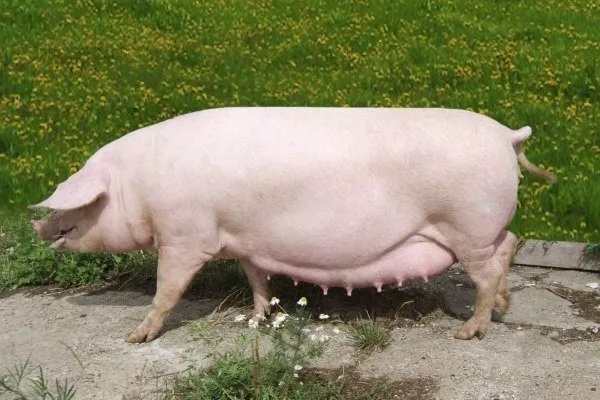
Landrace
Landrace – an elite breed that originated in Denmark as a result of crossing British Large White pigs with local Danish pigs. It is also popular in Russia. These animals are characterized by tasty, lean meat with a thin layer of fat and early maturity.
Appearance. These light-colored pigs have a small, rounded head, a torpedo-shaped body, and long ears that hang down over their eyes. Their chests are narrow, their backs are level, their hair is soft and sparse, and their skin is pink. Male pigs reach a body length of 2 meters, while female pigs reach 1.6 meters.
ProductivityA sow gives birth to 10 piglets at a time, rarely more (11-13). The young piglets grow rapidly, gaining 20 kg within two months. This is a large breed: adult boars weigh up to 300 kg, and sows – 210-250 kg.
Growing and careIn Landrace breeding, achieving high performance is impossible without considering certain nuances. In summer, pigs should be released into green pastures, and in winter, they should be provided with a warm barn; this will allow them to gain weight rather than waste energy on heating. Pigs require a balanced diet that includes greens and grains, vegetables, compound feed, bone meal, and more.
AdvantagesOne of the best breeds in its category. Pigs contain 2-5% more meat and a small amount of fat. Obvious advantages include fertility, rapid growth, and peacefulness.
FlawsThey are picky about food and maintenance. They have weak hind limbs and can be susceptible to stress.
Duroc
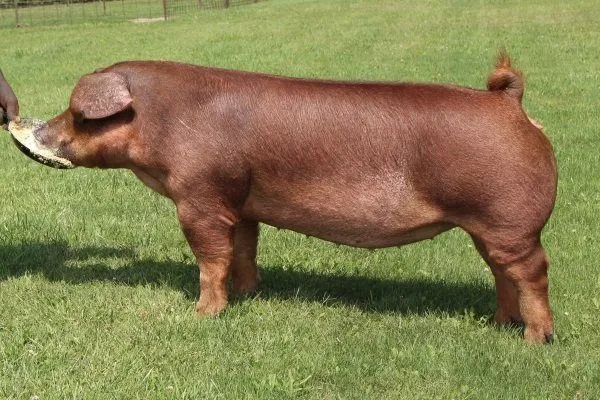
The Duroc boar was created by crossing Berkshire and Red Guinea pigs in the late 19th century. The breed was registered in the United States. These animals are distinguished by their vibrant coloring: brown with a red tint. They are quite hardy and large in size. Successful breeding of this breed requires creating comfortable conditions.
Appearance. They have a strong build, long legs, and an arched back. Their bodies are long—up to 2 meters. Their hams are thick. Their heads are medium-sized. Their ears are long, almost covering their eyes. Adult animals—males and females—do not differ much in size.
ProductivityThey are inferior to other breeds in terms of fertility: a sow gives birth to 9-11 piglets at a time. Newborn piglets weigh 1-1.5 kg, and by six months they gain weight up to 175 kg. By maturity, they can weigh 300-360 kg.
Growing and careDurocs are accustomed to a comfortable life and are extremely demanding of good food, warmth, and a spacious enclosure. If there is a lack of protein in the diet, the quality of their meat deteriorates. These pigs are active and not at all aggressive.
AdvantagesYoung animals gain weight quickly. The meat products have excellent taste. They can be raised en masse and raised on pasture.
Flaws. They are demanding in terms of care, love heat, and require a high-protein diet. They are not very resistant to certain diseases. Fertility is low.
You can find more information about the Duroc pig breed here. here.
Pietrain
The breed was developed over several decades in Belgium. The Pietrain (Petren) was created by crossing several productive meat breeds (including the Large White and Berkshire). These pigs are used as genetic material for other breeds to improve their meatiness.
Appearance. Large animals with a wide, cylindrical body. Muscles are well developed (especially in the loin), the rump is wide, and the hams are well developed. The head is small and the ears are erect. The coat is light with dark spots.
ProductivityThe sows produce little milk and are fertile. On average, they give birth to 8 piglets. In 200 days, the young piglets gain up to 90 kg. Adult animals can weigh up to 270 kg (boars), and 150-200 kg (sows).
Growing and careDue to their low fat content, pigs of this breed do not tolerate low (below 16 degrees Celsius) or high (above 30 degrees Celsius) temperatures. They require specially equipped housing for both winter and summer. Due to their high metabolism, these animals are picky eaters.
AdvantagesExcellent meat yield (70%), low fat content. Resistance to some viral diseases. Good appetite.
Flaws. Due to inbreeding during selective breeding, these animals suffer from a number of shortcomings. These include low daily weight gain, demanding maintenance, low-quality meat (which oxidizes quickly), and poor stress tolerance.
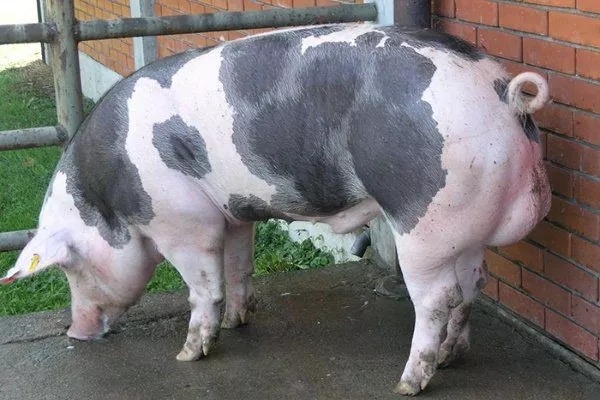
Donskaya
A domestic breed developed recently, in the 1980s near Rostov-on-Don. A cross between Pietrains and North Caucasian pigs. These medium-sized animals are considered by some to be ornamental pig breeds.
Appearance. The body is medium in build, with a massive and broad body. The head is flat and small, with a straight profile. The limbs are short. The hams are well developed. The animals are predominantly variegated and black in color.
ProductivityDon sows are productive, giving birth to 10-11 piglets per litter. The litter survival rate is high – up to 98%. Piglets gain weight quickly, weighing approximately 20 kg at two months. Adult piglets weigh 300-320 kg (boars) and 200-230 kg (females).
Growing and careDon pigs are acclimatized for breeding in the lower reaches of the Don River, Kuban, and the Northern Caucasus. They are undemanding animals and omnivorous. Females have a well-developed maternal instinct.
AdvantagesDon pigs have a strong immune system, are frost-resistant, and are not picky eaters. Females are good mothers. These animals mature quickly and produce a high meat yield.
Flaws. Compared to other breeds, Donskoy piglets gain weight more slowly. Adult weight can be considered average.
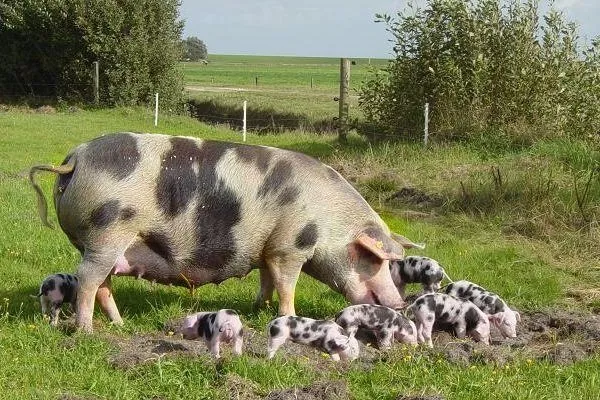
Estonian bacon
The first bacon-specific color developed in the USSR. It was the result of selective breeding between Landrace and white German pigs. The breed was finally established in the 1960s. It resembles a large white pig in appearance, and although smaller in weight, it produces more meat.
Appearance. A compact constitution. A broad back, a small head, and straight legs. The shoulder blades are light, and the haunches are large. The muscles are well developed. The coat is white, and the skin is pink and visible through the bristles.
ProductivityThe average weight of boars is 300 kg, and that of sows is 200 kg. A sow gives birth to up to 12 piglets. The young piglets have a high survival rate. The average daily gain of piglets is 700 g.
Growing and careEstonian pigs don't require any special feed; they are omnivorous and undemanding. They find their own food when kept on pasture. Females produce healthy litters.
AdvantagesGood bacon flavor. Easy to care for. The animals are strong and hardy, and are productive.
Flaws. The exterior flaws include a drooping or loose rump. However, this does not affect the meat quality.
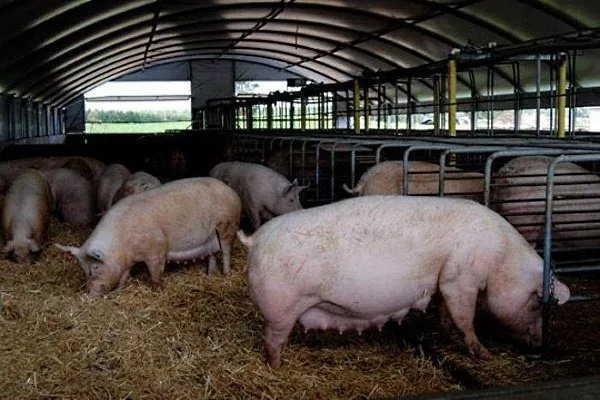
Lacombe
This breed originated in Canada in the mid-20th century, where it remains popular. It has also been bred in other countries, including Russia (since the 1960s and 1970s). Lacombe pigs were developed through multi-breed crosses (Landrace, Berkshire, and others). This breed has good conformation and a strong constitution.
Appearance. These pigs are medium-sized, strong-built, and meaty. Their bodies are small but elongated. Their heads are medium-sized. Their large ears hang down over their eyes. Their limbs are short but strong.
ProductivityFertility rates are above average. Sows are prolific, giving birth to 10-11 piglets at a time. The young piglets quickly gain weight, on average by 150 days. Adult weight: 220-280 kg (males and females, respectively).
Growing and careThese animals are phlegmatic and undemanding in temperament. This includes the piglets, who are calm and docile. They are bred in Canada, but they also thrive in Russia. With proper feeding, the young grow well.
AdvantagesGentle disposition, resistance to stress and some diseases (rhinitis). Productivity. Rapid growth of young animals. Good meat quality.
Flaws. No obvious disadvantages have been identified for the breed. Some cite the pigs' underweight as a drawback.
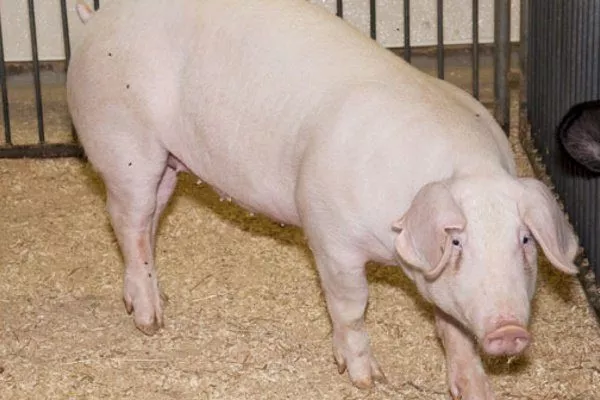
Hampshire
One of the most popular pig breeds in the world. Developed in the British province of Hampshire, but officially recognized in the United States. A meat breed, it is imported to European countries, where it adapts well. However, purebred animals are difficult to find.
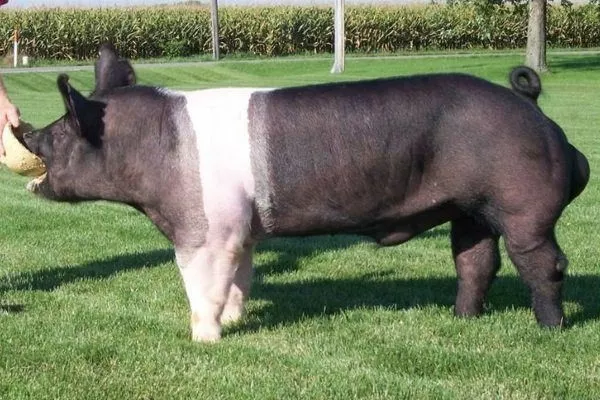
Appearance. The body is elongated, the back is wide and straight. The head is small. The legs are short. The coat is black with a white stripe running across the upper body, extending across the forelimbs and shoulder blades. The pigs are medium-sized. The ears are erect.
ProductivityThe maturation period for young piglets is average. Piglets grow slowly at first, but gain weight rapidly by the age of 8 months. Adult boars weigh 300-320 kg, and sows 230-250 kg. Sows are small-parous, giving birth to 6 to 11 piglets. However, their maternal instinct is well developed.
Growing and careHampshires are used to breed hybrids with positive characteristics. They don't produce super profits, but they are undemanding and adapt easily to different living conditions.
AdvantagesImmunity to many diseases. Endurance. High weight gain. Pigs of this breed produce a lot of meat with a thin layer of fat.
Flaws. The animals are timid and prone to stress. They have low fertility. The growth rate of purebred animals is low.
Tamworth
One of the oldest breeds in the world, developed in England. These pigs are adapted to harsh climates, so they are raised in northern countries (the USA, Canada), as well as Australia, New Zealand, and the UK.
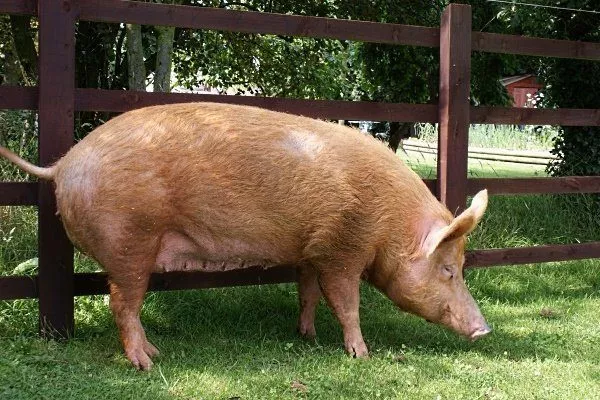
Appearance. The constitution is strong and prominent. The skeletal system is well developed. The muscles are clearly defined, and the body is narrow and elongated. The body length reaches 100-150 cm. The ears are pointed and erect. The neck is long and wide. The legs are strong. The bristles are shiny, and the color varies from red to dark red and even brown.
ProductivityOn average, a sow gives birth to 6 to 10 piglets at a time. They perform maternal duties extremely well, which impacts the health of the piglets. By 30 weeks, the young piglets reach a weight of 100 kg.
Growing and careThese pigs are remarkably hardy and are not afraid of cold, rain, or wind. They are very sociable and friendly, and get along well with other pets. They are suitable for pasture and livestock raising. They eat any feed, including that intended for cattle.
AdvantagesUndemanding (regarding living conditions and feed). Exceptional endurance and adaptability. Friendliness. High-quality bacon.
Flaws. Average fertility. Sometimes the bristles are curly and thin.
Vietnamese Pot-bellied
This unique pig color is popular for its high meat and fat content, making it considered a delicacy. It originated in Southeast Asia and was first imported to Europe and Canada from Vietnam in 1985. However, active breeding efforts are still ongoing. Breeders are trying to increase the animals' muscle mass.
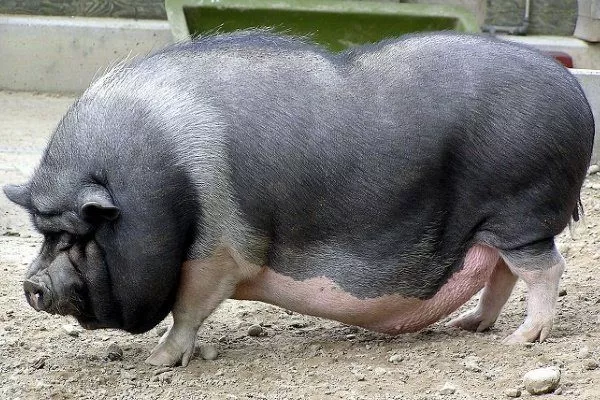
Appearance. These are medium-sized animals (the average adult weight is 140-150 kg). They have a bacon-like build, with a broad body and chest. Their heads are small and pug-like. By sexual maturity, boars develop tusks. Their bristles form a "mohawk" that stands up when they are emotionally upset. Their coloring is black, but can range to a dark red.
ProductivityThese animals are distinguished by their rapid maturation. Females reach sexual maturity as early as four months, while boars do so by six months. Sows are renowned for their equanimity and high milk production. Up to 15 piglets are born in a single litter. Furthermore, females are capable of being inseminated twice a year.
Growing and careThese animals are docile, calm, and surprisingly clean, making them a pleasure to raise. They are adapted to both hot, humid climates and harsh winters. Pigs thrive on pastures and prefer plant-based foods (grass and hay make up up to 85% of their diet).
AdvantagesGood immunity. Calm disposition. Prolific fertility. Easy to keep and fatten. Tasty meat.
Flaws. A tendency toward obesity. Pigs need to be monitored for nutrition, but even with increased feeding, there's no meat gain, only fat.
Read more about this pig breed. here.
Early maturing meat
All the virtues and purposes of these animals are encapsulated in their name. The SM-1 color was developed in the USSR through a complex crossbreeding of the best domestic and foreign breeds. Seventy-three large collective farms took up the project, and the work continued even after the collapse of the Soviet Union. This early-maturing meat breed was approved in 1993.
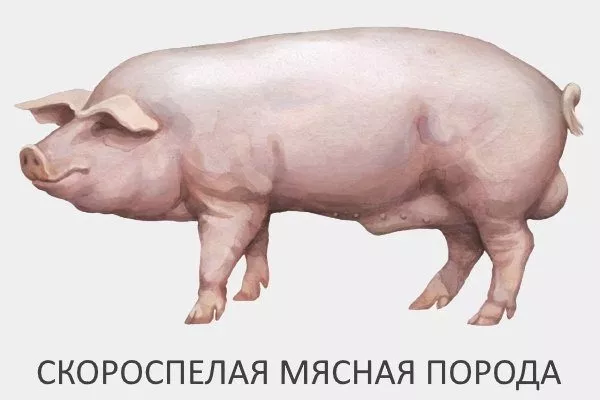
Appearance. Strong build, wide, cigar-shaped body with a well-developed loin. Males measure 180-185 cm, sows 168-170 cm. Large hams. Bristles are white, and ears hang slightly forward.
ProductivityInitially, the SM-1 surpassed other breeds in growth rate, early maturity, and adaptability. Animals gain weight quickly. Boars reach 300-320 kg, and sows 240. Sows give birth to 10-11 babies.
Growing and careThey are easy and profitable to raise, as the animals adapt well to any conditions and climate. They grow and mature quickly, requiring less feed than other breeds.
AdvantagesThey mature early and grow vigorously. They adapt easily to environmental conditions.
Flaws. To achieve high performance, animals require proper care.
Meat and fat breeds
This group includes versatile pig breeds bred for both meat and lard. This method is very popular in Russia, as it allows for unlimited fattening. Only in adulthood do lard-producing pigs begin to store fat. Young animals are used for meat and delicacies. Their nutritional value is as high as their taste.
Meat production is a profitable branch of pig farming. The useful yield per carcass is 70% or more.
| Name | Weight of an adult boar (kg) | Weight of an adult female (kg) | Number of piglets per farrowing | Average daily weight gain (g) |
|---|---|---|---|---|
| Lithuanian White | 300 | 200 | 10-12 | 700 |
| Large white | 300-380 | 250-300 | 12 | 850 |
| Ukrainian Large White | 330 | 250 | 10-12 | 700 |
| Ukrainian steppe white | 210-340 | 200-300 | 12 | 700-710 |
| Ukrainian steppe speckled | 320-325 | 240 | 9-10 | 650 |
| North Caucasian | 350 | 230 | 10-11 | 750 |
| Kemerovo | 250-350 | 200-300 | 10-12 | 730-780 |
| Livenskaya | 250-330 | 200-280 | 11 | 700 |
| Murom | 330 | 250 | 10-12 | 700 |
| Breitovskaya | 250-350 | 200-300 | 11-14 | 680-750 |
| Siberian North | 360 | 250 | 10-13 | 700-750 |
Lithuanian White
These pigs are primarily meat and fat producers. They were developed in Lithuania in the mid-20th century by crossing local females with males of several breeds: Large and Medium White, German White Long-Eared, and Short-Eared. They are noted for their fertility and large size.
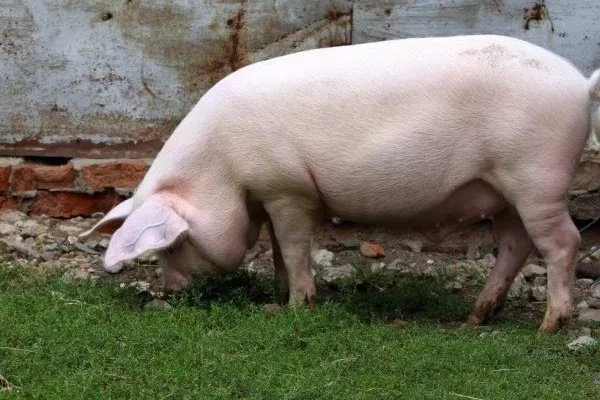
Appearance. The white coat is of a strong constitution. The body is round and well-developed, reaching 175-155 cm in length (males and females). The head and neck are medium in size, with a curved profile. The flanks are smooth, the skeleton is well-developed and not coarse. The belly is firm and voluminous. The skin is dense, and the bristles are white.
ProductivityA sow gives birth to 10-12 piglets per litter. The piglets grow rapidly. A mature boar weighs over 300 kg, while a sow weighs 200 kg. The carcass yield is over 50% meat, and 3.6% fat.
Growing and careThis breed is profitable and easy to maintain. Piglets grow quickly and eat little. To achieve maximum performance, it's important to formulate a proper diet and provide good living conditions.
AdvantagesThe breed has a harmonious body structure. It combines well with other varieties when crossed, for example, to improve the taste of meat. The pigs' fertility is also cited as an advantage.
Flaws. The only exterior drawbacks are that drooping sideburns, a constriction behind the shoulder blades, and insufficient hair growth are often found.
Large white
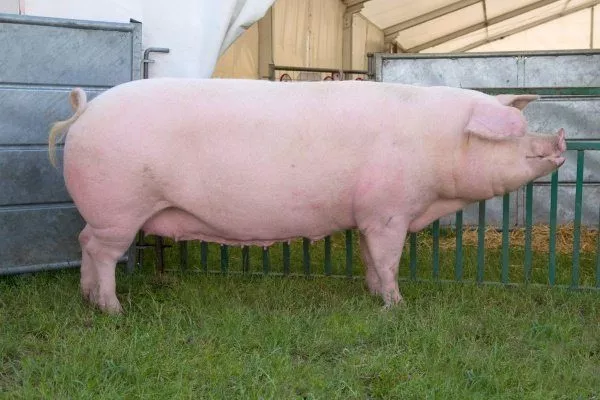
The most common breed in Russia, originating from England, it has undergone several stages of selection and has been repeatedly improved. It was registered in 1851. Sometimes called the Yorkshire, it is characterized by high reproductive capacity, development, and growth rates.
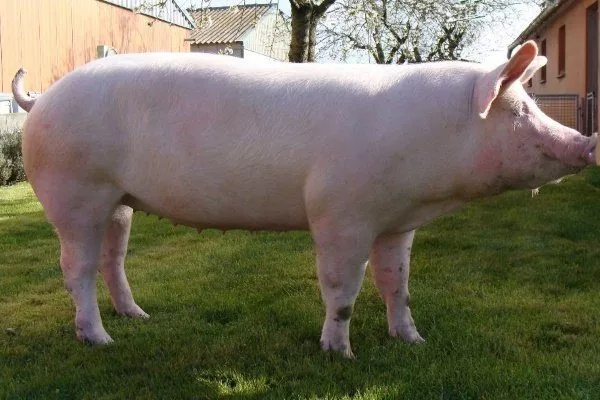
Appearance. White-colored animals with a harmonious build. The body is long, the back is straight, and the chest is wide and deep. The belly is capacious but not protruding. The legs are strong and low. The hams are muscular. The head is medium-sized, the cheeks are fleshy, and the forehead is wide.
ProductivityAdults can weigh 300-380 kg. A sow can give birth to up to 12 babies per litter. With intensive feeding, their daily gain can reach 850 g.
Growing and careThe breed adapts well to various conditions and climates, although it does not tolerate extreme heat or cold. When setting up a pigsty, consider providing a shelter, as sunlight can negatively affect the pigs' light skin, potentially causing burns.
AdvantagesExcellent production qualities. Animals are undemanding regarding the diet provided. High fertility and good weight gain.
Flaws. Prone to obesity and overheating.
Ukrainian Large White
A single-breed type of pig in the Large White breed. Developed at leading breeding farms and 10 subsidiary farms. UKB-1 was approved in 1984.
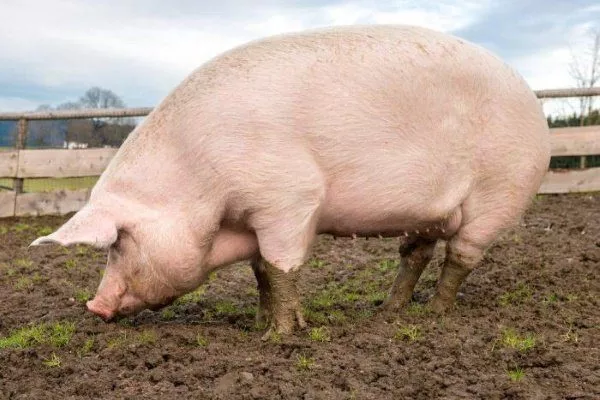
Appearance. A large animal. Outwardly, it is no different from a large white pig.
ProductivityThe live weight of boars is 330 kg, and that of sows is 250 kg. Litter size is approximately 10-12 piglets. At two months of age, the young reach a weight of up to 20 kg.
Growing and carePigs are easy to keep and easily transport from place to place. However, their massive build allows them to overcome weak fencing, which must be taken into account when constructing enclosures.
AdvantagesTasty, moderately fatty meat. Early maturation. Fertility and good milk production of sows.
Flaws. They do not tolerate heat and low temperatures (-30 and below) well.
Ukrainian steppe white
As the name suggests, these pigs originate in Ukraine. One of the best breeds, it was developed specifically for the steppe region of the country—regions with an arid climate. These pigs are well adapted to their habitat and acclimate well. The breed is used to develop new varieties and improve existing ones.
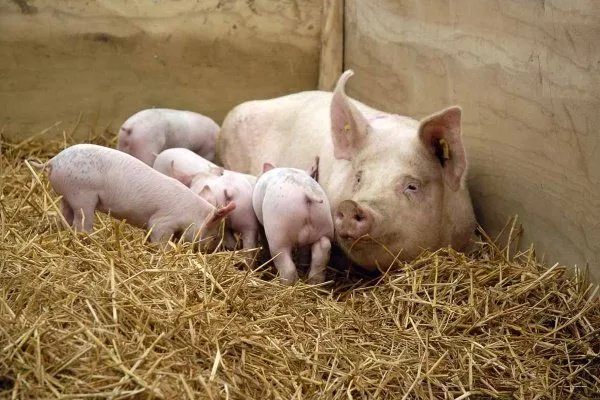
Appearance. These animals resemble Large White pigs, but their heads are longer and narrower, and their bristles are coarser. Their skeletons are strong. Their bodies are broad and deep, and their legs are strong and free of wrinkles. The bristles of purebred individuals are white, though dark, bluish-gray spots may occasionally appear.
ProductivityIt was developed as a breed with high reproductive potential. Sows give birth to an average of 12 piglets at a time. The average weight gain of young piglets is 700-710 g per day. Adults reach a weight of 210-340 kg.
Growing and careA versatile breed that easily adapts to adverse weather conditions (wind, cold, heat) and can digest low-calorie feed. It has a long grazing period.
Advantages. Endurance. Ability to adapt to various conditions. Fertility. Early maturity.
Flaws. Exterior - some individuals have a drooping rump.
Ukrainian steppe speckled
The breed was developed from speckled pigs, which belonged to the Ukrainian Steppe White line. To consolidate the desired results, crossbreeding with the Berkshire and Mangalitsa breeds was used. It was approved in 1961.
Appearance. Small in size but strong in build, the body length of males is 180 cm, while that of females is 165 cm. The loin and back are wide and straight. The hams are well-developed and rounded. Their coat color is variegated, with shades ranging from black, black and white, black and red, red, and others.
ProductivitySows are not very fertile, giving birth to 9-10 piglets at a time. By seven months, the young piglets reach a weight of 100 kg. Male pigs weigh 320-325 kg, while female pigs weigh 240 kg.
Growing and careThe animals tolerate heat well due to their coloring. At an early age, they are suitable for fattening for both meat and bacon.
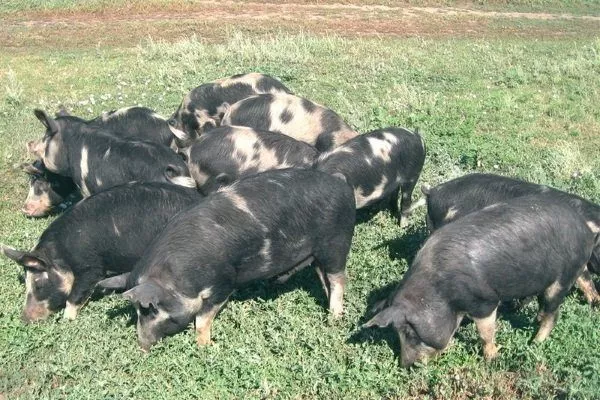
AdvantagesThe animals easily adapt to hot and dry climates. They are strong and resilient.
Flaws. As with the Ukrainian White breed, the rump is sometimes drooping.
North Caucasian
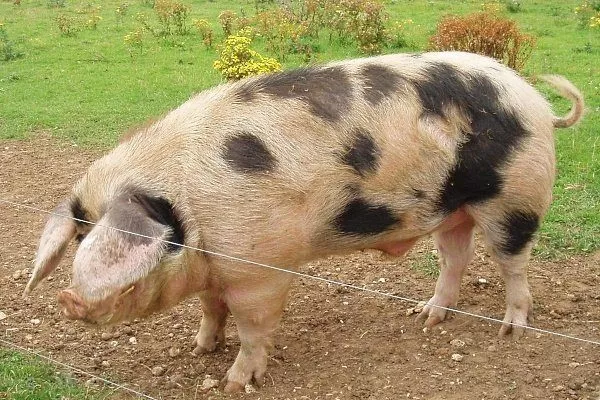
The breed was developed by crossing the Kuban pig with Large White, Berkshire, and White Short-Ear pigs. Today, to improve meat quality, North Caucasian pigs are crossed with Pietrains. These animals are used for purebred crossbreeding on an industrial scale.
Appearance. These are robust animals with a broad head and chest. The body is barrel-shaped, and the chest is deep. The hams are well-shaped, and the legs are strong. The skeleton is finer than that of pigs of similar colors. The bristles are dense, with a soft undercoat in winter. The color is variegated.
ProductivityAdult boars weigh up to 350 kg, and sows – 230 kg. They are prolific breeders, giving birth to an average of 10-11 piglets. By six months, the piglets reach a weight of 100-120 kg.
Growing and careNorth Caucasian pigs are adapted to the harsh continental climate. They can be kept in open-air barns year-round and also make good use of pastures.
AdvantagesEarly maturity. Prolific fertility and good maternal qualities. Calm disposition. Can be kept outdoors.
FlawsThe meat quality is not up to par. The bones are thin.
Kemerovo
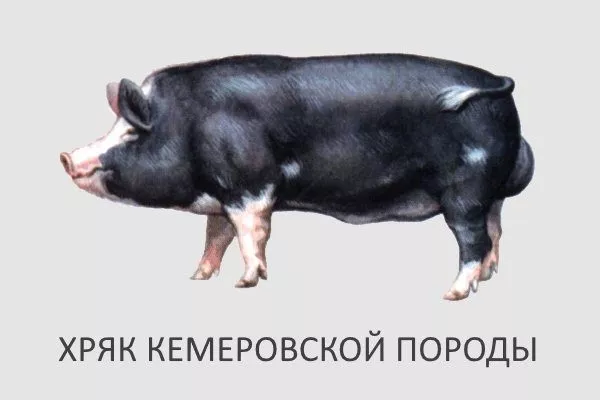
A meat-and-fat breed developed in Siberia, adapted to the harsh northern conditions. Kemerovo pigs are used for industrial crossbreeding with Large Whites, Landraces, and Siberian pigs. The animals are bred in Kazakhstan, Siberia, and the Russian Far East.
Appearance. These animals are large in build and have a regular body shape. Females measure 160-165 cm in length, while boars reach up to 170 cm. The chest is broad and deep. The haunches are well defined. The ears are small and erect. The head is medium in size. The coat is black, with light spots on the forehead, tail, and limbs. The bristles are dense.
ProductivityA sow gives birth to 10-12 piglets per litter, and the sow's milk yield is 60-65 kg. The piglets gain 730-780 g per day. Adult animals weigh up to 250-350 kg.
Growing and careThe animals are hardy and viable. They can be raised in harsh continental climates. However, if fed poorly, pigs feel unwell and become ill.
AdvantagesEarly maturity. Good reproductive potential. Adapted to northern conditions. Calm disposition.
Flaws. Demanding diet.
Livenskaya
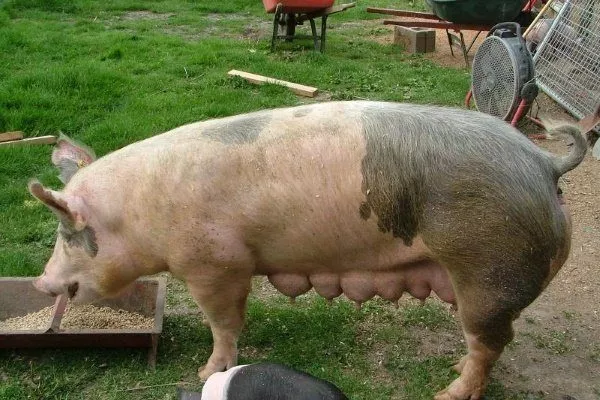
A combined breed of pig raised for meat and lard. The breed's ancestors are the Large White, Berkshire, and Landrace. Livny pigs were developed in the early 19th century, the breed was recognized in 1949, and by 1980, 60,000 individuals had been registered. These strong, hardy animals have a calm disposition and have earned a good reputation for their high-quality meat.
Appearance. Large size: elongated body (150-180 cm), chest girth 150-165 cm, high withers, strong build. The belly is slightly sagging. The back is broad and straight. The head is short, with a snub profile. The ears are large. Distinctive wattles are located on the lower part of the neck. The coat is white with gray spots.
ProductivityThe pigs are characterized by good fattening qualities. Adults reach a weight of 250-330 kg (females and males, respectively). Sows are fertile, producing an average of 11 piglets per litter.
Growing and careThese animals are unpretentious and hardy, adapting to a variety of conditions and tolerating pasture well. They are not picky eaters, happily consuming bulky feed, rye, and potatoes.
AdvantagesEasy to care for. Unfussy when it comes to food. Well-developed maternal instincts and a calm disposition.
FlawsLoose constitution, large folds of skin.
Murom
A versatile breed developed in the Murom district of the Vladimir region by crossing a local breed with the Lithuanian White pig. It was approved in 1957. Its quality is still being improved.
Appearance. White coat. Animals of strong constitution. They have a broad and harmonious body, reaching a length of 185 cm for males and 170 cm for females. The back is strong and straight. The legs are short and correctly positioned. The head is light and small. The ears are long and large, hanging down over the eyes. The skin is smooth, elastic, and the bristles are dense and light.
ProductivityThe sows are fertile, giving birth to 10-12 piglets. The young grow quickly, reaching 100 kg by 6-7 months. Adults weigh 250 kg (females) and 330 kg (males).
Growing and careThe breed is common in Central Russia, the non-chernozem zone. The pigs adapt well to local forages, are kept on pastures, and easily adapt to new conditions.
AdvantagesCalm disposition. Unpretentious in food. Early maturity. Strong immunity.
Flaws. External minus - X-shaped position of the legs.
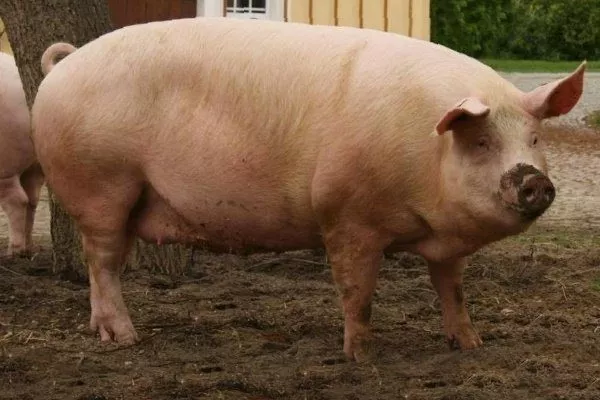
Breitovskaya
These pigs were bred in the Yaroslavl region by crossing local animals with several breeds: Latvian Lop-eared and Poleskaya pigs, Danish Landraces, and large and medium white pigs. In 1948, the breed was approved and spread widely across the country. Breitovsky pigs are suitable for damp and cold climates, adapting easily to these conditions.
Appearance. Large animals with a proportional head and a slightly curved profile. Large ears hang over the eyes. The neck is pronounced and of medium length. The body is muscular, the legs are straight and strong, and the haunches are prominent. The skin is elastic, but folds may form with significant weight gain. The bristles are dense. The coat is white; spotted individuals are rare.
ProductivityHigh. In one litter, a sow gives birth to 11-12, rarely 13-14 babies. With proper nutrition, daily weight gain is 680-750 g. Adults reach a weight of 250-350 kg (depending on sex).
Growing and careThese animals are hardy and adapt to a variety of climates. They are raised not only in the central regions, but also in the Murmansk and Leningrad regions. The piglets and their mother require special care—they must be kept dry and clean.
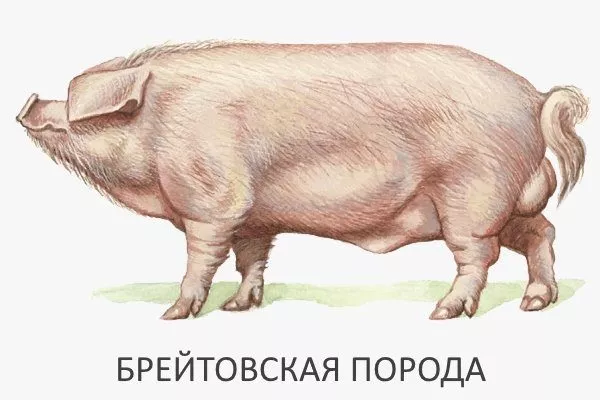
AdvantagesBreitovsky pigs are peaceful and caring towards their young. They are undemanding in their diet and adapt well to temperature fluctuations. Their meat is medium-fat.
Flaws. The breed needs to improve its meat qualities.
Siberian North
A popular, versatile breed, perfectly adapted to life in harsh climates. Developed in the Novosibirsk region through reproductive crossbreeding. The key characteristic of all the ancestors was the animals' adaptability to extreme weather conditions.
Appearance. The exterior is similar to large white pigs These are well-built animals. Their chest circumference is 150-155 cm. Their heads are small. Their legs are short but strong. Their ears are erect. Their bristles are light and long, and they have a thick undercoat that protects them from the cold.
ProductivityFemales give birth to 10-13 young. Their maternal instinct is well developed, so the young survive well into adulthood, gaining 700-750 g daily. Adult animals weigh up to 360 kg (boars) and 250 kg (females).
Growing and careThey are ideal for breeding in extreme conditions (they are common in Siberia and Kazakhstan). Their dense bristles protect against severe frosts in winter and midges in summer. However, ideally, pigs should be kept in enclosed enclosures, protected from moisture and wind.
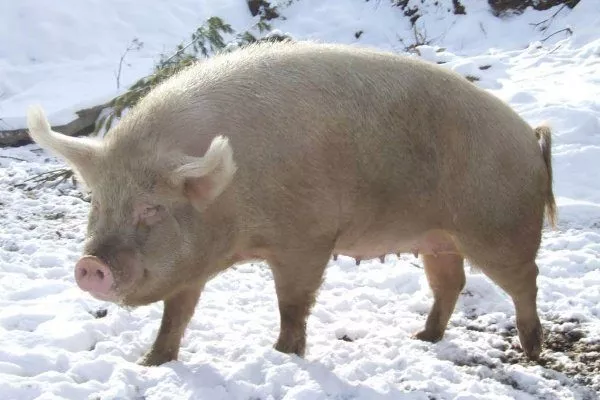
AdvantagesHardy pigs with a calm disposition. They tolerate frost well. They produce many foaled pigs and are good mothers.
Flaws. Exterior: pointed limbs, hanging sacrum in some individuals.
Tallow breeds
In recent years, tallow breeds have become a competitor to all-purpose and meat breeds. Their clear advantage is rapid weight gain and early accumulation of subcutaneous fat. In just 8-10 months of fattening, tasty fat and meat can be obtained. These make up approximately 40-50% of the animal's total weight.
- ✓ Provide a high-calorie diet for rapid weight gain.
- ✓ Take into account the lower fertility of fat breeds compared to meat breeds.
- ✓ Prepare warm premises for keeping during the cold season.
Compared to the other two varieties, the reproductive ability is lower.
Farmers choose this type of pig due to its obvious advantages:
- early maturity;
- multiple pregnancies persisting in descendants;
- short gestation period (from 112 to 116 days);
- massive body and meaty hams.
| Name | Weight of an adult boar (kg) | Weight of an adult female (kg) | Number of piglets per farrowing | Average daily weight gain (g) |
|---|---|---|---|---|
| Berkshire | 220-250 | 180-220 | 6-9 | 600 |
| Large black | 380 | 255 | 11-15 | 700 |
| Mirgorodskaya | 280-300 | 220-240 | 10 | 650 |
| Mangalitskaya | 180-300 | 150-250 | 4-6 | 500 |
Berkshire
A fast-growing breed developed in the English county of the same name in the mid-19th century. Their ancestors are English, Neapolitan, Siamese, and Chinese breeds. Berkshires were approved in Russia in 1975. Their genes are still actively used by breeders. Many well-known pig colors have been developed from them. Berkshires are conventionally considered a meat and lard breed, but this depends on the fattening method.
Appearance. These animals have a strong constitution, an elongated and voluminous body, and a broad back. The boars have well-developed bones, while the females have softer bones. The legs are strong and short, and the hams are well-developed. The head is large but light, and the ears protrude forward and upward. Their coat is black, with light spots on the tips of the tail, snout, and legs. The skin is thin and wrinkle-free, and the bristles are long and dense.
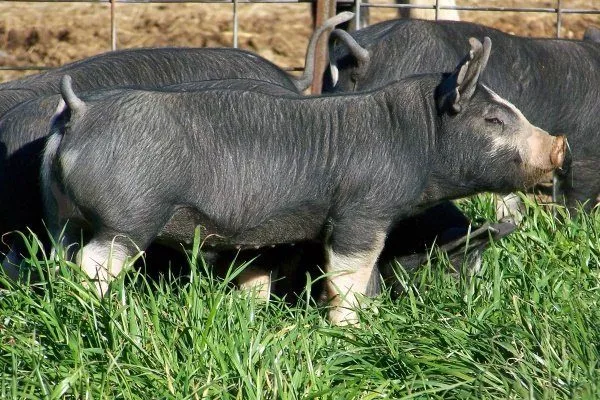
ProductivityThe average weight of adult boars is 220-250 kg, while sows weigh between 180 and 220 kg. Piglets reach 100 kg by the age of 197-200 days. Female sows are not very fertile, giving birth to an average of 6-9 piglets.
Growing and careThe breed is popular among farmers in various regions of Russia due to its low maintenance and easy acclimation. Piglets gain weight quickly. These pigs are renowned for their low maintenance but require a specific diet. Berkshires thrive in open spaces and can be kept on pastures.
AdvantagesGood early maturity and excellent fattening qualities. Slaughter yield is 88%. These animals have a good meat-to-fat ratio. They are easy to manage and require little feed.
Flaws. Animals are prone to obesity. Females are low-fertility. External defects include a pug-like appearance, a carp-like back, and X-shaped limbs.
Large black
A pig variety developed in England. The ancestors are Chinese and Neapolitan pigs, as well as English Long-Ears. The breed is suitable for crossbreeding with other breeds, which improves all its characteristics. The pigs are raised for meat, lard, and breeding. This is one of the most popular lines in the world.
Appearance. The exterior is typical of tallow breeds: a large body, a barrel-shaped chest, and a broad back. The large head is well-proportioned. The ears are long and pendulous. The legs are short, and the haunches are voluminous. The coat is thick and black, without markings. The sagging rump causes deep folds on the body.
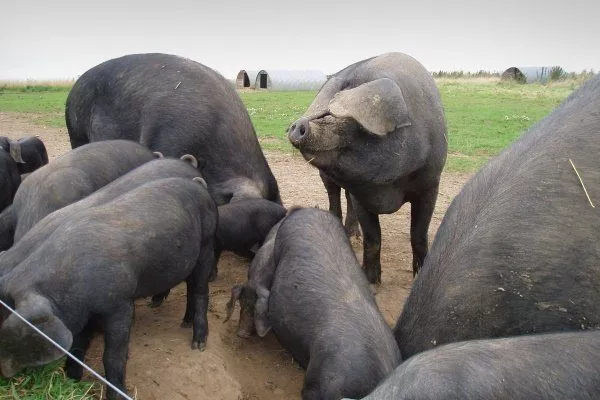
ProductivityAn adult boar can reach a weight of 380 kg. Females are smaller, up to 255 kg. For their breed, these animals are prolific, giving birth to 11-15 piglets at a time. The young quickly gain weight, reaching 200 kg by 10 months.
Growing and careThe animals are not picky eaters, adapt well to climate conditions, and tolerate both cold and heat. In summer, they prefer pastures, and in winter, they are kept indoors.
AdvantagesEarly maturity. Fertility. Has a strong constitution.
Flaws. Sagging butt, folds of skin.
Mirgorodskaya
Mirgorod breed of pigs The Mirgorodskaya pig breed was developed back in the 19th century, but was finally approved in 1940. It originates from Ukraine, in the Poltava region. It was obtained by crossing local pigs (short-eared, mottled) with Tamworth, Berkshire, and medium and large white boars. The Mirgorodskaya pig breed is well known in Ukraine; the quality and thickness of its fat is considered exemplary.
Appearance. They are characterized by a strong constitution, a deep and broad chest, and a voluminous body of moderate length. The back is straight. The head is medium. The legs are medium in length and strong. The hams are round and massive. The skin is smooth. The color is usually black and white, but sometimes pigs are red, black, or black and red.
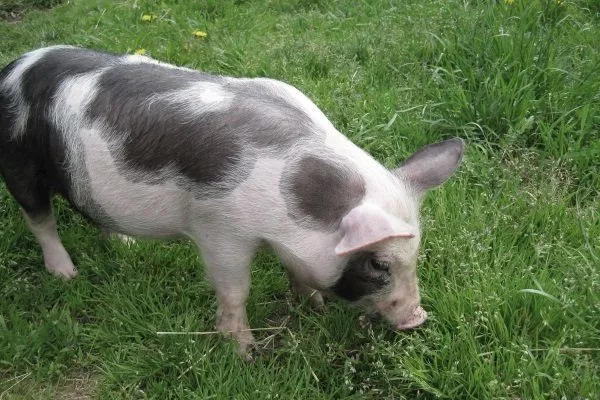
ProductivityDuring a litter, sows give birth to 10 or more piglets. From the first days of life, piglets rapidly gain weight. By three years of age, boars weigh 280-300 kg, and sows 220-240 kg. At breeding farms, the figures are even higher.
Growing and careThese animals are easy to care for and readily accept a wide variety of feeds. In southern regions, pigs spend most of their time on pastures, saving on grain feed. When kept in stalls, bulk feeds can be substituted.
AdvantagesGood slaughter weight: 85% fat mass, of which 30% is lard. Animals are known for their calm disposition and undemanding living conditions.
Flaws. A small proportion of lean meat in a pork carcass. Some people don't like its taste.
Mangalitskaya
One of the oldest breeds in the world, developed in 1833 in Hungary. It originated from wild boars crossed with the Carpathian Mangalitsa. The breed appeared in Russia in 1945. Large numbers of pigs were brought to the North Caucasus and the Moscow region.
Appearance. Externally Mangalitsa pig It's difficult to confuse this breed with any other because of its luxurious, curly coat, reminiscent of sheep. The animals come in a variety of colors: red, black, and white. In winter, the coat curls. A dark spot on the edge of the ears is a distinctive feature of the breed. These pigs are medium-sized. Their legs are strong, with hard hooves.
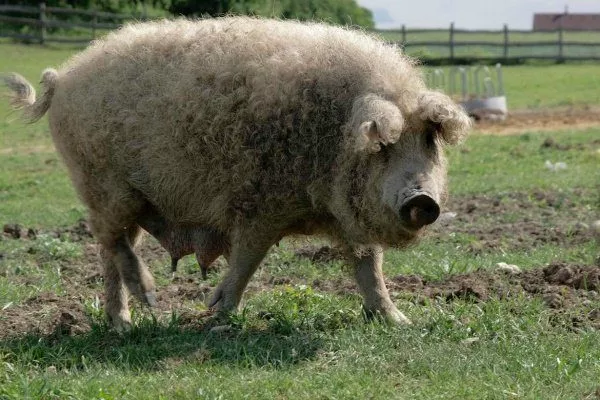
ProductivityFemales produce small litters of piglets—4 to 6, rarely more. At one year of age, females weigh no more than 150 kg, and males 180 kg. By three years, they reach 300 kg.
Growing and careMangalitsa pigs are easy to care for and adapt well to pasture. They are happy to be outside in both winter and summer. If kept outdoors, their fur will be thick and warm. If moved indoors for the winter, their fur will become normal.
AdvantagesCan be kept on pasture year-round. Good immunity, vaccinations are practically unnecessary. Gentle disposition.
Flaws. Low fertility. Tendency to obesity. Rare species.
When choosing a breed, it's important to consider many factors: where the animals will be raised (stall type, climate conditions), in what numbers, and what production goal will be the primary focus. It's best to choose animals that are adapted to the conditions and feed available in the area where they will be raised.