
Landrace is the best bacon-type pig breed. Thanks to their high lean meat content and thin layer of subcutaneous fat, these pigs have become extremely popular among breeders. The breed's distinctive features, pros and cons, care and breeding requirements, and disease prevention measures are discussed in detail later in the article.
| Breed | Average weight of an adult, kg | Thickness of bacon, mm | Disease resistance | Demandingness to feed |
|---|---|---|---|---|
| Landrace | 270-300 (boar), 190-195 (sow) | up to 20 | Average | High |
| Duroc | 340-360 (boar), 250-300 (sow) | up to 30 | High | Average |
| Pietrain | 240-260 (boar), 180-220 (sow) | up to 15 | Low | High |
History of the breed's origin
The Landrace bacon breed was developed in the early twentieth century in Denmark by crossing two breeds: the Danish Lop-Eared pig and the English Large White. During the selection process, the pigs were fed a complete, balanced diet rich in animal protein. The selection and selection of crossbreeds based on meat quality, early maturity, and profitability of the final product took a considerable period of time.
However, due to their lack of stamina, awkward build, and demanding living conditions, Landrace pigs are most often used to improve the meat quality of other pig breeds. Two- and three-breed Landrace pigs significantly surpass purebred pigs in stamina and robustness, while maintaining high meat quality. Today, Landrace pigs are widely popular in Europe, Australia, Canada, and the CIS countries.
Description, characteristics and productivity
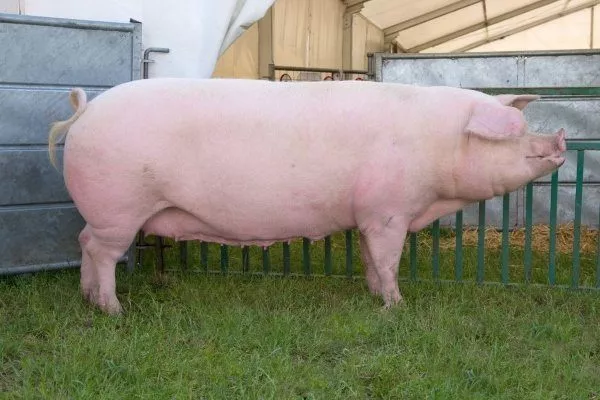
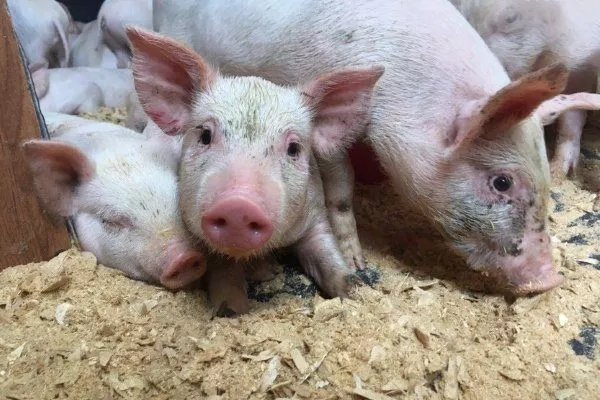
Animals of this breed are characterized by a fairly strong build and impressive meat volume. They are characterized by:
- elongated torpedo-shaped body;
- head of medium size, slightly elongated;
- long large ears hanging over the eyes;
- thick fleshy neck;
- deep sides;
- soft, straight back;
- narrow chest;
- legs of medium length, with a wide ham, squat;
- thin, elastic skin of a pinkish hue, covered with soft, sparse white bristles.
Landrace pigs are a large breed of bacon-type pig. An adult boar can have a body length of approximately 2 meters, with a chest girth of over 1.5 meters. The body length of a sow averages 1.5-1.7 meters.
By the age of one year, sows weigh 190-195 kg, and boars 270-300 kg. Despite their impressive weight, healthy individuals are quite active and move quickly.
The breed boasts high productivity. A unique characteristic of Landrace pigs is their accelerated protein synthesis, enabling piglets to gain 700-750 grams per day during growth. At two months of age, their live weight is approximately 20 kg, and by six months, it's around 100 kilograms. This rapid weight gain significantly reduces feeding costs for pig breeders, thus increasing profitability.
Sows have well-developed maternal qualities and are highly fertile. A single litter can produce up to 10-12 piglets. Newborn piglets have excellent survival rates. The sow has a relatively high milk yield.
In terms of the yield of pure lean meat (up to 70%) and the small thickness of fat (up to 20 mm), Landrace pigs exceed similar indicators among other breeds by 2-5%.
Advantages and disadvantages
The obvious advantages of the Landrace breed include:
- accelerated weight gain;
- good fertility of sows;
- strong offspring;
- ability to adapt to different climatic conditions;
- early maturity;
- excellent productivity;
- activity.
Despite its undeniable merits, Pigs of this breed also have a number of significant disadvantages:
- low stress resistance;
- weak constitution (weak hind limbs and sides, unsteady gait);
- demanding of feed composition and living conditions.
How to choose the right piglets and what is their price?
On private farms, it's best to raise and fatten two or more piglets. Raising one piglet is not cost-effective—a single animal eats less and, as a result, develops more slowly.
- ✓ Straight back without interceptions
- ✓ Wide and deep chest
- ✓ Strong limbs with correct positioning
- ✓ Developed genitals
- ✓ Active behavior
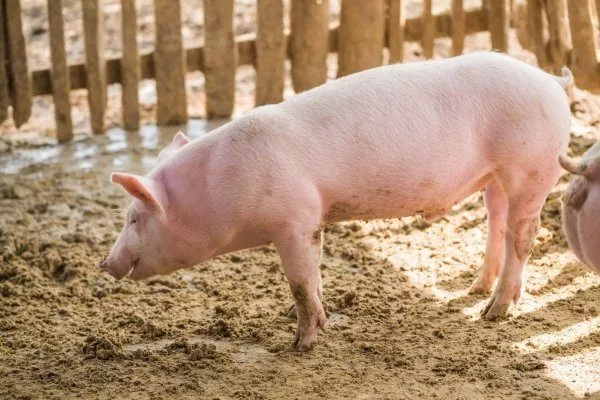
When purchasing a Landrace piglet, the first thing to consider is its build and appearance. It should have a straight back with no dips behind the shoulder blades, a broad and deep chest, a wide rump and loin, meaty hams, a tucked-up belly, and strong, well-positioned legs.
Piglets with long legs gain weight quickly and grow well. However, if their legs are short, the animals quickly become round and fat, but they also stop growing early and become fat.
It's also important to evaluate the head and snout length. An excessively elongated snout indicates the pig will be slow to grow. A light head with a snub profile indicates the pig will quickly become obese.
Teeth alignment is also important. Piglets with an incorrect occlusion have difficulty eating thick feed, resulting in developmental delays and low productivity. Short ears indicate that these animals are unpretentious eaters. They readily consume all types of succulent feed, roughage, wild grasses, and weeds.
Avoid purchasing overly plump piglets: they've been fed sugary milk for quick sale, so they're spoiled. You should also be cautious when purchasing overly thin animals, as this could be the result of an illness (the exception is piglets sold with their entire litter from a single sow).
Attention should also be paid to the development of the reproductive organs. Pigs showing signs of hermaphroditism are unsuitable for breeding. A boar should also have one or both testicles retracted into the pelvic region. It's also important to check for an inguinal or scrotal hernia, which appears as a nut- or acorn-sized bulge.
The piglet's behavior is also extremely important. A healthy piglet makes a loud, shrill squeal, is happy and active, its eyes are alert and clear, and its tail is curled into a ring.
If the goal is to produce offspring, you should buy a sow and a boar in the spring. Both boars and sows can be used for fattening. Sows grow more slowly, but their meat is more tender and tasty.
It's best to buy Landrace piglets that are at least one month old and weigh between 7 and 10 kg. They already eat well, adapt quickly to new conditions, and don't require as much attention.
Acquiring piglets under one month of age with low live weight requires significant effort and special skills in keeping them.
The price of Landrace pigs depends directly on the animal's age, region of purchase, and batch size. The average price of a single Landrace piglet currently ranges from 4,000 to 6,500 rubles.
Housing conditions, pigsty
High productivity of Landrace pigs, as well as rapid growth and development of piglets, occurs only under high-quality conditions.
Necessary conditions for keeping Landrace pigs:
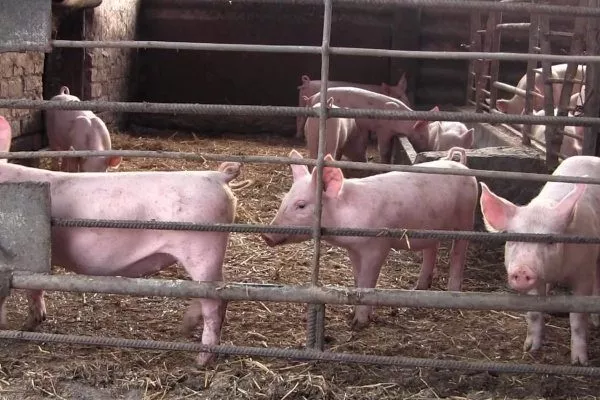
- the room for pigs must be consistently warm (at least +20°C), without drafts;
- high air humidity in the pigsty is unacceptable;
- For heavily overweight animals, it is very important to have a lot of space in the room (the standard area of a pigsty for a boar is at least 6 square meters, for a sow - 4 square meters; a pen - 100 square meters of land);
- if there is insufficient natural light (window area is less than one fifth of the floor area), you should resort to artificial light sources, especially in winter;
- cleaning of the pigsty should be carried out at least every other day;
- It is advisable to provide the pigs with a so-called swimming pool, otherwise, in hot weather, you should definitely water them with a watering can;
- The bedding should be deep, fresh and dry, and should be changed regularly to avoid damage from dampness.
Feeding and diet
To maximize the potential of Landrace pigs and produce tasty, lean meat, it is essential to provide them with a complete and balanced diet.
Pigs of this breed are quite picky eaters. Their diet must include dry, succulent feed and compound feed. Hay, silage, and oilcake are added to prevent nutrient overload and excess fat buildup. Adding various vegetables and root vegetables, pumpkin, and greens to the diet is beneficial.
It's preferable to prepare food specifically for this purpose, but kitchen scraps can also be used after boiling them first. Adults are fed twice a day, with a daily requirement of 2.5 buckets of food. In winter, three feedings a day are recommended.
Landrace pigs should always have free access to clean, fresh drinking water.
When raised free-range in the spring and autumn, pigs are additionally given the opportunity to consume fresh grass, clover, and nettles.
Breeding
Breeders use the Landrace breed for industrial-scale crossbreeding with other pig breeds to improve their productivity. Breeding this breed is accessible to both experienced professionals and private farms under appropriate conditions.
It's important to prepare for mating in advance. The pigs must be purebred and have clear, distinctive traits that will appear in the next generation.
To improve the quality of semen and ensure weight gain, boars should be well-fed throughout the year. Long summer walks in the fresh air are also beneficial. The number of previous matings is also important. For mature boars, the norm is around 30 matings, and for young boars, no more than 15. Otherwise, if these values are exceeded, the semen will no longer be suitable for insemination.
Feed for sows should be high in minerals, protein and vitamin complexes.
Selecting a boar should be planned well in advance, as a sow's estrus period is limited to just two days. During this time, the boar should mount the sow twice: the first mating should occur 10 hours after the sow shows the first signs of receptivity; the second, approximately 12 hours after the first.
Multiple crossbreeding should not be allowed, as this may negatively affect the planned offspring.
During mating, aggressive behavior between sows, including wounds and injuries to each other, may be observed. Therefore, this process should be monitored.
A sign that fertilization was successful is the sow's calm and measured behavior, showing no desire to estrus for the next 2-3 weeks. If this does not occur, the following may be the cause:
- poor quality boar semen;
- incorrectly chosen moment for mating, when the sow was not yet ready;
- overweight pig;
- exhaustion of the body.
The attempt can be repeated with another inseminator.
Landrace sows farrow 114 days after mating. This is a complex process that requires constant monitoring by the breeder and their readiness to assist the sow at any time.
Raising offspring
Landrace piglets are very fastidious and demanding in terms of their living conditions, as well as the composition and quality of their diet.
A newborn Landrace piglet weighs approximately 1.5-2 kg. After birth, the piglets should be dried thoroughly and the umbilical cord removed, treating the umbilical wound with iodine solution. Piglets are placed on dry, clean bedding, and a 150-watt incandescent lamp or oil heaters should be placed nearby to maintain warmth.
To ensure newborn piglets receive the maximum amount of nutrients, they should be introduced to the sow's teats within the first hour after farrowing. Longer, thinner piglets are placed on the front teats, while rounder, firmer piglets are placed on the rear, less milk-producing, tight teats. Consuming valuable colostrum will significantly increase their vitality.
Because the sow is heavy and can accidentally strangle her piglets, it's undesirable to house them in the same pen. In this case, the piglets are released to nurse 2-3 hours after the sow settles down. If a separate pen is not possible, the piglets are separated by a special partition. It's worth noting that when stressed, Landrace sows become aggressive and can even eat their own offspring.
The temperature in the piglet room should be at least +30 to +32°C during the first week, then decreased by 2-3 degrees every 3-5 days. By the time of weaning, it will be +18°C.
To prevent anemia, piglets from three days of age should be given 1 teaspoon of 0.25% ferrous sulfate solution (2.5 g of ferrous sulfate per 1 liter of boiled water).
During the first month of life, piglets' primary food is their mother's milk. However, regardless of the sow's milk production, piglets require additional nutrients.
Starting from day 4-5 of life, piglets should be provided with clean, fresh water. Containers containing mineral supplements (charcoal, chalk, red clay, or burnt bones) are placed in the feeding compartment.
Cow's milk is introduced from 5-7 days of age, 4 times a day, 10-15 g at a time. Before feeding, it must be warmed to a temperature of 37°C. It is first given fresh, and then as acidophilus milk.
To improve gastrointestinal tract development, piglets are given toasted oats, barley, and peas starting at ten days old. The grain should not be burnt. Toasting destroys microbes and mold in the grain, stimulates increased gastric acid secretion, improves protein and starch digestibility, and enhances its flavor.
Another beneficial property of this grain is that it reduces itching of gums during teething at the age of one week.
After introducing grain, add mixed feed to the feeders. Small portions of porridge with milk or skim milk can be given.
Of the succulent feeds, potatoes are considered the best, which are mashed in milk with the addition of dried nettles, finely chopped carrots or hay dust.
Root vegetables and melons are grated and served raw.
In the summer, piglets reaching one month of age are allowed to eat green grass, which is rich in vitamins. First, it is minced, then finely chopped and added to other feeds.
In winter, carrots and sprouted grains can be added to supplement their diet with vitamins. Fish oil, a source of vitamins A and D, is given 6-8 ml with cow's milk. Feeding Landrace piglets various vitamin supplements is beneficial. These increase resistance to infectious diseases, prevent rickets, stimulate metabolism, and promote overall health.
Piglets are weaned at 28-45 days of age. Feedings from the sow's breast milk should be reduced gradually.
After weaning, feeding should be done four times a day with the same feed to avoid a sudden transition. Next, young animals are introduced to animal-based feeds, including meat and fish scraps, yeast feed, skim milk, as well as legumes, cake, and meal. This will promote the development of all internal organs and facilitate enhanced muscle and bone growth.
Common diseases of the Landrace breed
The most common diseases affecting Landrace pigs are:
- white muscle disease;
- mug;
- plague;
- dysentery;
- cysticercosis (finnosis);
- ascariasis;
- scabies;
- ringworm.
Sick animals must be immediately isolated. Treatment is carried out under the strict supervision of a veterinarian.
Disease prevention, vaccinations
To prevent the occurrence of possible pig diseases For the Landrace breed, a whole range of preventative measures should be taken. These include:
- Disinfection. For small farms, irrigation is the optimal method. To kill spore-forming microorganisms, use a bleach solution (5% active chlorine) and a 4% formaldehyde solution at a rate of 3 liters per square meter of the pig house. On a medium-sized pig farm, irrigation uses a 5% solution of soda ash, a 3% solution of phosphorus or parasod, and a 20% suspension of freshly slaked lime. The temperature of these solutions should be approximately 80°C. The premises must be cleaned and washed, and disinfection is carried out 2-4 times for 3-5 days.
- Disinsection. Various insects (flies, ticks, gadflies, fleas, lice) can carry dangerous diseases. In combination with disinfection, use disinfestation solutions such as a 5% solution of iodine monochloride with chlorophos or a 1% solution of formaldehyde with chlorophos. In summer, regularly treat manure, garbage containers, and cesspools with aqueous emulsions of 50% trichlormethaphos-3 concentrate (0.3%) or 65% polychloropinene concentrate (0.5%) at a rate of 4 liters per square meter of pig barn.
- Deratization. Rodents can not only carry viral and bacterial diseases but also cause property damage. Fast-acting poisons, such as zinc phosphide, monofluorine, and anticoagulant poisons, are commonly used for rodent control. It's important to keep these products away from pigs to prevent poisoning. Bacterial products with specific pathogenicity, such as bactocoumarin, are considered the most effective.
- Disinfection of manure. If stored improperly, natural fertilizer poses a serious risk. The resulting diseases are dangerous for both animals and humans. Manure storage facilities must be isolated. The most effective, safe, and cost-effective method is biothermal composting, which processes pig bedding manure. The disinfection period ranges from 10 to 24 weeks, depending on the initial moisture content of the manure.
- Vaccinations. Routine vaccinations are mandatory for Landrace pigs. Piglets must be purchased with an accompanying document—a special veterinary certificate confirming the animals' good health. For one month after purchase, the piglet must be kept in isolation from other pigs. Vaccinations are administered according to the following schedule:
- Day 3: Salmonellosis, Colibacillosis
- 1 month 2 weeks: Leptospirosis
- 1 month 3 weeks: Leptospirosis
- 2 months: Erysipelas
- 3 months: Plague
| Day 3 | 1 month 2 weeks | 1 month 3 weeks | 2 months | 3 months | |
| Salmonellosis | + | ||||
| Colibacillosis | + | ||||
| Leptospirosis | + | + | |||
| Mug | + | ||||
| Plague | + |
A few days after birth, it is also recommended to administer vitamin supplements.
To prevent the development of pneumonia, it is necessary to ensure a comfortable temperature in the room and a complete absence of drafts.
Is it profitable to breed Landrace pigs?
Despite their demanding living conditions and dietary fads, Landrace pigs are economically viable. Their slaughter yield is approximately 60%. Their excellent productivity allows for high profitability in both commercial and private farming.
Reviews
The behavior of Landrace pigs in a pigsty and their appearance at seven months can be clearly seen in the following video:
Despite the difficulties of breeding, the Landrace breed has become very popular among livestock breeders. Its rapid weight gain and high yield of excellent-tasting meat have made it a leading bacon breed. It is a versatile breed that can be successfully raised both at home and on a farm.