
Mirgorod pigs require a considerable investment of time and money for farmer care and upkeep, but the investment will certainly pay off in the long run, as they are one of the best lard breeds. The breed is common in southern Russia, central and northern Ukraine, and the Republic of Belarus.
General characteristics of the breed
The Mirgorod pig breed was developed through complex crossbreeding of different breeds. Leading scientists, specialists, and farm workers crossed the following breeds:
- Belarusian black-and-white;
- large black;
- Temvorskaya;
- large white;
- medium white;
- Berkshire (males only).
The Mirgorod pig breed emerged as a result of such manipulations. Its individuals combine several traits common to all the breeds involved in the crossbreeding.
Appearance
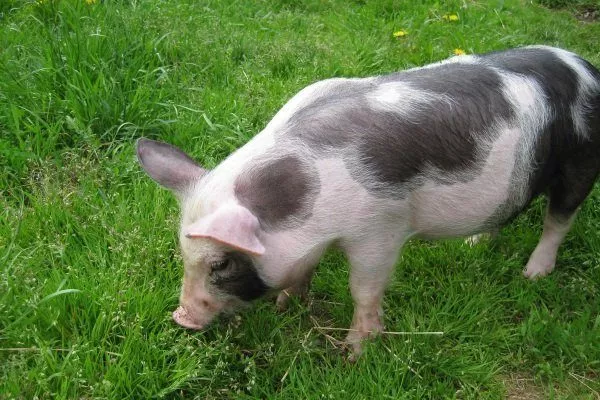
Mirgorod pigs are quite distinctive in appearance. This is reflected not only in their distinctive coloring but also in other characteristics of their appearance. Once you see one of this breed, it's difficult to mistake them for any other.
The color of individuals can vary, but the most common are:
- uniformly black color;
- mottled black;
- black and red.
There are also intermediate shades, transitioning from one to another (each individual has its own).
As for other external characteristics of the breed in question, they can be described as follows:
- wide body;
- strong build;
- deep chest;
- broad and fleshy shoulders;
- broad back;
- well developed hams;
- the skin does not have folds and is very elastic;
- widely spaced, dense, fleshy posterior edges of the lower jaw (ganache);
- head of medium size (not coarse);
- snout length – medium;
- medium-sized ears, directed forward;
- properly developed, strong and dry legs;
- strong hooves;
- The body is covered with long and shiny bristles.
This breed has one specific feature - characteristic spots all over the body, which is not found in individuals of any other breed (taking into account the elastic and smooth skin without folds).
Productive Features
The Mirgorod breed has become popular not only due to its unusual appearance, but also due to its productive characteristics:
1Fertility
Sows of this breed are extremely fertile. A single litter can produce 10 or more piglets. Each piglet weighs approximately 1.2 kg at birth.
In just one day, a single piglet can gain approximately 700 grams of weight. They reach a hundred kilograms (100 kilograms) in just six months.
And even with an average milk production rate of the sow (up to 50 kg per litter), the offspring develop quickly and confidently.
2Meat
The slaughter yield of a properly fed individual of this breed is 85%. Experts are less than enthusiastic about the meat quality, emphasizing that other breeds produce much better meat. However, the shortcomings in meat quality are certainly offset by the quantity:
- the weight of an adult boar can be around 270 kg;
- The weight of an adult queen is about 240 kg.
3Salo
The lard of Myrgorod pigs is legendary. This breed is incredibly popular in Ukraine precisely because of the tender and delicious lard these pigs produce. And given that "salo ta gorilka" (lard and vodka) is practically a national dish of this country, the opinions of Ukrainian experts can be trusted.
However, if this is not enough, here are some confirmed facts:
- On average, lard is 4.5-5 cm wide and is of extremely high quality and taste;
- The lard of Mirgorod breed pigs is considered the standard throughout the world;
- Initially, the breed was developed only for cultivation within the borders of Ukraine, but due to its unique characteristics, the breed became very popular in Russia and the Republic of Belarus (this only applies to breeding, but the finished products have already been seen in almost every country in the world);
- In honor of the Mirgorod breed, an annual festival is held - "The Mirgorod Pig Festival" (held in early October in the city of Mirgorod, where the breed originated).
Breed character
Mirgorod pigs are typically calm. They approach people confidently, and if they do show aggression, it's only when it's justified. This breed doesn't like rapid movement (except for small, playful piglets), so even hungry pigs won't rush headlong to an overflowing feeder.
However, a nursing female can do this, as nutrition is critically important for her to provide milk for her offspring.
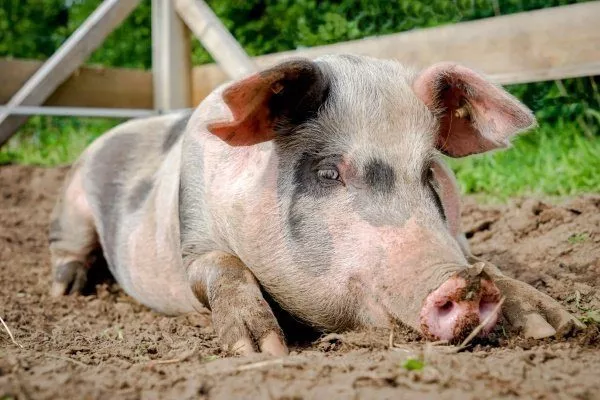
This breed of pig prefers a herd lifestyle. If left alone for long periods of time, they will become very homesick.
The Mirgorod breed prefers pasture-based housing, so it is important for them to have space for grazing.
Mothers treat their young very well, and although cases of abandonment have been recorded, they are quite rare. Females also tend to aggressively protect their young, but only when the need arises. And it doesn't matter whether it's a human or a well-fed boar—the offender will suffer.
Breeding zones
Mirgorod pigs are most often raised in:
- Poltava;
- Rivne;
- Cherkasy;
- Zhitomir
- and Sumy regions of Ukraine.
The breed is also very popular in the Republic of Belarus and in the regions of southern Russia.
Content Features
The key features for this breed are the following: conditions:
- mandatory and timely vaccination of pigs;
- constant maintenance of cleanliness in the premises;
- proper diet;
- regular grazing of animals in summer and spring.
Power supply conditions
Half of the daily diet of pigs should consist of compound feed based on fish and meat meal (for bone tissue), various vitamin and mineral supplements and crushed grain.
The remaining half may include:
- boiled potatoes;
- crushed grain crops;
- chopped (fresh) root vegetables such as turnips, beets, carrots, etc.;
- milk and fermented milk products;
- fruits and vegetables (seasonal);
- well-chopped fresh hay, tops and grass.
Boiled scraps from meat and fish are also suitable.
Expensive pig concentrates can be easily substituted. Crushed oats, barley, and wheat (pre-soaked in boiling water) are all suitable.
It is recommended to feed piglets 5 or more times per day. Adults will need 3 meals in winter and 2 meals in summer.
Care
Mirgorod pigs are relatively easy to care for (compared to other breeds). It's enough to follow just a few key requirementsto ensure that individuals of this breed feel good and comfortable:
- The pigs' enclosure must be highly airtight and warm, as this breed absolutely cannot tolerate cold.
Hypothermia causes developmental delays in pigs and contributes to the development of various diseases, primarily of the limbs.
- The room where the pigs are kept must have a stable temperature. Humidity should also not fluctuate abruptly; its level must be monitored.
- Pay close attention to the ventilation system. Avoiding drafts is the primary goal; otherwise, pigs will develop lung diseases even during warmer months.
- The barn must be cleaned 3 times a week (and if possible, even more often), and once a month the entire room must be treated with a sodium solution and bleached with lime.
- Strong odors and loud noises are strictly prohibited in the room. Peace and quiet are essential for Mirgorod pigs; otherwise, they will become nervous and restless, which will negatively impact their well-being.
This breed requires daily grazing because they thrive in pasture conditions. Without fresh feed and an active lifestyle, they are more likely to develop diseases such as rickets.
Yes, the Mirgorod breed is characterized by a leisurely gait, but that doesn't mean they don't enjoy walking and exercise. While some breeds prefer to run a kilometer, Mirgorod pigs are more likely to cover twice that distance, but at a slower pace.
Providing shade from the sun is critical when grazing. Light-colored animals do not tolerate sun exposure on their skin. The same applies to other colors, which are slightly more tolerant.
During the winter, pigs need to be kept as warm and dry as possible. It's also important to ensure constant access to clean water. In winter, the pigsty needs to be cleaned literally every day.
- Checking and insulating the premises.
- Providing additional heating for piglets.
- Prepare feed stocks to accommodate increased consumption.
Possible diseases
The Mirgorod breed of pigs has a strong immune system and rarely gets sick. However, there are some diseases specific to this breed that can occur even with proper care from the owner:
- helminths;
- scabies;
- lung diseases;
- poisoning;
- avitaminosis.
The risk of worm infestation can be significantly reduced by deworming your pigs' systems every six months as a preventative measure. Consult a veterinarian to determine the most effective and appropriate medications.
Washing pigs every three months will help reduce the risk of scabies. Lung diseases are prevented by avoiding drafts and hypothermia, to which Mirgorod pigs are extremely sensitive.
Poisoning often occurs due to an improper diet; avitaminosis (vitamin deficiency) can also occur for the same reason.
How to choose a piglet?
Before purchasing piglets, it is important to remember the basic rules:
- When purchasing Mirgorod piglets, you should make sure they are purebred.
- The piglet must be over one month old. By this age, pig breeders have time to wean the piglets from the sow and acclimate them to regular food.

Young piglets should not be abruptly switched from milk to standard feed. This will cause severe digestive upset.
- Having all the necessary vaccinations is crucial. The piglet you buy must be 100% healthy.
- Representatives of this breed are herd creatures; for their rapid adaptation, it is better to purchase 2-3 individuals.
- Fraud can be ruled out by the piglets' coloring: the Mirgorod breed is most often black and white. However, black or black and red piglets also occur.
- You can pay attention to the structure of the piglet’s body:
- it should be long and very wide;
- muzzle - conically elongated forward;
- The ears will be small in size, almost completely erect, slightly turned to the sides.
- It's a good idea to stay in touch with the pig breeder from whom you purchased the piglets. Piglets may have specific personalities or food preferences. Knowing what their mother ate can help you choose the right diet. The same applies to behavior. The pig breeder, as a more experienced breeder, can also offer valuable advice.
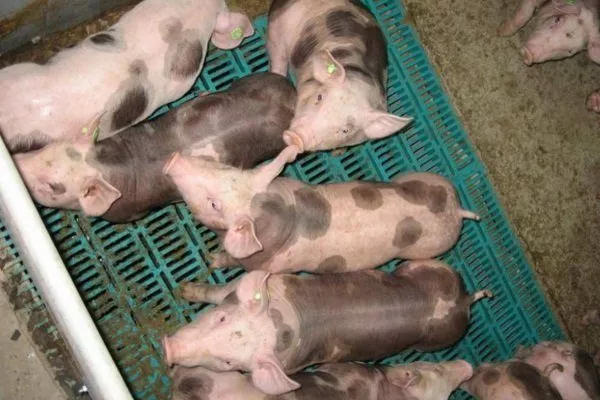
- ✓ Clear eyes without discharge.
- ✓ Clean, undamaged skin.
- ✓ Active behavior, no signs of apathy.
- ✓ Normal appetite, interest in food.
Changing the diet or environment too abruptly will cause problems adapting to the new environment. It's best to gradually prepare the piglets for the new conditions. This will ensure the adaptation process is as quick and easy as possible.
Advantages of the breed
Mirgorod pigs have equal amounts of positive and negative traits.
TO advantages can be attributed to:
- Tendency to gain weight. From an early age, piglets exhibit a strong and robust build. Representatives of this breed develop harmoniously, with a well-developed body structure, along with pronounced meaty contours and abundant fat and fat.
- Feeding and fattening. The Mirgorod breed of pigs is unfussy when it comes to food. They don't care about the quality of the feed, but rather its caloric content.
Mirgorod pigs gain weight so easily that no special feeding systems are required. Even with low-quality feed, the rate of fat accumulation is very high.
- Love of the pasture. From spring until the first frosts in autumn, pigs are kept on pasture. They enjoy the fresh air and large areas. It's best to bring them indoors only at night.
Mirgorod pigs suffer severe sunburn from direct sunlight (the layer of fat under the skin literally melts). They should be provided with shelter where they can escape the heat.
In other words, breeders emphasize the following advantages of the breed:
- undemanding to conditions of maintenance and nutrition;
- rapid accumulation of mass (meat, fat);
- balanced body structure;
- can stay on pasture for a long time without negative consequences;
- extremely tasty, tender, reference-level lard.
Disadvantages of the breed
This breed also has some disadvantages:
- Quality of meat. The lard produced by Mirgorod pigs is first-class, that's a fact. But the taste of the meat is considered several times worse.
The taste and yield of meat will improve if you let the pigs out more often and feed them predominantly protein feed.
- Vulnerability to cold. You can escape the sun's rays in the shade, but the cold will penetrate anywhere. The Mirgorod breed does not tolerate frost and suffers so much in cool conditions that even a short draft can cause serious illness. Growth rates decrease, and chronic diseases develop. And for small piglets, the cold is fatal, so they need additional heat lamps or be moved to a warmer room.
Mirgorod pigs can be considered one of the best lard breeds. Their low maintenance, strong immunity, and excellent quality lard are significant advantages over other pig breeds. Of course, there are some downsides, but if they aren't critical to the owner, there's no better breed.