
Conditionally edible mushrooms are those that are only suitable for consumption after processing. This may include pickling, boiling, frying, drying, blanching, or soaking. This is because conditionally edible mushrooms contain mildly toxic substances or a bitter, milky juice.
Tubular
The genus of tubular mushrooms features a wide, fleshy cap. The spore-bearing layer resembles a porous sponge with holes in the shape of miniature tubes.
| Name | Cap diameter (cm) | Leg height (cm) | Cap color |
|---|---|---|---|
| Wolf mushroom | 15-20 | 4-9 | Red, orange, pink |
| oak grouse | 2-25 | 2-10 | Light yellow, brown |
| Common Boletus | 18-19 | 4-8 | Yellow-brown, gray-brown |
| Speckled oakweed | 3-8 | 4-16 | Brown, dark brown |
| Ruby butter mushroom | 4-8 | 5-8 | Brick, dirty yellow, red |
| Butterhead Goat | 7-12 | 6-10 | Reddish, brown |
| Siberian butter mushroom | 4-10 | 5-10 | Light yellow with brown or red spots |
| Fir boletus | 3-6 | 4-8 | Dirty yellow, dirty brown |
| Grey butter mushroom | 5-10 | 5-8 | Gray with a purple or green tint |
| Red-pored porphyry | 5-10 | 4-8 | Brown, brownish-red |
| Porphyry false birch | 5-10 | 4-12 | Brown, gray-brown |
| Wood boletus | 2-8 | 3-10 | Orange-brown |
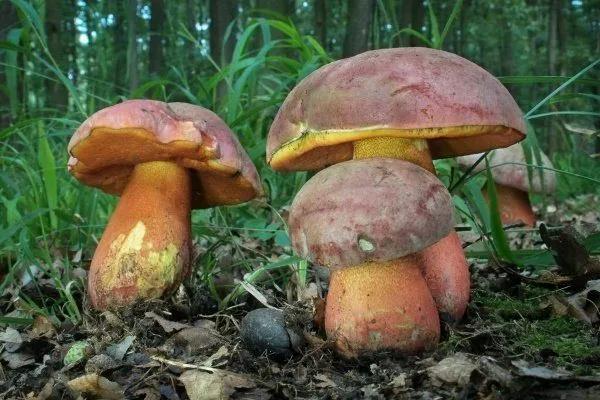
Wolf mushroom
The cap is convex, initially rough, later becoming smooth. Its width is 15-20 cm. The color directly depends on the age of the boletus:
- only those that have sprouted have pale brown or light gray caps, small, yellow pores;
- "Adults" have caps of red, orange or pink color, pores are large, red.
The pulp is fleshy, waxy or yellow in color, and when cut or damaged it turns blue.
The legs are yellow with brown-red spots, fleshy, from 1.5 to 7 cm in diameter, and from 4 to 9 cm in height.
The wolf mushroom prefers limestone, warm climates, and oak and beech forests. The harvest season is November-December.
oak grouse
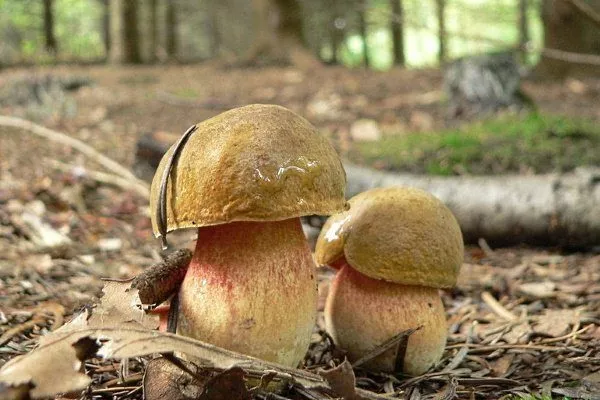
hat oak mushroom The mushroom can be anywhere from 2 to 25 cm wide. Initially, it's hemispherical, but as the mushroom ages, it becomes more concave, and its edges curl. Its color is light yellow or brown, and when damaged, it turns blue. The flesh is dense and slightly dry.
The stem is elongated, but thickens at the base and darkens to brown. It is yellow in the middle and turns red near the cap. It has a red mesh. The flesh is loose, sometimes with cavities. The stem length ranges from 2 to 10 cm.
This mushroom prefers oak groves, but can also grow in other deciduous forests. It's usually found at the edges of forests or clearings. It can be collected from June to September, and until November in warm autumns.
Common Boletus
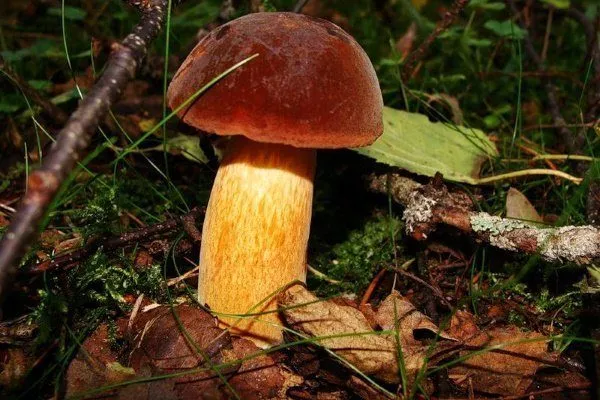
The cap of the common oak boletus is fleshy, convex, and rough. It can reach 18-19 cm in width. The color is yellow-brown or grayish-brown. The flesh is dense and yellow, but when cut, it turns blue-green and later black.
The pores of the cap are small, ochre-colored in young oak mushrooms, orange or red in “teenagers”, and dark gray-green in mature and large ones.
The stem seems to be covered with a brown mesh, its color is gradient - yellow at the cap, dirty yellow in the center, and olive near the base.
The common oak mushroom bears fruit in both deciduous and mixed forests, and is most likely found at the roots of oak and linden trees. The harvest season is August-September.
Speckled oakweed
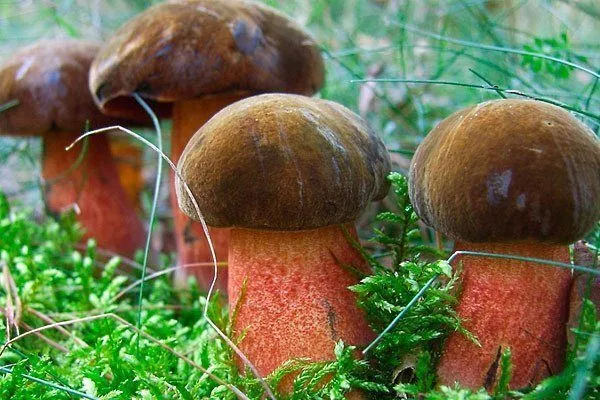
The cap of this species is hemispherical and brownish or dark brown. The flesh is yellow, turning blue-green when cut. In rain, the cap becomes slimy, and if pressed, it turns black.
The pores of young mushrooms are yellow, while those of mature mushrooms are orange and red. Where damaged, they turn blue. The spores are a dirty olive color.
The stem is thick and wide—up to 4 cm across in cross-section, 4-16 cm high. When the mushroom emerges, it is rounded, later taking on a cylindrical shape. Its color is yellow-orange with numerous bright red specks.
The spotted oak tree prefers coniferous forests, as well as areas where oak and beech trees grow. It is harvested from May to October.
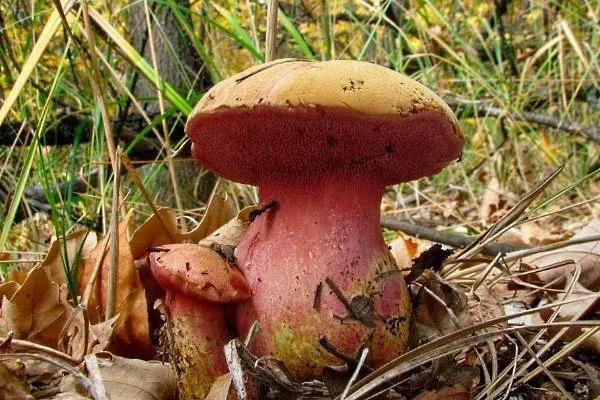
Ruby butter mushroom
The cap of the ruby boletus can be brick-red, dirty yellow, or red. It ranges from 4 to 8 cm in width. When young, the cap is convex; as the mushroom matures, it sags, and the edges curl upward. The flesh is yellow, turning pink at the tubular edge.
The stem is thickened at the base. It's purple near the cap, turning yellow closer to the ground, and the flesh also changes color.
The ruby boletus can germinate on partially decayed oak wood, but prefers the soil. It typically grows in oak forests, but can also be found in mixed deciduous or coniferous-deciduous forests. Fruiting occurs in August and September.
Butterhead Goat
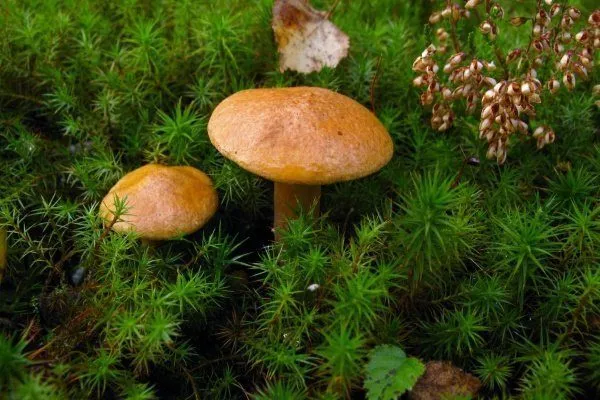
The cap is smooth, 7-12 cm in diameter, and has a reddish color that can darken to brown. With age, it sag, forming a plate-like shape. The flesh is rubbery in consistency, light yellow in color, but may take on a red tint when cut.
The stem is light orange, thin (no more than 2 cm wide), often curved, cylindrical, and thickens near the ground. The height varies from 6 to 10 cm.
The harvest season is from July to September. Kozlyak prefers pine forests with moist soil.
Siberian butter mushroom
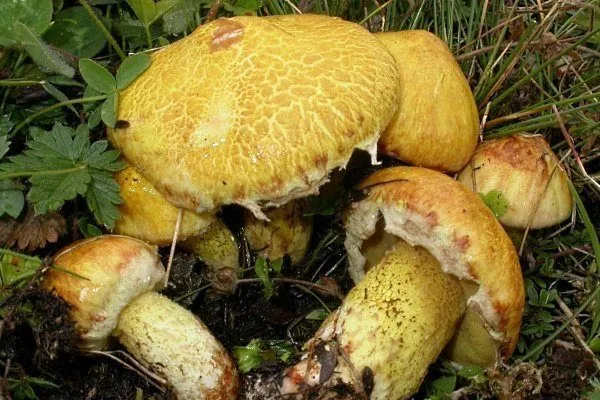
The cap is slimy, bumpy, and light yellow with brown or red raised spots. With age, its edges curl upward. It measures 4-10 cm in cross-section. The flesh, tubular layer, and pores are yellow, turning red when damaged. Mature mushrooms have brown spores. The tubular layer of a young mushroom is covered with a light, fuzzy film, which breaks off as it matures and may hang down, leaving a ring-shaped stalk.
The stem is 5-10 cm long. It is cylindrical, slightly curved, and tapers toward the ground. It is grayish-yellow in color, sometimes turning red at the base.
The mushroom prefers coniferous forests and can be harvested from July to mid-September.
Fir boletus
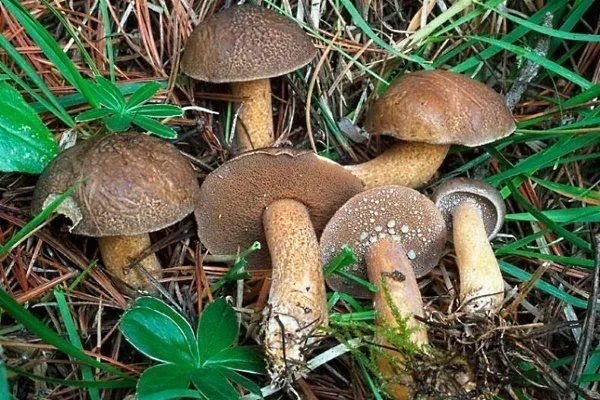
The mushroom has a wide, gently sloping, convex cap with a jagged edge. It is dirty yellow or dirty brown, darkening toward the top and lightening toward the edges. The cap is scaled, which, when dry, become rougher and darker. The pores are slightly lighter in color than the cap, and the spores are a rich yellow. The flesh is tender, light yellow. Pressure or excessively dry air causes the fir boletus to turn brown.
The stem is thin (1-2 cm in diameter), yellow, cylindrical, thickening toward the bottom, and covered with dark growths. Height ranges from 4 to 8 cm.
The mushroom grows in fir forests and bears fruit from July to September.
Grey butter mushroom
This butter mushroom's distinctive feature is its gray color with a purple or green tint. The cap is large, slimy, up to 10 cm in diameter, convex, with a tubercle in the middle, thinning toward the edges. The flesh is watery. Its coloration is white, turning brown over time, and if broken or cut, it turns blue.
The stem has a ring that disappears with age, and grows up to 8 cm in height. Its flesh is dense and yellow. The diameter is 1-2 cm.
The grey boletus can grow in both deciduous and pine forests. Fruiting occurs from July through September.
Red-pored porphyry
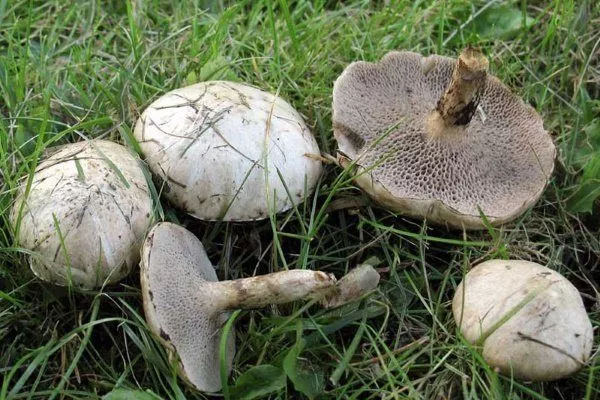
The cap of this mushroom has irregular contours and bumps, with an approximate diameter of 5-10 cm. Its color ranges from brown to reddish-brown, with a matte finish. When cut, the flesh of the red-pored porphyry mushroom can change color to green, blue, or black. A distinctive feature of this mushroom is its spores, which are a vibrant red-brown, almost purple color.
The shape of the stem depends on where the mushroom grows. In moist soil, it becomes elongated, while in dry soil, it becomes wide and short. The stems can be either smooth or scaly.
This mushroom grows in deciduous forests from August to September.
Porphyry false birch
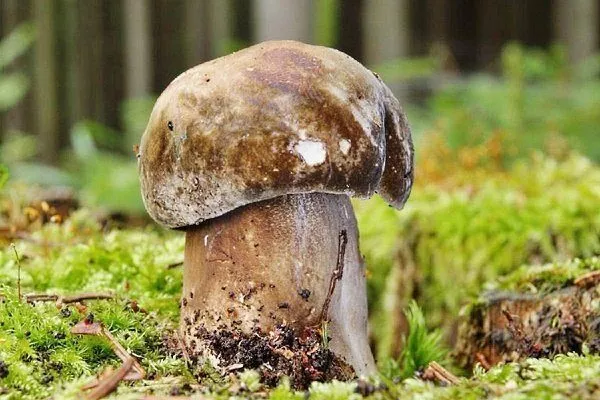
The cap is round, cushion-shaped, dry, brown or gray-brown in color. The diameter is up to 10 cm. The tubular layer is lighter than the cap: dirty gray or creamy gray. The spores are reddish-brown.
The stem is 4 to 12 cm tall and 1 to 3 cm in diameter. It thickens in the middle and is slightly thinner at the base and cap. The stem is dark brown. The flesh is white, but turns red when cut and then brown over time.
The false birch porphyry grows in coniferous or mixed forests. Fruiting occurs from July to October.
Wood boletus
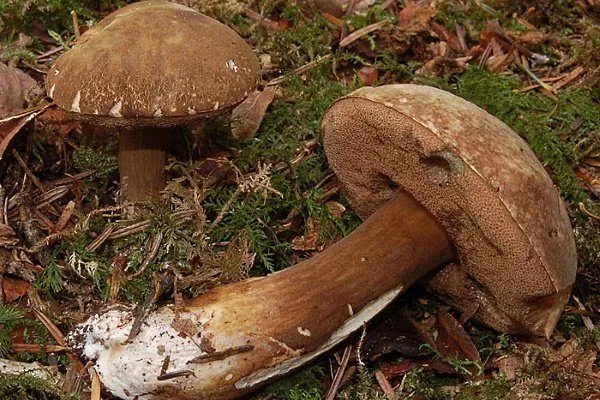
The cap is orange-brown and cushion-shaped. It is significantly wider than the stem, with a diameter of 2-8 cm. The spores are olive-colored, and the pores are soft yellow. The cap margin is brick-colored on the underside. The flesh is yellow and firm.
The stem is elongated and cylindrical, ranging from 3 to 10 cm in height. It can sometimes curve and is colored either the same as the cap or slightly lighter.
These mushrooms grow on trees, rotten stumps, and fallen trunks. They bear fruit from July to September.
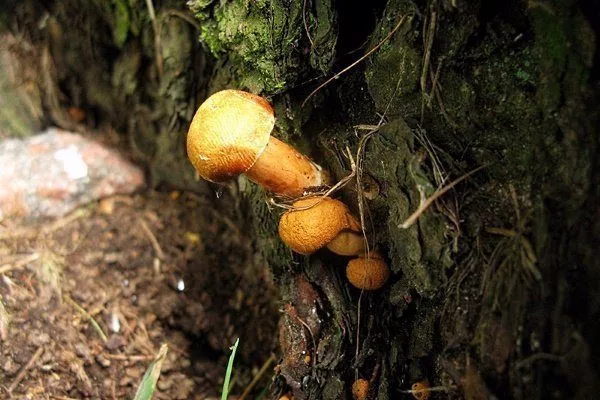
Plate-shaped
Lamellar mushrooms are distinguished by the fact that the spore-bearing layer (hymenophore) is located on the gills of the cap. These gills, in turn, extend from the center to the edges and protrude downwards.
| Name | Cap diameter (cm) | Leg height (cm) | Cap color |
|---|---|---|---|
| White milk mushroom | 5-20 | 2-6 | White |
| Black milk mushroom | 7-20 | 3-8 | Olive, dark olive |
| Felt milk cap | 7-18 | 2-8 | White, may turn yellow |
| Pink volnushka | 5-15 | 5-7 | Pale pink with dark circles |
| Common milkcap | 7-12 | 5-15 | Dark brown-gray, light gray with a bluish, blue and lilac tint |
| Sweet milkcap | 3-8 | 4-8 | Light orange, brick red |
| Brown milkcap | 3-7 | 5-8 | Dark brown, brown |
| Milkweed | 3-6 | 5-8 | Beige with a gray tint |
| Champignon tabular | 5-20 | 3-7 | White |
| Tiger saw-leaf | 2-10 | 3-5 | White |
| Common scalycap | 5-15 | 5-15 | Beige, yellow, light brown |
| Golden scalycap | 5-18 | 5-15 | Bright yellow |
| Purple rowan | 5-15 | 4-8 | Purple, lilac |
| Poplar rowan | 5-12 | 5-10 | Light orange |
| Winter honey fungus | 4-8 | 5-8 | Amber |
| Garden Entomola | 3-6 | 5-12 | White, gray, brown |
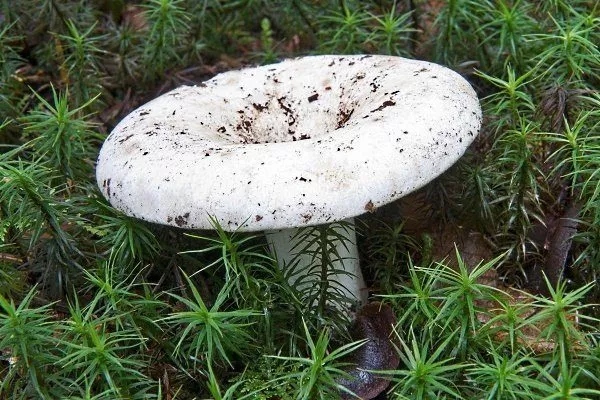
White milk mushroom
It is distinguished by its rich white color, but yellowing may occasionally appear. The cap ranges from 5 to 20 cm in diameter and is covered in mucus. It is funnel-shaped (with a central indentation), and the edges are rounded and tapering, sometimes covered with fibrous, hairy growths. The spores are colorless, and the gills are white with a slightly yellow edge. The flesh is dense but brittle. The mushroom contains a white, milky sap with a strong odor; it turns yellow when exposed to air.
The stem is 2 to 6 cm long and 1 to 4 cm in diameter. As the mushroom ages, it becomes hollow.
White milk mushrooms are especially fond of birch groves. Together with birch roots, this mushroom forms mycorrhiza. It can bear fruit from July to September.
Black milk mushroom
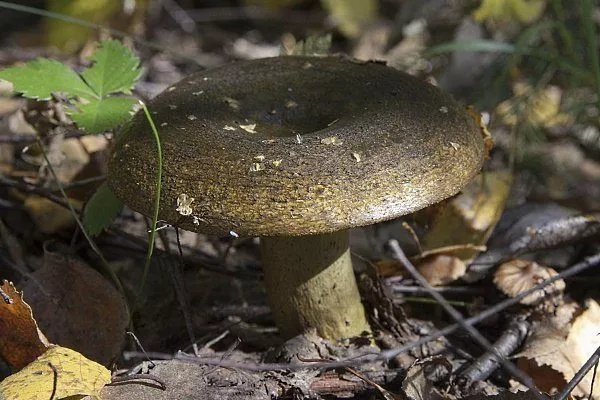
The cap is slimy, olive-colored at the edges and dark olive, almost black, in the center. It ranges from 7 to 20 cm in diameter and is funnel-shaped, with downward-curving margins. The flesh is dense and white, turning gray when cut. The mushroom secretes a milky white sap with a distinctive odor. The spores are beige.
The stem is 3 to 8 cm tall and 1 to 3 cm in diameter. It becomes hollow with age. The stem is identical in color to the cap and is cylindrical in shape, tapering slightly toward the ground.
The black milk cap prefers birch trees but can also be found in other deciduous forests. It requires light, so it often bears fruit along roadsides and in clearings. Harvest time: July to mid-October.
Felt milk cap
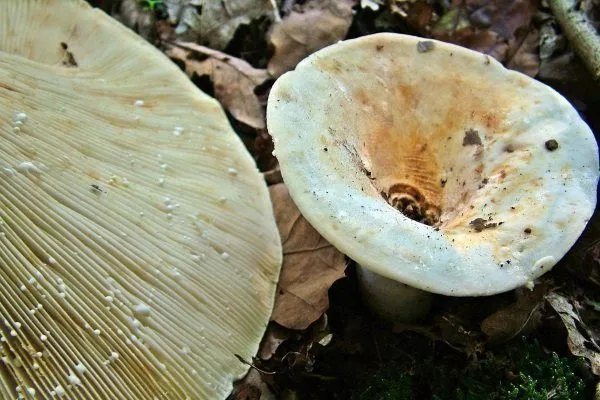
The mushroom is white, but may turn yellow or become spotted with age. The cap of a young milk mushroom is rounded and fringed; later, the edges become elongated, creating a funnel in the center. The diameter can range from 7 to 18 cm. The gills are sparse and yellowish, darkening to brown as they mature.
The stem is cylindrical, 2-8 cm tall. The flesh is identical to that of the cap: white, dense, and firm. The mushroom secretes a caustic, milky white sap that remains colorless when exposed to air (only as it dries may leave a red or brown stain).
The mushroom can live in deciduous, coniferous, and mixed forests, but especially prefers to nest near the roots of birch trees. They can be collected from July to September or early October.
Pink volnushka
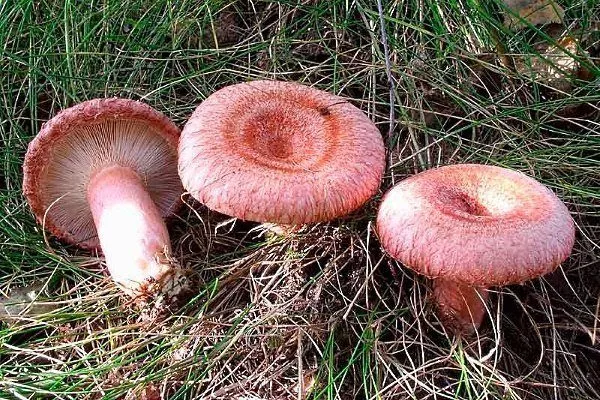
The pink milk cap has a large cap (5 to 15 cm in diameter). It is pale pink with darker circles radiating from the center. In damp weather, the cap becomes slimy and rounded, with a funnel-shaped depression. In young mushrooms, the edges are rounded, while in mature mushrooms, they are raised, revealing beige gills containing spores. The flesh is loose and pale yellow.
The stem is pale pink, hollow, up to 2 cm in diameter and up to 7 cm in height. The flesh of the stem is pink.
The mushroom secretes a bitter white milky juice.
The pink milk cap prefers to grow near the roots of birch and aspen trees, preferring moist soil. Fruiting begins in June and continues until the end of October, as this mushroom is frost-resistant.
Common milkcap
The cap is large, ranging from 7 to 12 cm in diameter, and becomes slimy in humid climates. Young mushrooms have curled margins with a depression in the center. With age, the margins straighten, rise upward, and become thin, forming a funnel-shaped center. Its color is initially dark brownish-gray, later becoming light gray with glaucous, blue, and lilac hues. Pale circles mark the cap. The flesh is yellow, dense, and brittle. The gills are beige, and the spores are bright yellow.
The stem is hollow, cylindrical, and slightly lighter in color than the cap. It ranges in height from 5 to 15 cm, and its diameter is 1-3 cm.
The common milkcap prefers humid regions, nesting in birch groves or pine forests. It is available for harvesting from July to September.
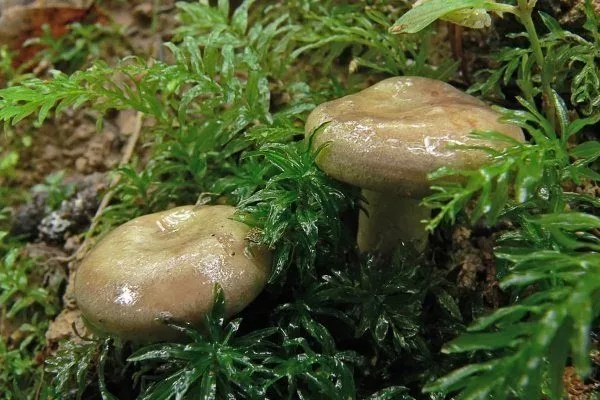
Sweet milkcap
The color varies from light orange to brick red. The mushroom contains a caustic, milky white sap. It does not change color upon exposure to air.
The cap of the sweet milkcap is 3-8 cm in diameter. It is fleshy and funnel-shaped, but has a small tubercle in the center. The flesh is loose and brittle. The gills vary in color from soft beige to pink.
The stem is 4 to 8 cm long and 1-3 cm in diameter. It is slightly lighter in color than the cap and may be slightly curved.
The sweet milkweed is found in deciduous forests. Fruiting occurs from August to late September.
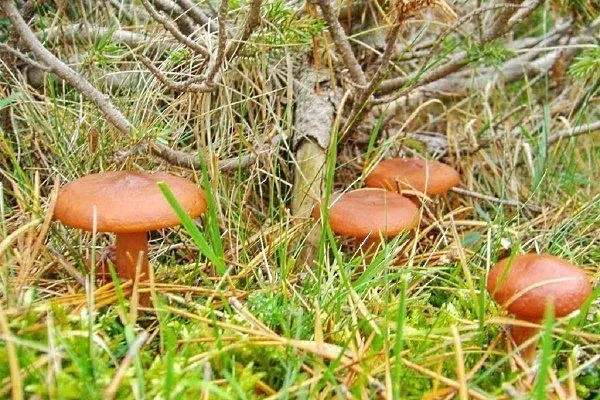
Brown milkcap
The mushroom's color ranges from dark brown to brown, with the stem and cap margins slightly darker and the center lighter. The surface is velvety to the touch. The flesh is light yellow, almost white, but turns red or ocher where broken. Young brown milk caps have a cushion-shaped cap, which becomes funnel-shaped with age, but retains a small tubercle in the center. Its diameter ranges from 3 to 7 cm. The gills are large, dense, and white, extending down the stem. The spores are dirty yellow.
The stem has a diameter of 1-3 cm and a length of 5-8 cm. It is cylindrical in shape and can bend and taper at the base.
The brown milkcap prefers coniferous forests. It can be collected from August to the end of September.
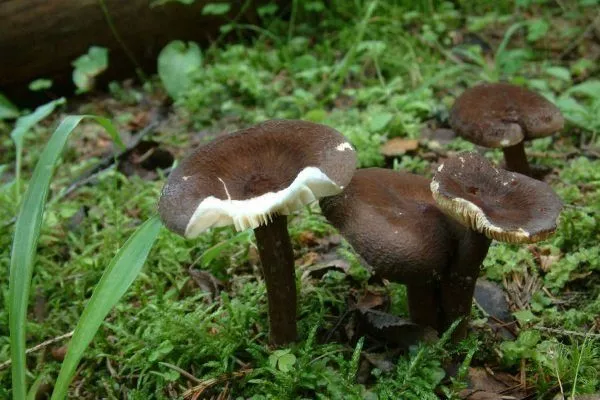
Milkweed
The cap and stem are the same beige color with a grayish tint. The mushroom has a coconut-like scent, imparted by the white milky sap. It is non-pungent and does not change color when exposed to air.
The cap is dry, rounded, with thin edges and a central depression that deepens with age. Its diameter is 3-6 cm. The gills are dense and thin, slightly paler than the rest of the mushroom. The spores are light cream. The flesh is white and loose.
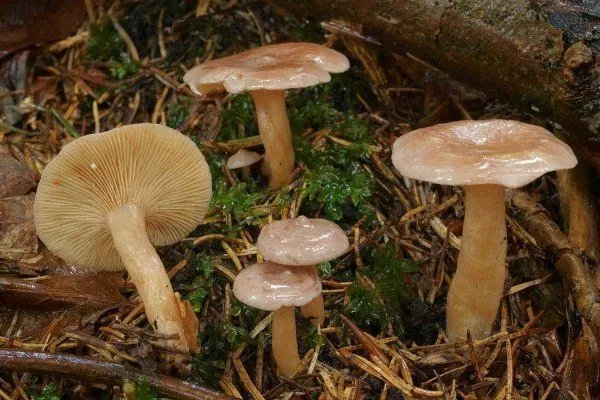
The stem is 5-8 cm long and 1-3 cm wide. It thickens near the ground. The stem is smooth and becomes hollow as the mushroom matures.
The fragrant milkweed is most often found in deciduous forests under layers of fallen leaves. It is harvested from August to October.
You can learn more about what conditionally edible milk caps look like, as well as how to prepare them for safe consumption, by watching this video:
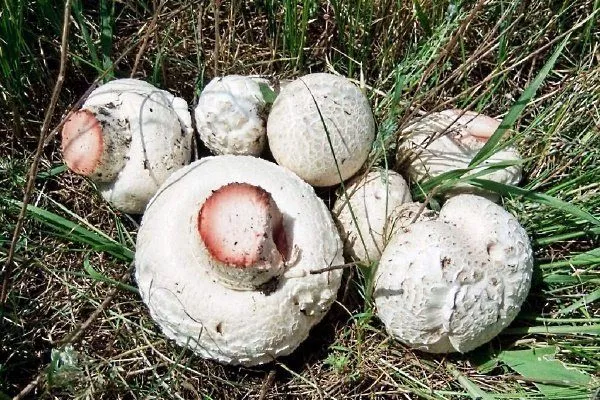
Champignon tabular
The cap is white, fleshy, with downward-curving margins, ranging from 5 to 20 cm in diameter. Its tip splits into tabular gills. These often darken, turning gray or brown. When pressed, the cap may turn yellow. In older mushrooms, the edges smooth out, revealing the gills. These gills are initially as white as the cap itself, but later darken due to the brownish-brown spores.
The stem is short and dense, 3-7 cm long and 1-3 cm in diameter. The flesh of the cap and stem is the same: white and very tender.
A young mushroom will have a ring that gradually separates from the stem and hangs in clumps.
The tabular mushroom prefers areas with a dry climate and steppe zones.
Tiger saw-leaf
The mushroom is white. The cap is dry, up to 10 cm in diameter, initially convex, then curling upward at the edges. The surface is covered with small brown scales. It has white flesh and light orange gills.
The stem is 3 to 5 cm long and about 1 cm in diameter. It is also covered with scales, but thicker and slightly darker towards the base.
The tiger sawfly grows by feeding on rotten wood. This mushroom is most often found in damp deciduous forests, near swamps, on stumps, or fallen trees. It especially favors willows and poplars.
Fruiting occurs from late April to early November. The largest harvest is from July to September, as this is the period when cluster growth occurs.
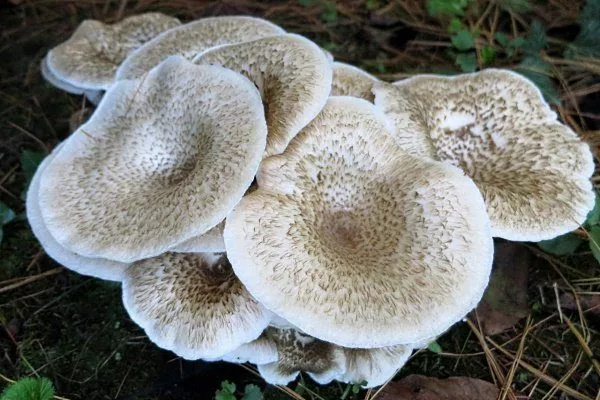
Common scalycap
The mushroom is beige, yellow, or light brown. It is covered entirely with small dark scales. Its flesh is yellow and firm.
The cap is dry, ranging from 5 to 15 cm in diameter. It is rounded, with edges turned down and a small tubercle in the middle. The gills are dense and can be gray, reddish, or brown. The spores are brown.
The stem is up to 2 cm in diameter and grows from 5 to 15 cm in height. Remnants of the ring remain on it.
The common scalycap prefers deciduous forests. It grows at the roots or stumps of hardwood trees. It requires light, so it often chooses sunny locations. It can be collected from July to September.
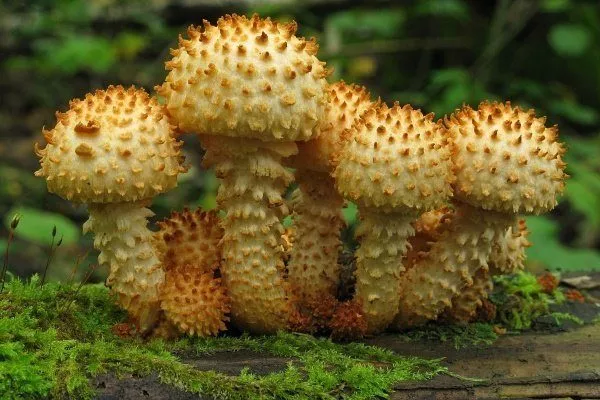
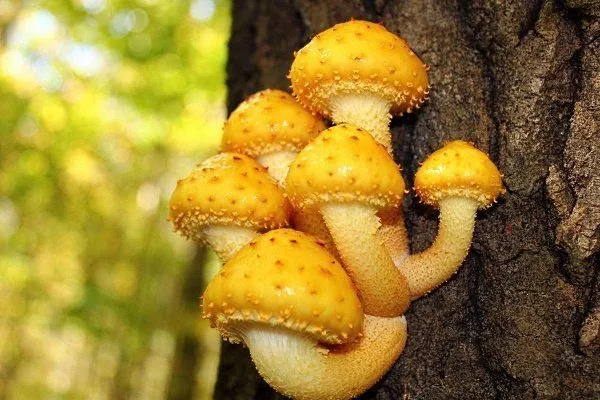
Golden scalycap
This subspecies lives in large colonies on tree trunks. Each mushroom is covered in scales. However, on the cap, the scales are less densely distributed, and they are larger and darker than those on the stem.
The cap itself is bright yellow, cushion-shaped, 5-18 cm in diameter, with a tubercle in the center, and the edges curl downward. With age, it flattens. The gills are wide, initially yellow, and turn olive in mature mushrooms. The flesh is creamy or yellow.
The stem is curved at the base as it attaches to the trunk. It is 1-2 cm in diameter and can reach 15 cm in length. Young mushrooms have a ring, which disappears later.
Golden scalycap prefers old deciduous forests. It can bear fruit from late May to early November.
Purple rowan
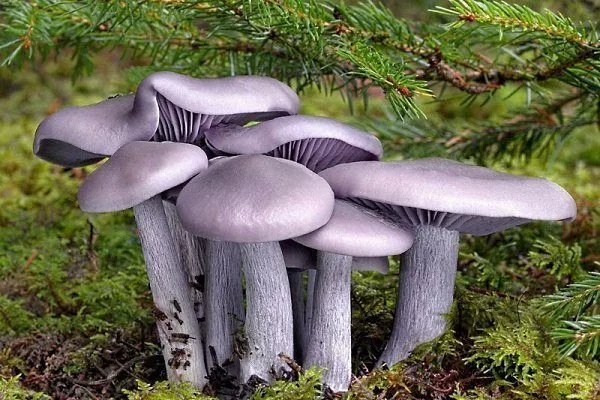
The young mushroom has a purple color, but with age it fades, becoming lilac.
The cap is round, fleshy, and jagged-edged. Its diameter is 5-15 cm. The gills are dense, large, but thin. The spores are pink. The flesh is dense, the same color as the mushroom, and has a fruity aroma.
The stem is fibrous, cylindrical, and thickened near the ground. Height is 4-8 cm, cross-sectional width is 1.5-3 cm.
It grows in mixed or coniferous forests. It bears fruit in the fall, until the first frost.
Poplar rowan
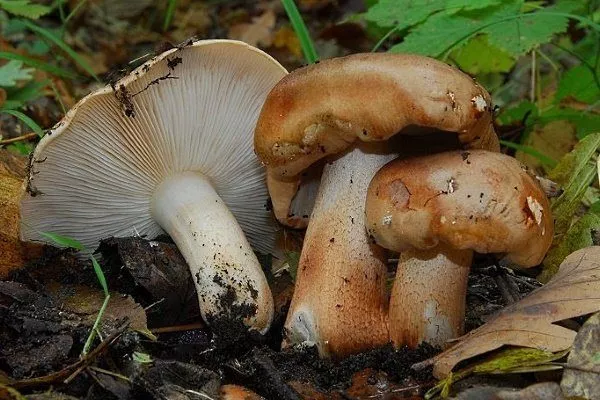
The mushroom is light orange in color. The cap is plump, soft, and hemispherical; with age, the edges straighten out, and the cap becomes spreading. Its diameter is 5-12 cm. The flesh and gills of young mushrooms are initially white or cream-colored, later becoming pink with a brown tint.
The stem is 5-10 cm tall and 2-4 cm wide, widening toward the ground. The cap is light, almost white, at the base.
Poplar rowan – a common mushroom. It is found in deciduous forests, parks, and gardens. It prefers to grow on poplar trees. It can be harvested from August to October.
Winter honey fungus
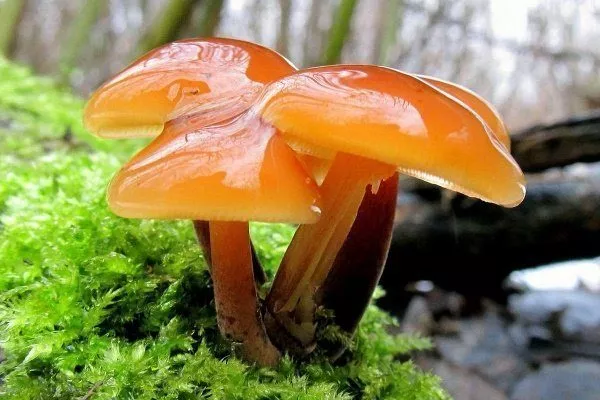
The mushroom grows in clusters on stumps and fallen trunks. The cap is convex, glossy, with a jagged, wavy edge. When humidity increases, it becomes covered in slime. The color is amber, darker in the center and lighter at the edges, sometimes even pale yellow. The gills are large and beige. The spores are white. The pulp is highly moist, and its color is the same as the gills.
The stem is light brown, thin (up to 1 cm in diameter), 5-8 cm high.
Common in deciduous forests, fruiting begins in November and can continue throughout the winter during thaws.
Garden Entomola
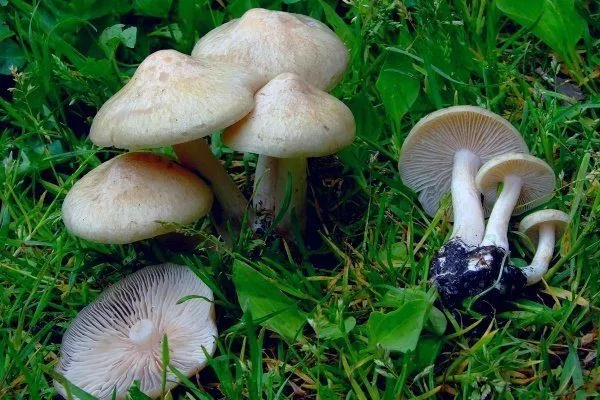
Young mushrooms are white, with a slightly creamy cap. As they age, they become grayer, and may eventually develop a brownish tint.
At first, the cap is bell-shaped, but over time, the edges rise, become thin, and sometimes jagged. A convex tubercle remains in the center. The gills are sparse and wide, changing color from pink to brown with a reddish tint. The spores are pink. The flesh is white and dense.
The stem is long (up to 12 cm), fibrous, sometimes twisted, and grooved; in older mushrooms, it is hollow. The width varies from 2 to 4 cm.
Entomola orchardiana can be found in deciduous or mixed forests, gardens, and parks. Fruiting occurs from late May to late July.
Marsupials
Ascomycetes contain their spores in asci, which is why they are called ascomycetes. They may lack a fruiting body entirely, and the entire visible surface of the mushroom is an asci. Conditionally edible ascomycetes include all morels and gyromitra. How are they different? look here.
| Name | Cap diameter (cm) | Leg height (cm) | Cap color |
|---|---|---|---|
| Morel mushroom | 4-9 | 8-9 | Yellow, gray-yellow, flesh-colored |
| Thick-legged morel | 3-8 | 4-8 | Gray, gray-yellow, orange |
| Conical morel | 3-10 | 5-10 | Orange, brown |
| Morel mushroom | 5-10 | 5-15 | Dark gray, black |
| Morel | 1-5 | 0-5 | Beige, brown |
| Morel cap | 2-5 | 5-10 | Light brown, dark brown |
| Morel cap conical | 2-3 | 5-10 | Light brown, dark brown |
| Common morel | 1-2 | 2-3 | Dark brown with a burgundy tint |
| Giant morel | 7:30 | 3-6 | Nutty, rich brown |
| Pointed stitch | 3-10 | 8 | Ochre, brown, red |
Morel mushroom
The cap, 4-9 cm in diameter, is an ovoid or spherical cluster of fungal tissue, resembling wrinkled, thin skin of yellow, gray-yellow, or flesh color. The cells are irregular, randomly elongated. The spores are yellow.
The stem is white, elongated, and may have thickenings anywhere, but is most common near the ground. It reaches 8-9 cm in length and 2-3 cm in width.
The flesh is light, tender to the touch, with a pleasant aroma. But there is not much of it, because morel - hollow.
This mushroom prefers limestone soil and can grow in deciduous and mixed forests. It appears from late April to early June.
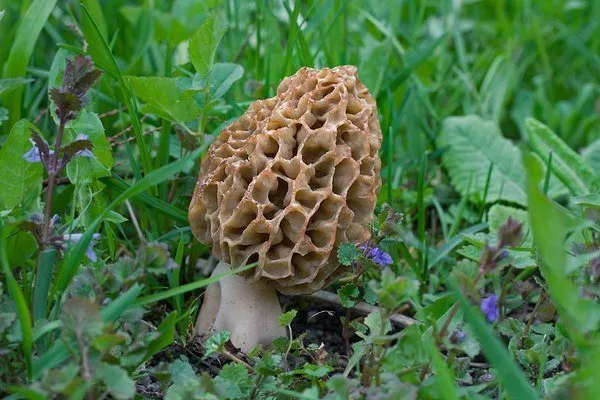
Thick-legged morel
The cap is ovoid, gray, gray-yellow, or orange, with edges fused to the stem. The cells are randomly shaped and elongated. The cap is 10 cm tall and can have a variable diameter of 3-8 cm. The spores are flesh-colored. The pulp is soft, brittle, and white.
The stem is white, reaches up to 8 cm in diameter and 4-8 cm in length. The structure is hollow, tuberous, with longitudinal grooves, wide at the base.
This morel prefers black soil and deciduous forests with moss beds. It bears fruit from late April to early June.
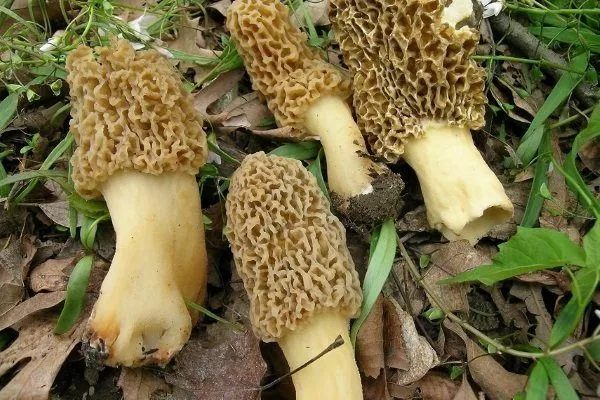
Conical morel
A distinctive feature of this morel is its elongated cap with a thin tip. It resembles a fairytale gnome's cap. Its color is orange, with brown edges around the cells. It may darken with age. Its diameter is up to 3 cm, and its height is up to 10 cm. The spores are light ocher.
The conical morel is a hollow mushroom with very soft flesh that breaks easily. The stem is white, cylindrical, and grooved longitudinally, thickening toward the base.
It can grow in both deciduous and coniferous forests, clearings, and gardens. However, it especially prefers marshy soil and ground fissures—ravines, landslides, canals, and burnt-out areas of forest. It can be harvested as early as mid-April, and it bears fruit until early June.
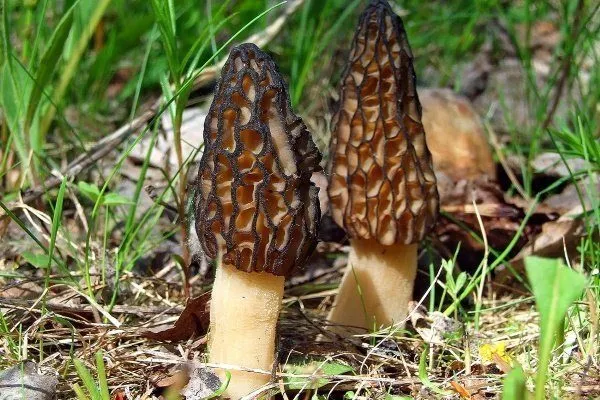
Morel mushroom
The cap is narrow, elongated, dark gray, with black edges at the cell edges. It can grow up to 10 centimeters in height and reach 5 cm in diameter. The spores are creamy yellow. The cells are strongly elongated, irregular in shape, delimited by vertical folds.
The stem is grainy to the touch, its height is 5-15 cm. The color is white or creamy yellow.
The tall morel can grow in deciduous and mixed forests, clearings, and mountains. It bears fruit from late April to mid-June.
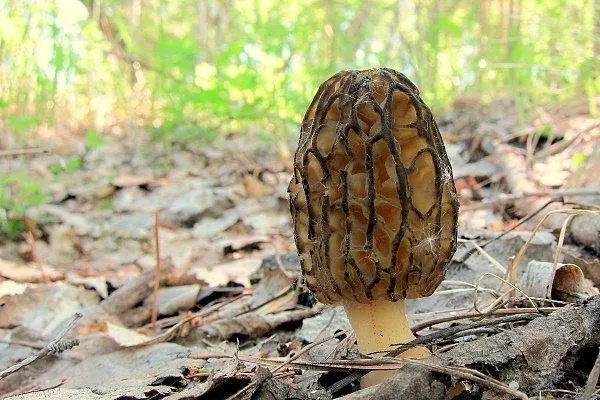
Morel
The main characteristic of this mushroom is the absence of a stalk, or only a rudimentary one. The cap is equal in height and width—1-5 cm. It is spherical and hollow. Initially, the mushroom is light beige, but as it matures, it darkens to brown. The cells are identical in color to the cap, both inside and along the ribs. The flesh is the same color as the rest of the mushroom, or slightly lighter.
The stem, if present, is white, cylindrical in shape, and covered by a cap.
The round morel bears fruit from April to May. It is found on old trees and moss. It prefers deciduous forests, but can also be found in mixed forests.
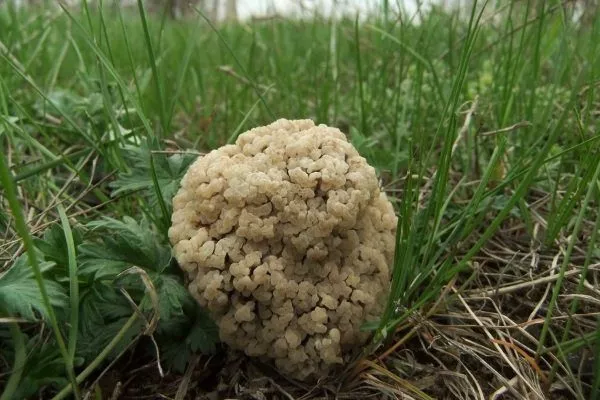
Morel cap
A distinctive feature of this morel is its cap, the edges of which are not fused to the stem. It appears to be worn like a hat. Its flesh is thin, tender, and waxy.
The cap is conical, with cells arranged in longitudinal wrinkles and thin white margins. Its height and width do not exceed 5 cm. Its color ranges from light to dark brown. The spores are colorless.
The stem is hollow, cylindrical, and widens at the base. Initially, it is completely white. With age, beige or ochre-colored, uneven scales appear, encircling the stem.
Morel cap It requires light, so it prefers deciduous forests with clearings, forest edges, and frequent paths. This mushroom can be harvested in late April and early May.
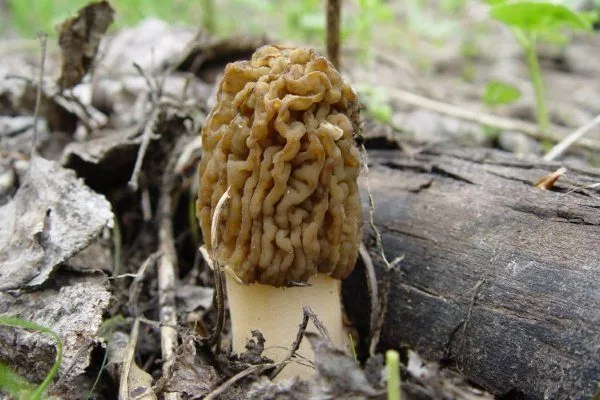
Morel cap conical (or smooth morel)
The mushroom has a conical cap, not attached to the stem at the edges. However, it is smooth when young and bumpy when mature. Its color ranges from light to dark brown. The cap is no more than 3 cm high and 2 cm wide. The flesh is thin and brittle. The spores are colorless.
The stem is 5-10 cm high and only 1 cm in diameter. It is milky in color, cylindrical in shape, and elongated.
The conical cap mushroom prefers to grow near bodies of water and in deciduous forests. It often grows near ditches under low bushes. It can be harvested from late April through May.
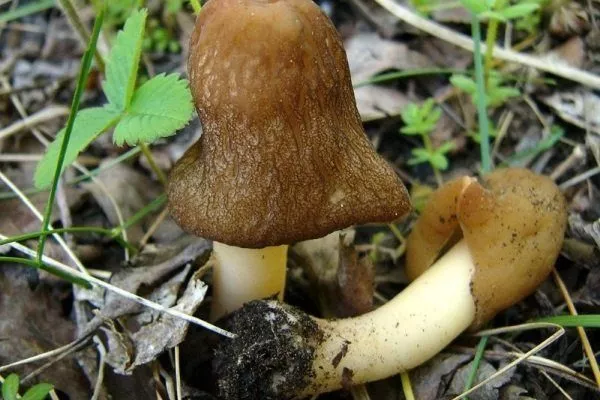
Common morel
The cap is uniquely shaped, resembling a brain. It can be described as spherical, covered with numerous large convolutions. The mushroom has a small cap (1-2 cm in height). Its color is dark brown with a burgundy tint. The spores are pale yellow and may leave an oily residue. The flesh is tender, brittle, and has a characteristic fruity aroma.
The short stem (2-3 cm in height) can be up to 6 cm wide. It is white with a pink tint, irregular in shape, smooth, and hollow inside.
This mushroom prefers sandstone and is found in burnt-out forest areas or at the roots of coniferous trees. It can sometimes be found under poplars. The common morel bears fruit from late April to May.
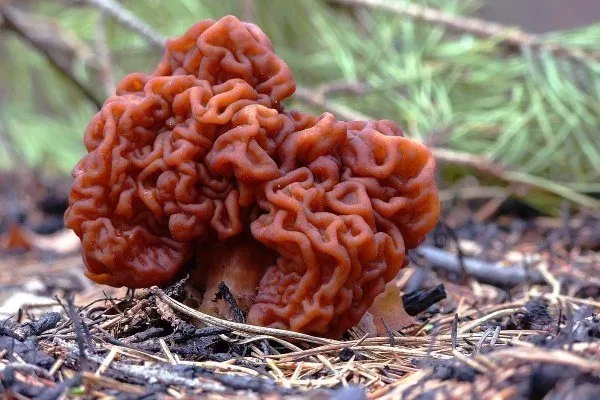
Giant morel
This mushroom is truly large for a morel. The cap width ranges from 7 to 15 cm, with rare specimens reaching 30 cm. The shape is irregular, wavy, and folded. The cap is nutty when young, darkening to a rich brown with age. The spores are grayish-yellow. The flesh is pale gray and pale yellow, with a waxy texture.
The stem is hollow, white, and grooved and indented. Its height is 3-6 cm.
The giant morel prefers sandstone but can also be found in chernozem soil. It especially likes to grow near the roots of birch trees. It can be harvested from late April to late May.
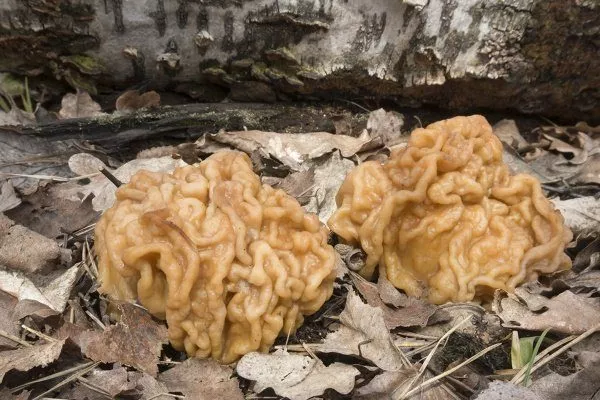
Pointed stitch
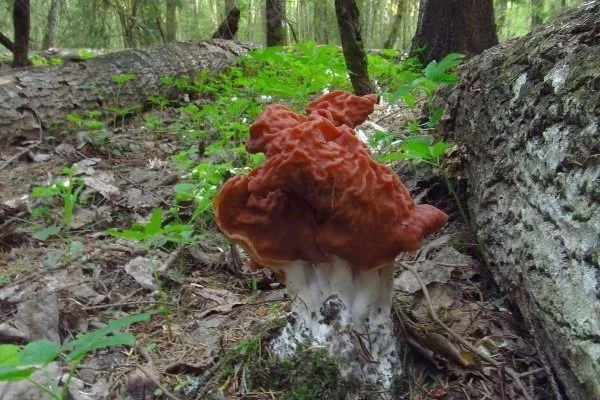
The cap of the pointed morel is hollow and has a very unique shape—it resembles a crumpled sheet of paper with the corners turned up. In reality, the cap is made up of wrinkled plates, usually three in number. The top is ochre, brown, or reddish; where the plates curl, the white underneath becomes visible. The flesh is thin and easily damaged.
The stem is milky-colored, hollow, and covered with tubercles and folds. It is 8 cm high and 2-5 cm wide. Bits of soil trapped inside the stem during the growth of the fruiting body remain. The flesh is firmer than that of the cap.
The morel bears fruit from early April to May. It thrives on rotting stumps in deciduous forests, especially beech forests.
Uncertain
This section includes mushrooms that simultaneously include characteristics of several species or have unique characteristics.
- ✓ Forests with minimal air pollution are preferred.
- ✓ Avoid areas with obvious signs of chemical contamination.
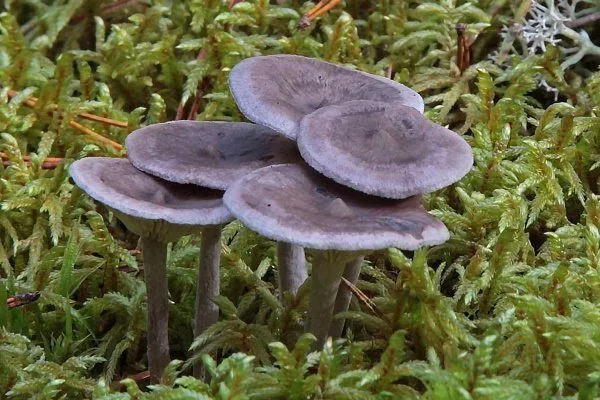
Humpbacked fox
Chanterelles have a gynemorphic layer located on pseudo-gills. The cap is funnel-shaped but shallow, with a slight bulge in the center and edges that are raised and curved downward. The cap is gray with a distinct violet or purple tint. The center of the cap is darker and reaches a diameter of up to 7 cm. The pseudo-gills and spores are white. The flesh is moist, flexible, and white, but if broken, the damaged part of the mushroom will turn red.
The stem is thin (1-1.5 cm wide) and tall (6-9 cm). It is white or gray, but differs from the cap in its lighter shade.
Humpbacked chanterelles grow in colonies. They prefer moist coniferous forests with moss litter. Fruiting begins in mid-August and ends around November.
Hericium variegated
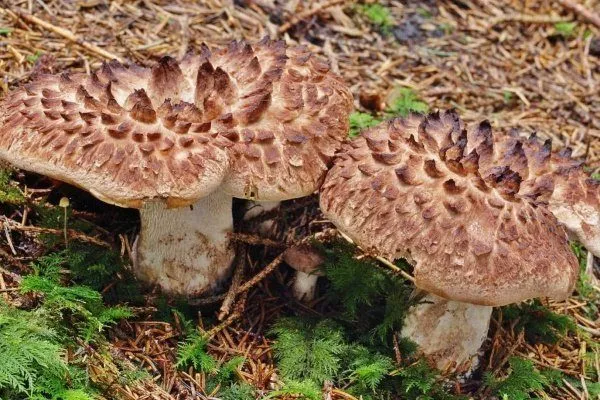
The cap is initially cushion-shaped, but as the mushroom matures, it takes on the appearance of a gently sloping funnel, with thin, drooping edges. The cap is dry to the touch, covered with scales that create a circular pattern. The diameter can reach 25 cm. It is characterized by a brownish hue with a violet tint, while the scales are significantly darker, reaching dark brown or black. The flesh is dense, flexible, and white. The spines are lilac-beige, and the spores are brown.
The stem is up to 2 cm in diameter and can be 2-8 cm high. It widens and darkens toward the bottom. The older the mushroom, the more hollow its stem becomes.
The variegated hedgehog mushroom prefers dry coniferous forests and sandstone. It can be harvested from mid-August to early November.
Hericium scaly
The cap is covered with dark brown scales that may merge. It is light brown with a reddish tint and ranges in diameter from 3 to 13 cm. Its shape is round, convex, with a jagged edge and a slightly depressed center. The spore-bearing spines are white and grow up to 1 cm in length. The spores are brown. The flesh is white with a blue tint, soft and firm, and has a distinctive doughy odor.
The stem is ochre-colored immediately adjacent to the cap, turning brownish-brown below, and with a blackish-blue tint near the base. There's no noticeable separation between the stem and the cap; they blend seamlessly into each other.
The rough hedgehog mushroom grows in clumps or rings. It typically inhabits pine forests and bears fruit from August to late September.
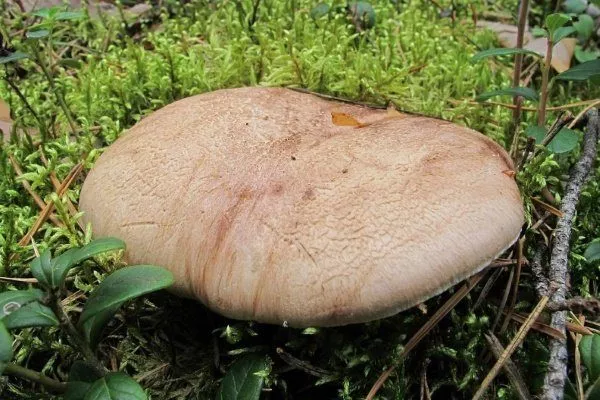
Tuberous tinder fungus
The cap is round and wide, reaching up to 20 cm in diameter. It is beige in color and covered with dark brown, ring-shaped scales. The hymenoform and spores are white. The pulp is fibrous and white.
The stem is slightly lighter than the cap and also covered with scales, but smaller ones. It can be curved, widening significantly at the base to 1-2 cm. It is flat in shape but can be slightly funnel-shaped. Its height is up to 8 cm.
The tuberous polypore prefers stumps and old deciduous trees growing in alkaline soils. It bears fruit from May to September.
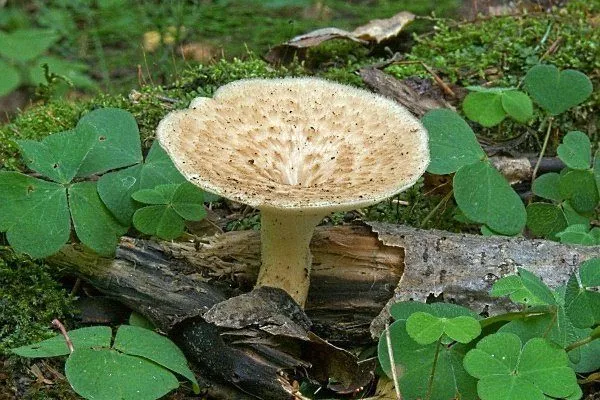
Sulphur-yellow tinder fungus
It grows in clusters on living tree trunks; separating one mushroom from another is virtually impossible, as they are fused at the base with caps and lack stalks. The fruiting body is bright yellow on the underside and edges, and the top turns orange as the mushroom matures. The flesh of young mushrooms is firm, but later it hardens. The spores are cream-colored.
The edges of the caps are wavy, overlapping each other to form a semicircle or fan-shaped form. A single colony can weigh approximately 10 kg.
The sulfur-yellow polypore is most often found on oaks and lindens, but can also infect other deciduous trees, and occasionally spruce. Fruiting begins in the last week of May and ends in September.
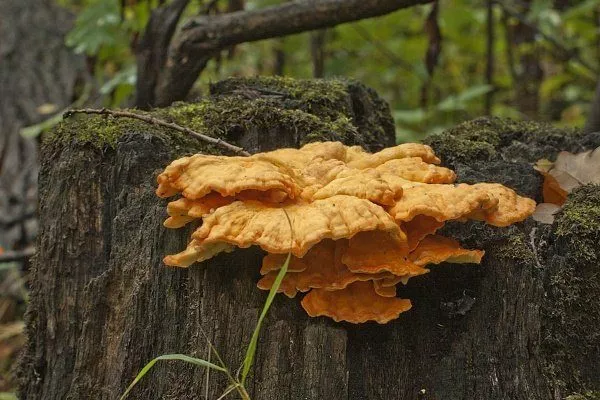
Umbrella polypore
A mushroom that grows in numerous families. It has a distinctive dill-like aroma. The caps of the umbrella polypore are 2-6 cm in diameter. They are thin, rounded, with jagged edges and a depression in the center. They are distinguished by their gray-beige color. The spores and flesh are creamy. Mature mushrooms have a tough flesh, while young mushrooms have a very tender flesh.
The stems are white, curved, and thin. In some mushrooms, they grow together, resulting in several stems growing from a single stem. The height is no more than 2 cm.
The umbrella polypore grows at the roots of deciduous trees, and less commonly, conifers. It bears fruit from June to November. The mycelium does not produce a fruiting body every year.
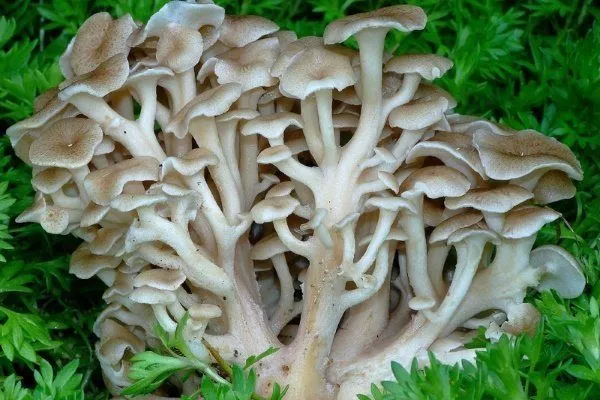
Thick-leaved tinder fungus
The mushroom grows at the roots of living, but already rotting, trees and stumps. It has virtually no stem. The fruiting body consists of caps that grow fan-shaped, overlapping each other. Their edges are wavy. Young mushrooms are typically light beige in color; at this stage, their flesh is tasty, soft, and white with a unique nutty aroma. With age, the mushroom darkens. The spores are white.
The dense-leaved polypore bears fruit from August to September. It often chooses deciduous trees.
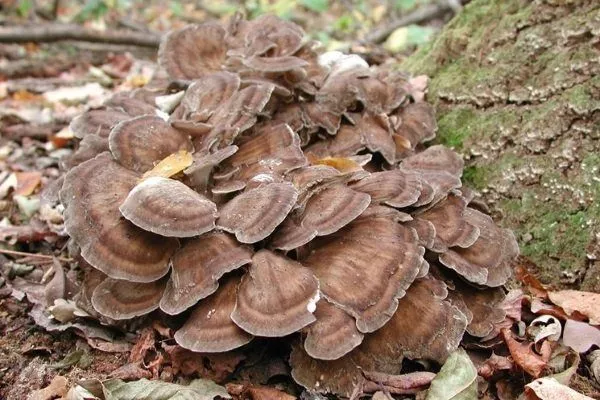
Curly tinder fungus
A parasitic tree fungus that grows from a single root-like stalk that anchors itself at the root. Numerous caps develop. They have wavy, sometimes jagged, edges, giving the fungus its spherical shape. The spores are cream or gray. The flesh is dense but delicate, with a nutty aroma. Young mushrooms are light yellow; mature ones acquire a light rusty hue, sometimes darkening to gray.
Curly-leaved polypores are measured not by individual mushrooms, but by the entire fruiting body. It can range from 5 to 60 cm in diameter. They can weigh up to 14 kg, but an adult curly-leaved polypore typically weighs 5-7 kg.
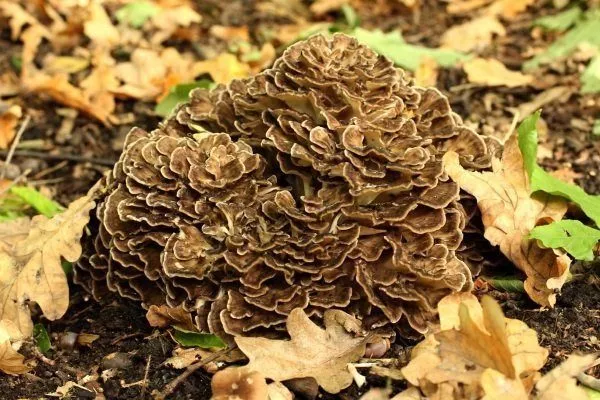
Curly polypore prefers coniferous trees and can be harvested from August to September.
Confluent tinder fungus
These mushrooms live in small families, the stems or caps of which are fused into a single fruiting body. The total diameter of a fused mushroom can reach 40-45 cm.
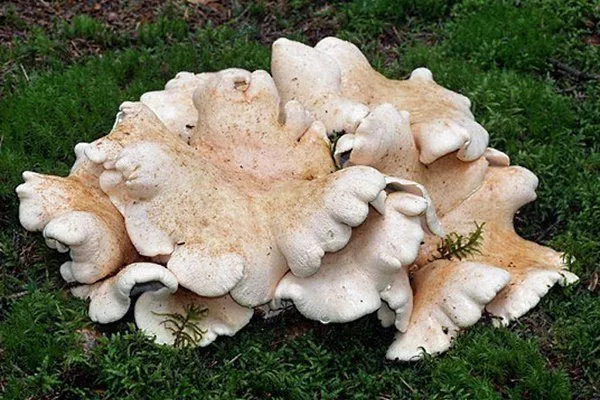
Hats come in various shapes:
- rounded;
- fan-shaped;
- arbitrary unequal.
Young mushrooms are cream-colored with a pink tint, turning red or orange with age. The caps are initially smooth, but later become rough, eventually developing scales. The hymenophore is white and may turn red as the mushroom dries.
The length of the stem is 3-7 cm, its diameter is 1-2 cm.
This mushroom grows on the ground, preferring coniferous forests, especially those rich in spruce. It often grows alongside moss. It bears fruit from mid-June to August.
Conditionally edible mushrooms represent a vastly diverse group of the mushroom kingdom, boasting a vast variety of shapes and colors. They include both well-known and extremely rare species, and they grow everywhere. It's important to remember that conditionally edible mushrooms must be properly cooked before consumption.