
The Texas White Broiler Quail is also known as the Albino White Pharaoh or the Texas White Giant (which sometimes causes confusion among inexperienced poultry farmers). These quail are prized not only for their healthy eggs but also for their lean meat.
A little about the breed
American breeders developed the breed. The ancestor was the Japanese quail, with only large specimens selected for breeding. The breed's white color was achieved by crossing the Japanese quail with the white English quail.
In appearance, the Texan is similar to the English breed. This breed is one of the most promising, as the birds are easy to care for and have a undemanding diet. Unlike the Pharaoh, they gain weight quickly and have tender meat.
Today, Texas broilers are raised not only in America, but also in central Russia.
Appearance
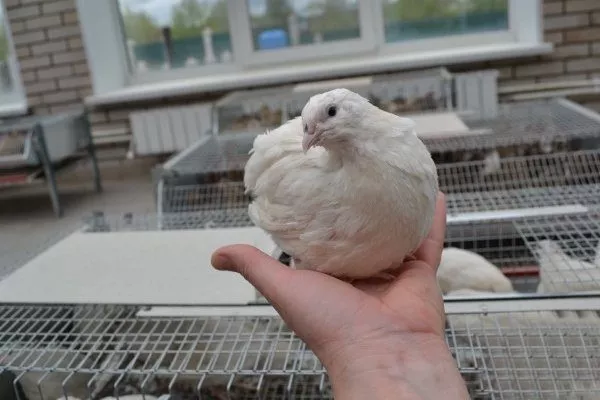
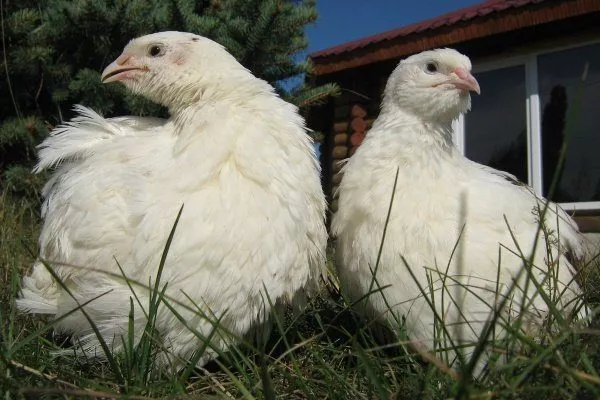
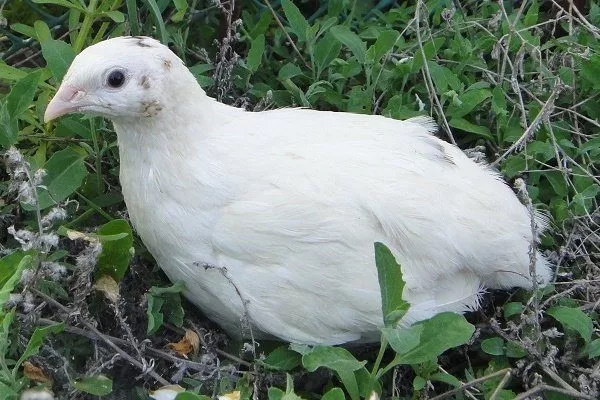
This breed has white plumage, with small dark gray spots on the head permitted. Underneath the white plumage, the skin is pinkish, and gray where the spots appear. Therefore, when selecting young birds, select those with minimal spots to improve the overall appearance.
The bird's plumage is lush. The back and convex chest are well developed. The small head and short neck contrast with the large, stocky build. The eyes are round and black, and the bill is beige, sometimes with a dark tip. The light pink legs are muscular.
Advantages and disadvantages of the breed
The breed has both significant advantages and disadvantages.
The positive aspects include:
- These birds gain weight quickly and have a high carcass yield at slaughter (approximately 260 g). Males weigh 360 g, and females 450 g. These birds are often fattened to a maximum weight of 550 g.
- The carcass has an attractive appearance and the meat is tasty.
- The feather is easily plucked.
- Unpretentious in poultry content, easy to care for.
- They are not shy and have a calm disposition.
- Females have virtually no problems with the oviduct.
- They start laying eggs early, at two months of age.
However, the breed has no fewer disadvantages:
- Low or medium egg production, but this shouldn't be a problem, as the breed is a meat breed. Quail lay large eggs, which can weigh up to 20 g. The average egg weight is 12-14 g. It's not uncommon for a single egg to contain two yolks. However, such eggs are only suitable for eating; eggs weighing 10-11 g are selected for incubation.
- Due to their phlegmatic nature, males show little activity toward females. This cool attitude toward their opposite sex leads to problems with breeding, as egg fertilization rates are low. Therefore, there should be one cockerel for every two females.
- The hatchability of chicks is also not encouraging and amounts to an average of 60%.
- The chicks are born weak, fragile, and require careful care. The survival rate is 70-80%.
- High feed consumption.
- It is impossible to immediately distinguish a female from a male; you will have to wait until they start laying eggs or learn to identify them by other characteristics.
How to distinguish a female from a male?
Those with a good ear for music who have heard the calls of male and female quail can distinguish them by their voices. Male quails are shrill and piercing, while female quails are more melodic and melodious, reminiscent of a soft croak. Having trouble identifying the sounds these birds make? There's a more practical way.
Chicks reach sexual maturity at five weeks of age. At this age, the sex of the individual can already be determined by the shape of their genitals. To do this, pick up the chick and turn it belly-first. The feathers near the cloaca are parted. In females, this area is shaped like an elongated slit; in males, the cloaca is rounded, and if you press gently on the sides, a white fluid appears.
- Ensure optimal room temperature (18-22 °C).
- Maintain air humidity at 60-70%.
- Provide proper lighting (16-17 hours of daylight).
- Provide access to fresh water and balanced food.
Maintenance and care
Texans can be housed in any room or building. The main thing is that there are no drafts, and it's warm, light, and dry.
Lighting
Windows are best placed on the south or east side. Quails don't like direct sunlight; they should be covered with light fabric or mesh, or their cages should be placed away from windows. They also thrive under artificial lighting; two 40-watt bulbs are sufficient. Daylight hours should be maintained for 16-17 hours per day.
Ventilation
Ventilation is essential to ensure adequate air circulation and prevent stagnation in the barn. A small yard for exercise will also be a welcome addition to the quail. It's fenced with fine mesh to prevent access by quail-loving predators such as cats, rats, and other critters, and a canopy is installed to protect the flock from direct sunlight. The exercise pen should be at least 10-15 square meters. This way, the quail are free of stress and anxiety, and feel at home in their natural habitat.
Cells
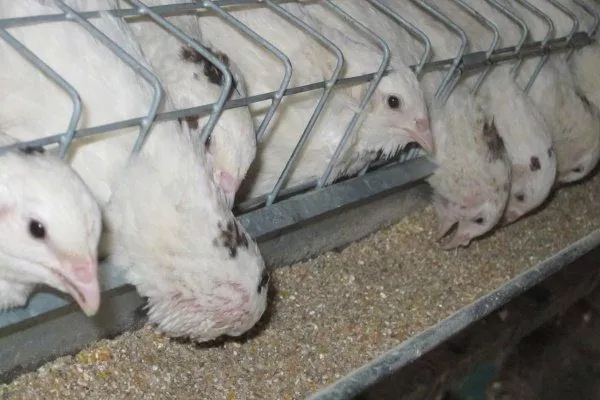
If space is limited, cage housing is used. Cages are arranged in rows in several tiers.
When calculating, keep in mind that each bird requires 20-30 cm of personal space (ideally 50 cm). The height of the structure should be 40 cm, not 20 cm as for other smaller breeds. The optimal mesh size is 35 x 45 cm, allowing the quail to easily fit its head through.
Each cage is equipped with a waterer and feeder on the outside, and egg collectors are installed, as hens can easily crush eggs on the floor. This design greatly facilitates care of the birds.
To make it easier to clean out the droppings, pull-out plastic and wooden trays are made at the bottom.
Quails fattened for slaughter are separated by sex - into cockerels and laying hens, and kept separately from each other.
How to make a cage for quails with your own hands – read here.
Temperature
Texas broilers are sensitive to sudden temperature fluctuations. They thrive in temperatures between 18 and 22°C. If the temperature drops below this, the birds begin to freeze and huddle together for warmth. This crowding can sometimes lead to injury.
At temperatures above 22°C, birds become completely lazy and passive. Their behavior signals that quails are hot: they breathe rapidly and hold their beaks open.
Air humidity
Air humidity must also be monitored. Optimal levels are 60-70%. Higher humidity leads to reduced weight gain, decreased egg production, and increased illness, resulting in increased mortality.
What to feed?
Texas Giants are known for their excellent appetite. To quickly gain weight, a balanced diet is essential. One quail consumes up to 40-50 grams of feed per day, meaning a flock of 100 birds will require up to 4-5 kg of feed per day. High-quality industrial feed is purchased for them. compound feed.
Unlike chicks, quail chicks immediately begin eating adult bird food, albeit in a more finely chopped form. However, to accelerate weight gain, they are fed according to the following schedule:
- First, the hatched quail chicks are given food rich in proteins:
- chopped boiled eggs;
- cottage cheese rubbed through a fine sieve;
- fermented milk products - yogurt, kefir.
- Next, add greens, finely ground crackers, and chick food.
- As the chicks grow older, they are given compound feed, as well as calcium-rich foods such as chalk, shells, crushed shells, and bone meal.
- The diet of females that have started laying eggs must include chopped raw sea fish and salt.
Fresh water at room temperature should always be available in the birds' drinking bowls from birth so that they can drink freely at any time.
Slaughter and culling
Broilers reach their peak weight at 5 months. By 6 months, egg production declines, and fertility also declines. Therefore, keeping broilers longer than 6 months is not advisable.
Large birds with a minimum number of spots are selected for breeding. Small quails that are stunted or have any defects are discarded. They are kept separate from the main flock and are not used for breeding.
Breeding Texans
Layers of this breed are completely devoid of the brooding instinct; even when kept in an aviary, no more than 3% of hens become brood hens. Therefore, breeding Texans is only possible using an incubator.
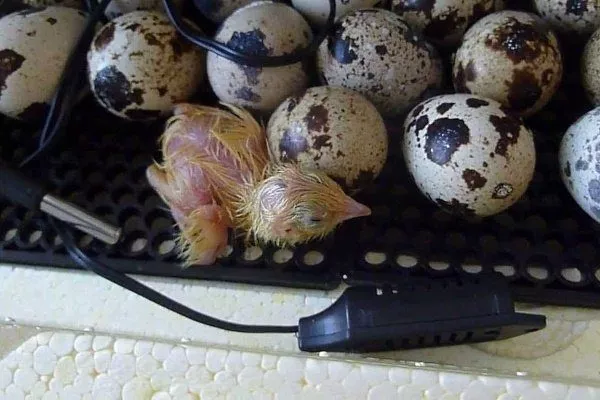
When incubating eggs, there are several nuances that should be taken into account:
- For incubation, it's best to use eggs from young females, those under 10 months old. In older females, the number of fertilized eggs decreases significantly.
- Eggs are collected within 7 days and stored at +18-22 °C.
- The chicks hatch on the 16th-18th day, but usually the mass “birth” occurs on the 17th day.
- Turning eggs during incubation is not necessary. This does not affect hatching success or the chicks' subsequent health (according to experts).
- Newborn quail are left in an incubator for several hours to dry completely, and only then are they moved to a special room called a brooder, where the optimal temperature (32-34°C) is maintained. Otherwise, their feathers will dry out quickly and become crusty.
At two weeks, the ambient temperature is gradually reduced, reaching 26°C by the end of the third week. At four weeks, the chicks are transferred to cages or a common area where the temperature is maintained at 22-24°C.
Diseases and prevention
Unlike egg-laying and meat-and-egg breeds, Texans have a weaker immune system. Therefore, as a preventative measure, they are given vitamin supplements starting at three days of age. They are also fed high-quality, balanced feed, calcium-rich foods, and protein. The quality of their drinking water is essential. It should not be stale, cold, or hot. Sick birds are immediately separated from healthy birds.
The most common diseases are associated with improper maintenance of quails and a lack of nutrients in their diet.
Birds are susceptible to:
- avitaminosis;
- cannibalism;
- baldness - loss of feathers.
For more information on quail diseases and their treatment, look here. Here.
How to distinguish a sick bird from a healthy one?
To understand which bird is sick, you need to observe the birds' behavior:
- A sick bird becomes lethargic and usually hides in a corner.
- Shows no interest in what is happening around her.
- Refuses to eat, and sometimes even drink.
- Her feathers are ruffled, her eyes are half-closed.
- She throws her head back and stretches her neck.
- Pulls out feathers and pecks eggs.
Sick birds must be identified promptly, and the cause of their ill health must be investigated. Often, by eliminating the negative factors in their care or diet, the bird recovers without any consequences.
How much does a Texas White broiler cost and where can I buy it?
If you're considering purchasing this breed of bird, choose a reputable seller to avoid disappointment. The Texas White Broiler is similar in appearance to the English quail, which is significantly smaller as it's an egg-laying breed. When purchasing, pay attention to the plumage; the fewer dark spots, the better—the more attractive the bird will be.
On average, the price of laying hens ranges from 100 to 200 rubles, depending on their age; the younger the hens, the cheaper they are. For example, a day-old quail costs 40-60 rubles. Hatching eggs are also available for sale starting at 15 rubles per egg, but there's no guarantee they're fertilized or will hatch into a Texan.
Birds are purchased from farms that breed them or from private individuals.
The Texas White Broiler and the Pharaoh are two meat breeds available to poultry farmers. Each individual must decide which breed to choose. The main characteristics are presented in the table below.
| Breed/traits | Texas White Broiler | Pharaoh |
|---|---|---|
| Weight of female (on average), g | 450 | 300 |
| Rooster weight (on average), g | 360 | 250 |
| Egg production (pieces/year) | 200 | 220 |
| Egg weight, g | 15 | 18 |
| Disease resistance | Average | High |
| Feed requirements | Tall | Average |
This quail breed is well suited for raising and selling meat. The requirements aren't too high, unlike many other breeds. The products are high-quality, and the business quickly pays for itself. However, breeding requires a bit of effort.