
Quail eggs are a dietary product popular among healthy eaters. Thanks to their high egg production, quail farming is becoming a profitable business. Let's explore what influences quail egg production and how to improve it.
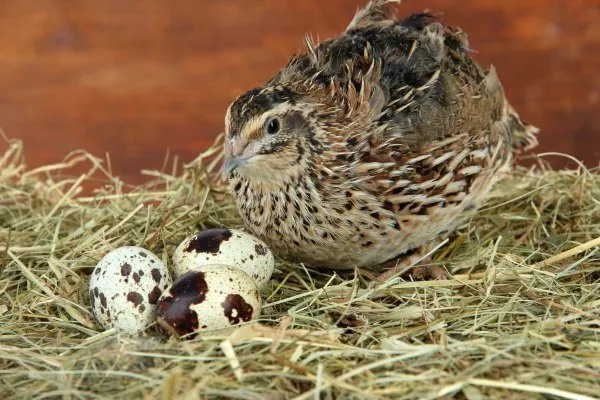
How many eggs does a quail lay in the wild?
Domesticated quails lay many eggs because humans want them to. In the wild, however, the female has a specific mission: to raise her offspring. Wild quails lay eggs once a year, in the spring. Young females lay up to 10 eggs, and mature females up to 20.
How many eggs does a quail lay when bred at home?
A young, healthy quail can lay 250 to 300 eggs per year. This is the average egg production range. The number of eggs laid is influenced by:
- time of year;
- quail breed;
- age of the bird.
The secret to quail's high profitability is their early reproductive ability. Females begin laying eggs when they are 35-40 days old.
When choosing a quail breed for breeding, it's important to weigh its capabilities against your goals. The number of eggs laid in a given period depends primarily on the breed, followed by the conditions and season. The average number of eggs laid per month is 25.
The number of eggs laid by a quail in a given period of time:
- Per day. There are quail breeds whose females can lay eggs several times a day. For example, Japanese quail can lay two eggs per day, while other, less productive breeds lay eggs every few days. The average egg per day for quail is one egg per day.
- Per month. The number of eggs laid per month depends not only on the breed and season, but also on the age of the female. Productivity fluctuates approximately as follows:
- beginning of laying – 8-10 eggs per month;
- In some breeds, by the tenth month, the number of eggs laid increases to 13 per month, while in others it decreases to 7-8.
- Per year. Highly productive egg-laying breeds—Japanese, Estonian, and others—lay 280-320 eggs per year. Meat-and-egg breeds lay 260-280 eggs per year, while meat breeds produce 200-220 eggs per year.
When do quails start and stop laying eggs?
Wild quail live up to five years, while domesticated species live even shorter lives—only two to three years. With such a short lifespan, the birds are forced to mature early. Quail are capable of producing eggs when:
- she will be 35-40 days old;
- She will gain 100 g of weight.
Wild quail lay eggs much later. Breeders developing domesticated breeds sought to accelerate maturation as much as possible, and they succeeded. Provided the required conditions are met, the birds will begin producing eggs consistently from the second month of life.
Peak productivity is observed one week after the onset of egg production. After three months, egg production declines, and then the bird stops laying eggs—this occurs after another five to seven months. This dynamic is explained by the short lifespan of quail. Recommended:
- change the livestock upon reaching 8 months of age;
- For incubation, take eggs from 2-month-old females - then the chicks will be stronger and healthier.
It is believed that quail eggs laid by females after one year of age are inferior in taste to eggs from younger quails.
Layers are considered unproductive after one year of age. Peak productivity ends after 10-12 months. In the second year of life, egg production drops by 50%, making it unprofitable. After two years, egg production drops significantly.
How does breed affect egg production?
Quail breeds are divided into meat, egg, and meat-and-egg breeds. Egg breeds are the highest egg-laying breeds.
Japanese quail
This breed is a benchmark for egg production, meat yield, and other characteristics. The egg production characteristics of the Japanese breed include:
- number of eggs per year – 250-300 pieces;
- the weight of one egg is 9-12 g;
- the beginning of oviposition is 35-40 days.
Japanese quails have a high fertility rate—up to 90%. Under favorable conditions, females can lay up to 320 eggs.
High fertility in this breed lasts for about a year, then egg production drops by 50% or more.
Advantages of the Japanese breed:
- undemanding to maintenance conditions;
- resist diseases;
- rapid weight gain – the weight of an adult bird is reached on the 40th day of life;
- Sexual characteristics appear on the 20th day – you can separate the birds into different cages at an early stage.
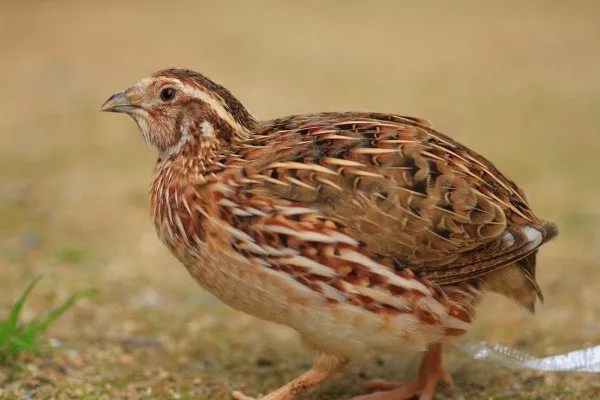
Pharaoh
This is a meat breed, but their egg production is not far behind that of the Japanese breed. They lay an average of 220 eggs per year. Eggs weigh 12-16 g. Pharaoh quails have a fertility rate as high as the Japanese breed, at 80-90%. Pharaoh quails successfully combine high egg production with a hefty body weight—they are twice as heavy as egg-laying quail. Pharaoh females weigh 300 g, while egg-laying quail weigh an average of 140-180 g.
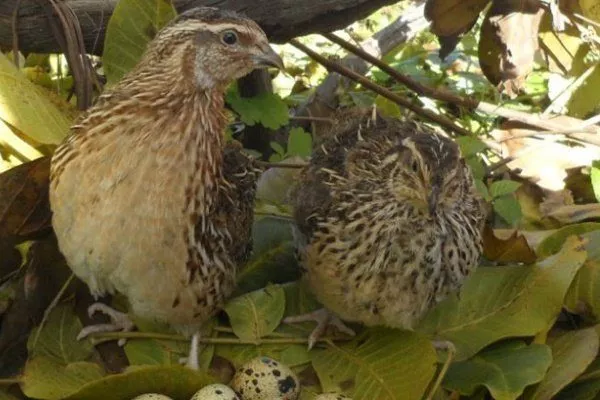
Quail eggs are significantly more nutritious than chicken eggs, containing more vitamins, amino acids, and microelements.
English
The breed was developed in England and has been bred in Russia since the 1980s. There are two subspecies of English quail: white and black. Apart from their feather coloring, these quails are indistinguishable. Their egg production rates are similar, laying 270-280 eggs per year. Each egg weighs 10-11 g.
However, the fertility rate of "English" chickens is lower than that of the previous breeds, at 75%. The white breed is particularly promising for commercial breeding – not only do they lay many eggs, but they also have attractive, soft pink bodies.
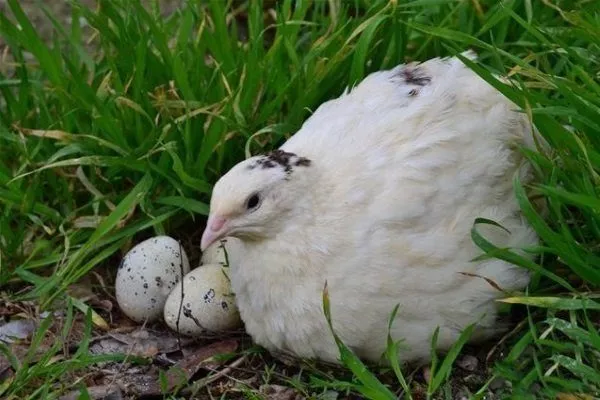
Estonian
A record-breaking egg-laying breed, Estonian quail females lay up to 320 eggs per year. Egg weight: 12 g. Fertility rate: 95%. The best choice for profitable quail breeding.
Estonians are prized for their versatility; they are cost-effective for any application—egg or meat. The birds gain weight quickly and lay many eggs. The breed was developed by Estonian breeders in 1989 by crossing Japanese quail with Pharaohs and English White quail. The resulting breed differed from all previous varieties:
- a combination of high egg production and good weight gain;
- high life expectancy;
- duration of oviposition;
- good survival rate.
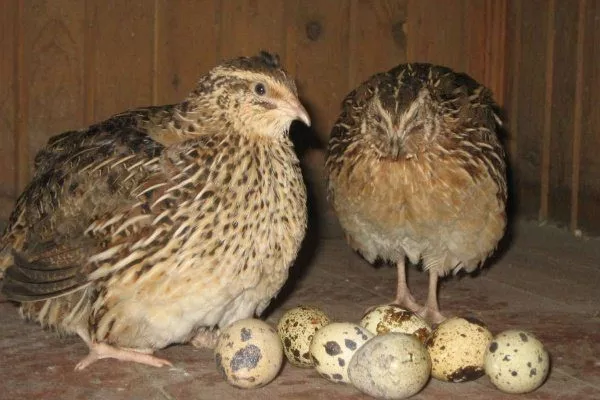
Tuxedo
This is a meat-and-egg breed, developed by crossing white and black "English" quail. The breed gets its name from its distinctive coloring: the tuxedo quail has a dark back, wings, and tail, while its neck and belly are white.
Tuxedo quail are often kept for their beauty, but they are also excellent layers—only slightly inferior to Japanese and Estonian breeds. Females lay their first eggs at 6-7 weeks.
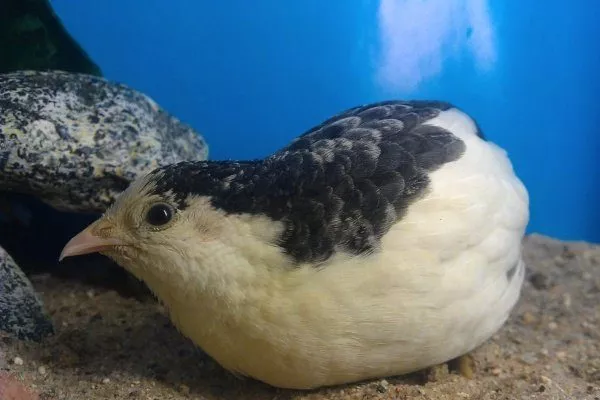
It's impossible to tell males and females apart by color. You can only tell which is which when they reach sexual maturity—by examining the cloacal gland under the tail of males.
Manchurian
These beauties are excellent egg layers. It's difficult to even determine whether they are more meat or egg-laying. Golden-colored birds are very beautiful and are often kept for ornamental purposes. The breed originates from China. A distinctive feature of the Manchurian breed is the pattern on its head.
Golden quails weigh less than broiler breeds but more than egg-laying breeds. However, in terms of egg production, they lag behind the leaders—Japanese and Estonian quail.
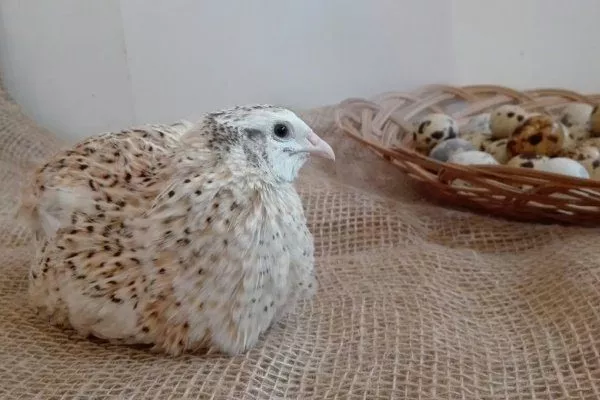
Marble
A hybrid of the Japanese breed, distinguished by its smoky coloration. The feathering resembles a marbled texture. Color varies—quails can have light gray, gold, white, and other plumage. Egg production and other characteristics are similar to those of the Japanese breed. They produce very high egg production and relatively large eggs—up to 10 g. An ideal breed for ornamental purposes.
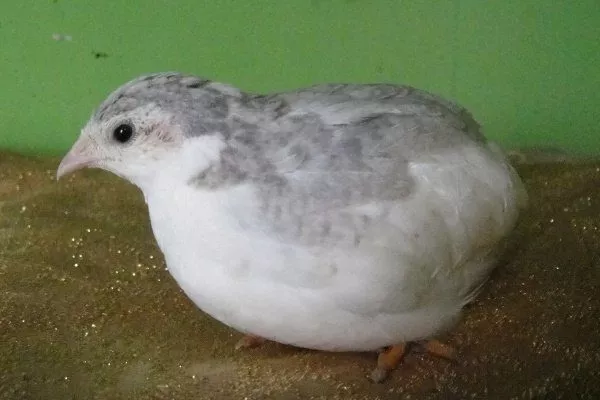
For comparative egg production characteristics of these and other popular breeds, see Table 1:
Table 1
| Name of the breed | Direction | Egg production, pcs./year | Egg weight, g | Weight of female/male, g | Fertility, % |
| Japanese | Egg | 250-300 | 9-11 | 140/120 | 80-90 |
| Pharaoh | Meat | 220 | 12-16 | 300/200 | 80-90 |
| White English | Egg | 280 | 10-11 | 190/160 | 75 |
| Black English | Egg | 280 | 10-11 | 200/170 | 75 |
| Tuxedo | Egg and meat | 280 | 10-11 | 170/150 | 80-90 |
| Marble | Egg | 260-280 | 9-10 | 140/110 | 70 |
| Manchurian | Egg and meat | 220 | 16 | 300/175 | 80 |
| Estonian | Egg | 300-320 | 12 | 200/170 | 95 |
Weight and composition of eggs
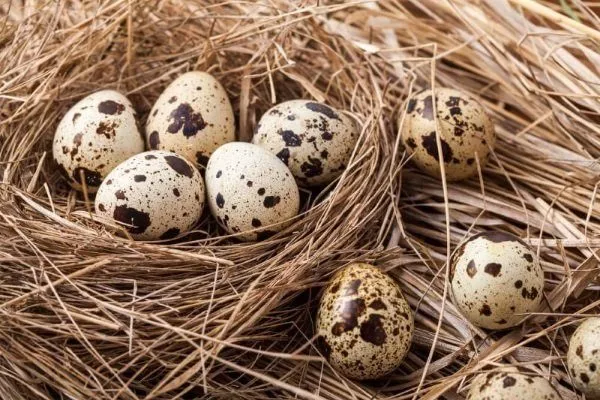
The average weight of quail eggs is 10 g. They range from 7 to 12 g. Some breeds have larger eggs. The shells are spotted. The main drawback is their high cholesterol content.
Some believe that home-cooked eggs cannot be a source of salmonella and can therefore be eaten uncooked. This is incorrect. Most bacteria are killed by the bird's high body temperature, but not all. Raw eggs can, in particular, cause pullorum disease.
Quail eggs are considered a dietary product. They contain only 168 calories per 100 g. Table 2 presents the chemical composition and nutritional value of quail eggs.
Table 2
| Name | Quantity in 100 g |
| proteins | 11.9 g |
| fats | 13.1 g |
| carbohydrates | 0.6 g |
| water | 73.2 g |
| cholesterol | 600 mg |
| calcium | 54 mg |
| iron | 3.2 mg |
| copper | 112 mcg |
| phosphorus | 218 mg |
| cobalt | 62 mg |
| potassium | 144 mg |
| sodium | 115 mg |
| manganese | 0.03 mg |
| sulfur | 124 mg |
| magnesium | 32 mg |
| vitamins A and B1 | 13.7 mcg |
| carotenoids | 67 mg |
| vitamin PP | 11 mcg |
| vitamin B2 | 110 mcg |
Thanks to regular consumption of quail eggs:
- the body recovers after heavy mental or physical stress;
- immunity is increased;
- hemoglobin increases;
- the functioning of the nervous system is normalized.
Quail eggs are beneficial for atherosclerosis, asthma, diabetes, hypertension, obesity, migraines, and chronic cholecystitis. For therapeutic benefits, eating 2-3 eggs daily is sufficient.
How are quail eggs different from chicken eggs?
Everyone has heard about the health benefits of quail eggs. A comparative analysis is provided in Table 3. The values are given for one egg.
Table 3
| Indicator | Quantity in one egg, g | |
| quail | chicken | |
| weight | 7-13 | 48-56 |
| protein | 13 | 12 |
| fats | 11 | 11.5 |
| carbohydrates | 0.5 | 0.7 |
Quail eggs contain more minerals than chicken eggs and twice as many vitamins.
Dependence of egg production on the season
In order for females to lay eggs year-round, they require special conditions:
- Provide a minimum amount of space. For one quail, 180-220 square centimeters. Excessive free space has just as negative an impact on productivity as too little.
- No drafts or stress, ventilation and cleanliness of the premises.
- Temperature in the range of +20…+22 °C.
- Humidity should be kept at 70-75%. Humidity can be regulated by installing humidifiers. If these are not available, simply place basins of water.
- Daylight hours are 14-15 hours. To keep quail laying eggs during the winter, you'll need to artificially "lengthen" the day by turning on dim lighting.
| Condition | Recommendations |
|---|---|
| Area per bird | 180-220 sq. cm |
| Temperature | +20…+22 °C |
| Humidity | 70-75% |
| Daylight hours | 14-15 hours |
Bright lighting is contraindicated for quails - it will provoke fights among the birds.
In the life cycle of domesticated quail, there is only one period during which egg-laying can cease: molting. This unfavorable period lasts for three weeks. During this time, it is important to keep the birds warm—the temperature should not drop below 18°C.
How to maintain egg production in winter?
It's recommended to keep young birds for the winter—they have a denser layer of down, so they tolerate the cold better and require less additional heating. During the winter, it's important to provide:
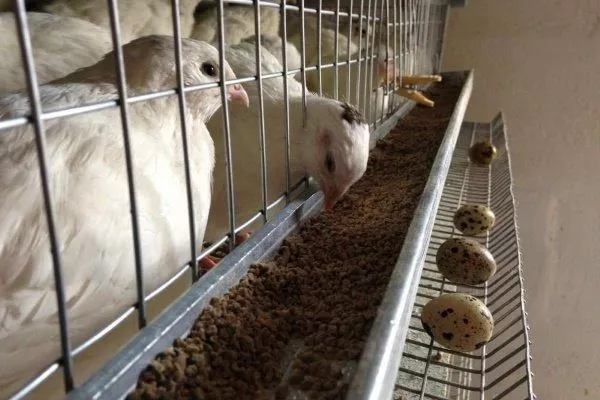
- Normal temperature. Cages are insulated. The insulation method is chosen depending on the material – there are wooden and metal lattice cages.
- The room with the cages must have windows and openings for ventilation.
- Humidity is maintained at 50% using humidifiers or regular wet cloths hung around the room. If humidity is low, birds drink excessively, eat little, gain weight poorly, and lay fewer eggs.
- Daylight hours are artificially extended in winter. Various infrared lamps can be used for lighting and heating—they provide not only light but also heat. A single 40-watt lamp is sufficient to heat a room housing 500 birds.
- During winter, light is left on for 15 hours a day. It should be dim. Some poultry farmers insist on 17-18 hours of light, but then alternating light and dark periods are necessary.
Why don't quails lay eggs?
A decline in productivity is a disaster for an egg farm. The main causes of a decline in egg production are improper care and poor living conditions:
- Daylight hours are too long or too short. Lights should not be on for more than 18 hours a day at any time of year.
- Violation of temperature conditions – too hot, too cold or sudden temperature changes.
- Unbalanced nutrition. Quails need protein in their diet. Poor-quality and coarse feed mixtures negatively impact productivity – the birds suffer from digestive upset, become weaker, and stop laying eggs.
- Cramped conditions in the sparrow hawk.
- Noise – birds are afraid of loud sounds.
- Stress – birds don't handle a change of residence well. Typically, productivity declines for a while after transportation.
- Diseases. You can tell if quails are sick not only by their behavior but also by their shells.
How do you know if a quail is laying eggs?
Which hens are working hard, and which are just eating their feed for nothing? It's easy to find out:
- Pick up the bird and place it belly-down on your palm. Its head should be facing you. Its belly should rest on your fingers.
- Feel the hen's abdomen—you'll feel a hard egg shifted to the side. A female who hasn't laid eggs for a long time will have a belly that's sunken inward, like a male's.
- When checking egg production, do not apply force, act carefully - quails are very shy.
- Check the conditions of detention
- Assess the quality of feed
- Eliminate stress factors
How to select eggs for incubation?
The key to successful quail breeding is high-quality eggs. To ensure good laying and rapid growth, the flock must be hatched from the finest eggs. Selection criteria:
- The egg must have the correct shape.
- The shell should have a smooth surface, without any unevenness or roughness.
- The egg should be clean - without plaque.
- The shape is ideal; elongated and spherical eggs are rejected.
- The egg weight should not go beyond the optimal range typical for a particular breed.
- If the eggs are purchased, they can be stored for 7 days before incubation, no more.
But selecting eggs based on external characteristics is only half the battle. If you need eggs for breeding, you need to candling them. You'll need an ovoscope. If you don't have one, a bright flashlight will do.
What should be checked during x-ray inspection:
- Number of yolks – eggs with two yolks are rejected.
- The location of the yolk - it should be in the middle, but slightly shifted towards the blunt edge.
- Foreign inclusions – blood clots, for example.
- Shell integrity – specimens with cracks and chips are rejected.
- The whites and yolks should be clean – there should be no dark spots.
How to increase egg production?
- In case of poor productivity, it is recommended to add chalk or small gravel to dry food to improve digestion.
- Feed the bird three times a day, 30 g of feed per bird. Feedings should occur at the same time. Between feedings, the feeders should be empty to encourage the bird to eat with gusto.
- Quails should be fed a special, balanced feed specifically designed for quail. If you prepare the feed yourself, don't drastically change its composition.
A specialist explains ways to increase egg production in egg-laying quail breeds:
By choosing the right quail breed and providing them with the right conditions, you can maximize egg production. It's important to remember that high egg production in quail is short-lived and to replenish your flock promptly.