
The lifespans of hens and roosters vary, depending on many factors. Birds are raised both commercially and at home for private use. On poultry farms, hens are kept for no more than two months, while at home, owners can raise them for up to three or even five years. There are also record-breaking longevity records that amaze everyone. Below, we examine chicken breeds and their lifespans.
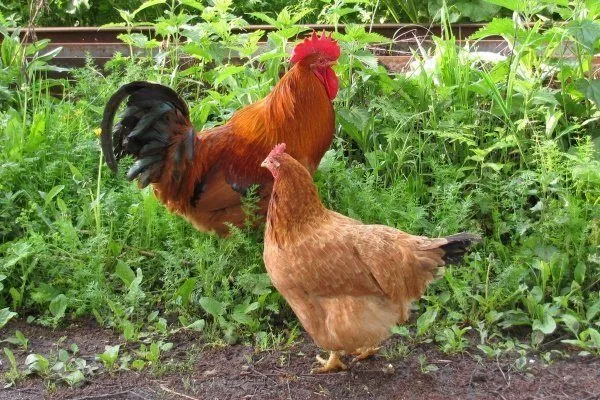
How long do chickens live?
In industrial farming, chickens can be kept for a maximum of six months, with the exception of layers, which are kept until they stop laying eggs, which are then placed in a special device called an incubator. As for home farming, the birds live until they reach the desired weight (for meat production) or until they lay a sufficient number of eggs (layers).
Birds living in the wild are at risk of premature death due to various predators. Finding food is also difficult, especially in winter. However, they can still live for about 10 years or more.
Meat
| Name | Weight of an adult (kg) | Egg production (pieces/year) | Lifespan (years) |
|---|---|---|---|
| Loman Brown | 2.5 | 320 | 3.5 |
| Russian chickens | 3.0 | 280 | 3 |
| Gate | 4.5 | 150 | 4 |
| Koninhin | 5.0 | 120 | 4 |
| Plymouth Rock | 3.5 | 200 | 10 |
| Hisex | 2.0 | 300 | 3 |
Commercial broiler chickens are not kept for long; as soon as they reach their maximum weight (2 months), they are immediately slaughtered. This cannot be said for brood hens, as they are kept specifically for brooding. In captivity, the lifespan of a bird can be extended to a year. As the bird ages, its meat loses its nutritional value and flavor—it becomes tough and less tasty.
These chickens produce delicious and tender meat that cooks quickly. They grow quickly, and even at home, they are slaughtered quickly, as the older the chicken, the tougher the meat becomes.
Meat and eggs
These birds are kept for approximately two years. Their eggs are strong and large, weighing up to 65 g. With proper feeding, they can produce 290 to 330 eggs per year for 12 months. Egg production begins at 4.5 months and ends at two years.
Egg
These hens are capable of laying 100% of their eggs in their first year of life, but their production declines with each subsequent year, dropping by 10% starting at age two. Egg-laying hens live for approximately four years, after which keeping them on a farm is simply pointless. As for poultry farms, they don't keep egg-laying hens because incubators are used for hatching. Read more about incubating chicken eggs.here.
Decorative
People keep ornamental birds the longest, as they are bred not for productivity but for their stunning beauty. Chickens, which can live for 20 years, are the luckiest of all breeds. Recently, selective breeding of these birds has negatively impacted their immune systems, causing them to become frequently ill. Because of these disadvantages, chickens rarely live long, and they die early from disease.
What does a bird's lifespan depend on?
There are numerous factors that can determine the health of our feathered friends. Each person cares for their birds differently and keeps them in different environments. The breed of chicken also plays a significant role. It's important to understand that if the owner provides proper care, a balanced diet, and promptly detects the first signs of illness, the birds will live a long life.
Of course, at home, the owner takes better care of the birds, checking them for illnesses, walking them, and feeding them a variety of homemade feeds. On poultry farms, however, hired workers feed them store-bought feed and treat it carelessly. The bottom line is: birds will live much longer at home than on a poultry farm.
From care and maintenance
The most important condition for a chicken's longevity is the conditions and location where it is kept. A homeowner tends to be more attentive to their poultry farm than workers on poultry farms.
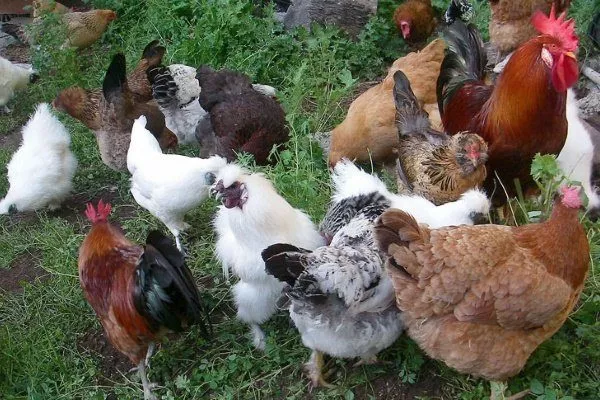
There are several important factors that influence the life of chickens:
- lighting the chicken coop naturally and artificially from 13 to 16 hours a day;
- large area for walking chickens;
- space in the chicken coop;
- the barn must be equipped with a sufficient number of feeders and water tanks, conveniently located;
- maintaining heat in the chicken coop and 50% humidity;
- installation of ventilation equipment;
- It is recommended to place ash and sand in the chicken coop; birds will bathe in it and get rid of parasites;
- Install soundproofing in the chicken coop so that the chickens are not frightened by loud and sharp sounds.
If all the rules are followed, the lifespan of chickens will double. In this case, the birds can delight their owners for as long as 10 years.
From the breed
The lifespan of chickens depends on the breed. For example, broiler chickens are slaughtered early, as soon as they stop gaining weight. This occurs no later than four months. Layers have the longest lifespan; they are slaughtered at three to four years.
As a bird ages, it lays fewer eggs, and the quality of its meat deteriorates. It can be kept for more than five years if it's an egg-laying bird. Fancy chickens don't lay eggs, and their meat shouldn't be eaten. They live for about 10 years; the record for longest-living bird was 18.
From feeding
Without proper nutrition, the birds' lifespan is significantly reduced. Their lifespan is a maximum of one year. However, if the owner monitors their birds' nutrition and includes essential micronutrients and vitamins, they can live up to six years. Chickens should be fed legumes daily:
- oats;
- peas;
- crushed corn;
- wheat.
- ✓ The ratio of grains in the diet should be: corn - 40%, wheat - 30%, oats - 20%, peas - 10%.
- ✓ Daily addition of greens and vegetables to the diet increases egg production by 15-20%.
But that's not all. It's important for birds to eat vegetables, greens, and fermented milk products.
Supplements are equally important for a chicken's longevity, so it's important to include them in their diet. On poultry farms, it's best to use ready-made feeds, which can be purchased at any veterinary pharmacy.
A chicken can die prematurely if it lacks micronutrients. This can also happen due to irregular feeding, overfeeding, or sudden changes in feed.
Interestingly, fasting has a therapeutic effect on birds, albeit a short-lived one. In Japan, an experiment was conducted in which older hens that had stopped laying eggs were fasted for a week, after which they were fed again. Having recovered from the stress, the hens began laying again, their combs and feathers grew back, and they resumed their activity typical of young hens.
From diseases
It's easy to guess that a sick chicken won't survive long, so it's essential to keep up with all vaccinations and call a veterinarian at the first sign of illness. Chickens often suffer from infectious bronchitis, smallpox, paralysis, salmonellosis, and avian influenza. Any illness can be cured; the key is to recognize the signs early. Read more about chicken diseases and their treatment. here.
How long do roosters live?
A rooster's lifespan depends on its reproductive activity, which averages four years. Large farms keep them for a maximum of two years.
Lifespan is determined by the purpose of the hens' lives. If the birds need to be of equal age and the hens' productivity remains high, one rooster per 10 hens is sufficient. If the birds are poorly cared for and housed, the male's workload should be reduced; if not, increased. Six roosters per 100 hens is sufficient.
The owner explains how many roosters are needed for a given number of hens, what kind of roosters they should be, and how long roosters can live:
Lifespan of a Headless Bird
People began asking this question after an incident from the last century. In 1945, a headless rooster from an American town lived for 1.5 years. He became a worldwide celebrity, enriching his owners. Upon examination, it was discovered that he survived due to a blood clot that blocked his jugular vein, preventing a fatal hemorrhage.
This incident has taken the internet by storm, and this video details the story:
To keep the rooster alive, the owner fed and watered him directly through the esophagus, and sucked out his secretions with a syringe to prevent suffocation. The spinal cord took over vital functions for life, allowing the rooster to survive for a full year and a half before suffocating and dying.
Both a chicken and a rooster can survive without a head for only 20 seconds, during which time the bird may flap its wings, twitch, and run around erratically. Generally, the time it takes to behead a bird depends on the following factors:
- place of impact;
- the amount of blood that leaked out;
- anatomical predisposition.
How to extend the life of a hen and a rooster?
There are approximate figures for the lifespan of birds, but these figures can be increased by following a few rules. Mature hens are excellent brood hens for hatching brood or for producing large eggs.
- Proper feeding. Chickens should be fed no more than three times a day. It's best to have dry food for breakfast, mash for lunch, and grain for dinner. Feed oats one day, corn the second, and wheat the third.
- Plenty of light. In the summer, the chicken coop is already bright, but in the winter, lighting is essential. If this isn't done, the chickens will wear out within a couple of years from lack of light.
- Lack of moisture. The room should be free of moisture, as this can cause bacterial or fungal infections. To prevent this, ventilation must be installed.
- Air temperature. The temperature in the room where the chickens are kept should be no lower than 20 and no higher than 25 degrees Celsius.
- Disinfection. Periodic disinfection of the premises is necessary.
- The correct number of roosters per hens. It's important to determine exactly how many roosters are needed per hens. Generally, 6 roosters are needed for 100 hens.
Record-breaking longevity
The oldest chicken on our planet, listed in the Guinness Book of World Records, lived for 14 years. There are other record-breaking longevity records, but they are not documented. Some chickens have been reported to live up to 25 years.
In China, a chicken has been recorded living for 22 bird years—400 human years. Yan Shaofu, now 77, told reporters about this amazing chicken. His daughter-in-law acquired four chicks in 1988; three have long since died, but one still delights the owners. She was unusual from the start, laying her first egg at two months, and the rest at six months.
Experts say a typical chicken lifespan is about 8 years, with the longest recorded lifespan in Ukraine being 12 years. The owner of this amazing bird claims there are no secrets to its longevity.
Each breed has a different lifespan, which can always be extended. The table shows the most common breeds and their lifespans.
| Breed | Life expectancy |
| Loman Brown | 3-3.5 years |
| Russian chickens | 3 years |
| Gate | from 2 to 4 years |
| Koninhin | 4 years |
| Plymouth Rock | 10 years |
| Hisex | 3 years |
A chicken's lifespan depends on many factors: feeding, housing, illnesses, different breeds, etc. Before buying chickens, you should determine their intended purpose, as they can be used for meat, egg, or both. The average lifespan is eight years, but some record-breaking long-lived chickens have lived much longer than the average chicken.