
Brahma chickens are known for their calm nature and minimal demands on coop conditions, making them a popular choice for homesteaders and experienced poultry farmers on large farms. These birds will be a true addition to any backyard and will also help you generate a good profit from selling their meat and eggs.
Appearance and character
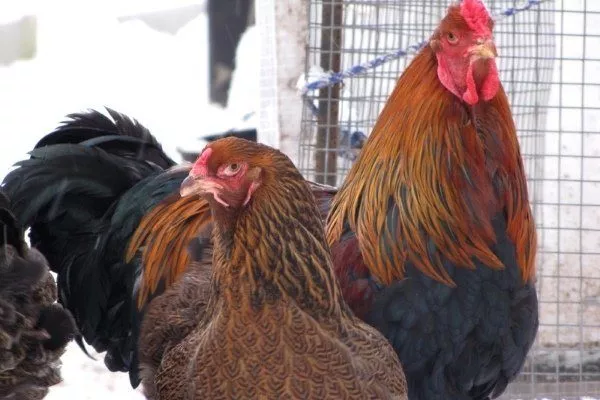
The bird has a slightly yellowish tint. Brahma chickens come in a variety of colors, including black, gray, yellow, and striped. They also have silver-white, birch, fawn, and red Columbian plumage. Brahmas have soft, firm feathers that lie close to the body. Their abundant down has an ash-gray tint. Hens are attractive with their fan-shaped, fluffy tails, while roosters have a vibrant ruff.
The birds' eyes are deep-set, their contrasting orange hue particularly captivating. The superciliary ridges are slightly overhanging and raised. They have a small head with a broad forehead. The crest lacks conspicuous teeth; it is usually three-rowed and pod-shaped. The ears have medium-sized red lobes, and the yellow bill is very strong. A lush, gently curved mane extends above the neck.
The bird is characterized by a rather fleshy and dense structure: moderately sized rump, back, belly, and chest. Its body is set high, the tail is raised, and it has a small bone structure. Roosters are more taut and slender, while hens are distinguished by their rounded shape and short legs.
It is unacceptable to keep a chicken with yellow plumage and a white tail, without a pea comb, without feathers on the toes and tarsus, and with black stripes in the waist area. Most of the feathers are predominantly light in color. The tarsus is white. Such birds cannot be considered true Brahma birds.
Detailed information about the bird
Previously, poultry was bred solely for meat production. Today, the Brahma breed is considered a delicacy for meat production. There has been a slight decline in productivity due to recent crossbreeding with various pedigree birds. This bird is particularly prized; its meat is not only tasty and tender, but also dietary. A decrease in flavor and coarseness of the meat can only occur if the breeder feeds the birds the wrong feed and supplements. For example, a laying hen can reach 4 kg, and a rooster 5 kg.
When the breed first emerged, hens weighed 7 kg, sometimes even more. Today, such large hens are virtually impossible to find.
These birds are unpretentious, resilient, and hardy. They are undemanding; a small coop and a small area for free exercise will suffice. This breed is considered peaceful, and the chickens have a calm disposition.
Layers can produce approximately 110 eggs per year, each weighing 60 grams. The eggs have strong shells and can be flint, brown, or russet. Even in winter, Brahma hens' egg production does not decrease.
| Indicator | Meaning | Note |
|---|---|---|
| Average weight of a chicken | 3.5-4 kg | Depends on the subspecies and conditions of maintenance |
| Average weight of a rooster | 4.5-5 kg | Maximum recorded - 7 kg |
| Egg production per year | 100-120 pcs | It does not decrease in winter |
| Egg weight | 55-60 g | Strong shell |
| Beginning of oviposition | 9 months | Late ripening |
| Daily feed consumption | 130 g/head | A balance of proteins and minerals is required |
Birds become layers at nine months of age. To ensure egg production, they need to be fed high-quality feed daily, averaging 130 g per hen.
What do you need to know about keeping birds?
There are several ways to raise chickens. You can buy eggs, chicks, or adult birds. Experienced poultry farmers often purchase birds from specialized breeding centers. The most economical option is to buy eggs for an incubator, while the mid-price option is to buy chicks. However, buying adult Brahma chickens will cost you 10 times more than an egg.
Layers are renowned for their sensitive maternal instincts. However, because they tend to gain a lot of weight, this can result in the crushing of up to a quarter of the egg. The best and safest option is incubation. Chicks grow very slowly, and young hatched in June may not survive the winter. If adults were purchased, they are quarantined. Chicks aged 16 weeks are kept separate from other birds.
While you can raise chickens at home, many poultry farmers believe it's best to start a poultry business by raising adult birds or young chicks. During the laying season, you can start and create an excellent breeding flock. However, to raise quality chickens, you need adult birds at least two years old. Only then will you be successful.
Over time, chickens of this breed become quite large and require a sturdy coop. It should be at least 400 mm high and at least 30 cm wide. Only a coop of this size will allow the birds to climb comfortably and feel comfortable.
It's important to set up the coop so that there are no drafts, but it's bright and dry. These conditions are especially important for chickens. They require at least 14 hours of indoor lighting per day. In winter, the coop is equipped with artificial lighting.
Brahma chickens are not demanding when it comes to living conditions; they are not afraid of frost, and dry sawdust will be enough for their bedding.
Varieties and subspecies
As early as the late 19th century, several main varieties were developed: European ornamental, American meat, dwarf ornamental, and Asian ornamental-meat. Several subspecies also exist:
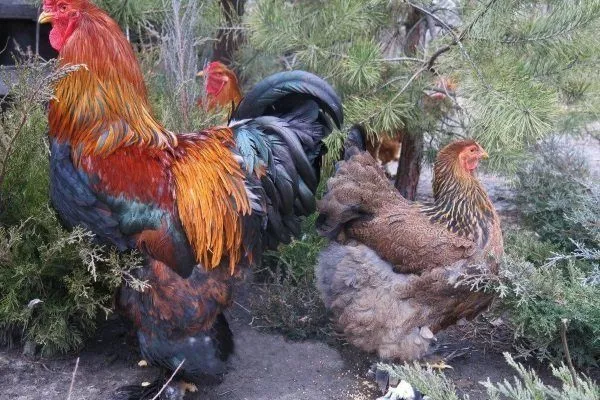
- Partridge. An American subspecies with a meat-oriented nature. It has brownish plumage with a golden hue. The tail feathers are black with a green metallic sheen. This Brahma resembles a partridge in coloring.
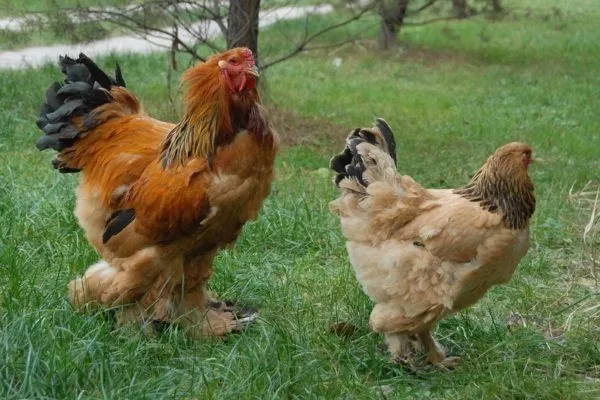
- Fawn. It is predominantly a brownish-golden hue. The tail and neck have dark feathers. This bird is particularly cold-resistant.
- Light. This Colombian subspecies has a gray-silver coloration. The bird is distinguished by its flight feathers, tail feathers, and a contrasting dark green collar. The tarsus and toes have black stripes. Roosters have black feathers, while hens have white plumage on their waists. The comb, earlobes, and muzzle are red. These birds are distinguished by their high posture, large beak, lush plumage, and large eyes.
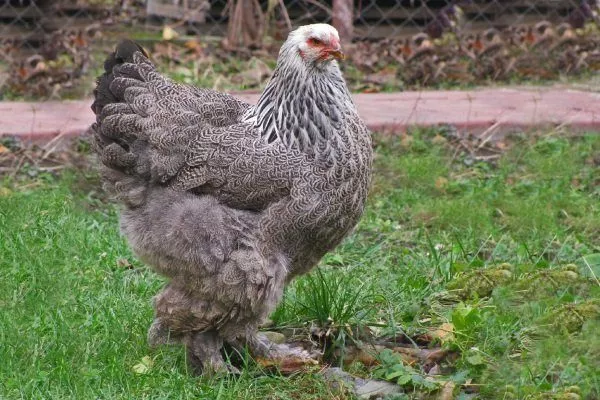
- Dark. Hens are typically white-gray with a silvery tint on their heads. Their necks are covered with white down with a dark edge. Their bodies are covered with sickle-shaped gray-black feathers, and their plumage is loose and abundant. Roosters have a gray-silver head, with a central black stripe on their neck and mane, set against white-silver feathers. Their legs have a lush, hawk-like tuft.
| Subspecies | Color | Direction | Peculiarities |
|---|---|---|---|
| Partridge | Brownish-golden | Meat | Black feathers on the tail |
| Fawn | Brownish-golden | Decorative meat | Cold-resistant |
| Light | Gray-silver | Decorative | Contrast collar |
| Dark | Gray-black | Decorative meat | Hawk tuft on legs |
| Dwarf | Various | Decorative | Weight up to 1.5 kg |
Brahma partridge
Pale Brahma
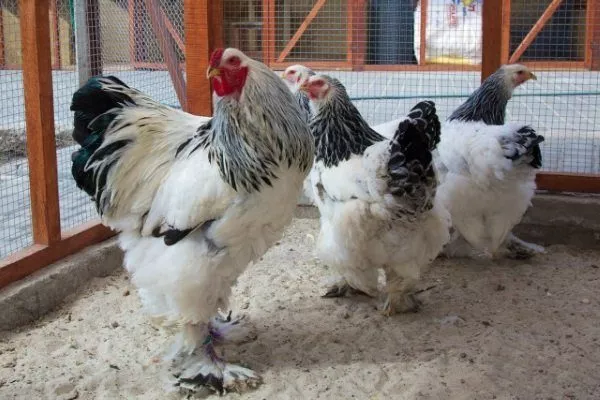
The gate is bright
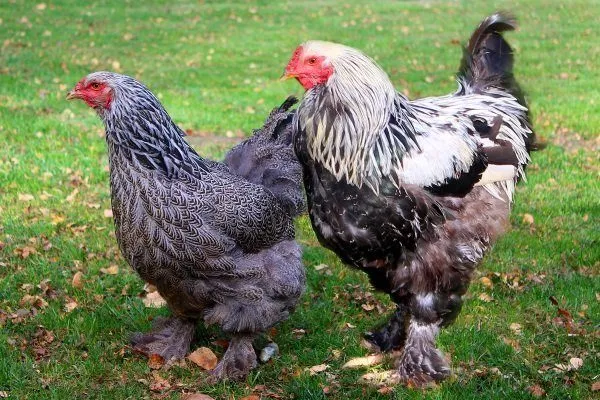
Dark Gate
The advantages of Brahma chickens include their undemanding climate and living conditions, unique appearance, high productivity, and meatiness. However, the disadvantages include the birds' lack of activity, hens' egg production at a relatively late age, and the relatively high cost of feeding for this breed.
Nutrition rules
To breed purebred Brahma chickens that will not only gain good weight but also produce high egg production, you need to follow basic feeding guidelines:
- Chickens need fresh food, so add a new portion to the feeders regularly.
- These birds are fed three times a day. Chickens are punctual, remembering the feeding schedule and knowing when they will be fed. If desired, you can train them to eat food from your hand.
- The food should be rich in minerals, vitamins, and microelements. It's important to feed birds foods containing calcium. Suitable foods include garden greens, special supplements, food scraps, ground eggshells, crushed shells, and chalk.
- To improve the functioning of the stomach, it is advisable to put fine sand and gravel in the birds' feeders.
- Experienced poultry farmers recommend following a specific feeding system. Feed the birds grain feed in the morning, give special supplements mixed with broth, scraps, and greens at lunch, and then grain for dinner.
- Don't forget about their drinking regime. Regularly ensure the chickens' water bowls are filled with room temperature water. One part dry feed is required per 1.9 liters.
- During the winter, grain is sprinkled on the bedding - this guarantees a 10% increase in activity.
- Chickens require a consistent, enhanced diet because they are more active and therefore expend much more energy. Feed them generously until they are seven months old. During the first two weeks, add finely chopped boiled eggs, corn, and wheat porridge to their diet. Over the next 20 days, feed them finely chopped nettles, dandelions, and low-fat cottage cheese. Then, gradually introduce carrot roots, beets, greens, apples, cucumbers, and zucchini.
Adult birds require the following diet: grain, boiled potatoes, bone meal, chalk, flour, salt.
Chicken feeding schedule
- 1-14 days: boiled egg, corn, wheat porridge
- 15-35 days: chopped greens, cottage cheese
- 36-60 days: vegetables (carrots, beets, zucchini)
- 2-5 months: grain mixtures, mineral supplements
- From 5 months: adult diet
Brahma chickens need to be monitored periodically to ensure they do not overeat, as the birds are prone to obesity.
How to protect chickens from diseases?
- ✓ Disinfection of the chicken coop once every 2 months
- ✓ Regular replacement of litter
- ✓ Feed and water quality control
- ✓ Inspection of livestock for parasites
- ✓ Vaccinations according to schedule
- ✓ Isolation of sick individuals
Chickens of this breed can boast of good resistance to diseases, but they are not completely protected from some diseasesTo reduce the birds' exposure to various diseases, their coop should be clean, and their waterers and feeders should be washed. Perches and bedding should be treated regularly. It's recommended to occasionally sprinkle ashes into the bedding—this is an excellent preventative measure to prevent various parasites from appearing in their feathers.
Brahmas are excellent chickens that can be raised for meat and eggs. This breed is distinguished not only by its attractive appearance and delicious meat, but also by its undemanding conditions and temperature. The main thing is to maintain proper nutrition, feed the birds high-quality feed, and monitor their well-being.