
Foxy Chick chickens are popular birds, bred by many for their healthy meat and egg production. They are low-maintenance, but proper conditions are required to ensure high productivity.
Origin, description and characteristics of the breed
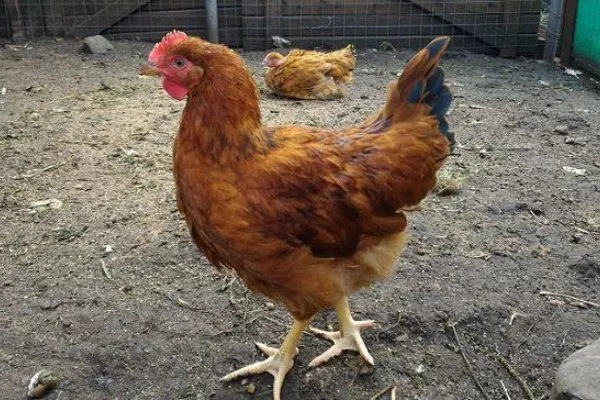
The bird's name derives from its bright red fox-like coat. Originally bred by Hungarians, the birds were later popular with farmers and brought to many European countries, including Russia. The bird has several names, all of which translate to "fox chicken." It is also often referred to as the Hungarian Giant or the Red Broiler. This is directly related to the birds' large size and color.
Distinguishing features of the breed include a small head with orange eyes, a yellow beak, and yellow feet. The birds have a large, sturdy body, a small stature, and a broad back and chest. Foxy Chick chicks initially grow taller, then begin to spread out. This characteristic often leads farmers to confuse the breed with other varieties.
The chickens have a medium-sized comb, slightly slanted to the side. Their plumage is bright red, sometimes with a brown tint. Their dense feathers protect them from severe frosts. This breed tolerates frost and cold very well.
Character
Foxy Chick chickens have a calm nature, making them rarely difficult to care for. Farmers describe the birds as active, curious, and calm. They get along well with other chickens, and males are very protective of their flocks but will not attack strangers without provocation. However, roosters and hens of this breed can be prone to constant bickering and fighting, so it's recommended to keep no more than one male in a flock.
Red broilers are noisy birds: if a stranger approaches their enclosure, they will immediately begin clucking and flapping their wings, alerting their owner. Females of this breed have a well-developed brooding instinct—they are capable of raising not only their own chicks but also those of others. A single hen can hatch 9-10 chicks at a time.
Productivity
The body weight of this breed's hens is particularly impressive. A single adult bird can weigh around 3.5-4 kg, while roosters are the heaviest among all domestic birds, weighing up to six kilograms.
Even at birth, the chicks, with their slender bodies, appear much larger than those of other breeds of the same age. For example, at 20 days old, the chicks weigh about half a kilogram, and by the age of one and a half months, their body weight has already reached 1.4 kg. The birds develop and grow rapidly.
The table shows the age of the bird and its approximate weight during this period:
| Age of the bird | Weight |
| 21 days | 460 g |
| 28 days | 690 g |
| 35 days | 980 g |
| 42 days | 1.37 kg |
| 49 days | 1.73 kg |
Raising poultry for slaughter is profitable not only because of the birds' large size, but also because the resulting product has excellent taste. The meat is juicy and tender, dietary, and contains minimal fat.
Hens reach sexual maturity at four months of age, sometimes later. A hen lays approximately 260-300 eggs per year, while other breeds produce no more than 160-180. With proper care, hens will continue laying eggs even during the winter.
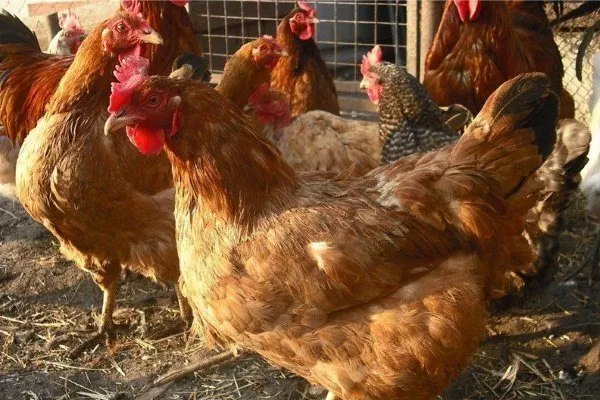
Each egg weighs 60-70 g. These large eggs have a light brown or beige, dense shell. Egg size increases significantly as the bird matures, reaching maximum production within a month of its first lay. However, once peak production ends, production declines again. A drawback of these birds is their short productive egg-laying period—about one year. Once the bird reaches two years of age, after its laying declines, it is slaughtered.
Advantages and disadvantages of breeds
This breed has many advantages. Many farmers value the bird not only for its charming appearance, but also for its other virtues:
- Unpretentiousness. The bird doesn't require any special living conditions – it easily tolerates severe frosts and temperature fluctuations, and is able to adapt well to a variety of climates.
- Rapid growth. The young animals rapidly gain weight and increase in size.
- Robust health. Unlike meat chicken breeds, the Hungarian cross is virtually disease-free and highly resistant.
- Tasty meat. The meat of this breed of birds is tender, dietary, and juicy.
- Low feed requirements. Feeding birds requires little effort on the part of the farmer, and allowing the birds to roam freely allows for significant savings on their upkeep.
- A well-developed maternal instinct. Foxy Chick hens are responsible, caring, and protective of their offspring. This results in a very high survival rate among the chicks.
- High egg production rates. These birds reach sexual maturity early, so they can lay a record number of eggs per year—up to three hundred.
Care and maintenance
Birds of this breed are known for their undemanding nature and can easily withstand a variety of climates. Even if kept in northern climates, insulating the coop isn't necessary, but the nests should be warm. To achieve this, it's recommended to line them with a deep layer of bedding and hang a thick wool curtain at the entrance to the coop.
- ✓ Optimal stocking density: 3-4 birds per 1 m² to prevent stress and diseases.
- ✓ Humidity level in the poultry house: should be maintained within 60-70% to prevent respiratory diseases.
Requirements for the poultry house
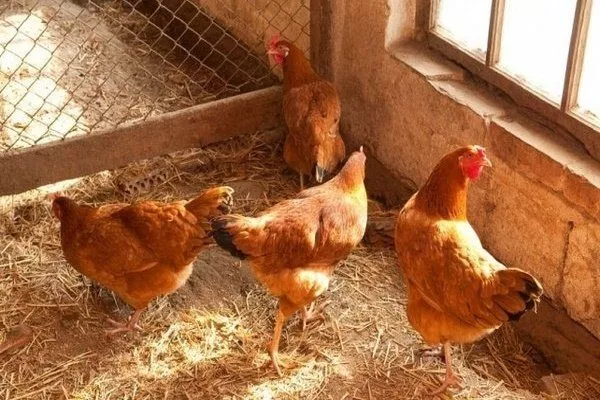
There's no need to heat the coop. However, Hungarian giants don't tolerate drafts, so it's necessary to line the coop floor with straw and sawdust. The litter should be clean and dry to ensure adequate heat retention. Dry leaves or straw can also be used as litter. In summer, the layer should be no more than 12 cm thick; in winter, especially when it's very cold, double that amount will be needed.
To ensure the birds' well-being, a proper ventilation system is required. Keeping birds in a room with musty and humid air can create favorable conditions for the growth of pathogenic and putrefactive bacteria, which can lead to the development of fungal diseases. To prevent this problem, not only a proper ventilation system but also regular cleaning of the coop, changing the litter, and performing preventative antifungal treatments on the walls will help.
Red broilers are large birds, so they are often kept on the floor, believing it would be difficult for them to climb onto perches. However, most farmers claim that Foxy Chicks have good flight qualities. Wooden nest boxes, set at a height of 800 cm, are suitable for this breed. Nest boxes are essential in the coop—one nest box for every 3-5 hens.
Special baths containing ash and fine sand are installed in the poultry house. Birds use this mixture to clean their feathers, thereby protecting them from various dangerous parasites. How to build a chicken coop yourself that meets all poultry-keeping requirements – read here.
Walking
The birds prefer to roam freely outdoors during the warmer months. There is no time limit on these walks. Foxy Chick chickens adapt well to the outdoors and can easily find their own food, allowing the farmer to save significantly on feed costs.
If for some reason it's not possible to provide free-range access for birds, it's possible to set up a "solarium"—a place where the animals can breathe fresh air and bask in the sun's rays, while at the same time being restricted in their movement:
- To do this, on the southern side of the chicken coop, a small space about 2 m high and as large as the area allows is fenced off with metal mesh.
- Because the amount of foraged food in such a "solarium" is minimal, it will be necessary to install a feeder, the cleanliness of which will need to be monitored especially carefully, since food spoils much faster outdoors than indoors.
If hens are kept on the ground, they need at least limited outdoor exercise. Free-range directly improves the taste of poultry meat, and the eggs produced by free-range hens contain six times more natural carotenoids, essential for the human body. Free-range hens continue their outdoor exercise even when cold weather sets in. If the temperature has not dropped below -10 degrees Celsius, the birds are allowed out for a short period.
Feeding
Red broilers are easy to feed. Until three weeks of age, the chicks should be fed a broiler-specific feed. After that, ground grain can be added to their diet. When the chicks are six weeks old, they are allowed to roam freely, where they can forage for food.
The diet of grown chicks should include foods such as wheat, vegetables, peas, corn, and barley. Chickens are fed three times a day. Also, don't forget about vitamin complexes.
Approximate feeding ration depending on the age of the birds:
| Feed, % | Chicks 1-4 days | Chicks 5-10 days | Chicks 31-60 days |
| Ground barley | — | 10 g | 16 g |
| Ground wheat | 40 g | 26 g | 35 g |
| Fish meal | — | 6 g | 3 g |
| Hydrolytic yeast | — | 3 g | 6 g |
| Sunflower cake | — | 16 g | 13 g |
| Salt | — | — | 0.4 g |
| Dry milk | 10 g | 2 g | — |
| Soybean meal | 10 g | — | — |
| Chalk | — | 1 g | 1.6 g |
| Meat and bone meal | — | 4 g | 3 g |
| Herbal flour | — | 2 g | 2 g |
| Ground corn | 40 g | 30 g | 20 g |
Adult birds are always fed a mash made from apples, potatoes, beets, and peas. Finely chopped fresh greens are always added to this feed.
It's beneficial to feed Hungarian crossbreeds cabbage leaves, beet and carrot tops, nettles, and quinoa—they contain many nutrients essential for chicks. These ingredients should be given in chopped form. It's essential to feed the hens. balanced compound feed, vitamin supplements, and productivity-boosting compounds. It's advisable to add a little chalk and salt, fish meal, and bone meal to the grain.
Feeding laying hens is discussed separately. here.
Breeding
Foxy Chick hens are very protective and constantly keep their chicks warm. The hens themselves turn the eggs to keep the chicks warm. During this period, special attention should be paid to the hens' diet, as a lack of natural food and a sedentary lifestyle can lead to exhaustion.
Usually the birds are bred with roosters of the Orpington red or Rhode IslandIn this case, the second-generation offspring will be in no way inferior to the parent birds in terms of productivity. Using Orpington roosters, the chicks will grow as large as Foxy Chicks. Crossing with Rhode Island males will produce chickens with high egg production rates.
It's also possible to breed this breed in an incubator. This method was invented by the birds themselves, who tend to bury their eggs in grass or leaves. If you must resort to this method, it's important to follow an important rule: choose the right incubation material and prepare it beforehand. Avoid overcooling the eggs, and it's crucial to monitor the temperature in the incubator.
Before placing eggs in an incubator They need to be checked for damage and cracks, and using an ovoscope, ensure the yolk is centered and the air cell is at the blunt end. Remember to turn the eggs regularly.
Diseases and prevention
Adherence to feeding and hygiene regulations contributes to almost 100% chick survival. All that is necessary for the well-being of red broilers is preventative vaccinations and proper care.
The Foxy Chick is a hardy breed that is virtually disease-free. If care and maintenance are neglected, some diseases may develop:
- Marek's disease. It is accompanied by seizures, an enlarged goiter, lameness, and a change in eye color. There is no treatment, only preventative vaccinations.
- Coccidiosis. Chicks react very poorly to the disease. Symptoms include decreased appetite, lameness, loose stools, and ruffled feathers. Veterinarians prescribe medications such as Amprolium, Sulfadimezine, and Coccidiovit for treatment. Folk remedies using iodine or sulfur are also used. To prevent the disease, clean waterers and feeders at least twice a week, change bedding, and remove food from the bowl after each feeding.
- Intestinal infections, mites, worms. Ticks attach themselves to birds and feed on their blood. The birds suffer from severe itching and loss of appetite. Insecticides can help eliminate the problem. A bath filled with ash also helps.
- Pasteurellosis. During the acute stage of the disease, general depression, loss of appetite, green, mucous diarrhea, and difficulty breathing are characteristic. In the chronic stage, birds exhibit a runny nose, wheezing, and swelling of the feet and comb. The disease is incurable, so the bird must be slaughtered immediately. Levomycetin tablets are recommended as a preventative measure.
More has been written about chicken diseases, their symptoms and treatment methods. Here.
Molting and breaks in egg production
Laying hens lay eggs almost all year round. However, they sometimes experience a forced pause in egg production due to the annual molt. Once egg production begins to decline, the hens need special conditions to speed up the molt process.
The birds require reduced daylight hours and a highly nutritious diet. Molting lasts from one and a half to two months. Clover, alfalfa, bone meal, and cabbage are added to the feed for these hens.
Experienced farmers recommend eliminating grain from the diet during the laying period. Resuming grain mixtures is acceptable during the period of new feather growth. During this period, hens especially need sprouted wheat, oat, and sunflower seeds.
Care and maintenance of chicks
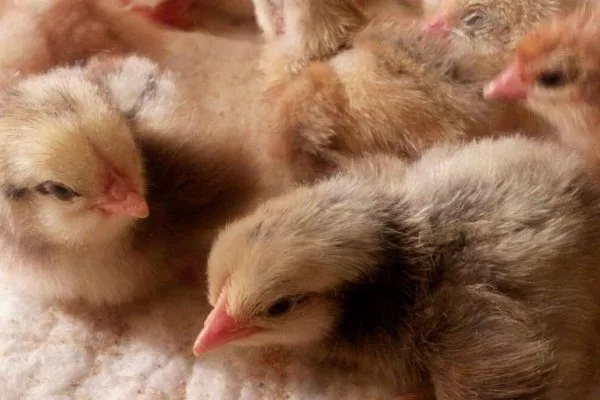
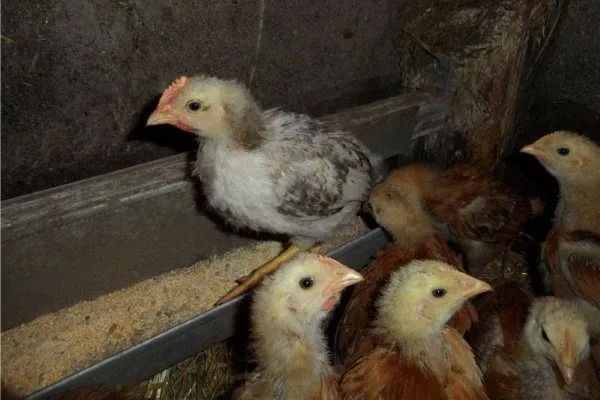
Chicks require excellent lighting for their proper development. The light should be on constantly for the first ten days of life. For the first five days of life, the optimal temperature is 30 degrees Celsius. At one month of age, 20 degrees Celsius is sufficient.
- ✓ The bright orange color of the beak and paws indicates good health.
- ✓ Activity and curiosity are markers of the absence of stress.
At first, chicks are fed high-quality compound feed (for broiler breeds). For poultry bred for meat and eggs, simple chick feed is not suitable.
After the chicks have dried off and are actively moving, farmers include fresh cottage cheese and fish oil in their diet, and also feed the chicks boiled, mashed eggs. Young birds should not be fed whole grains or milk, as their stomachs are still immature and unable to digest these foods.
After the birds are six weeks old, they are fed crushed "adult" food, which helps them digest and absorb it more quickly. It's important to provide the young with clean, fresh water. Water bowls should be installed in the coop to prevent contamination. Initially, the chicks are given warm water (at least 40 degrees Celsius) to prevent hypothermia. It's recommended to add a small amount of ascorbic acid solution to the water bowls.
Farmers' opinion
Many farmers speak well of Foxy Chick chickens, believing that the birds are easy to keep.
Foxy Chick chickens are excellent layers and strong roosters. They are noted for their excellent production qualities and undemanding care and diet. They rarely get sick, enjoy excellent health, and their appearance is particularly pleasing to farmers.