
Many farmers claim that raising guinea fowl at home is quite simple if you approach the task responsibly. If raising birds is a profitable venture, then within a few years you can recoup all costs and begin making a "net" profit.
Characteristics of the bird
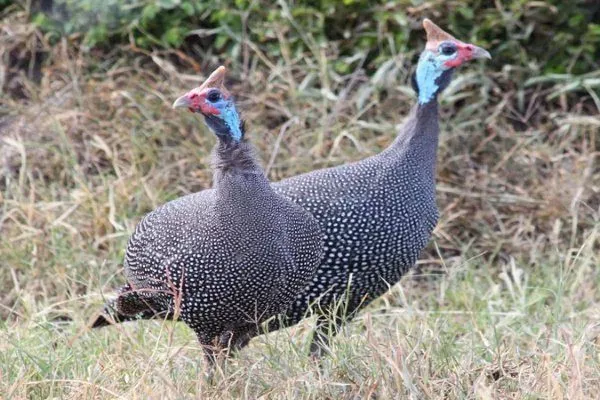
Guinea fowl are distant relatives of turkeys and chickens. Guinea fowl have an elongated, oval body, topped by a small head with an unusual design. The gray-speckled bird is often found in private farms, but other varieties also exist.
A one-day-old animal weighs approximately 29 g; by three months, their weight ranges from 1-1.2 kg. Adults weigh approximately 2 kg.
Guinea fowl delight with their delicious and nutritious eggs, producing around 120 per year. Each egg weighs up to 50 g, and the shell is a dark cream color. Distinctive features of these eggs include small speckles on the shell, a pear-shaped form, and a high content of vitamin A.
Guinea fowl breeds
| Breed | Egg production (pieces/year) | Male weight (kg) | Female weight (kg) |
|---|---|---|---|
| Gray-speckled | 100 | 2 | 1.5 |
| Zagorskaya | 140 | 2 | 2.5 |
| White Siberian | 170 | 2 | 2.1 |
| Creamy | 80-100 | 1.75 | 1.65 |
| Blue | 100-150 | 2 | 2.5 |
| Yellow | 100 | 1.5 | 1.8 |
| Volga White | 85-100 | 1.6 | 1.9 |
| Blue lilac | 150 | 2 | 2.5 |
| White | 90-100 | 1.5 | 1.8 |
Today, farmers prefer to breed several varieties of guinea fowl. Breeders have repeatedly worked to improve the productive qualities of the guinea fowl, and four subspecies have been developed. The most popular variety is the white-breasted Zagorsk guinea fowl.
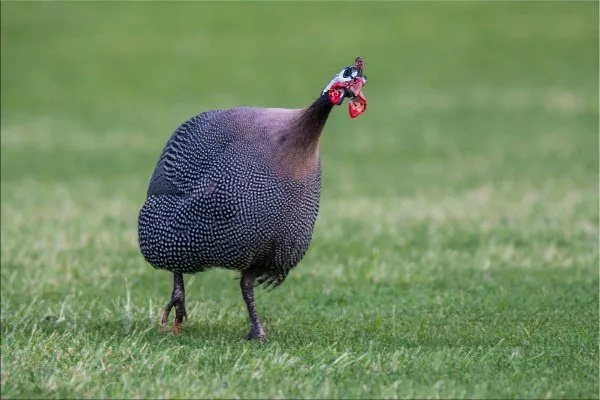
Gray-speckled
The flavor of this dietary meat is very delicate and at the same time pleasant. As its name suggests, this bird has a gray coat with speckles scattered throughout its body. Females weigh up to one and a half kilograms, while males weigh around two kilograms. Hens produce about a hundred eggs per year.
Zagorskaya
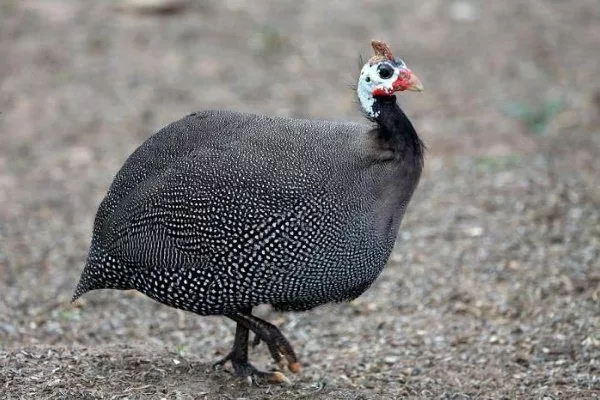
The most valuable breed, favored by farmers for breeding due to its excellent weight and high egg production. Large guinea fowl can produce up to 140 eggs per year. An adult male weighs approximately 2 kg, while a female weighs up to 2.5 kg. The breed was developed by crossing a Moscow rooster and a gray-speckled guinea fowl. The bird's distinctive feature is its white breast.
White Siberian
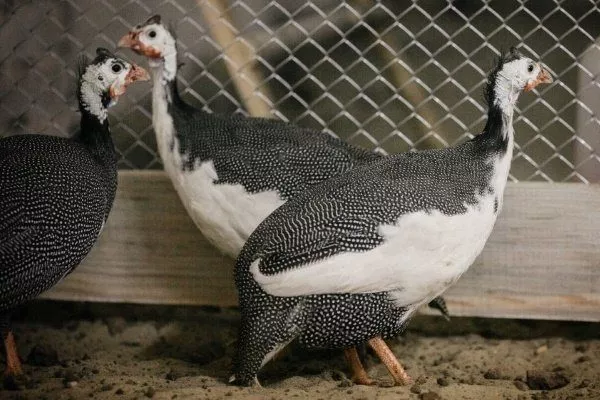
This bird was bred recently. It is characterized by a white coat with barely noticeable speckles all over its body. These birds exhibit excellent egg production rates—hens can lay up to 170 eggs per year. An adult female weighs up to 2.1 kg, while males weigh around 2 kg.
Creamy
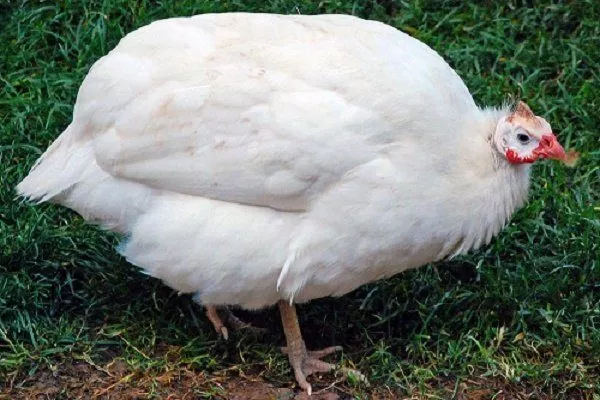
The cream guinea fowl is very similar in appearance to the Siberian white variety, but is significantly smaller and has a darker body color. This breed has a creamy white coat, sometimes with a yellowish tint.
An adult male weighs up to 1.75 kg, while a female weighs 1.65 kg. Egg production is lower than in other breeds, but females reach sexual maturity much earlier. A single hen lays 80-100 cream or brown eggs per year, weighing no more than 44 g. Hatchability reaches 70%.
Blue
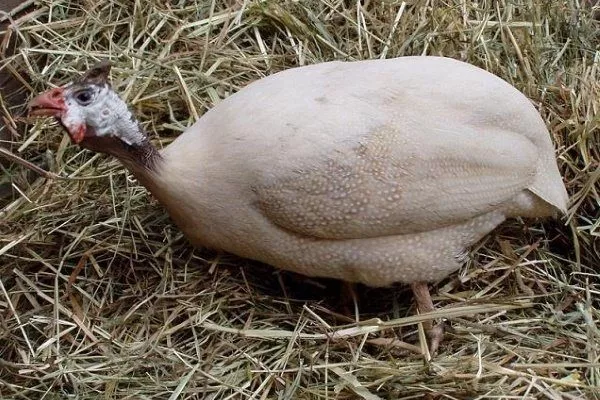
The blue guinea fowl has a body shape similar to its ancestors. It is distinguished by its distinctive coloration—light brown plumage with violet and blue highlights. The bird's neck and belly are purple, while the feathers on its back and tail are gray-blue with small white flecks. On the tail feathers, the white spots merge, forming a transverse line.
An adult male can weigh up to 2 kg, while a female can weigh up to 2.5 kg. A single hen lays 100 to 150 brown eggs with a yellow or reddish tint per year. Each egg weighs approximately 45 g.
Blue guinea fowl reproduce naturally or artificially. Fertility of eggs reaches up to 75%.
Yellow
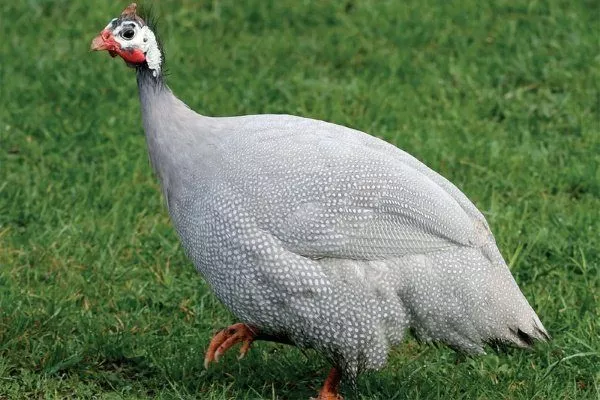
The feathers of this breed are a soft yellow, with a yellow-red tint on the neck and chest feathers. An adult female weighs 1.8 kg, while a male weighs 1.5 kg. A single hen lays up to 100 yellow-brown eggs weighing up to 45 g per year.
Volga White
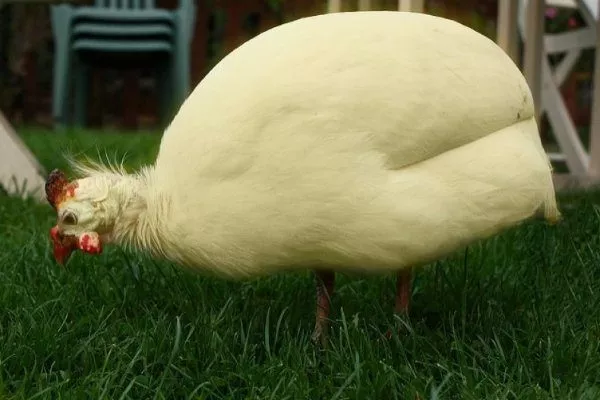
The gray-speckled guinea fowl was used for crossbreeding. The only difference between these two birds is their plumage color. This breed was developed in several stages. Today, there are over 20,000 mature individuals. The birds have an elongated body and short legs. They have a small head, pale pink wattles, and a pink beak.
An adult male weighs up to 1.6 kg, while a female can weigh up to 1.9 kg. Volga white guinea fowl produce 85-90, sometimes 100, eggs per cycle. Hatchability is up to 80%.
Blue lilac
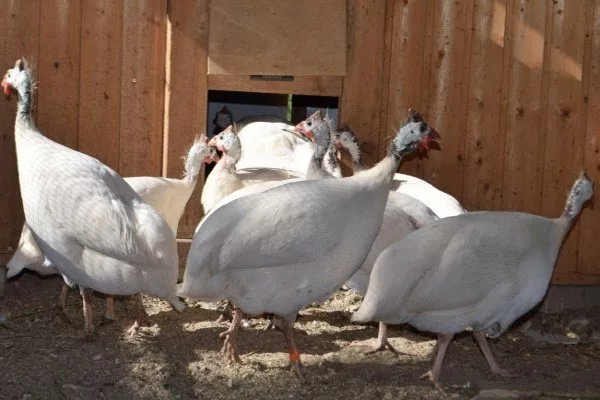
Guinea fowl of this breed differ from the blue variety in their coloring. The birds have rich indigo feathers with white flecks. There is a lot of down on the neck and chest.
An adult guinea fowl weighs 2.5 kg, and a male guinea fowl weighs 2 kg. On average, one adult female lays up to 150 eggs per year, weighing approximately 45 g. The eggs have a hard shell.
White
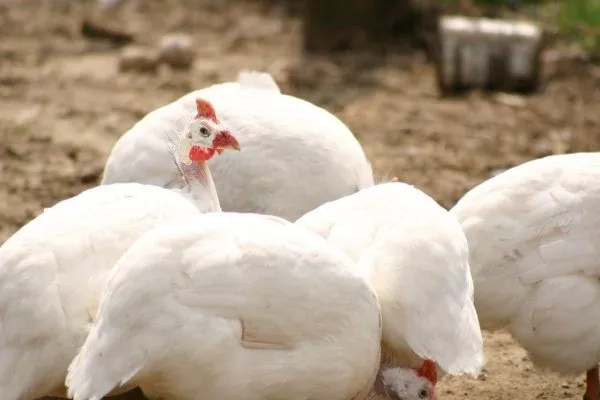
A distinctive characteristic of this species is its completely white feathers, lacking any spots or markings. The beak and wattles are a striking color, ranging from bright pink to white at the very tip.
The male guinea fowl weighs an average of 1.5 kg, while the female guinea fowl weighs up to 1.8 kg. During a single laying period, the female guinea fowl produces 90-100 yellow-brown eggs with dense shells covered with small spots. Each egg weighs 42-45 g.
Conditions for poultry
Only compliance with certain requirements poultry keeping This will allow you to produce healthy guinea fowl with excellent productivity. The birds will require a coop for overnight roosting and a walking area.
Arrangement of a poultry house and a walking yard
Guinea fowl breeding begins with setting up the breeding facility. This can be done using a farm building or constructing a structure, making sure it's insulated and protected from drafts. The facility must be comfortable and well-equipped to allow the birds to lay eggs.
To increase egg production, provide bedding indoors. It should not only absorb moisture well but also provide warmth. It's advisable to treat the floor with slaked lime. Apply one kilogram of the product per square meter. Only then can dry bedding be laid on the floor, using sawdust, dried grass, or straw.
Females will need perches, which should be placed 50 cm above the floor. There should be at least 1 meter of perch per five females.
Guinea fowl prefer open space and plenty of room to roam, requiring a large aviary. It's especially important for the birds to have access to the aviary during the breeding season, as cramped space will discourage them from mating. The aviary should be covered with mesh up to two meters high to prevent the birds from flying over it. Experienced farmers recommend installing a canopy to protect the birds from the scorching sun and rain.
Living conditions
Feeders and waterers must be installed in every aviary or cage. Birds must always have access to clean, fresh water. During the summer, this protects the birds from overheating.
It's crucial to follow the sanitary and hygienic procedures necessary for raising guinea fowl. This includes disinfecting the poultry house once a month and regularly cleaning feeders, waterers, and the bird's living areas.
Some varieties of guinea fowl require separation during breeding and raising, as they are prone to competition and fighting. They must be provided with ample space, otherwise egg production may decline. During raising, it's advisable for the farmer to monitor the behavior of their charges so that appropriate measures can be taken promptly.
In cool weather, birds tend to huddle together. The birds themselves will signal that the temperature has dropped and the coop needs to be ventilated by opening their beaks, spreading their wings, and lying down.
How is the parent herd formed?
The acquisition of chicks should begin with selecting the best-looking individuals. Lame, thin, or emaciated birds are culled. Birds showing signs of rickets, or weighing less than 1.3 kg at 5 months, are not suitable for breeding.
A healthy bird is easy to recognize: it has bright, active eyes and a strong beak. Males and females are identical in color, and sex can be determined by the following characteristics:
- the male has a large, tuberous and bright cere, the comb is located vertically;
- the female has a small cere that does not rise above the beak, a small comb directed towards the tail;
- males had larger earrings;
- In a 5-month-old female, one finger fits between the pubic bones.
Some farmers use the cloacal method for sexing. This involves turning the bird upside down and gently spreading the cloaca. A male's cylindrical penis, up to one centimeter long, is visible. This procedure greatly distresses the birds, which is why it is rarely used.
Feeding Features
Guinea fowl can be fed any type of feed: mixed feed, green feed, succulent feed, and food scraps. In the summer, guinea fowl get almost all their food from the range. They happily eat fruits and vegetables.
Some breeders recommend following a feeding schedule, feeding strictly at regular times—three to four times a day. Other breeders advise keeping the feeder full at all times so the bird can determine its own feeding times. Everyone experiments with their own feeding regimens.
Below is a table showing the feed and its volume depending on the age of the bird:
| Stern | Age from 1 to 20 days | Age from 21 to 40 days | Age from 41 to 60 days | Age from 61 to 80 days |
| Crushed shell | 0.25 g | 0.5 g | 1 g | 1.5 g |
| Wheat bran | 1 g | 10 g | 18 g | 25 g |
| Baker's yeast | 0.2 g | 0.5 g | 1 g | 1.5 g |
| Oats | 1 g | 7 g | 5 g | 5 g |
| Green | 3 g | 8 g | 20 g | 20 g |
| Barley | 1.5 g | 8 g | 12 g | 5 g |
| Back | 5 g | 7.5 g | — | — |
| Millet | 2 g | 5 g | 7 g | — |
| Fresh cottage cheese | 1 g | 5 g | 5 g | 2.5 g |
| Meat and bone meal | 0.5 g | 1 g | 2 g | 3 g |
| Wheat flour | 4.5 g | 7 g | 10 g | 20 g |
Breeding conditions for guinea fowl
Birds reach sexual maturity at 7-8 months of age. The hen incubates the chicks for 28 days. The chicks hatch in a high-humidity incubator, which requires the same amount of time. There are six females per male. During the breeding season, a hen lays 20 fertilized eggs.
Farmers typically purchase day-old chicks to raise in a brooder, which acts as a substitute for a broody hen. The nimble chicks are ready to fly from day one, so their wing tassels need to be clipped immediately. However, it's much more rewarding to raise your own brood so you can observe the family later. However, guinea fowl are rarely good mothers, so hatching is often done using an incubator.
Incubation and hatching of young
It is much easier to get young animals using an incubator than to wait for a hen to hatch eggs. incubation Use only eggs that have been stored pointy-end down for no more than 6 days at a temperature of 2-6 degrees Celsius. Be sure to use eggs that have been stored indoors, protected from light. It's also important to use eggs that weigh at least 40 grams, are pear-shaped, and have no imperfections, defects, or flaws.
Before placing the eggs in the incubator, they must be washed in a manganese solution and then dried. Afterwards, they are exposed to ultraviolet light for several minutes, which destroys all pathogenic microflora on the shell and also increases hatchability.
For the first 6-7 days, maintain a room temperature of 35 degrees Celsius, then reduce it by 3 degrees every week. After 20 days, the temperature should reach 20 degrees Celsius.
After hatching and drying, the chicks should be transferred to special boxes designed for day-old chicks. Place up to 25 chicks in each box. During the first day, the guinea fowl should be kept under a quartz lamp for several minutes.
Care and feeding of guinea fowl
For the first three days, the chicks' diet will consist of boiled chopped eggs. From days 4 to 8, ground wheat groats, chopped herbs, and fresh cottage cheese are added to the eggs. It is recommended to feed the guinea fowl with liquid curdled milk or whey. At this age, feedings are eight times a day.
Starting at eight days old, wet mash prepared from various grains with added greens is introduced into the chicks' diet. From this age, chicks can be introduced to dry food. To do this, they should be given a dry, crushed grain mix in the morning. During the day, feed the chicks wet mash, and for dinner, give the same as in the morning. By the time the guinea fowl are one month old, feedings should be reduced to five times a day. At two months, chicks are fed no more than three times a day.
To prevent illness, it's recommended to add Enroxil or Baytril to the chicks' water from day 2 to day 6 after birth. Vitamin deficiencies can be replenished with a yeast solution. A weak solution of potassium permanganate can help prevent intestinal infections.
In the summer, when the chicks are 10 days old, they are taken out for a walk. This should only be done on a warm, sunny day with no wind. Guinea fowl should not be allowed out onto grass wet from rain or dew. It's best to set aside a sandy area for their first walks—this will allow the chicks to adapt to the hard surface more quickly.
Development from birth to adult bird
A hen or turkey can hatch and raise the young guinea fowl. They are more protective of their young than guinea fowl. They can walk with the young, but if they sense danger or rain, they will look after themselves.
If the brood is entrusted to a guinea fowl, the poultry farmer will need to set up a special pen, erecting a temporary house to provide shelter from the elements and overnight accommodations for the family. The pen should also have perches where food is placed. The mother and her brood are cared for for several days until the chicks develop a herding reflex and understand that the foster mother is the leader they must follow.
If the chicks are kept in a brooder, proper lighting, feeding, and warmth will be essential. For the first three months, chicks require a special diet. Fresh water should always be available in the water bowl, and gravel and shells should be kept in a separate container.
It is necessary to maintain the temperature regime in the brooder:
- the first three days – 36 degrees;
- from the 4th to the 10th day – 30 degrees;
- from the 11th to the 20th day – 27 degrees;
- the rest of the time – not below 18 degrees.
The brooder should be bright until the birds are three months old, then the daylight hours are shortened by an hour, and so on until they are five months old. Then, an hour should be added again each week, regardless of the season. Daylight hours should be 17 hours long.
Maintenance and breeding in winter
During the winter, guinea fowl should be kept insulated and ensure the room is warm, with the air temperature not dropping below 18 degrees Celsius. The room should be cleaned once a month, and be sure to replace old bedding with fresh one as it becomes soiled.
Birds of this breed also require long, good lighting, so the lights are left on for 12 hours a day in winter. During this period, guinea fowl are also allowed to be taken outside. If the temperature does not drop below -10°C, the walk is limited to a limited amount of time, or the poultry farmer will need to monitor the birds' behavior. If they begin to huddle together, this indicates they are cold. In this case, they are immediately brought indoors.
During winter, guinea fowl should be fed a balanced diet. They are fed twice a day. In the morning, they can be given a mash of meat scraps, sour milk, and special egg-laying agents. In the evening, the birds should be provided with grain and mixed feed. Containers filled with shells, chalk, and fine gravel should be placed in the room. A box filled with equal parts ash and sand is also provided for the guinea fowl to bathe in.
The following video briefly describes the specifics of breeding guinea fowl during the cold season:
Guinea fowl diseases
When raising guinea fowl, a farmer may encounter certain bird diseases, some of which may or may not be harmful to humans. These illnesses are often caused by poor rearing conditions or inadequate nutrition. To avoid these unpleasant consequences, it's essential to maintain hygiene and sanitation, and keep the birds under the supervision of a veterinarian with many years of experience.
Poor care and uncollected bird droppings can cause the development of pathogenic microflora. Mice and rats also carry germs. Guinea fowl often suffer from trichomoniasis, pullorum, mycoplasmosis, and pasteurellosis. A doctor will prescribe treatment and a prescription.
Birds with weakened immune systems often suffer from helminths, so a specialist usually prescribes medications to help combat this problem. Timely treatment can prevent complications and death. Bacterial infections can be prevented by adding Baytril or Enroxil to the water.
How to choose healthy individuals when purchasing?
For proper guinea fowl breeding, it's crucial to select healthy birds that won't cause any problems later. It's recommended to purchase birds from a specialized poultry farm—this guarantees the animal's origin, health, and productivity. When purchasing, ask the seller for a veterinary certificate, which should include all the necessary information about the bird.
Day-old guinea fowl are most often purchased. This is the period when chicks are least likely to suffer during transportation. If you purchase older guinea fowl, you'll need to transport them in special containers. Sometimes, long-distance transport requires providing the birds with food and water. It's not recommended to purchase adult birds.
To avoid making a mistake in choosing healthy guinea fowl, a poultry farmer will need to pay attention to a few features:
- Externally, the bird should look large, not limp, have no defects on the body, and have a characteristic color.
- A healthy animal has shiny, mobile, bulging eyes, and the pupils are not reduced in size.
- Birds that show signs of rickets, such as a deformed breastbone or wings, should not be purchased. Emaciated birds with poor coordination or a swollen belly are not suitable for breeding.
- When purchasing an adult 5-month-old specimen, pay attention to its weight. Females at this age should weigh at least 1.3 kg, and males should weigh about 1.4 kg.
If you plan to breed birds for meat and egg production, with the potential to increase your flock, it's advisable to purchase at least 20 chicks. This number will easily be enough to form a breeding flock.
Income and expenses for keeping guinea fowl
Guinea fowl farming as a business can have its pros and cons. Understanding how profitable this type of venture is requires some calculations.
Let's say a farmer has a 100-square-meter facility. It can simultaneously house 400 birds (200 adult guinea fowl and 200 fattening chicks). In this case, the business starts with the purchase of 500 day-old chicks. Of these, 400 will be slaughtered after four months, and 100 will be kept for breeding until the following fall.
According to the business plan for raising guinea fowl, the expenses in the first year will be as follows:
- It will take about 400 thousand rubles to set up the farm.
- To purchase 500 chicks, where one individual costs 150 rubles, it will cost about 75 thousand rubles.
- The price of 1 kg of feed is 55 rubles. Feeding 400 birds would cost 22,000 rubles.
- Feed for a breeding herd will cost 240 rubles. Feeding 100 individuals will cost 24,000 rubles.
- A farmer will spend 1,400 rubles on one ton of straw for bedding.
- Electricity also requires payment. Paying for 5,100 kW of electricity at 4 rubles per kW would cost 20,400 rubles.
- The examination of 400 meat carcasses (one carcass costs 25 rubles) will cost 10 thousand rubles.
As a result, the first year of business development will cost the poultry farmer 552,800 rubles.
At this stage, the farmer will profit from selling 400 carcasses, each weighing 1.3 kg. The wholesale price of meat is 400 rubles per kilo. Selling all carcasses will generate a revenue of 208,000 rubles. Therefore, the expenses will amount to 344,800 rubles.
In the second year, the situation is slightly different. At the start of the breeding season, 400 eggs are placed in the incubators twice, with the goal of hatching 800 chicks. The young are distributed as follows:
- a third are sold to other farmers at day old;
- a third are fattened up to 4 months;
- a hundred are sent to slaughter at 8 months weighing about 2 kg;
- I use the remaining birds to form a flock so that there are 160 females and 40 males.
The main expenses in the second year of business include the purchase of feed for chicks, young birds, and adult birds:
| Name | Price | Quantity | Sum |
| Feed for young animals | 55 rubles/individual | 200 pcs. | 11,000 rubles |
| Feed for breeding stock | 240 rubles/individual | 200 pcs. | 48,000 rubles |
| Straw for bedding | 1400 rubles/t | 1 t | 1,400 rubles |
| Replacement young stock | 450 rub./piece | 10 pcs. | 4,500 rubles |
| Electricity | 4 rubles/kW | 5,100 kW | 20,400 rubles |
| Egg examination | 100 rub./piece | 25 pcs. | 2,500 rubles |
| Carcass examination | 25 rubles/piece | 200 pcs. | 5,000 rubles |
The total cost will be 92,800 rubles. At the end of the breeding season in September, the parent flock is slaughtered, as guinea fowl production declines in their second year. However, starting in early spring, these females will produce approximately 10,000 eggs, which can be sold for 200 rubles per dozen. Thus, the income in the second year will be as follows:
| Name | Price per piece | Quantity | Sum |
| Day-old chicks | 200 rubles | 200 pcs. | 40,000 rubles |
| Carcasses of young animals (1.3 kg) | 450 rubles | 200 pcs. | 90,000 rubles |
| Carcasses of adults (2 kg) | 650 rubles | 200 pcs. | 130,000 rubles |
| Eggs | 20 rubles | 10,000 pcs. | 200,000 rubles |
The total income will be 440,000 rubles. Taking into account expenses, the business will not only fully recoup its investment but also generate a net profit of 347,200 rubles. In the future, the farm will generate an annual income of approximately 255,000-300,000 rubles.
Advantages of breeding guinea fowl
Breeding guinea fowl, whether for personal use or for business development, has many advantages. All of these benefits apply to this breed of bird:
- Guinea fowl are allowed to graze in any outdoor areas, including vegetable gardens, pastures, and meadows. The birds are capable of foraging for food on their own and, in the evening, when it gets dark, return to their home range.
- Guinea fowl show high performance egg productionThey produce fairly large eggs throughout the year – from 90 to 160 pieces.
- No need feed the guinea fowl special foods or synthetic vitamins. They are undemanding in nutrition.
- Egg products are highly nutritious and contain beneficial substances.
- Unlike chickens, guinea fowl have a high survival rate. More than 95% of the young survive to 7-8 months.
- Guinea fowl are valued for their tasty, dietary meat, reminiscent of turkey.
- Farmers can safely let their birds roam their gardens. Guinea fowl aren't prone to digging up garden beds, but they do tend to hunt ground beetles, beetles, and other insects that damage crops.
- These birds are robust and highly resilient to adverse climatic conditions. Guinea fowl can survive temperatures ranging from +45 to -50 degrees Celsius.
- Guinea fowl can get along well with a variety of farm animals. The poultry house is set up in a barn where chickens, geese, and other birds live.
- Adult guinea fowls rarely get sick and are rarely susceptible to diseases common among chickens and turkeys.
Chicken carcasses are slightly darker than chicken meat due to the hemoglobin found in the muscles. The meat contains a lot of iron, vitamins A and E, and amino acids.
Guinea fowl farming is a profitable venture that can provide a decent living for the farmer and his family. The income from the business is so high that farm expansion is possible as early as the third year of breeding and raising the birds.