
Feeding guinea fowl is an important step in raising the birds. Their health and productivity depend on proper feeding. If guinea fowl are raised for sale, it's important to know how to feed them properly to increase their weight.
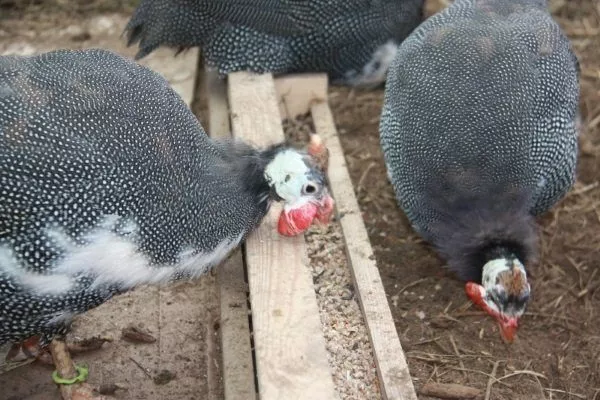
What do you feed guinea fowl?
Guinea fowl require a balanced diet. They are fed three times a day. Over the course of a year, one guinea fowl consumes approximately 32 kilograms of compound feed, 2 kilograms of mineral feed, 4 kilograms of animal feed, 12 kilograms of fresh greens, and 4 kilograms of root vegetables. Free-range feeding reduces these requirements by 1/3.
- ✓ Protein level of at least 16% to support health and productivity.
- ✓ Contains vitamins A, D3, E and B group to ensure immunity and good metabolism.
- ✓ The mineral composition should include calcium, phosphorus, sodium and trace elements to strengthen bone tissue and eggshells.
Animals should receive the most nutritious and healthy food, rich in vitamins – this will replenish the body’s energy losses.
Fresh herbs
| Object | Characteristic 1 | Characteristic 2 | Characteristic 3 |
|---|---|---|---|
| Legumes | High protein content | Improves the soil | Requires a lot of water |
| Nettle | Rich in vitamins | Medicinal properties | Growing fast |
| Dandelion leaves | Diuretic | Contains iron | Easy to digest |
| Quinoa | High protein content | Drought tolerant | It may be a weed. |
| Cabbage leaves | Rich in vitamin C | Low calorie | Require protection from pests |
| Ambrosia | Allergen | It spreads quickly | It's hard to eradicate |
| Tops | Rich in minerals | Used as feed | Decomposes quickly |
With free-range guinea fowl, the farmer doesn't have to worry about providing enough green grass in their diet—they can find everything they need on their own. If kept in cages, the greens will have to be collected by hand. The grass can be chopped up using a homemade shredder, which you can read about building yourself. here.
For one adult individual, the daily intake is approximately 40-60 grams of chopped grass, which may include the following plants:
- legumes – 10 g;
- nettle – 20 g;
- dandelion leaves – 10 g;
- quinoa – 10-15 g;
- cabbage leaves – 10 g;
- ragweed – 10 g;
- tops – 10 g.
These values are approximate and may be adjusted depending on local vegetation. It's important to understand that guinea fowl shouldn't be fed exclusively on grass; their diet must include a grain mixture.
Guinea fowl are considered human helpers. They can learn to collect Colorado potato beetles in the garden, thereby ensuring proper nutrition and ridding humans of pests.
Grain and grain mixtures
| Object | Characteristic 1 | Characteristic 2 | Characteristic 3 |
|---|---|---|---|
| Millet | Rich in carbohydrates | It cooks quickly. | Low protein content |
| Crushed wheat | High in fiber | Suitable for baking | Requires a lot of water to grow |
| Crushed barley | Rich in B vitamins | Used in brewing | Cold-resistant |
| Crushed corn | High energy value | Used in feed | Requires a warm climate |
During the period of feeding green vegetation, the amount of grain feed consumed by the birds can be reduced. For one adult guinea fowl, the following amounts of ingredients are required:
- millet – 4 g;
- crushed wheat – 5-10 g;
- crushed barley – 5-10 g;
- crushed corn – 10 g.
Mineral supplements
| Object | Characteristic 1 | Characteristic 2 | Characteristic 3 |
|---|---|---|---|
| Fine gravel | Helps with digestion | It is not digested | Must be clean |
| Table salt | Regulates water balance | Excess is harmful | Required in small quantities |
| Crushed shell | Source of calcium | Strengthens bones | It should be small |
| Nutritional yeast | Rich in protein | Stimulate growth | May cause allergies |
| Coarse river sand | Helps with digestion | It is not digested | Must be clean |
| Fish oil | Rich in omega-3 | Improves feather quality | It can be expensive |
| Meat and bone meal | Rich in protein | Stimulates growth | May be a source of disease |
| Wood ash | Source of minerals | It may be alkaline. | Used in small quantities |
| Crushed chalk | Source of calcium | Strengthens bones | Must be clean |
To ensure birds feel well and develop fully, it is advisable to include mineral supplements in their regular diet – they help strengthen bone tissue.
Mineral mixtures are given to birds per day in the following quantities:
- fine gravel – 3-6 g;
- table salt – 0.3-6 g;
- crushed shell – 5 g;
- fodder yeast – 3-4 g;
- coarse river sand – 5-10 g;
- fish oil – 3 g;
- meat and bone meal – 10 g;
- wood ash – 10-15 g;
- crushed chalk – 5 g.
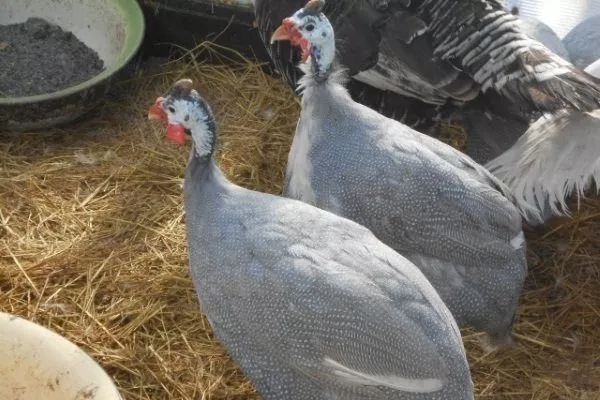
This will be enough for the bird, but it doesn't necessarily require it to eat the entire portion. The poultry farmer can either mix all the ingredients together or distribute them in separate containers, but all birds must have access to them at all times.
Food waste
Feeding birds food scraps is considered an excellent way to diversify their diet and simultaneously replace grain-based feed. In both winter and summer, guinea fowl can be fed cooked vegetables: they thrive on leftover soups and other liquid dishes, as long as they are unspiced. They also enjoy porridge, dairy products, and leftover fish and meat dishes.
Such food scraps can be used as a supplement to wet mash, replacing half the grain. One bird requires 30-40 grams of such feed per day.
Roots
During the summer, guinea fowl should be fed root vegetables, which are grated raw, boiled, or mashed. Carrots and potatoes are the best vegetables to feed them, as they don't eat other root vegetables as readily. An adult guinea fowl can consume approximately 20-30 grams of these foods per day.
Factory feed
Commercial poultry feed and supplements can be an excellent solution for balanced bird nutrition if a farmer doesn't have the time to select different products themselves. Feed is typically provided in dry form. It's important to choose the right mix, opting for only high-quality ingredients. Several popular feed options are available, described below.
Ryabushka
There are several bird food options available under the name "Ryabushka": a complete feed and a premix, which requires mixing a supplement with the main food. The complete feed is intended for feeding birds aged 4 months and older. It is also approved for feeding during the active laying period.
Manufacturers claim that "Ryabushka" has a positive effect on the bird's body, as evidenced by the following factors:
- improving the digestibility and absorption of nutrients from the diet;
- increase in egg production;
- strengthening the body's defenses;
- producing larger eggs with hard shells;
- improving the appearance of feathers;
- improving the reproductive capacity of guinea fowl and the incubation qualities of eggs.
It's also noticeable that the flavor of guinea fowl fed Ryabushka significantly improves. This superior performance is achieved thanks to the product's balanced composition, which contains plant protein, phosphorus, iodine, calcium, copper, manganese, cobalt, and various vitamins essential for the bird's body: A, E, H, K3, B1-B6, B12, and D3.
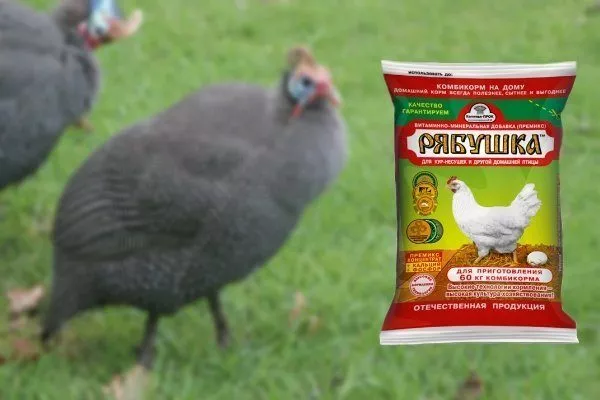
It is acceptable to start feeding the bird by giving it 80 grams per day, divided into 2 meals.
Ryabushka premix is a dry mixture containing beneficial ingredients that are simply added to the feed. While it can't replace regular food, it can be supplemented with beneficial ingredients. The powder contains the same ingredients as a complete feed, but in this case, it includes a feed antibiotic and a flour-and-grain accumulator. Guinea fowl require 1.2-1.5 grams of the mixture per bird per day.
Felutsen
Guinea fowl are often fed the feed supplement "Felutsen" in combination with their main feed. This dry powder is used to add to grain mixtures or wet mash. For guinea fowl, 55-60 grams of powder per 1 kilogram of feed is sufficient.
The feed contains the following components:
- carbohydrates;
- vitamins: A, D, K, C, H, group B;
- minerals: phosphorus, iodine, manganese, calcium, zinc, sodium chloride, selenium, cobalt.
There's no need to further process the powder before use. However, if using this supplement for guinea fowl, be sure to exclude chalk and salt components from their diet.
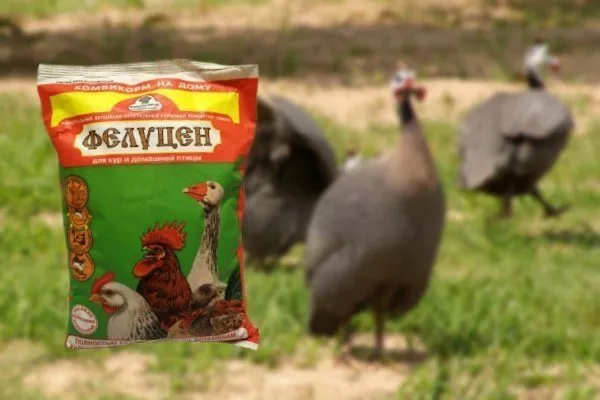
Using Felutsen feed significantly improves the condition of birds. Farmers note the following benefits of feeding the supplement:
- reducing the likelihood of developing anemia and various deformities in young animals;
- improving the incubation qualities of eggs;
- increasing the strength of eggshells and the skeletal system of guinea fowl;
- normalization of digestive processes;
- increasing the protective functions of the bird's body.
The supplement is introduced into the diet gradually. Initially, birds are given 1/7 of the daily dose, then increased to the recommended amount over the course of a week.
Mixed Sweet
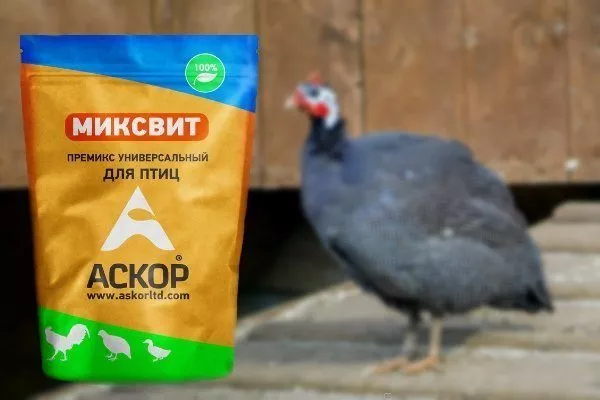
"Miskvit" is a powdered supplement containing calcium, iodine, iron, selenium, copper, manganese, zinc, and vitamins D3, A, E, B, H, and K. This supplement works similarly to the previous supplements. Feeding birds with "Miskvit" has been shown to strengthen their skeletal system, reduce feed consumption, improve eggshell strength, and enhance the nutritional value of the egg product itself.
To achieve the most effective results, add the supplement to the guinea fowl's main grain feed at a rate of 1.2 grams per bird per day.
A balanced diet is the first requirement for raising guinea fowl, as their food provides the birds with essential vitamins, micro-, and macronutrients. Guinea fowl are considered to be relatively undemanding birds, but this doesn't mean they can be fed just anything.
Feeding rules
There are no special feeding rules for guinea fowl. As with other poultry, it's important to choose high-quality, fresh feed. Wet mash should be prepared only before feeding. The same applies to porridges prepared with milk.
Chicks kept in a pasture-based environment can be fed three times a day, as they are able to find their own food the rest of the time. When kept indoors, newborn chicks need to be fed up to 12 times a day, gradually reducing the frequency to six, then four times.
What shouldn't you feed guinea fowl?
Poultry keepers, especially beginners, should be aware that feeding birds spoiled vegetables, stale greens, and low-quality feed is absolutely undesirable. This can lead to serious gastrointestinal problems.
Diet of little guinea fowls
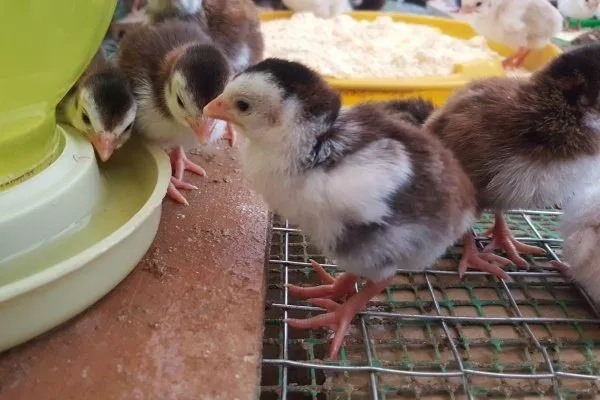
The period before guinea fowl are a month old is considered the most crucial. At this age, birds often suffer from various illnesses, so it's important to ensure they consume high-quality feed and clean, fresh water. They need a balanced diet.
Feeding of guinea fowls follows a specific pattern, depending on their age:
- Day 1 Start with a boiled, chopped egg. You can mix in bread soaked in milk or wheat porridge. It's acceptable to give all the ingredients separately. Before serving, the bread must be thoroughly chopped to prevent choking.
Occasionally, from the first days of life, the chicks are fed compound feed intended for broiler chickens. If the compound feed is coarse, it must be ground. Vitamins can be added to the water to help boost the newborn guinea fowl's resistance to disease. - From the 3rd day Fresh cottage cheese is introduced into the chicks' diet. It contains a large amount of protein, which plays an important role in the chicks' growth and development. Eggs are no longer given. During this period, a small amount of greens, barley, millet, and corn porridges are included in the menu.
- Day 5 It begins with the farmer bringing a container of chalk, crushed shells, and gravel into the poultry house. The birds continue to eat the same food, but during this period they are allowed to eat slightly more greens and grain. Vitamins are still added to the water.
- On the 7th day A mash made from boiled potatoes, beets, and grated carrots, mixed with sour milk, is introduced into the diet. At this time, the birds require a lot of green food, so it's necessary to increase the green feed intake by feeding cabbage, clover, lettuce, dandelion, and nettle.
- On the 21st day The young are now being released into the wild to search for food on their own. In the poultry houses, they are fed a wet mash of vegetables and grain porridge.
From the first days of life, chicks need to be fed every two hours, eight times a day. By the time they reach one month of age, the number of feedings is reduced to five. The water bowl should always be filled with clean water, which should be changed as frequently as possible. Chicks are very active, and because they run around and kick up dust, the water bowl can quickly become dirty.
What to feed guinea fowl from one month of age?
When the guinea fowl are 30 days old, they become adults. The farmer switches the animals entirely to adult feed. During this period, the guinea fowl are fed no more than three times a day. In the morning, they are fed a mash with added succulent feed and a wet porridge containing grains. In the evening, the birds are fed dry grain, which satiates their bodies throughout the night until the morning.
Birds' diets may include grain or vegetable mashes with meat scraps, yeast, crushed peas, or fish. These foods are high in protein, so they shouldn't be fed all at once. Birds are typically fed a single food item.
If the bird is fed a compound feed, it is given 150 grams of it and 50 grams of greens per day. In addition, they should be fed chalk and crushed shells. When fed a simple homemade diet, a month-old bird should eat the following amounts per day:
- salt – 0.3-1 g;
- cereals – 90 g;
- fish oil – 3 g;
- greens – 30-50 g;
- fish or meat meal – 15 g;
- yeast – 6 g;
- root vegetables – 20-30 g;
- hay – 15 g.
What should be the diet of an adult?
Adult guinea fowl are undemanding birds. 130-150 grams of commercial feed and 30-50 grams of greens per day are sufficient. Boiled potatoes and porridge can be substituted for grain feed. Birds require animal-based feed, so it's advisable to include scraps of meat, fish, or dairy products in their diet. In summer, they can graze on the lawn. Crushed shells or chalk are essential, even for adult birds, as they always need calcium.
An example of a weekly diet for guinea fowl is presented in the table:
| Stern | Age 21-40 days | Age 41-60 days | Age 61-80 days |
| Crushed shell | 0.5 g | 1 g | 1.5 g |
| Wheat bran | 10 g | 18 g | 25 g |
| Baker's yeast | 0.5 g | 1 g | 1.5 g |
| Oats | 7 g | 5 g | 5 g |
| Green | 8 g | 20 g | 20 g |
| Barley | 8 g | 12 g | 5 g |
| Back | 7.5 g | — | — |
| Millet | 5 g | 7 g | — |
| Fresh cottage cheese | 5 g | 5 g | 2.5 g |
| Wheat flour | 7 g | 10 g | 20 g |
| Meat and bone meal | 1 g | 2 g | 3 g |
We recommend watching a video in which an experienced farmer talks about feeding his guinea fowl:
Adults wake up early and eat the remains of the previous day's meal for breakfast. The birds are fed four times a day. The animals prefer a mash containing grass, boiled potatoes, and various cereals. Experienced farmers recommend preparing such feed in milk or meat broth—this has a beneficial effect on the birds.
Birds also need protein, but it's important to monitor their portions to avoid overfeeding, as this can lead to illness. It's especially important to monitor the animals during rainy and cold weather, as otherwise they may suffer from gastrointestinal problems. To prevent this, baker's yeast is added to the guinea fowl's diet once a day during the breeding season to promote hydration.
Giving birds a potassium permanganate solution to drink wouldn't hurt. In summer, birds love to feed on beetles and worms. These insects are a real boon for potato growers, as guinea fowl prey on Colorado potato beetles. These insects can be fed to birds with bread, and then fed on their own, before being released into the garden to hunt on their own.
If guinea fowl help get rid of beetles, avoid treating potatoes with toxic chemicals. During harvest season, feed the birds watermelons, squash, and melons. They prefer any vegetables.
Feeding in winter
Feeding guinea fowl in winter is somewhat different from feeding them in summer. Green grass and snails are very difficult to find in winter, but replacing these ingredients with succulent feed, meat scraps, etc. is perfectly acceptable.
- Harvesting hay and silage from legumes and cereal crops in summer.
- Purchasing or preparing vitamin and mineral supplements to compensate for the lack of fresh herbs.
- Store feed in a dry, ventilated area to prevent mold.
Instead of grass, birds are given fresh cabbage, beets, and chopped carrots. They will happily feast on vegetable scraps, sprouted wheat, and oats. These ingredients should be present in the birds' diet, as cereal grasses are their main food source.
The table shows the ingredients for feeding guinea fowl, the volume is calculated for 1 adult individual:
| Product | Quantity |
| Oats | 20 g |
| Table salt | 0.3 g |
| Barley | 20 g |
| Fish oil | 3 g |
| Corn | 21 g |
| Crushed shell | 3 g |
| Wheat bran | 20 g |
| Yeast | 6 g |
| Fish meal | 5 g |
| Spruce needles | 15 g |
| Carrot | 20 g |
| Hay-clover | 25 g |
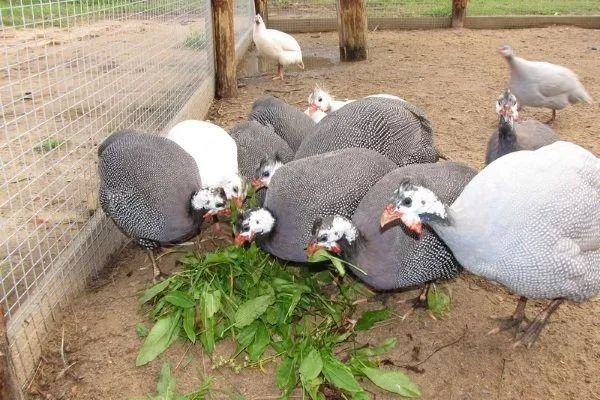
There's no need to chop the herbs; simply tie them together to form a broom and hang it within reach of the birds. Then, simply discard the coarse, inedible stems.
Legumes provide guinea fowl with plant-based protein. While the birds are typically fed inexpensive soybeans, peas, beans, or lentils can be substituted. These need to be ground and mixed before feeding. Guinea fowl require the same amount of grain as hens. For one adult laying hen weighing 1.5 kilograms, 100-120 grams of grain feed is required. Broiler guinea fowl weighing about 3 kilos, they give approximately 1200 grams of compound feed.
In winter, “summer” products are replaced by:
- fermented milk whey;
- meat and bone meal or fish meal;
- cottage cheese;
- chopped meat scraps;
- fish guts.
Fish meal or fish offal is not recommended for feeding to birds that will be slaughtered, as these products can impart a distinct fishy odor to the poultry meat.
In winter, vitamins are essential in the guinea fowl's feed. These are usually included in commercially prepared feeds. Adding crushed shells to the birds' diet can provide calcium. Mixing a small amount of chalk into the feed is also acceptable. It's also essential to provide the guinea fowl with containers of sand, from which they can peck out pebbles and then bathe in the sand.
Poultry nutrition for fattening
Starting at four months of age, birds are fed a dough made from flour and steamed roots for fattening. They must be provided with free-range pasture. Some breeders believe that there's no point in specially fattening guinea fowl, as by this age, with proper housing and feeding, they already gain sufficient weight, and are therefore sent to slaughter.
Only with proper feeding and care will guinea fowl remain healthy, develop well, and gain weight. There are several feeding options for birds, depending solely on their age and the time of year. In summer, they can consume a maximum of greens, while in winter, they are provided with a different diet.