
If a guinea fowl is kept in good conditions and nothing interferes with its normal development, it becomes sexually mature and capable of laying eggs by eight months. However, if especially comfortable conditions are created, the bird can begin laying eggs as early as six months.
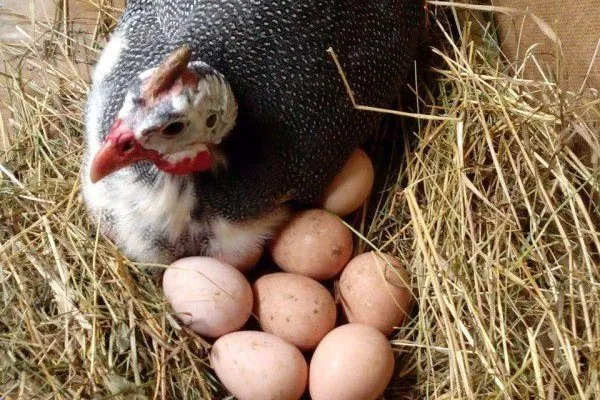
When does egg laying begin?
Guinea fowl sexual maturity is not tied to a specific time of year. It may occur during cold weather, but full egg production does not begin until spring. Females typically reach maturity between the 6th and 9th month.
The following factors influence the timing:
- how comfortable the conditions are for the bird;
- how nutritious and varied the diet is;
- Poultry house lighting and other factors.
The onset of egg-laying depends on a combination of factors influencing sexual maturity; it usually occurs in the first or second half of spring.
Guinea fowl are domestic birds that, under favorable conditions, are highly productive. With proper care and feeding, this "royal bird" can become a profitable business.
Males are late in maturation, reaching puberty at 10-11 months. Therefore, males of the same age cannot fertilize females, which reach sexual maturity 3-4 months earlier. If young hens are already laying eggs and there are no sexually mature males in the house, the eggs will be infertile and unsuitable for breeding.
Features of egg production of guinea fowl
Guinea fowl are characterized by progressive clutch size. This means that the egg-laying process dynamically increases. It looks something like this:
- Once sexually mature, females lay eggs at intervals of one day.
- After a certain time, they lay several eggs daily - for example, they can lay eggs every day for several days.
- For two to three months, guinea fowl's egg production gradually increases. But soon, the hens take a break—they simply need to replenish lost body fat and prepare for future egg production.
To determine if a guinea fowl is laying eggs, check its pelvis. If the pelvic bones separate, the bird's abdomen is soft and voluminous—it's in the egg-laying stage.
What does egg production depend on:
- It depends on the bird's age. Each subsequent year reduces the hens' productivity by 5-20%.
- It depends on the bird's weight. Moderately fat hens tend to lay the longest eggs.
- From the conditions of maintenance and nutrition.
Age dependence
Egg production decreases as guinea fowl age, while egg size increases. The relationship between egg weight and hen age is shown in Table 1.
Table 1
| Lifespan of a laying hen | Egg weight, g |
| First year | 40-44 |
| Second year | 43-46 |
Sometimes, the weight of eggs decreases, but the number increases. But this rarely happens in the lives of guinea fowl. Furthermore, farmers do not keep laying hens longer than 2-3 years.
On average, a guinea fowl lays 130 eggs per year. Their egg production ranges quite widely, from 70 to 190 eggs per year. Record-breaking females can lay up to three hundred eggs.
Dependence on the season
Guinea fowl egg production depends on the season:
- The steady rate of egg laying lasts, under favorable conditions, from March to November.
- In the northern regions, laying hens do not begin to lay eggs until May.
- During the egg-laying process, irregularities in its rate may be observed. It may subside and then resume again. Periods of fluctuation are 2-3 months.
The egg-laying months are presented in Table 2.
Table 2
| Laying period | When it happens, months |
| Start | February-March |
| Peak | May-June |
| The end | October-November |
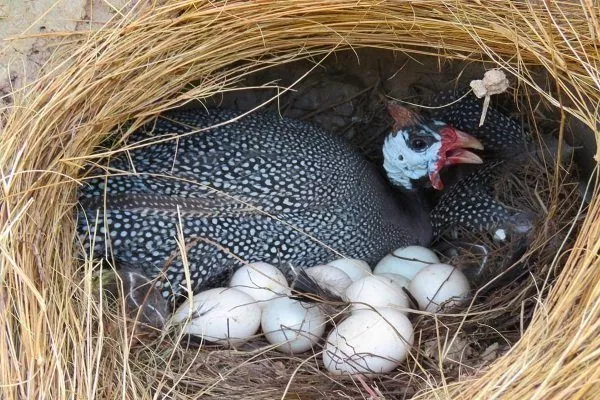
Egg production is positively affected by:
- duration of summer;
- number of sunny days;
- the duration of the period during which succulent feed is available.
The warmer the climate in the area where they live, the higher the fertility, hatching rate and productivity of guinea fowl.
If the chicken coop is equipped with special installations that regulate temperature and lighting, the hens will lay eggs continuously for 9 months.
Why do guinea fowl stop laying eggs?
Beginning poultry farmers often encounter problems with guinea fowl stopping laying eggs, even though the laying season should continue. The problem is most often rooted in unfavorable living conditions:
- It's cold in the poultry houseIf the barn is not insulated and the temperature inside drops below +12°C, the hens will go on strike.
- Failure to comply with sanitary regulationsIf the floor of the coop is dirty, guinea fowl will refuse to lay eggs. It's necessary to clean the coop more frequently, change the litter, and ventilate the room.
- The water in the drinking bowls is dirtyTo keep layers happy, the water in their drinkers needs to be changed regularly to ensure it's fresh. Otherwise, the birds will digest the food poorly. This is especially important if they eat compound feed.
- Poor nutritionIn cold weather, guinea fowl lack the insects they crave. If this is not compensated for with protein supplements, egg production will decline. A lack of greenery also negatively impacts egg production; it must be replenished with root vegetables and vegetable scraps. In warm weather, nutrient deficiencies can occur due to a lack of calcium supplements, yeast, bone meal, fish oil, fermented milk products, legumes, and grains.
- StressGuinea fowl are very timid birds. To disrupt egg production, it's enough to frighten them or change their feed. Sometimes, even changing the type of litter can upset them.
- ✓ Relative air humidity should be maintained at 60-70%.
- ✓ The concentration of ammonia in the air should not exceed 10 ppm.
In winter, it's recommended to feed guinea fowl finely chopped pine needles—they're a rich source of vitamin C. However, it's strictly forbidden to feed pine needles to birds in the spring, when trees are beginning to grow. At this time, the needles contain too high a concentration of essential oils, which can be harmful to guinea fowl.
Do you need a hen?
Farmers typically take all the eggs laid by guinea fowl. If a female sits on the eggs, she stops laying until the next season—which is completely unprofitable. Furthermore, guinea fowl are so easily startled and have such a weak maternal instinct that the likelihood of them successfully raising their chicks is slim.
However, if favorable incubation conditions are created, and especially if the birds are kept in pairs, the guinea fowl can sit on the eggs and later care for them. Incubation lasts 26-28 days.
Disadvantages of natural breeding:
- A guinea fowl might "change its mind." It will abandon its eggs and go about its business. As a result, you'll have to urgently find a broody hen.
- While the guinea fowl sits or “thinks” about whether to hatch eggs or not, the farmer loses egg production, since the guinea fowl does not lay eggs during the incubation period.
To successfully hatch offspring without losing the flock's egg production rate, farmers prefer to use incubators for breeding guinea fowl.
Preparing for incubation:
- Eggs laid by guinea fowl over one year old are collected. Unlike chicken eggs, they have a more pointed apex. The shell color is brown, and speckled eggs are common. Eggs are collected after 20 days from the start of laying. Collecting eggs earlier is highly likely to be unsuitable. The optimal storage period for hatching is 6-7 days. A fertilized egg weighs at least 40 g.
- Each egg is treated with iodine, potassium permanganate or quartz lamp.
- They are tested for suitability mechanically. When tapped against each other, the eggs should not crack or rattle.
Marbled eggs are not used for incubation—they are often "empty." Spots on the shell are believed to be a sign of a poor-quality embryo.
How do breed and plumage color affect egg production?
Guinea fowl egg production is influenced by breed characteristics, including productivity, frost resistance, and husbandry requirements. Guinea fowl are raised for meat, so broiler breeds are advantageous. Currently, the French broiler guinea fowl is considered the best – it boasts high egg production, large eggs, and high meat yield (up to 3.5 kg). The relationship between egg production and breed is shown in Table 3.
Table 3
| Breed | Egg production, pieces per year | Egg weight, g |
| French broiler | 140-150 | up to 50 |
| Volga White | 150 | 45 |
| Speckled gray | 90-100 | 45 |
| Blue | 130-150 | 40-45 |
| White Siberian | 110 | 50 |
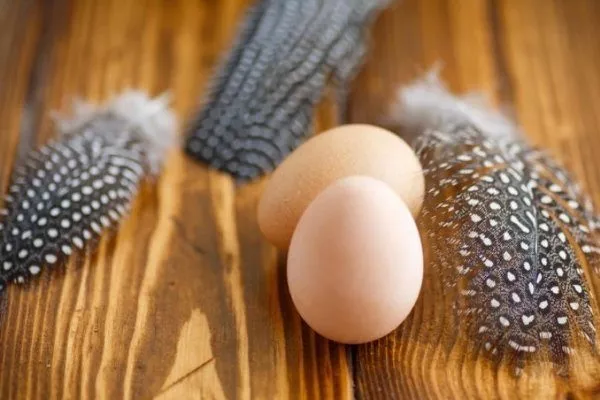
Poultry farmers have also noted that guinea fowl egg production is related to their color. The relationship between egg production and color is shown in Table 4.
Table 4
| Color | Egg production, pcs. per year |
| Grey | 90 |
| Blue | up to 100 |
| White | more than 100 |
Factors Affecting Egg Number
Guinea fowl owners can influence their egg production by improving their living conditions. What can increase egg production in laying hens?
- Favorable regime. It is desirable that the temperature in the poultry house does not fall below 14°C.
- Compliance with housing standards. For 5 birds – no less than 1 sq. m of area.
- Lighting. At 5 months of age, guinea fowl require 8 hours of daylight, and from 6 months of age, lighting is increased by an hour per week to 16 hours. In winter, guinea fowl require light from 7 a.m. to 10 p.m.
- Separate poultry house. Guinea fowl should not be kept together with other poultry – they require a separate, insulated room in which to create collective nests.
- Air mode. It is necessary to provide ventilation in the poultry house.
- Complete nutrition. Compound feed and grass alone are not enough for laying hens; the diet must include:
- corn;
- fish oil;
- fermented milk products.
- Walking. To increase egg production and weight gain, it's recommended to keep the birds in a free-range environment for as long as possible. Guinea fowl can spend all daylight hours here. The pen is enclosed with high mesh, as guinea fowl are good flyers.
- Drinking regime. Clean water should be freely accessible at all times. It should be changed regularly, as birds like to climb into the waterers with their feet.
- ✓ Lighting intensity should be at least 20 lux at the bird’s head level.
- ✓ Using red light at night can reduce stress and improve egg production.
Egg production can be negatively affected by:
- age of laying hens;
- time of year;
- characteristics of the body, illnesses or weakened immunity.
How much do guinea fowl eggs cost?
Eggs laid by productive breeds – blue, white, grey guinea fowl – cost 35-60 rubles each.
Eggs laid by ornamental breeds – purple or black guinea fowl – cost much more – 300-400 rubles.
Eggs from particularly rare breeds – crested or vulture guinea fowl – cost up to 3,000 rubles each.
Advice from experts
Guinea fowl behavior differs from that of chickens, so beginners should carefully study it. Experienced guinea fowl farmers advise:
- To increase egg production, feed guinea fowl with broiler chicken feed.
- When keeping guinea fowl outside during the day, refill their feeders twice a day—morning and evening. In the fresh air, the birds will forage beautifully, eating grass, seeds, and insects—an excellent source of vitamins and minerals.
- To achieve maximum egg production, it is necessary to breed white and light gray guinea fowl.
- Avoid using small eggs laid by young females for breeding. Such eggs are highly likely to die or produce non-viable chicks.
- The fertility of males decreases after two years of age, so they are sent for slaughter.
- Guinea fowl are gregarious birds, so they lay eggs in communal nests rather than in individual nests. However, sometimes hens lay eggs while outside, leaving their eggs on the ground or in the grass. Farmers know how to prevent egg loss: since guinea fowl lay eggs before lunch, it's best to let them outside in the afternoon.
By understanding the specifics of guinea fowl husbandry and creating favorable conditions for them, you can maximize egg production. By obtaining the required number of fertilized eggs, you can actively breed guinea fowl for meat, the primary source of their livestock.