
The Carniolan bee is the most productive breed, enjoying great popularity in Europe. These insects are highly productive and unpretentious, making them highly prized in Russia as well. They originate from Yugoslavia and the Australian Alps. Beekeepers believe that these bees combine the best characteristics of the Caucasian and Carpathian bees.
Origin
Previously, their main habitats were Carinthia and Upper Carniola. In older sources, these bees were called Carniolan bees; somewhat later, other names emerged: Carniolan and Carinthian.
In 1880, the official name Apis mellifica carnica Polltn appeared, then experts realized that this species of bee actually occupies a much larger area:
- Romania;
- Hungary;
- Carpathians;
- Bulgaria;
- Slovakia;
- Greece.
By the end of the 19th century, these bees began to be sold to other countries. Carniolan bees surpassed even the dark German ones in productivity and resistance to disease and climate. They soon appeared in all European countries, and reviews of them were extremely positive.
Description and characteristics
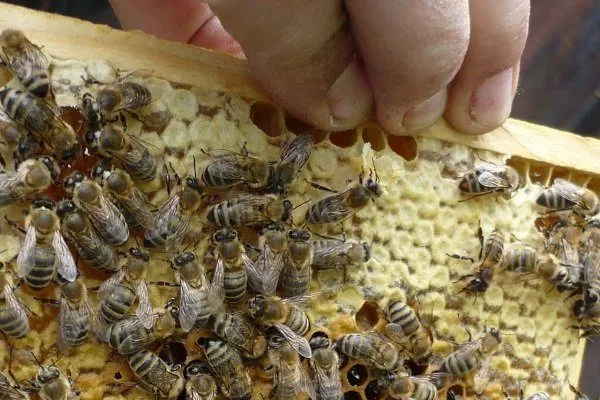
The Carniolan bee's main distinguishing feature is its distinctive appearance, unlike other bees. Instead of the typical yellow coloration of bees, its color is gray and silver. The fringe is very thick, and the hairs are short, giving it a shaggy appearance.
The sizes of such bees are not large:
- worker bees weigh 105 g;
- the queens are also small, from 185 to 205 g;
- drones weigh 230 g.
The proboscis of insects is not long and reaches only 6.6 mm, in rare cases it reaches 8 mm.
Types of Carniolan bees
There are several species of Carniolan bees, the most popular are discussed below:
| Types of bees | Description |
| Pawn | One of the oldest varieties, its maintenance was accomplished by maintaining isolated breeding sites and continually increasing the population with material originally preserved by the author. Specialists have worked diligently to preserve this species, which is why so many are observed today. |
| Karnika Troizek | One of the oldest selectively bred varieties of the Karinskaya bee, they are clean, not prone to swarming, and friendly. The colony develops with large numbers of bees in early summer. The queen stops laying eggs late, but at temperatures above 5°C (41°F), laying may resume even in winter. |
| Troizek Wintersbach | The bees are disease-resistant, produce medium-sized brood, are friendly, undemanding, and have a fast development rate. They produce good yields, making them ideal for commercial beekeeping. |
| A cross between a carnica and a northern bee | Brood production begins late, but it's good when the nectar flow begins, and their strength increases. They require spacious hives, and their strength doesn't wane in winter, unlike many other varieties. |
| Troisek Celle | The bees are calm and swarming is weak. Crossbreeding them with other bees is not recommended, as nothing good will come of it. |
| Carnica Sklenar | This species is distinguished from others by its strong aggressiveness. High rates of production occur late in life. Crossbreeding them is not recommended, as the new generation will have a poor temperament, poor performance, and excessive swarming. |
| A type of bee | Disease resistance | Tendency to swarming | Productivity (kg of honey per year) | Temperature range of activity (°C) |
|---|---|---|---|---|
| Pawn | High | Average | 15-20 | +10 to +35 |
| Karnika Troizek | Very high | Low | 20-25 | +5 to +30 |
| Troizek Wintersbach | High | Low | 18-22 | +10 to +35 |
| A cross between a carnica and a northern bee | Average | High | 12-15 | +5 to +25 |
| Troisek Celle | High | Low | 16-20 | +10 to +30 |
| Carnica Sklenar | Average | Very high | 10-14 | +5 to +25 |
Productivity
Carniolan bees can produce a large honey flow. A colony can collect between 6 and 15 kg of honey per day, depending on the number of bees in the hive.
- ✓ Disease resistance
- ✓ Tendency to swarming
- ✓ Productivity
- ✓ Temperature regime of activity
- ✓ The character of bees
Even during poor honey flows, they maintain their productivity. This is due to the size of their proboscis and their ability to extract nectar with low sugar content. The excellent profitability of Carniolan bees depends on their frugal winter expenses.
The queen's fertility reaches 1,400-2,000 eggs per year, which is quite a feat. The high survival rate of the young positively impacts the farm's profits.
Behavior of the Carniolan bee
Carniolan bees are very calm, friendly, and devoid of malice. They will never sting a person without provocation. A beekeeper can open the hive and perform any necessary manipulations without wearing a mask, and they will not harm him.
This variety of bees produces copious amounts of wax and enjoys building. A single hive can produce around 15 new frames in a single season. The wax cappings are beautiful, and the seal is dry and white.
Advantages and disadvantages
As for the advantages, they are as follows:
- high performance;
- explosion in development in the spring;
- early readiness for wintering;
- disease resistance;
- large honey flow;
- economy in winter;
- calm character;
- ability to navigate in space.
These bees will never confuse their hive with someone else's; they defend their own nests around the clock.
Honey collection
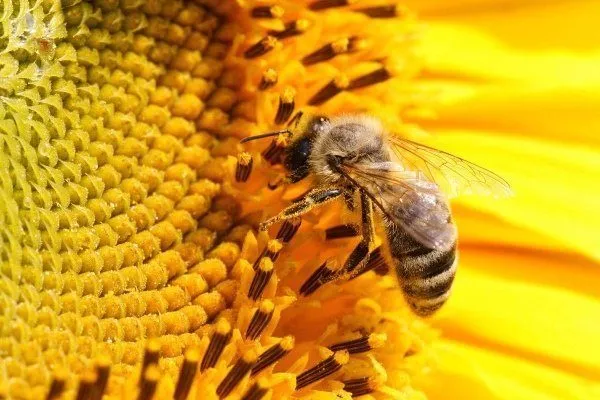
These bees develop quickly; with the onset of spring, the colony immediately increases its strength and produces early honey plants.
Their productivity is very high, but they produce their best results early, which occurs in early spring. They can begin their work actively when the air temperature reaches 11 degrees Celsius.
This variety is not sensitive to low honey flows, but they begin producing well at the first opportunity. This breed performs best on red clover, but they can also demonstrate their abilities in other locations. Bees emerge from their hives even in poor weather and light rain, when other bee varieties won't even leave their nests.
First, the bees fill the brood with honey, and then they move on to selling it in stores. The product's seal is generally light and dry.
Wintering of Carniolan bees
Carniolan bee colonies prepare for winter well in advance, as soon as the main summer nectar flow ends. The nectar flow into the hives ceases, and the queen stops laying eggs.
Carniolan bees tolerate temperature fluctuations, or more precisely, increases, well. In terms of cold tolerance, only Central Russian bees are second to them. However, the Caucasian bee does not tolerate cold temperatures as well as the Carniolan.
Until recently, beekeepers considered the abrupt development of the bees to be a characteristic feature. The insects overwinter in weak colonies. The winter reserves consisted of eight full frames. Today, European stores have begun offering extensions that allow for larger hives. Since then, Carniolan bees have been bred in full-fledged, strong colonies.
Swarming and prevention methods
As is already known, Carniolan bees are prone to swarmingNow the question arises: what can a beekeeper do to prevent this? How can they save some of the insects during the spring? Swarming occurs due to:
- a decrease in the queen bee's pheromones, resulting in the production of many drones;
- Young bees are instinctively ready to collect nectar, but there is none yet, so they begin to swarm.
The first signs that swarming is imminent are: Carniolan bees have paused their nest building and are not leaving their nests, and the queen is laying fewer eggs. This can be stopped in time or prevented altogether:
- increase ventilation in the house to stimulate further construction;
- reduce the light in the hive.
In addition, many beekeepers prevent swarming by expanding their nests with multi-hull construction. This separates the queen from the brood with a grid to prevent overcrowding. This allows the queen to reproduce freely, and the worker bees to bring in more nectar.
Bee disease
With different bee diseases Beekeepers rarely have to fight them, as they are resistant to them. This is especially true for foulbrood and nosematosisThe insects are energetic and have a high vitality; they almost never get sick. In recent years, only chalky brood has been frequently encountered.
Treatment of ascospherosis (calcareous growth)
The Carnica variety of bees can get sick ascospherosisThis disease is caused by the fungus Ascosphaera apis, which attacks the larvae of any species. The fungus itself will not disappear from the hive on its own, as it is highly viable. Beekeepers must eliminate this insidious fungus.
You can tell if the larvae are infected with ascospherosis by their appearance: a white, chalky coating appears on them. The fungus grows both on and inside the larvae, causing them to grow in size. If left untreated, the larvae will eventually turn into a piece of stone, which the bees themselves will discard.
Infection occurs due to high humidity and low air temperatures. Another common cause is poor hygiene when caring for the hive. If a beekeeper uses dirty equipment, the bees can easily become infected with ascospherosis.
If an infestation does occur, immediate action is necessary: discard the frame containing the infected larvae and treat the hive with Ascocin, Unisan, or Nystatin. Alternatively, you can use folk remedies such as wrapping crushed garlic in cheesecloth and placing it in the hive where all the bees will be temporarily relocated.
Reviews
Positive feedback from beekeepers is due to high productivity.
The Carniolan bee is ideal for industrial production due to its high productivity. They are also economical in winter, consuming little food. In addition to these positive traits, they have the ability to swarm, but this can be prevented with timely measures.