
The Buckfast bee gets its name from its English origins—bees were first bred in the abbey of the same name. Today, the breed is one of the most popular among beekeepers, despite its high cost.
| Breed | Productivity (kg of honey/year) | Frost resistance | Aggressiveness |
|---|---|---|---|
| Buckfast | Up to 128 | Low | Low |
| Carpathian | Up to 80 | Average | Average |
| Carnica | Up to 90 | High | Low |
General characteristics of the breed
Buckfast bees possess a number of characteristics that distinguish them from other members of the bee family. They stand out not only for their visual appearance but also for their productivity, which is so revered by beekeepers.
Appearance
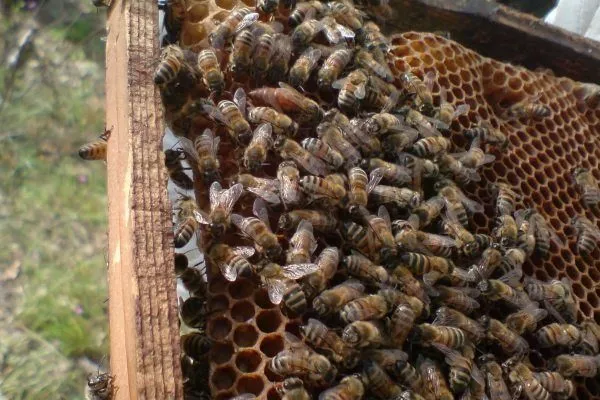
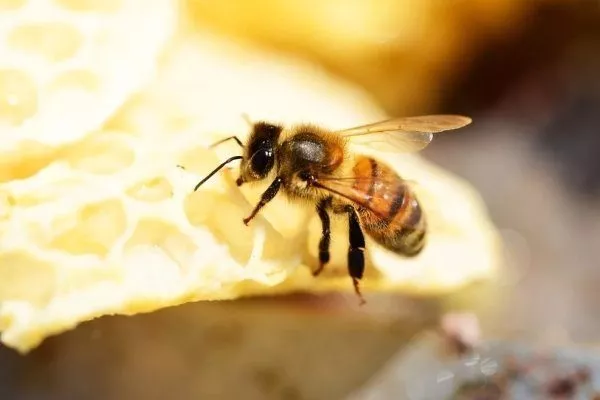
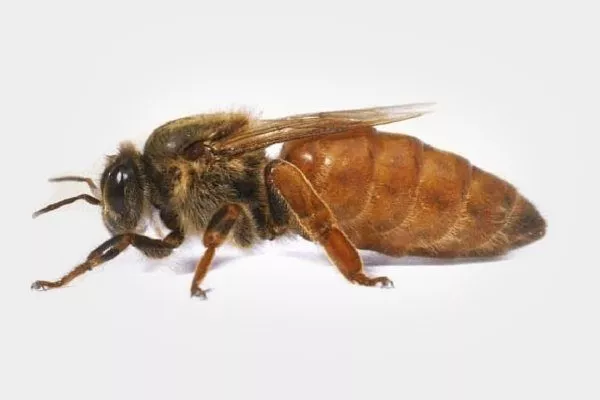
The weight of a Buckfast worker bee is approximately 115 milligrams, while an unfertilized queen can weigh around 200. Individuals of this breed have a slightly elongated, downward-sloping body.
Buckfast bees are dark yellow to yellow-brown in color. Their legs are much darker, almost black. Their wings, on the other hand, are relatively light.
The size of the breed's proboscis does not exceed 7 millimeters.
Productive Features
The breed is renowned for its productivity, which is virtually unaffected by circumstances. However, a number of peculiarities do occur during the summer season:
- during periods of average bribe the family continues to increase in strength;
- during periods of strong honey flow (for example, linden, sainfoin, sunflower), the queen is slightly limited by bees;
- Moreover, brood in families often occurs even in autumn, which prolongs the production period.
Buckfast queens are very prolific, and in late spring can lay up to 2,000 cells a day. Therefore, the breed is characterized by the formation of large colonies.
Moreover, the Buckfast breed is capable of effectively exploiting both weak and strong nectar flows, spread out over time. The beekeeper should maximize the colony's strength. If the nectar flow is too weak, the bees should be provided with top dressing.
Behavioral characteristics and climate preferences
One of the breed's hallmarks is their peacefulness. They are not prone to attacking humans without provocation, and they are quite receptive to inspection of the hive.
There's no absolute need for a smoker, gloves, or netting when handling a hive. However, if you're new to this breed, it's worth using them at least the first few times you inspect it.
Buckfast bees prefer to avoid contact when checking the hive, especially in bad weather. They tend to retreat downwards.
This is a very hard-working breed, collecting pollen from early morning until late evening. Buckfast bees can continue working even in temperatures as low as ten degrees Celsius.
They are also known to prefer humid climates: Buckfast bees thrive in areas with frequent rainfall. A prime example is the temperate zone. However, the breed is capable of adapting to virtually any conditions.
Features of honey collection and swarming
The amount of honey flow directly depends on the accumulated strength of bee colonies, the honey flow and the architecture of the hive (multi-body, horizontal hive).
Nomadic migration significantly increases the amount of honey obtained, but even without it there is always plenty of it.
To ensure Buckfast bees perform at their best during the honey flow period, their population growth must not be restricted under any circumstances. Beekeeping practices such as sealed brood removal and colony splitting, which limit colony growth, are also not recommended.
During the summer season, almost all the beekeeper's work is limited to setting up auxiliary hives and extracting honey. Another distinctive feature of Buckfast bees during the honey flow is their low propolis production.
Swarming is almost never a characteristic of this breed. For example, over five years of breeding, only a couple of colonies may swarm, which is a good indicator.
Other characteristics of the breed
A distinctive feature of Buckfast bees is the rapid hatching of worker bees – not 20, but 19 days.
There are three varieties of Buckfast, which are characterized by:
- early;
- average;
- late emergence of brood.
In addition, there are many lines and hybrids of the breed that differ from each other:
- resistance of bees to viral diseases and varroatosis;
- periods of queens' gestation (from late autumn to early September);
- periods of maximum honey production (for some lines, maximum honey production occurs in early spring, for others – in autumn), etc.
At the moment, it is quite difficult to find absolutely purebred representatives of the breed.
In this video, beekeeper Maxim Nikutkin shares his thoughts on the Buckfast breed and discusses some of the characteristics of these bees:
Content Features
Despite the unpretentiousness of the Buckfast breed, individuals require a certain attitude and care.
Nutrition and living conditions
Early insect development is beneficial only if the region can provide bees with sufficient food from the first months of spring. Otherwise (for example, in northern and western regions), beekeepers will have to provide the workers with supplementary food.
Buckfast bees are particularly demanding of space. They require large, spacious hives for their habitat. Without ample "living space," a colony will be unable to continually increase its population and strength, and these two factors directly impact the amount of honey produced by Buckfast bees. A separate hive is recommended for each colony.
It is recommended to install special sunbeds in the hives themselves - they will not only promote bee reproduction, but will also help preserve more honey.
Furthermore, hives for Buckfast bees must be warm. If bees are kept in northern regions, insulating them is highly recommended.
Wintering
Shortly before the final pumping, all the boxes are removed from the hives, and the lower frames are rearranged, replacing them with dry frames and wax foundation to provide the queen with work. This is done so early due to the peculiarities of the Buckfast breed: unlike other breeds, Buckfast bees do not flood the lower box with honey, but rather lift it up, providing the queen with a box to lay eggs in.
At the same time, feeding begins, preparing the bees for winter. Feeding continues until the bees refuse it. The nucs are fed in the same manner.
It is recommended to add polysin and nosema treatments to the feed. The hive should be treated for varroa before wintering.
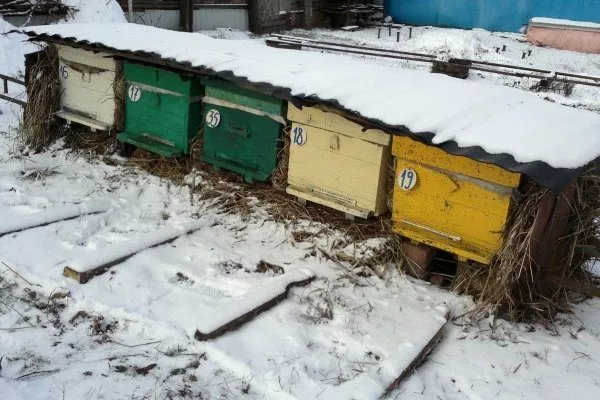
Another important aspect of preparing Buckfast bees for winter is removing the insulation from the hive in mid-autumn (depending on the temperature) before the onset of frost. This is done so that the bees have time to settle to the bottom of the hive before wintering. The resulting bee cluster will perfectly maintain the internal temperature throughout the winter. Furthermore, removing the insulation from the hive in the fall, before frost sets in, will protect the hive from excessive dampness and mold.
Concerns that Buckfast bees will freeze or become ill if their insulation is removed in the fall are completely unfounded. They tolerate low temperatures very well. The main thing is to ensure that hives containing this breed of bees are not left unprotected during freezing temperatures.
Diseases
Buckfast bees are resistant to infectious bee diseases such as:
- acarapidosis;
- nosematosis;
- ascospherosis.
However, at the same time they are vulnerable to:
- Varroa mite;
- European foulbrood;
- American foulbrood;
- tracheal mite.
In this regard, the beekeeper is required to carry out regular preventive measures (especially during the process of preparing the breed for wintering).
Other care features
The Buckfast breed has virtually no resistance to preserving its natural traits: no matter how high-quality and pure the Buckfast queen purchased is, after a couple of generations the individuals invariably change color and acquire aggressive behavior.
To maintain the purity of the existing breed, it will be necessary to either purchase new queens or use artificial breeding methods, limiting contact of individuals with other representatives of the bee family.
Additionally, read the instructional article with advice for a novice beekeeper.
Pros and cons of the breed
To the indisputable advantages The following provisions apply to the Buckfast bee breed:
- Endurance. Bees are capable of working from early morning until late evening.
- Fertility. Bee colonies grow rapidly, increasing in numbers almost exponentially.
- Longevity. Queens of this breed can live for about five years without losing their qualities.
- Variability. Depending on the region where the apiary operates, the optimal breed line can be selected.
- Convenience. Bees prefer to stay in the upper tiers of the hive and store their supplies in the lower tiers. This makes honey harvesting an easy task.
- Cleanliness. A hive left behind by Buckfast bees always remains clean, as the breed is renowned for its cleanliness.
- Good nature. Individuals of this breed do not show aggression towards people without significant provocation. Their peaceful nature is especially suitable for beginners in beekeeping.
- Resistance. Buckfast bees are rarely susceptible to disease.
- No swarming. Individuals are absolutely not prone to swarming, and if they do, it's extremely rare.
- Honey harvest. Bees produce a huge amount of honey compared to their fellow bees, making them an attractive choice for industrial-scale honey production.
However flaws The breed also has:
- Weak frost resistance. Despite bees' ability to continue working even in low temperatures, they can't be considered frost-resistant.
- Difficulties in breeding. Buckfast is one of the most difficult breeds to breed. Of the 1,500 queens, only 30 will be purebred and suitable for sale.
- Weakness of traits. Purchasing inferior Buckfast queens inevitably leads to new generations of bees becoming increasingly aggressive and lazier over time.
- Limitations. Capped brood selection and colony division are not applicable to this breed of bees if the beekeeper wants to obtain sufficient honey.
- Increased attention. The larger the colony, the more attention the insects will require. Otherwise, the honey flow will begin to decline.
- Propolis. As a tradeoff for the large quantities of honey produced, insects produce relatively little propolis.
- Cost. Acquiring even a barren Buckfast queen can require a significant investment. She can cost around two thousand rubles. Fertile queens are worth their weight in gold – up to 100 thousand rubles per queen.
Reviews
— they overwinter less efficiently than local bees, but at the same time they consume less food;
— in the spring the food simply disappears, but a huge increase follows;
— produce more honey than Carpathian and Carnica;
- peace-loving, he allowed himself to remove the net from his face even when pumping honey;
— there was a swarming mood, but it calmed down as soon as the reasons disappeared.
I recommend you try it!
With a number of significant advantages and a few drawbacks, Buckfast bees can survive in virtually any region, except for the coldest. This breed is an ideal choice for a beekeeping novice willing to make a financial investment that will pay off very quickly.