
Healthy bees not only contribute to the production of large quantities of high-quality honey, but also guarantee peace of mind for the beekeeper. It's essential to know whether the colony is sick and what to do if the little workers are ill.
Non-infectious diseases of bees
Non-infectious diseases arise from disruption of the bees' essential living conditions. Improper feeding, poor husbandry, and breeding practices can all lead to illness. However, once the underlying cause is eliminated, the bees will recover.
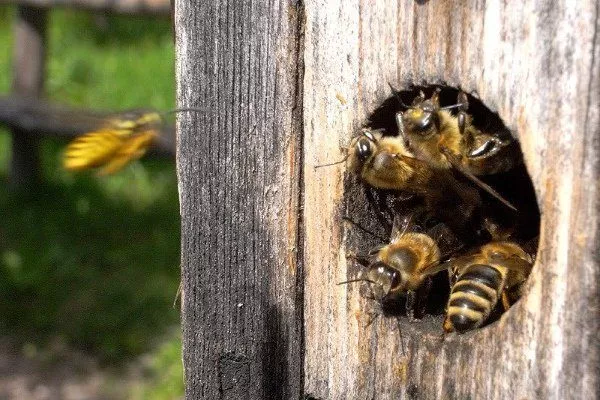
Pollen toxicosis
The essence and reason: poisoning of nurse bees with pollen from poisonous plants (worship, wild rosemary, hellebore, larkspur, etc.).
Signs:
- recently fed bees quickly die;
- bloated abdomen;
- the intestines of dead bees are full of thick, ocher-yellow contents;
- bees crawling out of the hive fall to the ground and die;
- most often observed in May, sometimes in June and July.
Treatment:
- remove recent pollen from the hive;
- install bee bread frames into the hive;
- give the bees sugar syrup for a couple of days.
Prevention:
- check the bees' habitat for the presence of poisonous plants;
- If the plant is found, destroy or isolate the bees.
Nectar toxicosis
The essence and reason: poisoning of bees with flower nectar of poisonous plants (worship, wild rosemary, hellebore, larkspur, etc.).
Signs:
- a large amount of poison accumulates in the feed, causing toxicosis over a period of two to three weeks;
- mass death of not only queens, but also brood and the entire family;
- The disease most often occurs in May and June.
Treatment: Replace honeycombs with fresh honey with honeycombs with liquid sugar syrup.
Prevention:
- sow honey plants near the apiary so that their flowering time coincides with the flowering time of poisonous plants;
- change the location of the apiary;
- completely eliminate poisonous vegetation.
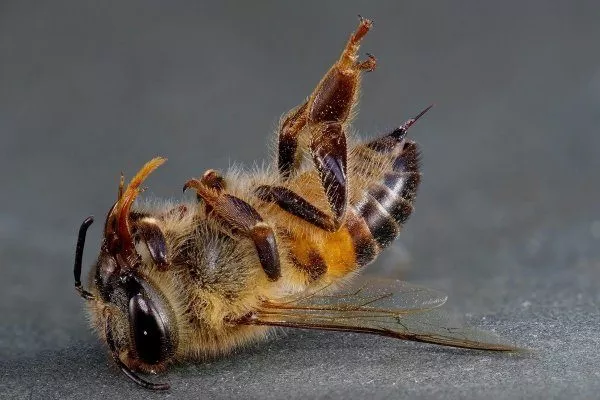
Chemical toxicosis
The essence and reason: poisoning by mineral fertilizers used in fields for foliar feeding of plants, as well as directly by pesticides.
Signs:
- poisoned bees become more aggressive;
- they can suddenly die both during collection and in the hive;
- bee colonies fed with food containing poison residues make noise and quickly weaken;
- the course of other diseases is more severe than usual.
- Immediately isolate bees from the source of chemicals.
- Replace honeycomb with honeycomb and sugar syrup.
- Provide bees with access to clean water.
Treatment: Replace honeycombs with fresh honey (or recently brought pollen) with honeycombs with liquid sugar syrup.
Prevention:
- a plan for treating the area with pesticides and fertilizers developed in advance and agreed upon with the district administration;
- organize bees' access to honey plants in such a way that the period of their collection is not later than the date of chemical treatment;
- If there is no possibility of agreement, remove the bees from the danger zone to a distance of 5 or more kilometers;
- If this is not possible, the bees must be isolated from the danger zone, not allowing them to leave the hive, and fed with sugar supplements for the duration of the chemicals' action.
Honeydew toxicosis of bees
The essence and reason: poisoning of bees with carrion.
Signs:
- the most obvious sign of the disease, especially in winter, is severe diarrhea;
- the disease is typical for arid areas and regions surrounded by forests;
- in sick bees, the intestines become dark in color: from brown to almost black;
- A severe form of poisoning is accompanied by massive (if not complete) death of the family in the second half of winter.
Treatment:
- feed bees with liquid sugar syrup;
- give melt water to drink;
- Place bee colonies as early as possible.
Prevention:
- Before the start of wintering, replace part of the feed honey with sugar at the rate of 6-10 kg per bee colony;
- Replace honeydew honey with high-quality honey.
Additionally, read the detailed article about bee poisoning.
Alimentary dystrophy
The essence and reason: metabolic disorder in bees due to a lack of food or its inadequacy.
Signs: unexplained exhaustion and death of both bees and all brood.
Treatment: If bees are starving, they need to be fed both in summer and winter. The following will do:
- honey;
- sugar syrup;
- sugar-honey dough;
- bee bread or its substitutes.
- ✓ The quality of honey must meet the standards.
- ✓ Sugar syrup must be fresh and properly prepared.
- ✓ Perga must be free from mold and other contaminants.
Prevention: Provide bees with a good food supply and strictly observe feeding hygiene.
The key to combating non-communicable bee diseases is vigilance and a quick response. The faster the cause and consequences of the disease are eliminated, the more bees will survive.
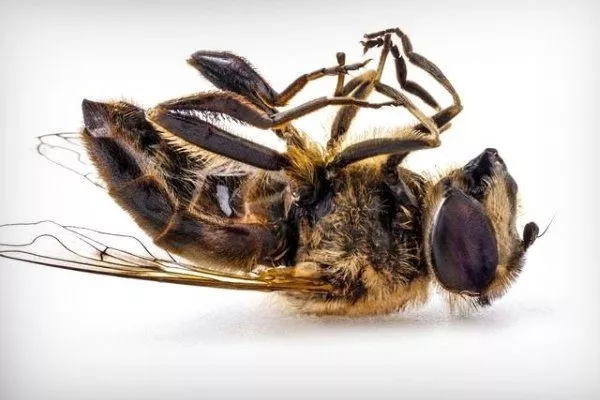
Steaming bees
The essence and reason: mass death of bees as a result of prolonged exposure to high humidity and temperature.
Signs:
- the death of a significant part or all of the bees in a steamed colony;
- the course of the disease is accompanied by severe agitation and increased aggression;
- the temperature and humidity in the nest rise rapidly, causing the wax in the honeycombs to become soft and pliable;
- over time, the honeycombs with honey and brood break off;
- the bees themselves become wet and black and quickly die;
- a loud noise of bees comes from the hive, which eventually dies down completely;
- the cracks and entrances are completely clogged with black bees.
Treatment:
- urgently open the hives and allow the bees to fly out freely;
- remove dead bees, leaked honey and torn honeycombs;
- The remaining families, if there are queens, should be reinforced with sealed brood at the exit or combined.
Prevention:
- provide additional free space (e.g. empty stores), auxiliary cross-ventilation;
- protect the hive from direct sunlight;
- When temporarily isolating the hives, be sure to provide water.
Infectious diseases of bees
Along with non-infectious bee diseases, there is also an extensive list of common infectious bee diseases – those that can be transmitted from one bee to another.
Ascospherosis
The essence and reason: a disease of bee and drone brood caused by a fungus, the spores of which are often found on flowers.
Signs:
- the disease is characterized by the presence of altered cells and larvae;
- holes have been gnawed in the cells containing dead larvae;
- Some honeycombs may be covered with a layer of mold;
- the larvae destroyed by the fungus are white and resemble lime;
- Most often the disease makes itself known in the spring and summer.
Treatment. Detection of chalkbrood requires a range of measures:
- move the bee colony into a clean hive;
- disinfect the victims;
- use chemical and herbal remedies (Nystatin, Ascocin, Polisot, etc.), adding them to bee food.
Prevention:
- hives should be placed in a dry, sunny place;
- do not allow thick and tall grass around and next to the hive;
- regularly remove debris from around the hive, especially dead larvae discarded by bees;
- periodically update the cellular infrastructure - there should be no black, old cellular cells;
- ensure sufficient ventilation in hives and wintering houses;
- in the fall, apply top dressing with medicinal herbal (chemical) preparations aimed at preventing fungus;
- Do not use cotton wool as insulation for the hive.
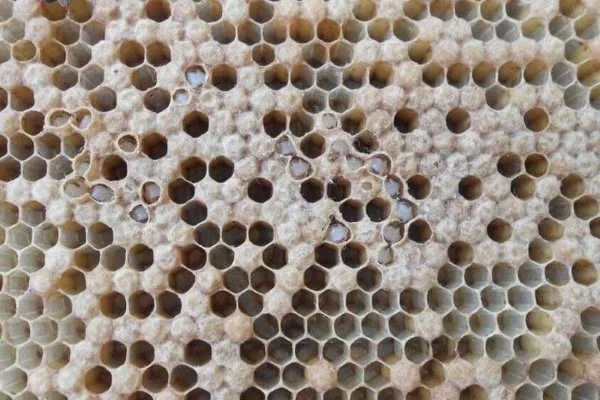
Aspergillosis
The essence and reason: Another bee disease caused by a fungus, but this time affecting both brood and adults.
Signs:
- white (gray) mold covers the pupae and larvae;
- shrinkage and hardening of the affected brood;
- a color change occurs: from unhealthy yellow to black;
- dry larvae over time become hard dark lumps resembling stones;
- adult bees affected by the fungus become excited, move a lot, and show aggression;
- In the advanced stage, the infected adults fall dead to the bottom of the hive, and a dark green, shaggy mold emerges from their corpses.
Treatment. There are currently no treatments for this bee disease. However, once a fungal infestation is detected, a number of measures should be taken to prevent further infection:
- Fungus-affected honeycombs must be burned immediately;
- hives where there were sick families should be treated first with high temperature and then with a disinfectant solution;
- Bee bread and honey from sick families should under no circumstances be used for feeding bees or for human consumption.
- Burn the affected honeycombs immediately.
- Disinfect the hives with high temperatures and special solutions.
- Do not use honey and bee bread from sick families for feeding.
Prevention: carry out the same measures as in the previous case.
Paratyphoid
The essence and reason: A disease of worker bees, drones and queens, also known as salmonellosis, it is accompanied by digestive problems, diarrhea, and can lead to the death of large numbers of individuals in a bee colony.
Signs:
- lethargy of bees;
- enlargement of the abdomen;
- paralysis of the legs and wings;
- diarrhea;
- feces are dark brown in color, of a sticky liquid consistency, with a putrid odor;
- there is an abundance of fecal matter on the honeycombs in the nest;
- at the bottom of the hive there is dead bees;
- bee colonies are weakened.
Treatment:
- transfer sick bee colonies into clean, sterile hives;
- reduce the nests and insulate them;
- Give medicinal supplementary feeding to both sick and healthy families for preventive purposes;
- antibiotics (Synthomycin, Levomycetin, Streptomycin, etc.) should be added to the syrup, calculating the dose per 1 liter of feed;
- weak families should be liquidated.
Prevention:
- Proper maintenance and adequate feeding of bees is the basis of preventive measures to protect against salmonellosis;
- when preparing bees for winter, replace poor-quality honey with sugar;
- To prevent the introduction of paratyphoid bacteria into the hive, apiaries should be located away from bodies of wastewater, polluted ponds, and livestock yards.
Viral paralysis
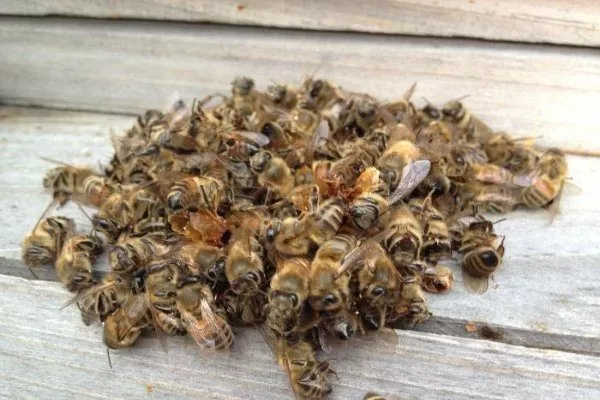
The essence and reason: an infectious disease of bee colonies that occurs in the form of chronic and acute paralysis.
Signs:
- On the landing board, the bees behave aggressively - they show hostility towards almost every bee that arrives;
- bees tend to drag black bees onto the landing board and not let them back in;
- The "exiles" first shake and then die right next to the hive, where many dead black bees can be found, and their number is constantly replenished.
Treatment:
- disinfect the infected hive by moving the bees to another, sterile one;
- Give the bees Sanapin in the doses prescribed by the veterinarian.
Prevention:
- install individual drinking bowls;
- reduce the level of infestation by the Varroa mite – the mite is a carrier of the disease;
- carry out timely culling of honeycombs that have served for a long time;
- regular disinfection of the hive and equipment;
- prevent the appearance of robber bees;
- Use antiviral drugs for prophylactic purposes as prescribed by a veterinarian.
Regardless of the type of infectious disease, when a family is sick, it is imperative to consult a veterinarian who can prescribe the right medications.
Learn more about viral paralysis in bees – read here.
Septicemia
The essence and the reason. Sick bees spread infection and bacteria, but symptoms may not appear in the early stages. High humidity in the wintering house, poor-quality food, and marshy areas are prerequisites for the development of the disease.
Signs:
- spring and autumn are the peak periods for the disease;
- During the wintering period, bees are restless;
- often, there is diarrhea;
- the family weakens or dies even before the hive is removed from the wintering house;
- in the spring there are quite a lot of weakened bees with large abdomens in the hive;
- weak bees initially barely move, but soon stop moving altogether;
- the hemolymph of patients is cloudy;
- When dissected, bees fall apart, their muscles are brown or black.
Treatment:
- use Biomycin or Tetracycline in the dose prescribed by your veterinarian;
- The sick family should be moved to a dry, disinfected hive with good insulation.
Prevention:
- keep families strong in well-insulated nests;
- Make sure that the air humidity in the winter quarters does not increase.
European foulbrood
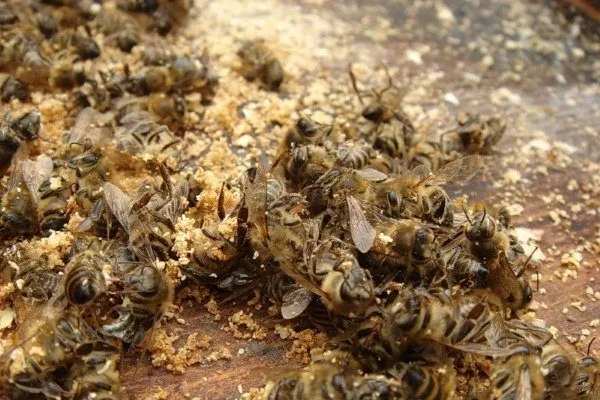
The essence and reason: A disease of open brood that affects larvae up to one week old, sometimes also known as capped brood. It is caused by one or more species of bacteria.
Signs:
- Infected larvae exhibit increased mobility;
- the cover becomes transparent and yellowish;
- at the bottom of the cells you can find a yellow-brown mass with a doughy texture from dead larvae;
- the course of the disease is sometimes accompanied by a sour smell;
- A severe degree of brood damage leads to the manifestation of European foulbrood in adult individuals – they become lethargic, inactive and quickly wear out.
Treatment:
- remove honeycombs with affected brood from diseased families and dispose of them;
- reduce the nests and insulate them;
- weak, sick families should be grouped into groups of 2-3 and fed with syrup containing the prescribed medication - sodium sulfazole, Sanazin, Streptomycin, etc.;
- replace the queens with healthy fertile ones;
- Bee colonies with an advanced form of the disease, detected during the honey flow, are transferred using the Prokopovich method.
Prevention:
- keep strong bee colonies in the apiary;
- provide families with a good harvest in the summer and a sufficient amount of high-quality food for the winter;
- use highly productive healthy queens in families;
- control and prevent the introduction of infection when purchasing bee packages;
- Do not allow bees to be fed with honey of unknown origin or use non-sterile equipment from other apiaries;
- use wax foundation only from reliable certified manufacturers;
- constantly follow sanitary and hygienic rules for keeping bees;
- replace annually 30% or more of the old dark combs with rebuilt ones;
- prevent families from overheating;
- Do not allow inbreeding of bees.
Find more information about foulbrood in bees. here.
American foulbrood
The nature, cause, and preventative measures of American foulbrood are identical to those of European foulbrood. The only differences are in the accompanying symptoms and the medications prescribed by a veterinarian.
Signs:
- the appearance of holes and indentation of wax caps;
- the viscous consistency of decomposed larvae;
- putrid smell in the hive;
- the bees are practically inactive, lethargic, and wear out quickly;
- the growth of young bees sharply declines, soon disappearing completely;
- Sick families die en masse at the end of summer or in autumn.
Invasive diseases of bees
Invasive bee diseases are caused by parasites that bees may encounter along the way. Robber bees can also bring in these uninvited guests.
Varroatosis
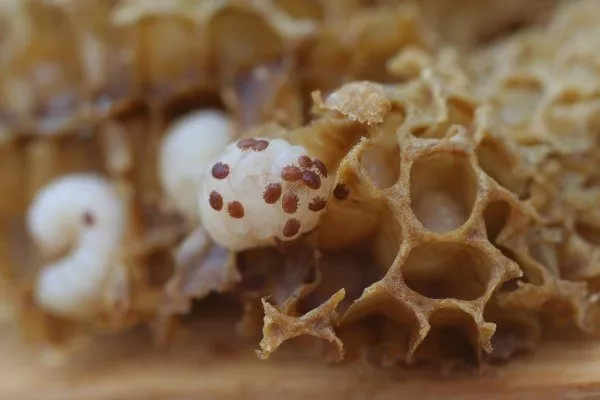
The essence and reason: varroatosis of bees and sealed brood, caused by mites and characterized by severe anxiety of bees, disruption of development and death of pupae.
Signs:
- the loss of the family's power;
- the larvae produce deformed bees - their wings, abdomen or limbs are irregularly shaped;
- the life cycle of bees is shortened;
- work capacity is reduced;
- Some bees do not participate in honey collection.
Treatment:
- eliminate bees that behave suspiciously;
- give medications (Folbex, formic acid, Varroatin, etc.) prescribed by a veterinarian.
Prevention:
- use various medicinal plants and essential oils as a tick preventative;
- Periodically change the preventative measure used, as over time the mite develops immunity and the bees are again at risk.
Braulez
The essence and reason: a disease of bee colonies in which bee lice settle on the abdomen and back between the wings of bees and queens.
Signs:
- bee colonies are weakening;
- the bees feel restless;
- the egg production of queens decreases;
- Brawl can be seen on the belly or back.
Treatment:
- Treat bee colonies with Phenothiazine before the main honey flow begins;
- carry out treatment of families for 3 days in a row;
- Repeat the course of treatment every 10 days until the bees are completely recovered.
Prevention:
- prevent the introduction of mites from nearby unhealthy apiaries;
- improve the sanitary condition of bee colonies;
- Conduct quarantine measures for already sick families in order to prevent healthy families from getting sick.
Nosema
The essence and reason: nosematosis adults, caused by nosema spores.
Signs:
- As spring approaches, the beekeeper notices the bees becoming restless;
- families are weakening and are dying;
- after being taken out of the wintering house, the bees are lethargic, cannot stay on the combs and fall to the bottom of the hive;
- the bee's abdomen is enlarged;
- sometimes there is a trembling of the wings;
- The honeycombs and hives in sick families are soiled with excrement, and in some families the queens die.
Treatment:
- After the exhibition, sick families from the wintering house should be transferred to sterile hives and combs or to free combs from healthy families;
- from the old nest, transfer only the combs with brood, previously cleaned of traces of excrement;
- for treatment, use Fumagillin DCG in accordance with the attached instructions;
- disinfect honeycombs and hives with acetic acid vapor;
- Place a rag soaked in acetic acid between the bodies.
Prevention:
- create favorable conditions for bees to overwinter;
- leave only strong families for the winter;
- provide high-quality honey for the winter;
- In spring, take the bees out of the wintering house as early as possible – with the first warm sunny days;
- disinfect honeycombs and hives in a timely manner.
Amebiasis
The essence and reason: a disease of bees that affects the Malpighian tubules of adult bees and is caused by a parasite, an amoeba.
Signs, treatment and prevention The diseases are identical to nosematosis. The only difference is that, for preventative purposes, hives should be placed in dry locations, and increased attention should be paid to the humidity levels both inside and around the hive.
Acarapisosis
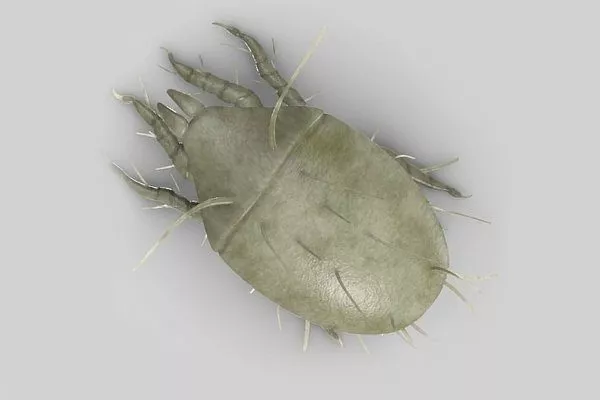
The essence and reason: acarapidosis – another bee disease caused by mites, but this time affecting the respiratory organs of adult bees.
Signs:
- in the spring, when trying to rise into the air, sick bees fall to the ground;
- sometimes the bees sit motionless on the landing board;
- seriously ill bees crawl along the ground with their wings spread out, as if dislocated (the so-called flaring);
- In summer, it remains noticeable that the affected families become unproductive, develop poorly, and weaken;
- death of bee colonies;
- In winter, acarapidosis manifests itself as disturbance of bees;
- a large amount of dead bees accumulates at the bottom of the hive;
- there are many dead bees on the floor of the wintering house;
- in wintering bees the disease is accompanied by diarrhea;
- The death of bee colonies is observed during the wintering period.
Treatment:
- Before treatment, remove the two outer feeding frames from the nest, creating a free space of 10 cm between the insert board and the outer frame;
- Place additional paper folded in several layers on top of the frames;
- close the top entrance tightly;
- Seal the cracks in the hive with clay or glue them with paper;
- Treatment of families should be carried out in the evening after the return of the flying bees using Folbex aerosol.
Prevention:
- the removal of bee colonies and queens from the farm (apiary) is prohibited;
- Limit the migration of bees - the collection distance should not exceed 7 kilometers from a successful apiary.
How to determine family health?
Only regular inspection of bee nests will allow you to accurately determine the health of a colony. A skilled beekeeper can determine health by the following signs:
- correct proportion of adults and offspring;
- feed reserve level;
- quality of uterine function;
- The occupancy of the frames indicates the strength of the nest.
Home diagnostics
There is a list of signs that indicate health problems in the family:
- fragility of dead bodies;
- the presence of holes on the abdomen of bees;
- brood discarded near the hives in large quantities;
- the insects' abdomens became swollen;
- unnaturally twisted wings;
- the bees huddle together and tremble;
- aggression that is not typical for the breed has appeared;
- The lifespan of insects has been shortened.
All of these factors give the beekeeper reason to seek help from a veterinarian to make sure that everything is in order with the health of the colony.
Laboratory diagnostics
Although a home examination can be very informative, laboratory diagnostics can still provide the most accurate data. This is necessary in the following cases:
- In the spring. It is mandatory to collect dead bee samples from several hives and then send them for analysis. The test results should then be entered into the apiary's passport.
- During the active period. If a beekeeper discovers large clusters of dead insects both inside and outside the hive, the bee carcasses must be collected and sent for examination to prevent the development and spread of infectious and invasive diseases.
Every day, bees face dangers in the form of a wide variety of diseases. However, with due attention, prompt response, proper treatment, and strict adherence to preventative measures, any beekeeper can be confident in the health of their colonies.