
Keeping honeybees is a painstaking process. People mistakenly believe it's a simple and promising endeavor, requiring minimal time and money. In reality, it's essential to thoroughly prepare, study beekeeping, and have at least a basic understanding of beekeeping before embarking on this endeavor. Simple tips for beginners will help you maximize the benefits and enjoyment of the process.
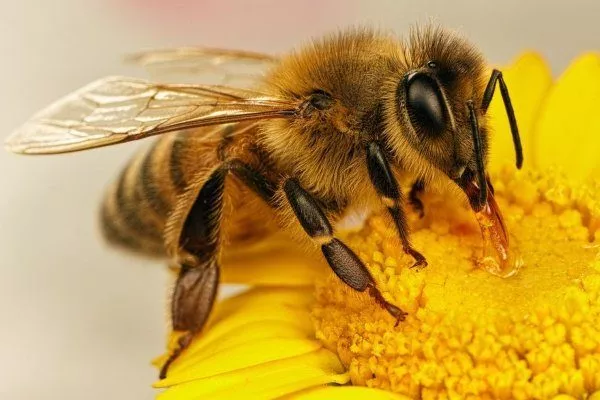
Is beekeeping right for you?
The main question a person should ask themselves when starting beekeeping is: is this activity right for them? Does the prospective beekeeper have the necessary knowledge to run a successful business? Do they have the space and resources to set up the hives? Like any small business, an apiary requires a financial investment. It doesn't necessarily have to be large, but saving money is unavoidable if the goal is to make a profit.
What qualities distinguish a real beekeeper?
- Endurance. Physical strength. The job involves heavy workloads, and you need to be prepared for it.
- Responsibility. The life of every insect is important.
- Excellent healthThe main contraindication is an allergy to bee venom. Anyone with this condition is strictly prohibited from being a beekeeper.
Before you start keeping bees, you need to have at least a minimal knowledge about the life of these insects.
You can master the science with the help of manuals and educational materials, but do so well in advance. If you plan to start setting up an apiary in the spring, start studying during the winter so you'll be well-versed in the new endeavor when the season begins. It's recommended to enlist the help of an experienced colleague. Having experience managing an apiary is a definite plus. If possible, it's worth apprenticing with a knowledgeable beekeeper for at least one season, perhaps even working as an assistant or smoker.
Choosing an apiary location
Beekeeping is a form of agriculture that doesn't require much space. If desired, you can even keep hives in your own backyard. However, according to safety regulations, hives installed in populated areas must be approved by neighbors. If you don't have a dacha, you can locate your apiary:
- in the garden;
- in an abandoned settlement;
- on a rented green area;
- in outbuildings (in the attic, in the barn, on the roof, on the balcony).
The apiary should be located in a clean area away from roads and factories. Ideally, it should be surrounded by a hedge of plants such as hawthorn, cotoneaster, or acacia. These can be planted or enclosed with a high (2 m) fence. The choice of location for the hives is determined by the following factors:
- Proximity to water. Small streams and ponds are suitable, but not large lakes.
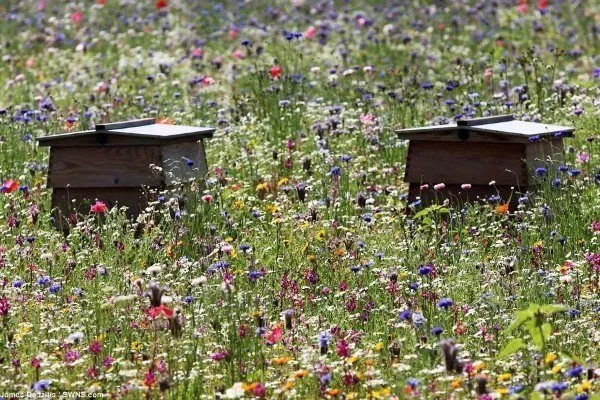
- Availability of feed. Untouched areas with wildflowers and herbs.
- Sunlight. Early in the morning the rays should hit directly into the entrance.
- Wind. The apiary must be exposed to winds and must not be placed in ravines.
- Lack of enemiesBees can be disturbed by bears, mice, bee-eating birds, and dragonflies. It's advisable to remove all anthills from the area.
There are also restrictions on choosing a location:
- Hives should not be located on the “flight route” of other bee colonies.
- There should be no roads or any obstacles (including people) in the insects' path.
- The location for the apiary is not chosen in a lowland or on a hill, or in open areas.
Optimal distances to objects
| Object | Minimum distance |
|---|---|
| Residential buildings | 50 m |
| Highways | 500 m |
| Farmland with pesticides | 3 km |
| Apiaries of other farms | 3-5 km |
| Reservoirs (except drinking bowls) | 100 m |
Selecting and placing hives
Proper hive grouping determines the comfort of bees and their future success. A single colony requires up to 40 square meters. Hives are arranged in rows, in groups of 2 or 4, or staggered to save space. It is recommended that hives be placed according to the following parameters:
- 3-4 meters apart;
- at least 10 meters to the property boundaries;
- 50 m from residential premises;
- If there are several rows, the distance between them should be 4-7 meters.
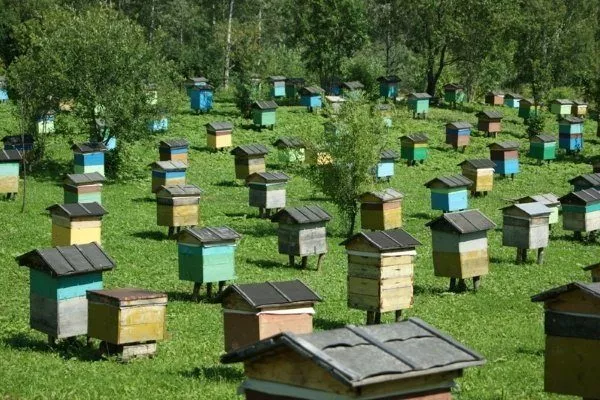
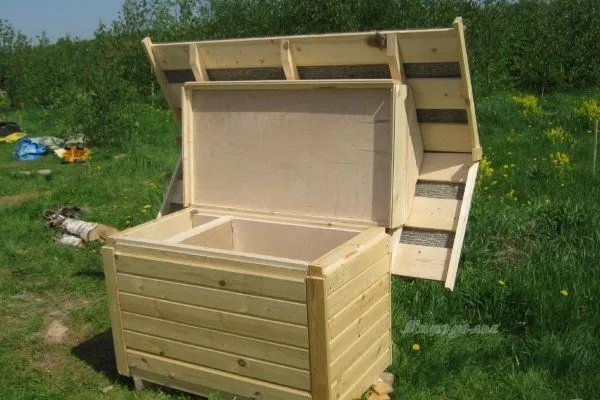
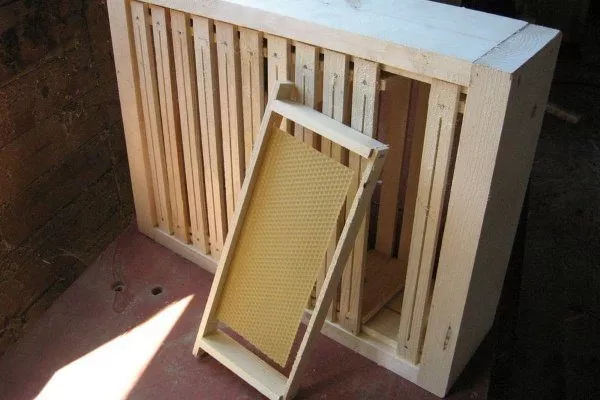
Beehives can be purchased ready-made (new or used) or built yourself. The optimal shape is a horizontal hive. This type of hive offers excellent visibility, allowing new beekeepers to easily observe the colony's development. Each hive should be mounted on a special stand or stakes. The hives should be separated from the ground by 30-40 cm. If it's not possible to place the hives in the shade of trees, plant tall plants nearby, such as sunflowers or corn. It's important that the hive entrances face the sunny side: east, southeast, or south.
To help bees locate their hives accurately, the hive houses can be painted different colors. Bees distinguish yellow, white, and blue best.
Hives must meet certain requirements to ensure comfortable accommodation for bees, reproduction, and honey production. They also need to be easy to handle. These requirements include:
- Proper design. Such a hive should retain heat in winter, but not become too hot in summer. The walls of the hive should protect against wind, rain, and temperature fluctuations. The recommended wall thickness is at least 3 cm for a single-walled hive.
- The bee house should be spacious. It accommodates brood, honey supplies, and bee bread.
- The beekeeper ensures access to the hive's contents. It's good when the hive house can be easily disassembled and reassembled. This allows for monitoring honey reserves and cleaning the hive's contents. To facilitate assembly, all parts of the hive house should be the same size.
Selecting and purchasing bees
The most important step in setting up a home apiary is acquiring bees. Only professional beekeepers should source bees, and a veterinary passport is a guarantee. It's best to buy bees in the same region where you plan to keep your apiary. The breeder should be reliable. In pursuit of price, some people buy bees from former Soviet republics, but the quality is poor. The bees are sick, the bee package contains few individuals, and there's no brood or food.
Like any branch of agriculture, beekeeping is heavily dependent on weather conditions. Therefore, when purchasing bees, it's best to choose varieties that are better adapted to local conditions: disease-resistant and able to withstand winter temperatures.
- Central Russian bees are recommended for the Central, Volga, Northwestern, Ural, and Siberian Federal Districts of Russia. However, some beekeepers are reluctant to work with them due to the insects' aggression.
- Unlike the Central Russian breed, the Transcarpathian breed is known for its peacefulness. It is often chosen for breeding by beginners.
- You can opt for gray mountain bees from the Caucasus, bred in the Southern, Volga, and Central districts. They find honey in hard-to-reach areas.
- Ukrainian and Italian bees are also popular for breeding in Russia.
Comparison of bee breeds for the middle zone
| Breed | Winter hardiness | Honey productivity (kg/family) | Aggressiveness |
|---|---|---|---|
| Central Russian | High | 30-50 | High |
| Carpathian | Average | 40-60 | Low |
| Caucasian | Low | 25-40 | Average |
| Italian | Very low | 35-55 | Low |
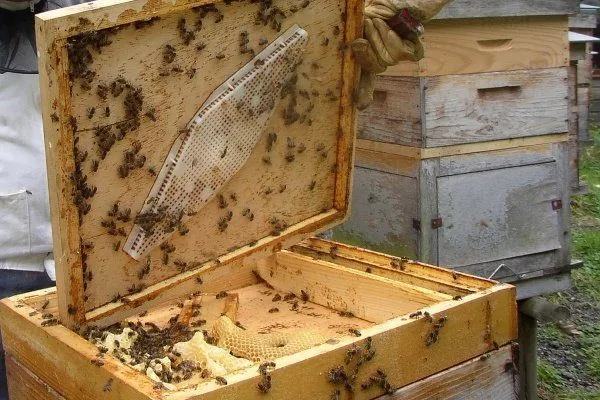
For a small apiary, a beginner will only need a few bee colonies (2-3) that have survived the winter. When selecting each colony, pay close attention to the queen. She is easy to find, as she is larger than the other bees. The bee should be free of mechanical damage, and her brood—the laid larvae—should be in their proper cells with a minimum of gaps. It's important that the other bees are also healthy, with intact wings and no external defects.
Before introducing a family, it's important to understand what constitutes the biological unit of an apiary—a bee colony or colony. After all, a queen simply can't exist alone, much less reproduce, despite being the foundation of the colony. The queen is accompanied by a constant retinue who guard, feed, and care for her. Furthermore, a colony must include:
- Male bees – dronesTheir main goal in life is to find a queen ready to mate and fertilize her.
- Worker bees. They perform all the work in the hive except laying eggs.
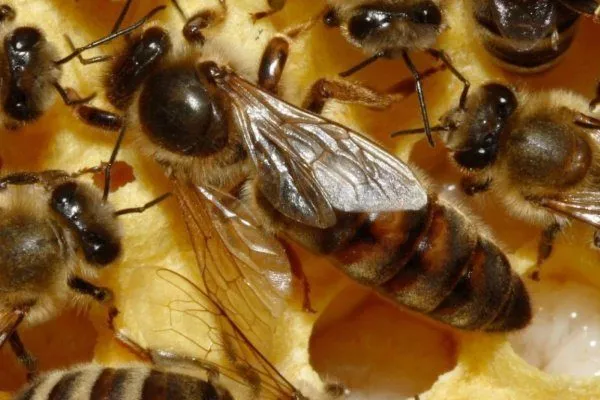
A full-fledged bee colony consists of a queen (one, or rarely several), hundreds of drones, and tens of thousands of worker bees. The queen may be infertile, i.e., newly hatched. On the fifth day, she flies out to search for a mate, becomes fertilized, and lays eggs, which are then divided into two types: fertilized and unfertilized. The former produce worker bees and future queens, while the latter produce drones. If for some reason the queen disappears, dies, or is unable to lay eggs, worker bees attempt to do so. However, all their brood is infertile, and the colony is called drone-free.
The beekeeper's job is not just to populate a bee colony and wait for the honey harvest, but to constantly monitor the process of its production and life in the hive.
Insects don't require special care, but the apiary owner should assist them whenever possible. Worker bees are capable of caring for the hive and the queen. However, the beekeeper should periodically check the colony's integrity, the health of the bees, and monitor the condition of the nest, which includes the brood and stored honey. Beekeepers should also be aware of insect diseases, which are divided into seasonal and pathological. The latter are the most dangerous and severe, affecting the brood and other parts of the nest.
To prevent disease, beekeepers must implement preventative measures, including specific, comprehensive measures. In the spring, before diseases have had a chance to spread, they should carry out routine apiary maintenance. If disease prevention fails, medical intervention is necessary.
Apiary equipment
In addition to hives, setting up and maintaining an apiary requires specialized equipment to assist in the work. It's important to approach the selection and purchase of all necessary equipment carefully. Everything should be ready even before the first insects appear. It's a good idea to always have the necessary tools readily available. Basic equipment is divided into three groups:
- for beekeeping;
- for work in the apiary;
- for working with beekeeping products.
Inventory maintenance schedule
- Weekly: Cleaning and disinfecting the smoker
- Monthly: Check the integrity of the protective suit
- Before the season: calibrating the honey extractor
- After the season: preservation of the wax refinery
Beekeeping tools
Apiary equipment allows beekeepers to care for bees quickly, efficiently, and safely. Many nuances must be considered and future considerations must be considered, such as when a queen rearing system (to replace an old one), a transfer box, or freeze-dryers for treating insects for diseases may be needed. Initially, the following equipment is needed to set up and care for the hives and their inhabitants:
- frames by hive types;
- fasteners;
- drinking bowls and feeders;
- wax foundation (thin wax plates for extracting honey);
- protective elements for flight holes;
- guard boards (a pair for each hive) and dividing grids;
- synthetic padding pillows for insulation.
Equipment for working in an apiary
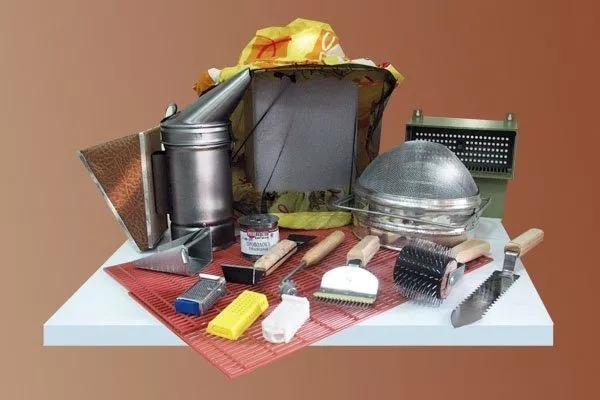
Apiary supplies include various essential beekeeping equipment and protective clothing. Every day, when beekeepers interact with insects, they use a wide range of tools. The following will be needed:
- brushes;
- chisels;
- grip (pincers);
- spray;
- smoker;
- steel spatula for cleaning the bottom;
- box for carrying frames and other products.
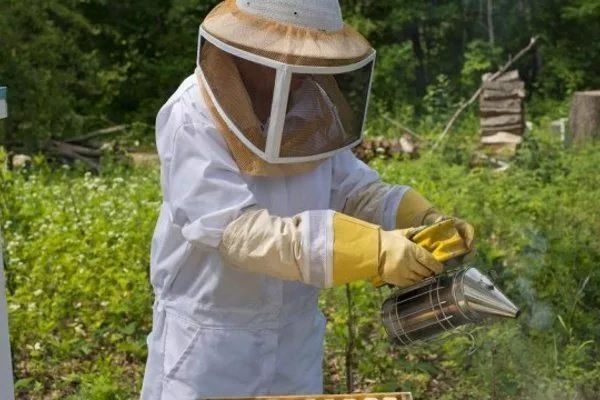
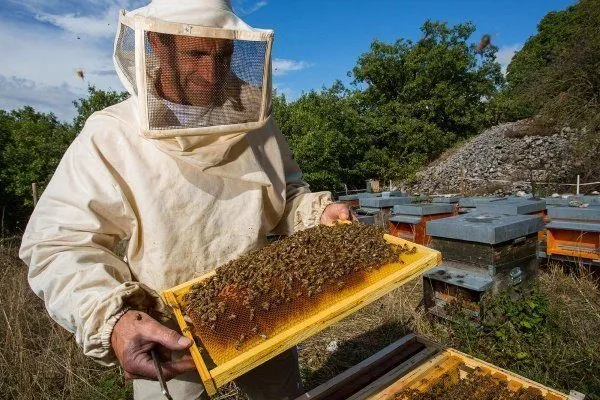
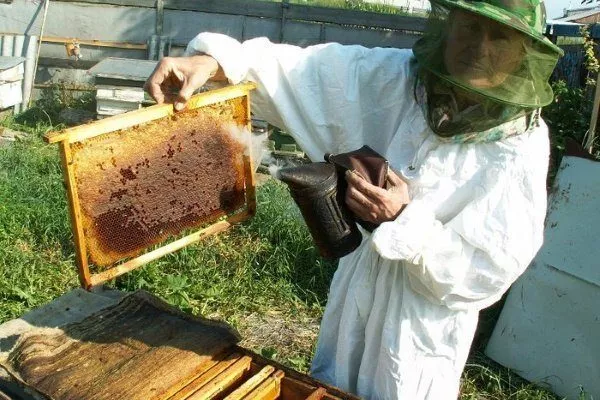
The need for protective clothing cannot be understated. Even peaceful insects protect their hives from intruders. They may interpret any attempt by a beekeeper to approach them as an attack and attack. Therefore, sting-resistant clothing is essential. To protect themselves, beekeepers should first obtain a full-body coverall and a hat with a mesh closure and a drawstring that fits snugly at the bottom. The suit should not be tight-fitting; it should be several sizes larger than regular clothing. Thick gloves and closed-toe shoes are essential.
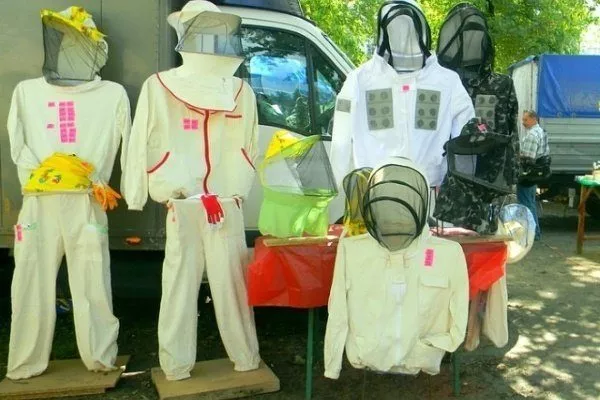
All elements of the beekeeper's clothing must be made of light fabric and equipped with elastic bands.
Devices for working with the product
The beekeeper and his staff complete their work with the production and collection of the finished product—honey—and much more. One of the most important pieces of equipment is a honey extractor, which is categorized by drive type as manual or electric. A small apiary will only need one two-frame honey extractor. To package the finished product, you'll need watering cans, spoons, knives, and a special work surface. Additionally, for collecting (extracting) the honey and storing it, you should purchase the following equipment:
- strainer;
- knives;
- honeycomb opener;
- hole punch;
- set of containers;
- container;
- bags and boxes for technical needs.
By-products of beekeeping (wax, propolis, bee bread, pollen, and royal jelly) are obtained in the apiary using other tools. Pollen requires a dryer, while wax is extracted using a wax melter and a wax press. It is recommended to store the equipment in an isolated room. All the tools presented here make the beekeeper's work significantly easier. It is useful to keep up with new market developments to stay informed about the availability of modern equipment.
Beekeeping Tips and Techniques
If you divide the work at the apiary by season, you get the following:
- Summer is the time of active collection of food supplies, reproduction of insects, and colonies.
- Autumn is the period when it is recommended to raise young bees, strong and powerful, capable of surviving until spring.
- Winter is a time of rest, when the insects are half asleep and consume their food reserves. As spring approaches, the queen begins laying eggs. The brood area should be maintained at a temperature of at least 14 degrees Celsius; the optimal temperature for the larvae is 34 degrees Celsius. Wintering lasts from the last flight to the first, from November to March.
- In the spring, new individuals develop, families gain strength and begin to reproduce.
Like any business, beekeeping has its tricks. To make it not only a pleasant hobby but also a profitable business, we recommend following these beekeeping tips. First, inexperienced beekeepers should decide on a breeding method. There are three types (starting with the simplest, suitable for beginners):
- Half a flightOne colony (it must be strong) is divided in half and placed in separate hives, which are set up at a distance. A new young bee is introduced into the colony that is left without a queen.
- Individual cuttingsSeveral frames containing brood and adult bees are removed from the hive and placed in an empty hive house located off to the side. The colony is strengthened after the brood appears, with several new frames added.
- Temporary layers, used only before the honey flow begins. New individuals are placed in one part of a multi-body hive; after the first honey flow, the old and young individuals are combined. The colony becomes stronger.
It's important to know that keeping colonies separate is only possible if there's a good honey flow near the apiary. This increases the insects' survival rate, and the quality of the honey improves.
Useful tips for beekeepers:
- the apiary should always have a supply of queens to replace sick, old, or dead individuals;
- young queens are needed to expand the apiary;
- in the absence of honeycombs, the queen loses up to 600 eggs, you cannot delay the move;
- Strong bee colonies are less susceptible to disease and survive the winter more easily.
Beginner beekeepers can benefit from advice from experienced beekeepers. A specialist will explain more about beekeeping. Watch the video:
Tips for collecting and processing honey
Once the bees have cured the honey, they seal it with airtight wax caps. The finished product is sealed from the outside world and preserved, preserving its beneficial properties. Only completely sealed honey should be collected, never before, from barely filled combs, or during the honey flow. This results in low-quality honey, containing twice as much water as it should.
Each bee colony should have an emergency supply of honey—about 5 kg—with the rest reserved for the beekeeper. When the productive honey flow period begins, the bees are given frames with wax foundation to store the honey. Only when the honey is ripe are the frames removed. How to do this correctly? Keep the following recommendations in mind:
- be in full gear (protective suit);
- take out one frame at a time from the hive;
- carefully shake the bees off them, driving them away with smoke;
- Only when all the insects have left the frame is honey taken out of it;
- It is easier to pump out the product using a honey extractor when it has not yet cooled down.
Honey quality parameters
| Indicator | Norm | Verification method |
|---|---|---|
| Humidity | ≤18-21% | Refractometer |
| Diastase number | ≥7 units Gote | Laboratory analysis |
| Sucrose content | ≤6% | Chromatography |
| Acidity | ≤4 ml/100 g | Titration |
After extraction, the honey is filtered to remove honeycomb particles, propolis, larvae, and other impurities. The honey should then be left to mature, especially if it is too wet. High-quality honey contains 18-21% water. If it contains more, its shelf life is reduced. Honey should mature in a container covered with cheesecloth, in a dry, warm place. The room should be well-ventilated. The honey should be stirred periodically until it reaches its optimal consistency.
Wintering and spring inspection
To preserve the integrity of the hive and the entire bee colony until the next season, wintering and spring inspections must be approached responsibly. First and foremost, ensure adequate ventilation inside the hives. Failure to do so will result in dampness, which is detrimental to the bees. The bees' condition should be checked every two weeks. They should have sufficient food remaining; if it runs low, they need to be replenished.
Winter
Some bee breeds overwinter in special hives called moss houses. You can make these yourself, depending on the size of the colony. These are required for breeds such as yellow, Caucasian, Ukrainian steppe, and Carpathian bees. Central Russian bees can easily overwinter in outdoor hives. You just need to ensure comfortable conditions inside the hives.
Given the unstable temperatures in the region and the sharp fluctuations from above zero during the day to below zero at night, even well-adapted bees should be kept in a moss house.
The benefits of keeping insects in a wintering house:
- bees consume less food;
- increases the service life of hives;
- You don't have to worry about temperature changes or insect death.
Spring
After a successful winter, when the weather improves and frosts are no longer expected, the hives are returned to their usual location. This typically occurs in April or May. In central Russia, the start of pollination of gray alder and hazel catkins is considered an indicator. Several inspections are necessary: an initial inspection, during which defects are addressed, and a major one.
An experienced beekeeper will demonstrate how to perform the first spring apiary inspection. Watch the video:
During the main inspection, which is best done in calm, sunny weather (the temperature in the shade should not fall below 15 degrees Celsius), the beekeeper carefully examines the bee colonies, identifies any deficiencies, and promptly corrects them. It is recommended to keep a log of all findings during the inspection.
The beekeeper must find out:
- The presence of a queen in the family and its quality (whether it is sick).
- Number of brood.
- Total number of individuals (will there be enough of them to feed the offspring).
- Availability of food supplies.
The inspection process includes repairing frames, removing damaged comb, reducing the nest size if necessary, replenishing food supplies, and introducing a new queen (if the old one did not survive the winter). A little later, when the weather settles, the beekeeper should completely clean the nest and disinfect the hives. The colony's strength can be determined by counting the number of bees. If the bees occupy at least six streets in the hive, or approximately 1.5-1.6 kg of bees, such a colony will thrive in the spring and guarantee a good honey flow in the new season.
Having heeded beekeeping tips and achieved a successful first harvest, a budding beekeeper must continually improve their skills. Success is impossible without knowledge. By learning more about beekeeping, listening to the advice of experienced colleagues, and acquiring modern beekeeping supplies, one can eventually become an experienced beekeeper. Today, this profession remains in demand, and a significant portion of the industry remains dedicated to novice beekeepers.