
Foulbrood is a dangerous bee disease that is widespread and independent of environmental conditions. It can affect larvae, pupae, and adults. It is important to recognize the disease promptly and take the necessary measures to eradicate it.
General characteristics of the disease
Foulbrood is caused by spore-forming bacteria. The disease is divided into two main types: European and American. There is also a type of foulbrood, commonly known as parafoulbrood.
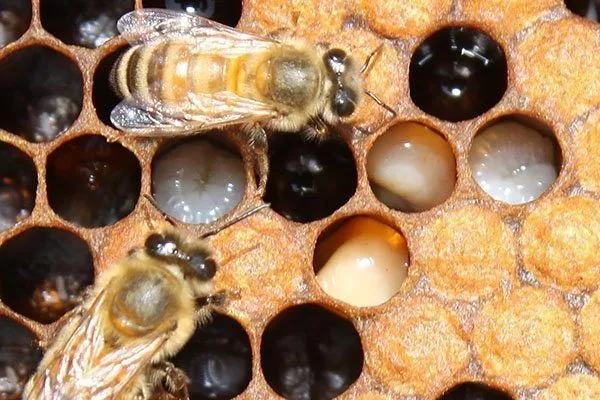
When the young are infected, holes appear in the caps, and after the larvae die, a sharp, unpleasant cadaverous odor appears. In most cases, beekeepers notice the onset of the disease before they do, and they attempt to combat the foulbrood-infected cells themselves. However, more often than not, the bees' health quickly declines, and they are unable to overcome the disease without human assistance.
In a short period of time, the disease can affect entire bee colonies and even spread to neighboring apiaries. If the disease's early development is not detected and hives with diseased larvae are left over winter, all colonies will likely perish by summer.
The infection process
The primary cause of infection is the death of already infected brood. Foulbrood is transmitted by ants, moths, mites, and wasps. The main pathogens include:
- streptococcus;
- staphylococcus;
- Orpheus and Alveus bacteria.
Infection of other families and apiaries located nearby is possible through:
- pollen;
- old infected hive;
- frames where the diseased larvae were located;
- beekeeper's hands;
- theft between neighboring hives;
- wax foundation without special heat treatment.
In most cases, the infection process begins in the summer months, when temperatures reach 37-40 degrees Celsius. Initially, antibodies found in the milk fight off the disease, but after 10-14 days, the immune system is depleted, and the bacteria attack the insects.
The spore-forming bacteria that cause the disease are extremely resistant to physical and chemical influences. They can survive for several years within their protective shell, and up to a year in distilled honey. The bacteria can only be killed by boiling in water for 15 minutes or by heating the honey for at least 40 minutes.
Symptoms of foulbrood in bees
Symptoms of the disease depend directly on its variety. There are two types of foulbrood:
- American;
- European.
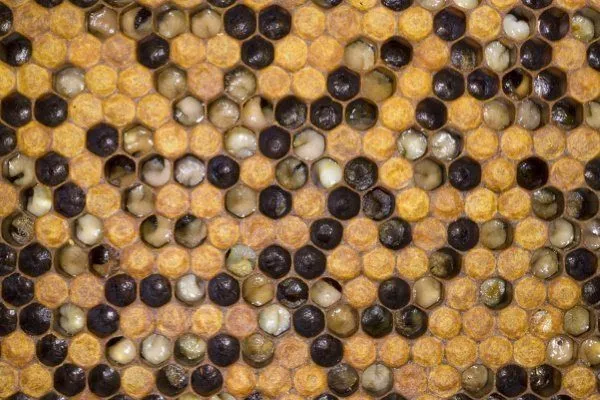
Dark larvae are a sign of foulbrood infestation.
| Object | Incubation period | Resistance to chemicals | Lifespan of spores |
|---|---|---|---|
| European foulbrood | 3-5 days | High | Up to 15 years old |
| American foulbrood | About a week | Almost everyone | Up to 10 years |
European foulbrood
The disease poses less of a threat, but can also lead to the death of colonies and the infection of bees in neighboring apiaries.
Among the characteristics of European foulbrood, the following distinctive features stand out:
- Most often, infection occurs in exposed brood aged 5-7 days. Adult bees are much less likely to become infected.
- The causative agent of foulbrood is resistant to most chemicals.
- Spores can survive in any weather conditions for up to 15 years.
- The incubation period is 3-5 days.
- The smell is pungent and unpleasant, but less pronounced than that of American foulbrood.
- When infected, the larvae turn from light to grayish, then darken to brown. European foulbrood most often attacks the larvae in the spring and summer.
- The disease spreads quite quickly due to worker bees carrying the bacteria on their bodies. Humans and animals can also act as carriers.
- The combs become mottled because some cells are infected, while others are completely healthy and empty. Sometimes, the bees can overcome the infection and the disease on their own. But even in this case, it's still necessary to disinfect the entire apiary.
It's easy to suspect a bee infestation with European foulbrood. The larvae become overly active, frequently change positions, darken, and lose their elasticity. After they die, an unpleasant odor develops. Dead larvae can only be removed once they have completely dried.
American foulbrood
This disease is one of the most dangerous for bees, as it attacks already-capped brood. An infected colony dies out completely within two years.
Diagnosing the disease without specialized testing is quite difficult. Only after the larvae die do foulbrood-infected cells become visible, but by this time the infection has usually spread to the entire frame.
American foulbrood spores can survive on beekeepers' equipment and tools, plants, and animals for up to 10 years. They are resistant to virtually all adverse conditions. Spores survive on dried larval corpses for about two years.
Among the distinctive signs of the disease, the following can be highlighted:
- Infection occurs after an insect consumes contaminated food. In this case, the larvae of working bees become infected, and much less frequently, the drones.
- This type of foulbrood is widespread and resistant to all temperatures. Outbreaks of infection occur in the summer, when temperatures reach their highest.
- Contaminated wax, honey, honeycomb, and bee bread become unfit for human consumption. Bacterial spores, if not properly heat-treated, remain in bee products for decades.
- The honeycombs become mottled as the diseased cells darken. The incubation period lasts about a week. The larvae are destroyed only after 10-16 days of life.
- The distinctive symptom of American foulbrood is a sharp, strong odor of decay. In advanced cases, it can resemble the odor of a corpse.
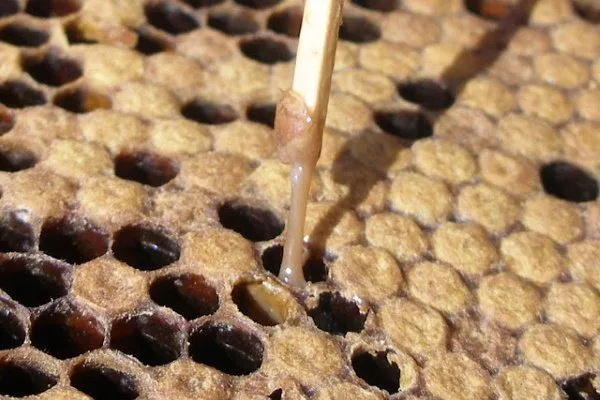
- When infected with American foulbrood, the larvae become sticky, lose their elasticity, and cling to the honeycomb. When attempting to remove them with a stick, a thin thread is pulled behind them, so such honeycombs must be burned.
Diagnostics
The characteristic pungent odor and appearance of infected and dead larvae are the main signs of foulbrood infection in bees. To confirm the presence of the disease in bees, specialized laboratory tests can be conducted to determine the pathogen and its resistance to various medications. Such tests will help beekeepers select medications that will quickly eliminate the source of the disease.
Treatment
One of the main measures aimed at treating foulbrood is establishing a quarantine regime in infected hives. If possible, neighboring apiaries should also be closed during an outbreak. The sale of beekeeping products and feeding them to healthy bees are also prohibited.
Bee colonies need to be treated with antibiotics (Penicillin, Chlortetracycline, Erythromycin, Streptomycin) and medications added to syrup feed. A veterinarian should determine the exact dosage. It's important to remember that these medications accumulate in honey, so they should not be used too frequently.
- ✓ Take into account bacterial resistance to antibiotics identified in laboratory conditions.
- ✓ Check the compatibility of antibiotics with other drugs used in treatment.
- ✓ Take into account the half-life of the antibiotic to minimize its accumulation in honey.
The honeycombs should be treated with any product that has a beneficial effect on the microflora and does not contain antibiotics. If the queen bee is infected, a new one should be introduced into the colony. If more than 50-60 larvae are infected, drastic measures must be taken and the entire colony must be disposed of at once.
You cannot use the same antibacterial drug for a long time, as bacterial spores can adapt to it and the drug will not have a positive effect.
To quickly deal with foulbrood in your apiary, you should follow the following steps:
- Move healthy insects to a clean hive, as far as possible from the main site of infestation.
- Discard all frames that contained infected bees.
- Clean, disinfect and reinstall the remaining frames and wax foundation.
- Transfer the sick insects to a clean sheet of paper with medication, then drive them into the hive with smoke and burn the paper.
- Conduct sanitization of infected hives and all equipment.
- If you successfully rescue healthy brood, take care to place it in an incubator.
For best results, spray the hive with whey 3-4 times, spaced 7-10 days apart. Spraying can be used not only as a primary treatment but also to prevent infectious diseases.
Pollination using a rubber bulb and a gauze bag will also help. To do this, prepare a solution of Biovetin, which is mixed with powdered sugar, starch, and flour. Antibiotics can be added to the mixture. The medication should not be used more than four times a week.
Prevention
To avoid contracting the disease, it is worth following certain preventative methods:
- It's essential to disinfect the hive, tools, equipment, and beekeeper's clothing as frequently as possible. To do this, treat these items with a solution of hydrogen peroxide, acetic acid, or lye.
- The apiary must always be kept clean, as pathogenic bacteria multiply much faster in unsanitary conditions.
- It is strictly forbidden to feed insects with food that was previously in an infected hive.
- You should not use old blackened honeycombs.
- The frames should be inspected at least every 10-15 days. This way, the development of the disease can be detected in its early stages.
By following the above advice, your apiary will be protected not only from foulbrood, but also from other equally dangerous infectious diseases of bees.
- ✓ Maintaining the temperature in the hive no higher than 35°C to reduce the risk of bacterial growth.
- ✓ Provide good ventilation to reduce moisture that promotes foulbrood growth.
Watch a video about the symptoms and treatment of European and American foulbrood:
Paragnilec
Parafoulbrood, also known as false foulbrood, is a type of disease. The primary source of infection is believed to be infected bee bread larvae. The disease affects approximately 6-9 larvae in open and sealed brood. The incubation period ranges from a couple of hours to several days.
The pathogen can survive in food for up to three years. It is resistant to many physical and chemical factors. It is most common in cold climates during the spring and summer.
Sick larvae are the primary vectors of the disease. The infection is also spread through beekeepers' feed, tools, and clothing.
Affected larvae exhibit unusual activity and mobility. Most die before they are sealed, while the rest die afterward, turning into a brownish mass with a strong, unpleasant odor. Over time, the larvae begin to resemble dark scabs that can be easily torn from the cells. Infected pupae are dark in color, have an unpleasant odor, and are severely underdeveloped.
To combat the disease, bees seal and thicken the cell caps. Upon inspection, these appear as sunken, greasy caps with no holes. Parafoulbrood is less dangerous than American and European foulbrood, so a bee colony can manage the disease on its own.
Distinctive features of paragnilts:
- outbreaks of infection occur mainly in May-June;
- the disease can occur either independently or together with a more dangerous type;
- Most often, the brood that is one week old is affected;
- The symptoms of the disease are mild: the larvae darken slightly, acquire a slight rotten smell and dry out;
- a rotten smell does not occur even with prolonged infection;
- the bacteria is resistant to various conditions and can survive in honey for up to 3 years;
- Infected larvae are much easier to remove from the honeycombs, and the surface of the cells resembles a hard crust.
Healthy bees should not be fed honey obtained from infected colonies. Infected brood in the combs should be melted down into wax, which can then be used for industrial purposes.
Treatment for the disease should be prescribed only by a veterinarian after a diagnosis has been made. Serological and bacteriological tests are often sufficient for this purpose. Differential diagnosis is equally important.
To combat parafoulbrood, tools, equipment, and hives are sanitized. Treatment is similar to that for American foulbrood. Before treating bees with antibiotics, thorough disinfection of all hives is recommended to prevent reinfection. Prevention is the same as for common foulbrood.
Foulbrood in bees is a dangerous and widespread disease. The infection often leads to the destruction of an entire apiary, but with prompt treatment, losses can be minimal. To avoid missing the first signs of foulbrood, regularly inspect hives, maintain cleanliness in the apiary, and practice disease prevention.