
The Dutch breed is a purebred and the most widespread worldwide. It was developed in the 17th century and has been kept by many people for milk and meat ever since. In the early 18th century, cows from Friesland were brought to Russia. Their milk production is high, with a high fat content.
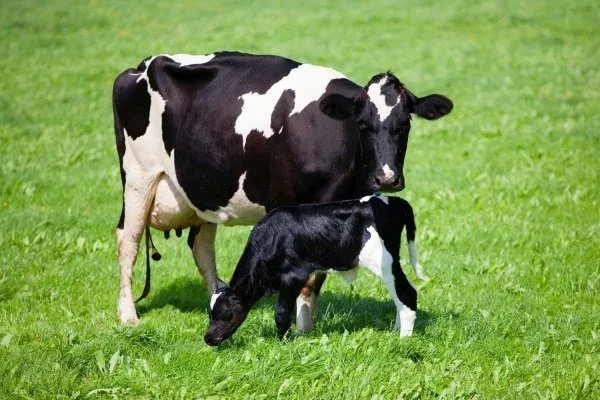
Description and characteristics of the Dutch cow
This breed of cows is renowned for its milk production, with a lactation period lasting 300 days or more. During this period, they can produce 6,000 liters of milk with a fat content of 4.1%. In addition to high milk yields, these cows also produce a significant amount of meat, with a carcass yielding 58% of its body weight.
The Dutch cattle have undergone intensive development over the past 160 years. Initially, their cows had weak muscles, weak bones, and thin skin. Today, the cows have become stronger, with strong bones and powerful muscles. This has had a positive impact on both their health and the taste of their meat.
The Dutch cow is black and white, variegated, and has an elongated body. The head is long, with a tapering forehead. This breed of cow is hornless. Characteristics of the beef breed:
- not long legs;
- back straight;
- the sides are wide.
The ischial tuberosities and shoulder blades protrude from the body, and the loin is wide. The udder is large, with prominent blood vessels.
The height of a Dutch cow reaches 132 centimeters, the weight of one animal is at least 600 kilograms, bulls reach 1 ton.
| Indicator | Cows | Bulls |
|---|---|---|
| Average weight | 600-700 kg | 900-1000 kg |
| Height at withers | 130-132 cm | 138-140 cm |
| Birth weight of calves | 38-40 kg | 40-42 kg |
| Weight gain (up to 6 months) | 180-200 kg | 280-300 kg |
| Age at first insemination | 18 months | 15 months |
Calves of meat breeds are born with a large weight – 40-42 kilograms of live weight.
The breed is considered a precocial breed; calves gain weight quickly and develop well. By six months, a heifer weighs almost 200 kilograms, and bulls around 300 kilograms. At eighteen months, a heifer is ready to bear her first calf. She should be bred, but if this is not possible, artificial insemination is performed. Bulls are ready to inseminate a heifer slightly earlier, at one year and three months.
These cows are very skittish, frightened by outside noises, veterinary examinations, and vaccinations. If a Dutch cow is very frightened, milk production may decrease for a while, and appetite may be lost.
These animals are demanding animals and cannot be kept tethered, as this can cause stress. Cows thrive on freedom, so they need to be kept in a spacious stall.
How to care for Dutch cats?
Cattle do not require any special attention or care, it is only important to follow the basic rules:
- Maintaining cleanliness: cleaning the stall twice a day, changing the bedding, washing the feeders and water containers;
- Feeding regime: cows need to be fed three times a day, preferably at the same time;
- If milking takes place at the same time, then more milk production can be obtained;
- You should feed them vegetables and clean hay;
- the water should not be cold, its temperature can reach +16 degrees;
- the general temperature of the barn should be +10 degrees Celsius;
- To prevent unpleasant odors from entering the room, it must be ventilated regularly.
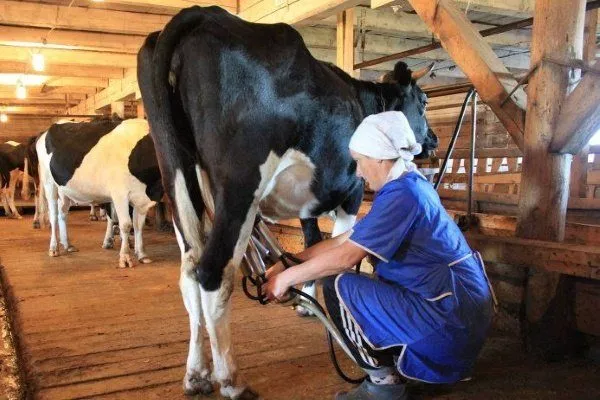
Before milking a cow, it's important to carefully inspect the udder for mastitis, as Dutch cows are highly susceptible to this disease. It's also beneficial to vaccinate this breed against mastitis.
Before purchasing a cow of a particular breed, it's important to consider its climate. Dutch cattle thrive in temperate climates. Because they have a large rumen, they can process large amounts of lush, green grass.
At one year and three months, bulls are sent to fattening, which lasts three months. It is during this period that they reach a weight of 300 kilograms. When the bull reaches 750 kilograms, they are taken to slaughter.
To maximize milk yield, cows should be kept untethered, with each animal in its own cubicle. This means the facility should be equipped with cubicles where the animal can rest if desired. Cows are divided into several groups:
- non-milking;
- milking;
- deadwood.
Each group contains 20 to 40 cows. If space is available, cows in the final stages of pregnancy are kept separately. Calves should also be kept separately from the others. Initially, the animals may clash until they find common ground.
Feeding the Dutch
In summer, Dutch cattle can graze all day long until evening. Spring straw and hay are recommended for roughage. Failure to do so can lead to gastrointestinal problems and rumen dysfunction.
An approximate daily diet for Dutch cats, which is calculated at 113 feed units, should look like this:
- 30 kilograms of corn and alfalfa silage;
- vegetables (carrots, beets) 5 kilograms, and every other day you can give potatoes, pumpkin and zucchini;
- cereal or legume hay in the amount of 6 kilograms;
- sunflower cake in the amount of 1.5 kilograms;
- dry or steamed bran 700 grams, this portion must be divided into three portions;
- 1 kilogram of barley flour, which should be poured into vegetables or cake.
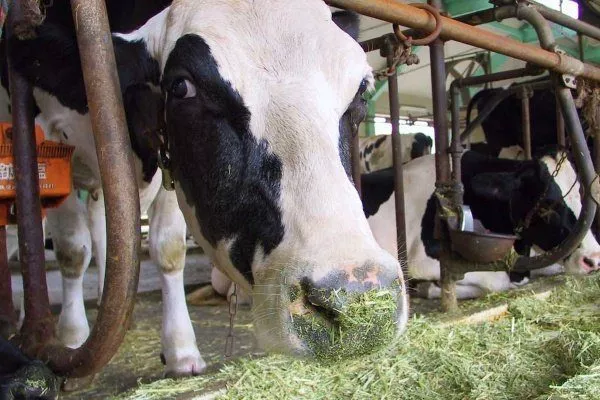
Equally important is the water intake. In summer, a cow can drink about 70 liters of water per day, while in winter, it's 50 liters. Salt, chalk, and phosphate supplements are essential.
Annual feeding plan
- April-October: grazing period (70% of the diet is green mass)
- November-March: stall period (hay 40%, silage 30%, concentrates 20%)
- 2 months before calving: increase in protein content by 15%
- During the milking period: add 1 kg of cake per head/day
- For fattening bulls: 3 kg of grain mixtures daily
Productivity
High milk productivity arose through years of Dutch efforts. They didn't pay much attention to meat production; their primary goal was to breed cows that would produce high milk yields.
Cows of this breed are among the most productive, capable of producing large amounts of milk—approximately 5,000 kilograms, or even more—containing a high amount of protein and fat. There are even record-breaking cows that have produced 11,000 kilograms of milk with a fat content of 4.16%.
| Indicator | Average value | Record figures |
|---|---|---|
| Milk yield per lactation | 5000-6000 kg | 11,000 kg |
| Fat content of milk | 4.0-4.1% | 4.5% |
| Protein content | 3.2-3.4% | 3.6% |
| Meat yield | 58-60% | 62% |
| Duration of lactation | 300-305 days | 330 days |
Advantages and disadvantages of Dutch cows
While Dutch cows certainly have many advantages, they also have some disadvantages. Regarding the positive qualities:
- early maturity;
- rapid weight gain;
- good milk productivity;
- This breed can be crossed with others to produce a new good breed of cows;
- These cows can be kept anywhere in the world;
- good meat productivity;
- rapid adaptation to changing climatic conditions.
Now let's talk about the disadvantages:
- The Dutch are susceptible to infectious diseases;
- This breed often suffers from mastitis;
- very timid;
- Dutch cats are very clean, so their bedding needs to be changed regularly, the room needs to be cleaned, ventilated, etc.
- They should be fed only with high-quality feed and at a certain time, if this is not done, the quality and quantity of milk may decrease;
- demanding regarding maintenance and feeding.
The Dutch breed is the most productive of all dairy cows, but it requires proper care. Experts insist that Dutch cows should be kept on specialized farms, as it's unlikely that a home owner will be able to create ideal living conditions for a cow. To develop this breed, the Dutch worked for many years, turning thin and weak animals into strong and beautiful cows.