
In the 17th century, the Kholmogory breed of cows emerged, which remains particularly profitable today. Their milk yield and delicious meat are still highly prized. Moreover, Kholmogory cattle are easy to care for and maintain, as discussed further in the article.
History and distribution of the breed
The Kholmogory breed of cattle was developed in the Dvinsky district of the Arkhangelsk province, hence the name. In the north of the country, Kholmogory cattle were in demand due to their low feeding and care requirements, their adaptability to cold climates, and their high milk yields and excellent offspring.
When Tsar Peter the Great began actively trading with Europe, foreign ships began importing cattle, which local residents in the northern provinces eagerly purchased and then allowed to raise their cows. Dutch bulls were especially prized, and the succulent grasses helped raise the strongest calves, which improved the new Kholmogorsky breed.
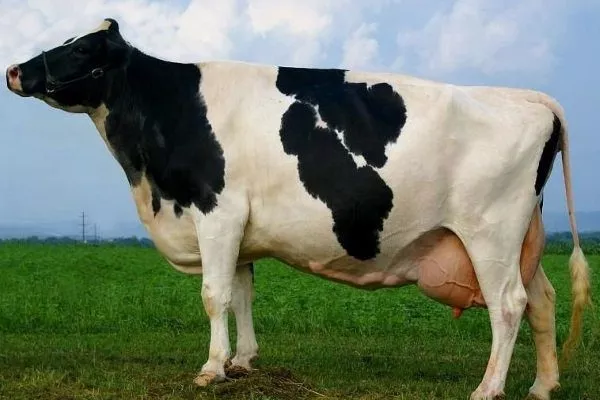
Initially, Kholmogorka cows had a uniform color, and only in the late 20th century, after crossbreeding with Holstein bulls, did their appearance begin to diversify. And in different regions, the coloring varies:
- In the central regions of Russia, so-called “central varieties” appeared.
- In the Arkhangelsk region - "northern".
- In the Komi Republic - “Pechora”.
Kholmogory cattle make up approximately 9% of all cattle in the country. This breed, whose main characteristic is its ability to withstand cold, was officially introduced to the public and registered only in the late 19th century. The breed quickly became popular among farmers in the northern regions.
Today, Kholmogory sheep are the most common in Russia; they are bred in 24 regions.
Breeding attempts in the 20th century
At the beginning of the last century, the development of this breed reached a nationwide level. In 1934, a breeding farm specifically for Kholmogory cows was opened. A couple of years later, an attempt was made to cross these cows with East Friesian bulls from Germany in an attempt to increase milk yield and improve their conformation. But the attempt failed; the cows only produced less milk, and their appearance remained unchanged.
Attempts ceased then, and were only resumed at the end of the century by modern scientists. They even succeeded in developing two intrabreeding species:
- Istobenskaya.
- Tagil.
Traits such as udder shape and milk flow rate are being improved, and options for improving body conformation, milk yield, and fat content are being explored. Breeders cite 4% milk fat content and even higher as one of their primary goals.
An attempt to crossbreed Kholmogory cattle with imported bulls resulted in the loss of Y-chromosome halotypes in northern cattle. However, the Kholmogory gene pool retains its distinctiveness in terms of autosomes and the X chromosome. Today, purebred Kholmogory cattle receive less attention and care than Holsteinized Kholmogory cattle. However, scientists do not consider this approach appropriate.
Appearance
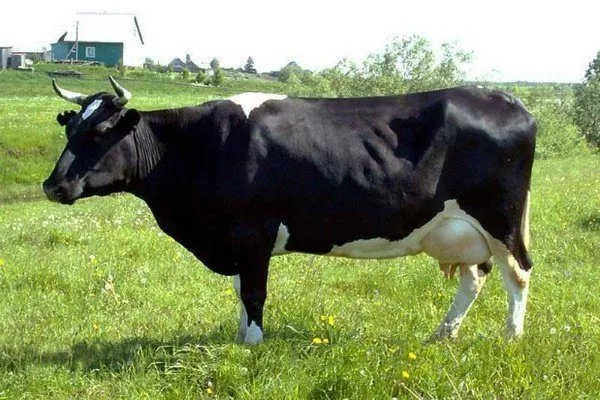
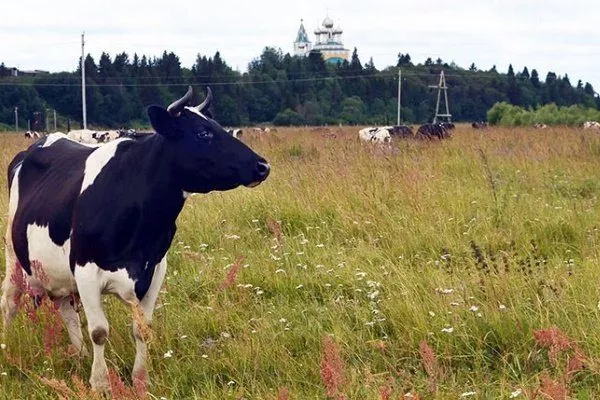
These cows never developed large flanks. Their limbs are proportional, but crooked. Occasionally, cows with a third pair of teats are encountered, but these are not considered culls. The standard color is black with white spots, but other colors are also available: red-and-white and black.
The following short video will help you get a better look at this breed of cows:
Characteristic features of the hillocks:
- powerful build;
- round, wide chest;
- elongated body;
- wide, raised backside;
- crooked hind legs;
- small, goat-shaped udder, similar to a bowl, with well-developed lobes;
- tall – up to 1 meter 35 cm at the withers;
- weight - up to 500 kg, for adult bulls - up to 850, and breeding bulls weigh more than 1 thousand kg;
- strong build;
- the chest is rounded, of medium width;
- the body is elongated, angular in shape;
- the sacrum is raised above the body, although there are specimens in which it can be higher than the withers;
- straight spine.
Since Kholmogory cattle were bred for northern latitudes, they are not as productive in southern regions, likely due to their poor adaptation to heat. These cows also owe their appetite to their origins, especially in summer, when the most abundant grass grows in the north.
Productivity
Cattle have always been evaluated by various characteristics: some breeds were used solely for slaughter, others for high milk yields, and still others for production. The Kholmogory breed excelled in all respects.
What was it valued for:
- Milk yield. The more a cow produced, the higher her price. A healthy Kholmogory cow could produce up to 4,000 liters of milk per year. And with good care, up to 6,000 liters. There have been record-breaking cows that produced around 10,000 liters per year, to the delight of their owners. Kholmogory milk has always been noted for its high fat content—around 4%—and the same—4%—as well as record protein levels.
- Not only cows but also young bulls were valued on the farm, kept both for breeding and for slaughter. Kholmogory breeds produced a slaughter yield of over 60%, and younger cattle produced even more.
These animals also excelled in their reproductive abilities. A cow gives birth to her first calf at 2.5 years of age. With proper care, the calves can weigh up to 300 kg within a year.
The table shows the average weight of Kholmogory, depending on age and gender.
| Age | Weight |
| Bull | 40 kg |
| Heifer | 35 kg |
| An adult bull | 1000 kg |
| An adult cow | 500 kg |
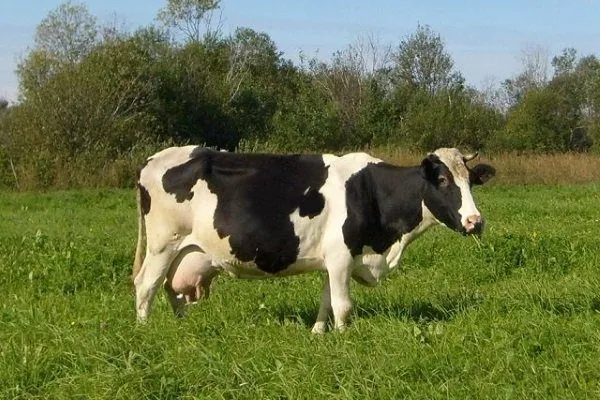
Modern breeders continue to improve the breed in terms of structure, milk yield, and characteristic exterior.
Advantages and disadvantages of the breed
Although the Kholmogory breed was heavily modified and has more advantages than disadvantages, there are still some problematic aspects. These are worth considering.
Advantages:
- hardy;
- unpretentious, develop well in any conditions;
- quickly gain weight when grazing;
- practically never get sick;
- often give birth to calves;
- maintain strong immunity;
- grow quickly;
- They produce a lot of meat and milk.
Flaws:
- not very presentable appearance;
- milk yields decrease if there is little grass in the pastures;
- Milk yield decreases in hot climates.
Maintenance (adults and juveniles)
Kholmogorok cattle are profitable not only for their milk but also for their meat, which accounts for more than half of their total weight. To promote weight gain, bulls are castrated. With proper feeding and care, they gain about 1 kilogram per day. This also increases the slaughter yield: from 58 to 65%. However, veterinarians recommend performing the surgery no later than 18 months, as it is unprofitable and dangerous after that. Most often, animals intended for slaughter are castrated at 6 months.
But when an animal reaches 1.5 years of age, its weight gain drops sharply, and raising it for slaughter no longer makes sense. Moreover, feeding a bull commercial feed over the winter is very expensive. The exception is culled bulls that are older but unfit for slaughter.
While chickens and other small animals are kept in cages, cows need:
- Leash.
- Free movement.
Living conditions also play an important role, so scientists today are researching not only ways to increase milk production, but also:
- daily routine options and its impact on milk yield;
- different diets;
- ways to reduce milk production costs;
- use of modern building materials for the construction of livestock complexes.
Kholmogorki cows tolerate double milking very well, which increases milk yield and reduces production costs.
Conditions of keeping in cowsheds
Good housing is essential for the Kholmogory breed, as they are quite large. To ensure they are comfortable and cozy, a lot of effort is required to furnish their home.
Important to know:
- The location of the barn should be chosen taking into account winds and spring runoff. Avoid placing them near residential buildings, wells, rivers, and springs.
- The construction material must be durable, heat-insulating, and take into account heating, ventilation, and lighting.
- Consider the size of the animals. One cow needs about 6 square meters, and if she has a calf, more than 10.
- Slate is laid on the roof, and it's advisable to build a building with an attic, which will help retain heat in cold weather and provide space for storing feed. If there's no attic, the roof should be additionally insulated.
- The walking area is always located outside, with a path at least 500 meters long. It's a good idea to have a canopy on one side to provide shelter from the sun and rain.
- Place waterers correctly. If the stalls are arranged in two rows, it's best to place the feeders outside for easier access to food and water. Avoid placing them along a wall, as this will cause moisture from the animals' breath to settle on the feed.
- The shape of the feeder should be like an inverted trapezoid, so it is easier for the cows to eat and for the owner to clean.
- When setting up a stall, consider the size of the cows and bulls, as Kholmogory cattle are very large. The cattle should stand facing the feeder and their backs toward the drainage ditch. The stall size should be medium: not too spacious, so they don't spin around and dirty the feeders, but not too narrow, so they don't stagnate.
- For stud bulls, it is better to purchase mating stalls; this will help to offset the stud's heavy weight.
- ✓ Provide a room with good ventilation and lighting.
- ✓ Maintain the temperature at least at 15 degrees in winter.
- ✓ Use moistened bedding made of straw and sawdust for animal comfort.
Features of a barn for adult animals:
- TemperatureIn winter, the temperature should be at least 15 degrees, and lighting and ventilation must also be taken into account.
- Windows for daylightCows produce poor milk yields under artificial lighting.
- FloorIt is more reliable to cover it with concrete, with slopes for urine and troughs for manure.
- Moistened bedding of straw and sawdustThis will prevent the calves' and cows' feet from getting damp, preventing them from catching colds. Furthermore, the bottom bedding with manure generates heat, further warming the barn in winter.
- Clean the stalls completely It is necessary twice a year, but you will have to constantly remove the old flooring and add fresh straw.
Features of a calf barn:
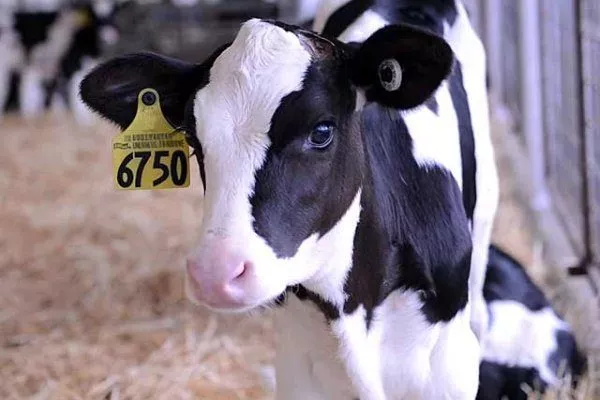
- For the first two to three weeks after birth, calves are kept close to their mother, but then they need to be given a separate room where they get used to the environment for about five days. If the calf is healthy, it is transferred to the calf barn, where cages are set up. It's best to keep calves separately; this makes care easier and prevents them from jostling each other at the feeder. Stronger calves often push their weaker siblings away from the food.
- Provide individual boxes. They're made of polyethylene, cylindrical, with an entrance on one side. Easy to clean and move, this dome-shaped structure is very warm and creates a sense of security for the calves. There are compartments for food and water, so the calves can eat on site. A special mesh is provided to prevent escape.
- In cold weather, a strong lamp should be hung in the room so that newborns do not freeze.
Calves can be introduced to feed from 1.5 months. Add potatoes, carrots, beets, and apples to the hay, but only chopped. Salt and chalk are essential. Kholmogory calves benefit greatly from oatmeal jelly, steamed at a rate of 80 grams of oatmeal per liter of water.
It is believed that a Kholmogory cow should have only one calf; when breeding the breed, heifers with twins are culled.
2 hours after eating, the calf should be given 0.5 liters of warm water.
Care
It's best to create separate stalls for milking. Milking can be done on site, but not in the lying area. The conditions in which the animals are kept are crucial. There are two options:
- Free. Large farms are adopting it because it makes herd management easier. However, even a single cow feels more comfortable in free-range housing.
- Free, without leashAnimals are free to roam the barn. Shared feeders and waterers are provided, and hay is more easily stored in bales.
In good conditions, the Kholmogory can live up to 25 years.
Nutrition
Kholmogory cattle require an optimal diet. They immediately respond to a lack of food or necessary vitamin supplements with low milk yield, and bulls with poor weight gain. An unbalanced diet can also lead to a short lactation period. Particular attention is recommended when preparing cows for calving, when nutrition, supplements, and even proper milking are all important.
Proper nutrition is also an indicator of the quantity and quality of milk. A Kholmogory cow can eat up to 80 kg of hay per day, so if she's not turned out to pasture, she'll need to stockpile a considerable amount of food.
- Provide a balanced diet with the addition of vitamin complexes.
- Milk your cows regularly, keeping equal intervals between milkings.
- Maintain optimal conditions, including temperature and lighting.
Tips for feeding Kholmogory:
- Ensure a clear diet.
- Add flaxseed, sunflower cake, mixtures of cereals and legumes.
- The intervals between feeding and milking should be equal.
Cows are fed three times a day, but this is based on milk yield—20 liters per day. Kholmogorki cows produce up to 30 liters, so feed must be distributed at least five times a day. Corn and root crops can be replaced with nutritious grain silage, which will reduce the cost and effort of feed preparation. This will not reduce the quality or quantity of milk.
Feeding features:
- In summer and spring. Forage, supplementary food can be vegetables and fruits.
- In winter and autumnHay, straw, compound feed, vitamin complexes.
- Drink. Give only warm water, warming it up in cold weather. In summer, the water should be at ambient temperature. In hot weather, plenty of water is needed, as animals are at risk of dehydration.
About grazing
It's much easier to let cows out to pasture; there's less hassle with feed. The key is to provide good pasture, as if there's not enough grass, milk yield will drop sharply. Many farmers team up to pay a shepherd, which is even an order of magnitude cheaper than purchasing large quantities of feed. But letting cows out to pasture isn't just about saving money. Scientists are convinced that cows, including Kholmogory cattle, need to graze for social interaction. As mentioned earlier, bulls and cows are herd animals, and they have their own system of communication signals. And if a cow or bull doesn't know how to behave in a herd, problems can arise.
Milking
It's best to create separate stalls for milking. Milking can be done in stalls, but not in the lying area. Kholmogorok cows are milked not only by hand but also mechanically; they are non-combatant and don't get upset with this approach. This is convenient for large herds.
It's important to remember that the fattiest milk is found in the hind lobes of the udder, so it's still best to milk by hand or at least check the quality of machine milking. Read more about proper milking. here.
Diseases
Farmers note that Kholmogory:
- they almost never get sick, they have excellent health and strong immunity;
- they practically never catch colds, since they were bred for northern latitudes;
- rarely suffer from tuberculosis, rheumatism, and udder diseases;
- Resistance to leukemia is a characteristic feature of this breed.
Breeding
Kholmogory cattle are currently being actively bred, especially in the Arkhangelsk region. Many farms strive to breed crossbreeds with no more than half Holstein genes. The primary focus is on increasing milk yield. Two technologies are being used:
- Purebred breedingThe breed is improved by introducing bulls with superior performance. Breeding farms in the Arkhangelsk region even have special reserves of bull semen for breeding families. Here, selection is based on the mother's line.
- HolsteinizationMilk production is increasing. But there's a downside: Holsteins are picky about feed and age faster. And milk production isn't so straightforward. Milk yields are higher, but they're smaller. While purebred cows can produce milk for up to five lactations, hybrids only last for three.
Keeping calves
While it's much more convenient to keep calves individually, it's recommended to do so no longer than a month after they're separated from their mother. Farmers who tried not grouping calves encountered a number of problems. The only advantage is that it's easier to monitor their growth, weight, and health.
Cons:
- They eat worse because there is no competition.
- No active weight gain.
- Mental development is impaired, because cows are herd animals.
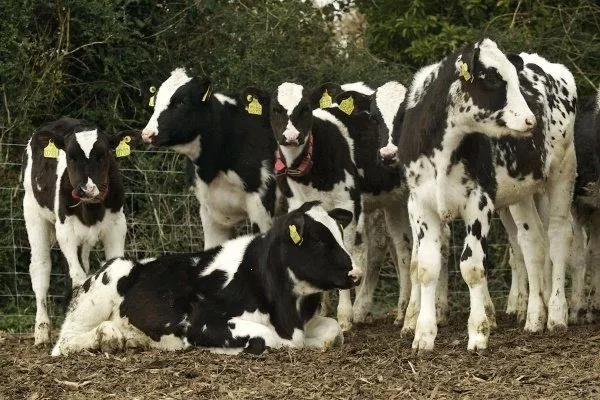
But raising calves in groups isn't as simple as gathering them into a single herd. It's important to acclimate the young calves to a group of 5-8 individuals—no more, no less. Proper housing is also essential.
Requirements:
- The flooring is made entirely of wood, and each calf is allocated at least 1.5 square meters of space.
- Drinking bowls and feeders are placed according to the number of heads, so that it is enough to feed everyone at the same time.
- The stalls should be disinfected daily, as small animals are more susceptible to infections, although they are quite resistant to diseases.
- Change the bedding every day.
- Different groups require different diets. More information on feeding calves from the first days of life can be found here. here.
- It is advisable to boil water for calves during the first month of life.
Prices for Kholmogory cattle
Thanks to the fact that Kholmogory salmon are actively bred in Russia, their prices are quite reasonable. The table shows the price of adult salmon at 150 rubles per kilogram.
| Representatives | Price |
| Calf – 1 month. | 11 thousand rubles |
| Calf – 2 months. | 13 thousand rubles |
| Adults:
Bull – 1000 kg Cow – 500 kg | 150 thousand rubles 75 thousand rubles |
Farmers' reviews
Most farmers speak positively about Kholmogory cattle; the breed's unpretentiousness, compared to more capricious ones, delights experienced farmers.
By all accounts, the Kholmogory breed is one of the most profitable and successful, with its advantages far outweighing its disadvantages. The key features are its low maintenance, excellent health, high milk yields, and healthy calves. Importantly, even with "greenhouse" care, they grow well and are disease-free. Such a purchase is a very profitable investment for a farm. However, it's important to remember that certain conditions for cows and bulls are still required, as well as ample feed reserves.