
Overall, there are over 2,000 species of mushrooms in the Saratov region. However, while approximately 150 are edible, only 10-20 are sought after by mushroom pickers. Other varieties are poorly studied and therefore regarded with caution.
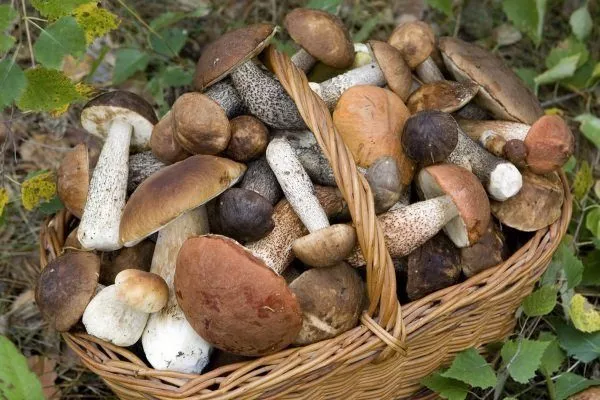
Mushroom spots in the Saratov region
The best time for mushroom picking is late summer and early fall. It's at this time that mushroom pickers, baskets and knives at the ready, head to the mushroom-growing areas to replenish their supplies.
Edible mushrooms are best found at higher elevations where the sun shines—forest edges, birch and oak groves, and old forest roads. Last year, pine forests and floodplain forests in the Khoper and Medveditsa river valleys were considered particularly rich in mushrooms.
The Saratov region also has a list of places considered richest in mushrooms, including edible ones. This list includes:
- Saratov district Near the village of Popovka there are milk mushrooms, birch boletes, and pink volnushki.
- Krasnoarmeysky District – porcini mushrooms, birch boletes. They can be found nearby in the forests of the village of Ivanteyevka.
- Engels district. The forest belt near Lake Tin-Zin is abundant with aspen mushrooms and milk mushrooms.
- Marx District – in the forests of the old village of Zvonarevka grow oak mushrooms, expensive porcini mushrooms, red saffron milk caps and aspen mushrooms.
- Bazarno-Karabulaksky district – in the nearby forests you can find oak and birch boletes.
- Baltai District – in the local forests there are birch boletes, butter mushrooms, aspen mushrooms and autumn honey mushrooms.
- Tatishchevsky district. There are several areas in this area where you can find mushrooms: near the village of Yagodnaya Polyana, you can find saffron milk caps and chanterelles, and near the village of Kamyanka, you can find a lot of butter mushrooms.
- Petrovsky district – near the village of Ozerki grow milk mushrooms, butter mushrooms, birch mushrooms and aspen mushrooms.
The mushroom yield depends on the region's weather conditions. Droughts are possible, which can hinder harvests. However, 2016, for example, was a very successful year in this regard, and a good harvest was achieved.
Edible mushrooms thrive in warm, humid weather, making autumn (September to late October) or late May the best time to harvest. Fog and warm nights indicate mushroom season. In spring and summer, provided there's sufficient moisture, porcini mushrooms, butter mushrooms, and birch boletes thrive. Small, slightly grown mushrooms are best picked two to three days after precipitation.
| Name of the mushroom | Harvest season | Place of growth | Peculiarities |
|---|---|---|---|
| Boletus mushrooms | June-October | Deciduous forests | The pulp does not change color when broken. |
| Podgruzdok | July-October | Coniferous and deciduous forests | The cap is up to 20 cm in diameter |
| White mushroom | Summer-October | Deciduous, mixed and coniferous forests | The pulp does not change color even in soup. |
| Real milk mushroom | — | Young forest plantations | After pickling it becomes bluish |
| Butterlets | September-October | Any forests, especially near pine, birch and oak trees | The skin separates from the pulp without any problems |
| Chanterelles | July-September | Pine forests | The bright red color is due to beta-carotene. |
| Aspen mushrooms | Late June-September | — | The flesh when cut may turn red, black, or grey. |
| Chanterelles | July-October | — | The taste is sour, the smell of dried fruits |
| Russula | Summer-autumn | Deciduous and coniferous forests | It is necessary to soak it before cooking. |
Edible mushrooms of the Saratov region
Edible mushrooms are those that are safe to eat. Let's look at the most popular ones.
Boletus mushrooms
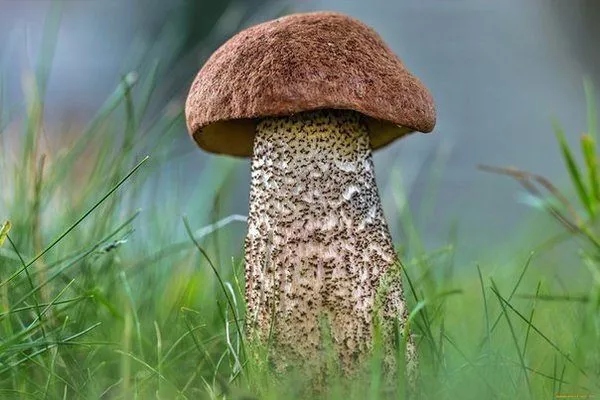
There are several varieties, and the skin color ranges from gray-brown to dark brown. The cap is dome-shaped, up to 15 cm in diameter, and the flesh is soft, covered with fibers underneath, which may darken with age.
The flesh does not change color when broken. The taste and aroma are indistinct. The stem is thin, up to 12 cm long, and light gray in color.
The harvest season is June through late October. They can be boiled, fried, dried, and pickled.
Podgruzdok
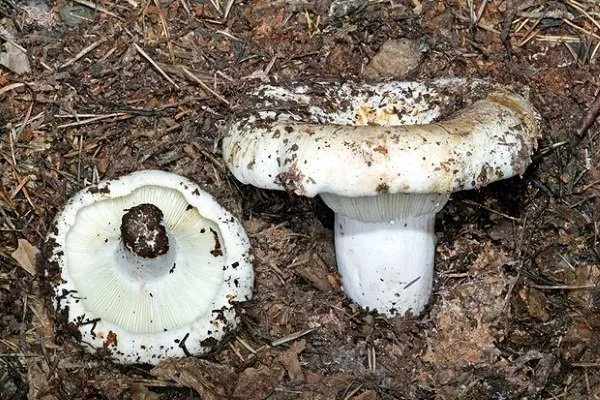
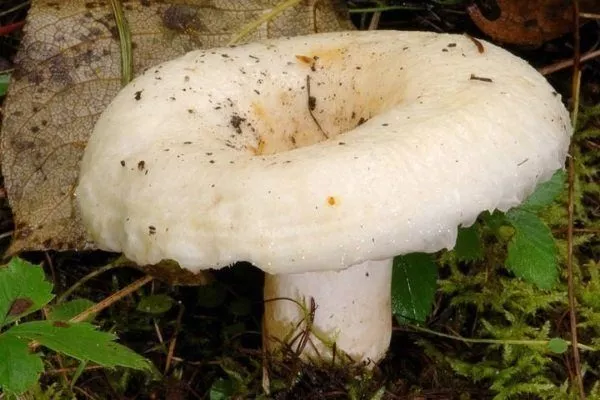
Belongs to the Russula family. The cap of a young mushroom is slightly depressed in the center, while in an adult it has a funnel-shaped form. The cap surface is white and dry, sometimes with brown spots, and reaches a diameter of up to 20 cm.
The flesh is white and brittle, with white gills. The stem is cylindrical and short in length.
They are found in coniferous and deciduous forests and can be collected from July to October.
White mushroom
White mushroom Belongs to the genus Boletus. The cap color varies depending on the growing conditions, from white to dark brown with a reddish tint. The diameter can reach 25 cm.
The cap initially resembles half a sphere, later becoming a pillow. The surface is velvety and smooth to the touch. The flesh is virtually odorless, but has a nutty flavor. It is dense, thick, and white in consistency.
This mushroom has a massive stem, reaching up to 20 cm in height and up to 5 cm in thickness. It is widened at the base and a significant part of it is located underground.
This mushroom grows in deciduous, mixed, and coniferous forests from early summer until October. It bears fruit in waves, but the first wave is not the most abundant compared to subsequent ones.
The porcini mushroom is believed to accompany the red fly agaric—when the fly agaric begins to grow, so does the porcini mushroom. It can be confused with the oak mushroom, but it's important to remember that the porcini mushroom's flesh never changes, even in soup, which is not the case with the oak mushroom.
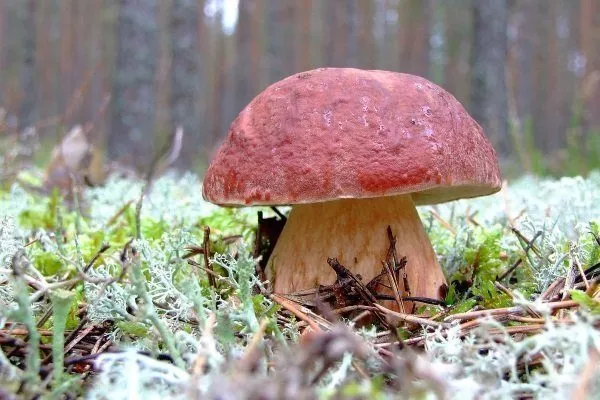
The porcini mushroom is considered the best of mushrooms and is eaten in any form.
Real milk mushroom
This mushroom belongs to the first category of mushrooms. Its cap is slimy, which is why it is called "raw." The stem is hollow, and the cap is funnel-shaped. Its color is milky white with faint stripes, which turns bluish after pickling. When salted, these mushrooms are very aromatic and delicious. Milk mushrooms can be found in young forest plantations.
Butterlets
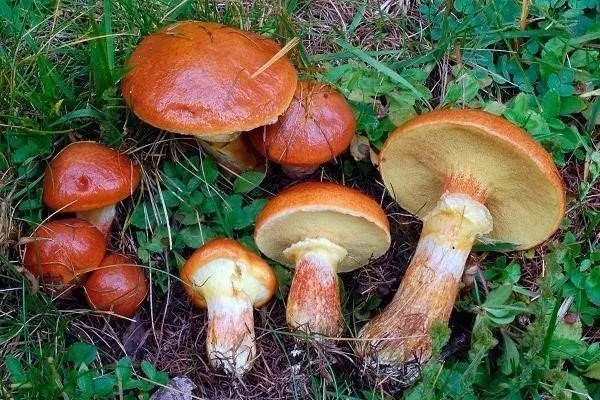
All species of these mushrooms are distinguished by their slimy skin, as if coated in vegetable oil, which is where they get their name. The cap's color can range from chocolate brown to grayish olive, and yellowish brown is also possible. It has a hemispherical shape that gradually becomes flattened. The edges may be raised.
The skin separates easily from the flesh. The stem is 4-12 cm tall. It is lighter in color than the cap and cylindrical in shape with a white, membranous ring in the center.
Butter mushrooms are damaged by worms and other pests, which is why the number of mushrooms in the Saratov region that are unfit for consumption reaches 80%.
They appear from mid-September to the end of October. They can be found in any forest, especially near pine, birch, and oak trees.
It is important to remove the skin from the cap, after which they can be consumed in almost any form.
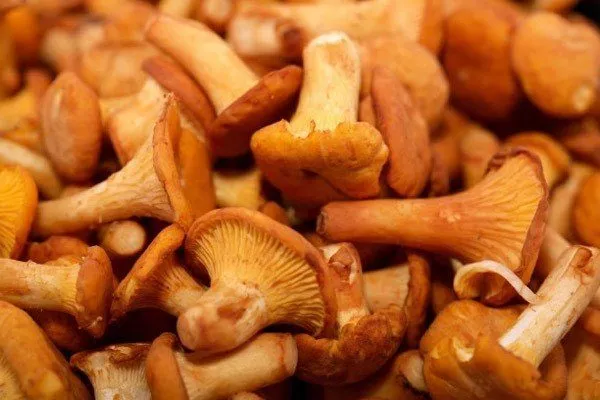
Chanterelles
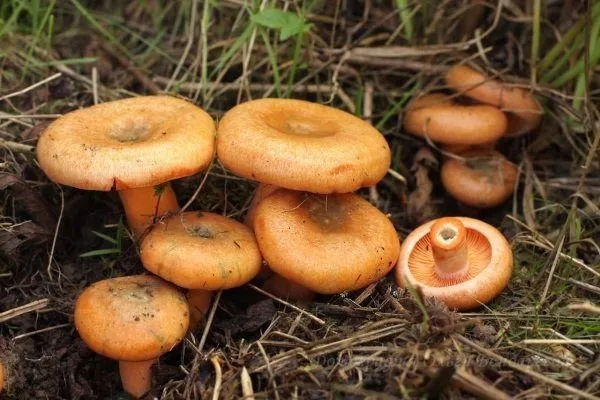
The name saffron milk cap comes from its color—a bright orange, even reddish hue, due to its high beta-carotene content. The cap is funnel-shaped, fleshy, and 5-10 cm in diameter. The skin can be moist or dry.
The stem is cylindrical, brittle, and features small lacunae. The flesh is fragile, does not change in color when exposed to air, and has no distinctive odor.
It grows most often in pine forests. The growing season is July–September.
Aspen mushrooms
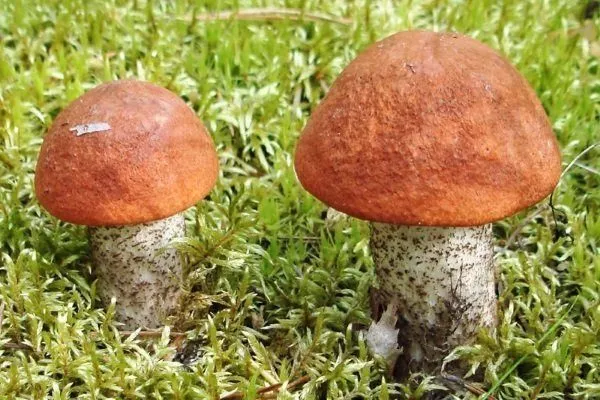
The cap is cushion-shaped, smooth, and fibrous. The stem is cylindrical or thickened toward the base, covered with white, brown, or black scales. The flesh is white, but when cut, it can turn red, black, or gray.
Aspen mushrooms typically appear in three waves. The first ("spikes") occurs from late June to early July, the second ("stubbles") in mid-July, and the third ("leaf-falls") from mid-August to mid-September, when they grow in great numbers. Between these waves, they can appear occasionally, especially if the summer has been excessively wet.
Chanterelles
The cap can be of various shapes—concave, convex, and funnel-shaped. It can be yellow or orange in color, and 3–14 cm in diameter.
The stem is 3 to 10 cm tall and usually fused with the cap. It is solid and thick in shape, widening from bottom to top.
The flesh is very fleshy, white, and firm; if pressed, it may turn red. The taste is slightly sour, and the mushroom smells like dried fruit.
Chanterelles have poisonous lookalikes—the false chanterelle and the olive chanterelle. You can tell them apart by knowing their location. The false chanterelle grows only on rotting wood or forest litter, while the olive chanterelle is common in the subtropics on wood dust.
They appear chanterelles from mid-July to early October, and are not grown in artificial conditions.
Russula
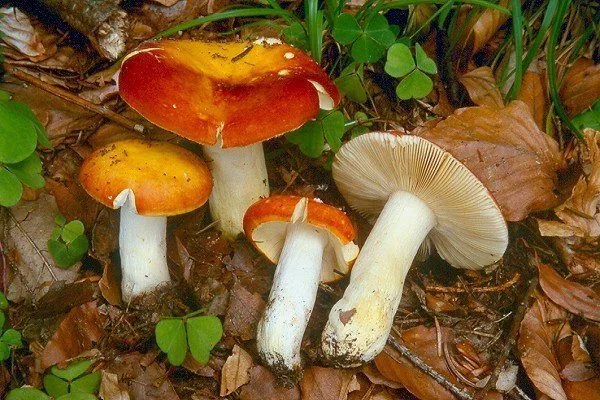
There are 275 species of russula. Of these, 60 are found in Russia, including the Saratov region, in deciduous and coniferous forests, traditionally in summer and autumn. These species differ in skin color.
The mushrooms' flesh is lamellar and brittle; some change color when exposed to air. The flavor can be mild, bitter, or sharp. The caps can be spherical, gradually straightening. The diameter ranges from 5 to 30 cm.
The stem can either narrow or widen towards the bottom, reaching up to 8 cm in height. Before cooking russula, they should be soaked to remove the bitterness.
Poisonous mushrooms found in the Saratov region
Such mushrooms can be extremely dangerous, sometimes even fatal, to humans. This is because some mushroom species may contain toxic substances that can cause food poisoning or damage the nervous system.
There are approximately 150 species of poisonous mushrooms in the Saratov region. Let's look at the most well-known.
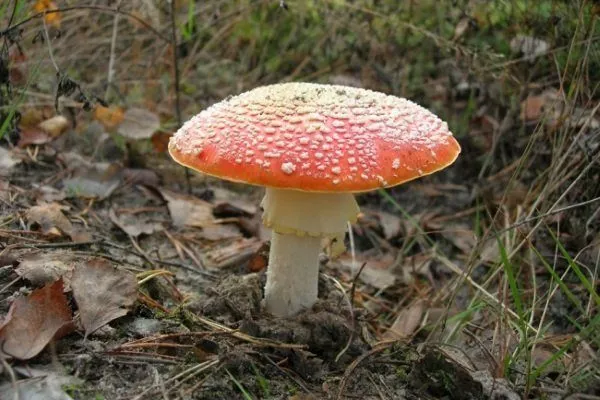
Fly agaric
A classic poisonous mushroom. A lethal dose for humans is considered to be 5-10 grams of pulp. It is widespread. fly agaric throughout the territory of Russia.
The mushroom's appearance is familiar, if not to everyone, then to many: a large mushroom with a bright red cap with white spots. The cap can reach up to 30 cm in diameter.
The cap's interior is composed of numerous white gills. The dense stem reaches up to 20 cm in height and is up to 4 cm in diameter.
The main growth zone is meadows, deciduous and coniferous forests. It grows from early June to late October.
Satanic mushroom
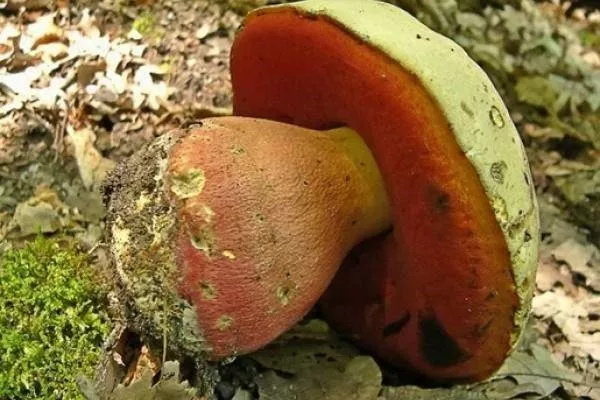
In some books, this mushroom is classified as conditionally edible (meaning it can be eaten after certain manipulations). Satanic mushroom It must be soaked and boiled for 10 hours. Failure to do so can result in severe liver and nervous system damage.
The mushrooms themselves are quite large. Specimens are known to have caps up to 40 cm in diameter, with a cushion-shaped cap and a smooth, skin-covered surface.
The mushroom's exterior is green or brown. The stem is massive, trapezoidal, up to 12 cm in diameter and up to 20 cm in height. The smell of the Satan's mushroom is reminiscent of rotten onions.
Death cap
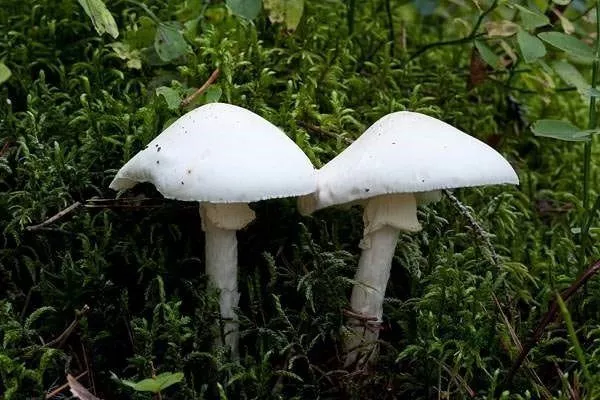
Belongs to the fly agaric family and can be dangerous even with short-term contact with edible mushrooms, as the stems and caps can quickly absorb toxic substances.
The death cap is quite heat-loving and grows in deciduous and broadleaf forests. Its favorite habitat is linden and oak groves. It bears fruit from July to early October.
The cap is ovoid to flat-convex, with a diameter of up to 6-12 cm. The skin is greenish with embedded fibers. White, flaky warts are found on the surface of this mushroom.
The stem is cylindrical, white or yellowish. The flesh is white and fairly thin. Young mushrooms have a pleasant aroma, unlike older mushrooms.
- Call an ambulance immediately.
- Before the doctors arrive, flush the stomach.
- Take activated charcoal.
- Save the remaining mushrooms for analysis.
If you're in the Saratov region and decide to pick your own mushrooms, it's worth doing your homework before heading into the forest or other mushroom-picking spots. Yes, there are plenty of places with tasty and healthy mushrooms, but you need to know them and be able to distinguish poisonous from edible ones to avoid serious health problems.