
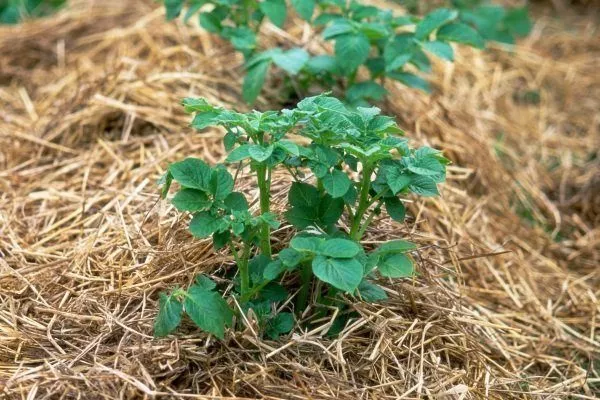
Planting and growing potatoes under straw or hay is a labor-saving method, as these materials make caring for them and harvesting them much easier. This method is especially popular with retired gardeners and will be of interest to younger gardeners as well.
Advantages and disadvantages of the method
Growing potatoes under straw or hay is ideal for small plots. This eliminates the need for digging, additional fertilization, or pest control.
The undoubted advantages of this method of planting potatoes include the following:
- Natural crop protection against various pests. Hay repels many pests, eliminating the need for additional pest control products.
- Protecting tubers from frost. Covering them with straw or hay will create a strong layer of frost protection, which is especially important when planting early.
- Protecting plants from heat. At high temperatures, straw and hay act as mulch, preventing excessive moisture loss.
- Minimal risk of mechanical damage to tubers. Since the harvest can be hand-picked, there's no need to worry about the integrity of the potatoes: each tuber will be intact, reducing the risk of various diseases.
- Saving time and effort. This potato planting method requires no digging before or in the fall, no hole preparation, no hilling or loosening, no fertilizing, and no fertilizer. Harvesting is also easy: you can do it by hand, without a shovel.
- Natural soil fertilization. As straw decomposes, it fertilizes and cleanses the soil.
Gardeners note that planting potatoes under straw or hay yields good results: one bucket of planting material can yield up to 10 buckets of large tubers.
The disadvantages of the method include:
- The spread of rodents, for whom straw becomes a breeding ground, is increasing. Mice are attracted to the remains of wheat ears. If the pests become numerous, they can ruin a significant portion of the harvest.
- Distinctive flavor. Some people find the flavor of potatoes grown under a layer of straw or hay unusual, different from that of tubers grown in the ground.
- Costs for covering material.
- Greening of tubers. This occurs when the mulch layer (hay or straw) is too thin.
- Slugs breed in straw and hay, which can also damage crops. This environment becomes ideal for these pests.
This method of planting and growing potatoes has many peculiarities, so before trying it out, it's worth planting a small plot. For a trial planting under straw, you can use the worst tubers, which you wouldn't want to throw away.
Peculiarities of planting potatoes under straw
Before you begin planting crops under hay or straw, you need to carry out some preparatory measures.
Preparation of planting material
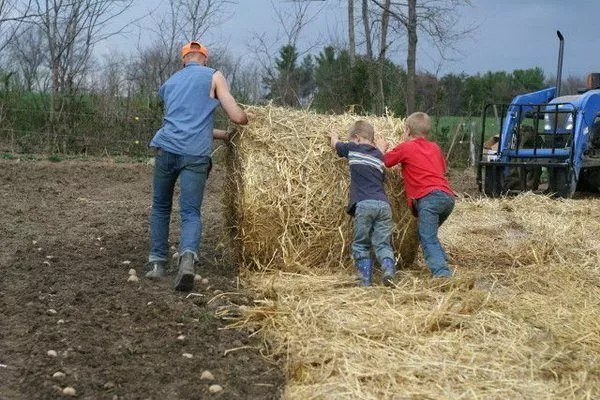
In March, seed potato preparation begins. All tubers are carefully inspected, and any infected ones are removed. Healthy potatoes, about the size of a chicken egg, are left for planting.
Next, treat the tubers with a potassium permanganate solution. Dip the potatoes in the light pink solution, leave for 10-15 minutes, then dry and place in boxes.
The containers with the planting material are left in a lighted, dry room for three weeks. The temperature should be between 5 and 15 degrees Celsius. During this period, strong sprouts will emerge from the tubers.
The following potato varieties are well suited for cultivation under straw:
- Nevsky;
- Artemis;
- Sappho;
- Symphony;
- Solar.
If a farmer is interested in getting an early harvest, we recommend reading this article, where early potato varieties are listed and described.
Soil preparation
Before planting potatoes, it's recommended to plant precursor crops in the area. These will crowd out weeds and enrich the soil with nutrients such as phosphorus and nitrogen. The following crops are best suited: alfalfa, oats, mustard, and rye.
To improve the composition of the soil, you can use the following fertilizers:
- Compost.
- Humus. You don't have to use fresh material. It's better if it's been stored for 2-3 years.
- Dried crushed citrus peel. This ingredient effectively repels rodents with its scent.
- Crushed eggshells. They disinfect the soil well.
- Ash. This fertilizer effectively combats wireworms.
Fertilizers should be scattered over the soil and then loosened with a rake.
It is best to prepare the area for planting in the fall.
Preparing mulch
To plant potatoes using the described method, you can use old hay, mown dried grass from meadows or lawns, or not completely rotted straw used for growing potatoes last season.
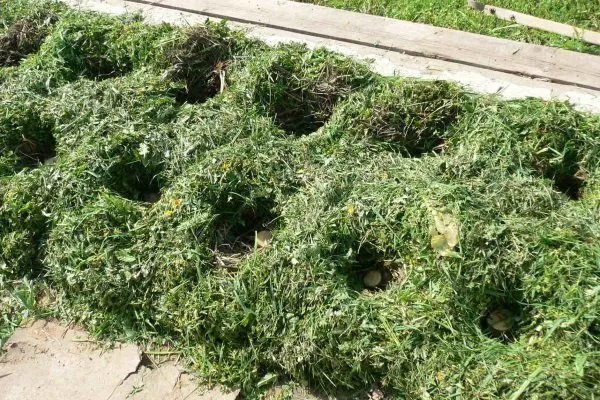
Per hundred square meters you will need about 20-30 square meters of covering material.
Landing features
Planting begins when the soil warms to 10 degrees Celsius. Seeds should be planted in a well-lit and sunny area.
You need to plant potatoes under mulch in the following way:
- Make furrows in the soil and add water if the soil is dry. The soil should definitely be moist. Instead of furrows, you can dig holes 10-15 cm deep.
- It's advisable (but not necessary) to add fertilizer to the furrows. The fertilizer should consist of humus and wood ash. The fertilizer is sprinkled in mounds over the holes, then the potatoes are placed in them.
- Distribute the prepared seedlings over the plot, with the sprouts facing upward. Rows should be spaced 70 cm apart, with a 30 cm interval.
- Cover the tubers with straw or hay in a layer of 45-50 cm.
It's important to remember that laying the straw too tightly will make it difficult for the sprouts to emerge. Therefore, it's important to monitor the layer's thickness.
Once the seedlings emerge from under the straw and reach a height of 15-20 cm, a layer of covering material should be applied. The mulch layer can be increased to a depth of up to 50 cm.
If the summer is damp, it's important to carefully fluff up the hay or straw to prevent it from rotting due to excess moisture. In hot, dry climates, on the other hand, the beds need to be watered more frequently, constantly monitoring the soil moisture level.
If done correctly, optimal conditions are created: weeds are unable to penetrate the layer of straw or hay, and evaporation is prevented. This ensures that the tubers grow in optimal conditions.
For more information on soil mulching, please see Here.
Alternative methods for growing potatoes under hay or straw
The method described above for growing potatoes under mulch is not the only one. There are also variations of this method.
Growing under straw using soil
On the plot, you need to mark out furrows, then make holes 7 cm deep. The distance between holes should be 30 cm. Place the seed in each hole and cover with soil, then lay a 25-30 cm layer of straw on top.
The main difference between this method and the classic method of growing potatoes in straw is the use of soil, which is sprinkled over the seed material.
Growing with straw in a bucket
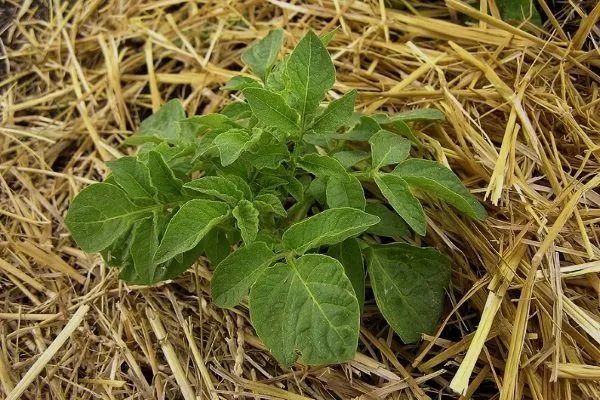
This method involves adding drainage, a 5-7 cm layer of soil, and humus to a deep bucket, then adding 1-2 tubers. Add a 10 cm layer of straw on top. Mulch is added as the tops grow until the bucket is full. This "bed" is watered periodically.
Using cardboard and straw
For this method, you'll need some thick cardboard (appliance packaging works well) and straw. Lay the cardboard over the area, overlapping it so there are no gaps. Secure it along the edges, such as with bricks. Make "X" slits in the cardboard, leaving a 30 cm gap between each slit.
Place a potato directly on the ground in each slit, ensuring at least one sprout is visible. Cover the cardboard sheets with a layer of straw (20 cm is sufficient). Once sprouts begin to emerge, add more straw or hay. The layer should be at least 15 cm thick.
Diseases and pests of crops
Growing potatoes under straw or hay does not exclude the possibility of the crop developing diseases or being damaged by pests.
The main enemy of potatoes are slugs, for whom the natural cover of dry grass provides a good refuge. The pests hide here from the heat. This proximity is dangerous for potatoes, as the slugs damage the plants and create conditions conducive to the development of secondary infections.
Slugs can be controlled with crushed eggshells, lime, sawdust, or onion peels. Periodically inspecting the bushes and collecting any lurking pests is recommended.
Rodents, which feed on the wheat ears found in hay, pose an equally significant threat to the harvest. Planting herbs around the perimeter of the garden bed can effectively combat them. Melissa and cilantro also repel rodents.
Mice can also be repelled by noise and vibration interference. To create this, you need to:
- Drive 1-1.5 m long metal rods into the ground around the perimeter of the bed, spaced about 1 m apart.
- Hang 5-liter plastic canisters with lids on the rods. The bottoms of the canisters should be cut off first.
This structure creates noise when exposed to wind, and the vibration of the metal rods transmits the noise downwards into the soil. These sounds repel pests.
To protect the crop from the Colorado potato beetle, it is recommended to treat the tubers with insecticides (for example, Prestige or Matador) before planting.
Placing poisoned bait around the perimeter of a property is not recommended for rodent control, as it violates sanitary and environmental considerations. The poison may kill other inhabitants of the property that pose no threat to crops, such as birds, hedgehogs, and beneficial insects.
To repel pests, you can also use ultrasonic repellers.
Harvesting
It's recommended to harvest potatoes grown under hay or straw on a sunny day. Here's how:
- Remove the layer of straw or hay with a rake. Don't throw it away, as you'll need it for growing potatoes next year.
- Harvest the tubers. Remove the potatoes by hand, as most of them are located shallow.
- You can place the tubers in bags or buckets.
With proper care, you can try your first new potatoes in as little as 12 weeks.
You can read about ways to store potato crops here.
What is better for growing - straw or hay?
How to choose a covering material for this method of planting potatoes?
| Parameter | Hay | Straw |
|---|---|---|
| Presence of weeds | Yes | No |
| Soil enrichment | High | Low |
| Sun protection | High | Average |
| Impact on soil acidity | Neutral | Acidifying |
| Weight | Easy | Easy |
| The period of decomposition | 2 years | 2 years |
Hay is dry grass containing weeds and their seeds, which quickly germinate and clog the soil in a moist environment. However, when decomposed, hay significantly enriches the soil with nutrients. It also provides much better protection for crops from the damaging effects of sunlight.
Straw is the dry stalks of cereal crops. It contains neither weeds nor nutrients. When decomposed, it releases no nutrients to the soil.
Both hay and straw are lightweight, making them easily carried away by the wind. Both types of covering materials completely rot within two years.
When choosing a material, consider the soil's characteristics. Straw acidifies the soil, making it ideal for alkaline and neutral soils.
Each type of covering material has its own advantages and disadvantages, so you can choose any of them.
Agronomists discuss the benefits of using this method of growing potatoes in this video:
Growing potatoes under straw is much easier than the traditional method. This method requires no soil digging, no harvesting, and no intensive fertilizing. Alternatively, you can use a combination of hay and cardboard, or straw and soil.